Nobel Prize 2026: Optogenetics Breakthrough Explained
- Karl Deisseroth, Peter Hegemann, and Georg Nagel won the 2026 Nobel Prize in Medicine for optogenetics.
- Optogenetics lets scientists switch individual brain cells on or off using light.
- The discovery began with a light-sensitive protein in pond algae in the 1990s.
- In 2021, an optogenetic treatment partially restored vision in a blind patient — a glimpse of its medical future.
Imagine being able to flip a light switch and turn a single brain cell on — or off. That is essentially what the three winners of the 2026 Nobel Prize in Physiology or Medicine achieved, and on Monday, October 5, the Nobel Assembly at Sweden's Karolinska Institute honored them with science's most prestigious award.
American researcher Karl Deisseroth (54) and Germans Peter Hegemann (71) and Georg Nagel (73) were recognized "for discoveries concerning light-gated ion channels and optogenetics" — a technique that has, in the committee's words, "laid the foundation for a new era in neuroscience." They will share a prize of 12 million Swedish crowns (about $1.2 million). This guide explains who they are, how a pond alga led to a brain-control breakthrough, and why optogenetics could transform how we treat blindness, Parkinson's, depression, and more.

Who Won the 2026 Nobel Prize in Medicine?
The three laureates span two generations and two continents, and — fittingly for a story about light — all three described themselves as surprised and delighted, calling each other friends:
| Laureate | Age | Affiliation | Key Contribution |
|---|---|---|---|
| Karl Deisseroth | 54 | Stanford University (bioengineering & psychiatry), USA | Showed the light-sensitive protein could control nerve cells (2005) |
| Peter Hegemann | 71 | Formerly Max Planck Institute for Biochemistry, Germany | Discovered the light-sensitive protein in algae (1990s) |
| Georg Nagel | 73 | Formerly Max Planck Institute for Biophysics, Frankfurt, Germany | Proved the protein is a light-gated ion channel (2000s) |
Deisseroth learned of the prize in the most human way possible: working late on a paper at Stanford, he was drifting to sleep when the Nobel committee called. "My phone rang at my bedside. There was about 30 seconds when I had trouble forming words," he told reporters. Nagel, meanwhile, was "on the terrace, in the sun" in Italy. "I didn't expect this, really!" he said — adding that he had always told friends watching the October announcements to "keep cool."
The medicine prize traditionally opens Nobel week, with physics, chemistry, literature, peace, and economics to follow over the coming days, according to Reuters.
What Is Optogenetics? The Simple Explanation
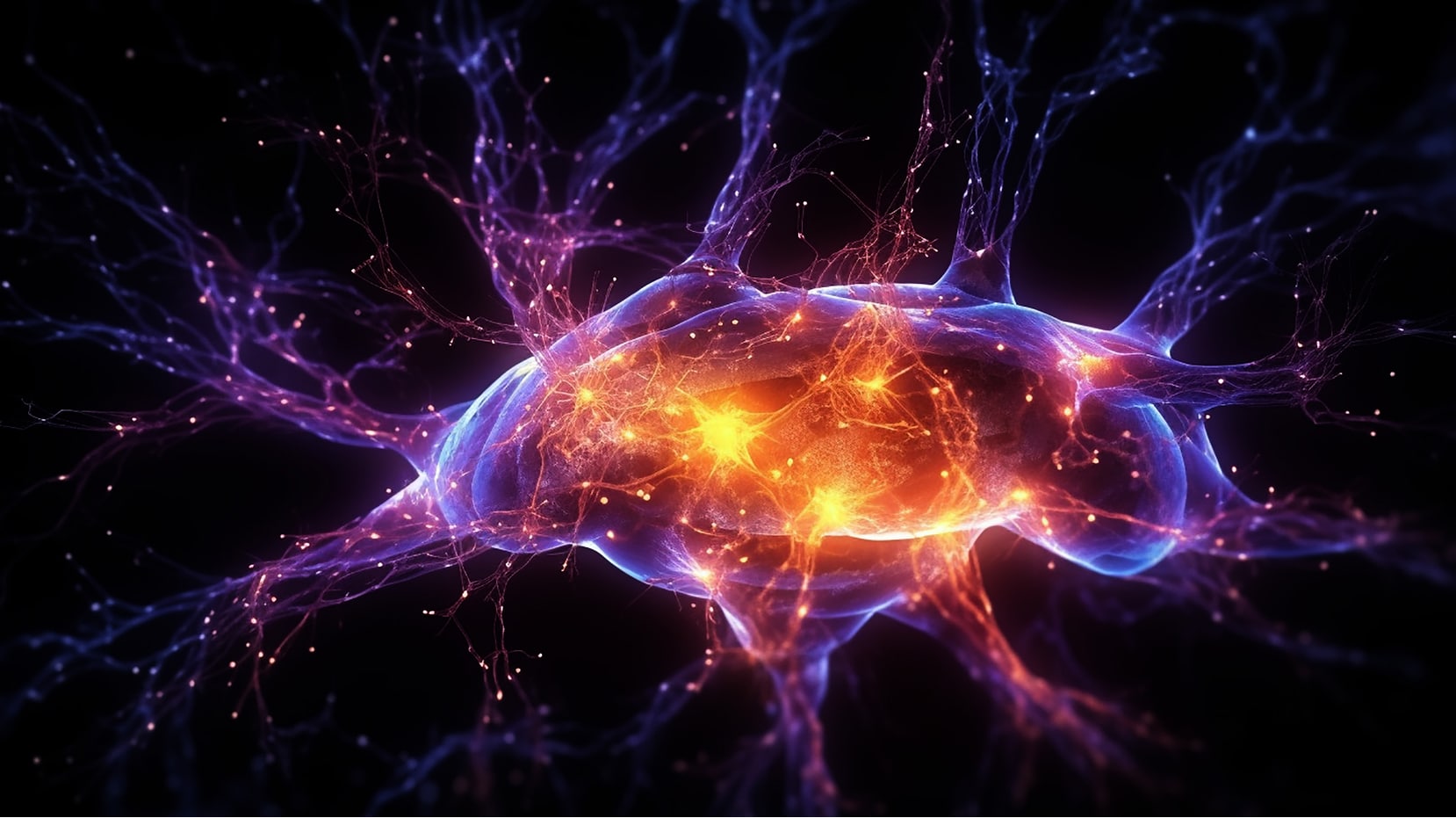
Your brain contains roughly 86 billion neurons, and for most of neuroscience's history, researchers faced a maddening problem: they could observe the brain, and they could stimulate it crudely, but they could not control specific groups of neurons with precision. It was like trying to fix a piano by hitting all the keys at once.
Optogenetics solved this with an elegant trick borrowed from nature:
- Insert a light-sensitive protein (channelrhodopsin) into the DNA of targeted neurons using genetic engineering.
- Shine light on the brain through a tiny implanted fiber-optic cable.
- The neurons switch on or off in milliseconds — only the ones carrying the protein respond.
"This method makes it possible to switch on, or off, the activity of individual nerve cells in a living brain," said Thomas Perlmann, Secretary-General of the Nobel Assembly. As committee member Anna Wedell put it, it is "a tremendous step forward to be able to link nerve cells and their function to specific behaviours" — in her words, "a completely new dimension of understanding of the function of the brain," New Scientist reports.
Today the method is used in laboratories worldwide to map the neural circuits behind specific memories, feelings, and behaviors — including those relevant to neurological and psychiatric disorders. That mapping is the essential first step toward future treatments.
From Pond Algae to a Nobel Prize: The 30-Year Journey
The most remarkable part of this story is where it started — not in a brain lab, but in a study of how pond scum swims toward light:
- Early 1990s: Peter Hegemann, at the Max Planck Institute for Biochemistry, wondered how the single-celled alga Chlamydomonas can swim toward light within half a millisecond. He hypothesized that a single protein both captured light and acted as an ion channel.
- 2000s: Hegemann teamed up with Georg Nagel, who tested the hypothesis by injecting algal genes into frog eggs — and discovered channelrhodopsin-2, a light-sensitive ion channel. In 2003, they published findings showing the protein could generate electrical impulses in human and hamster cells using light.
- 2005: At Stanford, Karl Deisseroth took the decisive step: he genetically engineered rats so their nerve cells produced channelrhodopsin, meaning those cells could be activated by shining light on them.
- 2006: The technique was formally named "optogenetics" — optics plus genetics.
As Nobel committee member Abdel El Manira said during the announcement, Hegemann and Nagel had "just discovered the switch neuroscientists had long dreamed of." There is a poetic coda: back in 1979, Francis Crick — the co-discoverer of DNA's structure and a 1962 Nobel laureate himself — had predicted that to understand the brain, scientists would need to turn neurons on and off on demand, and that "the ideal signal would be light." Nearly half a century later, he was proven right.
Why Optogenetics Could Change Medicine
So far, optogenetics has been primarily a research tool — but its medical horizon is expanding fast. The headline proof came in 2021, when a blind patient with retinitis pigmentosa — a disease affecting nearly two million people worldwide — partially recovered vision thanks to an optogenetic treatment, CNN reports. The approach: make surviving retinal cells light-sensitive, then stimulate them to restore a form of sight.
Researchers are now exploring optogenetic approaches for conditions where faulty neural circuits are the core problem:
- Parkinson's disease — precisely targeting the malfunctioning motor circuits that drugs treat only bluntly.
- Depression and anxiety — mapping and modulating the circuits that govern mood, potentially guiding next-generation therapies.
- Epilepsy — using light to silence the specific neurons where seizures originate.
- Chronic pain — switching off pain-signaling pathways without opioids.
The challenges are real: the technique still requires genetic modification and implanted light sources, so human applications demand extraordinary safety testing. But the 2021 vision result proved the principle works in people — and Nagel himself noted that only one patient had "profited from optogenetics" so far, which is why he thought the prize might come too early. The committee disagreed: the tool has already transformed neuroscience, whatever comes next.

Nobel Prize 2026 in Context: Recent Medicine Winners
The medicine prize has honored some of the most influential discoveries in history — Alexander Fleming's penicillin (1945), Karl Landsteiner's blood groups (1930), and the structure of DNA-era breakthroughs. Recent years show the committee's taste for foundational tools:
| Year | Winners | Recognized For |
|---|---|---|
| 2026 | Deisseroth, Hegemann, Nagel | Light-gated ion channels and optogenetics |
| 2025 | Mary Brunkow, Fred Ramsdell, Shimon Sakaguchi | How the immune system spares healthy cells (cancer therapy openings) |
Like last year's immune-system laureates, the 2026 winners gave science a tool — and tools compound. Every lab that adopts optogenetics accelerates every other field that depends on understanding the brain. If you're interested in how breakthrough science gets discovered online today, our guide to AI search optimization explains how Google's AI-driven results surface exactly this kind of explainer content — and boosting your online presence covers why clear science communication now travels further than ever.
Frequently Asked Questions
Who won the Nobel Prize in Medicine 2026?
Karl Deisseroth (USA), Peter Hegemann (Germany), and Georg Nagel (Germany), announced October 5, 2026, by the Nobel Assembly at Karolinska Institute in Stockholm.
What is optogenetics in simple terms?
A technique that inserts a light-sensitive protein (channelrhodopsin, first found in algae) into specific brain cells, so shining light on them switches those neurons on or off with millisecond precision.
How much is the 2026 Nobel Prize worth?
12 million Swedish crowns (about $1.2 million), shared equally among the three laureates.
Has optogenetics been used in humans?
Yes — in 2021, a blind patient with retinitis pigmentosa partially regained vision through an optogenetic treatment, the first clinical proof of the concept.
What diseases could optogenetics help treat?
Researchers are exploring Parkinson's, depression, epilepsy, and chronic pain — all conditions rooted in malfunctioning neural circuits that light could one day precisely control.
When are the other 2026 Nobel Prizes announced?
The medicine prize opens Nobel week; physics, chemistry, literature, peace, and the economics prize follow over the coming days.
Related Nobel week 2026 coverage: Nobel Prize 2026 Chemistry: Henri Kagan and Kenso Soai Win and Nobel Prize 2026 Literature: Anne Carson Wins and Nobel Peace Prize 2026: Navi Pillay Wins
The conversation
Post a Comment