
Imagine waking up one morning and being able to use your computer without touching a keyboard, moving a mouse or speaking a single word. You look at the screen, think about moving a cursor, and the pointer follows your intention. You select a message, imagine the words you want to communicate, and a computer turns the patterns of activity in your brain into text.
For someone who has lost the ability to move their hands or speak because of a spinal cord injury, stroke or neurological disease, this is not simply an interesting technological experiment. It could mean communicating with family independently, returning to education, controlling a wheelchair or performing everyday activities that previously required constant assistance.
This is the promise of brain-computer interfaces, commonly known as BCIs.
In 2026, the technology is moving through an important transition. What was once largely confined to university laboratories and carefully supervised experiments is increasingly being tested in people's homes and everyday environments. Neuralink has expanded its human research programme, Synchron is developing an approach that reaches the brain through blood vessels, and companies such as Paradromics are demonstrating new possibilities for restoring communication.
Researchers are also making progress in decoding attempted speech, controlling robotic limbs and allowing people with severe paralysis to use ordinary digital devices.
But the reality is more complicated than the headlines suggest. These implants are not reading private thoughts like subtitles in someone's mind. They cannot reliably extract arbitrary memories, understand every sentence a person imagines or give healthy people extraordinary mental abilities. Most systems are designed for a much narrower purpose: recognising specific patterns of brain activity associated with an intended movement or communication task.
The distinction matters. Brain-computer interfaces could become one of the most important medical technologies of the coming decade, but their success will depend on safety, reliability, affordability, regulation and the experiences of the people who actually use them.
2026 is an important year to examine what these systems can genuinely do, which companies are making progress, and how close society is to a future in which the brain can communicate directly with machines.
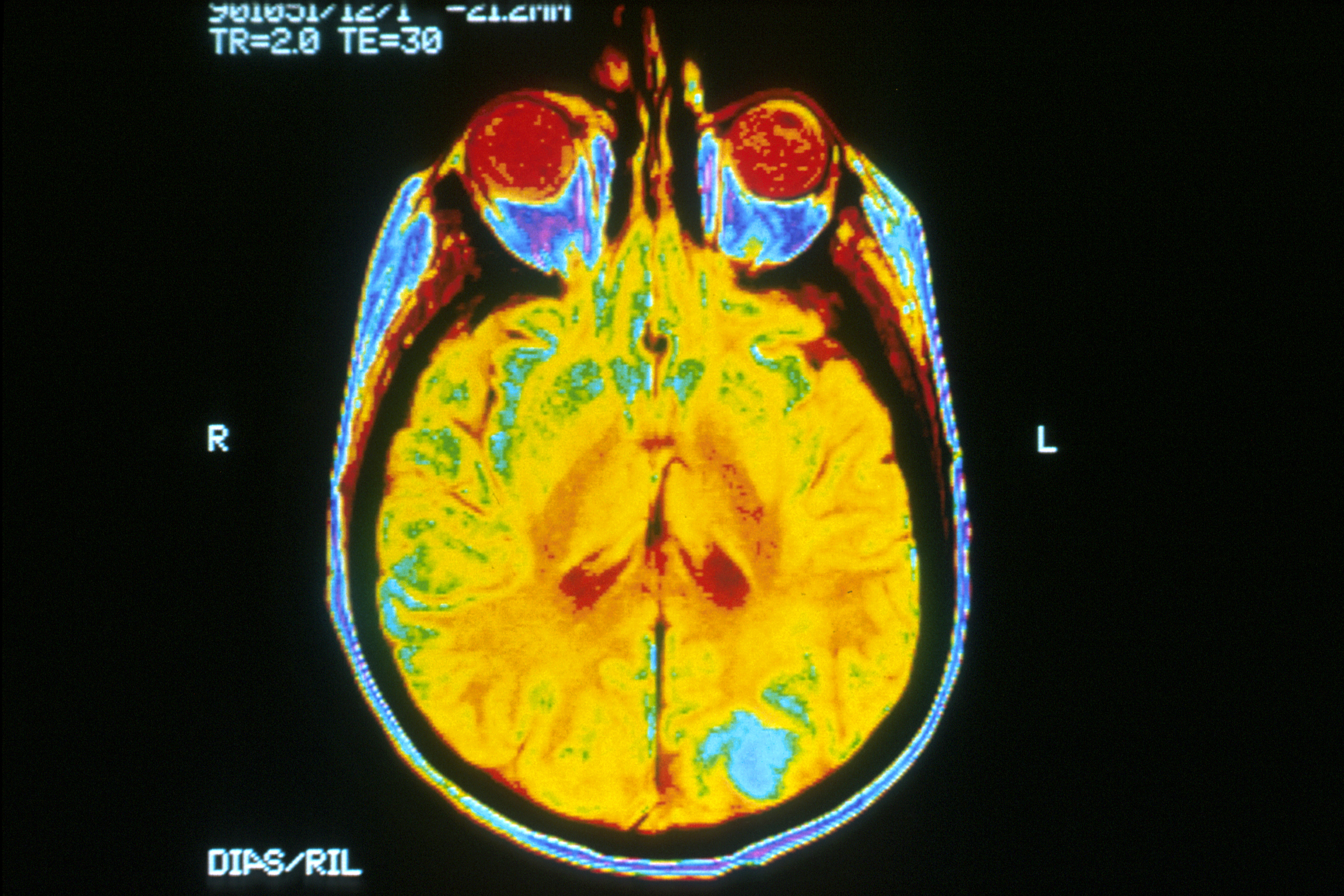
1. What Exactly Is a Brain-Computer Interface?
A brain-computer interface is a system that allows the brain to communicate with an external device without relying on the usual muscular movements involved in operating it.
Normally, when someone wants to move a computer mouse, the brain sends electrical signals through the nervous system to the muscles in the hand and fingers. Those muscles move the mouse, and the computer responds.
A person with a severe spinal cord injury may still have the intention to move their hand, but the communication pathway between the brain and the muscles may be damaged. The intention exists, yet the movement cannot happen.
A BCI attempts to create another route.
Instead of waiting for signals to travel through damaged nerves and activate muscles, the system measures activity in the brain, interprets the relevant patterns and converts them into instructions for a computer or another device.
Think of it as installing an alternative communication cable between two systems. The brain remains the source of the intention. The computer becomes the destination. The BCI acts as the translator.
1.1 How the technology reads brain activity
The brain contains approximately 86 billion neurons. These specialised cells communicate using electrical and chemical signals.
When groups of neurons become active, their electrical activity creates patterns that can be measured using specialised equipment.
A BCI collects these patterns through sensors and sends the measurements to software. Machine-learning algorithms then identify relationships between the signals and the task the user is trying to perform.
For example, a researcher might ask a participant to imagine moving their right hand, left hand or fingers. The system records the corresponding brain activity and learns to distinguish between the different patterns.
After sufficient training, the participant can attempt the movement without actually moving the limb. The computer recognises the associated neural activity and produces the corresponding action.
The process generally involves five stages:
- Signal collection: Electrodes or other sensors detect electrical activity from the brain.
- Signal processing: Software removes unwanted noise and identifies useful patterns.
- Decoding: An algorithm estimates the intended movement, selection or communication command.
- Device control: The decoded instruction is transmitted to a computer, communication system or robotic device.
- Feedback: The user sees or experiences the result and adjusts their intention if necessary.
The feedback stage is particularly important. It allows the user and the software to develop a more reliable working relationship.
1.2 Why artificial intelligence matters
The brain does not produce perfectly organised computer commands. Its activity varies between individuals and can change depending on attention, fatigue, posture, medication and other factors.
This makes neural decoding a difficult problem.
Artificial intelligence helps by learning patterns from recorded brain activity rather than depending entirely on fixed rules.
Imagine teaching a computer to recognise your handwriting. At first, the software might struggle with your letters. After seeing hundreds of examples, it becomes better at understanding your particular writing style.
A neural decoder works in a related way. It learns the patterns associated with a particular person's attempted movements or speech.
However, the system must continue working when the signals change slightly. An implant that requires lengthy recalibration every morning would be much less useful than one that remains reliable throughout ordinary daily activities.
This is one of the biggest challenges facing the industry in 2026.
2. The Different Types of Brain-Computer Interfaces
Not every BCI requires an operation. Some systems measure brain activity from outside the skull, while others use electrodes placed directly on or inside the brain.
The location of the sensors influences the quality of the information, the risks and the complexity of the equipment.
2.1 Non-invasive brain interfaces
Non-invasive BCIs generally use electroencephalography, or EEG.
An EEG system measures electrical activity through electrodes positioned on the scalp. A user might wear a cap containing multiple sensors connected to a computer.

The major advantage is that no brain surgery is required.
EEG technology is already used in medical examinations and research, and researchers have developed systems that allow users to select commands, interact with simple interfaces and operate certain assistive devices.
Its main limitation is signal quality.
Electrical activity must pass through brain tissue, the skull and the scalp before reaching the sensors. This makes it harder to distinguish individual neural signals.
Non-invasive systems can be useful, but they generally cannot provide the same level of detailed information as electrodes positioned closer to neurons.
2.2 Surface-based implanted interfaces
Another approach involves placing electrodes on the surface of the brain.
These systems can record electrical activity from groups of neurons without inserting every electrode into brain tissue.
One example is electrocorticography, commonly called ECoG.
Because the electrodes are closer to the source of the signals, ECoG can provide more detailed information than scalp EEG.
However, reaching the brain surface generally requires surgery, and long-term implantation introduces additional medical and engineering challenges.
2.3 Intracortical implants
Intracortical BCIs go further by placing tiny electrodes into brain tissue.
These electrodes can record activity from individual neurons or small groups of neurons, depending on their design.
This approach offers the possibility of obtaining more detailed information about intended movements and speech.
Neuralink and Paradromics are developing systems in this general category.
The trade-off is that inserting electrodes into brain tissue creates surgical and long-term biological challenges. Researchers must consider tissue reactions, signal stability, electrode durability and the possibility of complications.
2.4 Endovascular interfaces
Synchron has developed a different strategy.
Rather than placing electrodes directly into brain tissue, its Stentrode system is delivered through blood vessels.
The device is designed to position electrodes near relevant brain regions while avoiding the need to insert an electrode array directly into the brain itself.
It is a fundamentally different surgical philosophy, with its own advantages and limitations.
The important point is that there is no single perfect BCI design. Different approaches may ultimately serve different medical needs.
3. Neuralink: The Company Trying to Make Thought-Controlled Computing Practical
Few companies have brought brain-computer interfaces into mainstream conversation as successfully as Neuralink.
Founded in 2016, Neuralink aims to develop implantable devices that connect the brain to computers and other electronic systems. Its initial medical focus is restoring capabilities that people have lost through paralysis and neurological conditions.
The company's first major human research programme is known as PRIME, short for Precise Robotically Implanted Brain-Computer Interface.
The project combines three important components:
- The N1 implant: Records neural activity.
- The R1 surgical robot: Inserts extremely thin electrode threads into the brain.
- Software: Translates recorded signals into commands for external devices.
The combination is intended to make implantation precise and to give users a relatively direct way of interacting with computers.
3.1 Understanding the N1 implant
The N1 is a small, wireless implant designed to sit within the skull. Very thin electrode threads extend from it into the brain.
These threads contain electrodes that detect electrical activity associated with intended movements.
The design aims to collect information from areas involved in controlling the hands and arms. Software processes the resulting signals and translates them into commands.
Unlike traditional experimental systems that may depend on cables passing through the skin, Neuralink's design aims for a fully implanted and wireless arrangement.
This matters for everyday use.
External wires can create practical difficulties, including infection risks, restrictions on movement and the need for specialised equipment. A wireless system could make it easier for someone to use a computer at home, at school or in another environment.
The implant also uses wireless charging, reducing the need for a physical charging connection.
3.2 What happened in the PRIME study?
The first Neuralink human implant was performed in January 2024, when participant Noland Arbaugh received the N1 device.
He has demonstrated computer cursor control, gaming and other digital activities using the implant.
The initial experience also revealed a technical challenge: some electrode threads retracted from their original positions, reducing the number of effective channels. Neuralink subsequently described engineering and software changes intended to improve performance.
In its January 28, 2026 update, Neuralink announced that 21 participants had received implants across its clinical programmes.
The company reported that participants were using the technology for activities including:
- Controlling computer cursors.
- Playing video games.
- Browsing the internet.
- Communicating with family and friends.
- Studying and completing educational activities.
- Experimenting with robotic arms and other assistive equipment.
One participant highlighted in the company's January 2026 update was Sebastian, a medical student who had sustained a spinal cord injury.
According to Neuralink, he was using his implant to annotate research papers, complete assignments, take notes and prepare for examinations. The company reported that he could use the system for up to 17 hours a day.
These examples suggest that the technology is beginning to move beyond short laboratory demonstrations.
However, it is important to distinguish between what individual participants have demonstrated and what is available to everyone. The PRIME programme remains clinical research, and its results cannot automatically be generalised to every person with paralysis.
Sources: Neuralink research updates; Reuters technology coverage.
3.3 Telepathy: What can users actually control?
Neuralink calls its computer-control capability Telepathy.
The basic idea is relatively straightforward: a participant thinks about moving a cursor, and the system translates the associated neural signals into cursor movement.
According to Neuralink's clinical trial information, participants can navigate a cursor and perform mouse clicks.
Some participants have also experimented with controlling gaming systems, keyboards, wheelchairs and robotic arms.
These additional capabilities are experimental and are not necessarily available to every participant.
The distinction between a demonstration and a dependable medical product is important. A person might successfully control a robotic arm during a research session, but that does not automatically mean they can safely use the same system independently throughout the day.
For someone living with paralysis, reliability is just as important as impressive demonstrations.
A device that works consistently for several hours, allows communication without assistance and can be maintained safely may be more valuable than a technically spectacular system that requires constant specialist intervention.
Neuralink's published participant information also explains that the device remains investigational and has not received general marketing approval from the FDA.
Source: Neuralink PRIME Study brochure.
3.4 Neuralink's expansion in 2026: Beyond moving a cursor
The most interesting development in Neuralink's 2026 programme is its movement toward additional medical applications.
In June 2026, the company announced its first transdural procedure in its clinical trials. Instead of opening the dura, the protective membrane covering the brain, the team inserted electrode threads through it while keeping the membrane intact.
This is an engineering development rather than proof that the procedure is safer or better for every patient. Its longer-term surgical and biological implications still need evaluation.
Another important development is the VOICE programme.
The study is designed to investigate whether the N1 implant can help people with severe speech impairment communicate by translating attempted speech-related brain activity into text or spoken output.
The programme is particularly relevant to people with conditions such as ALS, spinal cord injuries and stroke.
Neuralink's October 23, 2026 research update described early speech-restoration findings presented at a meeting of the Northeast ALS Consortium. Its October 29 update also described an engineering sprint focused on translating brain activity into speech.
These developments indicate that the company is expanding beyond controlling a mouse pointer.
Nevertheless, speech decoding is a more complicated challenge. A computer must distinguish the neural patterns associated with intended language, identify the words and generate an appropriate output.
The system must also avoid turning unintended neural activity into incorrect messages.
The VOICE study is an investigation, not proof that Neuralink has already produced a universally reliable speech-restoration device.
Sources: Neuralink VOICE study; Neuralink research and engineering updates.
4. Synchron: A Different Way to Reach the Brain
While Neuralink focuses on electrodes inserted directly into brain tissue, Synchron has developed a different approach.
Its system is called the Stentrode.
Rather than requiring a conventional open-brain implantation procedure, the Stentrode is designed to travel through the body's blood vessels and reach a blood vessel near the brain's motor cortex.
The device is delivered using a catheter, a thin flexible medical tube commonly used in minimally invasive procedures.
This approach draws on techniques already familiar to specialists in endovascular medicine.
4.1 How the Stentrode works
Imagine trying to reach a room in a large building.
One option is to break through the outside wall and enter directly. Another is to use an existing corridor that leads to the same destination.
The Stentrode follows the second philosophy.
It is designed to travel through a blood vessel until it reaches a suitable location near the brain region responsible for movement.
Once positioned, the device expands and remains in the vessel. Its electrodes record electrical activity associated with intended movements.
The signals are transmitted to an implanted electronic unit, which communicates with an external computer.
The system can then translate attempted movements into digital commands.
The advantage is that the device does not need to penetrate brain tissue directly.
This could reduce certain surgical burdens, although it does not eliminate the risks associated with implantation.
4.2 What did the early human research demonstrate?
One of Synchron's important early studies was the SWITCH trial, which examined the safety and feasibility of its Stentrode system.
The published results involved four participants with severe paralysis.
All four completed 12 months of follow-up. Researchers reported no device-related serious adverse events resulting in death or permanent increased disability, no vessel occlusion and no device migration during the study period.
Participants were also able to use the system to control a computer.
These results were encouraging, especially because they demonstrated that neural signals could be recorded through an endovascular implant.
However, four participants represent a very small research group. A favourable safety result in four people cannot establish the long-term safety of a device for thousands of patients.
4.3 Why the endovascular approach matters
The Stentrode highlights an important principle in medical engineering: the best technology is not necessarily the one that records the most information.
A device must also be practical to implant, maintain and use.
Intracortical electrodes can provide detailed neural information, but their implantation involves entering brain tissue.
An endovascular device may offer a less direct surgical route, potentially making it suitable for some people who would not be candidates for more invasive procedures.
However, blood vessels impose their own restrictions.
The available recording locations, the distance from the targeted brain regions and the characteristics of the neural signals can influence performance.
There are also vascular risks, including clot formation, bleeding and complications involving the blood vessel itself.
The Stentrode is therefore not a risk-free alternative. It is a different balance between surgical access, signal quality and medical complexity.
4.4 What is Synchron trying to achieve?
Synchron's longer-term objective is to help people with severe motor impairment operate everyday digital devices.
Potential applications include:
- Sending messages.
- Browsing the internet.
- Controlling digital interfaces.
- Accessing communication tools.
- Operating compatible assistive technologies.
A particularly important development is the possibility of making computer access more natural and less dependent on caregivers.
For a person who cannot reliably use their hands, even the ability to independently select a contact and send a message can represent a substantial improvement in quality of life.
The company's work also illustrates why the BCI industry should not be judged only by the number of electrodes or the amount of data collected.
The relevant question is whether the technology produces meaningful, safe and sustainable improvements in people's lives.
5. The New Wave of Brain-Computer Interface Companies
Neuralink and Synchron attract considerable attention, but they are part of a much larger field.
Several other organisations are developing alternative electrode designs, surgical methods and neural decoding systems.
Some are building long-term implants. Others are concentrating on temporary recording devices or high-resolution communication technologies.
5.1 Blackrock Neurotech: One of the pioneers
Blackrock Neurotech has been involved in human neural-interface research for many years.
Its best-known technology includes the Utah Array, a small electrode array containing multiple penetrating microelectrodes.
The array can record neural activity with high spatial resolution and has been widely used in neuroscience and BCI research.
According to the company, its arrays can contain up to 128 electrodes, with multiple arrays capable of being combined for larger recording systems.
The technology has supported research into:
- Computer cursor control.
- Robotic prosthetic movement.
- Neural communication.
- Sensory feedback.
- Brain-controlled assistive devices.
Blackrock's importance is not simply that it has developed an electrode array. It has helped establish the technical foundations on which much of modern implanted BCI research depends.
Its history also demonstrates that brain-computer interfaces did not begin with Neuralink. University researchers and medical engineers have spent decades developing and testing these systems.
Source: Blackrock Neurotech: Utah Array.
5.2 Paradromics: Aiming for high-bandwidth communication
Paradromics is developing a system called Connexus.
Its objective is to record neural activity at high resolution and translate attempted speech into communication.
The company completed its first long-term human Connexus implantation at University of Michigan Health in June 2026, under its FDA-authorised Connect-One Early Feasibility Study.
The device uses a high-density microelectrode array. Neural signals are transmitted to an implanted transceiver in the chest, which communicates wirelessly with external equipment.
In September 2026, Paradromics announced that its first participant had used the system for real-time speech and text communication.
According to the company, the participant was able to generate her own words, respond to open-ended questions and communicate with family members during a telephone conversation.
This is particularly interesting because communication through attempted speech can be more natural than selecting letters individually.
In August 2026, the company also announced FDA approval to expand the types of personal computing devices that could be used in its clinical study.
In October 2026, it announced approval of a protocol amendment allowing recruitment beyond the original four-hour travel restriction around participating medical centres.
These are meaningful research and programme developments, but Connexus remains investigational. The company's demonstrations should not be confused with a commercially approved speech-restoration product.
Sources: Paradromics official website and research announcements; ClinicalTrials.gov.
5.3 Precision Neuroscience: A thin interface on the brain's surface
Precision Neuroscience is pursuing another approach.
Its Layer 7 Cortical Interface is a very thin electrode array designed to sit on the surface of the brain.
The goal is to record electrical activity without inserting electrodes deep into brain tissue.
The company's approach is based on the idea that a flexible, high-density interface can collect useful information from the cortex while reducing the amount of physical penetration.
In March 2025, the FDA granted 510(k) clearance to the Layer 7-T device for recording, monitoring and stimulating electrical activity on the brain's surface for implantation periods of up to 30 days.
This is an important regulatory milestone, but its meaning must be understood correctly.
The clearance concerns the specified cortical electrode product and its intended use. It does not mean that a fully implanted, permanently operating thought-controlled computer has received general FDA approval.
Precision is continuing to develop its longer-term BCI system.
Source: Precision Neuroscience official website and FDA 510(k) database.
5.4 Academic research: Brown, UCSF and Stanford
Some of the most important advances are happening in university laboratories rather than commercial companies.
The BrainGate research programme, involving Brown University and collaborating medical institutions, has helped demonstrate how implanted electrodes can restore computer access and communication.
Its researchers have investigated cursor movement, robotic arms, typing and speech decoding.
In March 2026, Brown University reported research demonstrating rapid communication through an implanted BCI using attempted finger movements.
The work involved participants with ALS and spinal cord injury and was published in Nature Neuroscience.
Another significant 2026 result involved independent home use of an intracortical system for speech and cursor control.
A participant with ALS used the system for more than 3,800 hours at home over nearly two years, communicating more than 183,000 sentences at an average rate of 56 words per minute.
The research reported more than 99% word accuracy in a formal prompted-word evaluation, although that figure should not be confused with the accuracy of every spontaneous conversation.
This is an especially important development because it addresses a practical question: can an implanted BCI work reliably outside a laboratory?
Source: Nature Medicine and Nature Neuroscience research publications.
At the University of California, San Francisco, researchers have also developed speech neuroprostheses that translate attempted speech into computer-generated words and speech.
The BRAVO research programme investigates communication and movement restoration using neural signals recorded from the brain's surface.
In September 2026, NIH highlighted UCSF research in which a BCI enabled three people with paralysis to communicate through both speech and upper-body gestures using a personalised virtual avatar.
The work suggests that future systems may restore more than a single communication channel.
They could potentially allow people to express words and accompanying gestures together, making communication more natural.
Sources: National Institutes of Health; UCSF Chang Lab.
Stanford researchers have also contributed substantially to the development of high-performance speech and movement interfaces, including work on neural decoding, speech synthesis and robotic control.
The broader academic ecosystem is important because it provides independent experiments, clinical evidence and new methods that commercial companies can learn from.
6. What Can People Actually Do With Brain Implants in 2026?
The most useful way to understand the current state of BCI technology is to look at what participants have actually achieved.
The technology is no longer limited to demonstrating that a computer can recognise a brain signal. Researchers have shown that people with severe disabilities can use neural activity to perform practical tasks.
However, these achievements differ in maturity, complexity and availability.
6.1 Controlling a computer cursor
Cursor control is one of the most established applications of implanted BCIs.
A participant imagines moving their hand or arm. The system detects the associated neural patterns and translates them into movements on a computer screen.
The user can then select icons, navigate menus, open applications and interact with digital content.
This can be particularly valuable for someone who has lost the ability to operate a mouse or keyboard.
Neuralink's Telepathy programme has demonstrated this type of control, while BrainGate researchers have been studying similar capabilities for many years.
The next challenge is improving precision and reducing the amount of training needed.
A useful system must handle small targets, fast movements and everyday computer applications without becoming frustrating to operate.
6.2 Writing messages and communicating
Communication is arguably one of the most important applications of BCI technology.
People with ALS and other neurological conditions can sometimes lose the ability to speak even while remaining fully conscious and mentally active.
Traditional assistive communication systems may use eye tracking, switches or other alternative input methods.
A speech BCI attempts to provide another option.
Rather than detecting the sound of a person's voice, it identifies brain activity associated with attempted speech.
Software uses those signals to estimate the intended words.
The resulting output can appear as text or be converted into synthetic speech.
Research published in recent years and continuing in 2026 has demonstrated that some systems can support substantial communication outside the laboratory.
The Nature Medicine research involving thousands of hours of independent use is especially significant because it shows the possibility of integrating a BCI into ordinary life rather than relying exclusively on supervised demonstrations.
Still, these systems are not universal translators. They are trained for specific users, depend on particular neural signals and require careful validation.
6.3 Operating robotic arms
A person who cannot move their natural arm may still generate neural activity associated with attempted movement.
A BCI can interpret that activity and use it to control a robotic arm.
Researchers have demonstrated tasks such as reaching for objects, moving a robotic hand and manipulating items.
The possibilities include:
- Picking up a cup.
- Reaching for objects.
- Moving items between locations.
- Operating an assistive robotic device.
- Performing selected activities of daily living.
Some experimental systems have also explored sensory feedback, allowing users to receive information about touch or contact through stimulation.
However, robotic-arm control is more difficult than cursor control.
A mouse pointer moves in two dimensions on a flat screen. A robotic arm must operate in three-dimensional space, avoid obstacles, manage force and interact with unpredictable objects.
The system must also account for delays and errors.
A small mistake when selecting an icon may be harmless. A mistake while holding a glass or moving a heavy object could cause injury.
6.4 Controlling wheelchairs and other assistive devices
Researchers are also exploring how BCIs could interact with wheelchairs and environmental control systems.
For someone with severe paralysis, the ability to control lights, doors, televisions and other household equipment could reduce dependence on caregivers.
A wheelchair controlled through neural signals is another potential application.
However, safety requirements are particularly demanding.
A wheelchair must recognise obstacles, respond to emergency stops and operate reliably in changing environments.
For this reason, research demonstrations should not be interpreted as proof that every implanted BCI can currently provide independent, safe wheelchair control.
The most realistic near-term systems will probably combine brain-derived commands with conventional safety sensors and intelligent control software.
7. The Medical Benefits: Why Patients and Researchers Are Interested
The strongest justification for implanted brain-computer interfaces is their potential to restore abilities lost through disease or injury.
7.1 Spinal cord injuries
A spinal cord injury can interrupt communication between the brain and muscles.
Depending on the location and severity of the injury, a person may lose the ability to move their legs, arms or all four limbs.
A BCI could bypass the damaged pathway by collecting movement intentions directly from the brain.
This could provide alternative ways to communicate with computers and control assistive equipment.
It is important to understand that the implant does not necessarily repair the spinal cord. It creates another route for communicating with external devices.
7.2 Amyotrophic lateral sclerosis
ALS is a progressive neurological disease that affects the nerve cells responsible for controlling voluntary muscles.
As the disease advances, some people lose the ability to speak and move.
For these individuals, maintaining communication can become increasingly difficult.
A speech-focused BCI may help preserve an important form of independence.
Research involving long-term independent use is particularly relevant because it demonstrates the possibility of communicating with family and maintaining professional activities despite severe physical impairment.
7.3 Stroke and other neurological conditions
Some people experience severe communication or movement difficulties following a stroke.
Brain-computer interfaces could potentially provide alternative pathways for controlling devices or expressing language.
However, stroke affects different brain regions in different ways.
A device that works for someone with a spinal cord injury may not work equally well for someone whose brain's motor or speech networks have been damaged.
Patient selection, individual assessment and rehabilitation will therefore remain essential.
7.4 Restoring independence rather than simply adding technology
The most important benefit may not be the ability to perform an extraordinary task.
It may be something ordinary.
Imagine being able to send a message to a family member without waiting for another person to help. Imagine choosing what to watch, reading an online newspaper, studying for an examination or participating in a video call independently.
For people living with severe paralysis, these activities can represent major improvements in autonomy.
That is why the medical applications deserve more attention than speculative discussions about enhanced intelligence or futuristic mind-reading.
8. The Risks: What Happens When a Device Is Connected to the Brain?
Despite the progress, implanted BCIs introduce serious medical and technical challenges.
The brain is a delicate organ, and any operation involving it must be evaluated carefully.
8.1 Surgical complications
Implantation procedures may involve risks such as:
- Bleeding.
- Infection.
- Damage to surrounding tissue.
- Seizures.
- Reactions to implanted materials.
- Complications associated with anaesthesia.
- Blood vessel complications in endovascular procedures.
The specific risks depend on the implant design, surgical technique and the patient's medical condition.
A device placed inside brain tissue does not have the same risk profile as an electrode array positioned on the brain's surface or an endovascular implant.
8.2 Long-term biological reactions
The brain is not an inert environment.
Implanted electrodes interact with living tissue, which may respond through inflammation, scarring or other biological processes.
These reactions can affect the quality of neural recordings.
Over time, some electrodes may become less effective or stop providing useful signals.
Researchers therefore need materials and designs capable of maintaining reliable performance over many years.
8.3 Hardware failure and maintenance
Implanted devices also contain electronic components.
They may experience problems involving:
- Batteries.
- Wireless communication.
- Electrode connections.
- Charging systems.
- Software compatibility.
- Component degradation.
A failure could leave a person unable to use a system on which they have come to depend.
This creates an important question: what happens if a company stops supporting its device?
Medical implants need long-term maintenance strategies, replacement plans and clear arrangements for patients who can no longer use the original technology.
8.4 Removing an implant
Implant removal is not necessarily a simple reversal.
Depending on the design and the time the device has been implanted, removal may require another operation.
Scar tissue, electrode placement and the condition of surrounding structures can complicate the procedure.
Researchers and ethics committees must therefore consider both the risks of keeping an implant and the risks of removing it.
The decision should not be postponed until a trial ends. It should be addressed during the informed-consent process.
8.5 Psychological and emotional effects
There is also a human side to implantation.
A participant may become emotionally dependent on a system that restores an important ability.
If the device stops working, loses functionality or becomes unavailable, the consequences may extend beyond physical inconvenience.
People may also experience anxiety about the implant, its security or the possibility of future surgery.
These considerations should be included in long-term patient support.
9. Brain Data Privacy: Who Owns Information Generated by Your Brain?
One of the most important questions surrounding brain-computer interfaces concerns privacy.
A smartphone collects information about location, browsing habits and communication. A brain implant introduces a different category of information: neural data.
This data may include electrical activity associated with movement, speech and other brain functions.
As decoding systems improve, researchers may be able to extract more information from the signals than was possible with earlier technology.
That creates new responsibilities.
9.1 Are brain implants reading people's private thoughts?
This is a common misunderstanding.
Current medical BCIs do not simply read every thought passing through someone's mind.
Most systems are designed to recognise specific patterns associated with a task.
A motor-control implant may be trained to distinguish intended cursor movements. A speech neuroprosthesis may be trained to decode attempted words from activity in particular speech-related brain regions.
Neither capability means that the device can freely access memories, dreams, personal secrets or every unspoken idea.
Even advanced speech decoding remains constrained by the signals being recorded, the neural regions being monitored and the algorithms used.
The distinction between attempted communication and unrestricted thought-reading is fundamental.
9.2 Neural data is unusually sensitive
Although current systems have limitations, the information they collect deserves strong protection.
Neural data may reveal information about neurological health, patterns of brain activity and aspects of a person's behaviour.
Combining it with other information could create additional privacy risks.
For example, an organisation might be interested in analysing neural patterns to infer attention or emotional responses.
Such applications raise questions about consent, discrimination and the boundaries of acceptable data use.
9.3 Who should control the data?
There are several questions that need clear answers:
- Can a manufacturer store neural recordings indefinitely?
- Can research data be reused to train commercial AI models?
- Can participants request access to their neural data?
- Can they request deletion where legally and technically possible?
- Who is responsible if data is stolen?
- Can insurers or employers request access to neural information?
- Can a company change its data policy after a patient receives an implant?
These are not distant philosophical concerns. They are practical questions for clinical research programmes operating today.
International discussions about neurotechnology governance emphasise the importance of consent, data minimisation, security and safeguards against discrimination.
Sources: OECD research on neurotechnology and data governance; UNESCO Recommendation on the Ethics of Neurotechnology.
9.4 Cybersecurity becomes a medical safety issue
A connected brain implant is also a digital device.
It may communicate wirelessly with computers, receive software updates and interact with external applications.
That means manufacturers must consider cybersecurity from the beginning.
A secure system should use strong authentication, encryption, restricted access and carefully tested software updates.
It should also be designed to fail safely.
For example, a loss of wireless communication should not cause a connected robotic device to behave unpredictably.
A cybersecurity problem involving a medical implant could have consequences beyond the loss of personal information. Depending on the device's functions, it could also affect the user's ability to operate assistive equipment.
However, it is important not to confuse theoretical vulnerabilities with demonstrated incidents. The existence of a potential cybersecurity risk does not mean that current commercial systems have been successfully hacked in the ways sometimes imagined in popular science fiction.
10. The Ethics of Connecting Human Brains to Machines
The ethical debate goes beyond privacy.
Brain-computer interfaces raise questions about identity, autonomy, informed consent and the relationship between humans and technology.
10.1 Informed consent
A person considering an implanted BCI should understand what the technology can and cannot do.
They should receive clear information about:
- The surgical procedure.
- Expected benefits.
- Known and uncertain risks.
- The duration of the study.
- Data collection and storage.
- Maintenance responsibilities.
- Device removal.
- What happens when the research programme ends.
Consent must also be ongoing.
Participants should have a meaningful opportunity to withdraw from research, subject to the practical and medical arrangements involved.
10.2 The risk of unequal access
Suppose a future generation of implants becomes highly effective.
If the devices are extremely expensive and only wealthy patients can obtain them, an important medical opportunity could remain unavailable to many people.
This could deepen existing inequalities between healthcare systems and countries.
Access should not depend entirely on a person's financial circumstances.
Researchers, healthcare providers and policymakers need to consider equitable access from the beginning rather than treating it as a problem to solve after commercialisation.
10.3 Enhancing healthy brains
Most current implanted BCI research is focused on restoring lost capabilities.
However, some companies and researchers have discussed broader possibilities involving human-computer interaction and cognitive enhancement.
These possibilities raise more complicated ethical questions.
Would a person be pressured to receive an implant to compete professionally? Could employers favour people with enhanced digital interfaces? Would access to advanced technology create new forms of inequality?
These are questions worth discussing, but they should not distract from the present medical mission.
Restoring communication to someone who cannot speak is a very different objective from giving a healthy person an artificial competitive advantage.
11. FDA Regulation: When Does an Experimental Brain Implant Become a Medical Product?
The development of a brain implant involves more than building a working prototype.
Before a device can be marketed for a particular medical purpose in the United States, it must follow the applicable regulatory pathway.
The US Food and Drug Administration (FDA) plays an important role in evaluating the safety and effectiveness of medical devices.
11.1 What is an Investigational Device Exemption?
An Investigational Device Exemption, or IDE, allows an investigational medical device to be used in a clinical study to collect safety and effectiveness information.
For studies involving significant-risk devices, FDA approval of the IDE is required, alongside institutional review board oversight and informed consent.
This allows researchers to investigate promising technologies while maintaining defined safety and reporting requirements.
An IDE is not the same as approval to sell a medical device to the general public.
For example, Neuralink's PRIME programme is a clinical research programme. Its existence does not mean that the N1 implant is an FDA-approved consumer product.
The same distinction applies to other companies conducting early feasibility studies.
11.2 What about Breakthrough Device Designation?
The FDA's Breakthrough Devices Program is intended to help facilitate the development and review of certain medical devices that could provide more effective treatment or diagnosis for serious or life-threatening conditions.
The programme can provide opportunities for more frequent communication with the FDA and other forms of regulatory support.
However, receiving a Breakthrough Device designation does not mean a device has been approved.
A company must still satisfy the applicable regulatory requirements.
11.3 Why the distinction matters in 2026
The industry is moving quickly, and headlines often describe regulatory milestones using language that can confuse readers.
| Regulatory or research status | What it means |
|---|---|
| Laboratory research | Technology is being tested in controlled research environments. |
| IDE-authorised clinical study | Investigational use is permitted under defined conditions. |
| Early feasibility study | Initial human safety and functionality are being evaluated. |
| FDA 510(k) clearance | A particular device has been found substantially equivalent for its specified intended use. |
| Premarket approval | FDA has approved a device for its specified medical indication. |
| Breakthrough designation | A regulatory programme offering additional development and review support. |
Precision Neuroscience's Layer 7-T clearance is an example of why the intended use matters. The clearance covers a specified cortical electrode device, not every possible application of the company's wider technology.
The FDA also published specific guidance in May 2021 covering non-clinical testing and clinical considerations for implanted BCIs intended for people with paralysis or amputation.
That guidance addresses areas including device safety, clinical study design and evaluation of effectiveness.
Sources:
- FDA: Investigational Device Exemption.
- FDA: Implanted BCI guidance.
- FDA: Breakthrough Devices Program.
12. How Much Will a Brain Implant Cost?
One question that naturally follows the medical progress is affordability.
If a person with severe paralysis could benefit from an implanted BCI, how much would it cost?
There is currently no reliable universal retail price for Neuralink's N1 implant, Synchron's Stentrode or Paradromics' Connexus.
These technologies remain in different stages of clinical development, and their eventual pricing structures have not been established as standard consumer prices.
It would therefore be misleading to quote a specific purchase price as if patients could walk into a hospital and buy an approved implant.
12.1 The costs go beyond the implant itself
An implanted BCI involves a much larger healthcare system.
Potential expenses include:
- Medical examinations and patient assessments.
- Neurosurgical or endovascular procedures.
- Hospital stays.
- Imaging and monitoring.
- Rehabilitation.
- External computers and accessories.
- Software and technical support.
- Device maintenance.
- Replacement components.
- Long-term clinical follow-up.
Even if the physical implant becomes relatively inexpensive to manufacture, surgery and continuing medical care could remain substantial expenses.
12.2 Who pays for clinical research?
Some early feasibility studies cover the cost of participation.
For example, Neuralink's participant information states that the device, surgery and study-related visits are provided without charge to participants in its relevant programme, with travel and lodging support for visits to the study site.
That arrangement applies to research participation. It should not be interpreted as a promise that future commercial treatment will be free.
Other research programmes also provide study-related care under their own arrangements.
12.3 Could insurance cover brain implants?
Future insurance coverage will depend on several factors.
Insurers generally need evidence that a medical intervention is safe, effective and appropriate for a defined patient population.
They may also evaluate the cost of the technology against its clinical benefits and available alternatives.
If a BCI allows someone with severe paralysis to communicate independently, the potential healthcare and quality-of-life benefits could be substantial.
However, reimbursement will require established clinical evidence and clear treatment indications.
12.4 What about countries such as Morocco?
Access will be a particularly important issue for countries where advanced neurosurgical services and specialist neurorehabilitation are less widely available.
For a country such as Morocco, the introduction of implantable BCIs would require more than importing a device.
It would involve:
- Specialist neurosurgeons and neurovascular teams.
- Neurologists and rehabilitation professionals.
- Medical engineering expertise.
- Long-term patient monitoring.
- Reliable technical support.
- Clear medical-device regulation.
- Funding arrangements for patients.
International collaboration could help make these technologies more accessible.
University hospitals, medical research centres and partnerships with established neurotechnology developers could eventually play an important role.
The long-term goal should be to make useful medical technology available to patients who need it, rather than limiting it to a small number of wealthy healthcare systems.
13. What Is Realistic Between 2026 and 2031–2036?
Predicting the future of brain-computer interfaces is difficult because progress depends on several technologies developing together.
Electrode materials, surgical techniques, neural decoding, artificial intelligence, wireless electronics and medical regulation all influence the outcome.
Nevertheless, some developments appear more realistic than others.
13.1 The next two to three years: Better communication and computer control
Between 2026 and approximately 2029, one realistic direction is improving existing medical applications.
Companies and academic teams are likely to focus on:
- More reliable computer cursor control.
- Faster and more accurate speech decoding.
- Better independent home operation.
- Reduced recalibration requirements.
- Smaller external equipment.
- Improved wireless reliability.
- Better patient-selection methods.
The most meaningful advances may be less dramatic than a new type of implant.
A device that operates reliably for months without constant technical assistance could be a major achievement.
13.2 The next five years: More practical assistive systems
By approximately 2031, it is reasonable to expect further progress in integrating BCIs with everyday assistive technology.
Possible applications include more dependable communication systems, improved robotic-arm control and interfaces that work with compatible computers and household devices.
Research may also produce more sophisticated combinations of speech, cursor movement and other commands.
The major question will be whether these systems can demonstrate consistent performance across larger groups of patients.
A successful experiment involving one participant is valuable, but widespread medical use requires much stronger evidence.
13.3 The next ten years: More sophisticated neural communication
Looking toward 2036, several possibilities deserve serious research.
Future systems could potentially provide:
- More natural speech restoration.
- More precise control of robotic limbs.
- Better integration with sensory feedback.
- Longer-lasting implanted electrodes.
- Improved independence for people with severe paralysis.
- More accessible surgical procedures.
- Greater interoperability between assistive devices.
It is also possible that some forms of non-invasive and minimally invasive BCI technology will become more capable.
However, predictions about unrestricted thought-reading, uploading memories or directly transferring complex ideas between healthy people's brains remain speculative.
There is currently no established clinical technology that can reliably perform these tasks.
13.4 The biggest obstacle may not be artificial intelligence
The industry often focuses on decoding performance and the number of electrodes.
But practical medical success requires more than a sophisticated algorithm.
A genuinely useful implant must be:
- Safe to implant.
- Stable over long periods.
- Comfortable to use.
- Reliable in everyday environments.
- Supported by appropriate healthcare services.
- Affordable enough to reach patients.
- Protected against misuse and unauthorised access.
If these conditions are not met, even a technically impressive BCI may remain unsuitable for ordinary medical practice.
14. Will Brain-Computer Interfaces Eventually Replace Smartphones?
The idea of controlling a smartphone directly through the brain is attractive.
Instead of typing, tapping or speaking, a person could select commands through neural activity.
For people with severe physical disabilities, this could be transformative.
But will healthy people eventually abandon keyboards and touchscreens?
That is much less certain.
Most people can already interact with digital devices comfortably using their hands, eyes and voices.
Implanting electrodes into a healthy brain would introduce medical risks without necessarily offering a meaningful advantage.
Non-invasive interfaces may be more attractive for entertainment, research and limited computer-control applications.
Implanted devices are more likely to remain focused on medical needs in the foreseeable future.
There may eventually be applications beyond medicine, but they will need to demonstrate substantial benefits and satisfy demanding ethical and safety requirements.
15. The Companies Are Competing, but Patients Need More Than a Winner
The competition between Neuralink, Synchron, Paradromics, Precision Neuroscience and other developers is often presented as a race to build the world's most advanced brain implant.
But medicine does not necessarily reward the company with the most impressive demonstration.
Different patients have different conditions, abilities and medical needs.
Someone with a spinal cord injury may benefit from a system that records intended hand movement. Someone with severe speech impairment may need a device that focuses on communication. Another person may require a less invasive implantation procedure because of their medical circumstances.
The future could therefore involve several successful BCI technologies rather than one dominant system.
Neuralink may make progress with its flexible electrode threads and robotic implantation system. Synchron may continue refining its endovascular approach. Paradromics may advance high-bandwidth speech communication. Precision may develop more capable cortical surface interfaces.
Academic research will continue to contribute independent evidence and alternative designs.
Ultimately, the most important measure of success should be the benefit experienced by patients.
An implant that allows someone to communicate with their children, continue studying or control their environment independently may be more valuable than a device that simply produces a remarkable laboratory demonstration.
Key Takeaways
- Brain-computer interfaces translate neural activity into digital commands. They create an alternative communication pathway between the brain and external devices.
- Neuralink's N1 implant is progressing through clinical research. Its PRIME programme has demonstrated computer control and other assistive applications, while its VOICE programme is investigating speech restoration.
- Synchron takes a different surgical approach. Its Stentrode travels through blood vessels to record brain activity without directly inserting electrodes into brain tissue.
- Paradromics is advancing speech communication. Its Connexus system entered human clinical testing in 2026 and has demonstrated real-time speech and text communication in an early participant.
- Other companies are important too. Blackrock Neurotech, Precision Neuroscience and academic teams are developing different approaches to neural recording and communication.
- Some people can already use BCIs in practical settings. Demonstrated applications include cursor control, digital communication, typing and experimental robotic-arm operation.
- Safety remains a major concern. Surgery, infection, bleeding, long-term tissue reactions and hardware failure must be considered.
- Brain data deserves strong protection. Neural recordings and the information inferred from them can be highly sensitive.
- FDA research authorisation is not commercial approval. Most advanced implantable BCIs remain investigational.
- Affordability and access will determine their impact. Medical infrastructure, rehabilitation and long-term support are just as important as the implant itself.
- The next decade is likely to bring more capable assistive systems. Unrestricted mind-reading and memory uploading remain speculative rather than established medical capabilities.
Frequently Asked Questions (FAQ)
1. What is a brain-computer interface?
A brain-computer interface is a technology that records brain activity and translates it into commands for an external device. It can allow someone to control a computer, communicate or operate assistive equipment without using conventional muscle movements.
2. Is Neuralink available to the public in 2026?
No. Neuralink's N1 implant remains an investigational medical device. Its technology is being evaluated through clinical research programmes involving carefully selected participants. It is not a generally available consumer product.
3. How does Neuralink's Telepathy work?
Telepathy records electrical activity using electrodes implanted in the brain. Software interprets patterns associated with intended movements and converts them into computer commands. Participants can use the system to control a cursor and perform mouse clicks.
4. What is the difference between Neuralink and Synchron?
Neuralink inserts tiny electrode threads into brain tissue using a robotic surgical system. Synchron's Stentrode is delivered through blood vessels and records neural activity from a location near the brain's motor cortex. Both aim to restore digital control, but their implantation methods are different.
5. Can brain implants allow someone to speak again?
Experimental speech BCIs can translate neural activity associated with attempted speech into text or synthetic speech. Research involving ALS and other forms of paralysis has demonstrated encouraging results. However, these systems remain investigational and do not work equally well for everyone.
6. Can someone control a robotic arm with their thoughts?
Yes. Researchers have demonstrated systems that translate intended movements into commands for robotic arms. Participants have used these systems to reach for objects and perform selected tasks. The technology remains experimental and requires careful safety controls.
7. Can Neuralink read someone's thoughts?
Not in the unrestricted sense often suggested by science fiction. Current Neuralink technology is designed to decode specific neural patterns associated with intended movements and other targeted activities. It cannot simply access every private thought, memory or dream.
8. Is brain-computer interface surgery dangerous?
Implantation carries medical risks, including bleeding, infection, tissue damage and complications associated with surgery. Long-term risks may include inflammation, changes in electrode performance and hardware failure. The specific risks depend on the device and implantation method.
9. Can a brain implant be removed?
Removal may be possible, but it can require another surgical procedure. The difficulty and risks depend on the implant's design, location, duration of implantation and surrounding tissue reactions. Removal arrangements should be discussed before participation in a clinical study.
10. How much does a Neuralink implant cost?
There is no established general retail price for Neuralink's N1 implant in 2026. It remains an investigational device, and clinical trial participation is governed by specific study arrangements. Future costs will likely include surgery, medical care, rehabilitation and ongoing technical support.
11. Has the FDA approved Neuralink?
Neuralink has received regulatory authorisation to conduct clinical investigations, but that is not the same as approval to market the N1 implant as a general medical product. Its safety and effectiveness continue to be evaluated.
12. Can people with ALS benefit from brain-computer interfaces?
Potentially, yes. Speech and computer-control BCIs are particularly relevant to people with ALS who have difficulty moving or communicating. Some clinical research participants have demonstrated substantial communication capabilities. Eligibility depends on the individual condition and study requirements.
13. Are brain-computer interfaces wireless?
Some modern implanted systems are designed to communicate wirelessly with external computers. Neuralink's N1 implant, for example, uses wireless communication and charging. Other research systems may still require external hardware, cables or specialised equipment.
14. Will healthy people use brain implants in the future?
It is possible that some future applications will extend beyond medical treatment. However, invasive implants introduce risks that healthy people may not need to accept. In the foreseeable future, restoring lost movement and communication is a more established and compelling medical objective than cognitive enhancement.
15. When will brain-computer interfaces become widely available?
There is no confirmed date. The next five to ten years could bring more capable systems, larger clinical studies and improvements in speech decoding, computer control and robotic assistance. However, widespread availability will depend on long-term safety evidence, regulatory approval, affordability and healthcare infrastructure.
Sources and Further Reading
The following sources provide scientific research, regulatory information, institutional research updates and company announcements relevant to this article. Company announcements should be distinguished from independently published clinical evidence.
Neuralink and clinical development
- Neuralink – Official Research and Engineering Updates.
- Neuralink – PRIME Study: Precise Robotically Implanted Brain-Computer Interface.
- Neuralink – Device Control Clinical Trials.
- Neuralink – Speech Restoration and the VOICE Study.
- Neuralink – A Year of Telepathy.
Synchron and endovascular interfaces
- Assessment of Safety of a Fully Implanted Endovascular Brain-Computer Interface for Severe Paralysis – SWITCH Study, JAMA Neurology.
- Synchron – Official Technology and Research Information.
Paradromics and Precision Neuroscience
- Paradromics – Official Research and Connexus Technology.
- ClinicalTrials.gov – Connect-One and Brain-Computer Interface Clinical Studies.
- Precision Neuroscience – Layer 7 Cortical Interface.
- FDA – Medical Device 510(k) Database.
Academic and clinical research
- Nature Medicine and Nature Neuroscience – Brain-Computer Interface Research.
- Brown University – BrainGate Research Programme.
- Brown University – Neuroscience Research.
- National Institutes of Health – Neurotechnology and Brain Research.
- UCSF – Speech Neuroprosthesis Research.
- Blackrock Neurotech – Utah Electrode Array.
Regulation, safety and ethics
- FDA – Investigational Device Exemption.
- FDA – Guidance on Implanted Brain-Computer Interfaces.
- FDA – Breakthrough Devices Program.
- UNESCO – Recommendation on the Ethics of Neurotechnology.
- OECD – Neurotechnology, Neurodata and Governance Research.
The Future of Brain-Computer Interfaces
Brain-computer interfaces are no longer just an idea from futuristic films. In 2026, researchers have demonstrated that electrical activity in the human brain can help restore communication, operate computers and control assistive machines.
Yet the most important milestone will not be the ability to make a machine respond to a thought during a laboratory demonstration.
It will be the day someone with severe paralysis can use a safe, dependable and affordable system to communicate with their family, continue working, study or live more independently without needing constant technical assistance.
That is the future worth watching.
The conversation
Post a Comment