
Home Solar Panels in 2026: Costs, Payback Time, Batteries, Incentives and Whether Rooftop Solar Is Worth It
Imagine waking up on a bright morning, making coffee, switching on the washing machine and charging your electric car. Outside, sunlight is falling across your roof. Instead of buying every unit of electricity from the grid, your home is producing some of its own.
That is the central promise of rooftop solar.
A few years ago, solar panels were often viewed as an expensive environmental upgrade, something mainly for homeowners with substantial savings and a strong interest in renewable energy. Today, they are increasingly discussed as a household financial decision. Electricity prices, improved panel technology, home batteries, electric vehicles and changing government policies have all influenced the calculation.
But there is an important distinction between a solar system that looks impressive on a roof and one that genuinely saves its owner money.
A household might install panels and reduce its electricity purchases considerably. Another household with the same equipment might experience a much longer payback period because its utility pays very little for electricity exported to the grid. A third might discover that adding a battery makes the home more resilient during power cuts but also makes the entire project considerably more expensive.
In other words, solar panels are not automatically a good investment simply because sunlight is free.
In 2026, deciding whether rooftop solar is worthwhile requires looking at several connected questions: the installation price, the amount of electricity a household consumes, the local electricity tariff, the value of exported electricity, available incentives, financing costs, equipment warranties and the expected lifetime of the system.
This guide examines those questions carefully. It focuses primarily on the United States when discussing dollar-denominated installation costs, utility arrangements and federal incentives, while explaining principles that apply internationally. Local electricity rules, taxes and government programmes differ substantially between countries.
The aim is not to convince every homeowner to install solar. It is to help readers understand when the numbers make sense, when they do not, and how to avoid paying for equipment that will never deliver the expected savings.
1. What Are Home Solar Panels, and How Do They Work?
Home solar panels are photovoltaic (PV) devices that convert sunlight into electricity. They do not need direct, uninterrupted sunshine to function, although their output generally increases when sunlight is stronger.
A residential solar installation is more than a collection of panels. It is an electrical system made up of several components working together.
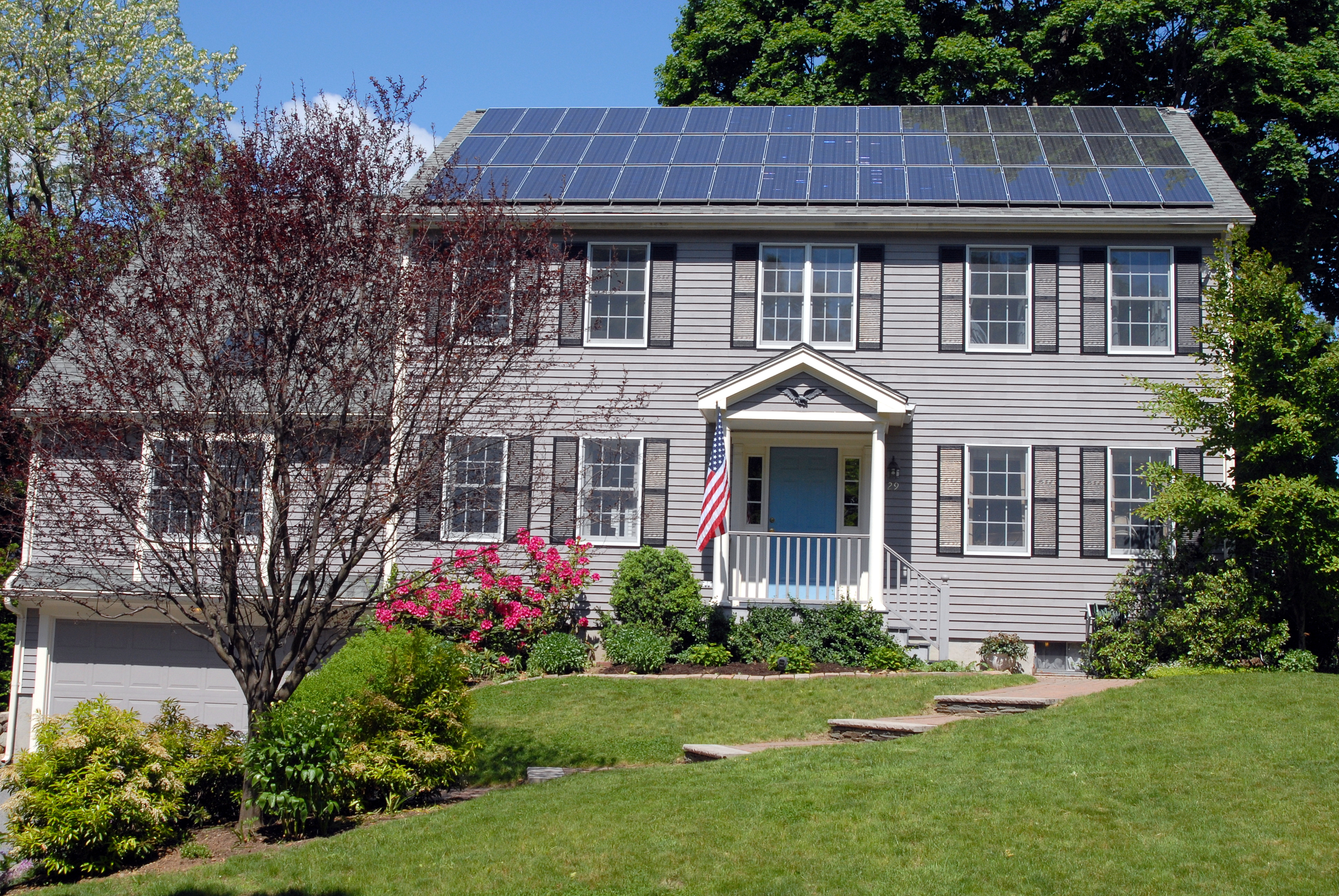
The Main Components of a Rooftop Solar System
1. Solar panels
Panels contain photovoltaic cells, usually made from silicon. When sunlight reaches these cells, it generates an electrical current.
Modern residential panels commonly use monocrystalline silicon technology. Their efficiency, dimensions, power ratings and temperature characteristics differ between manufacturers and models.
2. Inverter
Solar panels generate direct current (DC), while most household appliances use alternating current (AC).
An inverter converts the electricity into a form that the home can use. Some installations use one central string inverter, while others use microinverters or power optimizers to manage individual panels or groups of panels.
3. Mounting equipment
Rails, brackets and roof attachments secure the panels to the building. Proper installation matters because the equipment must withstand wind, rain, temperature changes and the weight of the panels.
4. Electrical protection and monitoring
Switches, circuit breakers, wiring and protective equipment help the system operate safely. Monitoring software allows homeowners to see how much electricity their panels generate.
5. Optional battery storage
A battery stores electricity for later use. It can supply selected appliances at night or during certain grid outages, provided the system has the appropriate backup equipment.
What Happens When Sunlight Reaches Your Roof?
The process is relatively straightforward:
- Sunlight reaches the photovoltaic cells.
- The cells produce direct-current electricity.
- The inverter converts that electricity into alternating current.
- Household appliances use the available solar electricity.
- Excess electricity may charge a battery or be exported to the utility grid.
- When solar production is insufficient, the home draws electricity from its battery or the grid.
Think of the system as a small electricity factory attached to your house. During sunny hours, it produces energy. Your home consumes what it needs, stores some if a battery is installed, and may send the remainder elsewhere.
However, having panels does not automatically mean that a house can operate independently of the electricity grid. Most ordinary grid-connected systems shut down during a power outage unless they have specific backup equipment.
That distinction becomes particularly important when comparing standard solar installations with solar-plus-battery systems.
2. How Much Do Home Solar Panels Cost in 2026?
The installation price is usually the first question homeowners ask, and understandably so. A solar system can represent a major household investment.
However, there is no universal installation price. A house in California, a house in Texas and a house in New York may have very different project costs, even if they install systems with similar power ratings.
Roof design, labor costs, local regulations, equipment selection, installation complexity and competition between contractors all influence the final quotation.
The 2026 US Residential Solar Cost Benchmark
For a useful current reference, EnergySage reported in June 2026 that its average residential installation cost was approximately $2.60 per watt before incentives.
Its reported average system was approximately 12 kW, with a total installation price of about $31,135 before incentives. These are marketplace quote averages, not guaranteed prices for every homeowner.
The following table illustrates the relationship between system size and a hypothetical price using that benchmark.
| System size | Illustrative cost at $2.60/W |
|---|---|
| 5 kW | $13,000 |
| 6 kW | $15,600 |
| 8 kW | $20,800 |
| 10 kW | $26,000 |
| 12 kW | $31,200 |
These figures are arithmetic illustrations using one reported national benchmark, not individual market quotations. They exclude any separately priced battery, financing costs, unusual roof work and other project-specific charges.
A homeowner should not assume that a 6 kW system will always cost exactly $15,600. Smaller installations can have higher per-watt costs because certain expenses, such as permitting, site assessment and electrical work, do not shrink in proportion to system size.
What Are You Actually Paying For?
One common misunderstanding is that solar panels account for nearly the entire installation price.
In reality, the total project includes much more than the panels themselves.
| Cost component | What it covers |
|---|---|
| Solar modules | Photovoltaic panels |
| Inverter equipment | Conversion of DC electricity to AC |
| Mounting hardware | Roof attachments, rails and structural connections |
| Installation labor | Electrical and construction work |
| Permits and inspections | Local approvals and compliance |
| Design and engineering | System sizing, layout and electrical planning |
| Monitoring and commissioning | Testing and system activation |
| Business overhead | Insurance, customer support and contractor operating costs |
This is why buying inexpensive panels online and comparing their price with a professionally installed system can be misleading.
The homeowner is not purchasing just the panels. The homeowner is purchasing a complete electrical installation.
Why Do Solar Quotations Differ So Much?
Imagine three contractors offering to install an 8 kW system.
One proposes basic equipment and a simple string inverter. Another offers premium panels, microinverters and extended monitoring. The third includes electrical upgrades, roof repairs and a more comprehensive warranty.
Even if all three proposals advertise the same system capacity, they are not necessarily selling the same product.
Before comparing quotations, check:
- Total installed price.
- Price per watt.
- Panel manufacturer and model.
- Inverter manufacturer and model.
- Expected annual electricity production.
- Warranty terms.
- Roof preparation requirements.
- Electrical upgrade costs.
- Monitoring and maintenance arrangements.
- Estimated utility bill savings.
A low quotation is not automatically a bargain. Equally, expensive equipment is not automatically more profitable.
The most useful comparison is the expected lifetime value of each installation, not the appearance of its equipment.
3. How Many Solar Panels Does a House Need?
There is no single number that works for every home.
The correct system size depends on electricity consumption, available roof space, local sunlight, panel output, shading and the utility's rules for exporting excess electricity.
A family using substantial electricity for air conditioning, heating, cooking and electric vehicle charging may need a considerably larger installation than a smaller household.
Understanding Kilowatts and Kilowatt-Hours
These two terms are frequently confused.
A kilowatt (kW) measures power: how much electricity a system can produce at a particular moment under specified conditions.
A kilowatt-hour (kWh) measures energy: how much electricity is produced or consumed over time.
Think about a water pipe.
- Kilowatts are similar to the rate at which water flows.
- Kilowatt-hours are similar to the total amount of water collected.
A 6 kW solar installation does not necessarily generate 6 kWh every hour. Its actual production changes with sunlight, weather, roof orientation, temperature and system losses.
How to Estimate Your System Size
Start with your electricity bills.
Find your annual consumption in kWh rather than relying only on the amount you pay. If your utility bills are monthly, add the consumption figures from the previous 12 months.
Next, estimate the annual production of a proposed solar installation.
The National Renewable Energy Laboratory's PVWatts calculator, now provided through the National Laboratory of the Rockies, estimates grid-connected photovoltaic production using location and system characteristics. It is useful for preliminary planning, although its estimates involve assumptions and cannot replace a detailed site assessment.
A simplified calculation is:
System size (kW) = Annual consumption (kWh) ÷ Annual production per kW
For example, suppose a home consumes 10,000 kWh annually and a local solar estimate suggests that each installed kW would produce 1,400 kWh annually.
10,000 ÷ 1,400 = 7.14 kW
A system of approximately 7.1 kW would theoretically produce an amount of electricity equal to the home's annual consumption.
But this does not mean the home would have no electricity bill.
Production and consumption happen at different times. The household may produce more electricity than it needs during the afternoon and purchase electricity at night. Fixed utility charges and other fees may also remain.
Why Roof Orientation Matters
In the Northern Hemisphere, south-facing roofs often provide strong annual solar production, although east-facing and west-facing roofs can also be useful.
A west-facing system, for example, may generate more electricity later in the day, when a family returns home and begins using appliances.
Roof pitch, nearby buildings, trees, chimneys and other obstructions can reduce production.
A roof that looks sunny at midday may experience substantial morning or afternoon shading.
This is why a professional solar assessment should consider the roof throughout the day and across different seasons.
4. How Long Does It Take to Recover the Cost of Solar Panels?
The payback period is the time required for the financial savings from a solar installation to equal its initial net cost.
It is one of the most important numbers in a solar investment decision.
A homeowner might hear that solar panels pay for themselves in six years, while another installer might estimate ten or twelve years. Neither number should be accepted without examining the assumptions.
The payback period depends on:
- Initial installation price.
- Electricity prices.
- Annual solar production.
- Household electricity consumption.
- Compensation for exported electricity.
- Incentives and rebates.
- Financing costs.
- Maintenance and equipment replacement.
- Changes in utility tariffs over time.
A Simple Solar Payback Example
Consider a hypothetical US household with the following circumstances:
| Item | Illustrative amount |
|---|---|
| Solar installation price | $20,000 |
| Annual bill savings | $2,000 |
| Annual additional costs | $100 |
| Net annual benefit | $1,900 |
The simple payback calculation is:
Payback period = Initial investment ÷ Annual net savings
$20,000 ÷ $1,900 = 10.53
The estimated simple payback period is approximately 10.5 years.
This is an illustration, not a forecast for a particular home. It assumes relatively consistent annual savings and does not account for financing, degradation, discount rates or future equipment replacement.
Why Payback Calculations Can Be Misleading
Some solar sales presentations calculate savings using the current electricity bill and assume that utility rates will rise substantially every year.
That may produce an attractive financial projection, but future electricity prices are uncertain.
Other calculations assume the homeowner receives full retail credit for every exported kWh. That is not true in every utility territory.
A third common problem is overlooking the cost of borrowing.
Suppose a homeowner finances a solar system through a long-term loan. The monthly loan payment may be greater than the reduction in the electricity bill, especially during the first years.
The system may still provide long-term value, but the household's immediate cash flow could be worse.
Simple Payback Versus Lifetime Savings
Simple payback answers one question: how long until the original investment is recovered through savings?
Lifetime savings asks a different question: how much money does the installation save over its operating life after considering future costs?
A system that pays back in ten years and continues generating useful electricity for another fifteen years could deliver substantial long-term value.
However, panels do not operate at their original output forever. Their production gradually declines, and inverters or other components may need replacement during the system's life.
The homeowner should therefore examine a realistic 20- to 25-year financial model rather than relying on one attractive payback number.
5. Solar Batteries in 2026: Are They Worth the Extra Money?
Solar panels produce electricity during daylight hours. Unfortunately, household electricity demand does not always follow the same schedule.
A family might produce the most electricity around lunchtime but use much of its electricity after sunset.
Without storage, surplus electricity generally goes to the utility grid, subject to the installation's operating arrangement.
A battery changes that equation.
It allows the household to store some electricity generated during the day and use it later.

How a Home Solar Battery Works
A home battery stores electrical energy in chemical form.
During sunny periods, surplus solar production can charge the battery. Later, the battery discharges to supply the house when solar generation falls.
The basic sequence is:
- Solar panels generate electricity.
- The household uses the electricity it needs.
- Surplus production charges the battery.
- The battery stores energy.
- At night, the battery supplies selected household loads.
- When the battery is depleted, the home may draw electricity from the grid.
The actual arrangement depends on the inverter, battery chemistry, electrical configuration and system controls.
How Much Does a Home Battery Cost in 2026?
Battery storage is a significant additional investment.
EnergySage reported an average installed residential battery price of approximately $15,647 in July 2026, based on its marketplace data for a typical 13.5 kWh storage system. The actual cost varies by equipment, location, installation requirements and system configuration.
This means a household considering both solar panels and a battery should compare the total project price with the cost of a solar-only installation.
A battery is not automatically financially worthwhile just because it allows the home to use more of its own electricity.
When Is a Solar Battery Worth Buying?
There are several situations in which a battery may make sense.
1. Frequent electricity outages
If the household experiences frequent blackouts, battery backup can provide meaningful practical value.
It can keep essential equipment running, depending on the system's power capacity and backup configuration.
2. Low compensation for exported electricity
Some utilities pay considerably less for exported solar electricity than they charge for electricity purchased from the grid.
In this situation, storing surplus solar production and using it later may improve the economics.
3. Time-of-use electricity pricing
Some electricity plans charge different prices depending on the time of day.
A battery can store inexpensive or self-generated electricity and discharge it during expensive periods, provided the battery's operating strategy and tariff rules make this beneficial.
4. Greater energy independence
Some homeowners value using their own generated electricity rather than relying entirely on the utility.
This is a legitimate preference, although it is not always the least expensive option.
When Might a Battery Not Be Worth It?
A battery may be difficult to justify when:
- The household receives attractive compensation for exported electricity.
- Electricity outages are uncommon.
- The electricity tariff does not reward shifting consumption.
- The battery installation is unusually expensive.
- The household consumes little electricity after sunset.
- The homeowner expects the battery to pay for itself quickly without sufficient evidence.
A useful way to think about a battery is as a financial and practical tool rather than an automatic part of every solar installation.
Battery Capacity Versus Battery Power
Two specifications matter.
- Capacity, measured in kWh, tells you how much energy the battery can store.
- Power, measured in kW, tells you how quickly it can deliver electricity.
A 10 kWh battery does not necessarily mean that every appliance in the house can operate simultaneously.
For example, a household might have enough stored energy to run a refrigerator, lights and internet equipment for many hours but not enough power to operate several high-demand appliances at once.
Battery Chemistry and Lifespan
Lithium-ion batteries are widely used in residential storage systems.
Lithium iron phosphate (LFP) is one common chemistry. It is valued for its thermal characteristics and cycle-life potential, although the performance of an actual battery depends on its design, operating conditions and manufacturer specifications.
Battery warranties commonly specify a warranty period, retained capacity threshold and sometimes an energy-throughput or cycle limit.
Homeowners should compare all three rather than looking only at the advertised number of years.
A battery may also require replacement before the solar panels reach the end of their useful operating life.
6. What Solar Incentives Are Available in 2026?
Government incentives can make a major difference to the financial case for residential solar.
However, incentives are also among the most confusing aspects of the market because tax rules and subsidy programmes change.
The important point for 2026 is that homeowners should not automatically use older online solar calculators that assume the previous US federal residential tax credit remains available.
The United States: An Important Federal Tax-Credit Change
Under the previous rules, the Residential Clean Energy Credit under Section 25D generally provided a 30% federal tax credit for eligible residential solar and certain battery-storage expenditures.
However, following the 2025 legislative changes, the residential credit does not apply to qualifying expenditures made after December 31, 2025.
The IRS explicitly states that residential clean energy property placed in service after that date is not eligible for the credit. The amended statutory provisions also establish the termination.
Important for 2026 US buyers: A homeowner installing a new residential solar system in 2026 should not assume that they can subtract 30% from the installation price through the former Section 25D personal tax credit.
The date and circumstances of the expenditure matter. Homeowners with projects spanning different tax years should consult the IRS instructions or a qualified tax professional rather than relying on a contractor's verbal explanation.
Are State and Local Solar Incentives Still Available?
Potentially, yes.
The end of a federal residential tax credit does not automatically eliminate every state, municipal or utility incentive.
Depending on the location, homeowners may find:
- State-level solar rebates.
- Local renewable-energy grants.
- Property-tax exemptions.
- Sales-tax exemptions.
- Utility battery programmes.
- Demand-response payments.
- Special financing arrangements.
- Community solar alternatives.
Availability, funding and eligibility can change. Some programmes are limited by household income, installation date, system size or approved equipment.
What About Business Solar Incentives?
Commercial solar projects operate under a different tax framework.
Certain business-owned renewable-energy investments may qualify for tax provisions under Section 48E or other applicable rules, subject to their eligibility, construction dates, ownership arrangements and statutory requirements.
These business provisions should not be confused with the former personal residential credit.
A homeowner who leases a system or purchases electricity through a third-party arrangement also needs to understand who owns the equipment and who, if anyone, can claim applicable incentives.
Incentives Outside the United States
The situation is different in other countries.
Government support may take the form of direct grants, reduced taxes, subsidised financing, low-interest loans, export compensation or regulated electricity programmes.
In some markets, incentives are available only for certain technologies or approved installers.
For example, a homeowner in Europe may encounter national support combined with regional programmes, while a homeowner in Morocco may need to investigate local electricity regulations, connection requirements and applicable energy programmes.
The important lesson is simple: never include an incentive in your financial calculations until you have verified that the programme is currently active and that your particular installation qualifies.
7. Net Metering: What Happens to Electricity Your Panels Do Not Use?
Net metering and other electricity-export arrangements can determine whether a solar installation becomes an excellent investment or a disappointing one.
Imagine that your panels produce 8 kWh of electricity during the afternoon, but your household uses only 5 kWh at that moment.
The remaining 3 kWh must go somewhere.
Depending on your system and local utility rules, the electricity may be stored in a battery or exported to the grid.
The utility may compensate you through bill credits or payments, but the value of those credits varies.
Full Retail Net Metering
Under traditional full retail net metering arrangements, exported electricity receives a credit close to the retail price of electricity.
For example, if your household purchases electricity for $0.20 per kWh and exports 100 kWh, it could receive approximately $20 in energy credits, subject to the applicable tariff and billing rules.
This can make solar financially attractive because the grid effectively acts as a form of energy accounting system.
However, traditional full retail net metering is not available everywhere.
Net Billing and Reduced Export Compensation
Some utilities compensate customers at a lower rate for electricity they export.
For example:
- Electricity purchased from the grid: $0.22 per kWh.
- Electricity exported to the grid: $0.06 per kWh.
If the household uses its own solar electricity instead of purchasing electricity, it avoids paying the higher retail rate.
But if it exports that electricity, it receives a much smaller credit.
This creates an incentive to use electricity when the panels are producing it.
Running a washing machine, dishwasher or other flexible appliance during sunny hours may therefore improve the economics of a solar installation.
Why Your Utility Agreement Matters
The US Department of Energy explains that net-metering arrangements depend on state policies and utility practices. Homeowners should check whether their utility offers the programme, how exported electricity is valued, and what system-size restrictions apply.
Before signing a solar contract, ask your utility:
- How is exported electricity credited?
- Are credits carried forward to future bills?
- Do credits expire?
- Are there fixed monthly charges?
- Does the export tariff change during the year?
- Are there limits on system size?
- Is a battery required or financially beneficial under the current tariff?
These questions are often more important than small differences between competing solar panel brands.
8. Grid-Tied, Hybrid and Off-Grid Solar: Which System Is Best?
Not all residential solar systems work in the same way.
Three common configurations are grid-tied, hybrid and off-grid systems.
Grid-Tied Solar Systems
A grid-tied installation connects the solar panels to the household electrical system and the public electricity grid.
It is generally the simplest residential configuration.
During daylight, the home uses solar electricity. If production is insufficient, it purchases electricity from the utility. If production exceeds demand, surplus electricity may be exported.
Advantages include:
- Lower initial cost than many battery-based systems.
- No need to purchase a battery.
- Access to grid electricity at night.
- Relatively straightforward system design.
- Potential eligibility for export credits.
The main disadvantage is that conventional grid-tied inverters generally shut down during an outage for safety reasons.
This protects utility workers who may be repairing power lines.
Hybrid Solar Systems
A hybrid system combines solar panels, battery storage and a grid connection.
It can use electricity from several sources depending on availability and household demand.
Advantages include:
- Solar electricity during daylight.
- Stored energy for evening consumption.
- Potential backup during outages.
- Greater flexibility with time-of-use tariffs.
- Better control over self-consumption.
The disadvantages are additional equipment costs, more complicated installation and potential battery replacement expenses.
Off-Grid Solar Systems
An off-grid system operates without a connection to the public electricity network.
It generally requires:
- Solar panels.
- Battery storage.
- Inverters.
- Charge controllers where applicable.
- Backup generation or additional energy capacity in some installations.
- Careful electrical load management.
Off-grid systems can be useful in remote locations where grid access is unavailable or expensive.
However, they are not automatically cheaper than grid electricity.
A homeowner must design enough generation and storage to handle periods of poor weather and high electricity demand. This can require a larger and more expensive system.
For a typical suburban house with reliable grid access, a grid-tied or hybrid system is usually more practical than a fully off-grid installation.
9. Is Rooftop Solar Environmentally Friendly?
Solar energy has an important environmental advantage: photovoltaic panels generate electricity without burning fossil fuels during operation.
They do not release carbon dioxide from combustion while producing electricity.
But that does not mean solar power has zero environmental impact.
Panels, inverters, mounting materials and batteries must be manufactured, transported, installed and eventually managed at the end of their useful lives.
A responsible assessment considers the entire lifecycle.
The Carbon Footprint of Manufacturing Solar Panels
Manufacturing photovoltaic panels requires energy.
Silicon must be processed, cells must be manufactured, glass and aluminium must be produced, and the finished modules must be transported.
If the electricity used in manufacturing comes from fossil-fuel-heavy grids, the manufacturing footprint may be higher.
However, panels subsequently generate electricity for many years without requiring fuel.
This means the environmental impact of manufacturing is spread across their lifetime electricity production.
Energy Payback Time
Energy payback time is the period required for a solar installation to generate an amount of energy equivalent to the energy used in its manufacturing, transport and installation.
It is different from financial payback.
A solar installation might recover its manufacturing energy relatively quickly but take considerably longer to recover its purchase price.
The exact energy payback period depends on the technology, manufacturing location, sunlight conditions and system design.
Solar Panel Recycling
Solar panels are designed for long-term operation, but they do not last forever.
At the end of their useful lives, their glass, aluminium, silicon and certain other materials may be recovered through appropriate recycling processes.
The challenge is developing economical collection, transport and recycling systems as the volume of retired panels increases.
Battery recycling is another important issue.
Lithium-ion batteries contain valuable materials, but safe recovery requires specialised processes.
Does Rooftop Solar Reduce Household Emissions?
Generally, yes, when it replaces electricity that would otherwise have been generated using higher-emission sources.
However, the environmental benefit depends on the electricity mix.
A solar installation connected to a coal-heavy grid may displace more carbon-intensive electricity than one connected to a grid that already generates most of its power from low-carbon sources.
Solar production also varies throughout the day, so the timing of generation matters.
A homeowner interested in environmental benefits should therefore consider both the quantity of electricity generated and the type of electricity it replaces.
Solar and the Wider Energy Transition
Residential solar can contribute to a more decentralised energy system.
Instead of relying exclusively on large power stations, electricity can be generated closer to where it is consumed.
When combined with batteries, smart inverters, electric vehicles and flexible household consumption, rooftop solar can help reduce pressure on certain parts of the electricity network.
But rooftop installations are only one part of the transition.
Large solar farms, wind power, hydroelectricity, transmission networks, storage facilities and improved energy efficiency remain essential.
10. How Long Do Solar Panels Last?
Solar panels are long-term equipment.
They are not expected to produce exactly the same amount of electricity throughout their operating lives.
Their output gradually declines because of exposure to sunlight, heat, moisture and other environmental conditions.
This process is known as degradation.
Understanding Solar Panel Degradation
Manufacturers commonly provide performance warranties that guarantee a minimum percentage of original output after a specified period.
For example, a panel might have a 25- or 30-year performance warranty.
That does not mean the panel suddenly stops working when the warranty ends.
It means the manufacturer has specified the performance level it promises under the warranty conditions.
Actual output depends on the product, installation quality and operating environment.
What About Inverters?
Inverters are another important consideration.
A solar panel may continue functioning for decades, while its inverter may need replacement earlier.
The exact replacement timing depends on the equipment and conditions.
Microinverters, string inverters and hybrid inverters have different designs and warranty arrangements.
Homeowners should check:
- Product warranty length.
- Labor coverage.
- Replacement equipment costs.
- Warranty transferability.
- Availability of replacement parts.
- Monitoring and technical support.
A financial model that assumes every component will operate indefinitely without maintenance is not realistic.
Maintenance Requirements
Solar panels generally require relatively little routine maintenance compared with many mechanical systems.
However, homeowners should periodically inspect:
- Visible panel damage.
- Mounting hardware.
- Electrical connections.
- Inverter warning messages.
- Unusual production reductions.
- Accumulated dirt or debris.
Cleaning requirements depend on the environment.
In dry, dusty regions, dirt accumulation can reduce output. Heavy rainfall may naturally clean some panels, but it should not be assumed to remove every deposit.
Cleaning must be performed safely, following manufacturer guidance. Walking on panels or using inappropriate chemicals can cause damage.
11. What Can Make a Solar Installation a Bad Investment?
Solar is not suitable for every property.
Some houses have roofs that are too shaded, too small or structurally unsuitable.
Others have electricity tariffs that make exported solar electricity relatively unattractive.
There are also situations where a homeowner would be better off improving energy efficiency before purchasing a large solar system.
A Heavily Shaded Roof
Trees, nearby buildings and other obstructions can reduce solar production.
If a substantial portion of the roof is shaded, the system may generate much less electricity than the installer initially predicts.
Panel-level power electronics may help in certain configurations, but they cannot create sunlight where there is none.
An Old Roof That Needs Replacement
Installing solar panels on a roof that needs replacement soon can create additional costs.
If the roof requires major work a few years later, the homeowner may have to pay to remove and reinstall the panels.
It is usually sensible to assess roof condition before installation.
Low Electricity Consumption
A small household with low electricity consumption may not need a large solar system.
Installing more panels than necessary can increase the initial investment without creating proportionate savings.
The objective should be to match the system to the household's actual energy requirements.
Expensive Solar Financing
Some solar loans include dealer fees, origination charges or complicated payment structures.
A seemingly low monthly payment may hide a long repayment period and a substantial total financing cost.
Always compare the cash price with the financed price.
Selling the Home Too Soon
Solar ownership may increase a property's attractiveness, but the financial benefit is not guaranteed to match the original installation cost.
If the homeowner sells before the system reaches its expected payback period, the result depends on the buyer's willingness to pay for the equipment and the condition of the system.
Leased solar systems and power purchase agreements can create additional complications during a property sale.
12. Should You Buy, Lease or Finance Solar Panels?
There are several ways to pay for residential solar.
The best option depends on available savings, financing rates, household cash flow and how long the homeowner expects to stay in the property.
Buying Solar Panels With Cash
Cash purchases provide straightforward ownership.
The homeowner pays the installation cost and receives the electricity savings, subject to the applicable utility arrangement.
Advantages:
- No loan interest.
- Full ownership.
- Greater control over the equipment.
- No monthly solar loan payment.
- Potentially better long-term financial returns.
Disadvantages:
- Large upfront expense.
- Capital tied up in the property.
- Homeowner bears equipment and maintenance responsibilities.
For someone who can afford the installation without compromising emergency savings or other important financial goals, cash ownership can be attractive.
Solar Loans
A solar loan allows the homeowner to spread the installation cost over time.
This can make solar accessible without requiring a large initial payment.
However, the interest rate and fees matter enormously.
A homeowner should request a complete repayment schedule and calculate the total amount payable over the life of the loan.
The loan payment should be compared with realistic electricity savings, not the optimistic savings advertised during a sales presentation.
Solar Leases
Under a lease, a third-party company generally owns the solar equipment and allows the homeowner to use it in exchange for recurring payments.
The homeowner may benefit from reduced electricity purchases without directly owning the panels.
However, the contract may include annual payment increases, maintenance conditions and requirements when selling the house.
The homeowner should understand who is responsible for repairs and whether the lease can be transferred.
Power Purchase Agreements
Under a power purchase agreement (PPA), a third-party provider generally owns the system and sells the electricity it produces to the homeowner at an agreed price per kWh.
The homeowner does not necessarily pay for the equipment itself.
The financial benefit depends on the difference between the PPA electricity price and the alternative utility electricity price, together with the contract's terms.
A PPA is not automatically cheaper than buying electricity from the utility.
Comparing the Options
| Payment method | Ownership | Main consideration |
|---|---|---|
| Cash | Homeowner | Highest upfront cost, no loan interest |
| Solar loan | Usually homeowner | Interest and repayment terms |
| Lease | Third-party provider | Contract payments and transfer conditions |
| PPA | Third-party provider | Price charged for generated electricity |
There is no universally best option.
The right choice is the one that provides acceptable savings, manageable financial risk and clear contractual responsibilities.
13. How to Choose a Reliable Solar Installation Company
The quality of the installer can be just as important as the quality of the equipment.
A poorly designed system may underperform even when it uses premium solar panels.
Before signing an agreement, homeowners should compare at least three detailed quotations.
Check the Installer's Qualifications
Ask about:
- Relevant electrical and solar installation licences.
- Insurance coverage.
- Professional certifications where applicable.
- Previous residential installations.
- References from existing customers.
- Local experience.
- Warranty and after-sales arrangements.
A professional installer should be able to explain the technical design in understandable language.
Request an Annual Production Estimate
The installer should provide an estimated annual electricity output in kWh.
Ask what assumptions were used.
The estimate should account for roof direction, tilt, shading, weather conditions and system losses.
Compare the proposal with an independent estimate from PVWatts where the calculator supports the location. Remember that an independent calculator is a screening tool, not a guarantee.
Read the Contract Carefully
Check the following before making a deposit:
- Total price.
- Equipment models.
- Installation schedule.
- Payment milestones.
- Performance assumptions.
- Warranty coverage.
- Cancellation conditions.
- Roof damage responsibilities.
- Permitting responsibilities.
- Utility interconnection arrangements.
- Ownership and financing terms.
Be cautious if a salesperson promises that the system will eliminate every electricity bill or guarantee a specific payback period without examining your utility tariff.
Avoid Unrealistic Savings Promises
A trustworthy contractor should explain both the advantages and limitations of solar.
For example, if your utility charges fixed monthly fees, those charges may remain after installation.
If exported electricity receives low compensation, you may continue purchasing some grid electricity at night.
Honest projections are more valuable than impressive-looking savings charts.
14. Home Solar Panels in Morocco and Other Sunny Countries
Although many international solar cost reports focus on the United States, rooftop solar is relevant far beyond the American market.
Countries with strong sunshine resources have opportunities to generate substantial amounts of electricity from residential rooftops.
Morocco is an interesting example.
Its sunny climate creates favourable conditions for photovoltaic generation, particularly in many inland and southern regions. However, sunshine alone does not determine whether a household solar project is financially worthwhile.
The electricity tariff, connection rules, system price, equipment availability and household consumption pattern all matter.
Is Rooftop Solar Worth It in Morocco?
Potentially, yes.
A Moroccan household that uses significant electricity during daylight hours may benefit from generating some of its own electricity.
For example, a family operating air conditioning, refrigeration, water pumps and other appliances during sunny hours may be able to use a considerable proportion of its solar production directly.
This is particularly relevant because self-consumption can avoid purchasing electricity at the applicable retail tariff.
However, homeowners should not assume that unused electricity can automatically be exported and sold to the grid at an attractive rate.
The legal and technical arrangements for grid-connected self-generation must be checked with the relevant authorities and electricity distributor.
What Should Moroccan Homeowners Investigate?
Before installing panels, check:
- Whether the property can legally connect the proposed system.
- What technical approvals are required.
- Whether the electricity distributor permits the proposed export arrangement.
- Whether surplus electricity receives compensation.
- Whether the installation requires a particular inverter configuration.
- Whether the installer provides local warranty support.
- Whether the system is appropriately sized for household consumption.
The regulatory framework for renewable self-generation in Morocco includes Law 82-21, concerning self-production of electrical energy. Its implementation and applicable technical requirements should be checked through official Moroccan sources before proceeding.
The country's renewable-energy policy is also shaped by the work of institutions such as the Moroccan Agency for Sustainable Energy (MASEN) and the Ministry responsible for energy transition.
Why Morocco's Climate Does Not Automatically Guarantee a Short Payback Period
A sunny roof can generate considerable electricity, but financial savings depend on the value of that electricity.
Imagine two households with identical solar systems.
The first household consumes most of its electricity during daylight hours.
The second household uses little electricity during the day and consumes most of its energy at night.
If exporting surplus electricity is not adequately compensated, the first household may achieve better financial returns even though both systems generate the same annual amount of electricity.
This is an important distinction for homeowners in Morocco, Spain, Portugal, southern Europe and other sunny markets.
The best solar system is not necessarily the one that produces the most electricity. It is the one that produces electricity when the household can use it economically.
What About Solar Water Heating?
Homeowners should also distinguish photovoltaic panels from solar thermal systems.
Photovoltaic panels produce electricity.
Solar thermal collectors use sunlight to heat water.
For households that consume substantial hot water, solar thermal technology may be worth comparing with an electric water heater or a photovoltaic system.
The technologies have different installation requirements and financial benefits.
A household should evaluate its actual energy needs before deciding which technology is appropriate.
15. How to Calculate Whether Solar Is Worth It for Your Home
Instead of relying on a national average, homeowners can build a simple financial estimate using their own electricity consumption and installation quotations.
Here is a practical process.
Step 1: Calculate Annual Electricity Consumption
Collect your previous 12 months of utility bills.
Add the total electricity consumption in kWh.
Avoid calculating the system size from only one summer or winter bill because seasonal consumption can be very different.
Step 2: Estimate Annual Solar Production
Ask installers for an annual production estimate.
Check the estimate against an independent solar calculator.
For a US property, PVWatts provides an accessible starting point. Its assumptions and limitations should be understood before treating the output as a financial forecast.
Step 3: Estimate Self-Consumption
Self-consumption is the proportion of generated solar electricity used directly by the household or stored and later used.
For example, suppose a system generates 8,000 kWh annually.
If the household uses 60% of that electricity directly or through storage, 4,800 kWh is self-consumed.
The remaining 3,200 kWh may be exported or otherwise managed according to the system configuration.
Step 4: Calculate the Value of Exported Electricity
Do not automatically value every exported kWh at the full retail price.
Use the actual export compensation rate in the utility agreement.
Step 5: Subtract Additional Costs
Consider:
- Financing interest.
- Inverter replacement allowance.
- Battery replacement allowance where applicable.
- Monitoring or maintenance costs.
- Additional insurance costs if applicable.
- Any recurring utility charges.
Step 6: Calculate Simple Payback
Use:
Simple payback = Net initial cost ÷ Annual net savings
Then perform a second calculation that considers electricity-price changes, panel degradation, financing and the time value of money.
This produces a more realistic long-term assessment.
A Worked Example
Consider a hypothetical household with the following figures:
| Variable | Assumption |
|---|---|
| Installed solar system | 8 kW |
| Initial cost | $20,800 |
| Annual electricity generation | 11,200 kWh |
| Directly used solar electricity | 6,720 kWh |
| Exported electricity | 4,480 kWh |
| Retail electricity price | $0.18/kWh |
| Export compensation | $0.06/kWh |
The value of directly used electricity is:
6,720 × $0.18 = $1,209.60
The value of exported electricity is:
4,480 × $0.06 = $268.80
Total annual gross electricity value:
$1,209.60 + $268.80 = $1,478.40
The simple payback calculation becomes:
$20,800 ÷ $1,478.40 ≈ 14.07
The estimated simple payback period is approximately 14.1 years before additional costs, financing and future changes in production or electricity prices.
This example demonstrates why the export compensation rate matters so much.
If the household could receive a higher value for exported electricity, the economics would improve. If the household used more electricity directly, the result could also improve.
Conversely, if the installation cost increased or production was lower than expected, payback would become longer.
The example is not a prediction for an actual property. It is a demonstration of the calculation.
16. What Will Change for Residential Solar After 2026?
Solar technology continues to develop.
However, homeowners should distinguish between improvements that are already commercially available and technologies that are still developing.
More Efficient Solar Panels
Manufacturers continue to improve photovoltaic cell designs.
Newer technologies and manufacturing processes can increase power output per square metre.
For homeowners with limited roof space, higher-efficiency panels can be useful.
But efficiency should not be the only selection criterion. Price, temperature performance, degradation, warranties and availability also matter.
Smarter Home Energy Management
Smart inverters, connected batteries and household energy management systems can coordinate electricity use.
A system may schedule certain appliances during high-production periods or charge an electric vehicle when solar generation is available.
This can increase the proportion of solar electricity used inside the home.
Vehicle-to-Home Technology
Some electric vehicles and charging systems support bidirectional electricity flows.
In compatible configurations, an electric vehicle can potentially supply electricity to a house.
This could provide another form of household energy storage.
However, vehicle-to-home capability depends on the vehicle, charger, software, electrical installation and local rules.
It should not be assumed that every electric car can power a house.
Better Battery Systems
Battery technology continues to evolve, with research and commercial development focused on cost, safety, capacity and durability.
Future batteries may improve the economics of residential energy storage.
However, homeowners should not delay every investment in the hope that a dramatically cheaper battery will arrive soon.
It is better to compare the equipment and prices actually available today.
Policy Uncertainty
Government support is another area of uncertainty.
Tax incentives, electricity-export arrangements, grid connection requirements and utility compensation policies can change.
A long-term solar investment should therefore be evaluated using current confirmed rules, with future policy changes treated as possibilities rather than guaranteed benefits.
17. Final Verdict: Are Home Solar Panels Worth It in 2026?
The answer is yes for some households, but not for everyone.
Solar panels can be an excellent long-term investment when installation costs are reasonable, the roof receives sufficient sunlight, electricity prices are relatively high and the household can use a meaningful proportion of the electricity it generates.
They can also offer environmental benefits, reduce exposure to future electricity-price increases and provide a degree of energy independence.
However, a solar installation can become financially unattractive when equipment is overpriced, the roof is heavily shaded, exported electricity receives poor compensation or financing costs consume much of the expected savings.
Batteries add another layer to the decision. They can improve resilience and increase self-consumption, but their additional cost needs to be justified by actual household requirements.
The end of the US federal residential clean energy tax credit for expenditures after December 31, 2025, is another important consideration for American homeowners planning installations in 2026.
The best approach is to evaluate solar as a long-term household investment rather than an environmental purchase that must automatically be worthwhile.
Before signing a contract, obtain multiple quotations, examine your electricity bills, verify local incentives and calculate your expected savings using realistic assumptions.
A roof covered with solar panels may look like a picture of the future. But the smartest solar investment is not necessarily the largest or most expensive system.
It is the one that produces useful electricity, fits the household's needs and delivers financial and environmental value over its operating life.
Key Takeaways
- Solar prices vary: EnergySage reported an average US residential installation cost of approximately $2.60 per watt in June 2026.
- System size matters: Household consumption, roof conditions and local solar resources should determine the installation size.
- Payback is not universal: Electricity tariffs, installation costs, export compensation and financing determine the actual return.
- Batteries are optional: They can provide backup power and improve self-consumption, but add considerable expense.
- US incentives have changed: The federal residential clean energy credit does not cover expenditures made after December 31, 2025.
- Local incentives may remain: State, municipal and utility programmes should be checked individually.
- Net metering is important: The value of electricity exported to the grid can substantially change the financial calculation.
- Solar panels last for decades: However, production gradually declines and other components may need replacement.
- Solar can reduce emissions: Its environmental benefits depend partly on the electricity it replaces and its manufacturing footprint.
- Morocco has strong solar potential: Nevertheless, local connection rules, electricity tariffs and self-consumption arrangements must be investigated.
- Compare installers: Obtain multiple detailed quotations and examine equipment, warranties and expected production.
- Calculate before buying: A realistic financial model is more valuable than an attractive sales presentation.
Frequently Asked Questions About Home Solar Panels in 2026
1. Are home solar panels worth it in 2026?
They can be worthwhile when the installation price is competitive, the property receives sufficient sunlight and electricity savings are substantial. However, the financial result depends on local electricity prices, export compensation, incentives, financing and equipment costs. A homeowner should calculate the expected payback period before purchasing.
2. How much do solar panels cost for an average house in 2026?
In the United States, EnergySage reported an average installation price of approximately $2.60 per watt in June 2026. Its average 12 kW installation cost approximately $31,135 before incentives. Actual quotations vary by state, roof design, equipment and installation complexity.
3. How many solar panels does an average home need?
The number depends on household electricity consumption and individual panel output. A home using 10,000 kWh annually may require a system around 6–8 kW in a location with favourable solar production, although a detailed site assessment is necessary. The number of physical panels depends on their individual power ratings.
4. How long does it take for solar panels to pay for themselves?
There is no universal payback period. Some installations recover their cost relatively quickly, while others require considerably longer. A useful calculation divides the net installation cost by realistic annual net electricity savings. Financing, maintenance and inverter replacement should also be considered.
5. Do solar panels work on cloudy days?
Yes. Photovoltaic panels can generate electricity under cloudy conditions because some sunlight still reaches them. However, production is generally lower than under clear skies. Heavy cloud cover, shading and other weather conditions can reduce output considerably.
6. Can solar panels power a house at night?
Solar panels do not generate electricity at night. A household can use electricity stored in a compatible battery or purchase electricity from the grid. A standard grid-connected solar installation without storage cannot independently supply nighttime electricity.
7. Are solar batteries worth the additional cost?
They can be worthwhile for households experiencing frequent outages, facing expensive peak electricity rates or receiving low compensation for exported solar electricity. However, batteries add significant upfront costs. Their value should be calculated using the household's consumption, tariff and backup requirements.
8. How much does a home solar battery cost in 2026?
EnergySage reported an average installed residential battery cost of approximately $15,647 in July 2026 for a typical 13.5 kWh system. Prices differ according to battery brand, capacity, location, installation requirements and electrical configuration.
9. Can solar panels eliminate my electricity bill?
Not necessarily. A solar installation can substantially reduce electricity purchases, but fixed utility charges, connection fees and electricity consumed when solar production is insufficient may remain. Whether the bill can be reduced close to zero depends on the utility's billing and export arrangements.
10. What happened to the 30% US federal solar tax credit in 2026?
The Residential Clean Energy Credit under Section 25D was terminated for qualifying expenditures made after December 31, 2025, following the 2025 legislative changes. New residential installations in 2026 should not automatically be modelled using the previous 30% personal tax credit. Homeowners should check the IRS guidance for their particular circumstances.
11. Do solar panels increase the value of a house?
Owned solar installations may make a property more attractive to buyers, particularly when electricity savings are substantial and equipment is in good condition. However, the effect on property value varies by location, housing market, system ownership and buyer preferences. A specific increase in resale value should never be guaranteed.
12. How long do residential solar panels last?
Many residential solar panels are sold with performance warranties of approximately 25–30 years. They can continue generating electricity after their warranties expire, although output gradually declines. Inverters, batteries and other components may require replacement earlier.
13. Do solar panels work during a power outage?
Most ordinary grid-tied solar systems automatically shut down during a grid outage for electrical safety. A system equipped with compatible battery storage and backup functionality may continue supplying selected circuits or household loads. The homeowner should confirm the backup configuration before installation.
14. Are home solar panels worth it in Morocco?
They can be attractive because many parts of Morocco receive substantial sunshine. However, profitability depends on equipment prices, household electricity consumption, applicable electricity tariffs and legal grid-connection arrangements. Homeowners should verify the requirements under Morocco's self-generation framework, including Law 82-21, before investing.
15. Should I install solar panels now or wait for cheaper technology?
There is no universal answer. Solar technology continues to improve, but waiting also means continuing to purchase electricity from the utility. If a current installation has a reasonable price, reliable equipment and an attractive financial return, delaying may not be beneficial. Compare available quotations with realistic future scenarios instead of assuming that equipment will become dramatically cheaper.
Sources and Further Reading
- U.S. Department of Energy — Homeowner's Guide to Solar
https://www.energy.gov/cmei/systems/homeowners-guide-solar - Internal Revenue Service — Residential Clean Energy Credit
https://www.irs.gov/credits-deductions/residential-clean-energy-credit - U.S. Code — Section 25D, Residential Clean Energy Credit
https://uscode.house.gov/view.xhtml?req=granuleid:USC-prelim-title26-section25D - EnergySage — Solar Panel Cost in 2026
https://www.energysage.com/local-data/solar-panel-cost/ - EnergySage — Solar Battery Costs in 2026
https://www.energysage.com/energy-storage/how-much-do-batteries-cost/ - National Laboratory of the Rockies — PVWatts Solar Calculator
https://pvwatts.nlr.gov/ - National Laboratory of the Rockies — System Advisor Model
https://sam.nlr.gov/ - U.S. Energy Information Administration — Electricity Prices and Factors Affecting Prices
https://www.eia.gov/energyexplained/electricity/prices-and-factors-affecting-prices.php - U.S. Environmental Protection Agency — Solar Energy Resources
https://www.epa.gov/energy - Solar Energy Industries Association — Solar Market Research and Industry Information
https://seia.org/solar-industry-research-data/ - International Energy Agency — Solar PV
https://www.iea.org/energy-system/renewables/solar-pv - International Renewable Energy Agency — Renewable Energy
https://www.irena.org/Energy-Transition/Technology/Renewable-energy - Moroccan Agency for Sustainable Energy (MASEN)
https://www.masen.ma/ - Morocco Ministry of Energy Transition and Sustainable Development
https://www.mem.gov.ma/ - National Renewable Energy Laboratory — Solar Research
https://www.nrel.gov/solar/
The conversation
Post a Comment