
It is 5:17 in the morning, and the airport is already awake.
Outside the terminal, headlights form a slow-moving river along the departures road. Suitcases rattle across polished floors. A tired family searches for its check-in counter while a business traveller balances a coffee, a passport and a phone displaying a digital boarding pass.
Above the crowds, enormous screens flicker with flight numbers and destinations. Somewhere behind the walls, conveyor belts are carrying thousands of bags through a maze of tunnels. On the other side of the glass, ground crews are preparing aircraft that have only recently arrived.
A plane begins to move away from its gate. Another descends through the morning clouds. A third waits near a runway, its passengers unaware of the complicated sequence of decisions required before its pilots can accelerate for takeoff.
To most travellers, an airport is a place of queues, gates, shops and departure announcements.
But behind that familiar experience is something far more remarkable.
A modern airport is a giant coordination system that combines transportation networks, security operations, industrial machinery, computer systems, commercial businesses and thousands of people working against the clock.
Every flight depends on dozens of separate processes happening in the correct order. A passenger must be checked in. A bag must be screened and routed. An aircraft must be inspected, cleaned, loaded and fueled. A gate must be available. A runway must be clear. Air traffic controllers must establish safe separation from other aircraft.
Even the smallest disruption can spread through this interconnected network.
Yet, on most days, this enormous system works well enough that millions of people arrive at distant destinations with little understanding of the work that made their journeys possible.
According to Airports Council International (ACI) World, airports handled approximately 9.8 billion passenger movements in 2025. That works out to roughly 26.8 million airport passenger movements per day on an annual-average basis. Importantly, airport passenger movements are not the same as unique individuals: someone connecting through multiple airports can be counted more than once.
How do airports coordinate traffic on this extraordinary scale? What happens to your suitcase after it disappears behind the counter? Why might a flight remain delayed even when the aircraft is already at the gate? And how are airports using technology to make the entire operation more efficient?
To answer these questions, we need to follow a flight from the moment a journey begins to the moment the aircraft leaves the ground—and examine the largely invisible machinery that keeps global aviation moving.
Key Takeaways
- Airports are complex operating networks, not simply buildings where aircraft take off and land. Their success depends on coordination among airlines, security agencies, air traffic controllers, ground handlers and infrastructure operators.
- Global airports recorded approximately 9.8 billion passenger movements in 2025, demonstrating the scale of modern aviation.
- Check-in, identity verification, security screening and boarding are separate processes with different responsibilities.
- Automated baggage systems use barcodes, scanners, conveyor belts, sorting equipment and increasingly sophisticated tracking technology.
- Air traffic controllers manage aircraft movements through structured procedures and separation rules, rather than simply directing planes in the order they appear.
- The aircraft turnaround is one of aviation's most demanding coordination exercises, involving many teams working within a limited time.
- Delays often spread between flights because aircraft, crews, gates and airspace capacity are interconnected.
- Airport revenue comes from both aviation activities and commercial services, including shops, parking and property.
- Sustainability involves airport energy use, ground transport and aircraft operations, but these emission sources must be distinguished carefully.
- Travellers can reduce avoidable problems by preparing documents, understanding baggage rules, allowing enough time and responding quickly to operational changes.
1. The Airport Is a City That Never Fully Sleeps
Imagine running a small city where thousands of residents arrive every hour, stay for a short time and then disappear.
They speak different languages, carry different documents, have different destinations and expect to reach those destinations at precise times.
Now imagine that nearly every visitor arrives with luggage, many have connecting journeys, some require special assistance, and a significant proportion are operating under tight schedules.
That is the basic challenge of a major international airport.
More than a terminal and a runway
An airport is usually divided into two broad operational environments.
The landside includes the areas accessible before security screening, such as public roads, parking facilities, check-in halls, ticketing areas and some transportation connections.
The airside includes controlled areas used for aircraft operations, along with passenger areas accessible after security screening and other required checks.
This distinction matters because each environment has different access controls, safety requirements and operational priorities.
Behind the public terminal may be baggage facilities, maintenance areas, emergency response stations, fuel infrastructure, cargo buildings, catering facilities, utility networks and restricted service roads.
A large airport also relies on systems that passengers rarely notice: electrical substations, backup power supplies, drainage networks, data connections, fire protection equipment and heating and cooling infrastructure.
A runway cannot operate efficiently without functioning taxiways. A gate cannot handle an aircraft without suitable equipment and staff. A terminal cannot process passengers smoothly if its document-verification or baggage systems fail.
The airport therefore functions less like an isolated building and more like an interconnected industrial city.
Who actually runs an airport?
One surprising fact is that the airport operator does not usually control everything happening at the airport.
Different organizations perform different tasks.
| Organization | Typical responsibilities |
|---|---|
| Airport operator | Terminals, infrastructure, gates, facilities and airport coordination |
| Airlines | Flight schedules, passenger bookings, crews and aircraft operations |
| Ground handling companies | Baggage loading, aircraft servicing and other ramp activities |
| Security authorities or contractors | Passenger and baggage screening under applicable regulations |
| Air traffic control | Safe and orderly aircraft movement within assigned areas |
| Border authorities | Immigration and customs processes |
| Retail and service businesses | Shops, restaurants, lounges and passenger services |
| Emergency services | Fire response, rescue operations and medical assistance |
These responsibilities vary by country and airport. Some airports provide more services directly, while others rely heavily on contractors.
The important point is that a passenger's journey depends on several organizations acting together.
An airline might be ready to depart while an airport gate remains occupied. A ground crew might finish loading while air traffic control temporarily restricts departures. A security checkpoint might experience unusual demand even though aircraft operations remain normal.
No single team controls the entire journey.
The airport operations center
Many large airports operate coordination centers that bring together information about flight schedules, gates, weather, infrastructure, passenger flows and operational incidents.
These centers resemble the control room of a power station or a busy railway network.
Staff monitor information from multiple sources and respond when circumstances change.
If an arriving flight is late, the planned gate may become unavailable. If the gate changes, cleaning teams, baggage handlers, passenger information systems and other personnel may need updated instructions.
The objective is not merely to keep everything on schedule. It is to preserve safety while using limited airport resources efficiently.
Increasingly, airports use digital platforms that share operational milestones among airlines, airports and ground handlers. However, the quality and depth of integration differ considerably between airports.
2. How Millions of Passengers Move Through the Terminal

The passenger journey may seem simple: arrive, check in, pass security, find the gate and board.
In reality, every stage is a separate operation designed to verify information, manage risks and move people toward departing aircraft.
Check-in: turning a reservation into a journey
When someone purchases an airline ticket, the airline creates a booking record containing information about the journey.
Depending on the airline and booking system, that reservation may be associated with a passenger name record, ticket information and other operational records.
During check-in, the airline confirms relevant travel details and establishes that the passenger is expected for a particular flight.
A boarding pass is then issued or made available.
The boarding pass may contain a machine-readable barcode or another digital identifier that links to passenger and flight information within the airline's systems.
It is not, by itself, a substitute for a passport, visa or other required travel document.
Airlines may still need to verify identity, immigration eligibility or documentation before allowing a passenger to travel.
Why online check-in matters
Online check-in can reduce the amount of work performed at airport counters.
Passengers who have completed check-in and do not need to check a bag or complete in-person document verification may be able to proceed directly toward security.
This can reduce demand for staffed check-in desks.
For airports, spreading passengers across self-service machines, mobile applications and traditional counters helps manage congestion.
However, online check-in does not eliminate every airport process.
Some travellers must still visit a counter because of visa checks, special assistance requirements, baggage arrangements or airline procedures.
The science of airport queues
Airport queues are a classic example of a problem studied through mathematics and operations research.
Imagine a security checkpoint capable of processing 100 passengers every ten minutes.
If 80 passengers arrive during that period, the queue may remain manageable.
If 130 arrive, the number waiting begins to grow.
If arrival rates continue exceeding processing capacity, even a relatively efficient checkpoint can develop a long queue.
This is why a queue can appear to become enormous within a short time.
The difficulty is not always that employees are working slowly. Sometimes too many people are arriving at the same stage simultaneously.
Airports therefore study passenger arrival patterns, flight schedules, staffing levels and processing times.
They may open additional lanes, adjust staff assignments or redesign passenger flows to reduce bottlenecks.
But security checks cannot simply be skipped to improve throughput.
Security screening: protection before speed
Airport security screening is designed to reduce the risk of prohibited or dangerous items entering controlled aviation environments.
The exact process depends on national rules, local equipment and a traveller's circumstances.
Common technologies include X-ray baggage scanners, computed tomography scanners, walk-through metal detectors, body scanners and explosive detection equipment.
A conventional X-ray scanner produces an image based on how materials interact with X-rays.
A computed tomography system takes multiple measurements that can be reconstructed into a three-dimensional representation of baggage contents.
These technologies can help screening officers examine items without relying entirely on manual searches.
Nevertheless, technology does not eliminate human judgment.
Screening officers may need to inspect particular items, resolve alarms or apply additional procedures.
Why security rules differ between airports
Travellers sometimes notice that one airport requires certain electronics or liquids to be removed from bags while another does not.
There is not necessarily a contradiction.
Equipment capabilities, regulatory approvals, national requirements and local security procedures vary.
Even airports with advanced scanning equipment may retain restrictions on specific items or liquid quantities.
This is why travellers should check the current rules of their departure and connecting airports rather than assuming that procedures experienced elsewhere will apply.
Biometrics and digital identity
Some airports and airlines have introduced facial recognition or other biometric identity systems at selected stages of the journey.
These systems may compare a live image with an approved identity reference, depending on the program.
The potential benefit is faster or more convenient identity verification.
However, implementation raises important questions about privacy, consent, information security, data retention, accessibility and error rates.
Facial recognition also does not guarantee that every traveller can use a fully automated process.
What is known: Digital identity technologies can automate parts of verification in supported environments.
What remains uncertain: How consistently such systems will be adopted worldwide, and whether their long-term benefits will outweigh implementation and governance challenges across different legal systems.
3. What Really Happens to Your Suitcase?
You place a suitcase on the check-in scale.
An airline employee attaches a long printed label. The bag slides onto a conveyor belt and disappears behind a rubber curtain.
From the passenger's perspective, it has vanished.
Behind that curtain, however, a carefully managed logistics operation begins.
The baggage tag is a destination instruction
A checked suitcase is usually identified by a baggage tag associated with routing and tracking information.
The tag commonly carries a barcode, and some systems also use radio-frequency identification technology.
These identifiers help automated and manual systems determine where the bag should travel.
The information can include the intended flight and destination, with handling instructions adapted to the airline's operational arrangements.
A passenger might imagine the system as a giant collection of conveyor belts.
A more useful analogy is a postal sorting network.
Each suitcase is a parcel that must be scanned, screened, sorted and delivered to the correct departure point.
The journey through the baggage system
A typical checked bag may pass through several stages:
- Acceptance: The airline receives the bag and creates or confirms its routing information.
- Identification: Automated scanners read the baggage tag.
- Security screening: The bag undergoes required screening, with additional handling if necessary.
- Sorting: The handling system directs the bag toward an assigned collection or loading area.
- Transport: Ground handlers transfer baggage to the aircraft, often using carts or containers.
- Loading: Bags are loaded according to the aircraft's loading instructions and safety requirements.
- Arrival or transfer: Bags are unloaded and routed either toward baggage claim or another flight.
The exact sequence depends on airport design.
Some airports use traditional conveyor belts, while others have systems in which individual carriers transport bags along dedicated routes.
Large airports may also use early baggage storage facilities.
These hold luggage belonging to passengers who check in long before their flights, allowing bags to be released into the departure process at an appropriate time.
Why connecting luggage is complicated
Direct flights are relatively straightforward compared with journeys involving multiple aircraft.
Consider a traveller flying from Marrakech to London through Madrid.
The first aircraft arrives in Madrid. The passenger proceeds toward the connecting gate.
Meanwhile, the suitcase must be unloaded, identified as transfer baggage, routed through the appropriate process and delivered to another aircraft.
Its available connection time may be shorter than the passenger expects.
A late inbound flight can leave baggage handlers with only a narrow opportunity to complete the transfer.
The bag may also require additional screening or handling depending on the route and local procedures.
It is therefore possible for a passenger to make a connection while the suitcase does not.
How often do bags go missing?
Baggage systems have improved considerably, but problems remain.
According to SITA's 2026 Baggage IT Insights report, approximately 24 million bags were mishandled worldwide in 2025. The report also estimates that baggage mishandling costs the air transport industry about $6.3 billion annually.
The term mishandled includes several types of problems, such as delayed, lost or damaged baggage. It does not mean that every affected bag disappears permanently.
SITA identifies transfer operations as an important source of baggage problems.
This makes sense: every additional transfer introduces another opportunity for a suitcase to miss a connection, be routed incorrectly or require manual intervention.
Can technology solve the problem?
Modern baggage systems increasingly use improved scanners, tracking databases, RFID, automated routing, predictive software and real-time operational information.
Some airlines also permit passengers to share the location of compatible personal tracking devices when reporting delayed luggage.
These tools can improve the visibility of baggage movements and help identify problems earlier.
But tracking a suitcase does not physically move it onto the correct aircraft.
A location update may tell an airline where a delayed bag is, while recovering and transporting it still requires staff, available flights and logistical coordination.
Technology can reduce uncertainty and help recovery. It cannot remove every operational constraint.
4. Air Traffic Control: Managing an Invisible Highway
High above the airport, an aircraft begins its descent.
From the cabin, the journey may feel almost automatic.
But the aircraft is entering a carefully managed air traffic environment where controllers and pilots coordinate movement according to established procedures.
The sky is organized, not chaotic
Commercial aviation uses structured routes, navigation procedures and airspace rules to help aircraft move safely and efficiently.
Air traffic control is divided into different functions.
En-route controllers manage aircraft traveling through assigned regions of airspace.
Approach and departure controllers coordinate aircraft arriving at and leaving airport areas.
Tower controllers manage appropriate aircraft movements near the airport, including runway operations.
At some airports, ground controllers separately manage taxiing aircraft on designated movement areas.
The details differ among countries and facilities, but the underlying principle is consistent: each controller manages a defined responsibility within a larger network.
How controllers keep aircraft separated
Controllers apply separation standards based on factors such as airspace classification, aircraft position, altitude, surveillance capabilities, flight rules and wake turbulence requirements.
A controller might instruct an aircraft to change altitude, adjust speed, follow a particular heading or wait before entering a runway.
These instructions are not random.
They are designed to maintain required separation and create an orderly sequence of traffic.
The US Federal Aviation Administration's Aeronautical Information Manual describes how controllers sequence arrivals and departures, including directing an aircraft to hold short of a runway when necessary.
Why a flight cannot always take off immediately
Imagine ten aircraft waiting to depart and six arriving.
The airport cannot simply allow everyone to use the same runway whenever they are ready.
Controllers must account for aircraft separation, runway occupancy, wake turbulence, runway configuration and local procedures.
An aircraft that has been cleared to taxi is not necessarily cleared to enter a runway.
Even after reaching a departure holding point, it may need to wait.
Weather conditions can further complicate this sequence.
Low visibility may change the procedures available to controllers and pilots. Strong winds may require a different runway configuration.
A runway that normally supports a high level of traffic may handle fewer movements under more restrictive conditions.
The problem of wake turbulence
Aircraft create swirling air disturbances behind them as they generate lift.
These disturbances are called wake vortices.
They can be particularly significant behind larger or heavier aircraft, although the exact hazard depends on several factors.
Air traffic procedures account for wake turbulence when establishing appropriate separation.
This is one reason two aircraft cannot always take off immediately after one another, even when the runway appears clear.
The spacing needed may vary with aircraft categories, runway arrangements and operational rules.
To a passenger, the waiting time may look unnecessary.
To the controller, it is part of maintaining a safe traffic sequence.
5. Runways: The Most Valuable Strips of Concrete
Runways look simple from an aircraft window.
They are long, paved surfaces marked with lines, numbers and lights.
Yet runway capacity is one of the most important constraints on airport performance.
Runway capacity is not just about length
A runway's physical length helps determine which aircraft can operate under particular conditions.
But the number of aircraft movements an airport can handle depends on much more.
Important factors include runway layout, taxiway access, surrounding airspace, weather, aircraft types, separation requirements and operational procedures.
Two airports with similar runway lengths may have very different capacities.
An airport with several runways can also experience constraints if their operating patterns interfere with one another.
For example, closely spaced runways may not always support fully independent simultaneous operations.
Arrivals and departures share limited resources
Some airports operate runways primarily for arrivals or departures during particular periods.
Others use the same runway for both types of movement.
The operating configuration may change with wind direction, weather or traffic demand.
Controllers must build a sequence that allows aircraft to enter, use and vacate runways safely.
A plane that takes longer than expected to leave the runway can affect the next movement.
A vehicle requiring permission to enter a runway can also affect the operating sequence.
Small events matter because runway capacity is limited and difficult to recover once a queue develops.
Why runways cannot simply be added
Building a new runway is an enormous undertaking.
It may require land acquisition, environmental assessments, extensive construction, airspace redesign and years of regulatory planning.
Noise impacts on nearby communities can become a major source of disagreement.
Airport expansion can also affect roads, drainage, wetlands, agriculture and residential areas.
For some densely developed airports, meaningful runway expansion may be extremely difficult.
As a result, airports increasingly look for ways to improve the efficiency of existing infrastructure through better scheduling, surface movement management and operational coordination.
But these improvements have limits.
Software cannot make one runway occupy two separate physical locations at the same moment.
6. The Ground Crews Who Make Every Flight Possible
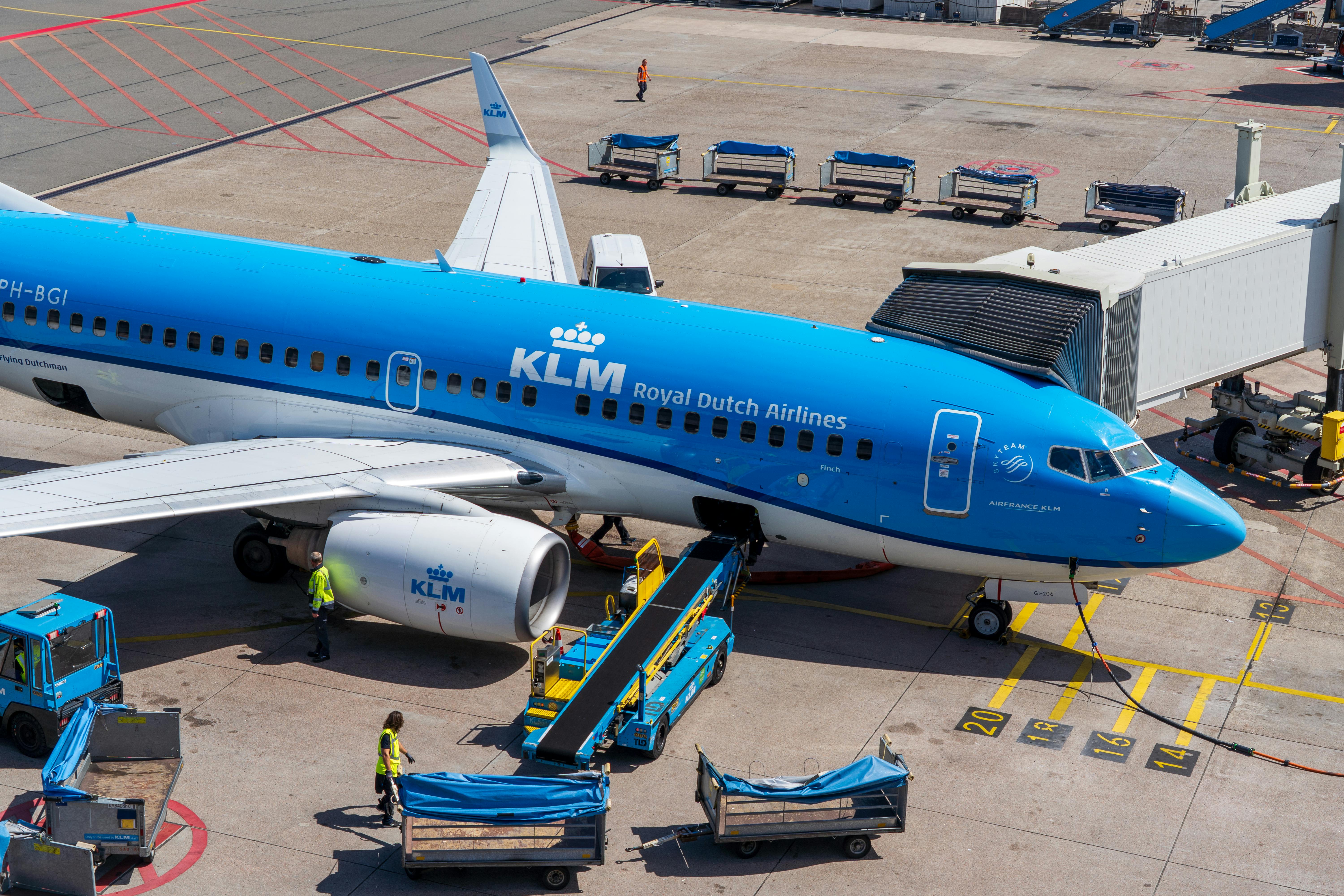
When an aircraft arrives at its gate, passengers often assume the difficult part of the journey is finished.
For the ground crews, another demanding operation is beginning.
The aircraft may need to depart again relatively soon.
Everything required for the next flight must be completed safely and in the correct sequence.
This is known as the aircraft turnaround.
A tightly coordinated operation
Several teams may work around the aircraft during a turnaround.
Passengers leave through a jet bridge or mobile stairs.
Baggage handlers unload the cargo compartments.
Cleaning staff prepare the cabin.
Catering workers may replenish food and beverages.
Ground equipment operators provide required services.
Maintenance personnel may inspect or address technical issues.
Fueling personnel carry out fueling operations under applicable safety procedures.
The flight crew prepares the aircraft for its next journey.
Some tasks can happen in parallel. Others depend on earlier steps being completed.
It resembles preparing a theater for a new performance while dismantling the previous production.
Every team has a task, but no team can ignore what the others are doing.
The turnaround sequence
A simplified example illustrates the dependencies.
| Turnaround activity | Why it matters |
|---|---|
| Aircraft parking and securing | Establishes safe conditions for ground operations |
| Passenger disembarkation | Clears the cabin for the next departure |
| Baggage and cargo unloading | Removes inbound items |
| Cabin cleaning and servicing | Prepares the passenger environment |
| Fueling and technical checks | Supports the next flight's operational requirements |
| Baggage and cargo loading | Places outbound items on the correct aircraft |
| Passenger boarding | Brings the next group of travellers aboard |
| Final documentation and checks | Confirms departure readiness |
| Door closure and pushback | Allows departure from the stand when authorized |
This table is illustrative, not a universal checklist or fixed operating order. Actual procedures depend on aircraft type, airline, airport, weather and safety requirements.
Why a small delay matters
Suppose an aircraft is scheduled for a 45-minute turnaround.
Its arrival is ten minutes late.
The aircraft may still depart on time if sufficient schedule flexibility exists and all required tasks can be completed safely.
But if a catering vehicle is also delayed, passengers board more slowly than expected, or a technical issue is discovered, the remaining schedule margin may disappear.
The airline cannot simply skip mandatory inspections or loading checks to recover time.
Delays can accumulate.
The hidden role of aircraft loading
Loading an aircraft is not merely about fitting bags into the available space.
Aircraft weight and balance are central to safe flight operations.
The distribution of passengers, baggage, cargo and fuel affects the aircraft's center of gravity.
Airlines use approved weight-and-balance procedures to ensure the aircraft remains within required operating limits.
Ground staff and flight crews may rely on load documentation or electronic systems to confirm relevant information.
Late changes in passengers, baggage or cargo can require updated calculations or documentation.
This explains why a flight may remain at the gate after everyone appears to be seated.
The aircraft's departure readiness depends on more than passenger boarding.
Why pushback requires coordination
Many aircraft parked at terminal gates cannot simply drive forward to leave their stands.
A specialized towing or pushback vehicle may move the aircraft away from the gate.
Depending on the aircraft and local procedures, personnel coordinate the movement through established communication and safety processes.
The surrounding area must be clear of equipment and other hazards.
After the aircraft is safely positioned and authorized to proceed, it can begin taxiing.
To passengers, pushback may feel like the beginning of the flight.
Operationally, it is the end of one complex process and the beginning of another.
7. Why Airport Delays Spread Like Falling Dominoes
It is 6:40 p.m.
A departure board shows that your flight has been delayed by 35 minutes.
Outside the window, the aircraft is already parked at the gate.
The weather seems pleasant. The runway is visible. Passengers are waiting.
So why is the flight delayed?
The answer often lies somewhere else in the aviation network.
Aircraft operate on connected schedules
An aircraft rarely performs only one flight per day.
Depending on the airline and route network, it may operate multiple journeys, moving through several airports.
A delay during an earlier flight can affect later departures.
Imagine the following hypothetical schedule:
| Flight | Scheduled departure | Operational problem |
|---|---|---|
| Flight A | 7:00 a.m. | Departs 20 minutes late |
| Flight B | 10:30 a.m. | Arriving aircraft is late |
| Flight C | 2:15 p.m. | Turnaround margin is reduced |
| Flight D | 7:00 p.m. | Crew or aircraft availability is affected |
These times are illustrative, not industry averages.
An airline may recover some lost time through schedule buffers, operational adjustments or aircraft substitutions.
But the aircraft is only one part of the network.
Pilots and cabin crews also have schedules and regulated duty limitations.
A flight may have an available aircraft but still be unable to depart because the required crew is unavailable or cannot legally continue working.
Weather affects more than one airport
A thunderstorm hundreds of kilometers away can affect a flight leaving under clear skies.
This happens because aviation operates through connected airspace.
If storms reduce the capacity of an important air traffic corridor, aircraft may need alternative routes or adjusted departure times.
If an airport's arrival capacity falls, controllers and traffic-flow management systems may regulate how many aircraft can depart toward it.
Holding aircraft at their departure airports can sometimes be more efficient than sending them into the air only to wait near the destination.
Strong winds, snow, lightning, fog and extreme temperatures can also influence ground operations.
For example, lightning hazards may temporarily restrict certain outdoor ramp activities under local safety procedures.
Snow can require runway treatment and aircraft deicing.
Low visibility may reduce the rate at which aircraft can safely arrive and depart.
The effect is not always a complete airport closure. Sometimes the airport continues operating but at a lower capacity.
The difference between delay and disruption
An ordinary delay occurs when an operation takes longer than planned.
A larger disruption can require substantial changes to the flight schedule.
Examples include widespread weather events, major technical failures, infrastructure outages, airspace restrictions or prolonged staffing shortages.
Airlines may respond by delaying flights, reassigning aircraft, rerouting passengers, canceling selected services or changing crew assignments.
These decisions can be difficult.
Canceling one flight may release an aircraft and crew needed to operate several later flights. But it also creates significant inconvenience for the passengers affected.
Operational planners must weigh available resources, legal requirements, passenger connections and the consequences for the wider network.
How airports respond to irregular operations
Airports and airlines typically coordinate through their operational centers during significant disruptions.
They may adjust gate assignments, passenger-processing resources, baggage arrangements, ground transportation information and staff deployment.
Airlines handle many passenger-specific responsibilities, including rebooking and communicating ticket arrangements.
Airport operators focus on matters such as infrastructure capacity, terminal operations and coordination with relevant stakeholders.
The distinction can become confusing to passengers because all these organizations operate within the same physical airport.
When a flight is canceled, the airport operator may not have the authority to issue a new ticket. That responsibility generally belongs to the airline or the relevant travel provider.
Can AI prevent flight delays?
Artificial intelligence and predictive analytics are increasingly used to support aviation planning.
Potential applications include forecasting passenger demand, identifying likely baggage connection failures, predicting equipment problems and estimating operational delays.
A system might recognize that an incoming aircraft is running late and recommend adjustments before the disruption becomes worse.
But predictions are not guarantees.
A model trained on historical conditions may struggle when unusual weather, geopolitical events or unprecedented operational problems change the environment.
Furthermore, even an accurate prediction cannot manufacture an available runway, an extra aircraft or a rested flight crew.
What is known: Better data sharing, forecasting and coordination can support more informed operational decisions.
What remains uncertain: How much AI will reduce system-wide delays over the long term, particularly during unusual or widespread disruptions.
The most realistic goal is not a world without delays. It is a system that recognizes problems earlier, reduces unnecessary consequences and recovers more effectively.
8. The Economics of Airports: How They Make Money
Airports are essential transport infrastructure, but they are also expensive organizations to operate.
A large airport may require significant spending on runways, terminals, security-related infrastructure, utilities, maintenance, technology, emergency services and construction.
These costs do not disappear when passenger numbers temporarily decline.
Understanding airport economics helps explain why airports contain so many shops, restaurants, lounges and commercial services.
Aviation revenue
Airports commonly receive revenue from activities connected directly to aviation.
Depending on the airport's ownership, regulations and commercial arrangements, these may include charges associated with aircraft landings, parking, passenger facilities and terminal services.
The exact charging structure varies considerably.
Airport charges can be subject to regulatory oversight, airline agreements or national pricing frameworks.
These fees help finance infrastructure that airlines and passengers depend upon.
However, aviation revenue alone is not always sufficient to support every airport's financial requirements.
Non-aviation revenue
Airports may also generate income from commercial operations.
These can include:
- Retail concessions and duty-free stores
- Restaurants and cafés
- Vehicle parking
- Property leasing
- Advertising
- Hotels and commercial development
- Airline lounges and other premium facilities
- Ground transportation arrangements
For some airports, commercial income plays an important role in supporting operations and investment.
This explains why modern terminals often resemble shopping centers.
Passengers represent a concentrated market of people who may have time to spend before boarding.
Commercial businesses value that opportunity.
Why airport parking can be expensive
Airport parking is a useful example of the relationship between convenience, infrastructure and demand.
Parking facilities close to terminals require land, construction, maintenance, security and access infrastructure.
Space may be limited, particularly at airports surrounded by developed urban areas.
Passengers often value convenience and proximity, especially when travelling with luggage or at unusual hours.
Airport operators may use different prices for short-term, long-term, premium or remote parking.
Prices also reflect local competition, policies and demand.
There is no universal formula explaining why every airport charges a particular parking rate.
The economics of unused capacity
Consider a terminal designed to handle large holiday crowds.
The infrastructure must exist even when passenger demand is lower.
An airport cannot easily reduce the physical size of its runway or terminal during a quiet month.
This creates high fixed costs.
The same challenge applies to many forms of infrastructure, including railways, electricity networks and hospitals.
Airports therefore try to balance long-term capacity investment against uncertain future demand.
Building too little capacity can produce congestion.
Building too much can create expensive facilities that are underused for years.
Airport revenue does not automatically follow passenger growth
ACI World's March 2026 Airport Economics Report highlighted an important distinction: global airport passenger traffic had recovered beyond pre-pandemic levels in 2024, but airport revenue had not fully returned to the corresponding earlier benchmarks.
This illustrates why passenger volume and financial performance are not interchangeable.
An airport may welcome more passengers while facing higher operating costs, changing commercial spending patterns or other financial pressures.
The economics of airports also vary by size and location.
A major international hub may have extensive commercial opportunities, while a small regional airport may rely on public support or operate under very different financial constraints.
Why airports matter beyond their terminals
Airports support more than airline operations.
They connect tourism markets, business travelers, international students, medical passengers, cargo shipments and supply chains.
Businesses near airports may benefit from access to transportation networks.
Hotels, logistics companies, maintenance facilities and related services can develop around aviation infrastructure.
But airport development also creates costs, including noise, road congestion, land use pressures and environmental impacts.
Evaluating an airport's economic value therefore requires more than counting passengers or calculating ticket sales.
The broader effects include both benefits and costs for surrounding communities.
9. Sustainability: Can Airports Become Greener?
Aviation presents a difficult environmental challenge.
Airports connect people and economies across long distances, but aircraft operations, airport facilities and ground transportation all contribute to environmental pressures.
The first step toward understanding sustainability is to separate the activities involved.
Airport emissions and aircraft emissions are different
An airport operator can directly influence some sources of emissions, such as energy consumed by terminal buildings and fuel used by airport-owned vehicles.
Aircraft emissions are different.
Airlines operate aircraft, select fleets and flight schedules, and purchase aviation fuel.
Air traffic systems and airport infrastructure can influence flight and ground-operating efficiency, but airports do not directly control every source of aviation emissions.
This distinction matters when evaluating sustainability claims.
An airport might reduce emissions from its own operations substantially without eliminating the emissions produced by aircraft using the airport.
Both achievements and limitations should be communicated clearly.
Cleaner airport buildings
Large terminal buildings consume energy for lighting, ventilation, heating, cooling, escalators, baggage systems and other equipment.
Potential improvements include more efficient lighting, upgraded heating and cooling systems, better insulation, smarter building management and greater use of low-carbon electricity.
Some airports install solar panels on suitable roofs or nearby land.
Others purchase electricity from renewable sources or undertake wider energy-efficiency projects.
The effectiveness of these measures depends on local climate, electricity generation, building design and implementation.
A terminal in a hot region may face substantial cooling demands, while an airport in a colder climate may require more heating.
Electric ground equipment
Airport ground operations traditionally use a variety of vehicles powered by internal combustion engines.
These include some baggage tractors, service vehicles and ground support equipment.
Electrification can reduce direct tailpipe emissions from suitable equipment.
Electric baggage tractors and other service vehicles can be particularly attractive where predictable routes and charging opportunities exist.
However, electrification requires charging infrastructure, electrical capacity, equipment investment and operational planning.
Not every piece of equipment is equally easy to replace.
Cold weather, intense operating schedules and vehicle requirements can complicate deployment.
The environmental benefit also depends partly on how the electricity is generated.
Aircraft at the gate
Aircraft parked at gates may require electrical power and conditioned air.
Airports can provide fixed electrical ground power and pre-conditioned air systems at suitable stands.
These facilities can reduce the need for an aircraft to operate its auxiliary power unit for certain services.
Their effectiveness depends on aircraft compatibility, availability, airline procedures and the local electricity supply.
They represent a practical example of how airport infrastructure can influence aviation-related emissions without changing the aircraft itself.
Ground transportation matters
An airport can also influence emissions generated by passengers and employees travelling to and from terminals.
Rail links, public buses, electric vehicle charging, shared transport arrangements and better pedestrian connections can provide alternatives to private-car journeys.
However, successful public transport requires more than constructing a station.
Service frequency, operating hours, affordability, accessibility and connections to residential areas are important.
A late-night passenger may have few practical alternatives to a taxi if public transport services have stopped operating.
Improving airport access is therefore both a sustainability challenge and a transportation planning problem.
Carbon accreditation: what does it mean?
The Airport Carbon Accreditation program assesses airports through different levels of carbon management and performance.
Its framework distinguishes between emissions within an airport operator's control and wider emissions involving other organizations.
Higher levels involve more extensive requirements, including reductions and stakeholder engagement.
Certification can provide a structured framework for measurement and progress.
But travellers should be cautious about treating any certification label as proof that an entire airport or all flights using it have no climate impact.
Different accreditation levels represent different achievements and requirements.
Sustainable aviation fuel and operational efficiency
Sustainable aviation fuel, or SAF, is another important part of aviation's environmental discussion.
SAF is produced through approved pathways using different feedstocks and processes.
Depending on its production method and life-cycle assessment, it can offer lower life-cycle greenhouse gas emissions than conventional jet fuel.
However, it is not automatically emission-free.
Its sustainability depends on factors including feedstock sources, energy inputs, land-use effects and production methods.
Airports may support SAF supply infrastructure, but production and procurement involve fuel producers, airlines and other participants.
Operational efficiency can also contribute.
Better taxiing procedures, reduced unnecessary engine operation and more efficient airspace management may lower fuel consumption in some circumstances.
But operational improvements alone are unlikely to eliminate aviation's climate impact.
What remains uncertain about greener aviation?
The pace of future progress depends on technology, economics, regulation and infrastructure.
Important unresolved questions include how quickly lower-emission fuels can scale, what they will cost, whether sufficient sustainable feedstocks will be available and which technologies will work for different aircraft sizes and routes.
Battery-electric aircraft may play a role in certain shorter-range applications, but the energy requirements of large long-distance aircraft present substantial challenges.
Hydrogen-powered aviation also faces difficulties involving aircraft design, storage, fuel production and airport infrastructure.
A careful sustainability strategy acknowledges these constraints rather than assuming that one emerging technology will solve every problem.
10. The Airport of the Future: Smarter, but Not Entirely Automatic
Airports increasingly resemble digital networks connected to physical infrastructure.
Thousands of events must be recorded and shared: aircraft arrivals, gate assignments, baggage milestones, passenger counts, equipment movements and operational delays.
Information is valuable because it allows organizations to coordinate their decisions.
Airport collaborative decision-making
One important approach is Airport Collaborative Decision Making, often called A-CDM.
Its basic principle is that airport stakeholders benefit from sharing consistent, timely operational information.
Instead of each organization working from separate assumptions, airlines, airport operators, ground handlers and air traffic management participants can coordinate around relevant milestones.
For example, more accurate information about when an aircraft will be ready can help planners sequence ground operations and departures.
This does not eliminate uncertainty.
A technical problem may still arise unexpectedly.
But better shared information can reduce avoidable confusion.
Digital twins
A digital twin is a digital representation of a physical system that may incorporate information about its current condition and operations.
For an airport, such a model might represent terminal spaces, infrastructure assets, passenger movement or aircraft ground operations.
Engineers and planners may use digital models to test scenarios.
What happens if a terminal entrance closes temporarily?
How might passenger queues change if two large flights arrive close together?
Which areas could become congested during a construction project?
Simulation can support planning, but the usefulness of a digital twin depends on the quality of the data and assumptions used.
A sophisticated model can still produce misleading results if its inputs fail to represent actual operations.
Robots and autonomous vehicles
Robotic cleaning equipment, autonomous transport systems and other forms of automation have been introduced or tested in airport environments.
Some tasks are well suited to automation because they are repetitive and occur within structured spaces.
Other tasks remain more complicated.
An airport apron contains moving aircraft, vehicles, workers, equipment and changing environmental conditions.
Operating safely in such an environment requires reliable detection, communication and control systems.
For this reason, the adoption of autonomous technology is likely to vary across tasks and airports.
Will airports become completely automated?
It is possible that more passenger processes will become self-service or digitally assisted.
Baggage systems may become increasingly connected.
Predictive software may help identify problems before they spread.
But full automation of complex airport operations is a much larger challenge.
Airports must accommodate unusual situations, equipment failures, changing weather, passengers needing assistance and safety-critical decisions.
Human judgment, accountability and emergency response remain essential.
The most useful vision of future airport technology is not necessarily an airport without workers.
It is an airport where technology reduces repetitive work, improves visibility and allows people to concentrate on decisions that require experience and responsibility.
11. What Travellers Can Do to Make Their Airport Journey Smoother
Passengers cannot control air traffic restrictions, runway capacity or aircraft maintenance.
However, they can reduce some avoidable problems.
The goal is not to make every journey perfect. It is to remove unnecessary uncertainty before reaching the airport.
Before leaving home
Check the airline's current baggage policy.
Rules may differ by ticket type, destination, aircraft and operating carrier.
Verify that travel documents meet the relevant requirements for every destination and transit point.
Use online check-in when available and appropriate.
Review your flight's scheduled departure time, terminal information and airline notifications.
Remember that airport information can change after you begin travelling.
A gate displayed in the morning is not necessarily the final gate.
How early should you arrive?
There is no universal arrival time suitable for every airport and journey.
A common planning guideline is approximately two hours before a domestic departure and three hours before an international departure.
For example, Seattle-Tacoma International Airport recommends those general arrival margins for its passengers.
But requirements vary by airport, airline and circumstances.
Travellers checking several bags, requiring document verification, travelling during busy holidays or needing accessibility assistance may need additional time.
Airline check-in and baggage acceptance cutoffs can be particularly important.
Arriving before scheduled departure does not guarantee that a passenger has arrived before the relevant cutoff.
Pack for security screening
Prepare carry-on baggage according to the applicable security rules.
Check restrictions for liquids, batteries, sharp objects and other regulated items.
Keep essential documents accessible.
Avoid placing prohibited items in baggage because you assume that another airport's procedures will apply.
When uncertain, check the official security authority or airline guidance before travelling.
A few minutes of preparation can prevent a lengthy inspection or the need to surrender an item.
Give connecting flights enough time
A connection involves more than walking between gates.
Passengers may need to travel between terminals, pass additional security screening, complete immigration procedures or reclaim and recheck baggage.
A connection sold on one ticket may carry different airline protections and handling arrangements from two independently purchased tickets.
Travellers should consider the airport layout, route, ticket arrangement and the consequences of missing the next flight.
The shortest connection is not always the most comfortable option.
Protect important items
Keep essential medication, required documentation, valuables and other critical items in appropriate hand baggage, subject to applicable rules.
Carry a small amount of necessary clothing or toiletries when practical.
Photographing the exterior of a checked suitcase and retaining baggage receipts can help if a bag is delayed.
Consider using the airline's baggage tracking features where available.
If carrying a personal tracking device, follow the relevant airline and battery safety requirements.
What to do when a flight is delayed
Start with the airline's official application or communication channel.
A gate agent may have limited information about the precise cause or expected duration of a delay.
If a connection is at risk, investigate available rebooking options promptly.
Keep receipts for necessary expenses when compensation or reimbursement might apply.
Passenger rights depend on jurisdiction, route, airline and the cause of disruption.
For example, protections applicable to certain European journeys are different from those applicable to many US domestic itineraries.
Avoid assuming that every delayed flight automatically qualifies for monetary compensation.
A practical airport checklist
| Stage | Useful action | Why it helps |
|---|---|---|
| Before travel | Verify passport, visa and entry requirements | Reduces document-related problems |
| Before packing | Check baggage and security rules | Helps avoid additional screening or rejected items |
| Before departure | Complete online check-in if available | May reduce counter time |
| Journey to airport | Allow for traffic and transport delays | Protects against unexpected congestion |
| At the airport | Check current terminal and flight information | Helps avoid incorrect directions |
| After security | Monitor departure displays and notifications | Gates and boarding arrangements may change |
| During connections | Follow transfer signs and allow time for checks | Reduces the risk of missing the next flight |
| During disruptions | Contact the airline promptly | Improves access to current rebooking information |
These steps cannot prevent every aviation disruption.
They can, however, help travellers respond more effectively when circumstances change.
12. Frequently Asked Questions About How Airports Work
1. How many people travel through airports every day?
ACI World reported approximately 9.8 billion airport passenger movements worldwide in 2025. Dividing that annual figure by 365 gives an average of about 26.8 million passenger movements per day. This is a calculated daily average, not a measurement for every individual day. The total counts airport passenger movements rather than unique individuals, so connecting travellers can be counted at multiple airports.
2. How do airports manage so many flights at once?
Airports use coordinated scheduling, air traffic control procedures, gate allocation, operational information systems and specialized teams. Aircraft movements are managed according to safety requirements, available infrastructure and traffic conditions. Airlines, airport operators and ground handlers share responsibility for different parts of the process.
3. What happens to checked baggage after it disappears behind the counter?
The suitcase typically enters a baggage handling system that identifies its destination, performs or supports required security screening, sorts it and directs it toward the appropriate aircraft-loading area. Ground handlers then transport and load the bag. The exact equipment and procedures differ among airports.
4. How do airports know which flight a suitcase belongs to?
Baggage tags contain machine-readable identification information associated with routing records. Scanners and baggage management systems use this information to direct bags toward their intended destinations. Some systems also use RFID technology and additional tracking events to improve visibility.
5. Why does baggage sometimes arrive later than the passenger?
Common causes include missed transfers, loading problems, routing errors, operational delays and other handling difficulties. A passenger and suitcase may follow different processes during a connection. If the bag misses its intended flight, an airline may need to arrange transport on another available service.
6. Can airport security scanners see everything inside luggage?
Modern scanners can produce detailed images of baggage contents, and CT equipment can provide three-dimensional representations. However, screening effectiveness depends on equipment, procedures and human assessment. No screening technology should be described as infallible.
7. Who decides when an aircraft can take off?
Pilots operate the aircraft and are responsible for their flight-related decisions, while air traffic controllers issue clearances and instructions within their areas of responsibility. Departure requires compliance with applicable operating procedures and safety requirements. A flight being ready at the gate does not automatically mean it can immediately use a runway.
8. Why do planes sometimes wait in long lines before takeoff?
Aircraft may be waiting for runway availability, required separation, traffic sequencing, weather-related restrictions or other operational conditions. Even when a runway appears physically clear, the traffic sequence may require additional spacing.
9. Why do airports have multiple runways?
Multiple runways can increase operational flexibility and potentially allow more aircraft movements. They can also support different traffic patterns and wind conditions. However, the amount of additional capacity depends on runway geometry, separation requirements, airspace procedures and other factors.
10. How long does it take to prepare an aircraft for another flight?
There is no universal turnaround time. The duration depends on aircraft size, route, airline procedures, available equipment, passenger numbers and required servicing. Some operations are designed around relatively short turnarounds, while others require significantly longer periods.
11. Why can a flight be delayed when the weather is good?
The aircraft or crew may be arriving from another airport affected by bad weather. Air traffic restrictions, aircraft maintenance, late baggage, unavailable gates or other issues may also cause delays. The conditions visible from the departure terminal do not reveal the state of the entire aviation network.
12. Who is responsible when a flight is canceled?
The airline operating or marketing the flight generally handles passenger communication and relevant rebooking or refund obligations, depending on the ticket and applicable law. Airports manage infrastructure and coordinate operations but do not usually control an airline's ticketing decisions.
13. How do airports make money?
Airports can earn revenue from aviation-related charges, parking, retail concessions, restaurants, property leasing, advertising and other commercial activities. The importance of each revenue source varies by airport, ownership structure and national regulations.
14. Are airport shops more expensive than ordinary shops?
Prices vary widely. Airport retailers may face distinctive operating costs, concession agreements and customer demand, but that does not mean every airport product is more expensive. Travellers should compare prices when value matters, especially for electronics, accessories and everyday purchases.
15. Are airports becoming more environmentally friendly?
Many airports are investing in energy efficiency, cleaner electricity, electric ground equipment and improved public transport access. These measures can reduce particular sources of emissions. However, the environmental footprint of an airport and the climate impact of aircraft flights must be evaluated separately.
16. Can artificial intelligence run an airport?
AI can assist with predictions, scheduling, passenger-flow analysis and operational planning. It does not replace all safety-critical procedures, regulatory responsibilities or human decisions. The degree of automation varies widely, and full autonomous airport operation is not an established global reality.
17. What is the busiest airport in the world?
According to ACI World's final 2025 rankings, Hartsfield-Jackson Atlanta International Airport ranked first worldwide for total passenger traffic, with approximately 106.3 million passenger movements. Different airports lead other categories, such as international passengers, aircraft movements or cargo volume.
18. What is the biggest challenge facing airports in the future?
There is no single universal challenge. Major concerns include expanding capacity, maintaining safety, managing growing infrastructure costs, adapting to climate risks, improving operational resilience and reducing environmental impacts. The balance of challenges differs across airports and regions.
13. The Hidden System Behind Every Successful Flight
Return to the airport at 5:17 in the morning.
The queues are still forming. Departure boards continue to change. Passengers move toward security checkpoints, coffee shops and boarding gates.
But now imagine everything happening beyond their view.
A baggage sorter identifies a suitcase and sends it toward the correct loading area.
A maintenance technician completes an inspection.
A ground operations team coordinates equipment around an arriving aircraft.
An airport planner reassigns a gate after a delayed flight disrupts the schedule.
An air traffic controller sequences departures while monitoring arriving aircraft.
A cleaner prepares a cabin for its next passengers.
A fueling team completes its work according to established procedures.
A baggage handler loads the final container.
These actions are separate, yet connected.
If one is delayed, several others may need to adjust.
This is the fundamental achievement of modern airports: not simply that aircraft can take off and land, but that enormous numbers of people, machines and organizations can work within a shared system while maintaining demanding safety standards.
The scale is difficult to comprehend.
Billions of passenger movements every year. Thousands of aircraft journeys every day. Vast quantities of luggage and cargo moving through interconnected transportation networks.
And behind those movements are decisions made constantly by people whom most passengers will never meet.
The future will bring more automation, improved data sharing and potentially more efficient ways of using existing infrastructure. It will also bring difficult questions about expansion, costs, privacy, sustainability and resilience.
Technology can make airports smarter, but the essential task will remain the same: moving people and goods safely through a complicated world.
The next time you sit beside an airport window and watch an aircraft pull away from its gate, consider what has already happened before that moment.
Your boarding pass was checked. Your baggage was routed. The aircraft was serviced. The loading information was prepared. The ground crew completed its tasks. Controllers coordinated the next stage of movement.
What appears to be a single departure is the result of hundreds of connected actions.
And when the engines begin to accelerate and the runway disappears beneath the wings, you are witnessing only the most visible moment of a much larger achievement.
The hidden system behind your flight has done its work.
Sources and Further Reading
The following primary and industry sources provide data, operational explanations and additional context. The article distinguishes reported findings from simplified illustrative examples and areas of uncertainty.
- Airports Council International (ACI) World — Global Airport Passenger Traffic Reaches Record 9.8 Billion in 2025 (September 2026). Global passenger movements, aircraft movements and cargo statistics. Read the ACI World report.
- ACI World — World's Busiest Airports Revealed in Latest Global Rankings (April 2026). Airport passenger rankings and comparisons. Read the airport rankings.
- ACI World — Airport Economics Report and Key Performance Indicators (March 2026). Revenue recovery, infrastructure investment and airport economics. Read the airport economics report.
- SITA — Baggage IT Insights 2026. Baggage tracking, mishandling, technology and industry costs. Read the baggage insights report.
- Federal Aviation Administration — Aeronautical Information Manual, Air Traffic Control Clearances and Aircraft Separation. Runway procedures, sequencing and separation principles. Read the FAA manual.
- International Air Transport Association (IATA) — Global Outlook for Air Transport, June 2026. Aviation demand, operating costs and global industry conditions. Read the IATA report.
- Airport Carbon Accreditation — About the Programme. Airport emissions measurement and carbon management certification. Explore Airport Carbon Accreditation.
- Seattle-Tacoma International Airport — Predicted Checkpoint Wait Times and Travel Advice. Practical examples of passenger arrival recommendations and terminal demand patterns. Read the airport travel advice.
- Federal Aviation Administration — Air Traffic Organization. Information about US air traffic management responsibilities and operations. Explore the FAA Air Traffic Organization.
- International Civil Aviation Organization (ICAO) — Environmental Protection. International aviation environmental policies and initiatives. Explore ICAO environmental protection.
The conversation
Post a Comment