
Introduction: The Little Machine That Keeps Food Fresh
Imagine arriving home on a hot afternoon. The kitchen is warm, the air feels heavy, and you open the refrigerator. A cool stream of air escapes. Inside, milk remains fresh, vegetables are crisp, drinks are cold, and yesterday's dinner is waiting safely for another meal.
It is an ordinary moment, repeated millions of times around the world. Yet something remarkable is happening behind that familiar refrigerator door.
A refrigerator does not manufacture cold in the same way a heater manufactures warmth. Instead, it removes heat from one place and transfers it somewhere else. It takes thermal energy out of its interior and releases that energy into the surrounding kitchen.
This simple idea is one of the most useful applications of thermodynamics in everyday life.
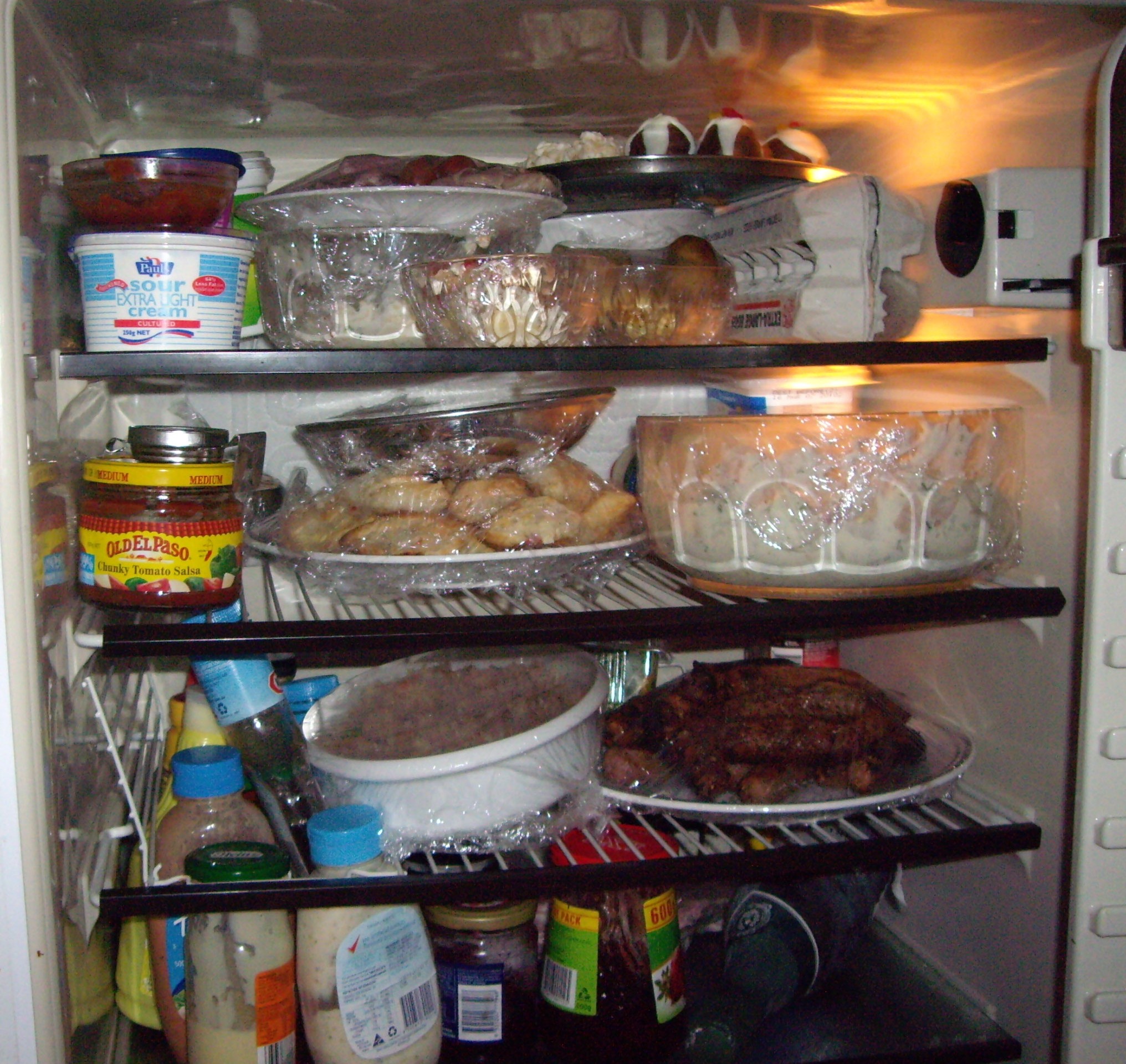
Refrigerators make it possible to preserve food for longer, reduce food waste, store medicines, cool drinks, and maintain the conditions required for many modern food supply systems. They also represent an important engineering achievement: a machine that continuously moves heat in a direction it would not naturally travel without an energy input.
The technology behind modern refrigeration is based primarily on a process called the vapour-compression refrigeration cycle. It involves four principal components: an evaporator, a compressor, a condenser, and an expansion device. Together, these components circulate a special working fluid called a refrigerant.
Although the basic principle has remained remarkably consistent, refrigerators have changed considerably. Modern models use improved compressors, better insulation, electronic temperature controls, more efficient heat exchangers, and refrigerants designed to reduce environmental harm.
In 2026, refrigeration is also experiencing another transition. Environmental regulations are encouraging manufacturers to replace certain high-global-warming-potential refrigerants, while efficiency requirements and smart technologies are influencing the design of new appliances.
Understanding how refrigerators work helps explain not only why food stays cold, but also why the back of a refrigerator becomes warm, why ice sometimes forms inside, why different models consume different amounts of electricity, and why the refrigerant inside the appliance matters to the environment.
Let's examine the science behind this familiar machine.
Key Takeaways
- A refrigerator does not create cold. It removes heat from its interior and releases it into the surrounding environment.
- Most household refrigerators use a vapour-compression refrigeration cycle.
- The four main components are the evaporator, compressor, condenser, and expansion valve or capillary tube.
- Refrigerants absorb and release heat as they circulate and change pressure and physical state.
- The back or sides of a refrigerator can become warm because the condenser releases heat into the room.
- Frost-free refrigerators periodically melt accumulated frost using an automatic defrost system.
- Manual-defrost refrigerators generally have a simpler design and may use less electricity under comparable conditions.
- For food safety, the refrigerator should remain at or below 40°F (4°C), while the freezer should remain at or below 0°F (-18°C).
- CFC refrigerants were phased out because of their damaging effects on the ozone layer. HFCs subsequently became widely used, but many have substantial global-warming potential.
- Hydrocarbons such as isobutane (R-600a) and carbon dioxide (R-744) are among the alternatives used in modern refrigeration.
- EnergyGuide labels and ENERGY STAR certification can help consumers compare refrigerator efficiency.
- In 2026, refrigerant regulations, energy efficiency, and connected appliance technology continue to influence refrigerator development.
The Science of Refrigeration: How Does a Refrigerator Actually Work?
1. The Basic Principle: Moving Heat Instead of Creating Cold
To understand refrigeration, it helps to begin with something familiar.
Place a cold glass of water on a kitchen table during a warm afternoon. After several minutes, the glass becomes wet on the outside. The surrounding air transfers heat to the cold glass, cooling the air immediately around it and causing water vapour to condense.
Heat naturally moves from warmer objects toward colder objects.
A refrigerator uses electrical energy to make heat move in the opposite direction: from its relatively cold interior to the warmer kitchen.
This is possible because the appliance operates as a heat pump.
A heat pump transfers thermal energy using mechanical work. In a refrigerator, the desired result is to keep the interior cold, so the machine extracts heat from the food compartment and releases it outside.
There are two important locations:
- The cold side: The interior of the refrigerator, where heat is absorbed.
- The warm side: The external environment, where the extracted heat is released.
The refrigerator needs electricity to keep this process running.
A useful analogy is a water pump. Water does not naturally travel uphill without an external force. A pump supplies energy to move it against its natural direction of flow.
Similarly, a refrigerator uses electrical energy to move heat from a colder space to a warmer space.
The refrigerator is not destroying thermal energy. It is transferring it.
This distinction is essential to understanding everything that follows.
2. The Vapour-Compression Refrigeration Cycle
The most common refrigeration technology used in household refrigerators is the vapour-compression cycle.
It operates through four main stages:
- Evaporation.
- Compression.
- Condensation.
- Expansion.
A refrigerant continuously circulates through a sealed network of pipes connecting these components.
During the cycle, the refrigerant changes pressure, temperature, and physical state. These changes allow it to absorb heat inside the refrigerator and release heat outside.
Let's examine each stage.
Stage One: The Evaporator Absorbs Heat
The evaporator is the component responsible for absorbing heat from the refrigerator's interior.
It is generally located behind an internal panel, inside the freezer compartment, or within an air circulation system.
After passing through the expansion device, the refrigerant enters the evaporator at low pressure and low temperature.
At this point, it is usually a cold mixture of liquid and vapour.
As warm air from the refrigerator passes across the evaporator, heat transfers from the air and surrounding surfaces into the refrigerant.
The refrigerant absorbs this energy and evaporates, changing from liquid into gas.
This phase change is especially important.
A liquid refrigerant can absorb considerable thermal energy while changing into vapour without requiring a large increase in its temperature. This energy is known as latent heat.
An everyday analogy is water boiling in a saucepan. Energy is absorbed as liquid water changes into steam. The refrigerator takes advantage of a similar principle, although its refrigerant operates at different pressures and temperatures.
As the evaporator removes heat, the refrigerator's internal temperature falls.
A fan may help circulate the cold air throughout the compartments, particularly in frost-free models.
Once the refrigerant has absorbed enough heat and become vapour, it travels toward the compressor.
Stage Two: The Compressor Raises Pressure and Temperature
The compressor is often described as the heart of the refrigerator.
It is usually located near the bottom of the appliance, behind or beneath the cabinet.
Its job is to draw in low-pressure refrigerant vapour from the evaporator and compress it.
Compression requires mechanical work, supplied by an electric motor.
When a gas is compressed, its pressure increases. Its temperature also rises.
The result is a high-pressure, high-temperature refrigerant vapour.
Why is this necessary?
The refrigerant must become warmer than the surrounding kitchen air before it can effectively release heat into that environment.
Imagine inflating a bicycle tyre. The pump can become warm as you compress the air inside it. The compressor in a refrigerator uses the same general physical principle, although its operation is continuous and carefully controlled.
The compressor also maintains the pressure difference between the evaporator and condenser.
Without this difference, the refrigerant would not circulate through the system in the required way.
The hot, pressurised vapour then moves toward the condenser.
Stage Three: The Condenser Releases Heat
The condenser is the part of the refrigeration system that releases heat into the surrounding environment.
In some refrigerators, it consists of visible coils at the back. In others, the condenser is integrated into the appliance's side panels.
The refrigerant enters the condenser as a hot, high-pressure vapour.
Because it is warmer than the surrounding air, heat transfers through the condenser's metal surfaces into the kitchen.
As it loses heat, the refrigerant changes from vapour into liquid.
This process is called condensation.
The refrigerant therefore leaves the condenser as a high-pressure liquid, ready to enter the expansion device.
An important detail is that the condenser releases more heat than the refrigerator absorbs from its interior.
Why?
Because the compressor also adds electrical energy to the refrigeration system.
The relationship can be expressed simply:
Heat released outside = Heat absorbed inside + Electrical work supplied
In thermodynamic notation:
QH = QL + W
Where:
- QH is the heat rejected by the condenser.
- QL is the heat absorbed by the evaporator.
- W is the work supplied to the compressor.
This explains why a refrigerator can make its interior cold while releasing warmth into the kitchen.
Stage Four: The Expansion Valve Lowers Pressure
The final main stage is the expansion device.
It may be a thermostatic expansion valve or, in many household refrigerators, a narrow capillary tube.
Its function is to reduce the pressure of the liquid refrigerant before it returns to the evaporator.
When the high-pressure liquid passes through this restriction, its pressure falls sharply.
Its saturation temperature also decreases, producing a cold refrigerant mixture suitable for absorbing heat in the evaporator.
The refrigerant is now ready to begin another cycle.
The process repeats continuously whenever the refrigerator needs cooling.
Why does the expansion device matter?
Without it, the refrigerant would not reach the low-pressure conditions required for evaporation at the desired temperature.
It helps establish the separation between the high-pressure side and the low-pressure side of the refrigeration circuit.
In other words, the expansion device prepares the refrigerant to absorb heat again.
3. Following One Complete Refrigeration Cycle

It is useful to imagine following a tiny quantity of refrigerant through the entire system.
First, it enters the evaporator as a cold, low-pressure mixture. It absorbs heat from the refrigerator and becomes vapour.
Next, the compressor draws in that vapour and increases its pressure and temperature.
The hot vapour then travels through the condenser, where it releases heat into the kitchen and becomes liquid.
Finally, the liquid passes through the expansion device. Its pressure falls, its temperature drops, and it enters the evaporator again.
The cycle continues.
| Component | Main function | Refrigerant condition |
|---|---|---|
| Evaporator | Absorbs heat | Low-pressure vapour at outlet |
| Compressor | Raises pressure and temperature | High-pressure hot vapour |
| Condenser | Releases heat | High-pressure liquid at outlet |
| Expansion device | Reduces pressure | Cold liquid-vapour mixture |
The process is a practical application of thermodynamics rather than a complicated mystery.
4. Why Does the Back or Side of a Refrigerator Feel Warm?
Have you ever touched the back or side of a refrigerator and noticed that it feels surprisingly warm?
This is usually normal.
The warmth is a direct consequence of the refrigeration cycle.
Remember that the refrigerator removes heat from the food compartment and transfers it into the surrounding environment.
The condenser releases this heat.
In older appliances, the condenser coils are often visible at the back. In many newer refrigerators, the condenser is concealed within the cabinet walls, which is why the sides can become warm.
There are three main reasons this happens.
First, the refrigerant releases heat. The hot refrigerant passes through the condenser, transferring thermal energy to the surrounding metal and air.
Second, the compressor produces additional heat. The compressor uses electricity to compress the refrigerant. Some of this energy eventually leaves the appliance as heat.
Third, the refrigerator must continuously compensate for incoming heat. Every time someone opens the door, warm air enters. Heat also travels through the insulation from the warmer kitchen into the colder compartments.
The refrigerator must remove this additional energy.
A warm refrigerator exterior is therefore not automatically a sign of a problem.
However, unusually high temperatures combined with poor cooling, continuous operation, or strange noises may indicate a fault.
Common causes include:
- Dirty condenser coils.
- Insufficient ventilation.
- A damaged door seal.
- A malfunctioning fan.
- An overloaded appliance.
- A problem with the compressor or refrigerant circuit.
Always follow the manufacturer's recommended ventilation clearances.
A refrigerator needs room to release heat efficiently.
5. What Is a Refrigerant?
A refrigerant is the working fluid that circulates through the refrigeration system.
It is specially selected because its physical properties allow it to absorb and release heat efficiently under appropriate pressure conditions.
A refrigerant must satisfy several important requirements.
- Have suitable boiling and condensation temperatures.
- Transfer heat effectively.
- Remain chemically stable during normal operation.
- Be compatible with system materials and lubricants.
- Have appropriate safety characteristics.
- Minimise environmental harm.
Different refrigerants have different advantages and disadvantages.
Some work well thermodynamically but have environmental problems. Others have low environmental impact but require additional safety measures.
Choosing a refrigerant is therefore an engineering decision involving performance, safety, cost, and environmental considerations.
6. The History of Refrigerants: From CFCs to Modern Alternatives
The history of refrigeration is closely connected to environmental science.
Early mechanical refrigeration systems experimented with several chemicals, including substances that could be toxic, corrosive, or flammable.
As the industry developed, manufacturers increasingly adopted synthetic refrigerants.
Some of these chemicals later became a major environmental concern.
CFCs: The Ozone Problem
Chlorofluorocarbons, commonly known as CFCs, were widely used in refrigeration and air conditioning during the twentieth century.
One familiar example was R-12.
CFCs became popular because they were chemically stable and generally convenient to use.
However, scientists discovered that when CFCs escape into the atmosphere, they can eventually reach the stratosphere.
Ultraviolet radiation breaks them down, releasing chlorine atoms.
These chlorine atoms participate in chemical reactions that destroy ozone molecules.
The ozone layer is important because it absorbs much of the Sun's harmful ultraviolet radiation.
The scientific discovery of ozone depletion led to international action.
In 1987, countries adopted the Montreal Protocol, an international agreement designed to phase out ozone-depleting substances.
The agreement became a landmark achievement in international environmental cooperation.
HFCs: An Alternative With Another Environmental Problem
Hydrofluorocarbons, or HFCs, became important replacements for many CFC applications.
Unlike CFCs, HFCs do not contain chlorine and do not directly destroy the ozone layer in the same way.
However, many HFCs are powerful greenhouse gases.
This means that releasing them into the atmosphere can contribute significantly to global warming.
One historically important refrigerant was R-134a.
It became widely used in domestic refrigerators and other refrigeration equipment.
Scientists and policymakers increasingly recognised that eliminating ozone damage was not the only environmental challenge.
Refrigerants also needed to have lower climate impacts.
The Kigali Amendment to the Montreal Protocol, adopted in 2016, established a global framework for reducing HFC production and consumption.
This marked another major stage in refrigerant policy.
Hydrocarbons: Isobutane and Propane
Hydrocarbons are increasingly important alternatives.
Two examples are:
- R-600a: Isobutane.
- R-290: Propane.
Isobutane is widely used in modern domestic refrigerators.
It has a very low global-warming potential compared with many traditional HFC refrigerants.
However, hydrocarbons are flammable.
This does not mean that a properly manufactured refrigerator using R-600a is inherently unsafe.
Rather, the appliance must be designed, manufactured, tested, and serviced according to the relevant safety standards.
Refrigerant quantities in household appliances are controlled, and technicians must follow appropriate procedures.
Consumers should never attempt to open or repair a sealed refrigerant circuit themselves.
Carbon Dioxide: R-744
Carbon dioxide is another alternative refrigerant.
Its refrigerant designation is R-744.
Carbon dioxide has a very low global-warming potential compared with conventional high-GWP HFCs.
It also has no ozone-depletion potential.
It is used in commercial refrigeration, industrial systems, supermarkets, and some specialised applications.
However, carbon dioxide systems operate at relatively high pressures and require appropriately designed components.
It is therefore not simply a matter of replacing one chemical with another.
The engineering of the entire refrigeration system must account for the refrigerant's properties.
Comparing the Main Refrigerant Families
| Refrigerant | Environmental characteristic | Important consideration |
|---|---|---|
| CFCs | Ozone-depleting and climate-warming | Phased out under the Montreal Protocol |
| HFCs | Generally no ozone depletion, but many have high GWP | Subject to international phasedown |
| R-600a | Very low GWP | Flammable; requires suitable design |
| R-290 | Very low GWP | Flammable; requires suitable design |
| R-744 | GWP of 1 under commonly used climate assessments | High operating pressures |
The main lesson is that refrigerant technology has evolved because scientists and engineers have had to balance refrigeration performance with environmental responsibility.
7. How Does a Refrigerator Control Its Temperature?
A refrigerator does not necessarily run its compressor continuously.
Most appliances use a temperature-control system to maintain an appropriate internal temperature.
Traditional refrigerators use mechanical thermostats.
A thermostat detects temperature changes and controls the cooling system accordingly.
When the interior becomes warmer than the selected temperature, the control system activates the compressor.
The compressor continues operating until the desired cooling condition is reached.
The system then reduces or stops cooling until another temperature increase requires it.
Modern refrigerators often use electronic sensors and control boards.
These systems can measure temperatures in several compartments and coordinate different components.
For example, a refrigerator may contain:
- A temperature sensor in the refrigerator compartment.
- A separate freezer sensor.
- An evaporator sensor.
- A defrost sensor.
- Fan controls.
- Compressor speed controls.
Some models use inverter compressors.
Unlike conventional compressors that mainly operate at fixed speeds and switch on and off, inverter systems can adjust their operating speed according to cooling demand.
This can improve temperature stability and reduce energy consumption under suitable operating conditions.
However, the actual savings depend on the appliance's design, size, insulation, usage, and operating environment.
8. How Does Cold Air Move Around the Refrigerator?
A refrigerator needs more than a cold evaporator.
It also needs a way to distribute cooling throughout its compartments.
There are two common approaches.
Natural convection: Some simpler refrigerators rely primarily on natural air movement. Cold air is denser than warm air and tends to move downward, while warmer air rises. This creates temperature differences within the compartment.
Forced-air circulation: Frost-free refrigerators commonly use fans to move air through the evaporator and around the compartments. The fan distributes cooled air through internal channels. This helps maintain more consistent temperatures.
However, forced-air systems also introduce additional components, including fans and air ducts.
If food blocks the air outlets, cooling distribution can become less effective.
This is one reason why refrigerator shelves should not be packed so tightly that air cannot circulate.
9. Frost-Free vs Manual-Defrost Refrigerators
One of the most noticeable differences between refrigerators is how they handle frost.
When warm, humid air enters a cold compartment, water vapour can freeze on cold surfaces.
Over time, this creates a layer of ice.
The ice may accumulate around evaporator surfaces, reducing heat transfer and obstructing airflow.
Manufacturers use different approaches to manage this problem.
How Frost-Free Refrigerators Work
Frost-free refrigerators use an automatic defrost system.
A typical system contains:
- An evaporator.
- A fan.
- A defrost heater.
- Temperature sensors or a defrost thermostat.
- An electronic control system or timer.
During normal cooling, moisture may freeze on the evaporator.
At selected intervals, the refrigerator temporarily interrupts normal cooling and activates the defrost heater.
The heater warms the evaporator enough to melt accumulated frost.
The resulting water drains through a small channel into a collection tray, where it eventually evaporates.
After the defrost process, normal cooling resumes.
The process is automatic, so users generally do not need to remove ice manually.
Some modern models use more sophisticated demand-based defrost controls that adjust the timing according to operating conditions.
How Manual-Defrost Refrigerators Work
Manual-defrost refrigerators do not have the same automatic heating arrangement.
Instead, users periodically switch off the appliance or follow the manufacturer's instructions to remove accumulated ice.
The ice is allowed to melt, and the resulting water is removed.
This requires more attention from the owner.
However, manual-defrost designs are often simpler and can use less electricity than comparable automatic-defrost models because they avoid some additional electrical components and defrost-heating energy.
Actual efficiency depends on the appliance's overall design and operating conditions.
Which Is Better?
| Feature | Frost-free | Manual defrost |
|---|---|---|
| Ice removal | Automatic | Manual |
| Maintenance | Generally easier | Requires periodic defrosting |
| Defrost heater | Usually present | Usually absent |
| Air circulation | Often fan-assisted | May rely on natural circulation |
| Electricity use | May be higher | Can be lower |
| Convenience | High | Lower |
For households that prioritise convenience, frost-free refrigerators are attractive.
For people who prefer simpler appliances and are willing to perform periodic maintenance, manual-defrost models can be a reasonable choice.
Neither technology is universally superior.
10. Why Do Refrigerators Consume Electricity?
Refrigerators are among the appliances that operate throughout the day.
Their electricity consumption depends on several factors.
The most important is the amount of heat that enters the refrigerator.
The compressor must remove this heat to maintain the selected temperature.
Heat enters through:
- The cabinet insulation.
- The door seals.
- Warm food placed inside.
- Warm air entering when the door opens.
- Heat transfer through exposed surfaces.
The refrigerator also consumes electricity through its compressor, fans, electronic controls, lighting, and, where fitted, automatic defrost heaters.
Several factors influence total energy consumption.
Size: A larger refrigerator generally has more internal volume and a greater surface area through which heat can enter.
Temperature settings: Setting the refrigerator colder than necessary increases the cooling demand.
Room temperature: A refrigerator operating in a hot kitchen generally has to work harder than one operating in a cooler environment.
Ventilation: Poor ventilation around the condenser can reduce heat rejection and increase compressor operating time.
Door seals: Damaged seals allow warm air to enter continuously.
Door-opening habits: Repeatedly opening the door introduces warm, humid air into the appliance.
Age and condition: Older appliances may have less effective insulation, worn seals, or less efficient compressors.
Keeping the condenser area clean, where the manufacturer permits cleaning, and maintaining proper ventilation can help improve performance.
11. Energy Efficiency Ratings: How to Read Them
When shopping for a refrigerator, appearance and storage capacity are not the only important considerations.
Energy consumption can have a significant effect on long-term operating costs.
In the United States, the yellow EnergyGuide label provides useful information about an appliance's estimated annual energy consumption.
The most important figure to examine is:
Estimated Yearly Energy Use (kWh).
A kilowatt-hour is a unit of electrical energy.
If a refrigerator is labelled as using 400 kWh annually, it is estimated to consume approximately 400 kilowatt-hours of electricity in a year under the applicable test conditions.
To estimate the annual electricity cost, multiply the annual consumption by your electricity price.
For example, suppose a refrigerator uses 400 kWh annually and electricity costs $0.15 per kWh.
400 × 0.15 = $60
The estimated electricity cost would be $60 per year.
This is only an illustration. Actual bills depend on local electricity rates and household conditions.
The EnergyGuide label also provides a comparison range for similar appliances.
This is important because comparing a small compact refrigerator with a large French-door model would not provide a fair assessment.
What Is ENERGY STAR?
ENERGY STAR is a voluntary energy-efficiency certification programme administered by the U.S. Environmental Protection Agency.
Products that qualify meet efficiency requirements established for their category.
An ENERGY STAR-certified refrigerator can be a useful starting point when comparing appliances.
However, consumers should still compare:
- Annual kWh consumption.
- Total usable capacity.
- Freezer capacity.
- Features such as ice makers.
- Installation requirements.
- Purchase price.
- Expected operating costs.
A refrigerator with a lower annual energy figure may be more economical over its lifetime, even if its purchase price is slightly higher.
12. Food Safety: How Cold Should a Refrigerator Be?
Keeping food cold is not simply about maintaining freshness.
It is also a food-safety issue.
Many harmful microorganisms grow more slowly at low temperatures.
Refrigeration therefore helps reduce the rate at which bacteria multiply.
However, it does not sterilise food.
Some bacteria can survive refrigeration, and certain microorganisms, including Listeria monocytogenes, can grow even at refrigerator temperatures.
The U.S. Food and Drug Administration recommends keeping the refrigerator at or below 40°F (4°C).
The freezer should be maintained at 0°F (-18°C) or below.
Recommended Temperatures
| Appliance | Recommended temperature |
|---|---|
| Refrigerator | 40°F (4°C) or below |
| Freezer | 0°F (-18°C) or below |
An appliance thermometer is a simple way to verify the actual temperature.
This is important because the numbers on a refrigerator's temperature dial do not always correspond directly to the temperature inside.
For example, a dial marked from 1 to 5 may indicate cooling intensity rather than degrees.
How Long Can Food Be Stored?
Refrigeration slows food deterioration, but it does not stop it completely.
The following are general USDA and FoodSafety.gov storage recommendations for properly refrigerated foods.
| Food | Refrigerator storage |
|---|---|
| Raw ground meat | 1–2 days |
| Raw chicken and turkey | 1–2 days |
| Raw steaks, chops and roasts | 3–5 days |
| Fresh fish | 1–3 days |
| Cooked meat and poultry leftovers | 3–4 days |
| Soups and stews | 3–4 days |
| Egg, chicken and tuna salads | 3–4 days |
| Opened luncheon meat | 3–5 days |
| Hard-boiled eggs | 1 week |
These are general guidelines, not guarantees. Food handling, packaging, initial freshness, and refrigerator temperature all matter.
The FoodSafety.gov cold-storage chart provides additional information about different food categories.
Does Freezing Make Food Safe Forever?
There is an important distinction between food safety and food quality.
Food maintained continuously at 0°F (-18°C) or below can remain safe for a very long time because freezing prevents microorganisms from multiplying.
However, quality gradually declines.
Food may develop freezer burn, lose moisture, change texture, or experience flavour deterioration.
Therefore, recommended freezer storage periods are generally quality guidelines rather than strict safety deadlines.
The Two-Hour Rule
Perishable foods should generally be refrigerated within two hours of being prepared or purchased.
If the surrounding temperature is above 90°F (32°C), such as during a hot summer day, the limit becomes one hour.
Large amounts of leftovers should be divided into shallow containers so that they cool more quickly.
Never rely entirely on smell or appearance to determine whether potentially unsafe food is suitable to eat.
13. Common Refrigerator Myths: What Is Actually True?
Refrigerators are familiar appliances, but several common beliefs about them are inaccurate.
Let's examine some of the most widespread misconceptions.
Myth 1: A Refrigerator Creates Cold
Reality: It removes heat from its interior and transfers that heat outside.
The distinction is fundamental to the science of refrigeration.
Myth 2: The Back of a Refrigerator Should Always Be Cold
Reality: The condenser needs to release heat.
A warm back or side panel is therefore a normal feature of many refrigerators.
However, excessive heat accompanied by poor cooling deserves attention.
Myth 3: Putting Hot Food in the Refrigerator Always Damages It
Reality: Small portions of hot food can be refrigerated safely.
The more important concern is cooling food quickly enough.
Large pots of hot food should be divided into smaller, shallow containers.
Allowing food to remain at room temperature for hours is generally a greater food-safety concern.
Myth 4: Freezing Kills All Bacteria
Reality: Freezing stops or greatly slows microbial growth, but it does not destroy every harmful microorganism.
Some bacteria survive freezing and can become active again when food thaws.
Myth 5: A Refrigerator Is More Efficient When Completely Empty
Reality: An empty refrigerator is not automatically more efficient.
Stored cold items can help stabilise internal temperatures, although the appliance still needs to cool its contents and maintain the compartment.
What matters more is avoiding unnecessary heat entering the appliance and ensuring that air can circulate properly.
Myth 6: Opening the Door Briefly Makes No Difference
Reality: Every opening allows some warmer air to enter.
A single brief opening is not usually significant, but frequent or prolonged openings increase the cooling demand.
Myth 7: Turning the Temperature to the Coldest Setting Cools Food Faster
Reality: A colder setting generally makes the appliance work harder and can cause food to freeze unintentionally.
It is better to use an appropriate temperature rather than permanently selecting the coldest setting.
Myth 8: Ice in the Freezer Means the Refrigerator Is Working Better
Reality: Excessive ice can interfere with airflow and heat transfer.
In a frost-free model, persistent frost may indicate a problem with the defrost system, door seal, or airflow.
Myth 9: Food Is Safe as Long as It Looks and Smells Normal
Reality: Harmful microorganisms cannot always be detected through appearance, smell, or taste.
Food-safety guidance should be followed even when food appears normal.
Myth 10: A Refrigerator Uses the Same Electricity Every Day
Reality: Consumption varies with ambient temperature, door openings, food loading, compressor operation, defrost cycles, and other conditions.
A refrigerator may use more electricity during a particularly hot period than during a cooler one.
14. What Is Changing in 2026?
Refrigeration technology is not standing still.
In 2026, several developments are influencing the design, manufacture, regulation, and use of refrigerators.
Some changes are already established. Others are still developing and should be treated with caution.
Refrigerant Regulations Are Changing
Environmental regulation is one of the most important influences on modern refrigeration.
In the United States, the American Innovation and Manufacturing Act of 2020 established a programme to phase down the production and consumption of HFCs.
The EPA's phasedown programme aims to reduce HFC production and consumption to 15% of baseline levels by 2036.
There is also a more specific requirement for household refrigerators and freezers.
Under the U.S. HFC technology-transition restrictions, new household refrigerators and freezers using regulated refrigerants with a global-warming potential of 150 or greater became subject to restrictions from January 1, 2025.
This means that 2026 is part of an established transition, not the beginning of an entirely new global ban.
The European Union has adopted additional restrictions under its revised F-gas framework.
Its rules prohibit F-gases in domestic refrigeration equipment from January 1, 2026.
The precise legal requirements and exemptions depend on the equipment category and the applicable regulation.
Importantly, European rules should not be confused with rules applying to every country.
Natural Refrigerants Are Becoming More Important
Refrigerants such as R-600a and R-744 are increasingly important in the transition toward lower-GWP systems.
R-600a is already established in domestic refrigeration.
R-744 is particularly relevant to commercial and industrial applications.
These alternatives are not identical, and they require different engineering approaches.
Manufacturers must consider operating pressures, flammability, component compatibility, service requirements, and overall system efficiency.
The objective is not simply to replace one refrigerant with another.
It is to develop systems that deliver reliable cooling while reducing environmental impacts.
Energy Efficiency Remains a Priority
Energy efficiency is another important area of development.
The U.S. Department of Energy establishes minimum energy conservation standards for residential refrigerators and freezers.
Its regulatory framework includes product-specific compliance dates and test procedures.
The 2024 federal standards rule includes future compliance dates in 2029 and 2030, depending on the relevant product class.
These dates should not be confused with a universal new refrigerator efficiency requirement taking effect in 2026.
Manufacturers are also developing more efficient compressors, insulation materials, electronic controls, and heat exchangers.
The long-term objective is to reduce electricity consumption without compromising food preservation or appliance reliability.
Smart Refrigerators and Connected Features
Modern refrigerators increasingly include digital technologies.
Some models provide:
- Wi-Fi connectivity.
- Smartphone temperature monitoring.
- Door-open notifications.
- Internal cameras.
- Digital shopping lists.
- Food inventory management.
- Remote control features.
- Diagnostic notifications.
These features can be useful.
For example, an alert can tell someone that a refrigerator door has remained open.
A temperature notification can also help identify an unexpected cooling problem.
Some systems use cameras and software to help identify food stored inside.
However, smart technology does not automatically make an appliance more energy-efficient.
A connected refrigerator still needs good insulation, an efficient refrigeration circuit, and reliable temperature control.
There are also questions about software support, data privacy, cybersecurity, repairability, and the long-term availability of connected services.
These issues are likely to remain important as appliances become increasingly connected.
Artificial Intelligence and Food Management
Artificial intelligence is beginning to influence household appliance features.
Some manufacturers are experimenting with systems that recognise food items, suggest recipes, monitor inventory, and help users plan shopping.
In principle, these systems could reduce food waste.
For example, a refrigerator might remind its owner that certain ingredients have been stored for several days.
However, automated food recognition is not always accurate.
A camera cannot necessarily determine whether food is safe to eat, whether it has been stored correctly, or whether it has become contaminated.
For this reason, AI-assisted food management should be treated as a convenience feature rather than a replacement for proper food-safety practices.
What Is Still Uncertain?
Several developments deserve attention, but their long-term impact remains uncertain.
First, the future balance between different refrigerants will depend on regional regulations, safety standards, manufacturing capacity, and technological improvements.
Second, smart refrigerators may become more common, but it is not yet clear which connected features consumers will find genuinely useful over the lifetime of an appliance.
Third, improvements in compressor technology and insulation may reduce electricity consumption, but the actual benefits will differ between models and household conditions.
Finally, environmental performance cannot be judged by refrigerant choice alone.
A complete assessment should consider:
- Electricity consumption.
- Refrigerant global-warming potential.
- Refrigerant leakage.
- Manufacturing impacts.
- Product lifespan.
- Repairability.
- Disposal and refrigerant recovery.
A refrigerator that uses an environmentally preferable refrigerant but consumes excessive electricity is not necessarily the best overall solution.
The challenge for manufacturers is to improve the entire system.
Practical Guide: Using Your Refrigerator More Efficiently and Safely
Understanding the science is useful, but the practical benefits become clearer when we apply that knowledge at home.
The following recommendations are based on established food-safety and appliance-maintenance principles.
1. Set the Correct Temperature
Keep your refrigerator at or below 40°F (4°C).
Keep your freezer at or below 0°F (-18°C).
Use an independent appliance thermometer to check the actual temperatures rather than relying entirely on the control dial.
2. Avoid Blocking Air Vents
Cold air must circulate around the refrigerator.
Avoid placing large containers directly in front of air outlets.
Organise food so that air can move between shelves.
3. Check the Door Seals
The rubber gasket around the refrigerator door prevents warm air from entering.
Inspect it periodically for cracks, dirt, or deformation.
A damaged seal can increase energy consumption and make temperature control less reliable.
4. Keep the Condenser Area Clean
Dust and debris can accumulate around condenser coils and ventilation openings.
Follow the manufacturer's instructions for cleaning.
Disconnect the appliance from its power supply when the maintenance instructions require it.
Not every refrigerator has externally accessible coils.
5. Avoid Unnecessary Door Opening
Plan what you need before opening the door.
Close it promptly after removing or placing food inside.
This reduces the amount of warm air entering the appliance.
6. Store Food Properly
Keep raw meat, poultry, and seafood in sealed containers on a lower shelf.
This reduces the risk of their juices contaminating other foods.
Store leftovers in covered containers.
Avoid overloading the refrigerator.
7. Refrigerate Leftovers Promptly
Refrigerate perishable foods within two hours, or within one hour when exposed to temperatures above 90°F (32°C).
Divide large portions into shallow containers to help them cool more quickly.
8. Defrost Manual-Defrost Freezers When Necessary
If your appliance requires manual defrosting, follow the manufacturer's instructions.
Do not use sharp knives or other objects to remove ice because they can damage the evaporator or refrigerant tubing.
9. Compare Energy Consumption Before Buying
When buying a new refrigerator, examine its annual electricity consumption.
Compare similar models with similar storage capacities.
Check the EnergyGuide label where applicable and look for recognised efficiency certifications.
10. Choose the Right Size
A refrigerator should suit the needs of the household.
An unnecessarily large appliance may consume more electricity than required.
On the other hand, an extremely small refrigerator that is constantly overloaded may not provide adequate storage or airflow.
11. Leave Appropriate Ventilation Space
Follow the manufacturer's installation requirements.
A refrigerator installed too tightly against surrounding cabinets may struggle to release heat.
Adequate ventilation helps the condenser operate effectively.
12. Respond to Unusual Performance
Pay attention to warning signs such as:
- Food becoming warmer than usual.
- Continuous compressor operation.
- Unusual buzzing or clicking.
- Water accumulating inside.
- Persistent frost in a frost-free freezer.
- Damaged door seals.
These symptoms do not always indicate the same problem.
A qualified appliance technician should inspect suspected refrigerant-circuit or electrical faults.
Frequently Asked Questions: How Do Refrigerators Work?
1. How does a refrigerator make food cold?
A refrigerator removes heat from its interior using a circulating refrigerant. The evaporator absorbs heat, the compressor raises refrigerant pressure, the condenser releases heat into the kitchen, and the expansion device lowers pressure so the cycle can repeat.
2. Does a refrigerator actually create cold?
No. A refrigerator does not create cold as a separate form of energy. It removes thermal energy from the interior and transfers it to the surrounding environment using electricity.
3. What are the four main parts of a refrigerator?
The four principal components of a vapour-compression refrigerator are the evaporator, compressor, condenser, and expansion device. Each performs a different function in the refrigeration cycle.
4. Why does the back of a refrigerator become hot?
The condenser releases heat removed from the refrigerator's interior. The compressor also contributes heat because it consumes electrical energy. This is why the back or sides of many refrigerators feel warm during operation.
5. What is the liquid inside a refrigerator called?
It is called a refrigerant. It circulates through sealed pipes, absorbing heat in the evaporator and releasing it in the condenser. Examples include isobutane (R-600a) and carbon dioxide (R-744).
6. Does a refrigerator need electricity all the time?
A refrigerator needs an electricity supply to maintain its cooling system and operate its controls. However, its compressor does not necessarily run continuously. Many models switch the compressor on and off according to cooling demand, while inverter models can adjust compressor speed.
7. Why does a refrigerator sometimes make clicking or humming noises?
Humming may come from the compressor or fans. Clicking can occur when electrical controls switch components on or off. Occasional sounds are generally normal, but persistent unusual noises accompanied by poor cooling should be investigated.
8. What is the difference between a frost-free and a manual-defrost refrigerator?
A frost-free refrigerator automatically removes accumulated ice using a defrost system, usually involving a heater and temperature controls. A manual-defrost refrigerator requires the owner to remove accumulated ice periodically.
9. Are manual-defrost refrigerators more energy-efficient?
They can be more energy-efficient than comparable automatic-defrost models because they generally use simpler systems and do not require automatic defrost-heater cycles. However, actual energy consumption depends on the complete appliance design and how it is used.
10. What temperature should a refrigerator be set to?
For food safety, the refrigerator should be maintained at or below 40°F (4°C). An appliance thermometer is the most reliable way to check the actual temperature.
11. What temperature should a freezer be?
The recommended freezer temperature is 0°F (-18°C) or below. This temperature keeps food frozen and prevents microorganisms from multiplying while the food remains frozen.
12. Can bacteria survive inside a refrigerator?
Yes. Refrigeration slows the growth of many microorganisms but does not kill all bacteria. Some, including Listeria monocytogenes, can grow at refrigerator temperatures. Proper storage, cleaning, and food-handling practices remain essential.
13. Can frozen food remain safe indefinitely?
Food kept continuously at 0°F (-18°C) or below can remain safe indefinitely from a microbial-growth perspective. However, its flavour, texture, and quality may deteriorate over time. Recommended freezer storage periods are generally quality guidelines.
14. Why does ice form inside a refrigerator?
Ice forms when moisture enters a cold compartment and freezes on cold surfaces. Frequent door opening, damaged seals, excessive humidity, and malfunctioning defrost systems can contribute to frost accumulation.
15. Why did manufacturers stop using CFC refrigerants?
CFCs contribute to the destruction of stratospheric ozone. International agreements, particularly the Montreal Protocol, established a framework for phasing out ozone-depleting substances.
16. Are modern refrigerator refrigerants environmentally friendly?
Some modern refrigerants have much lower environmental impacts than older alternatives. R-600a, for example, has a very low global-warming potential. However, no refrigerant choice should be evaluated in isolation from energy consumption, leakage, safety, and the appliance's complete lifecycle.
17. What does R-600a mean?
R-600a is the refrigerant designation for isobutane. It is widely used in modern domestic refrigeration because it has favourable thermodynamic properties and a very low global-warming potential. It is flammable, so appliances must meet appropriate safety requirements.
18. How much electricity does a refrigerator use?
There is no single answer. Electricity consumption depends on size, design, efficiency, ambient temperature, insulation, compressor technology, and usage. The annual kWh figure on an EnergyGuide label provides a useful starting point for comparing models.
19. Do smart refrigerators save electricity?
Not automatically. Smart features can help users monitor temperatures, receive alerts, and manage food. However, actual electricity savings depend primarily on the appliance's refrigeration technology, insulation, controls, and usage patterns.
20. What is the future of refrigerator technology?
Future developments are likely to include lower-GWP refrigerants, more efficient compressors, improved insulation, smarter temperature controls, connected monitoring, and better food-management features. The pace of adoption will depend on regulations, manufacturing costs, safety requirements, and consumer demand.
Conclusion: The Remarkable Science Behind an Everyday Appliance
A refrigerator is easy to overlook.
It stands quietly in the kitchen, preserving food and maintaining a comfortable supply of cold drinks. Its operation becomes so familiar that we rarely consider the engineering taking place behind its doors.
Yet the refrigerator is a remarkable application of thermodynamics.
Its operation depends on a carefully controlled cycle in which a refrigerant absorbs heat, changes pressure, releases energy, and circulates through a closed system. The evaporator cools the interior, the compressor supplies mechanical work, the condenser releases heat, and the expansion device prepares the refrigerant for another cycle.
The science also explains everyday observations.
The warm back of a refrigerator is evidence of heat being transferred into the kitchen. Frost formation reflects the behaviour of moisture at low temperatures. Differences in electricity consumption reveal how insulation, compressor design, temperature controls, and operating conditions influence efficiency.
Refrigeration has also developed alongside our understanding of environmental responsibility.
The transition away from CFCs helped protect the ozone layer. The subsequent move away from high-GWP HFCs reflects the growing importance of reducing climate impacts. Modern alternatives such as isobutane and carbon dioxide demonstrate how engineering can respond to environmental challenges while continuing to provide reliable cooling.
In 2026, the refrigerator is therefore more than a simple food-storage appliance. It is part of a wider technological transition involving energy efficiency, environmental regulation, smart electronics, and improved food preservation.
Some developments are already well established. Others, particularly advanced AI features and future refrigerant technologies, will take time to demonstrate their long-term value.
One principle, however, remains unchanged: refrigeration works by moving heat.
The next time you open your refrigerator on a hot afternoon, remember that the cool air escaping from inside is only one side of the story. Somewhere behind the cabinet, a carefully engineered system is continuously transferring that heat into the surrounding world.
It is a small but extraordinary example of science working quietly in everyday life.
Sources and Further Reading
- ASHRAE — Household Refrigerators and Freezers. Technical explanation of household refrigeration circuits and the vapour-compression cycle. Read the ASHRAE technical reference.
- U.S. Environmental Protection Agency — Refrigerated Condensers. Technical information about refrigeration systems and the stages of the vapour-compression cycle. Read the EPA technical document.
- U.S. Environmental Protection Agency — Substitutes in Household Refrigerators and Freezers. Information about alternative refrigerants, including R-600a. Read the EPA refrigerant guidance.
- U.S. Environmental Protection Agency — Rule 22 Final Rule Notice. Regulatory information about the use of hydrocarbon refrigerants in household refrigerators and freezers. Read the EPA rule notice.
- United Nations Environment Programme — The Montreal Protocol. Background on the international agreement to phase out ozone-depleting substances. Read about the Montreal Protocol.
- U.S. Environmental Protection Agency — HFC Phasedown: 2026 Allowance Allocations. Information about the American Innovation and Manufacturing Act and the HFC phasedown programme. Read the EPA HFC phasedown information.
- European Commission — Climate-Friendly Alternatives to F-Gases: Refrigeration. Information about natural refrigerants, domestic refrigeration, and European refrigerant restrictions. Read the European Commission guidance.
- U.S. Department of Energy — Refrigeration Products. Information about residential refrigerator energy-conservation standards and compliance. Read the Department of Energy guidance.
- U.S. Department of Energy — Purchasing Energy-Efficient Residential Refrigerators. Guidance for understanding and comparing residential refrigerator energy performance. Read the energy-efficient refrigerator guide.
- Federal Trade Commission — How to Use the EnergyGuide Label. Explanation of appliance energy labels and estimated operating costs. Read the FTC EnergyGuide explanation.
- FoodSafety.gov — Cold Food Storage Charts. Recommended refrigerator and freezer storage periods for different foods. View the cold food storage charts.
- U.S. Food and Drug Administration — Refrigerator Thermometers: Cold Facts About Food Safety. Recommended refrigerator and freezer temperatures and practical food-safety guidance. Read the FDA food-safety guidance.
- U.S. Department of Agriculture — Refrigerator Temperature Guidance. Information about appliance thermometers and safe refrigerator and freezer temperatures. Read the USDA temperature guidance.
- Centers for Disease Control and Prevention — Preventing Food Poisoning. Guidance on refrigeration, food storage, and preventing foodborne illness. Read the CDC food-safety guidance.
- New York State Department of Environmental Conservation — Natural Refrigerants Fact Sheet. Comparison of natural refrigerants, including carbon dioxide, propane, and isobutane. Read the natural refrigerants fact sheet.
The conversation
Post a Comment