
Imagine it is election night in the United States. Millions of people are watching television screens as votes are counted across the country. News presenters are analysing early results, political experts are discussing possible outcomes, and campaign teams are waiting anxiously for updates from important states.
But something else is happening online.
On prediction-market platforms, thousands of people are buying and selling contracts based on who they believe will win. One candidate's market-implied probability rises from 45% to 68%. Another falls from 55% to 32%. A new announcement, an unexpected result or a change in voting patterns can move these numbers within minutes.
For participants, these are not simply opinions. They are financial positions connected to what they believe will happen.
This is the world of prediction markets, an increasingly important development at the intersection of technology, finance, politics and public information.
During the 2024 US presidential election, platforms such as Kalshi and Polymarket attracted considerable attention as journalists, investors and ordinary internet users began following their predictions alongside traditional opinion polls. Instead of relying exclusively on political analysts or statistical models, people could observe how a marketplace responded to new information.
By 2026, the industry has expanded considerably. Markets now cover subjects ranging from elections and economic indicators to weather, sport, technology and entertainment.
The attraction is understandable. People have always wanted to know what will happen next. Businesses need to plan for the future, governments need to anticipate public responses, investors need to understand risks and ordinary people need to make decisions about money, health, education and daily life.
Prediction markets offer a different way to explore these questions. They turn expectations into prices, making public beliefs about the future visible, comparable and easily understood. In a sense, they operate like a constantly updated weather forecast created by the interaction of many people at once.
However, their growth also raises important concerns. Can a market really predict an election better than a poll? Should people be allowed to bet on political events? Does the participation of large traders distort the picture? And what happens when the market is wrong?
These questions make prediction markets much more than another internet trend. They represent an experiment in collective intelligence, finance and information gathering that is now being tested at scale.
To understand why they matter, we first need to understand exactly what a prediction market is and how it works.
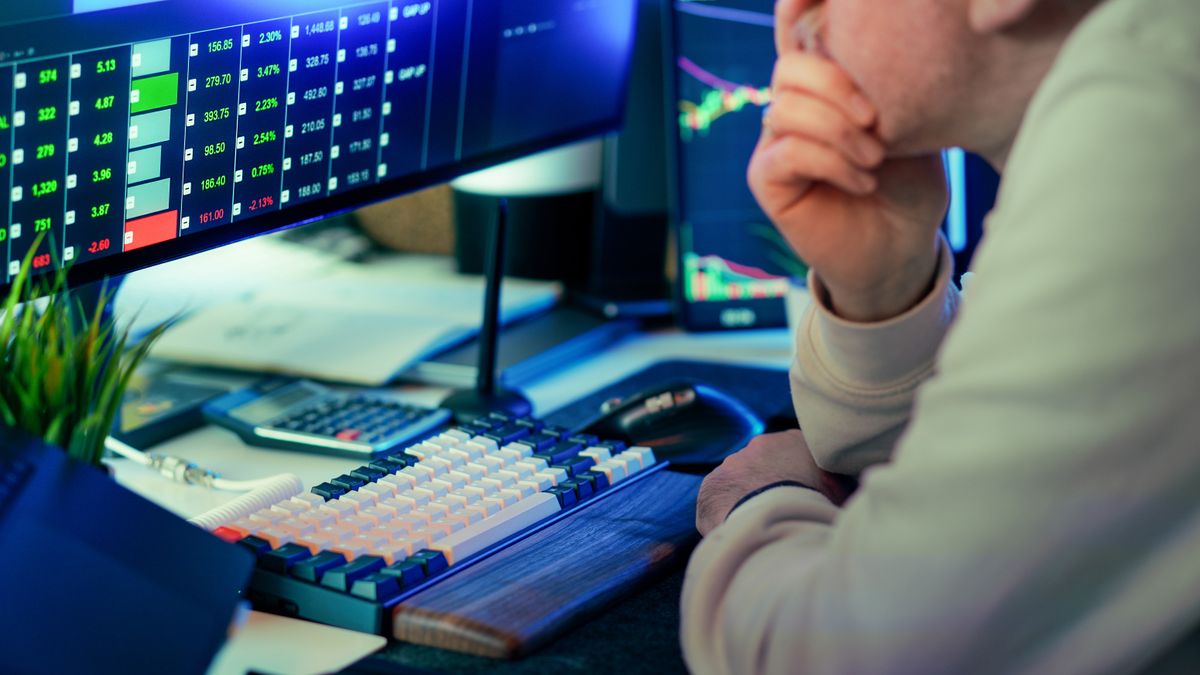
What Is a Prediction Market, Exactly?
A prediction market is a marketplace where people buy and sell contracts linked to the outcomes of future events. Instead of purchasing shares in a company, participants take positions on questions that have clearly defined answers. These questions might involve who will win an election, whether inflation will rise above a certain level or whether a particular product will be released by a particular date.
For example, a platform might create a market asking whether the Federal Reserve will lower interest rates in the next quarter. People who think it is likely can buy a Yes contract, while those who think it is unlikely can buy a No contract. As more participants take part, the price of each contract changes, reflecting the group's overall expectations.
Each market has a question, a deadline and rules explaining how the final outcome will be determined. There is also a source, such as official results, published data or a recognised institution, to settle any disputes.
Many prediction markets use simple Yes-or-No contracts.
Imagine a market asking whether a company will release a new smartphone before December 31, 2026.
A Yes contract pays a specified amount if the announcement happens. A No contract pays if it does not happen.
Suppose the winning contract pays one dollar. If the Yes contract is trading at 70 cents, its price suggests that the market believes there is a 70% chance the phone will be announced before the deadline. If the price is 25 cents, the market is suggesting a 25% chance.
If new information makes the announcement seem less likely, the price might fall to 40 cents. If the phone is announced early, the price will move to 100 cents. If the deadline passes without an announcement, it will fall to zero.
This is the basic mechanism behind prediction markets: participants express their expectations through prices.
It is important to understand that a market price is not a scientifically established probability. It is a reflection of the beliefs of the participants, combined with the money they are willing to commit. Prices may be influenced by incomplete information, emotion, liquidity and other factors.
Prediction markets are also different from traditional opinion polls.
A poll asks people what they think or intend to do. A prediction market asks participants to take financial positions, making their beliefs part of their decisions. That financial commitment may encourage more careful consideration, but it does not eliminate mistakes, misunderstandings or even deliberate attempts to influence prices.
The concept is closely connected to the idea of the wisdom of crowds. Imagine asking a thousand people to estimate the weight of a large pumpkin. Most individual guesses will be wrong, but the average of their estimates may be surprisingly close to the true weight. Something similar happens when many people with different knowledge and perspectives contribute to a market.
Prediction markets attempt to apply a similar principle to future events.
One participant may understand economics. Another may follow political developments. A third may have experience in a particular industry. When their views are combined through prices, the result can be more useful than the opinion of any one person.
However, crowds are not always correct. If participants follow the same misleading information or become caught up in shared beliefs, the crowd can be systematically wrong. Even a well-designed market can produce a poor forecast if its participants lack accurate information or if its trading volume is too small.
The real value of prediction markets therefore lies not in their ability to guarantee the future, but in their ability to bring together knowledge, beliefs and expectations in a form that can be observed and discussed.
A Short History: From Iowa to the Internet
Although prediction markets seem like a product of the modern internet, the idea of putting money behind predictions is much older.
Long before smartphones and cryptocurrency, people were already trading opinions about political outcomes. By the nineteenth century, markets and informal betting on elections in the United States were already common.
New York became an important centre of election betting. At certain points, the volume of money associated with election betting was reported to be considerable, and some contemporary reports suggested that Wall Street participants viewed election odds as a reflection of the political climate.
A major turning point came in 1988 at the University of Iowa.
Three economists, including Robert Forsythe, became interested in whether a marketplace could provide a useful way to predict the results of presidential elections.
The result was the Iowa Electronic Markets, commonly known as IEM.
The project began with presidential election contracts and operated on a small scale. Participants could buy and sell contracts linked to the outcome of an election, with prices reflecting the market's collective judgement.
The market received regulatory permission to operate under specific restrictions, including limits on the amount participants could invest. These restrictions were designed to keep the market small, academic and focused on research rather than profit.
Over time, researchers discovered something interesting. Despite its relatively small number of participants, IEM often produced forecasts that were comparable to, and sometimes more accurate than, traditional opinion polls.
The project demonstrated that financial incentives could encourage people to combine information and share expectations in a way that was more direct and measurable than simply asking them for an opinion.
The next important stage came with the development of internet-based platforms during the late 1990s and early 2000s.
Websites made it possible for participants to access markets from different locations, follow changing prices and trade quickly.
Commercial platforms also appeared. Intrade, an Irish prediction-market exchange launched in 2002, became particularly well known. At its height, Intrade allowed people to trade contracts linked to political events, financial developments, entertainment and other outcomes.
Meanwhile, academic institutions continued experimenting with prediction markets, and businesses began using internal prediction markets to estimate project outcomes, sales and product demand.
The arrival of blockchain technology introduced another development. Platforms such as Polymarket developed markets using cryptocurrency, making it possible for participants in different countries to trade without relying on traditional banking systems.
Kalshi followed a different path, developing a federally regulated exchange in the United States. Its approach focused on operating within existing financial regulations and obtaining approval from the Commodity Futures Trading Commission.
These developments helped transform prediction markets from a relatively small academic experiment into a more accessible and visible part of the financial and information landscape.
The important historical lesson is that the underlying idea is not new. What has changed is the technology, the scale and the speed at which information can be shared.
Why Prediction Markets Took Off in 2024 and 2025
The years 2024 and 2025 marked a particularly important period for prediction markets. Several developments came together at the same time, creating the conditions for rapid growth.
The biggest catalyst was the 2024 United States presidential election.
Political campaigns traditionally generate enormous public interest, but the 2024 election introduced a new element. Prediction markets provided continuously updated probabilities for candidates such as Donald Trump and Kamala Harris, while platforms such as Polymarket and Kalshi displayed continuously changing prices associated with their chances of winning.
For many internet users, this was their first direct encounter with prediction markets.
Instead of simply reading that a candidate was gaining support, people could observe how market participants responded to polling releases, debates, campaign announcements and breaking news.
The markets became part of the election conversation, attracting attention from journalists, financial commentators and social-media creators.
Trading activity increased dramatically. Polymarket alone recorded more than $9 billion in cumulative trading volume during 2024, according to data reported by The Block in January 2025.
But the election was only one part of the story.
The second major factor was the expansion of event contracts into new categories.
Platforms increasingly offered markets involving economic announcements, interest-rate decisions, business developments, technology and sports. This attracted people who were not particularly interested in political forecasting.
The third factor was improved accessibility. Modern platforms offered easier interfaces, mobile access and continuously updated information. Social media also helped market prices spread quickly beyond the platforms themselves.
Finally, investor interest increased. Financial companies and technology businesses began recognising that prediction markets could potentially become more than speculative entertainment. They might also provide useful information about economic expectations and future business conditions.
In 2025, sports-related contracts became particularly important to the industry's expansion. Prediction markets attracted participants who were interested in trading on individual games and competitions, creating new opportunities but also intensifying debates about gambling regulation.
The result was a significant transition. In 2024, elections helped introduce prediction markets to mainstream audiences. In 2025, expanding product categories, technology and commercial investment helped establish them as a much broader industry.
However, rapid growth also brought new challenges. Greater participation does not automatically produce more accurate forecasts, and larger markets require stronger protections against manipulation, misinformation and exploitation.
The popularity of prediction markets therefore represents both a technological opportunity and a regulatory challenge.
How Accurate Are Prediction Markets, Really?
One of the biggest questions surrounding prediction markets is whether they can genuinely predict the future.
The answer is complicated. In some situations, prediction markets have demonstrated impressive accuracy. In others, they have produced results that were misleading, overconfident or simply wrong. The question is not whether markets are always right — they are not — but whether they are often more reliable than the alternatives.
The 2024 United States presidential election provides an important example.
During the campaign, Polymarket attracted enormous attention because its prices frequently suggested that Donald Trump was more likely to win than traditional polls indicated. Some polling models gave Trump a 45% or 50% chance of victory, while Polymarket often placed his probability at 60% or higher.
When Trump won the election, many commentators presented the result as evidence that prediction markets were more accurate than polls.
However, one successful election does not establish that a forecasting system is consistently superior. Researchers need to examine many predictions, including those that failed, and determine whether the results are more accurate over time than comparable methods.
For example, imagine a market that gives an event a 70% probability. If we examine hundreds of comparable predictions, about 70% of them should actually happen. If only 50% occur, the market has been overconfident.
This is more meaningful than simply counting how many predictions were correct.
Another important issue is liquidity. A market with thousands of active participants and substantial trading volume generally provides more reliable signals than a small market with only a few traders.
The identity and independence of participants also matter. If everyone follows the same information source, uses the same model or copies the decisions of others, the market may appear confident even though its participants are not truly independent.
A particularly interesting example involved a French trader who reportedly made approximately $85 million from betting that Trump would win the 2024 election.
The trader, operating through several accounts, attracted attention because of the size and timing of the trades. Some people argued that his success proved the value of prediction markets. Others pointed out that it may have distorted prices and made the market less representative of broader opinion.
The episode demonstrated both the financial opportunities and the unusual risks associated with prediction markets.
Ultimately, prediction markets should be evaluated using long-term evidence, not spectacular individual successes or failures.
What They Predict Well — and Where They Go Wrong
Prediction markets are not equally useful for every type of event. Their performance depends on how clearly an outcome can be defined, how much information is available and how many independent participants are involved.
Some categories appear particularly suitable for market-based forecasting.
Economic announcements are one example. Interest-rate decisions, inflation releases and employment statistics have clearly defined outcomes and reliable official sources. Participants can examine economic reports, central-bank statements and historical patterns before forming expectations.
Political elections can also produce useful markets because they attract substantial public attention and generate large quantities of information. Polling, campaign developments and demographic data provide participants with evidence to evaluate.
Corporate announcements may offer another opportunity, although contracts involving confidential business information require particularly strong safeguards.
However, prediction markets can struggle when events are extremely uncertain or depend on unpredictable human decisions.
A market may assign a low probability to an unexpected political crisis, natural disaster or sudden military development. If the event happens, the forecast may appear dramatically wrong even though the original probability was not necessarily unreasonable.
Markets can also be affected by emotional reactions. A dramatic speech or viral social-media post may temporarily move prices even when the underlying evidence has not changed significantly.
Low trading volume creates another problem. A contract showing an 80% probability may appear convincing, but if that price comes from very limited activity, it may not represent a reliable collective assessment.
There is also the problem of ambiguous questions. If participants disagree about what qualifies as an event, the final settlement can become controversial.
For example, a market asking whether a company will launch a product needs to distinguish between announcing a prototype, opening pre-orders and beginning commercial sales.
The most useful prediction markets therefore share several characteristics: clearly defined outcomes, reliable settlement sources, meaningful liquidity and participants with access to different kinds of information.
The central lesson is simple. Prediction markets can be powerful forecasting tools, but they are not universal truth machines. Their prices deserve attention, comparison and critical examination, especially when the stakes are high.

Inside the Machines: How Prices Become Predictions
Behind every prediction-market percentage is a system that connects buyers, sellers, trading orders and settlement rules.
The process usually begins when a platform creates a market with a clearly defined question. For example, a market might ask: 'Will the central bank increase interest rates by the end of June 2026?'
The platform publishes the contract rules, deadline and settlement conditions. Participants can then examine the question and decide whether to buy Yes or No contracts.
Some prediction markets use order books, similar to traditional financial exchanges. An order book displays buy and sell offers at different prices, allowing participants to see how much interest exists at each price level.
Other platforms use automated market-making mechanisms. These systems help facilitate trading by using a formula to calculate the price after each transaction, ensuring there is usually someone willing to trade.
Consider a simplified example. A Yes contract is available for 40 cents. A participant believes the actual probability is 65%, so the contract appears undervalued. The participant buys it, pushing the price upward.
Another participant might decide that the contract has become too expensive and sell an existing position. The price would then fall. If many people buy the contract, its price will keep rising, suggesting growing confidence.
This continuous interaction between buyers and sellers helps establish the market price.
The mathematical interpretation is relatively straightforward for a binary contract paying one dollar. If the price is 60 cents, the market-implied probability is 60%. If the price is 95 cents, it is 95%.
However, the displayed probability is not necessarily the same as the true probability of an event. Market prices are affected by transaction fees, limited liquidity, the need for compensation for risk and the differing views of participants.
A market may be influenced by participants with different financial resources, different levels of information and different willingness to take risks. Prices reflect how those participants behave in a particular environment, not the outcome of a perfect calculation.
Technology also plays an important role in settlement.
When the event occurs, the platform must determine the correct outcome using the evidence specified in the contract. For example, a political market might rely on official results published by a recognised authority, while an economic market might rely on government statistics.
The reliability of this final stage is essential. Even an active market becomes useless if participants do not trust its settlement process.
As the industry develops, platforms will likely invest more heavily in market surveillance, automated settlement and tools designed to detect suspicious activity.
The Legal Battle: Kalshi, the CFTC and the Courts
The growth of prediction markets has created a major regulatory debate in the United States. At its core is a question about the nature of prediction markets: are they financial instruments or forms of gambling?
The Commodity Futures Trading Commission, commonly known as the CFTC, regulates important parts of the US financial system. It has responsibility for derivatives markets, where participants can trade contracts related to future prices, commodities and events.
Kalshi operates as a federally regulated designated contract market. This means its qualifying event contracts are designed to operate under federal oversight rather than state gambling rules.
However, the legal position became controversial when Kalshi attempted to introduce contracts connected to US election outcomes.
The CFTC objected, arguing that the proposed contracts involved prohibited gaming activity under the Commodity Exchange Act.
Kalshi challenged the decision in court.
On September 12, 2024, the US District Court for the District of Columbia ruled in Kalshi's favour regarding the specific congressional-control contracts. The court concluded that the CFTC had exceeded its authority in prohibiting them.
The decision was a major development because it opened the way for election-related contracts on the exchange.
However, it did not establish that every prediction-market product was automatically legal.
The disagreement continued as platforms expanded into sports-related contracts. Several states argued that these products resembled gambling and should fall under state gaming laws.
The CFTC and industry participants maintained that qualifying contracts traded on federally regulated exchanges were subject to federal derivatives oversight.
Different court decisions during 2026 demonstrated that the relationship between federal and state authority remains complicated.
In August 2026, a Ninth Circuit appeals court ruled that Kalshi could not prevent Nevada gaming regulators from overseeing its sports-related prediction markets.
The issue is important because the outcome could influence how prediction markets operate across the country.
Regulation also involves more than deciding which agency has authority. Exchanges must address insider information, market manipulation, product notifications, consumer protection and settlement disputes.
For example, on November 10, 2026, Reuters reported that the CFTC had warned Kalshi of possible charges concerning notifications for planned products. Kalshi described the issue as procedural and said it was addressing it.
The broader lesson is that prediction markets are growing faster than some existing regulatory frameworks can comfortably accommodate.
Their future will depend partly on whether regulators and courts can establish clearer rules that protect consumers while allowing legitimate financial innovation.
The 2026 Landscape: Mainstream, but Still Young
By November 2026, prediction markets have moved considerably beyond their earlier position as small academic experiments or niche betting platforms.
Kalshi and Polymarket have become two of the most recognisable names in the industry, but the wider ecosystem is expanding too. New services are exploring market-data analysis, forecasting tools and ways to integrate prediction-market information into business intelligence.
One important development is the growing interest in economic forecasting. Rather than concentrating exclusively on political elections, platforms are offering contracts related to inflation, employment, central-bank decisions and other economic indicators.
This creates opportunities for businesses and researchers interested in understanding how expectations change when new information becomes available.
Artificial intelligence could accelerate this development. AI systems can analyse financial reports, government announcements and large collections of public information. Combined with prediction-market data, these tools could help researchers identify changes in expectations more quickly.
However, the technology is still young. Market prices can be misleading, liquidity varies considerably and the legal environment remains uncertain.
There are also questions about whether prediction markets can maintain public trust as they become more commercially important.
A platform that generates significant trading activity but fails to protect participants from manipulation or unclear settlement rules may eventually damage confidence in the entire industry.
Another challenge concerns the types of events that should be tradable. Markets involving political decisions, public safety and human suffering can create ethical problems that go beyond ordinary financial risk.
The next stage of development will therefore depend on more than attracting new users. Platforms will need reliable technology, clear rules, effective oversight and responsible product design.
Prediction markets may eventually become a permanent part of the global information economy. But their long-term importance will depend on whether they can demonstrate consistent value without sacrificing fairness and public confidence.
What This Means for You
You do not need to trade prediction contracts to benefit from understanding this technology.
For ordinary readers, prediction markets offer another way to observe how people interpret information.
Imagine reading that a central bank is expected to reduce interest rates. Instead of relying on one newspaper headline, you could examine the relevant prediction-market prices, compare them with official economic forecasts and investigate why participants expect a particular decision.
The same approach can help when following elections, technology announcements or major business developments.
However, there are several principles worth remembering.
First, never treat a market price as a guaranteed outcome. A 75% probability still leaves room for the event not to happen.
Second, examine trading activity. A price supported by limited transactions may provide a misleading impression of public expectations.
Third, compare different information sources. Traditional polls, academic research, official announcements and economic statistics remain important.
Fourth, understand the legal and financial risks before considering any participation. Platform availability does not automatically mean that a product is legally authorised in your country.
For readers in Morocco and elsewhere outside the United States, local regulations, payment restrictions and platform eligibility deserve particular attention.
Finally, recognise the psychological risks. Repeatedly checking prices, chasing losses or treating predictions as a source of guaranteed income can lead to harmful financial decisions.
Prediction markets are most useful when approached as information tools rather than shortcuts to making money.
Their greatest potential may lie in helping people ask better questions about uncertainty, evaluate competing expectations and understand how new information changes the way society views the future.
Key Takeaways
- Prediction markets allow people to trade contracts linked to future events.
- Their prices represent market-implied probabilities, not guaranteed outcomes.
- The 2024 US presidential election helped introduce prediction markets to mainstream audiences.
- Kalshi and Polymarket are major platforms with different operating structures and regulatory histories.
- Academic research suggests that prediction markets can provide useful forecasting information, but their accuracy varies.
- The CFTC and state regulators continue to debate the legal treatment of certain event contracts.
- Insider trading, manipulation, low liquidity and gambling-related harm remain important concerns.
- Artificial intelligence could improve forecasting research while introducing additional risks.
- Prediction markets can be studied without placing money on an event.
- Their long-term success will depend on accuracy, transparency, regulation and public trust.
Frequently Asked Questions
Are prediction markets legal?
It depends on where you live and which platform you use. In the United States, Kalshi operates as a federally regulated exchange, while Polymarket has historically served users outside the US. Some states have challenged sports and election contracts in court. Always check the rules in your country before using one.
Are prediction markets better than polls?
Sometimes. Markets often update faster than polls and can reflect new information quickly. But polls and markets answer slightly different questions: a poll estimates how people say they will vote, while a market estimates the probability of an outcome. Neither is perfect, and comparing them is usually more useful than choosing one.
Can you make money from prediction markets?
Some people do, and many do not. Markets reward accurate information and good judgement, but they also involve fees, risk and competition from experienced traders. They should not be treated as a reliable source of income.
What is the difference between Kalshi and Polymarket?
Kalshi is a US-regulated exchange that uses US dollars and lists event contracts under CFTC oversight. Polymarket is a crypto-based platform that has mainly served users outside the US and uses stablecoins such as USDC. Their products, rules and availability differ, so check the platform's terms for your location.
Do prediction markets influence the events they predict?
They can. Large trades can move prices and attract media attention, which may influence public perceptions. Markets are supposed to reflect beliefs, but when trading becomes news, the line between prediction and influence can blur.
Are prediction markets safe for beginners?
They carry real financial risk. Start by reading the market's rules, understanding how settlement works, and only risking money you can afford to lose. Many people use prediction markets simply as a source of information, without trading at all.
Sources and Further Reading
- CFTC — Kalshi LLC, Docket No. 24-04 — cftc.gov
- Kalshi — "What is Kalshi?" — kalshi.com
- The Block — "Polymarket hits record $9 billion in trading volume in 2024" — theblock.co
- Reuters — "CFTC warns Kalshi of possible charges over product notifications" — reuters.com
- Polymarket — polymarket.com
- Iowa Electronic Markets — Tippie College of Business, University of Iowa — iemweb.biz.uiowa.edu
This article is for general information only and is not financial advice. Market prices change constantly, and some figures cited here were accurate at the time of writing but may have changed. If you are considering trading, check the platform's rules and the laws in your country first.
The conversation
Post a Comment