
Quantum Computing in 2026: The Machines That Could Break the Internet — and Build the Future
In a basement laboratory in New York, a machine hangs like a chandelier made of gold. It does not hum like a server, or glow like a television. It is cold — colder than outer space — and almost silent. Inside it, tiny pieces of metal and silicon are doing something no ordinary computer can do: they are holding many possibilities at once, and letting those possibilities interfere with each other, like waves in water, until an answer emerges.
That machine is a quantum computer. For decades it lived mostly in physics papers and science fiction. In 2026, it is still not in your pocket, and it will not replace your laptop. But it is no longer a distant idea either. Governments are spending billions on it. Companies are building larger, steadier machines every year. Scientists are using them to study molecules, materials, and problems that ordinary computers struggle with. And security experts are quietly preparing for the day — still years away, and still uncertain — when a powerful quantum computer might be able to break much of the encryption that protects the internet.
This article is a calm, careful look at where quantum computing actually stands in 2026. What can these machines really do now? What can they not do? Who is ahead in the race, and what does it mean for encryption, medicine, and everyday life? The honest answer is more interesting, and less dramatic, than most headlines suggest.

Key Takeaways
- Quantum computers use qubits, which can hold many possibilities at once, instead of ordinary bits, which are either 0 or 1.
- In 2026, quantum computers are real and useful for research, especially for simulating molecules and materials, but they are still small, fragile, and specialised.
- They are not faster than ordinary computers at most everyday tasks, and they will not replace your phone or laptop.
- The race is led by companies including IBM, Google, Microsoft, IonQ, Rigetti, and PsiQuantum, and by governments in the United States, China, and Europe.
- A future, much larger quantum computer could one day threaten today's encryption — but experts do not agree on when, and the world is already moving to post-quantum cryptography.
- The most promising near-term uses are in chemistry, materials science, and medicine, where quantum machines can model nature more directly.
What Is a Quantum Computer, Anyway?
A Machine That Thinks in Possibilities
An ordinary computer thinks in bits. A bit is like a light switch: it is either off, which we call 0, or on, which we call 1. Every photo, message, song, and spreadsheet you have ever used was built from millions — in fact, billions — of these tiny switches flipping in carefully organised patterns. Ordinary computers are astonishingly good at this. They are fast, reliable, and cheap, and they have changed the world.
A quantum computer thinks differently. Its basic unit is called a qubit. A qubit can be 0, or 1, or — and this is the strange part — a combination of both at the same time. Physicists call this superposition. Imagine a coin spinning in the air. While it spins, it is not simply heads or tails. It is, in a sense, both at once, until it lands. A qubit is a little like that spinning coin: it holds several possibilities together until you measure it, and the measurement makes it settle on one answer.
That alone would not be very useful. The real power comes when qubits are linked together in a phenomenon called entanglement. When qubits are entangled, changing one can instantly affect another, even though they are separate. It is as if two spinning coins always land in a coordinated way, no matter how far apart they are. Entangled qubits can explore many combinations at once, in a way that ordinary bits cannot.
There is a third idea that matters: interference. A quantum computer arranges its calculations so that wrong answers cancel each other out, like waves cancelling in a pond, while right answers reinforce each other and grow stronger. When it works, the correct answer stands out at the end, like a single clear note emerging from a chord.
How Qubits Are Different
It helps to think of the difference with a familiar puzzle. Suppose you need to find a single name in a phone book with a million entries. An ordinary computer checks the entries one by one, very quickly. A quantum computer, in theory, can explore many entries at the same time, because its qubits hold many possibilities together. That does not mean it checks a million entries instantly. It means that for certain kinds of problems — problems with a particular mathematical shape — it can find an answer with far fewer steps.
That phrase, “certain kinds of problems,” is the key to the whole subject. Quantum computers are not simply faster computers. They are different computers, good at different things. Asking whether a quantum computer is faster than a laptop is a little like asking whether a submarine is faster than a bicycle. It depends entirely on where you are going.
Qubits themselves come in several forms. Some machines use superconducting circuits, cooled to temperatures colder than outer space, where electric current can flow without resistance. Others trap individual atoms or ions in electromagnetic fields and control them with lasers. Others use photons, the particles of light, travelling through tiny optical circuits. Each approach has strengths and weaknesses, and in 2026 no single approach has clearly won. That is one reason the field feels both exciting and unsettled: several very different kinds of machine are competing, and each is improving.
Why Entanglement Matters
Entanglement is often described as spooky, and it is genuinely strange. But for practical purposes, think of it as teamwork. A single qubit is interesting. A hundred entangled qubits can represent an enormous number of combinations at once — far more than a hundred ordinary bits could. In principle, a few hundred well-controlled qubits could represent more possibilities than there are atoms in the observable universe.
In practice, that promise is hard to keep. Qubits are fragile. The slightest vibration, a tiny change in temperature, or a stray electromagnetic field can disturb them, a problem called decoherence. It is like trying to keep a hundred spinning coins perfectly balanced on a table during an earthquake. Keeping them steady long enough to finish a calculation is one of the hardest engineering challenges in modern science, and it is the reason quantum computers live in specialised laboratories, inside dilution refrigerators that cool them to a fraction of a degree above absolute zero.
That fragility also explains why progress is measured not only in the number of qubits, but in their quality. A machine with many noisy qubits may be less useful than a machine with fewer, steadier ones. In recent years, researchers have made real progress on error correction — using many physical qubits to make one reliable, logical qubit — but this is still early work. Error correction is the bridge between today's experimental machines and tomorrow's practical ones, and crossing it will take time.
What Quantum Computers Can Actually Do in 2026
So what can these machines do right now? The honest answer is: some genuinely useful, genuinely interesting things, mostly in research — and far less than the headlines sometimes imply.
1. Simulate Molecules and Materials
This is the most promising use, and the one closest to the original dream of quantum computing. Molecules are quantum systems. Their electrons behave according to the rules of quantum mechanics, and ordinary computers have to work very hard to simulate even a small molecule accurately. A quantum computer, by contrast, speaks the same language as nature. It can model how atoms bond, how electrons move, and how a new material might behave, in a more direct way.
In 2026, researchers are using quantum computers to study small molecules, catalysts, and materials for batteries and solar cells. These are early, small-scale studies, not yet the discovery of a revolutionary new drug or a perfect battery. But they are real, and they are teaching scientists how to ask better questions. A catalyst that makes a chemical reaction cheaper, or a material that stores energy more efficiently, could matter enormously — and quantum simulation is one of the few tools that might help find it.
2. Solve Optimisation Problems
Many real-world problems are optimisation problems: finding the best route for a fleet of delivery trucks, the best schedule for an airline, or the best way to arrange a portfolio of investments. There are often too many possible combinations for an ordinary computer to check them all. Quantum computers, and related machines called quantum annealers, can explore many combinations at once and suggest good — though not always perfect — solutions.
Companies in logistics, finance, and manufacturing are experimenting with this now, often in hybrid systems where a quantum computer works alongside an ordinary computer. The ordinary computer does the bookkeeping, and the quantum computer tackles the hardest part of the puzzle. Results so far are mixed and modest, but the experiments are teaching both sides what works and what does not.
3. Help with Machine Learning and Data
Quantum machine learning is a young and uncertain field. The idea is that quantum computers might spot patterns in data that ordinary computers miss, or process certain kinds of data more efficiently. In 2026, this is mostly research, not a product you can buy. Some experiments show promise; others show that ordinary machine learning, running on powerful modern chips, is still hard to beat. It is fair to say that this area is full of potential, and full of unanswered questions.
4. Make Randomness and Precision Measurements
Quantum computers are also good at generating true randomness, which matters for security and for scientific simulations. And the same delicate technology that makes qubits fragile also makes them exquisitely sensitive to tiny changes — a property that can be used for precise sensors, for measuring magnetic fields, gravity, or time with extraordinary accuracy. These uses are less glamorous than breaking codes, but they may arrive sooner, and they may matter in medicine, navigation, and geology.
5. Run Quantum Simulations for Science
Beyond chemistry, physicists are using quantum computers to study the behaviour of matter itself: how materials become superconductors, how magnets order themselves, and how particles interact. These are questions that are hard to answer with pen and paper, and hard to simulate on ordinary computers, because the number of possibilities grows so quickly. Quantum computers offer a new laboratory for these questions — a laboratory made of quantum matter itself.
That list may sound modest, and it is. But it is also real. In 2026, quantum computers are research instruments, used by scientists and engineers to learn, to test ideas, and to solve small but genuine problems. They are not yet the general-purpose machines of science fiction. The progress is steady rather than sudden, and that steadiness is itself a sign of a field maturing.
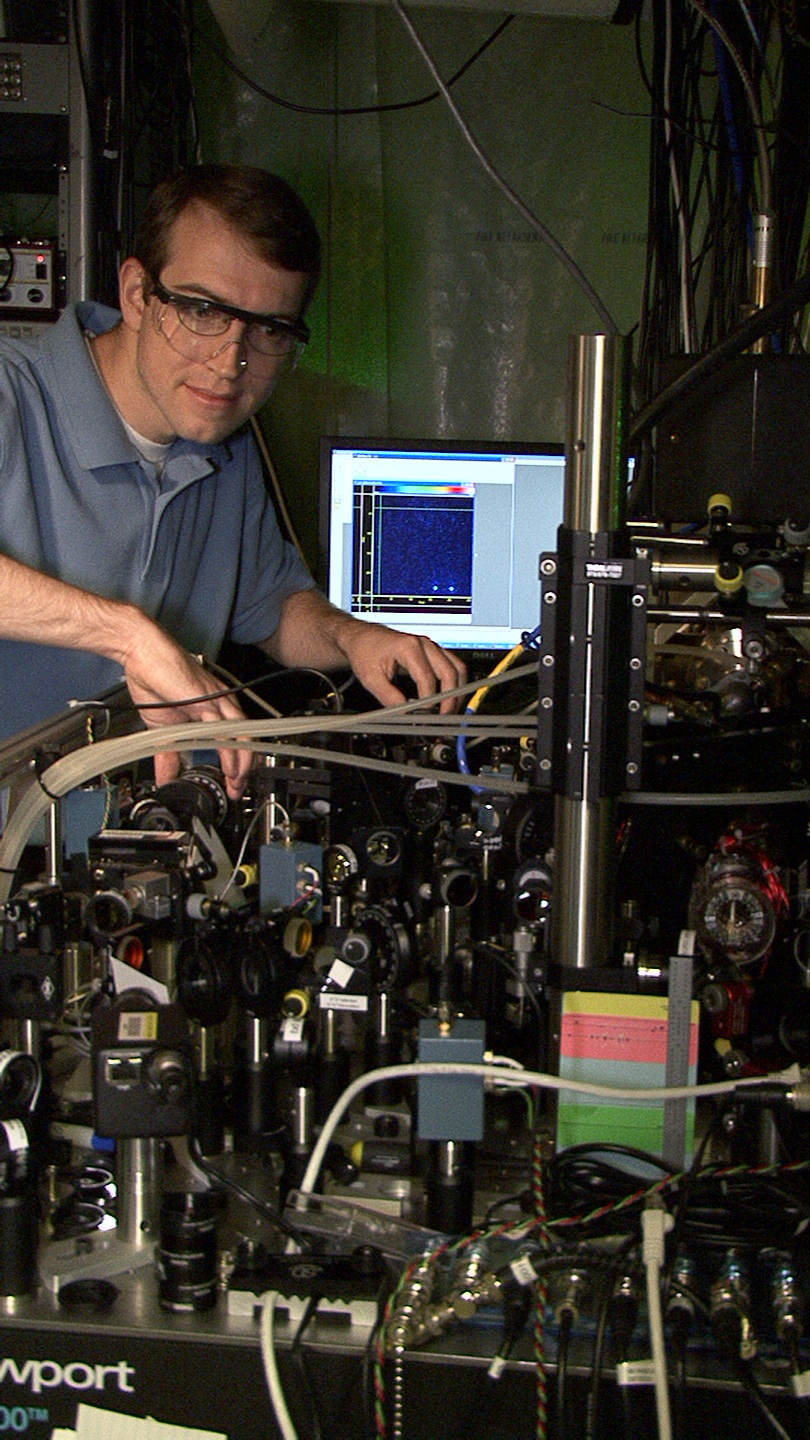
What Quantum Computers Cannot Do — Yet
They Are Not Faster at Everything
The most common misunderstanding about quantum computers is that they are simply faster versions of ordinary computers. They are not. For most tasks — writing an email, editing a photo, streaming a film, running a spreadsheet — an ordinary computer is far better, far cheaper, and far more reliable. A quantum computer would be a terrible, expensive way to check your messages.
Even for the problems where quantum computers might one day excel, today's machines are limited. They have relatively few qubits, those qubits make errors, and a calculation can only run for a short time before the qubits lose their delicate state. That means the problems they can solve today are small. Scaling up — adding more qubits while also making them more reliable — is the central challenge of the field.
They Are Still Small and Fragile
Think of today's quantum computers as the early aeroplanes of the 1900s: they fly, sometimes impressively, but they are fragile, expensive, and not yet ready to carry passengers across an ocean. The Wright brothers' first flight lasted 12 seconds. Nobody in 1903 could have booked a ticket to Paris. But the flight proved that heavier-than-air flight was possible, and that was enough to change everything, eventually.
Quantum computers are at a similar stage. They have proved that quantum computation works. They have solved some problems faster than ordinary computers in carefully designed demonstrations. But turning those demonstrations into reliable, everyday tools will require years of engineering: better qubits, better error correction, better software, and better ways to connect quantum machines to the ordinary computers that will always do most of the work.
They Are Not Ready to Replace Ordinary Computers
It is unlikely that quantum computers will ever replace ordinary computers. A more likely future is a hybrid one: ordinary computers for ordinary work, quantum computers for the specific problems where they help, connected through the cloud. You might one day use a quantum computer without knowing it, just as you already use distant data centres without thinking about them, when you ask a question, search for a route, or design a new medicine. The quantum part will be invisible, working quietly in the background on the hardest part of the problem.
The Quantum Race: Companies and Countries
If quantum computing feels like a race, that is because, in part, it is. Companies are competing to build better machines. Countries are competing to train scientists, fund laboratories, and set standards. And, as with earlier technologies, the race is both about prestige and about practical advantage: whoever masters quantum computing first may gain an edge in science, industry, and security.
The Companies Building the Machines
IBM has been one of the most visible leaders, building superconducting quantum computers, making them available through the cloud, and publishing a public roadmap for larger, more reliable machines. Its Quantum System One, the golden chandelier in the photograph above, has become the public image of quantum computing — a beautiful, strange object that looks more like sculpture than machinery.
Google's Quantum AI team made headlines in 2019 with a demonstration, often called quantum supremacy, in which its Sycamore processor performed a specific calculation much faster than the best ordinary supercomputer available at the time. The claim was debated — other researchers argued that ordinary computers could do the same task faster than first thought — but the demonstration showed that quantum hardware had reached a new level. Since then, Google has focused on error correction, showing that it can make logical qubits more reliable as it adds more physical qubits, a crucial step toward practical machines.
Microsoft is taking a different path, working on topological qubits, a design that, in theory, should be more resistant to errors. It is a riskier approach, and progress has been slower and more contested, but if it works, it could be a significant advantage. Microsoft is also building a cloud platform that brings together quantum hardware from several different companies, so that researchers can try different machines without owning one.
IonQ and Rigetti are smaller, specialised companies, using trapped ions and superconducting circuits respectively, and offering their machines through the cloud. PsiQuantum is pursuing a photonic approach, using light, and aiming to build a very large, fault-tolerant machine. There are many others — in the United States, Europe, Canada, Japan, and elsewhere — each betting on a different technology, a different design, or a different part of the problem. In 2026, it is still too early to say which approach will win, or whether several will coexist, each suited to different tasks.
The Countries Investing in Quantum
The United States has invested heavily through government programmes, universities, and private companies, and it is home to many of the leading firms. China has also invested very heavily, building large research centres, launching a quantum communications satellite, and publishing important results in quantum communication and computing. Europe, through the European Union and through national programmes in Germany, France, the Netherlands, and the United Kingdom, is funding research, building machines, and trying to keep its scientists and companies competitive. Japan, Canada, Australia, and other countries are also investing, often by focusing on a particular strength, such as photonics, materials, or software.
This competition is real, but it is not only competition. Science is also collaborative. Researchers publish papers, attend the same conferences, and build on each other's work. A breakthrough in one country is soon read, tested, and improved in another. The race is therefore less like a sprint with a single winner, and more like a long expedition in which several teams are climbing the same mountain by different routes, sometimes helping each other, sometimes trying to get there first.
There is also a quieter, more cautious side to the race. Governments worry about security. If a powerful quantum computer could break encryption, then the country that builds one first might be able to read secrets that others thought were safe. That worry — sometimes called “harvest now, decrypt later,” the idea of collecting encrypted data today and decrypting it in the future — is one reason governments are investing so much, and one reason they are also working to replace vulnerable encryption before it is too late.
What Quantum Computing Means for Encryption
The Problem with Today's Codes
Almost everything you do online is protected by encryption. When you log in to your bank, send a message, or buy something, your device and the server agree on a secret code, using mathematics that is easy to do in one direction and very hard to reverse. The most common system, called RSA, relies on the fact that it is easy to multiply two large prime numbers together, but very hard — for an ordinary computer — to work backwards and find the original numbers from the result.
A large, reliable quantum computer could change that. In 1994, the mathematician Peter Shor showed that a quantum computer could, in theory, factor large numbers far more efficiently than an ordinary computer. If a machine with enough reliable qubits were built, it could break RSA and similar systems, and with them, much of the security of the internet as we know it. That is why the headline “quantum computers could break the internet” is not pure fantasy. It is a real, mathematical possibility.
But — and this is an important but — such a machine does not exist yet. Breaking RSA as it is used today would require millions of reliable, error-corrected qubits, far more than today's machines have. Estimates of when such a machine might appear vary widely, from a decade to several decades, and some experts think it may never be practical. The uncertainty is genuine. What is certain is that the risk is taken seriously by governments, banks, and technology companies, and that they are not waiting to find out.
Post-Quantum Cryptography: Preparing Now
The response is called post-quantum cryptography: new encryption methods that are designed to be secure against both ordinary and quantum computers. The US National Institute of Standards and Technology (NIST) has been running a long, careful process to choose and standardise these new methods, and in recent years it has announced the first standards. Companies and governments are now beginning to move to these new systems, a slow, expensive, but necessary process, like replacing the locks on every door in a very large city.
For most people, this change will be invisible. Your browser, your phone, and your bank will update their software, and you will not need to do anything. But for organisations that keep secrets for a long time — governments, hospitals, banks — the change matters now, because data encrypted today could, in theory, be stored and decrypted in the future. That is why the advice is to prepare early, even though the threat is not immediate.
There is also a brighter side. Quantum mechanics itself offers new ways to communicate securely, called quantum communication and quantum key distribution, in which the laws of physics make eavesdropping detectable. These systems are already being tested, including over satellites, and they may one day provide a new kind of security. But they are expensive, limited in distance, and not a replacement for ordinary encryption. The future of security is likely to be a mix: better mathematics, better engineering, and, in some cases, quantum physics itself.
What It Could Mean for Medicine
Drug Discovery, Molecule by Molecule
Medicine may be where quantum computing makes its most human difference. Developing a new drug is slow and expensive, often taking a decade and costing billions. Much of that time is spent testing molecules, trying to find one that binds to a disease-causing protein in just the right way, without harming the rest of the body. Ordinary computers can help, but they struggle to model molecules accurately, because molecules are quantum systems.
A quantum computer could, in theory, model a molecule more directly, predicting how it will behave before it is ever made in a laboratory. That could help scientists find promising drugs faster, design them more precisely, and avoid dead ends. It could also help design new materials for medical devices, better catalysts for making drugs, and new ways to understand diseases at the molecular level.
In 2026, this is still a promise, not a product. Researchers have simulated small molecules on quantum computers, and pharmaceutical companies are partnering with quantum firms to explore what is possible. But no drug on the market today was discovered by a quantum computer, and none is likely to be in the next few years. The timeline is long, and the science is hard. What is changing is that the experiments are becoming more serious, more specific, and more grounded in real chemistry, rather than in abstract demonstrations.
Proteins, Biology, and the Long Timeline
Proteins are large, complex molecules that fold into intricate shapes, and their shape determines what they do. Understanding protein folding has already been transformed by ordinary artificial intelligence, notably by systems such as AlphaFold, which can predict protein structures with remarkable accuracy. Quantum computers may one day add to this, by modelling the quantum behaviour of electrons inside proteins, or by simulating how a drug interacts with a protein in motion.
Again, the key word is “may.” Biology is messy, warm, and wet, and quantum computers are cold, delicate, and precise. Bridging that gap will take time, and it will require close collaboration between physicists, chemists, biologists, and doctors. The most likely path is not a sudden breakthrough, but a gradual one: quantum computers helping with one small, hard part of a larger problem, while ordinary computers and AI handle the rest.
For patients, the honest message is this: quantum computing will not cure a disease tomorrow. But over the next decade or two, it may help scientists understand diseases better, design drugs more cleverly, and develop treatments that are more personal — tailored to an individual's biology, rather than to an average patient. That is a hopeful, but not immediate, prospect.
What It Could Mean for Everyday Life
The Invisible Upgrade
Most people will never see a quantum computer, and most will never need to. Like the supercomputers that forecast the weather, or the data centres that store your photos, quantum computers will work in the background, in specialised facilities, accessed through the cloud. You will notice their effects, if at all, in the form of better medicines, more efficient batteries, cheaper fertilisers, better weather forecasts, or more secure communications — not in the form of a new device on your desk.
That invisibility is normal for deep technology. The most important technologies are often the ones you do not see. You do not think about the transistors in your phone, or the mathematics that keeps your messages private. Quantum computing, if it succeeds, will join that quiet infrastructure: powerful, important, and largely invisible.
Work, Skills, and New Jobs
Quantum computing will also create new kinds of work. There will be a need for quantum engineers, who build and maintain the machines; quantum software developers, who write programmes for them; and scientists who know how to ask the right questions. Universities are already adding quantum courses, and companies are training staff. But it is important not to exaggerate. Quantum computing will not create millions of jobs overnight, and it will not make every programmer obsolete. For most people, the more important skill will be understanding what quantum computers can and cannot do, so that they can use them wisely when the time comes.
A Fair Question: Who Benefits?
New technologies often benefit some people before others. Quantum computers are expensive, and in the early years they will be available mainly to large companies, wealthy universities, and governments. That raises a fair question: will the benefits — new drugs, new materials, new security — be shared widely, or will they be concentrated among the few?
There is no simple answer. But there are encouraging signs: many quantum machines are available through the cloud, at relatively low cost, to researchers and students around the world. Open-source software is making it easier to learn and experiment. And governments are funding public research, not only private companies. Whether quantum computing becomes a tool for everyone, or only for the powerful, will depend on the choices we make now — about funding, education, access, and regulation.
The Risks, the Hype, and What We Do Not Know
How to Read a Quantum Headline
Quantum computing attracts bold headlines, and it is worth learning how to read them. When you see a claim that a quantum computer has “solved a problem in seconds that would take a supercomputer thousands of years,” ask a few questions. What problem was it? Was it a useful problem, or a problem designed to show off the machine? Could an ordinary computer solve it faster with a better method? Was the result checked by independent researchers?
Often, the honest answer is more modest than the headline. A demonstration may be real and important, and still not mean that quantum computers are ready for everyday use. Progress in this field is real, but it is incremental. The machines get a little bigger, a little steadier, a little more useful, year by year. That is how most technologies develop — not in a single leap, but in many small steps, each building on the last.
There are also genuine risks to watch. The security risk is real, even if it is distant. The concentration of power is a real concern. And there is a risk of disappointment: if promises are made too loudly, and then not kept, public trust and funding may fade, as happened in earlier waves of excitement about artificial intelligence. The best protection against all of these risks is honesty: clear, careful communication about what is known, what is demonstrated, and what is still uncertain.
What we do not know is still large. We do not know which type of qubit will win, or when error correction will be good enough for large, practical calculations. We do not know exactly when a quantum computer might threaten today's encryption, or whether it ever will. We do not know which applications will turn out to be most useful, or which will turn out to be dead ends. That uncertainty is not a failure. It is the normal state of a young science, and it is why the work is so interesting.
A Short, Honest Timeline
It is tempting to ask for a date: when will quantum computers change the world? Any single date would be misleading, because change will happen gradually, in different fields at different times. But a rough, honest timeline might look like this. In the next few years, quantum computers will get bigger and more reliable, and researchers will use them for more serious chemistry, materials science, and optimisation problems. Error correction will improve, and the first logical qubits will become more practical.
In the next decade, we may see the first genuinely useful quantum advantage for a real, practical problem — a problem that matters outside a laboratory, and that a quantum computer solves better, faster, or cheaper than an ordinary computer. We may also see the widespread adoption of post-quantum cryptography, as organisations replace vulnerable encryption.
Beyond that, in the 2030s and later, if error correction continues to improve, we may see larger, fault-tolerant machines that can tackle bigger problems in drug discovery, materials design, and security. Or we may find that progress is slower, and that quantum computers remain specialised research tools for longer than expected. Both outcomes are possible, and both would still be a form of progress.
What to Watch Next
If you want to follow quantum computing without being misled, watch a few simple things. Watch error rates, not just qubit counts: a machine with fewer, steadier qubits may be more useful than one with many noisy ones. Watch for independent verification: results that are checked by other teams, in other laboratories, are more trustworthy than announcements alone. Watch for useful problems: a machine that solves a real chemistry or logistics problem is more significant than one that wins a contrived race. And watch for the quiet work: better software, better cooling, better control electronics, and better education — the unglamorous engineering that turns a laboratory curiosity into a reliable tool.
Conclusion: A Machine for the Patient
Quantum computing in 2026 is not magic, and it is not a myth. It is a real, difficult, and fascinating technology, at an early but genuine stage. It can already do things that ordinary computers cannot, and it cannot yet do many things that people hope it will. It is being built by companies and countries that are competing, cooperating, and learning, often at the same time. It may one day help us design better medicines, cleaner energy, and more secure communications. It may also force us to rethink how we protect our secrets.
Perhaps the best way to think about it is this: a quantum computer is a machine for the patient. It rewards careful questions, honest measurement, and steady engineering. It does not promise instant answers. It promises a new way of thinking about problems — a way that, if we are patient and careful, may help us understand the world a little better, and build a future a little more wisely. The chandelier in the basement laboratory is cold and quiet. But inside it, something new is happening, and it is worth watching, calmly, and with curiosity.
Frequently Asked Questions
What is a quantum computer in simple terms?
A quantum computer is a computer that uses qubits instead of ordinary bits. Qubits can hold many possibilities at once, thanks to superposition and entanglement, which lets the machine explore certain problems in a different way from an ordinary computer. It is not simply a faster laptop; it is a different kind of machine, suited to different problems.
What can quantum computers do in 2026?
In 2026, they can simulate small molecules and materials, help with certain optimisation problems, run research experiments in physics and chemistry, and generate true randomness. They are mainly research tools, used by scientists and companies through the cloud, rather than everyday devices.
Will quantum computers break the internet?
Not now, and not soon. A future, much larger quantum computer could, in theory, break some of today's encryption, including RSA. But such a machine would need millions of reliable qubits, far more than exist today. Governments and companies are already moving to post-quantum cryptography, which is designed to resist quantum attacks.
When will quantum computers be useful for everyday people?
Most people will probably never use a quantum computer directly. Its effects may reach everyday life indirectly, through better medicines, materials, batteries, and security, over the next decade or two. Ordinary computers will continue to do most everyday work.
Who is leading the quantum race?
Companies including IBM, Google, Microsoft, IonQ, Rigetti, and PsiQuantum are among the leaders, using different technologies. The United States, China, and Europe are the largest public investors, with Japan, Canada, the United Kingdom, and others also investing heavily.
What is a qubit?
A qubit is the basic unit of quantum information, like a bit in an ordinary computer. Unlike a bit, which is 0 or 1, a qubit can be in a combination of 0 and 1 at the same time, a state called superposition, until it is measured.
Are quantum computers dangerous?
They are not dangerous in themselves. The main concern is security: a powerful future quantum computer could threaten today's encryption if we do not replace it in time. That is why post-quantum cryptography is being developed now. Quantum computers also raise questions about who benefits from new technology, which are questions of policy, not physics.
Should I learn quantum computing?
If you are curious, yes — but you do not need a physics degree to start. There are free online courses, open-source software, and cloud access to real quantum machines for learning and experimentation. For most careers, a basic understanding of what quantum computers can and cannot do will be more useful than deep technical expertise.
The conversation
Post a Comment