
The Science of Balance in 2026: How Your Body Stays Upright — and Why Balance Fades With Age
Imagine walking across a crowded room while carrying a cup of coffee. Someone suddenly steps into your path. Without thinking, you shift your weight, adjust your steps, and keep the coffee from spilling. You do not fall. You do not even have to think about it.
Balance is what makes that ordinary moment possible. It is the quiet skill that keeps you upright while you walk, reach, turn, and stand. It is so automatic that you rarely notice it, until it starts to change.
It is easy to forget how complicated balance is, because it feels automatic. You do not have to think about it. Your body does the work for you, silently, every second of the day.
And then, slowly, balance changes. You may notice it when you stand up too quickly and feel dizzy, or when you walk on uneven ground and feel less sure of yourself. You may notice it when you turn your head quickly and the world seems to spin for a moment.
In this article, we will look at how balance works, why it changes with age, and what the evidence says about keeping it strong. We will explore the three systems that keep you upright, the role of the brain, and the practical steps that help prevent falls.
Balance is one of the most important skills your body has, and it is also one of the least appreciated. It is the reason you can walk without thinking about every step, and the reason you can carry a cup of coffee without spilling it.
Most people do not think about balance until it begins to change. A fall, a stumble, or a moment of dizziness is often the first sign that something has shifted. But balance is not something that suddenly disappears. It changes slowly, and it can be trained, protected, and improved.
The good news is that balance is not a fixed gift. It is a skill, and like any skill, it can be practiced. The more you understand how balance works, the more you can do to keep it strong.
The science of balance is practical, and it is hopeful. It tells us that falls are not inevitable, and that small, regular actions can make a real difference. Let us begin by looking at what balance really is.
Key Takeaways
- Balance is a constant, silent collaboration between vision, the inner ear, and proprioception.
- Proprioception is the body's sense of where it is in space, and it is one of the least well known senses.
- Your brain treats balance like a budget: when one system becomes weaker, it leans more heavily on the others.
- Balance fades with age because the systems behind it age at different speeds.
- Falls are the leading cause of injury and injury-related death for older adults.
- Regular strength training, balance exercises, walking, and tai chi are among the most effective ways to reduce fall risk.

1. What Is Balance, Really?
Balance is not a single skill
Stand on one foot for a moment. Notice how your body moves. Your ankle shifts, your toes grip the floor, and your arms move slightly to keep you steady. Now imagine doing the same thing while turning your head, or while standing on a soft surface. Balance is not one thing. It is many small actions, happening at the same time, without you thinking about them.
A helpful way to think about balance is to imagine a tripod. A tripod has three legs, and if one leg is weak, the others have to work harder. Your balance system works in a similar way. It has three main parts: your eyes, your inner ear, and your sense of body position. When one part is weaker, the others try to compensate.
Why balance requires constant movement
Imagine the balance system as a small group of friends who are trying to carry a heavy table together. Each friend is helpful, but none of them can carry the whole task alone. If one friend gets tired, the others have to take more of the weight. Balance works in the same way. It is a team effort, and the team is always adjusting.
- Each system has a different job, and each one has a different weakness.
- The brain notices the change and adjusts the muscles.
- The system is quiet and automatic.
Standing still is not really still. Every second you stand, your muscles are making tiny adjustments to keep you upright. Your body is constantly shifting its weight, almost like a tree swaying in the wind. You do not notice it, because the movements are small and smooth.
2. The Three Systems That Keep You Upright
The inner ear is not only for hearing. It is also a balance organ, and it is one of the most important parts of your balance system. Deep inside your ear, there is a small structure called the vestibular system. It tells your brain where your head is, and how it is moving.
2.1 Your eyes: the fastest warning system
Imagine your head as a small camera that is always recording. Your eyes tell your brain where you are, and what is around you. They help you see the ground, the walls, and the objects in your path. Without your eyes, you would have to rely on your other senses, and that is much harder.
2.2 The inner ear: your internal gyroscope
The vestibular organs are hidden deep inside the ear, and they are very small. They are made up of two main parts: the semicircular canals and the otoliths. Together, they tell your brain how your head is moving, and where it is in relation to gravity.
Imagine holding a glass of water and tilting it slowly. The water moves, and you can feel the change. The semicircular canals work in a similar way. They are filled with fluid, and when you turn your head, the fluid moves. Tiny sensors detect the movement and send a message to your brain.
Together, the canals and the otoliths give your brain a complete picture of how your head is moving. They tell it when you are turning, when you are tilting, and when you are moving up or down. Without them, you would feel dizzy and disoriented every time you moved your head.
Imagine trying to walk in the dark. You can still move, but you feel much less sure of each step. Your eyes cannot help you, so your brain has to rely on your inner ear and your sense of body position. This is why walking in the dark feels so different from walking in the light.
The otoliths are like the ball inside a spirit level. They tell your brain which way is up, and how your head is tilted. When you tilt your head to one side, the otoliths shift, and your brain knows that your head has moved.
2.3 Proprioception: the sense you did not know you had
Imagine trying to walk in the dark, without any light to guide you. Every step feels uncertain, and you have to move slowly. This is because your brain is missing one of its most important sources of information: your eyes. But you can still walk, because your body has another sense that tells it where your limbs are.
2.4 How the brain combines the signals
The messages from the eyes, the ears, and the body all arrive at the brain at the same time. The brain has to sort through them and decide what to do. It is like a conductor leading an orchestra, making sure that every part is playing in time.
Imagine the brain as a control room, with many screens showing different information. One screen shows what your eyes see, another shows what your inner ear feels, and another shows what your muscles and joints are doing. The brain watches all of these screens at once, and it makes decisions based on what they show.
Imagine a waiter carrying a tray of drinks through a crowded restaurant. The waiter has to watch where he is going, avoid the other people, and keep the tray steady. His brain is doing the same thing your brain does when you walk: it is combining information from many sources, and it is making quick adjustments to keep you balanced.
3. Proprioception: The Hidden Sense That Tells You Where You Are
When you reach out to pick up a cup, you do not need to look at your hand to know where it is. You can feel it. When you walk up the stairs in the dark, you know where your feet are, even though you cannot see them. This is proprioception, and it is one of the most important senses you have.
3.1 Muscle spindles: the stretch sensors
Imagine a driver approaching a bend in the road. The driver has to slow down, turn the wheel, and keep the car on the road. Your muscles do something similar. They have tiny sensors called muscle spindles, which tell your brain how much a muscle is stretched, and how fast it is changing.
The brain uses the messages from these sensors to build a picture of where your body is in space. It is like a map, constantly updating, showing the position of your arms, your legs, and your head.
3.2 Joint receptors: the position keepers
If you close your eyes and stand on one foot, you can still feel where your foot is. You can feel the pressure on the sole of your foot, and the angle of your ankle. This is because your joints have receptors that tell your brain how they are positioned.
3.3 The skin of the feet: the first point of contact
When you try to walk on sand, your feet sink a little with each step. Your brain has to work harder to keep you balanced, because the ground is not stable. The skin on the soles of your feet is full of sensors that tell your brain about the surface you are standing on.
The brain also uses memory to help with balance. It remembers how to walk, how to stand, and how to move, and it uses that memory to predict what will happen next. This is why balance improves with practice: the brain gets better at predicting, and the movements become smoother.
4. The Brain: The Conductor of Balance
A simple analogy helps here. Imagine a conductor leading an orchestra. The conductor does not play an instrument, but they make sure that every musician plays at the right time, in the right way. Your brain does the same thing for balance: it takes information from your eyes, your inner ear, and your body, and it turns that information into movement.
4.1 The cerebellum: the learning center
The cerebellum helps you learn new movements and refine old ones. When you first learn to ride a bicycle, your movements are clumsy and uncertain. With practice, they become smooth and automatic. This is the cerebellum at work, learning from your mistakes and improving your movements over time.
4.2 The brainstem: the automatic pilot
The brainstem acts like the control room of a ship. It receives messages from the eyes, the inner ear, and the body, and it sends out instructions to the muscles. It does this automatically, without you having to think about it.
Imagine a musician in an orchestra who has practiced a piece many times. The musician no longer has to think about every note. The movements are automatic. Your brainstem works in a similar way: it has learned how to keep you balanced, and it does it without you having to think about it.
5. Why Balance Fades With Age
A fall is not always caused by a single problem. Often, it is the result of several small changes happening at the same time. One system becomes weaker, another slows down, and the brain has less information to work with. The result is a person who is less steady on their feet, and more likely to fall.
Imagine a group of friends who share the work of carrying a heavy table. If one friend gets tired, the others have to take more of the weight. If two friends get tired, the table becomes much harder to carry. Balance works in the same way: when several systems weaken at once, the risk of falling increases.
In some studies, researchers have used the word "fall" very carefully. A fall is not just a stumble. It is an event where a person ends up on the ground, or on a lower surface, without meaning to. This definition helps researchers count falls accurately, and it helps them understand what causes them.
5.1 Muscles get weaker, and reactions get slower
One of the reasons balance fades with age is that muscles get weaker. The muscles in the legs, especially the ankles and the hips, are the ones that keep you upright. When they become weaker, it is harder to correct a stumble before it becomes a fall.
When you walk across a room, your muscles are constantly adjusting to keep you balanced. They are like the ropes that hold a tent upright: if the ropes are loose, the tent sways. Strong muscles help you stay steady, even when the ground is uneven or when you are bumped.
5.2 The senses change too
Vision also changes with age. The eyes become less sensitive to light, and it becomes harder to see in dim light. Depth perception, the ability to judge distances, also becomes less accurate. This makes it harder to see obstacles, and to judge where to place your feet.
5.3 Medicines and health conditions can add to the problem
Medications are another important part of the story. Some medicines can make you feel dizzy, or sleepy, or less alert. Others can lower your blood pressure, which can make you feel faint when you stand up. If you take several medicines, the effects can add up.
Some people have a condition that affects their balance, such as an inner ear problem, a nerve problem, or a problem with their feet. These conditions can make balance more difficult, and they can increase the risk of falling. It is important to talk to a doctor about any balance problems, especially if they are new or getting worse.
6. What the Evidence Says Helps Improve Balance
What the evidence says is simple: balance can be improved, at any age. The most effective approach is not a single exercise, but a combination of strength training, balance practice, and walking. Each one helps in a different way, and together they are more powerful than any one alone.
The most useful type of practice is the one you will actually do. It does not have to be long, or intense, or expensive. It has to be regular. A few minutes every day is better than an hour once a week.
- To build strength, you need to challenge the muscles.
- To improve balance, you need to challenge the balance system.
- Practicing controlled stepping.
6.1 Strength training: the foundation
Strength training is the foundation of good balance. When your legs are strong, you can correct a stumble more quickly. You can catch yourself before you fall. Strength training does not have to mean lifting heavy weights. It can be as simple as standing up from a chair without using your hands, or doing heel raises while holding on to a counter.
Strength exercises also help the muscles learn to work together. When you do a squat, for example, your ankles, knees, and hips all have to work in coordination. This is the same coordination you need when you walk, or when you step over an obstacle.
Many people think of strength training as something for athletes, or for young people. But it is one of the most important things older adults can do for their balance. It is also one of the most effective ways to prevent falls.
6.2 Balance practice: challenging the system
When you practice a skill, you get better at it. Balance is no different. If you practice standing on one foot, you will get better at standing on one foot. If you practice walking on uneven ground, you will get better at walking on uneven ground.
One of the simplest balance exercises is to stand on one foot while holding on to a chair. As you get more comfortable, you can let go of the chair, or close your eyes, or stand on a soft surface. The key is to challenge yourself a little, but not so much that you feel unsafe.
Imagine standing with your feet together, and then slowly shifting your weight from side to side. This is a simple way to practice balance, and it can be done anywhere. You can do it while you are waiting for the kettle to boil, or while you are brushing your teeth.
Some people do balance practice as part of a class, such as a yoga class or a tai chi class. Others do it at home, on their own. Both approaches can work. The most important thing is to do it regularly, and to do it safely.
6.3 Tai chi: slow movement, strong balance
Tai chi is one of the most studied forms of exercise for balance. It is a slow, gentle practice that involves moving the body in a controlled way, shifting weight from one foot to the other, and turning the body. It is often described as meditation in motion.
It also has other benefits. It can improve strength, flexibility, and confidence. It can reduce stress, and it can help people feel more in control of their bodies. Many people find it enjoyable, which makes it easier to keep doing.
Balance in this position is constantly being adjusted, but the adjustments are so small and so quick that the person is not aware of them. The body is learning to make these adjustments automatically, without conscious thought.
Photo 1 — Tai chi is a gentle, slow movement practice that also challenges balance. Source: Ahmed Nishaath, Unsplash.
Many people also learn, gradually, that a fall is not the same thing as a failure. A person can learn how to move safely, how to react quickly, and how to use the strength and balance they still have.
6.4 Walking: the simplest balance exercise
Walking is one of the best balance exercises there is, and it costs nothing. Every step is a small balance challenge: you shift your weight from one foot to the other, you adjust to the ground, and you keep your body upright. Walking also builds leg strength, and it keeps the joints flexible.
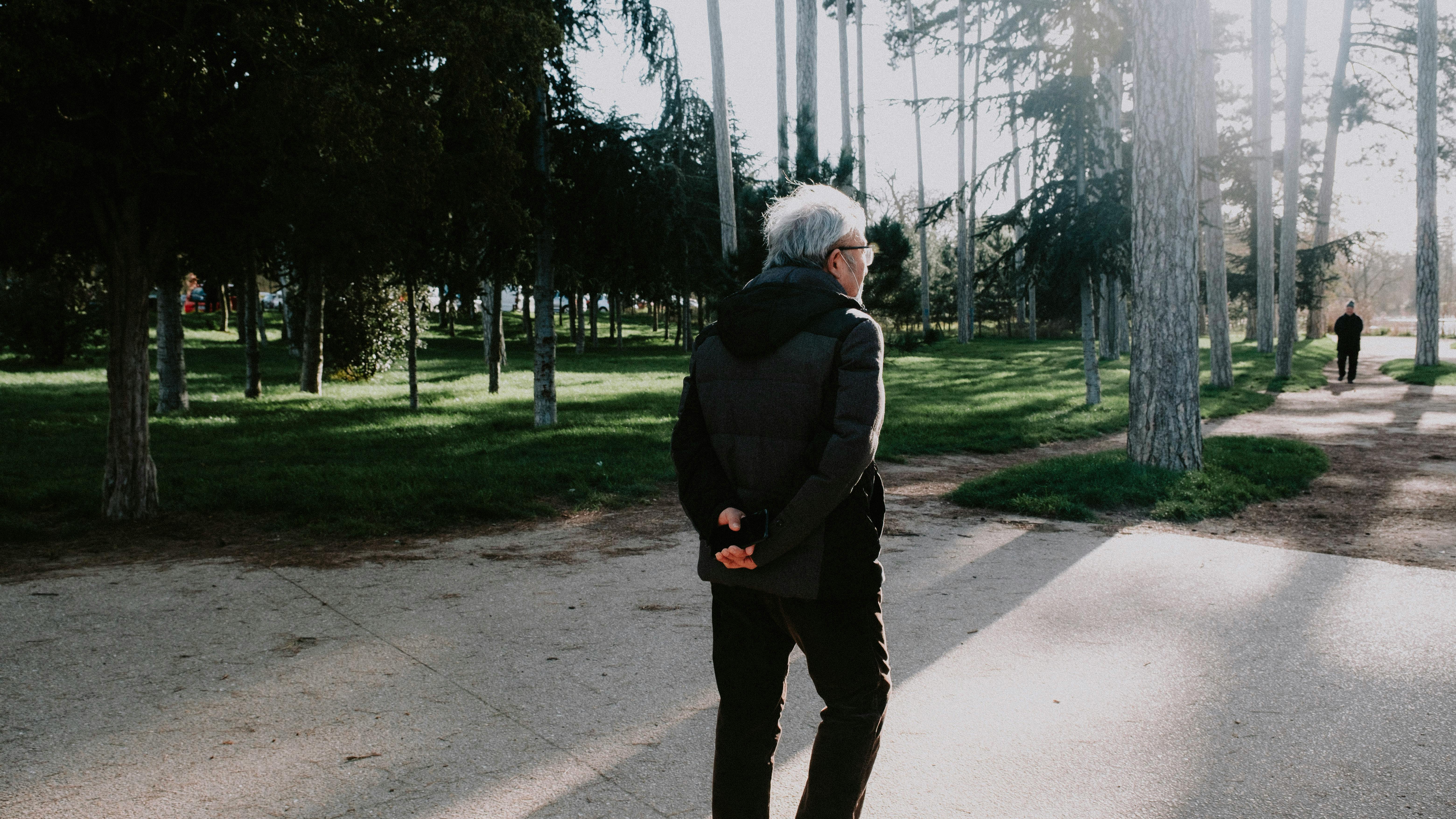
Photo 2 — Walking is one of the best balance exercises there is, and it costs nothing. Source: Mathias Reding, Pexels.
Balance needs to be practiced in many positions, not only while walking forwards. Try walking backwards, or sideways, or turning around. Each of these movements challenges your balance in a different way, and each one helps your brain learn to adapt.
7. Making Your Home Safer
A home can either help balance or work against it. Small changes in the home can make a big difference, especially for older adults. The goal is not to make the home into a hospital. It is to make it easier to move around safely.
7.1 Lighting and handrails
Some homes have rugs that slide, or cords that cross the floor, or furniture that blocks the way. These are all hazards, and they can be fixed. A rug can be removed, or taped down. A cord can be moved. A chair can be placed where it does not block the path.
Lighting is often the simplest and cheapest improvement. A bright light in the hallway, or a night light in the bathroom, can make a big difference. It is much easier to see where you are going when the room is well lit.
Handrails are another simple change. A handrail on the stairs, or a grab bar in the bathroom, can give you something to hold on to when you need it. It is a small change, but it can prevent a fall.
7.2 The kitchen and bathroom
The kitchen is a good place to start. It is where many falls happen, because people are often carrying things, or reaching for things, or turning quickly. A kitchen can be made safer by keeping the things you use most often within easy reach, and by making sure the floor is not slippery.
7.3 The importance of confidence
The most important safety improvement is not a product. It is confidence. When people feel confident, they move more freely. When they feel afraid, they move more carefully, and they are more likely to fall. Confidence comes from practice, and from knowing that you can catch yourself if you stumble.
8. Simple Balance Tests You Can Try at Home
If you have never had a balance test, it is a good idea to try one. A balance test can tell you how steady you are, and whether you need to work on your balance. It is not a diagnosis, but it is a useful starting point.
The results of these tests are not a pass or a fail. They are a way to see where you are now, and to track your progress over time. If your balance improves, you will see it in the test results.
8.1 The single-leg stance test
The single-leg stance test is a useful first step. Stand next to a chair or a wall, so you can hold on if you need to. Lift one foot off the ground, and see how long you can stand on the other foot. Try it with your eyes open, and then with your eyes closed. Most people can stand on one foot for at least 10 seconds with their eyes open.
8.2 The timed up-and-go test
The second test is a little more difficult. It is called the timed up-and-go test. Sit in a chair, stand up, walk three metres, turn around, walk back, and sit down again. Time how long it takes. If it takes more than 12 seconds, it may be a sign that your balance needs work.
8.3 The functional reach test
A functional reach test is also helpful. Stand next to a wall, raise one arm, and reach forward as far as you can without losing your balance. Measure how far you can reach. A shorter reach can be a sign that your balance is not as good as it could be.
There is a simple rule for interpreting these tests: if you find them difficult, or if you feel unsteady, it is a good idea to talk to a doctor or a physiotherapist. They can help you understand what is happening, and what you can do about it.
A good habit is to check your balance once every few months. It is a simple way to see if your balance is improving, or if it is getting worse. If it is getting worse, it is a good idea to talk to a doctor.
9. Common Myths About Balance
Myth 1: Balance is something you are born with
A common belief is that balance is something you are born with, and that you either have it or you do not. In fact, balance is a skill, and it can be learned and improved at any age. It is never too late to start.
Myth 2: Falls are a normal part of aging
Another myth is that falls are a normal part of aging. Falls are common, but they are not inevitable. Many falls can be prevented, and the risk can be reduced with exercise, home safety, and regular check-ups.
Myth 3: Balance problems always mean something is seriously wrong
A third myth is that balance problems always mean something is seriously wrong. In fact, many balance problems have simple causes, such as weak muscles, poor vision, or a medicine that makes you dizzy. A doctor can help you find out what is causing the problem.
Myth 4: You need special equipment to train balance
Myth 5: Balance training is only for older adults
Another myth is that balance exercises are only useful for older adults. In fact, balance is important at every age. Athletes, dancers, and young people all benefit from balance training. It is never too early to start, and it is never too late.
10. What the Research Says in 2026
The science of balance is moving quickly. New studies are helping us understand how balance works, and how it can be improved. Here are some of the most interesting findings from recent research.
10.1 A 2025 study on thinking and moving at the same time
In 2025, a study in Nature Human Behaviour found that combining physical exercise with cognitive challenges, such as memory tasks, can improve balance more than exercise alone. The study involved older adults who practiced walking while doing a mental task, such as counting backwards. The results showed that this kind of training can help the brain learn to handle two tasks at once, which is something we do every day.
10.2 A 2026 study on sensor-based training
In 2026, a study published in Scientific Reports described a new kind of balance training that uses sensors to give feedback. The sensors are worn on the body, and they tell the person how they are moving. This kind of training can help people learn to move more steadily, and it can be done at home.
10.3 Vestibular rehabilitation: better results, faster
Many older adults lose their balance on stairs, or when they turn their head quickly. This is often because the vestibular system, the balance organ in the inner ear, is not working as well as it should. Vestibular rehabilitation is a type of therapy that helps the brain adapt to changes in the vestibular system.
In a 2025 study of vestibular rehabilitation, researchers found that people who did the exercises improved their balance more quickly than people who did not. The exercises are simple, and they can be done at home, with guidance from a physiotherapist.
In a 2026 meta-analysis published in Age and Ageing, researchers looked at many studies of tai chi and balance. They found that tai chi is one of the most effective ways to improve balance and prevent falls in older adults. The evidence is strong, and it is growing.
11. A Simple Weekly Approach
If you want to put all of this into a simple routine, start small. You do not need to do everything at once. Pick one or two activities, and do them regularly. Over time, you can add more.
A simple weekly approach could look like this:
| Activity | Example | Main purpose |
|---|---|---|
| Strength training | Chair rises and supported heel raises | Improve lower-body strength |
| Balance practice | Supported weight shifting | Improve postural control |
| Walking | Comfortable outdoor walking | Support mobility and endurance |
| Tai chi | Slow controlled movements | Challenge coordination and balance |
| Functional movement | Safe stepping and turning | Practice everyday movements |
| Recovery | Rest and gentle mobility | Allow recovery |
Over time, this kind of routine helps your body learn to move more steadily. It is not about being perfect. It is about being consistent, and about giving your body the practice it needs.
Conclusion: Balance Is a Skill You Can Keep
Imagine yourself standing still in the kitchen, reaching for a cup, and turning to walk across the room. You do it without thinking, and you do it safely. That is balance at work. It is quiet, it is automatic, and it is worth protecting.
The science of balance teaches us something important: balance is not a gift that fades away, but a skill that can be trained, protected, and improved. The systems behind balance may change with age, but they do not stop working. With regular practice, good habits, and a little attention, you can keep your balance strong for years to come.
Balance is not a skill that belongs to the young. It belongs to everyone, at every age. It is the skill that lets you walk, reach, turn, and stand, and it is the skill that keeps you independent. Take care of it, and it will take care of you.
Medical and educational note: This article is for general education. It is not medical advice, and it is not a substitute for professional care. If you have balance problems, dizziness, or a history of falls, talk to a doctor or a physiotherapist before starting a new exercise program.
Frequently Asked Questions
1. What is balance?
Balance is your body's ability to stay upright and steady while you stand, walk, or move. It is not a single skill, but a combination of information from your eyes, your inner ear, and your body, all working together.
2. Why do we lose balance as we get older?
Balance fades with age because the systems behind it age at different speeds. Muscles get weaker, reactions get slower, vision changes, and the inner ear becomes less sensitive. When several systems weaken at once, balance becomes harder to maintain.
3. What is proprioception?
Proprioception is your body's sense of where it is in space. It comes from sensors in your muscles, joints, and skin, and it tells your brain where your limbs are, even when you cannot see them. It is one of the most important senses for balance, and one of the least well known.
4. What is the vestibular system?
The vestibular system is a small structure in the inner ear that tells your brain where your head is, and how it is moving. It has two main parts: the semicircular canals, which sense rotation, and the otoliths, which sense tilt and linear movement.
5. Can balance be improved at any age?
Yes. Balance is a skill, and it can be improved at any age. Strength training, balance exercises, walking, and tai chi are all effective, and they work best when they are done regularly.
6. What is the best exercise for balance?
There is no single best exercise. The most effective approach is a combination of strength training, balance practice, and walking. Tai chi is also very effective, because it combines balance, strength, and coordination in one practice.
7. How often should I practice balance exercises?
A few minutes every day is better than a long session once a week. Try to include balance practice in your daily routine, such as standing on one foot while you brush your teeth, or walking on uneven ground.
8. Is it normal to feel dizzy when I stand up quickly?
Feeling dizzy when you stand up quickly is common, especially in older adults. It can be caused by a drop in blood pressure, or by a medicine. If it happens often, or if it is severe, talk to a doctor.
9. When should I see a doctor about balance?
You should see a doctor if you have fallen, if you feel unsteady, if you have dizziness that does not go away, or if your balance is getting worse. A doctor can help you find out what is causing the problem, and what you can do about it.
10. Are falls a normal part of aging?
Falls are common, but they are not a normal or inevitable part of aging. Many falls can be prevented with exercise, home safety, and regular check-ups. If you have fallen, it is a good idea to talk to a doctor.
11. What is tai chi, and why is it good for balance?
Tai chi is a slow, gentle practice that involves moving the body in a controlled way, shifting weight from one foot to the other. It improves balance, strength, and coordination, and it is one of the most studied forms of exercise for fall prevention.
12. Can I improve my balance at home?
Yes. Many balance exercises can be done at home, with no special equipment. A chair, a wall, and a clear space are enough to start. The most important thing is to practice regularly, and to do it safely.
13. What is the single-leg stance test?
The single-leg stance test is a simple way to check your balance. Stand next to a chair or a wall, lift one foot off the ground, and see how long you can stand on the other foot. Most people can stand on one foot for at least 10 seconds with their eyes open.
14. What is the timed up-and-go test?
The timed up-and-go test measures how long it takes you to stand up from a chair, walk three metres, turn around, walk back, and sit down again. If it takes more than 12 seconds, it may be a sign that your balance needs work.
15. Do medicines affect balance?
Yes. Some medicines can make you feel dizzy, sleepy, or less alert. Others can lower your blood pressure, which can make you feel faint when you stand up. If you take several medicines, the effects can add up. Talk to your doctor or pharmacist about your medicines.
16. How can I make my home safer?
Remove rugs that slide, move cords out of the way, and make sure your home is well lit. Install handrails on stairs and grab bars in the bathroom. Keep the things you use most often within easy reach.
17. Is walking good for balance?
Yes. Walking is one of the best balance exercises there is. Every step is a small balance challenge, and walking also builds leg strength and keeps the joints flexible. Try walking on different surfaces, and in different directions, to challenge your balance more.
18. What should I do if I fall?
If you fall, try to stay calm. Check if you are hurt, and get up slowly if you can. If you cannot get up, or if you are hurt, call for help. After a fall, talk to your doctor, even if you feel fine. A fall can be a sign that something has changed.
19. Can balance training help after a fall?
Yes. Balance training can help you regain confidence and strength after a fall. It is important to start slowly, and to work with a physiotherapist if you can. The goal is to rebuild your balance, and to prevent another fall.
20. What is the most important thing I can do for my balance?
The most important thing is to stay active. Regular movement, strength training, and balance practice are the best ways to keep your balance strong. It is never too late to start, and small, regular actions can make a real difference.
Sources
-
CDC. 'Older Adult Falls: Facts and Prevention.' Updated 2026.
Statistics, risk factors, and consequences of falls among older adults.
-
CDC. 'STEADI — Older Adult Fall Prevention.'
A practical framework for assessing and reducing fall risk in clinical practice.
-
National Institute on Aging. 'Preventing Falls.'
Falls, risk factors, and practical prevention steps for older adults.
-
World Health Organization. 'Falls.' Fact sheet, October 2026.
Global falls statistics and prevention strategies.
-
NHS. 'Falls.'
Symptoms, causes, and prevention of falls in older adults.
-
Mayo Clinic. 'Balance Problems.'
Symptoms, causes, and diagnosis of balance disorders.
https://www.mayoclinic.org/diseases-conditions/balance-problems/symptoms-causes/syc-20350474
-
British Journal of Sports Medicine. 'Exercise for Preventing Falls in Older People Living in the Community.'
Systematic review and meta-analysis of exercise interventions for fall prevention.
-
Nature Human Behaviour. 'Cognitive-motor interventions and fall risk in older adults.' 2025.
Cognitive-motor interventions and fall risk in older adults.
-
Scientific Reports. 'Sensor-based balance training and fall risk in older adults.' 2026.
Sensor-based balance training and fall risk in older adults.
-
Journal of the American Geriatrics Society. 'Association between vestibular function and fall risk in older adults.'
Association between vestibular function and fall risk in older adults.
https://agsjournals.onlinelibrary.wiley.com/doi/10.1111/jgs.19458
-
Age and Ageing. 'Effectiveness of Tai Chi for fall prevention in older adults: a systematic review and meta-analysis.'
Effectiveness of Tai Chi for fall prevention in older adults: a systematic review and meta-analysis.
https://academic.oup.com/ageing/article/55/1/afae268/7935783
-
Vestibular Disorders Association (VeDA). 'Vestibular Rehabilitation Therapy (VRT).'
What vestibular rehabilitation is, how it works, and who it helps.
https://vestibular.org/article/diagnosis-treatment/treatments/vestibular-rehabilitation-therapy-vrt/
-
PubMed Central. 'How the brain integrates vestibular, visual and proprioceptive information.'
How the brain integrates vestibular, visual and proprioceptive information.
-
Harvard Health Publishing. 'Better balance: Simple exercises to improve stability and prevent falls.'
Simple exercises to improve stability and prevent falls.
Photo Credits
Photo 1 — Older adult practicing tai chi outdoors
- Photographer: Ahmed Nishaath.
- Platform: Unsplash.
- Direct image URL: https://images.unsplash.com/photo-1774618623680-c2286dd71734?auto=format&fit=crop&fm=jpg&q=80&w=1600
- Original source: Unsplash photograph page
Photo 2 — Older adult walking in a park
- Photographer: Mathias Reding.
- Platform: Pexels.
- Direct image URL: https://images.pexels.com/photos/11299600/pexels-photo-11299600.jpeg?cs=srgb&dl=pexels-matreding-11299600.jpg&fm=jpg
- Original source: Pexels photograph page
Both photographs are real stock photographs, not AI-generated images.
The conversation
Post a Comment