
Imagine walking into a small café in a city you have never visited. Sunlight falls across the tables, a cup clinks against a saucer, and a stranger laughs at the far end of the room. Nothing about the scene should feel familiar.
Yet, for a brief moment, it does. You have a sudden, powerful sense that this exact moment has happened before. You can almost predict what the waiter will say next. You know that you are in a new place, and yet part of your brain insists that you have already lived this scene.
That strange, fleeting experience is called déjà vu. It is French for "already seen", and it is one of the most common and most misunderstood experiences in human psychology. Most people have had it at least once. Many have had it many times. It usually lasts only a few seconds, leaves no trace, and then disappears as quickly as it arrived.
In this article, we look carefully at what scientists actually know about déjà vu in 2026. We explain how memory and familiarity work, why the brain can produce a false sense of recognition, what recent research has found, and when déjà vu may be a sign that medical advice is needed. We also separate what is supported by evidence from what remains uncertain, because with déjà vu, that distinction matters.
1. What Déjà Vu Really Is
Déjà vu is a brief, involuntary feeling that a present experience has happened before, even when a person knows that it has not. It is not a memory in the usual sense. It is a feeling about a memory that cannot be found.
The word "déjà vu" comes from French and literally means "already seen". Psychologists use it to describe a specific kind of recognition error: a strong sense of familiarity that is not supported by a retrievable memory.
It is important to distinguish déjà vu from ordinary recognition. When you visit a restaurant for the second time, you may recognise the room, remember the food, and recall who you were with. That is normal recognition. Déjà vu is different. You feel that you have been in this exact situation before, but you cannot identify when, where, or how. The feeling is strong, but the details are missing.
This distinction is central to the science of déjà vu. It suggests that familiarity and recollection are not the same process, even though they usually work together.
2. How Common Is Déjà Vu?
Most people will experience déjà vu at some point in their lives. It is not rare, unusual, or a sign of an extraordinary mind. It is a normal feature of how human memory works.
Research on prevalence is difficult because déjà vu is subjective. People must notice it, remember it, and describe it accurately. Different studies use different definitions and different questions, so estimates vary.
Some estimates suggest that between two-thirds and three-quarters of healthy adults have experienced déjà vu at least once. A 2024 systematic review and meta-analysis by Hadzic and Andersson examined 46 studies and estimated that about 74% of healthy participants had experienced non-ictal déjà vu at some point in their lives. That figure is often quoted, but it needs careful interpretation.
Frequency also varies a great deal. Some people experience déjà vu only once or twice in a lifetime. Others experience it several times a year. A small number report it weekly or more often. Frequency alone does not tell us whether an experience is ordinary or medically significant.
Because déjà vu is so common, it is best understood as part of normal cognition rather than as a mysterious or supernatural event. The interesting scientific question is not whether it happens, but why the brain sometimes produces this feeling.
3. A Brief History of Déjà Vu Research
People have described déjà vu for centuries, but scientific study of the experience is relatively recent. In the 19th century, writers and philosophers began to discuss it as a psychological phenomenon rather than a spiritual one.
The word "déjà vu" was popularised in French psychological literature in the late 1800s. Early explanations often focused on memory errors, dreams, or the idea that a current experience might resemble a forgotten one.
In the 20th century, researchers began to study déjà vu more systematically. They distinguished between ordinary déjà vu in healthy people and déjà vu associated with epilepsy, particularly temporal lobe epilepsy. This distinction remains important today.
Modern research uses a combination of methods: surveys, laboratory experiments, brain imaging, and studies of people with epilepsy who experience déjà vu as part of a seizure. Each method provides a different piece of the puzzle.
4. What Happens in the Brain During Déjà Vu?
The most useful way to understand déjà vu is to start with how memory normally works. Memory is not a single system. It involves several brain regions working together to recognise, store, and retrieve information.
4.1 The Temporal Lobe and Memory
The temporal lobe, located on the side of the brain, plays a central role in memory and recognition. It includes structures such as the hippocampus and surrounding cortex, which help the brain process new experiences and compare them with previous ones.
In temporal lobe epilepsy, abnormal electrical activity in this region can trigger déjà vu. This has provided researchers with important clues about which brain systems are involved.
4.2 The Hippocampus and Familiarity
The hippocampus helps the brain form new memories and distinguish between similar experiences. It is involved in recognising places, objects, and events, and in deciding whether something is new or familiar.
When the hippocampus and related structures produce a strong familiarity signal, a person may feel that a situation has happened before. If that signal is not matched by a specific memory, the result can be déjà vu.
4.3 Familiarity and Recollection
Memory researchers distinguish between two processes:
- Familiarity: The immediate feeling that something has been encountered before.
- Recollection: The ability to retrieve details about an actual previous experience, including where and when it happened.
During déjà vu, familiarity appears to be activated without successful recollection. The brain produces a sense of "I have seen this before" but cannot supply the memory to support it.
This is why déjà vu can feel both convincing and confusing. The feeling is real, but the memory behind it is not.
5. Why Does the Brain Produce a False Sense of Familiarity?
There is no single, universally accepted explanation for déjà vu. Researchers have proposed several theories, and each explains part of the experience.
5.1 A Small Error in Memory Processing
One leading idea is that déjà vu results from a brief mismatch in the brain's memory systems. A new experience may be processed in a way that resembles a previous one, triggering a familiarity signal even though the experience is new.
It is similar to a computer recognising a file as familiar because it shares features with another file, even though the files are not identical.
The feeling is not a failure of memory in the sense of forgetting. It is a failure of discrimination: the brain correctly detects similarity but incorrectly labels the experience as a repeat.
5.2 A Conflict Between Familiarity and Novelty
Another idea is that déjà vu occurs when the brain detects a conflict. One system signals familiarity, while another signals that the situation is new. The brain's monitoring systems notice this contradiction.
The brain's monitoring systems are thought to be involved in this process. They help us evaluate whether our feelings match reality. When they detect a mismatch, we become aware that something is unusual.
This explanation is useful because it accounts for a key feature of déjà vu: the person usually knows that the feeling is incorrect. They feel that they have lived the moment before, but they also know that they have not.
5.3 A Delayed or Split Signal
A third idea is that information about a new experience may arrive in the brain through different pathways at slightly different times. This could create a sense that the experience has already been processed once before.
Research has not established this as a definitive mechanism. It remains a hypothesis, and it is not sufficient on its own to explain all cases of déjà vu.
Each of these explanations highlights a different aspect of memory. Together, they suggest that déjà vu is not caused by a single fault, but by the interaction of several normal brain processes.
6. The Memory System: Why Familiarity Can Be Misleading
Memory is not a perfect recording system. It is a reconstructive process. The brain does not store exact copies of experiences. Instead, it stores patterns, associations, and fragments, and reconstructs them when needed.
The brain does not simply retrieve a memory like a file from a drawer. It rebuilds it from available cues, and that rebuilding can be influenced by current context, expectations, and emotions.
Déjà vu reminds us that familiarity is a feeling, not a proof. A strong sense of familiarity does not guarantee that an experience has actually happened before.
7. Déjà Vu, Jamais Vu and Presque Vu
Déjà vu is one of three related experiences that involve unusual feelings about memory and recognition. The other two are jamais vu and presque vu.
| Experience | Meaning | What happens |
|---|---|---|
| Déjà vu | Already seen | A new situation feels familiar |
| Jamais vu | Never seen | A familiar situation feels unfamiliar |
| Presque vu | Almost seen | A memory feels almost accessible but cannot be retrieved |
These three experiences show that memory involves more than simply remembering or forgetting. It also involves judging whether something is familiar, new, or just out of reach.
8. What Makes Déjà Vu More Likely?
Déjà vu does not occur at random. People often report it in particular circumstances, although the evidence for each trigger varies in strength.
8.1 Being Tired or Stressed
Tiredness and stress are among the most commonly reported circumstances. When people are tired, attention and memory monitoring may work less efficiently, making unusual feelings more likely to be noticed.
Stress can also affect how the brain processes information. It can increase awareness of internal sensations and make people more likely to notice a brief feeling of familiarity.
8.2 Travel, New Places and Unfamiliar Settings
Many people first notice déjà vu while travelling. A new city, hotel, or landscape contains many unfamiliar elements, but it may also contain familiar patterns: a street layout, a café interior, or the sound of a train.
This does not mean that travel causes déjà vu. It means that travel provides many opportunities for the brain to detect similarity between a new place and a previous one.
8.3 Age and Life Stage
Déjà vu is often reported more frequently by younger adults, particularly those in their late teens and twenties. It also tends to become less frequent with age, although it can occur at any age.
It also tends to be reported more often by people who travel frequently, have vivid dreams, or are under stress. These associations are interesting, but they do not prove a direct causal relationship.
8.4 Attention and Distraction
Déjà vu is also associated with divided attention. When a person is distracted or only partly focused on their surroundings, the brain may process a scene incompletely at first and then process it again more fully.
In a distracted state, the second processing may feel like a repetition, even though it is the first complete processing of the scene.
9. Déjà Vu and Epilepsy: An Important Medical Connection
Most déjà vu is ordinary and harmless. However, déjà vu can also be a symptom of temporal lobe epilepsy, and this connection deserves careful attention.
In some people with epilepsy, déjà vu occurs as part of a focal seizure. These seizures begin in a specific area of the brain, often the temporal lobe, and may affect awareness, emotions, and memory.
This link is important because it shows that the same brain systems involved in ordinary déjà vu can also be involved in neurological conditions. It does not mean that ordinary déjà vu is a sign of epilepsy.
The table below summarises some general differences. It is not a diagnostic tool.
| Feature | Ordinary déjà vu | Possible seizure-related déjà vu |
|---|---|---|
| Frequency | Occasional | May recur in a stereotyped pattern |
| Duration | Usually brief | Often brief, but varies |
| Awareness | Usually fully preserved | May be altered |
| Emotional feeling | Often neutral or mildly surprising | Can involve sudden intense fear |
| Other symptoms | Usually absent | May include unusual smells, tastes or automatic movements |
| After the event | Normal activity continues | Confusion or difficulty speaking may occur |
The table does not provide a diagnosis. Only a clinician can determine whether déjà vu is related to epilepsy, and that determination requires a full medical history and, often, further tests.
10. Can Déjà Vu Be a Warning Sign?
For most people, déjà vu is not a warning sign. It is a brief, harmless experience that does not require medical attention.
Déjà vu may deserve medical attention if it:
- Becomes frequent or significantly changes in pattern
- Is accompanied by loss of awareness, confusion, or unusual movements
- Is accompanied by sudden fear, unusual smells, or tastes
- Is followed by difficulty speaking or memory gaps
This list is not a diagnosis. It is a guide to when a conversation with a healthcare professional may be helpful.
11. What Scientists Still Do Not Know
Despite decades of research, several important questions remain unanswered.
First, researchers have not identified a single mechanism that explains all cases of déjà vu. Different episodes may involve different processes.
Second, it is difficult to study déjà vu in a laboratory. Researchers cannot reliably trigger a genuine episode on demand, so much of the evidence comes from retrospective reports and from people with epilepsy.
Third, the precise role of the frontal cortex in monitoring familiarity is still being investigated. Scientists know that monitoring is important, but they do not fully understand how it works in everyday life.
These are not failures of science. They reflect the difficulty of studying a brief, subjective experience that cannot be easily reproduced.
12. Research in 2026: What Is New?
Recent research has added useful detail to our understanding of déjà vu, even though it has not provided a complete explanation.
Studies have also examined how familiarity decisions are made in the brain. Research on song familiarity, published in 2026 in the journal Psychophysiology, investigated how the brain accumulates evidence when deciding whether a song is familiar. This research is relevant because déjà vu involves an unusual familiarity judgement.
A 2026 study from a Polish-French research team led by Krystian Barzykowski investigated spontaneous mental experiences during monotonous tasks. The researchers tested 96 participants who were exposed to monotonous stimuli and asked to report spontaneous thoughts, memories, and déjà vu experiences.
Another line of research has explored how long-term memory influences the speed of encoding new information. A 2026 study by Wyllie, von Bastian, and Zivony examined this relationship and suggested that prior knowledge can affect how quickly new information is processed.
Together, these studies suggest that déjà vu is best understood as part of a broader system of memory, attention, and familiarity, rather than as an isolated phenomenon.
13. Can Déjà Vu Be Studied in the Laboratory?
One reason déjà vu remains mysterious is that it is difficult to reproduce in a controlled setting. Researchers have tried several approaches.
Researchers have used virtual reality, photographs, and controlled scenes to create situations that resemble déjà vu. In some studies, participants are shown scenes that are similar to ones they have seen before, but not identical. This can produce a feeling of familiarity without a clear memory.
In 2025, researchers reported that they had developed a method to study déjà vu using immersive virtual reality. Participants explored virtual environments and reported experiences that shared features with déjà vu.
These methods are promising, but they do not capture every aspect of real-life déjà vu. Laboratory experiences are often weaker and less surprising than spontaneous episodes.

Photo 1 – Human perception and surroundings
A person looking across a city, illustrating how familiar surroundings can influence human perception.
Photographer: Thirdman. Source: Pexels.
Photo credit: Thirdman via Pexels.
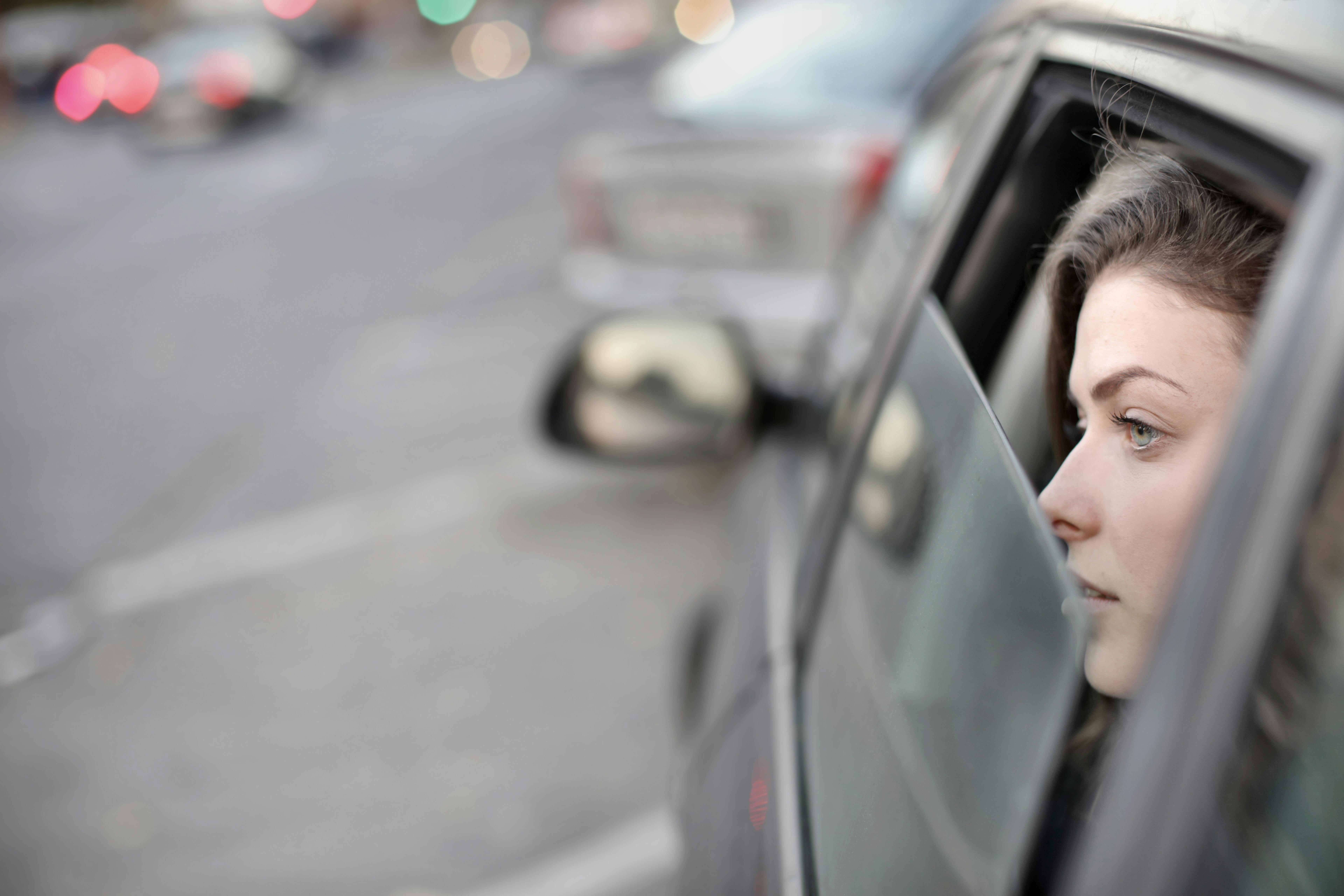
Photo 2 – Travel and unfamiliar environments
A woman looking through a car window at an unfamiliar urban environment.
Photographer: Andrea Piacquadio. Source: Pexels.
Photo credit: Andrea Piacquadio via Pexels.
14. What to Do When Déjà Vu Happens
Most of the time, the best response to déjà vu is simply to notice it and let it pass. There is no need to try to force a memory or to search for a hidden meaning.
If it is a one-off experience, it is usually nothing to worry about. It is a normal part of how the brain processes familiarity.
It can help to note the circumstances: were you tired, stressed, travelling, or distracted? This information may be useful if episodes become frequent and you decide to discuss them with a healthcare professional.
There is no need to try to prevent déjà vu. It is not a condition to be cured. It is a reminder that memory is an active, reconstructive process.
15. The Emotional Side of Déjà Vu
People often describe déjà vu as unsettling, fascinating, or even comforting. The emotional response varies from person to person.
That mixture of familiarity and strangeness can be disorienting. A person may feel that they know what will happen next, even though they know that this is impossible.
For some people, déjà vu is a pleasant surprise. For others, it is a brief moment of confusion. Both reactions are normal.
This is a reminder that memory is not only a cognitive process. It is also an emotional one. How we feel about a memory can be as important as the memory itself.
16. Déjà Vu in Everyday Life
Déjà vu is not confined to dramatic moments. It can happen in ordinary settings: a supermarket, a bus stop, a conversation with a friend, or a walk through a familiar neighbourhood.
The same processes that produce déjà vu also help us recognise people, places, and situations in everyday life. Without familiarity, we would have to relearn the world each time we encountered it.
It is also worth remembering that déjà vu is not a sign of a special ability. It does not mean that a person has a better memory, a psychic gift, or access to parallel universes. It means that the brain's familiarity system has produced a brief, misleading signal.
17. Key Takeaways
- Déjà vu is the brief feeling that a new experience has already happened.
- It is a widespread human experience, with a 2024 meta-analysis estimating lifetime occurrence in about 74% of healthy adults.
- Familiarity and recollection are different memory processes, and their interaction may help explain déjà vu.
- The hippocampus, surrounding medial temporal structures and frontal cognitive-control networks are relevant to the experience.
- Similarity between new and previous experiences may contribute to some episodes.
- Tiredness, stress and travel are commonly reported circumstances, but they are not established universal causes.
- A 2026 Polish-French study investigated déjà vu and other spontaneous mental experiences during monotonous tasks.
- Jamais vu describes familiar things suddenly feeling unfamiliar, while presque vu describes information feeling almost accessible but out of reach.
- Déjà vu can occur during temporal-lobe seizures, but occasional ordinary déjà vu does not mean that a person has epilepsy.
- Repeated episodes accompanied by altered awareness, unusual smells, sudden fear or confusion deserve medical attention.
- Déjà vu does not predict the future and is not evidence of parallel universes or supernatural experiences.
- Scientists understand several aspects of the phenomenon, but a complete explanation has not yet been found.
18. Real Photographs and Credits
The photographs in this article are real photographs, not AI-generated images.
- Photo 1: A person looking across a city, illustrating how familiar surroundings can influence human perception. Photographer: Thirdman. Source: Pexels. View the original photograph on Pexels
- Photo 2: A woman looking through a car window at an unfamiliar urban environment. Photographer: Andrea Piacquadio. Source: Pexels. View the original photograph on Pexels
Frequently Asked Questions (FAQ)
1. What exactly is déjà vu?
Déjà vu is the feeling that a current experience has already happened, even though you know that the current experience is new. It usually lasts only a few seconds and involves a strong sense of familiarity without a retrievable memory.
2. Is déjà vu normal?
Yes. Occasional déjà vu is a normal experience reported by many healthy people. It usually lasts a few seconds and does not indicate a medical problem on its own.
3. How many people experience déjà vu?
A 2024 systematic review and meta-analysis estimated that approximately 74% of healthy individuals in the included studies had experienced déjà vu at some point in their lives. This figure should be interpreted carefully, as it depends on the studies included and how déjà vu was defined.
4. Why do I experience déjà vu so often?
There is no single established explanation for frequent déjà vu. Individual differences in memory, attention, sleep, stress, and travel may all play a role. Frequency alone does not establish whether an experience is ordinary or medically significant.
5. Can lack of sleep cause déjà vu?
Sleep deprivation affects attention, concentration and memory. It may influence the circumstances in which déjà vu occurs, but it has not been established as a direct cause of ordinary déjà vu.
6. Can stress trigger déjà vu?
People sometimes report déjà vu during stressful periods. Stress can affect attention and cognitive monitoring, but there is not enough evidence to identify everyday stress as a direct, universal cause.
7. Why does déjà vu happen when travelling?
New environments often contain arrangements, sounds, shapes and other features that resemble previous experiences. The brain may detect these similarities without producing a complete memory, leading to a feeling of familiarity.
8. Does déjà vu mean I have experienced the moment in a dream?
Not necessarily. Dreams can contain familiar-looking locations and situations, but there is no reliable evidence that déjà vu is caused by remembering a dream.
9. What is the difference between déjà vu and jamais vu?
Déjà vu means that a new experience feels familiar. Jamais vu describes the opposite: something genuinely familiar suddenly feels strange or unfamiliar.
10. What does presque vu mean?
Presque vu describes the feeling that information is almost available in memory but cannot quite be retrieved. It is closely related to the tip-of-the-tongue experience.
11. Is déjà vu connected to epilepsy?
Yes. Déjà vu can occur as a symptom of focal seizures, particularly those involving temporal-lobe networks. However, occasional ordinary déjà vu does not mean that a person has epilepsy.
12. How can I distinguish ordinary déjà vu from seizure-related déjà vu?
Ordinary déjà vu generally occurs briefly without other neurological symptoms. Seizure-related experiences may recur in a stereotyped pattern and may be accompanied by sudden fear, unusual smells or tastes, altered awareness, or confusion afterwards. Only a clinician can make this distinction.
13. Can déjà vu predict the future?
No credible scientific evidence demonstrates that déjà vu predicts future events. The sensation of knowing what will happen next is a feeling, not proof of precognition.
14. Can déjà vu be caused by anxiety?
Anxiety can influence perception, attention and the feeling of being connected to one's surroundings. It is different from classic déjà vu, although the two experiences can sometimes be confused.
15. Does déjà vu become less common as people age?
Research generally suggests that ordinary déjà vu is reported more frequently by younger adults. The pattern is not fully understood, and older adults can still experience déjà vu.
16. Can children experience déjà vu?
Yes. Déjà vu is not exclusively an adult experience. However, research on its prevalence and characteristics in children is more limited.
17. Can medications cause déjà vu?
Some medications can influence cognition, perception or neurological activity, but déjà vu is not a standard side effect of most medications. Any new or unusual symptom after starting a medication should be discussed with a healthcare professional.
18. Should I worry if I experience déjà vu every week?
Not necessarily. Frequency alone cannot establish whether the experience is harmless or medically significant. If episodes are stereotyped, intense, or accompanied by other symptoms, medical advice is recommended.
19. Can doctors diagnose epilepsy using déjà vu alone?
No. Déjà vu is one possible symptom, not a diagnosis. Doctors consider the complete history, observed symptoms, and results of tests such as EEG and MRI.
20. What is the biggest unanswered question about déjà vu?
One of the biggest unanswered questions is exactly how the brain generates a conscious feeling of familiarity without a corresponding memory. Researchers are still working to understand the precise mechanisms involved.
Sources
- Hadzic, A. and Andersson, S. (2024). Non-ictal, interictal and ictal déjà vu: a systematic review and meta-analysis. Read the full research paper.
- Aitken, C. B. A., Jentzsch, I. and O'Connor, A. R. (2023). Towards a conflict account of déjà vu: The role of memory errors and cognitive control. Neuroscience & Biobehavioral Reviews. Read the research review.
- Zareen, M., Barzykowski, K., Moulin, C. and colleagues (2026). Spontaneous mental experiences and memory activation during monotonous tasks. Consciousness and Cognition, Volume 137, Article 103976. Read the research paper.
- Girard, A., Hobeika, L., Moussard, A. and colleagues (2026). Song Familiarity Relies on Evidence Accumulation. Psychophysiology. Read the research paper.
- NHS – Epilepsy. Medical information about seizure symptoms, diagnosis and when to seek emergency help. Read NHS medical guidance.
- Epilepsy Action – Focal Seizures. Information about temporal-lobe seizures, unusual sensations and what to do. Read the clinical explanation.
- US National Library of Medicine – PubMed. Bibliographic information and research details for the 2026 study. View the PubMed record.
This article is for general information only and is not medical advice. If déjà vu is frequent, intense, or accompanied by other symptoms, speak to a qualified healthcare professional.
The conversation
Post a Comment