
The Rise of Slow Fashion in 2026: Why More People Are Choosing Quality Over Fast Fashion
Imagine opening your wardrobe on an ordinary Monday morning. There are shirts you bought because they were inexpensive, trousers that looked attractive in an online photograph, and dresses that seemed essential when a particular trend appeared on social media. Some still have their price tags. Others have lost their shape, developed loose seams or become uncomfortable after several washes.
You have plenty of clothes, yet somehow nothing feels quite right.
Now imagine a different wardrobe. It contains fewer items, but most of them fit comfortably, work together and have survived several years of regular use. A jacket has a small repair near its pocket. A pair of trousers has been altered to fit properly. A favourite shirt has become softer with time rather than falling apart.
The difference is not simply about money or appearance. It is about the relationship between people and the things they own.
This distinction helps explain why slow fashion has become an increasingly important conversation in 2026. After years in which clothing shopping was shaped by rapid product releases, inexpensive online purchases and constantly changing trends, more consumers are questioning whether having more clothes actually makes their lives better.
Slow fashion offers another approach. It encourages people to consider how garments are designed, produced, purchased, worn, maintained and eventually reused. Rather than treating clothing as something that should be replaced whenever a new trend arrives, it treats garments as useful objects with a longer life.
The idea is not that everyone must buy expensive designer clothing, stop enjoying fashion or build an entirely minimalist wardrobe. Slow fashion is better understood as a change in priorities: choosing usefulness over impulse, durability over disposability, and thoughtful decisions over endless consumption.
In 2026, that conversation matters for several reasons. Environmental concerns have become more visible, household budgets remain important, online shopping makes buying easier than ever, and social media continues to introduce new styles at remarkable speed.
But there is also a quieter reason. Many people are rediscovering the pleasure of owning something that genuinely works.
Slow fashion does not promise a perfect solution to the problems of the clothing industry. It does, however, offer a practical way to rethink everyday choices.
1. What Exactly Is Slow Fashion?
Slow fashion is an approach to clothing that places greater importance on quality, longevity, responsible production and thoughtful consumption.
The term is often used as the opposite of fast fashion, although the distinction is more complicated than simply comparing inexpensive clothes with expensive ones.
Fast fashion generally describes a business model built around rapidly translating trends into products, producing garments in large quantities and encouraging frequent purchases. New collections and styles appear quickly, prices can be very low, and consumers are repeatedly encouraged to update their wardrobes.
Slow fashion questions the assumption behind that model: that clothing should be purchased, worn briefly and replaced whenever something new becomes available.
Instead, it considers the entire life of a garment.
A slow-fashion garment should ideally be useful, comfortable, reasonably durable and designed with consideration for the people and resources involved in making it. It might come from a small independent clothing business, a responsible manufacturer, a second-hand shop or even someone's own sewing machine.
Importantly, slow fashion is not a single official certification. There is no universal label that automatically makes a product slow fashion. It is a broad philosophy, and the standards used by different brands and consumers can vary.
The difference between fast fashion and slow fashion
Consider two ways of buying a winter jacket.
In the first situation, a shopper sees an inexpensive jacket online. It is fashionable, the photographs look attractive, and the price seems difficult to resist. The shopper orders it without considering the fabric, stitching or whether it will fit into their existing wardrobe.
After several months, the jacket loses its shape. The zipper becomes unreliable, and the material begins to look worn. Another inexpensive jacket replaces it.
In the second situation, the shopper takes time to compare several jackets. They examine the stitching, check the material, consider the climate in which they live and choose a design that can be worn with different outfits.
The second jacket may cost more initially, but it has a better chance of remaining useful for years.
| Fast fashion | Slow fashion |
|---|---|
| Frequent trend-driven releases | More considered collections |
| Emphasis on rapid purchasing | Emphasis on thoughtful purchasing |
| Often shorter product lifespans | Greater attention to durability |
| High-volume production | More emphasis on responsible production |
| Frequent wardrobe replacement | Repair, reuse and long-term wear |
| Trend-led decisions | Personal style and practical needs |
These are general tendencies, not absolute rules. An inexpensive garment can be well made, and an expensive garment can be poorly constructed. The label, price and marketing language alone cannot establish how responsibly an item was produced.
The most useful question is not whether a garment looks sustainable in an advertisement. It is whether its quality, production and expected lifespan justify the purchase.
2. Why Slow Fashion Is Gaining Attention in 2026
The growing discussion around slow fashion reflects several changes happening at the same time.
Consumers are becoming more aware of textile waste, household spending, clothing quality and the influence of digital shopping. At the same time, second-hand marketplaces and repair services are making alternatives to buying new clothing easier to access.
The fashion industry is also facing pressure to reconsider how it produces and sells garments.
The influence of environmental awareness
Environmental concerns are one of the strongest reasons people discuss slow fashion.
The United Nations Environment Programme published a report in October 2025 highlighting the scale of textile waste. It estimates that approximately 92 million tonnes of textile waste are generated worldwide each year.
The report also notes that only around 8% of textile fibres in 2023 came from recycled sources, while textile-to-textile recycling accounted for less than 1% of the total fibre market.
These figures help explain why simply placing unwanted clothing in a collection bin cannot solve the problem.
The industry needs to produce fewer unnecessary garments, extend the useful life of existing clothing and improve systems for reuse and recycling.
For an individual shopper, this can begin with a relatively simple decision: before buying another shirt, consider whether an existing one can still serve the same purpose.
Household budgets are changing shopping habits
Another important influence is financial.
When living expenses compete for attention, clothing purchases become easier to question. A wardrobe full of inexpensive garments may appear economical, but repeated replacement can gradually become expensive.
Imagine purchasing four inexpensive shirts during a year because the previous ones lose their shape. Compare that with purchasing two better-constructed shirts that remain wearable for several years.
The second approach may not always be cheaper, especially when the initial price is considerably higher. However, evaluating cost over time gives consumers a more useful comparison.
This is one reason slow fashion can appeal even to people who are not primarily motivated by environmental concerns.
They may simply want to stop spending money on clothes that disappoint them.
Social media is creating both pressure and resistance
Fashion has always been influenced by celebrities, magazines, television and popular culture. Social media has accelerated that influence.
A person can encounter dozens of clothing trends in a single browsing session. An outfit appears in a short video, a similar product is advertised, and a shopping link makes purchasing possible within seconds.
The cycle can create a feeling that an existing wardrobe is outdated even when its contents remain perfectly usable.
Oxfam's 2026 State of Style report provides a useful indication of this influence in Britain. It reports that 57% of surveyed people say social media affects their clothing purchases, while 64% say they have bought clothing they were not actively looking for after seeing it on social media, apps or online shopping platforms.
These findings concern the UK rather than the entire world, so they should not be treated as universal consumer statistics.
Nevertheless, they illustrate an important challenge: people are increasingly exposed to shopping opportunities even when they did not begin the day intending to buy clothes.
Slow fashion offers a form of resistance to this cycle. It encourages consumers to develop a personal style instead of allowing every new online trend to determine what they wear.
The appeal of owning fewer, better things
There is also a psychological dimension.
A person who owns twenty garments they genuinely enjoy may feel more satisfied than someone who owns one hundred items but regularly struggles to find something appropriate.
This does not mean everyone should aim for a tiny wardrobe. Different occupations, climates, cultures, family responsibilities and personal preferences require different amounts of clothing.
The important distinction is between having clothes because they serve a purpose and accumulating clothes simply because purchasing them has become habitual.
In 2026, the attraction of slow fashion increasingly sits at this intersection of practicality, identity and environmental awareness.
3. The Environmental Cost of Fast Fashion
Clothing looks simple when it hangs in a shop. A cotton shirt, for example, appears to be an ordinary everyday object.
But its production involves a chain of activities: growing or extracting fibres, processing materials, dyeing fabrics, manufacturing components, assembling garments, packaging, transportation and retail.
The shirt's environmental footprint begins long before someone wears it.
The problem of textile waste
One of the clearest problems associated with excessive clothing consumption is the amount of textile waste generated.
The UNEP estimate of 92 million tonnes annually demonstrates the scale of the challenge. Textile waste is not limited to unwanted shirts and trousers. It can include production scraps, damaged garments, unsold inventory and discarded household textiles.
When clothing is discarded prematurely, the materials and resources used to produce it are also lost.
A garment that could have been worn for another two years may instead become waste because it no longer matches a trend or has developed a minor problem.
This is why extending a garment's life matters.
A repaired pair of trousers does not require the same new production process as purchasing another pair. Rewearing a jacket also avoids the immediate need to manufacture a replacement.
The environmental benefit depends on what happens next, but preventing unnecessary replacement is an important starting point.
Water, energy and raw materials
Clothing production also depends on natural resources.
Cotton cultivation requires land and water. Synthetic fibres such as polyester are commonly produced from fossil-fuel-based raw materials. Dyeing and finishing involve water, chemicals and energy.
The exact environmental footprint differs significantly according to fibre type, agricultural practices, energy sources, manufacturing processes and the country of production.
The United Nations has highlighted the environmental pressures associated with fashion, including water use, greenhouse gas emissions and textile disposal.
This makes the idea of a completely impact-free garment unrealistic.
Even a responsibly produced cotton shirt requires resources. Even a recycled polyester jacket needs energy and processing.
Slow fashion does not eliminate those impacts. Its potential advantage is that a useful garment can provide value over a longer period, reducing the need for repeated replacement.
Synthetic fabrics and microfibres
Synthetic materials deserve particular attention.
Polyester, nylon and acrylic are widely used because they can be relatively affordable, lightweight, versatile and easy to manufacture.
However, synthetic fabrics can release tiny fibres during washing and everyday use. These microfibres can enter wastewater and the wider environment.
A June 2026 publication from the United Nations Economic Commission for Europe discussed the growing dependence on synthetic fibres. It reported that global fibre production reached 132 million tonnes in 2024, with approximately 60% of fibres made from polyester.
Choosing natural fibres can sometimes help avoid particular synthetic-fibre concerns, but the decision is not as straightforward as choosing cotton over polyester.
Conventional cotton can have substantial agricultural and water impacts. Some synthetic garments may be more durable than poorly constructed natural-fibre alternatives.
The better approach is to consider the complete garment rather than treating one material as automatically sustainable.
4. Quality Over Quantity: Why Durability Matters
The central promise of slow fashion is not that every garment should be luxurious. It is that clothing should be worth keeping.
Durability is one of the most practical ways to evaluate that promise.
A well-made garment should withstand ordinary use without quickly losing its essential qualities. It should maintain a reasonable fit, resist unnecessary damage and remain comfortable.
What makes a garment well made?
Quality is not always visible in a product photograph.
A jacket may look elegant online but have weak stitching. A shirt may use an attractive fabric but have buttons that loosen after a few washes.
Before buying clothing, shoppers can examine several details.
- Stitching: Look at seams, hems and areas under tension. Uneven stitches, loose threads and unfinished edges can indicate poor construction.
- Fabric: Feel the material where possible. Consider whether it is appropriate for the intended use, climate and washing routine.
- Buttons and zippers: These small components often determine whether a garment remains practical.
- Fit: A garment that fits properly is more likely to be worn regularly. Alterations may improve an otherwise excellent item.
- Care requirements: A garment that requires expensive specialist cleaning may be less practical than one that can be maintained easily at home.
- Construction: Check pockets, lining, seams and reinforcement around areas that receive repeated movement.
No single test guarantees durability, but several small observations can help shoppers make more informed decisions.
Cost per wear: a better way to compare prices
One useful concept in slow fashion is cost per wear.
Instead of evaluating clothing only by its purchase price, consumers consider how many times they expect to wear it.
The formula is straightforward:
Cost per wear = Purchase price ÷ Number of wears
Consider two hypothetical jackets.
- Jacket A costs $30 and is worn 10 times.
- Jacket B costs $90 and is worn 100 times.
The calculation produces:
- Jacket A: $3 per wear.
- Jacket B: $0.90 per wear.
Although Jacket B costs three times as much initially, its cost per use is lower.
These numbers are illustrative rather than claims about actual garment lifespans. Real outcomes depend on fit, construction, care, changing needs and personal use.
The calculation also has limitations. It does not measure labour conditions, environmental impact or the financial difficulty of paying a higher price upfront.
Nevertheless, it helps explain why the cheapest purchase is not necessarily the best value.
Why timeless clothing can be useful
Timeless fashion is often associated with neutral colours, simple silhouettes and classic garments.
A white shirt, dark trousers, a well-fitting jacket or a comfortable pair of shoes may remain useful across multiple seasons.
However, timelessness should not become another rigid fashion rule.
Someone who loves colourful clothing, traditional patterns or expressive designs does not need to abandon those preferences to practise slow fashion.
A garment becomes timeless in a personal sense when its owner continues to enjoy wearing it.
The objective is not to dress identically to everyone else. It is to develop a wardrobe that reflects individual taste without requiring constant replacement.
5. Second-Hand Fashion: Giving Existing Clothes Another Life
Second-hand fashion is one of the most accessible ways to participate in the slow-fashion movement.
Instead of requiring new resources to manufacture another garment, resale allows an existing item to find another owner.
The process can be compared to buying a used book. The previous reader has finished with it, but the pages remain useful. A new reader can enjoy the same story without requiring another copy to be printed.
Clothing can work in a similar way.
Why second-hand shopping is becoming attractive
Second-hand shopping has several advantages.
First, it can provide access to clothing at lower prices than comparable new products. This matters for students, families and people trying to manage household expenses.
Second, it offers variety. Vintage shops and resale platforms can contain designs that are no longer available in ordinary retail stores.
Third, second-hand shopping allows consumers to discover garments with unusual details, materials or construction.
It also challenges the assumption that new clothing is always better than previously owned clothing.
Industry analysis from McKinsey's State of Fashion 2026 identifies the growth of resale as an important development, noting that consumers are increasingly interested in second-hand fashion as they search for value.
Online resale platforms and digital marketplaces
Digital marketplaces have made second-hand fashion easier to access.
Consumers can search by garment type, size, colour, condition and price without visiting multiple physical stores.
Some platforms also provide photographs, seller ratings and buyer protection systems.
However, online second-hand shopping requires attention.
Photographs may hide small defects. Measurements may be inaccurate. A garment described as excellent may show signs of wear when it arrives.
Before purchasing, shoppers should examine the description, request additional photographs when necessary and check the return policy.
They should also consider shipping costs. Buying a second-hand item from a distant seller is not automatically the most environmentally sensible option if transportation is substantial.
Vintage fashion and personal identity
Vintage fashion adds another dimension to the slow-fashion conversation.
A vintage jacket or dress may carry a particular design language associated with an earlier period. Its appeal comes partly from the fact that it is not simply another copy of a current trend.
This can encourage individuality.
Rather than purchasing the same products promoted by thousands of online accounts, consumers can develop a personal style using garments from different periods.
The result does not have to look old-fashioned. Vintage clothing can be combined with modern basics, contemporary footwear and personal accessories.
Second-hand fashion is therefore not simply a way to save money. It can also become a creative approach to dressing.
6. Repair, Reuse and the Return of Traditional Clothing Skills
One of the most interesting aspects of slow fashion is its renewed appreciation for ordinary clothing skills.
For many years, repairing clothes was a normal part of household life. A loose button was replaced. A torn seam was stitched. Trousers were shortened rather than discarded.
Today, those activities are receiving renewed attention.
Why repairing clothes makes sense
Imagine that your favourite shirt develops a small tear near the sleeve.
There are two possible responses.
You could discard it and purchase another shirt, or you could spend a few minutes repairing the damaged area.
If the fabric is otherwise in good condition, repairing it may be the simpler and less expensive choice.
The same principle applies to many everyday clothing problems:
- Replacing missing buttons.
- Repairing loose seams.
- Fixing small holes.
- Replacing damaged zippers.
- Shortening trousers.
- Adjusting waistbands.
- Reinforcing pockets.
- Repairing loose hems.
Not every garment is worth repairing, and some damage requires professional assistance. However, a small problem does not automatically mean that the entire garment has reached the end of its useful life.
The renewed popularity of sewing
Sewing is increasingly being discussed as both a practical skill and a creative activity.
A sewing machine can be used to repair garments, adjust fit or create entirely new pieces from existing fabrics.
Hand sewing is also useful. Learning a few basic stitches can help people solve common clothing problems without needing expensive equipment.
An October 2026 article from Ethical Consumer explored the growing interest in making and mending clothes, including the practical and creative benefits of sewing.

The interest is not limited to professional designers.
Students, families, hobbyists and people who simply want to become more self-sufficient can benefit from basic repair skills.
Clothing repair as a form of creativity
Repairing clothing does not always mean hiding damage.
Some approaches make repairs visible through decorative stitching, patches or contrasting fabric.
This is sometimes associated with visible mending and Japanese-inspired repair traditions.
A small patch can become a design feature rather than an embarrassment.
The idea challenges the belief that newness is the only form of beauty.
A garment with a carefully repaired sleeve may become more personal because its owner has invested time in maintaining it.
There is also a cultural value in preserving practical skills that might otherwise disappear from everyday life.
7. Ethical Fashion: Looking Beyond the Final Product
Slow fashion is not only about how long clothing lasts. It also asks how garments are made and who makes them.
Behind every shirt, pair of jeans or winter coat is a production chain involving many workers.
These can include agricultural workers, textile processors, dye-house employees, factory workers, transport staff and retail employees.
The final price does not always reveal how fairly those people have been treated.
Why workers matter in the slow-fashion conversation
A garment cannot be considered responsible simply because it uses recycled material or comes in recyclable packaging.
The working conditions of people involved in production also matter.
- Are workers paid fairly?
- Are working hours reasonable?
- Are factories safe?
- Are employees protected against discrimination and harassment?
- Can workers raise concerns without retaliation?
- Does the brand understand where its products are manufactured?
These questions are not always easy for consumers to answer.
Fashion supply chains can involve several countries and multiple subcontractors. A brand may know its direct supplier but have limited visibility into the businesses supplying fabric, dyes or other components.
This makes transparency important.
Why transparency matters
Transparency means providing meaningful information about how products are made.
A brand might disclose its manufacturing locations, supplier relationships, material composition and labour standards.
However, transparency should not be confused with proof of perfect performance.
Publishing a factory list does not automatically establish that every worker receives fair treatment. Similarly, displaying a sustainability statement does not demonstrate that a company has reduced its total environmental impact.
Consumers should look for specific information rather than vague claims.
The danger of greenwashing
Greenwashing occurs when businesses create an impression of environmental responsibility that is stronger than their actual practices justify.
Examples may include:
- Calling an entire collection sustainable because it contains a small amount of recycled material.
- Using green packaging and nature imagery while ignoring production practices.
- Describing garments as ethical without explaining labour standards.
- Promoting a recycling initiative while encouraging excessive purchasing.
- Using broad words such as eco-friendly without providing measurable evidence.
This is an important issue in 2026 because sustainability has become a valuable marketing message.
A brand may genuinely improve one part of its operations while still having significant problems elsewhere.
Consumers should therefore examine specific claims, certifications, supplier information and measurable targets.
A responsible purchase should be based on evidence, not simply attractive language.
8. Natural Fabrics, Recycled Materials and the Question of What Is Better
Material selection is another major part of the slow-fashion discussion.
Consumers increasingly encounter descriptions such as organic cotton, recycled polyester, linen, hemp, Tencel and responsibly sourced wool.
But understanding these materials requires more than memorising which names sound environmentally friendly.
Cotton
Cotton is popular because it is comfortable, breathable and familiar.
It can be used for shirts, trousers, dresses, towels and many other everyday products.
However, conventional cotton production can require substantial water, agricultural land and chemical inputs, depending on where and how it is grown.
Organic cotton uses standards that restrict certain synthetic pesticides and fertilisers, but organic production is not automatically impact-free.
The growing conditions, irrigation, processing and garment lifespan still matter.
Linen
Linen is made from flax fibres.
It is valued for its breathable qualities and suitability for warm weather.
For people living in hot climates, linen shirts and trousers can be practical wardrobe choices.
Linen can also develop a distinctive appearance as it ages. Its tendency to wrinkle is not necessarily a defect; it is part of the fabric's character.
However, linen garments can vary considerably in construction and durability.
Hemp
Hemp is another natural fibre receiving attention in sustainable textile discussions.
It can be used in clothing, blends and other textile applications.
Its agricultural requirements depend on the growing region and production methods. Processing techniques also influence its overall environmental performance.
A hemp label alone does not guarantee that a garment is responsibly produced.
Recycled polyester
Recycled polyester is commonly made using recycled plastic materials, including certain post-consumer plastic bottles.
It can reduce demand for virgin fossil-based polyester in some applications.
However, recycled polyester is still synthetic. It can release microfibres, and recycling plastic bottles into textiles does not necessarily create a closed-loop system for recycling old garments back into new garments.
The UNEP's 2025 report highlights how limited textile-to-textile recycling remains.
Is there one perfect sustainable fabric?
No.
A fabric's environmental performance depends on its origin, production, processing, durability, care requirements and eventual disposal.
A well-made garment from a conventional material that is worn for many years may be a more practical choice than a poorly made garment from a supposedly sustainable material.
The most useful approach is to evaluate the complete product.
9. Social Media, Personal Style and the End of Constant Trend Chasing
Fashion is closely connected to identity.
People use clothing to express personality, cultural background, creativity, profession and social belonging.
There is nothing inherently wrong with enjoying trends. Fashion can be entertaining, artistic and expressive.
The problem emerges when trends create pressure to purchase clothing more frequently than people actually need.
The endless trend cycle
Social media platforms can make trends appear and disappear extremely quickly.
A particular colour, silhouette or accessory becomes popular. Influencers demonstrate how to wear it. Online shops promote similar products. A few weeks later, another trend takes its place.
Consumers can begin to feel that their wardrobes are permanently incomplete.
This creates a cycle in which clothing is purchased not because existing garments have stopped working, but because something new has attracted attention.
Slow fashion offers an alternative: develop a recognisable personal style.
Building a wardrobe around your own preferences
A useful starting point is to identify the clothes you already wear most frequently.
Perhaps you regularly choose comfortable trousers, simple shirts and practical shoes.
Perhaps your style includes colourful traditional garments, patterned fabrics or distinctive accessories.
These preferences can help guide future purchases.
Instead of asking whether a garment is fashionable this month, ask whether it fits your existing wardrobe.
Can it be worn in several combinations? Does it suit your daily activities? Does it feel comfortable? Will you still want to wear it when the current trend disappears?
These questions help separate personal taste from temporary online influence.
Repeating outfits is not a fashion failure
One misconception surrounding fashion is that wearing the same outfit repeatedly is somehow undesirable.
In reality, outfit repetition can be a practical sign that someone owns clothing they genuinely enjoy.
A favourite jacket may appear in dozens of photographs. A comfortable pair of shoes may become part of someone's everyday identity.
There is no requirement to create a new appearance every day.
Slow fashion encourages people to find satisfaction in garments they already own.
10. The Role of Technology in the Slow-Fashion Movement
Technology may appear to be part of the fast-fashion problem because digital platforms make shopping immediate and convenient.
However, technology can also help create more responsible clothing systems.
The difference depends on how it is used.
Digital product information
Some clothing systems are moving towards more detailed product information.
Digital product passports are one example being discussed in the European Union's sustainable textile policy.
The broader idea is to provide information about products, such as material composition, durability, repair possibilities and other relevant details.
The European Commission's strategy for sustainable and circular textiles aims to encourage durable, repairable and recyclable textile products, alongside stronger reuse and repair systems.
If implemented effectively, better product information could help consumers make more informed decisions.
However, the usefulness of such systems will depend on data quality, accessibility, verification and how consistently businesses provide information.
Artificial intelligence and clothing production
Artificial intelligence can help fashion businesses analyse demand, forecast sales, improve inventory management and identify purchasing patterns.
For example, a company with better demand forecasting may avoid producing excessive quantities of garments that are unlikely to sell.
Technology can also support virtual fitting, product recommendations and improved material tracking.
Yet technology is not automatically sustainable.
If more efficient production simply encourages businesses to manufacture and sell even more clothing, the total environmental burden may remain high or increase.
The European Environment Agency has also warned that digital technologies can potentially increase consumption through online platforms and social media, even while offering efficiency benefits.
The lesson is simple: technological progress must be measured by its actual results, not just by the presence of new tools.
11. How Slow Fashion Is Changing the Clothing Business
The growth of slow fashion is influencing more than individual shoppers.
It is also encouraging clothing businesses to reconsider their products, services and relationships with customers.
Repair services offered by retailers
Some clothing retailers have introduced repair workshops, garment care services and resale programmes.
An Associated Press report in 2026 described initiatives from retailers including Levi's, Uniqlo, Zara and Primark involving repairs, mending workshops, resale and clothing customisation.
These programmes can make repair more convenient for customers.
However, they also raise an important business question.
Can a clothing company build a successful business around making garments last longer when its traditional revenue model depends on selling new products?
There is no single answer.
Some businesses may generate revenue through repairs, resale, alterations and after-sales services. Others may use these programmes mainly to improve brand reputation.
The real environmental value depends on whether such initiatives reduce the production and disposal of clothing, rather than simply becoming another marketing activity.
Independent designers and small businesses
Slow fashion can also create opportunities for independent designers and small clothing businesses.
Smaller producers may offer limited collections, customisation, made-to-order products or locally manufactured garments.
These approaches can reduce the need to maintain large inventories.
They can also help consumers develop relationships with the people making their clothes.
However, small businesses are not automatically sustainable. Their material sourcing, labour conditions, transport arrangements and product quality still require consideration.
The challenge of remaining affordable
One of the biggest obstacles facing slow-fashion businesses is price.
Responsible materials, skilled labour, smaller production runs and repair services can increase costs.
This creates a difficult situation for consumers who want more durable clothing but cannot afford high upfront prices.
A truly accessible slow-fashion movement must therefore include more than premium brands.
It should also support second-hand shopping, clothing exchanges, repair services, practical basic garments and affordable local production.
Slow fashion should not become a privilege available only to people with large clothing budgets.
12. Slow Fashion Around the World: Why Local Culture Matters
The slow-fashion movement does not look identical everywhere.
Different societies have different clothing traditions, climates, economic conditions and relationships with textile production.
These differences are important because sustainability should not require every country to adopt the same wardrobe.
Traditional clothing and long-lasting design
Many traditional garments were designed around practical needs.
They often reflected local weather, available materials, cultural practices and established craft traditions.
In some regions, clothing was tailored, altered and repaired rather than replaced immediately.
Traditional textile crafts can therefore offer useful lessons about material knowledge, construction and the value of skilled labour.
This does not mean that every traditional garment is automatically environmentally sustainable.
The wider production system still matters. However, traditional clothing practices can demonstrate how fashion can remain connected to place, identity and craftsmanship.
The Moroccan perspective
Morocco offers an interesting example of how slow-fashion principles can connect with existing cultural practices.
The country's clothing traditions include garments such as the djellaba, caftan and gandoura, alongside regional weaving, embroidery, leatherwork and tailoring traditions.
Traditional garments can be adapted, altered and worn across different occasions. Some are made by skilled artisans who understand the construction and materials involved.
The country's traditional tailoring and textile crafts also create opportunities to support local workshops and independent producers.
For consumers in Morocco, a practical slow-fashion approach might involve:
- Buying from local tailors when suitable.
- Repairing a djellaba or other traditional garment instead of discarding it.
- Supporting skilled embroidery and weaving businesses.
- Choosing clothing appropriate for the local climate.
- Reusing garments across different occasions.
- Exploring second-hand clothing markets.
- Buying fewer items that genuinely fit everyday needs.
There is also an economic dimension.
Supporting local producers can help retain spending within communities and maintain practical craft knowledge.
However, locally made does not automatically mean environmentally friendly. Material sourcing, production conditions and durability remain important.
The broader lesson is that slow fashion should respect local identity rather than impose a single international definition of good style.
13. The Hidden Economic Benefits of Buying Less
Slow fashion is frequently presented as an environmental choice, but its financial implications deserve equal attention.
Clothing is a recurring household expense. Even relatively small purchases can accumulate when shopping becomes frequent.
The wardrobe spending problem
Consider a hypothetical consumer who purchases several inexpensive garments each month.
Each individual purchase may seem harmless. However, after twelve months, the total expenditure can become substantial.
Now imagine that the same consumer reduces unplanned purchases and uses the savings to purchase a few carefully selected items.
The difference is not necessarily that the second consumer spends very little. It is that the spending is more deliberate.
Buying fewer items does not mean buying everything at a high price
A common misunderstanding is that slow fashion requires expensive clothing.
That is not true.
A person can practise slow fashion by wearing existing clothes for longer, purchasing second-hand garments, exchanging clothing with friends or repairing damaged items.
Someone with a limited budget may actually benefit more from these approaches than from attempting to replace an entire wardrobe with premium sustainable brands.
The objective is not to spend more money in the name of sustainability.
It is to extract more usefulness from the money already spent.
The long-term value of wardrobe planning
Planning purchases can reduce unnecessary duplication.
For example, someone who already owns three similar black shirts may not need a fourth simply because it is discounted.
A wardrobe inventory can reveal what is missing and what is already available.
This is similar to checking the contents of a refrigerator before going grocery shopping. The purpose is to avoid purchasing something that is already sitting at home.
A little planning can prevent considerable waste.
14. The Challenges and Limitations of Slow Fashion
Despite its advantages, slow fashion is not a perfect solution.
The movement faces practical, economic and structural challenges that deserve honest attention.
Higher upfront prices
Durable clothing can cost more initially.
A carefully constructed garment may require better materials, skilled labour and more time to manufacture.
For consumers living with limited budgets, even a modest price difference can matter.
This is why advice to simply buy expensive sustainable clothing is incomplete.
Affordable slow fashion requires second-hand markets, accessible repairs, clothing exchanges and better-quality products at different price levels.
Limited information
Consumers may struggle to verify claims made by brands.
A company can describe its products as ethical or sustainable without providing enough information to support those statements.
Supply chains are complicated, and independent verification is not always available.
This makes responsible purchasing difficult.
Consumers can reduce uncertainty by looking for specific, independently verified information, but they cannot personally investigate every factory involved in every purchase.
Not all second-hand clothing is automatically beneficial
Second-hand shopping can extend the life of garments, but it also has limitations.
Some resale systems involve long-distance transportation. Others encourage consumers to buy more because prices are low.
A shopper who purchases ten unnecessary second-hand garments may still end up with an overcrowded wardrobe.
Reuse is most useful when it replaces a new purchase or gives an existing garment a meaningful second life.
Recycling is not a complete solution
Recycling is important, but it should not become an excuse for excessive production.
Different fibres are difficult to separate and process. Blended fabrics can create technical challenges, while some recycling processes produce lower-quality materials.
The UNEP report's finding that textile-to-textile recycling accounted for less than 1% of the global fibre market in 2023 demonstrates the limitations of current systems.
The most effective strategy is therefore not to manufacture unlimited clothing and hope that recycling will manage the consequences.
It is to reduce unnecessary production and keep existing garments useful for longer.
Consumer choices cannot solve every industry problem
Individuals can make better decisions, but responsibility does not belong exclusively to shoppers.
Manufacturers, retailers, policymakers, investors and waste-management systems all influence how clothing is produced and consumed.
Consumers cannot independently establish fair wages across international supply chains or create textile-recycling infrastructure.
Real progress requires cooperation between businesses, governments, workers and communities.
15. How to Start a Slow-Fashion Wardrobe in 2026
The most useful way to approach slow fashion is to start gradually.
There is no need to throw away existing clothes, purchase an entirely new wardrobe or follow a strict minimalist lifestyle.
Small changes can create a more practical relationship with clothing.
Step 1: Understand what you already own
Begin by examining your wardrobe.
Identify the garments you wear regularly, the items you rarely use and the clothes that need minor repairs.
You may discover that you already own everything required for most everyday situations.
This exercise also helps reveal patterns.
Perhaps you repeatedly purchase similar shirts while avoiding certain trousers. Perhaps you own many special-occasion garments but very few comfortable everyday options.
Understanding those habits makes future decisions easier.
Step 2: Create a realistic clothing budget
Decide how much you can comfortably spend on clothing.
A budget should reflect your income, family responsibilities and other financial priorities.
It should not force you to purchase premium sustainable brands simply to follow a trend.
Include possible expenses for alterations and repairs.
Sometimes spending a small amount to fix a useful garment is more practical than replacing it.
Step 3: Choose versatility
Look for garments that can be combined with several things you already own.
A jacket that works with jeans, trousers and a traditional outfit may be more useful than one that only matches a single look.
Versatility does not mean every garment must be neutral.
The important thing is that new purchases should have a clear role in your wardrobe.
Step 4: Examine quality before purchasing
Check seams, fabric, fit, buttons and zippers.
Read material descriptions carefully.
If shopping online, examine photographs from different angles and look for information about sizing and returns.
Do not assume that a higher price guarantees better quality.
Step 5: Explore second-hand options
Visit local second-hand shops, vintage stores, clothing markets or trusted resale platforms.
Take your measurements before shopping online.
Look carefully at the condition of garments, particularly around collars, cuffs, knees and seams.
Buy only items you genuinely intend to wear.
Step 6: Learn basic repairs
Start with simple skills.
Learning to sew on a button, repair a loose seam or mend a small hole can make a real difference.
You do not need professional equipment to begin.
A small sewing kit containing needles, thread, scissors and spare buttons can be sufficient for basic household repairs.
Step 7: Care for clothing properly
Follow care labels and use suitable washing temperatures.
Avoid unnecessary washing when garments can simply be aired.
Store clothing properly and allow shoes to dry between uses.
Small maintenance habits can help garments remain comfortable and presentable.
Step 8: Avoid impulse purchases
Before buying something, wait a little.
Ask yourself:
- Do I genuinely need this?
- Do I already own something similar?
- Does it fit my lifestyle?
- Can I wear it with existing garments?
- Is the quality appropriate for the price?
- Would I still want it without the advertisement or social media post?
If the purchase still makes sense after considering these questions, it is more likely to be a deliberate decision.
16. A Practical 30-Day Slow-Fashion Challenge
Changing shopping habits can be easier when the process is divided into manageable steps.
The following 30-day challenge is designed for ordinary consumers. It does not require special equipment or a large budget.
| Period | Activity | Main objective |
|---|---|---|
| Days 1–5 | Review your wardrobe | Understand existing clothing |
| Days 6–10 | Identify repairs | Extend garment lifespans |
| Days 11–15 | Plan outfits | Discover more combinations |
| Days 16–20 | Explore second-hand options | Consider reuse before buying new |
| Days 21–25 | Review shopping habits | Reduce impulse purchases |
| Days 26–30 | Create a future clothing plan | Make more informed decisions |
Week one: Discover your wardrobe
Spend a few minutes each day reviewing different categories of clothing.
Start with shirts, then trousers, outerwear, shoes and accessories.
Identify garments that are frequently worn and those that remain unused.
Do not immediately throw anything away.
The purpose is to understand what you own.
Week two: Repair instead of replacing
Choose a few garments that need attention.
Replace missing buttons, repair small holes or visit a tailor.
If an item no longer fits, consider whether alteration is practical.
You may discover that several pieces can return to regular use with relatively little effort.
Week three: Experiment with existing outfits
Try combining garments in different ways.
A shirt normally worn with jeans might also work under a jacket. A traditional garment might be paired with different accessories.
Take photographs of combinations you like.
This can reduce the feeling that you need new clothing to create a different appearance.
Week four: Establish new purchasing habits
Write down the clothing items you genuinely need.
Prioritise practical gaps rather than temporary trends.
Compare new and second-hand options, examine quality and establish a realistic budget.
At the end of the month, consider whether your shopping decisions have become more intentional.
The goal is not perfection. It is progress.
17. What the Future of Fashion Could Look Like Beyond 2026
Slow fashion is part of a larger discussion about how products are designed, sold and used.
The next stage of fashion may involve a combination of resale, repair, rental, better materials, improved manufacturing information and more efficient production systems.
A more circular clothing economy
A circular economy aims to keep products and materials in use for as long as possible.
Instead of following a simple path from production to purchase to disposal, clothing could move through several stages.
A garment might be worn by its first owner, repaired, resold, altered and eventually recycled when it can no longer serve its original purpose.
The Ellen MacArthur Foundation describes the need to move away from the traditional linear clothing model towards a circular system in which products are used more, designed for reuse and made from safer or recycled materials.
This approach could create new business opportunities in repair, resale, sorting and textile processing.
However, it requires investment, practical infrastructure and cooperation across the industry.
Better rules for textile production
Governments are also becoming more involved in the sustainability discussion.
The European Union's Strategy for Sustainable and Circular Textiles aims to encourage durable, repairable and recyclable textile products, alongside greater reuse and repair opportunities.
Such policies may influence manufacturers, retailers and product information systems.
Their effectiveness will depend on implementation, enforcement and the ability of businesses to adapt.
The possibility of slower fashion cycles
The fashion industry may not abandon rapid trend cycles entirely.
Trends have always been part of fashion, and consumers will continue to enjoy new designs.
But the industry could develop a healthier relationship with novelty.
Instead of making consumers feel that their clothing is constantly outdated, brands could focus more on quality, service, repairs, personalisation and garments designed to remain useful.
That would not eliminate fashion's creative energy.
It could simply allow creativity to exist without requiring constant replacement.
18. How to Recognise a Truly Responsible Fashion Brand
As slow fashion becomes more popular, more businesses are using words such as sustainable, conscious, ethical and responsible in their marketing.
For consumers, the challenge is distinguishing genuine progress from attractive advertising.
A useful approach is to evaluate a brand through several questions.
Does the company explain where its clothes are made?
A responsible business should ideally provide meaningful information about its manufacturing locations and suppliers.
It may not be possible to publish every detail of a complicated international supply chain, but transparency should go beyond a general statement about caring for people and the planet.
Does the brand discuss garment durability?
Look for practical information about construction, fabric composition, care and repair.
Some businesses provide repair instructions, spare buttons or replacement components. Others offer alterations or take-back programmes.
These services do not automatically prove that a company is sustainable, but they can demonstrate an interest in keeping products useful.
Are sustainability claims specific?
Compare two hypothetical statements:
- "We care about the planet."
- "Our collection contains 40% recycled fibre, and we publish information about the suppliers involved in its production."
The second statement provides something that consumers can investigate.
Even specific claims require verification, but measurable information is generally more useful than broad environmental language.
Is the business encouraging unnecessary consumption?
This question is particularly important.
A brand might promote sustainable materials while introducing hundreds of new products every month and constantly encouraging customers to buy more.
Consumers should consider the company's overall business model rather than judging it by a single environmentally friendly product.
A genuinely responsible approach should consider production volumes, product lifespan, repair, reuse and disposal.
19. Slow Fashion and the Meaning of Personal Value
Perhaps the most important change encouraged by slow fashion is not environmental or financial. It is a change in how people think about value.
Modern shopping often measures value through novelty.
A new product feels exciting because it has not been owned before. An older product can appear less attractive simply because it is familiar.
But familiarity is not the same as uselessness.
A comfortable coat that has accompanied someone through several winters may have more practical and personal value than a new coat that remains unused in a wardrobe.
Clothing can also become connected to memories.
A dress might be associated with a wedding. A jacket might remind someone of their first job. A traditional garment might have been made for an important family occasion.
These relationships cannot be measured by a price tag.
Slow fashion makes room for this emotional dimension of ownership.
The difference between fashion and consumption
Fashion is a form of creativity. It allows people to experiment with colour, texture, shape and identity.
Consumption, however, is simply the act of acquiring products.
The two are related, but they are not identical.
Someone can enjoy fashion without purchasing new clothes every week. They can experiment with existing garments, change accessories, alter clothing, exchange items or discover vintage designs.
This distinction is important because slow fashion should not make people feel guilty about enjoying their appearance.
Its purpose is to make enjoyment less dependent on constant purchasing.
Why keeping something can be meaningful
There is a particular satisfaction in wearing something that has lasted.
A pair of shoes that remains comfortable after years of use, a shirt that still fits properly or a jacket that has been repaired rather than discarded can represent a different kind of success.
The garment has fulfilled its purpose.
Instead of becoming an object that quickly loses value, it becomes something useful that continues to earn its place in everyday life.
That is the central idea behind choosing quality over quantity.
Key Takeaways
- Slow fashion is about longevity: It encourages thoughtful purchasing, durable clothing, responsible production, repair and reuse.
- The environmental challenge is significant: UNEP estimates that approximately 92 million tonnes of textile waste are generated globally each year.
- Quality can provide better long-term value: Cost per wear offers a useful way to compare garments beyond their initial purchase prices.
- Second-hand fashion is an important alternative: Resale and vintage shopping can extend the useful life of existing garments.
- Repair is worth rediscovering: Basic sewing, alterations and maintenance can prevent perfectly usable clothes from becoming waste.
- Materials require careful evaluation: No fabric is automatically sustainable in every situation. Production, durability and disposal all matter.
- Social media influences shopping habits: Developing personal style can help consumers resist unnecessary trend-driven purchases.
- Slow fashion should be accessible: Buying second-hand, exchanging clothes and repairing existing garments can be practical even with a limited budget.
- Businesses have responsibilities too: Consumers cannot solve textile waste and labour challenges without better production systems, transparency and effective policies.
- The future may be more circular: Resale, rental, repair, reuse and improved textile recycling could become increasingly important parts of the fashion economy.
Frequently Asked Questions (FAQ)
1. What is slow fashion?
Slow fashion is an approach to clothing that prioritises quality, durability, responsible production and thoughtful consumption. It encourages people to buy clothing more carefully, wear garments for longer, repair damaged items and consider second-hand alternatives.
It is not a specific type of clothing or a single fashion style. It is a philosophy about how garments are designed, manufactured, purchased and used.
2. Why is slow fashion becoming popular in 2026?
Slow fashion is receiving greater attention because of growing environmental awareness, household budget pressures, concerns about textile waste and changing attitudes towards shopping.
Second-hand marketplaces, clothing repair services and greater interest in garment quality are also helping make alternatives to fast fashion more accessible.
However, popularity varies between countries, age groups and income levels. It would be inaccurate to suggest that everyone is abandoning fast fashion.
3. Is slow fashion better than fast fashion?
Slow fashion can offer advantages when it genuinely encourages longer garment lifespans, responsible production and reduced unnecessary consumption.
It may reduce the need to repeatedly manufacture replacement clothing.
However, not every product marketed as slow fashion is automatically environmentally or socially responsible. Quality, materials, labour conditions and production practices all matter.
4. Is slow fashion expensive?
It can be more expensive when consumers purchase newly manufactured garments from brands that invest in better materials, skilled labour and smaller production runs.
But slow fashion does not require expensive shopping.
Buying second-hand, repairing existing clothing, exchanging garments and avoiding unnecessary purchases are all affordable ways to participate.
5. How can I start practising slow fashion?
Start by reviewing your existing wardrobe.
Identify what you wear regularly, repair garments that need attention and avoid buying items that duplicate clothing you already own.
When you genuinely need something new, examine its quality, fit, material and versatility. Consider second-hand options before purchasing new products.
Small, consistent changes are more useful than attempting an unrealistic overnight transformation.
6. What is the difference between slow fashion and sustainable fashion?
The terms overlap, but they are not identical.
Slow fashion focuses particularly on thoughtful consumption, quality, longevity and a less rushed approach to clothing production and purchasing.
Sustainable fashion is a broader concept that considers environmental, social and economic impacts throughout the fashion industry's supply chain.
A slow-fashion business may pursue sustainability, but the terms describe different aspects of responsible clothing practices.
7. Does buying second-hand clothing help the environment?
It can.
Second-hand shopping gives existing garments another opportunity to be used and may reduce demand for new production.
The environmental benefit is strongest when a second-hand purchase replaces a new purchase and the garment is worn regularly.
However, excessive second-hand shopping, unnecessary shipping and poor purchasing decisions can reduce those benefits.
8. Which fabrics are best for slow fashion?
There is no single best fabric for every situation.
Cotton, linen, hemp, wool and recycled fibres each have different characteristics and environmental considerations.
Consumers should consider material origin, processing, construction, durability, comfort and care requirements.
A durable garment made from an appropriate material may provide better long-term value than a poorly constructed product carrying a fashionable sustainable-fabric label.
9. Can fast fashion ever be sustainable?
Individual garments from fast-fashion retailers may be durable, useful or responsibly sourced.
However, the broader fast-fashion model is frequently associated with high production volumes, rapid trend cycles and short periods of use.
Improving individual products is valuable, but wider progress requires businesses to reconsider production quantities, garment quality, labour conditions and product lifespans.
10. What is cost per wear?
Cost per wear is a way of measuring how much a garment costs each time it is used.
It is calculated by dividing the purchase price by the number of times the garment is worn.
For example, a $60 jacket worn 120 times has a cost per wear of $0.50.
The calculation helps consumers compare purchases, although it does not measure environmental impact or working conditions.
11. What is a capsule wardrobe?
A capsule wardrobe is a relatively small, coordinated collection of clothing designed to provide multiple outfit combinations.
It often includes versatile basics, suitable footwear and a limited number of accessories.
Capsule wardrobes can support slow-fashion habits by reducing unnecessary purchases and encouraging people to make better use of existing garments.
However, there is no universal ideal wardrobe size. What works for one person may not work for another.
12. How does slow fashion reduce textile waste?
Slow fashion can reduce textile waste by encouraging people to purchase fewer unnecessary garments and keep existing clothes in use for longer.
Repair, resale, clothing exchanges and reuse can delay disposal.
Recycling can also help recover materials, although textile-to-textile recycling remains limited and cannot replace the need to reduce unnecessary production.
13. Is organic cotton always sustainable?
No.
Organic cotton production follows standards that restrict certain synthetic agricultural inputs, but it still requires land, water, processing and transportation.
Its overall environmental impact depends on the farming system, manufacturing process, garment quality and how long the product is used.
The word organic should therefore be considered alongside other product information.
14. What is greenwashing in the fashion industry?
Greenwashing is the practice of creating a misleading impression that a business or product is environmentally responsible.
A clothing company might highlight a small amount of recycled material while providing little information about its overall production practices.
Consumers can avoid relying entirely on marketing language by checking specific claims, certifications, supplier information and measurable progress.
15. Can slow fashion support local businesses?
Yes.
Independent designers, tailors, repair workshops, textile artisans and second-hand retailers can all participate in a slower clothing economy.
Supporting these businesses can help preserve practical skills and create opportunities within local communities.
However, locally produced clothing still needs to be evaluated according to its quality, materials and production conditions.
16. Does slow fashion mean following minimalist fashion?
No.
Minimalism is one possible way to organise a wardrobe, but slow fashion does not require people to own a particular number of garments.
Consumers can enjoy colourful outfits, traditional clothing, accessories and experimental designs while making more thoughtful purchasing decisions.
The important factor is not the size of the wardrobe but how clothing is selected and used.
17. How can I identify a high-quality garment?
Examine stitching, seams, fabric, buttons, zippers, fit and construction.
Check whether the garment is comfortable and appropriate for its intended use.
When shopping online, read the material description, look at detailed photographs and check customer feedback.
Remember that price alone does not establish quality.
18. Is repairing clothes really worth the effort?
Often, yes.
A missing button, loose seam or small hole may be inexpensive and relatively easy to repair.
Professional alterations can also make garments more comfortable and useful.
Repair is not always worthwhile when clothing has extensive damage or cannot realistically be restored, but many everyday problems do not require replacing an entire garment.
19. What role will technology play in the future of slow fashion?
Technology could improve material tracking, demand forecasting, inventory management, virtual fitting and product information.
Digital product passports may also help consumers understand where garments come from and how they can be maintained or recycled.
However, technology is not automatically sustainable. Its environmental benefits depend on whether it actually reduces waste and unnecessary production.
20. What is the future of slow fashion beyond 2026?
Slow fashion could become more closely connected with resale, repair, rental, clothing exchanges, circular production and better garment information.
Businesses may increasingly compete through product quality, durability and after-sales services rather than relying entirely on frequent new collections.
The pace of change remains uncertain, but the growing discussion about textile waste and responsible consumption suggests that the relationship between people and clothing is likely to remain an important issue.
Conclusion: A Better Relationship With What We Wear
The rise of slow fashion in 2026 is not simply a reaction against inexpensive clothing or changing fashion trends. It reflects a broader question about how people want to spend their money, express their identity and relate to the products they use every day.
For years, the clothing industry has made novelty extremely accessible. A new shirt, jacket or pair of shoes can be purchased with a few clicks. The convenience is undeniable, but convenience alone does not guarantee satisfaction.
A wardrobe can become crowded without becoming more useful.
Slow fashion offers a different way of thinking. It encourages people to examine the clothes they already own, appreciate good construction, support responsible producers where possible and give garments a longer life.
The transition does not need to be dramatic.
It might begin with repairing a favourite shirt, buying a second-hand jacket, learning to sew a button or deciding not to purchase something simply because it appeared in an advertisement.
These actions may seem small, but they represent a different set of priorities.
The future of fashion will not be determined by consumers alone. Manufacturers, retailers, governments and textile-recycling systems must also change. Better materials, transparent supply chains, fair working conditions and accessible repair services are all important parts of the picture.
Still, individual decisions have a place in that wider transformation.
Perhaps the most useful lesson of slow fashion is that clothing does not become valuable simply because it is new. Its value comes from how well it serves the person wearing it, how responsibly it was made and how long it remains useful.
In a world that constantly encourages people to buy the next thing, choosing to keep, repair and appreciate what already exists can be a meaningful alternative.
Sometimes, the most fashionable decision is simply to buy less and wear what you love.
Photo Credits
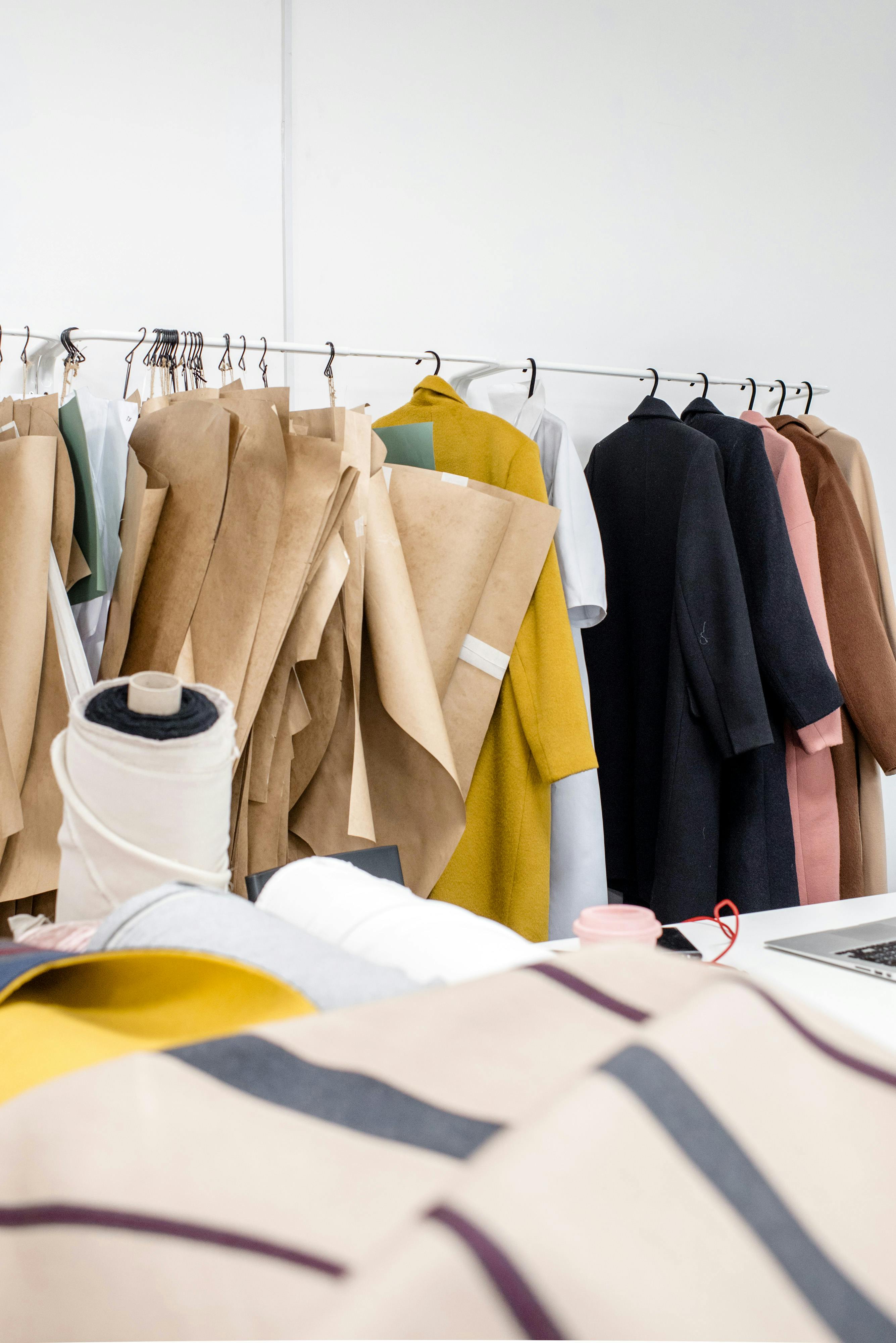
- Photo 1: Clothing and fabric samples in a fashion design studio. Photo by Ksenia Chernaya on Pexels. Image: direct image.
- Photo 2: Garment craftsmanship and sewing in a traditional atelier. Photo by Michael Burrows on Pexels. Image: direct image.
Sources and Further Reading
- UNEP — Sustainability and Circularity in the Textile Value Chain. Global textile waste and recycling context.
- Oxfam — State of Style Report 2026. Consumer shopping behaviour and social media influence.
- European Environment Agency — Textiles. Environmental pressures associated with textile consumption.
- Ellen MacArthur Foundation — Fashion and the Circular Economy. Circular fashion and garment longevity.
- European Commission — EU Strategy for Sustainable and Circular Textiles. European textile policy and sustainability objectives.
- McKinsey — The State of Fashion 2026. Resale, consumer value and fashion industry developments.
- UNEP — The Environmental Costs of Fast Fashion. Environmental impacts of the fast-fashion business model.
- UNECE — Sustainable Fashion and Textile Materials. Global fibre production and synthetic materials.
- Ethical Consumer — Making and Mending Your Own Clothes. Clothing repair and sewing practices.
- Associated Press — Clothing Brands Try to Win Over Gen Z With a Needle and Thread. Retailer repair and clothing customisation initiatives.
Editorial note: The article distinguishes published industry statistics from general explanations and recommendations. Consumer statistics from Oxfam refer to Britain, not the entire global population. Environmental impacts also vary according to materials, manufacturing methods and garment lifespans. Slow fashion should be understood as an evolving approach, not a guarantee that every product carrying the label is sustainable.
The conversation
Post a Comment