
The Science of Volcanoes in 2026: What Eruptions Reveal About Earth's Hidden Power
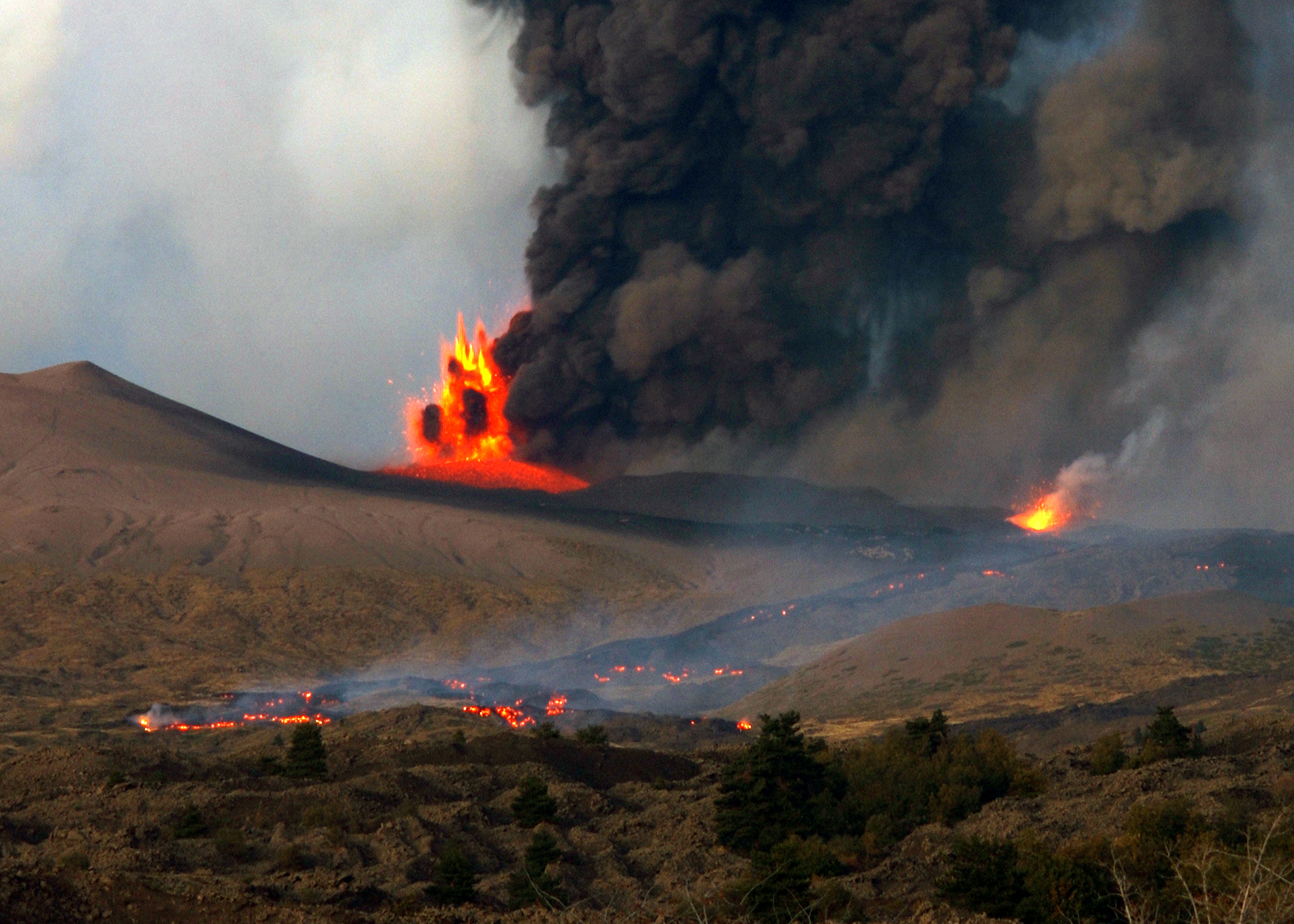
Imagine standing on a hillside after sunset. In the distance, a mountain suddenly glows red. The ground trembles, smoke rises above its summit, and glowing rivers begin moving down its slopes. Lightning flashes inside a towering ash cloud. What appeared to be an ordinary mountain has become a powerful natural force, reshaping the landscape within hours. This is the extraordinary behavior of a volcano.
Volcanoes reveal that Earth is not a motionless planet. Beneath its surface, enormous amounts of heat drive the movement of molten rock, gases, and tectonic plates. Eruptions can build islands, destroy settlements, influence temperatures, and release materials stored deep underground. They also provide scientists with valuable evidence about the structure and history of our planet.
In 2026, researchers have increasingly sophisticated tools for studying volcanoes. Satellites detect changes in temperature and volcanic gases, seismic instruments record underground movement, and computer models help estimate where ash may travel. Yet predicting exactly when an eruption will begin remains difficult. Understanding volcanoes requires combining technology, geological evidence, historical observations, and careful preparation.
Key Takeaways
- Volcanoes release magma, gases, ash, and other materials through openings in Earth's crust.
- Most volcanoes form near tectonic plate boundaries, while others develop above mantle hotspots.
- Magma becomes lava when it reaches the surface.
- Magma composition, viscosity, temperature, and gas content influence eruption behavior.
- Shield volcanoes commonly produce fluid lava flows, while stratovolcanoes can produce explosive eruptions.
- Major hazards include lava, ashfall, pyroclastic flows, lahars, gases, landslides, and tsunamis.
- Historical eruptions have improved scientific understanding and emergency planning.
- Modern monitoring combines seismic measurements, GPS, gas sensors, thermal cameras, and satellites.
- Large eruptions can temporarily influence global temperatures.
- Volcanic regions also provide fertile soils, geothermal energy, minerals, and new land.
- Scientists can recognize warning signs but cannot predict every eruption precisely.
- Public awareness and emergency preparation remain essential.
1. What Exactly Is a Volcano?
A volcano is an opening in Earth's crust through which magma, gases, ash, and fragments of rock reach the surface. Some volcanoes form tall mountains with steep slopes. Others are broad hills, underwater ridges, or enormous depressions called calderas. Volcanic systems can also exist beneath glaciers and oceans.
The mountain itself is only the visible part of a larger geological system. Beneath it may be magma storage regions, cracks, channels, and partially molten rocks. These structures connect Earth's interior with its surface.
Magma and lava: Understanding the difference
Magma is molten or partially molten rock beneath Earth's surface. It contains liquid rock, mineral crystals, and dissolved gases. When magma reaches the surface, it becomes lava. The distinction is simple but important because underground pressure strongly influences how magma behaves.
Basaltic magma is relatively fluid and can travel considerable distances. Silica-rich magma, including rhyolite and dacite, is generally more viscous. It behaves more like thick honey than water, making it harder for gas bubbles to escape. These differences help explain why some volcanoes produce flowing lava while others generate violent explosions.
What is inside a volcanic system?
A volcanic system is not necessarily a single underground reservoir filled with liquid rock. Research shows that magma may occupy several interconnected storage regions. Some contain mostly crystals with smaller amounts of liquid, while others contain more molten material. New magma can change pressure, temperature, and gas conditions, encouraging existing material to move. Scientists therefore describe many volcanic systems as complex networks rather than simple underground tanks.
2. How Do Volcanoes Form?
Earth contains enormous amounts of internal heat. Some remains from the planet's formation approximately 4.5 billion years ago, while additional heat comes from radioactive decay. Earth's outer shell is divided into tectonic plates that move slowly over geological time. Interactions between these plates create many of the conditions necessary for volcanic activity.
Volcanoes at convergent plate boundaries
At convergent boundaries, one tectonic plate may descend beneath another. This process is called subduction. As the descending plate releases water and other substances, it helps promote melting in the mantle above it. Magma can then rise through surrounding rocks.
This process creates volcanic chains such as the Andes and many volcanoes around the Pacific Ocean. Subduction zones frequently produce silica-rich magmas associated with explosive eruptions. However, eruption behavior varies according to local geology, magma composition, and underground conditions.
Volcanoes at divergent plate boundaries
At divergent boundaries, tectonic plates move apart. Pressure on the underlying mantle decreases, allowing some rock to melt through decompression melting. Magma rises into the opening and creates new crust. The Mid-Atlantic Ridge is a major example. Iceland is particularly interesting because it lies on this ridge and above an unusually hot region of the mantle.
Hotspot volcanoes
Some volcanoes form away from plate boundaries. They develop above hotspots, where unusually hot mantle material rises toward Earth's crust. Hawaii provides a famous example. As the Pacific Plate moves over a relatively stationary volcanic source, new volcanoes develop while older ones move away. This creates a chain of islands and underwater mountains. Scientists continue investigating the precise structure and origin of mantle hotspots.
3. How Does a Volcanic Eruption Actually Happen?
An eruption occurs when magma and volcanic gases move through Earth's crust and reach the surface. Several connected processes can contribute to this event.
Stage one: Magma begins moving
Changes in temperature, pressure, or magma supply can encourage molten material to rise. Because magma is generally less dense than surrounding solid rock, buoyancy helps move it upward. It may travel through existing fractures or create new cracks as pressure increases.
Stage two: Gas bubbles develop
Magma contains dissolved gases, including water vapor, carbon dioxide, and sulfur dioxide. At great depths, high pressure allows substantial quantities of gas to remain dissolved. As magma rises, pressure decreases and bubbles begin forming. The process resembles carbon dioxide escaping from an opened bottle of sparkling water.
Fluid magma may allow bubbles to escape relatively easily. Viscous magma can trap them, allowing pressure to accumulate. If the pressure becomes sufficient, the magma may fragment explosively.
Stage three: The eruption begins
Once magma reaches the surface, it may flow quietly, produce lava fountains, or explode into ash, gas, and volcanic fragments. Some eruptions alternate between different behaviors. The outcome depends on magma characteristics and surrounding conditions.
Why do some eruptions explode?
Expanding gas is a major reason. Inside viscous magma, bubbles may become trapped as pressure falls. Their expansion can fragment the molten material into countless pieces. These include fine ash, larger volcanic rocks, and lightweight pumice. Powerful explosions can send these materials high into the atmosphere.
What happens after an eruption?
Volcanic danger does not necessarily end when the main explosion stops. Lava may continue flowing, ash may keep falling, and unstable volcanic domes may collapse. Rain can mix with loose deposits to produce lahars. Even after visible activity declines, hot materials, unstable slopes, and changing water conditions can remain dangerous.
4. The Main Types of Volcanoes
Volcanoes differ in shape, size, structure, and eruption behavior. Geologists classify them according to their physical features and the materials that build them.

Shield volcanoes
Shield volcanoes are broad structures with gentle slopes. They form through repeated eruptions of fluid lava, usually basaltic in composition. Because this lava travels considerable distances before cooling, it spreads across wide areas. Mauna Loa in Hawaii is a well-known example. Although shield volcanoes often produce less explosive eruptions, their lava can destroy homes, roads, farmland, and infrastructure.
Stratovolcanoes
Stratovolcanoes, also called composite volcanoes, have steep sides built from alternating layers of lava, ash, and other volcanic materials. Mount Fuji, Mount Vesuvius, and Mount St. Helens are familiar examples. Many contain relatively viscous magma and can produce explosive eruptions, lava domes, pyroclastic flows, and lahars.
Cinder cones
Cinder cones are usually smaller volcanoes formed when fragments of erupted lava accumulate around a vent. Gas-rich magma breaks into pieces, which cool and fall around the opening. Parícutin in Mexico is a famous example. Its appearance in a farmer's field in 1943 allowed scientists to observe the development of a new volcano.
Lava domes
Lava domes develop when viscous magma reaches the surface but cannot flow far. It accumulates around the vent, forming a rounded or irregular mound. These structures can become unstable. A collapsing dome may release hot rock fragments and gas in dangerous pyroclastic flows.
Calderas
A caldera is a large depression formed when part of a volcanic system collapses. This often happens after substantial magma removal reduces support beneath the surface. Calderas can be much larger than ordinary craters. Yellowstone and Santorini are well-known examples.
5. Different Types of Volcanic Eruptions
Scientists classify eruptions according to their physical behavior, deposits, and explosivity. These categories help explain why different volcanoes produce different hazards.
Effusive eruptions
Effusive eruptions release lava relatively continuously. The magma is generally fluid enough to flow rather than fragment violently. They are common at basaltic volcanoes. However, even without enormous explosions, lava can destroy everything in its path.
Explosive eruptions
Explosive eruptions occur when expanding gas fragments magma and ejects volcanic material. Columns may contain ash, pumice, rocks, and gases, sometimes rising many kilometers. If an eruption column becomes too dense to remain suspended, it can collapse and generate dangerous pyroclastic density currents.
Phreatic eruptions
A phreatic eruption occurs when water is heated rapidly by magma or hot volcanic rock. Steam expansion produces an explosion that throws existing rock and other material into the air. Fresh magma does not necessarily reach the surface, so dangerous explosions can occur without obvious new lava.
Phreatomagmatic eruptions
These eruptions involve direct interaction between magma and external water. Rapid heating and expansion can fragment magma, producing explosive activity. They may occur when magma enters lakes, groundwater systems, coastal waters, or shallow marine environments.
Plinian eruptions
Plinian eruptions are powerful explosive events characterized by sustained eruption columns. They can distribute ash over enormous distances and produce extensive pumice deposits. The eruption of Mount Vesuvius in AD 79 is a famous historical example.
6. Famous Volcanic Eruptions and What They Taught Us
Historical eruptions have transformed landscapes and improved scientific understanding. They also demonstrate how volcanic hazards affect communities far beyond the immediate crater.
Mount Vesuvius, AD 79: The destructive power of pyroclastic material
The eruption of Mount Vesuvius near Naples buried settlements including Pompeii and Herculaneum. Explosive activity produced falling pumice, hot ash, and pyroclastic currents. Archaeological discoveries preserved remarkable evidence of Roman life. The disaster demonstrated that volcanic danger extends far beyond visible lava flows.
Krakatau, 1883: Volcanoes and tsunamis
The eruption of Krakatau in Indonesia was one of history's most destructive volcanic events. Explosions, collapse processes, and associated tsunamis caused enormous loss of life. The disaster showed that volcanic hazards can affect distant coastal communities through destructive waves. It also demonstrated that major eruptions can influence atmospheric conditions and produce unusual optical effects.
Mount St. Helens, 1980: A volcano can explode sideways
On May 18, 1980, Mount St. Helens in Washington State experienced a catastrophic eruption. An earthquake triggered the collapse of its unstable northern flank. The landslide rapidly reduced pressure on the volcanic system and contributed to a powerful lateral explosion. Forests and infrastructure were devastated, ash spread across the northwestern United States, and 57 people died. Scientists learned important lessons about volcanic landslides, lateral blasts, changing mountain shapes, and continuous monitoring.
Mount Pinatubo, 1991: Volcanoes can influence global temperatures
The June 1991 eruption of Mount Pinatubo in the Philippines released enormous quantities of sulfur dioxide into the stratosphere. Chemical reactions produced sulfate aerosols that reflected some incoming sunlight back into space. Global average temperatures temporarily declined. The eruption demonstrated the connection between geological activity and climate. Scientific monitoring and evacuation warnings also helped reduce the human toll.
Eyjafjallajökull, 2010: Volcanic ash and modern transportation
The 2010 eruption of Eyjafjallajökull in Iceland disrupted international aviation. Interaction between magma and glacial ice contributed to explosive activity and ash production. Winds carried particles across European airspace, leading airlines to cancel thousands of flights. Ash can damage aircraft engines, windshields, and sensors. The event encouraged improvements in satellite observations, ash forecasting, and communication between scientific and aviation agencies.
7. How Scientists Monitor Volcanoes in 2026
Modern volcanology combines several technologies to investigate activity beneath and around volcanoes. Scientists look for changes that may indicate increasing unrest or an approaching eruption.
Seismometers: Listening to underground movement
Seismometers measure ground vibrations. Volcanoes often produce earthquake swarms when magma moves through underground fractures. Some earthquakes occur as rocks break under pressure; others reflect the movement of fluids and gases. Scientists examine their frequency, depth, location, and patterns. Increased seismic activity can indicate unrest, but it does not guarantee an eruption. Some earthquake swarms stop without any eruption.
GPS and ground deformation
Underground magma accumulation can push surrounding rocks outward, causing the surface to rise, sink, tilt, or move sideways. GPS stations measure these changes. Satellite radar techniques, particularly Interferometric Synthetic Aperture Radar (InSAR), detect subtle ground movements over large areas. These observations help researchers investigate possible magma accumulation and movement.
Gas monitoring
Volcanoes release water vapor, carbon dioxide, sulfur dioxide, and other gases. Changes in emissions can reveal information about magma movement and pressure. Increasing sulfur dioxide may indicate that magma is approaching the surface or that a pathway has opened. Ground instruments, aircraft, and satellites provide measurements. Wind, weather, groundwater, and vent conditions can complicate interpretation.
Thermal cameras and satellite observations
Hot lava, growing domes, and changing surface temperatures provide clues about volcanic activity. Thermal cameras detect unusual heating around vents and slopes. Satellites offer wider coverage, especially at remote volcanoes where ground instruments are difficult to install. They can identify thermal anomalies, ash clouds, and atmospheric gases.
Artificial intelligence and computer models
Artificial intelligence can help researchers classify seismic signals and examine large collections of observations. Computer models simulate magma movement, lava flows, ash transport, and possible hazard zones. However, these tools cannot eliminate uncertainty. A model trained on one volcano may perform poorly on another with different geology. Expert interpretation and field observations remain essential.
8. Can Scientists Predict a Volcanic Eruption?
Scientists can sometimes identify signs that an eruption is becoming more likely. However, predicting volcanic activity is difficult because underground conditions are only partially observable.
What scientists can forecast
Monitoring can help researchers estimate whether activity is increasing, whether magma may be moving upward, which areas could experience lava or ashfall, and whether a growing dome is becoming unstable. Scientists can also model the possible movement of ash under forecast wind conditions and identify communities that may need evacuation. Comparing current observations with a volcano's historical behavior provides valuable context.
What remains difficult
Determining the exact moment an eruption will begin is much harder. Even when earthquakes, ground deformation, and gas emissions increase together, a volcano may experience unrest without erupting. Some systems undergo repeated periods of activity before returning to quieter conditions. The size and duration of an eruption are also difficult to predict. Scientists therefore communicate probabilities, possible scenarios, and alert levels rather than promising exact predictions.
Why warning systems matter
Warnings can save lives even when they cannot predict every detail. Authorities can prepare evacuation routes, move vulnerable residents, close dangerous areas, and coordinate emergency services. Monitoring aims to reduce uncertainty and provide information that supports practical decisions.
9. The Main Dangers of Volcanic Eruptions
Volcanoes produce several hazards. Some are more dangerous than the visible movement of lava.
Lava flows
Lava flows are streams of molten rock moving away from a vent. Their speed depends on temperature, viscosity, slope, and the volume released. Some advance slowly enough for people to escape after receiving warnings. Others move rapidly, particularly on steep slopes or through confined channels. Lava destroys buildings, roads, forests, electrical systems, and farmland. It can also start fires and block transport routes.
Pyroclastic flows
Pyroclastic flows and surges contain hot volcanic gases, ash, and rock fragments moving rapidly along the ground. Depending on their type and conditions, they can travel at speeds of many tens to hundreds of kilometers per hour. Their temperatures can be extremely high. Direct exposure is generally unsurvivable, making evacuation and exclusion zones essential.
Volcanic ash
Volcanic ash is not soft fireplace ash. It consists of tiny fragments of volcanic glass, minerals, and rock. It can irritate the eyes and respiratory system, contaminate water, damage machinery, and reduce visibility. Thick deposits can place dangerous weight on roofs. Wind may transport fine particles far from the volcano.
Lahars
A lahar is a fast-moving mixture of water, volcanic ash, mud, and rock. It may develop when volcanic deposits mix with rain, melting snow, ice, or water from a crater lake. Lahars can travel through river valleys, bury settlements, destroy bridges, and damage farmland. Communities far from lava flows may still face serious risks.
Volcanic gases
Volcanic gases include sulfur dioxide, carbon dioxide, and hydrogen sulfide. Some irritate the respiratory system, while others become dangerous at high concentrations. Carbon dioxide can accumulate in low-lying or enclosed areas and displace oxygen. Sulfur dioxide can react with atmospheric moisture to form acidic compounds. Risk depends on concentration, exposure time, wind, and local conditions.
Landslides and volcanic tsunamis
Volcanic slopes can become unstable because of earthquakes, erosion, groundwater changes, or accumulating deposits. Large landslides may move enormous quantities of rock. If material enters the sea or a large lake, it can generate destructive waves. Coastal communities near volcanic islands may therefore need tsunami preparation as part of their emergency planning.
10. Why Volcanic Ash Is Dangerous to Aircraft
Volcanic ash presents a serious challenge for modern aviation. Unlike ordinary clouds, ash contains hard, abrasive particles that can damage aircraft. When particles enter a jet engine, extreme temperatures may melt them. The material can then cool and accumulate on engine components, interfering with airflow and potentially causing engine failure.
Ash can also damage windshields, sensors, and other systems. High-altitude winds may transport it across countries and oceans. The Eyjafjallajökull eruption in 2010 demonstrated how one volcanic event can disrupt international aviation networks.
In 2026, aviation authorities continue using volcanic ash advisory systems, satellite observations, atmospheric models, and pilot reports. These tools help identify ash clouds, estimate their movement, and guide aircraft away from dangerous concentrations. Effective protection requires cooperation between geology, meteorology, engineering, and aviation authorities.
11. The Positive Side of Volcanoes
Volcanoes can destroy communities, but their long-term influence is not entirely negative. Over geological time, volcanic activity helps create landscapes and resources that support ecosystems and human settlements.
Fertile volcanic soils
Volcanic rocks gradually break down through weathering. Rain, temperature changes, chemical reactions, and biological activity transform them into soil. Many volcanic soils contain minerals that support productive agriculture. This helps explain why communities have historically settled near volcanic landscapes. However, fresh lava and ash are not automatically fertile. Soil development may require many years and depends on climate, drainage, mineral composition, and land management.
Geothermal energy
Volcanically active regions often contain heat relatively close to the surface. Geothermal systems can use underground hot water or steam to generate electricity or provide direct heating. Geothermal energy can offer relatively reliable power. Iceland is a prominent example of extensive geothermal use. Nevertheless, projects require suitable geological conditions, investment, careful water management, and environmental assessment. Not every volcano is suitable for electricity generation.
New land and islands
When lava enters the ocean and cools, it can build new coastal land. Repeated eruptions may eventually create islands. The Hawaiian Islands demonstrate how long-term volcanic activity builds new landscapes. Underwater eruptions can also form seamounts, some of which eventually rise above sea level. These processes show that Earth's surface is continuously changing.
Mineral resources
Volcanic and magmatic systems are associated with economically important mineral deposits. Copper, gold, silver, and other metals can become concentrated through processes involving magma and hot fluids. These deposits provide valuable resources, although mining can create environmental costs and requires responsible management.
12. Volcanoes and Earth's Climate
Volcanoes can influence the atmosphere and climate over large distances. Their effects depend on eruption size, composition, and location.
How sulfur dioxide cools the planet
Large explosive eruptions can inject sulfur dioxide into the stratosphere. Chemical reactions convert it into tiny sulfate aerosols that reflect some incoming sunlight back into space. Less solar energy then reaches Earth's surface, temporarily lowering average temperatures. The 1991 Mount Pinatubo eruption provides an important example. Its atmospheric effects contributed to temporary global cooling.
Why volcanic cooling is temporary
Volcanic aerosols do not remain in the atmosphere indefinitely. They gradually settle or are removed through atmospheric processes. The cooling influence of a major eruption generally lasts months to a few years, rather than permanently changing the climate. This differs from the long-term warming associated with rising greenhouse gas concentrations from human activities. Volcanic eruptions are not a safe or reliable method of controlling climate change.
Can volcanoes cause global warming?
Volcanoes release carbon dioxide, a greenhouse gas. However, modern human activities release substantially more carbon dioxide each year than volcanic activity. Ordinary eruptions do not explain the rapid modern increase in atmospheric carbon dioxide. Scientists also investigate ancient volcanic events that released enormous quantities of gases over extended geological periods. These events may have contributed to major environmental disruptions and ancient warming episodes.
13. Living Near an Active Volcano
Millions of people live in regions influenced by active or potentially active volcanoes. For many communities, volcanoes are part of local identity, employment, agriculture, and tourism. Fertile land and geothermal resources can provide important benefits, but living nearby requires understanding local hazards.
Why communities remain
Volcanic regions are not necessarily dangerous every day. Some volcanoes remain quiet for long periods, and many eruptions affect limited areas. People also have economic, family, and cultural reasons to remain. Agriculture, fishing, tourism, and local businesses may depend on the surrounding landscape. The challenge is balancing these benefits with realistic preparation.
Risk maps and evacuation zones
Volcanic hazard maps identify areas that could experience different threats. One region may face lava flows, another lahars through river valleys, and another heavy ashfall. These maps help authorities establish evacuation zones, emergency routes, and infrastructure plans. They are not exact predictions of future eruptions. Instead, they describe possible hazards using geological evidence and modelling.
The importance of community education
Residents should know how to receive official alerts, where evacuation centers are located, and which routes remain usable during emergencies. Schools, hospitals, businesses, and emergency services need plans for possible disruptions. Preparedness is most effective when it becomes part of normal community planning rather than something considered only after an eruption begins.
14. How Climate, Water, and Ice Change Volcanic Hazards
Volcanoes interact with their surrounding environment. Weather, groundwater, snow, glaciers, and nearby water bodies can influence eruptions and their consequences.
Volcanoes beneath glaciers
Some volcanoes are covered by thick ice. When hot volcanic material interacts with ice, rapid melting can generate large quantities of water. This water may mix with volcanic debris and produce dangerous floods. In Iceland, these events are known as jökulhlaups. They can travel through river systems and damage roads, bridges, and settlements.
Rainfall and volcanic mudflows
Heavy rainfall can mobilize loose ash and volcanic debris. Even after an eruption ends, unstable deposits may remain on slopes. Rainwater can transform them into lahars that move down river channels. This is why monitoring and hazard management must continue after the main eruption.
Changing environmental conditions
Climate change can influence some volcanic landscapes through glacier loss, changing rainfall patterns, and groundwater alterations. Researchers are investigating whether melting ice or changes in surface water affect certain volcanic systems. However, the relationship is complicated. There is no scientific basis for claiming that ordinary modern climate change will make all volcanoes more active. Local geological conditions determine whether environmental changes significantly affect a particular system.
15. What Is New in Volcanology in 2026?
Volcanology continues developing through better technology, international data sharing, and detailed studies of underground systems. The Smithsonian Institution's Global Volcanism Program maintains an international database of volcanoes and eruptions.
Its 2026 database release, version 5.4.0, was published on August 7, 2026. It included a completed review of 2025 eruption records and general revisions to volcano information. The program's 2026 records provide a snapshot rather than a complete year-end total. For example, its published annual summary available on March 31, 2026, recorded 47 confirmed eruptions during that year to that date, including six new eruptions that began in 2026. These figures must not be treated as final totals for the entire year.
Better satellite observations
Earth-observation satellites help identify changes in surface temperature, ground deformation, ash distribution, and atmospheric gases. Their greatest advantage is coverage. Scientists can monitor remote volcanoes where permanent ground instruments are difficult to install and compare observations over time.
More detailed seismic analysis
Modern seismic networks produce enormous quantities of information. Researchers are developing methods to identify subtle signals associated with magma movement, fluid circulation, and rock fractures. Artificial intelligence can help classify seismic events and identify unusual patterns, although expert interpretation remains essential.
Better ash forecasting
Ash forecasting combines eruption observations with atmospheric models. Scientists need information about ash volume, eruption-column height, particle characteristics, and prevailing winds. Improved satellite observations and computer modelling help estimate where ash may travel. This information is particularly important for aviation authorities and downwind communities.
Greater international cooperation
Volcanoes do not respect national borders. An eruption can disrupt aviation in another country while ash and gases travel across entire regions. International organizations, observatories, aviation authorities, and emergency agencies share information to improve warnings. Cooperation is a major part of modern volcanic risk management.
16. Practical Safety Advice: What to Do Before, During, and After an Eruption
Understanding volcanoes is useful, but preparation can make a direct difference during an emergency. Appropriate actions depend on local hazards and instructions from emergency authorities.
Before an eruption
People living near active volcanoes should:
- Learn whether their homes, schools, and workplaces are inside identified hazard zones.
- Know official evacuation routes and nearby emergency shelters.
- Register for local emergency alerts where available.
- Prepare drinking water, food, medication, flashlights, batteries, and essential documents.
- Keep a battery-powered radio or another reliable way to receive information.
- Prepare suitable eye protection and a well-fitting NIOSH-approved N95 respirator where available.
- Plan how to help children, older people, and individuals requiring assistance.
- Keep emergency contacts accessible.
A household emergency plan should include a meeting location in case family members become separated.
During an eruption
Follow official instructions immediately. If evacuation is ordered, leave promptly using the recommended route. Never approach a volcano to photograph an eruption. Avoid valleys and river channels when lahars are possible.
If ash is falling and authorities have not instructed you to evacuate, staying indoors may reduce exposure. Close windows and doors, limit outside air entering the building where practical, and protect sensitive equipment. If you must go outdoors, wear protective clothing, goggles, and a properly fitted respirator. Avoid driving during heavy ashfall unless absolutely necessary because ash reduces visibility, damages engines, and makes roads slippery.
After an eruption
Do not assume danger has disappeared when visible activity stops. Follow official updates before returning to evacuated areas. Wear suitable protection when cleaning ash and avoid disturbing dry deposits because particles can become airborne. Remove roof ash only when authorities say it is safe. Wet ash can be extremely heavy, and roofs may already be weakened. Check water supplies for contamination and watch for rainfall-related lahars, particularly near valleys and drainage channels. Report infrastructure damage and follow public-health guidance.
A special warning about volcanic ash
Ash can remain dangerous long after an eruption. It may enter ventilation systems, contaminate machinery, damage electronics, and cause breathing difficulties. The Centers for Disease Control and Prevention recommends staying indoors during ashfall when possible and using a NIOSH-approved N95 respirator when outdoor exposure cannot be avoided. Respiratory protection is particularly important for people cleaning ash or working outdoors.
17. What Volcanoes Reveal About Earth's Future
Volcanoes are part of the natural system through which Earth releases internal heat and reshapes its surface. They help create new crust, recycle elements, release gases, and influence the long-term evolution of continents and oceans.
By studying volcanic rocks, scientists reconstruct ancient environments and investigate the chemical history of Earth's interior. Volcanic deposits also provide clues about past climates and major geological events. Researchers compare volcanic systems on Earth with geological features on Mars, Venus, and several moons to understand how planetary interiors evolve. Although volcanism is not unique to Earth, our oceans, atmosphere, and active tectonic systems create a distinctive environment.
Could a volcano change the entire planet?
Extremely large volcanic events have affected global environments in the geological past. Some ancient volcanic provinces released enormous quantities of gases over extended periods. These episodes may have contributed to climate changes, altered ocean chemistry, and biological crises. However, such events differ greatly from ordinary modern eruptions. Studying them helps scientists understand Earth's long-term history; it does not mean every active volcano is likely to produce a planet-changing catastrophe.
18. What We Know and What Scientists Are Still Investigating
Volcanology has advanced considerably, but important questions remain. Separating established evidence from unresolved questions is essential for understanding the science.
What is well established?
- Magma forms through melting processes within Earth's interior.
- Tectonic plate movement is responsible for many volcanic systems.
- Dissolved gases strongly influence eruption behavior.
- Earthquakes, ground deformation, gas emissions, and thermal changes provide evidence of volcanic unrest.
- Explosive eruptions can produce dangerous ash clouds and pyroclastic flows.
- Large sulfur-rich eruptions can temporarily cool Earth's surface.
- Volcanic materials contribute to new land and mineral-rich soils.
What remains uncertain or under investigation?
- The precise timing of many eruptions.
- The exact quantity of magma stored beneath individual volcanoes.
- Why some periods of unrest lead to eruptions while others do not.
- How underground magma reservoirs change over time.
- How glacier loss influences particular volcanic systems.
- How well artificial intelligence can generalize between volcanoes with different geological histories.
- The exact size and duration of an eruption before it begins.
These uncertainties do not mean scientists know very little. They reflect the complexity of volcanic systems and the difficulty of observing underground processes directly. Reliable research combines measurements, historical evidence, geological models, and honest communication about limitations.
19. Frequently Asked Questions About Volcanoes
1. What causes a volcano to erupt?
A volcano erupts when magma and gases move upward through Earth's crust and reach the surface. Pressure, dissolved gases, magma composition, and underground fractures influence the process.
2. What is the difference between magma and lava?
Magma is molten or partially molten rock beneath Earth's surface. Once it reaches the surface, it is called lava.
3. How many active volcanoes are there in the world?
The Smithsonian Global Volcanism Program documents approximately 1,214 volcanoes active during the Holocene, covering roughly the last 12,000 years. The precise number depends on scientific definitions and classifications. Around 40-50 continuing eruptions are typically recorded at a given time.
4. Where are most of the world's volcanoes located?
Many are located around the Pacific Ring of Fire, where tectonic boundaries and subduction produce extensive volcanic activity. Important regions include Indonesia, Japan, the Philippines, Alaska, and the western coasts of North and South America.
5. Can a volcano erupt without warning?
Some volcanoes show increasing earthquakes, ground deformation, or gas emissions. Others can produce relatively sudden explosions, particularly when water interacts with hot volcanic material. Monitoring reduces uncertainty but cannot guarantee advance warning of every event.
6. What is the most dangerous type of volcanic eruption?
There is no single answer because danger depends on location, population, and hazards. Large explosive eruptions can produce devastating pyroclastic flows and widespread ashfall. Smaller events can also be deadly when communities face lahars, gases, or landslides.
7. Can people survive a volcanic eruption?
Yes. Many people survive eruptions, especially when they receive timely warnings and follow evacuation instructions. Survival depends on distance, eruption characteristics, geography, and access to safe shelter. Direct exposure to pyroclastic flows is generally unsurvivable.
8. Why is volcanic ash dangerous?
Volcanic ash contains fragments of rock, minerals, and volcanic glass. It can irritate the eyes and lungs, contaminate water, damage machinery, reduce visibility, and make roofs collapse when deposits become sufficiently heavy.
9. Can volcanic eruptions affect the entire world?
Large explosive eruptions can inject sulfur dioxide into the stratosphere. Sulfate aerosols may spread widely and temporarily influence global temperatures. Most eruptions have mainly local or regional effects.
10. Which volcanic eruption caused the greatest historical loss of life?
The 1815 eruption of Mount Tambora in Indonesia is among the deadliest recorded volcanic disasters. The USGS lists approximately 92,000 deaths, including substantial mortality associated with famine and disease. Historical estimates vary because records are incomplete.
11. Can volcanoes create new islands?
Yes. Underwater eruptions can accumulate lava and volcanic material until a structure rises above sea level. Some new islands are temporary and may later be eroded or collapse.
12. Why do some volcanoes produce lava while others explode?
Magma viscosity and dissolved gas content are major factors. Fluid magma allows bubbles to escape relatively easily, often producing lava flows. Viscous magma can trap gas, allowing pressure to accumulate and causing explosive fragmentation.
13. Are dormant volcanoes dangerous?
A dormant volcano is currently quiet but may erupt again. Dormancy does not mean permanent safety. Scientists examine geological history, unrest signals, and surrounding hazards when assessing risk.
14. Can an extinct volcano become active again?
Extinct classification indicates geological evidence that a volcano is unlikely to erupt again. Classifications may change when new evidence emerges. Scientists must distinguish extinct volcanoes from systems that are simply dormant.
15. How do satellites help scientists monitor volcanoes?
Satellites detect changes in ground elevation, surface temperature, volcanic gases, and ash clouds. They are especially useful for monitoring remote volcanoes with limited ground instruments.
16. Do volcanoes cause earthquakes?
Volcanic activity can produce earthquakes when magma moves through fractures or pressure changes break surrounding rocks. However, most earthquakes worldwide are related to tectonic processes rather than volcanic activity.
17. Can volcanic eruptions cause tsunamis?
Yes. Underwater explosions, volcanic flank collapses, and landslides entering the sea can generate tsunamis. The 1883 Krakatau disaster demonstrates the relationship between volcanic activity and destructive ocean waves.
18. Are volcanic soils good for farming?
Many volcanic soils become fertile through weathering and can contain minerals that support plant growth. Fresh lava and ash are not automatically fertile. Soil quality depends on local environmental conditions.
19. Can volcanoes provide renewable energy?
Yes. Geothermal energy uses underground heat to produce electricity or provide direct heating. Volcanically active regions may offer valuable resources, although suitable geology and responsible development are necessary.
20. Will scientists ever be able to predict eruptions perfectly?
There is no guarantee that perfect prediction will become possible. Volcanoes have complicated underground structures that cannot be observed directly in every detail. Better combinations of seismic measurements, gas observations, satellite data, and computer models may improve forecasts, but uncertainty will remain.
Conclusion: Understanding the Power Beneath Our Feet
Volcanoes remind us that Earth is not a motionless planet. Beneath mountains, forests, cities, and oceans, geological systems continue to move and evolve. Heat travels through the interior, tectonic plates shift, magma rises, and volcanic materials reshape the surface.
An eruption may appear sudden, but it often results from processes developing underground for years, decades, or much longer. Studying volcanoes helps explain how mountains and islands form, how geological activity influences climate, how mineral resources develop, and why certain landscapes are both productive and hazardous.
In 2026, satellites, seismic networks, gas sensors, thermal instruments, and computer models give scientists powerful ways to investigate these systems. Yet no instrument can reveal every detail of what happens beneath the surface. Scientific observation must therefore go hand in hand with public education, emergency preparation, and responsible planning.
Volcanoes can destroy communities, but they also create landscapes, support ecosystems, and provide valuable resources. Their story is ultimately the story of a dynamic planet continually being rebuilt and transformed by forces hidden beneath our feet. Understanding those forces helps us live more safely on an ever-changing Earth.
Sources and Further Reading
- USGS — About Volcanoes. Volcano formation, magma, eruptions, and volcanic structures.
- Smithsonian Global Volcanism Program. Worldwide volcanic activity and eruption records.
- Smithsonian — Volcanoes of the World Database. Volcano information, geological records, and eruption updates.
- USGS — Principal Types of Volcanoes. Shield volcanoes, stratovolcanoes, cinder cones, and lava domes.
- USGS — Mount St. Helens. Geological history and eruption information.
- USGS — Ten Ways Mount St. Helens Changed Our World. Scientific and environmental lessons from the 1980 eruption.
- USGS — Which Volcanic Eruptions Were the Deadliest?. Historical volcanic disasters.
- USGS — Volcanoes Can Affect Climate. Sulfate aerosols and temporary global cooling.
- NASA Earth Science. Atmospheric and environmental effects of volcanic eruptions.
- USGS — Volcano Hazards Program. Volcanic hazards, monitoring, and public safety.
- CDC and NIOSH. Respiratory protection and occupational safety information.
- Federal Aviation Administration. Aviation safety and aeronautical information.
The conversation
Post a Comment