
Urban Gardening in 2026: How Balconies, Rooftops and Community Plots Are Growing Real Food in the City
Introduction: A Small Garden Can Change the Way a City Eats
Imagine waking up on a warm morning in 2026, opening the balcony door and stepping outside with a cup of coffee. Instead of looking at an empty concrete floor, you see green leaves moving gently in the breeze. A few cherry tomatoes are turning red, basil is ready to be picked, mint is spreading through a pot, and lettuce leaves are waiting to become part of lunch.
There is no large backyard, no expensive greenhouse and no countryside property. There is simply a small urban space that someone decided to use differently.
This is the idea behind urban gardening: growing useful plants, including food crops, in the places where people live, work and spend their everyday lives.
For many city residents, the traditional picture of gardening does not match reality. Apartment buildings have replaced houses with large gardens. Balconies are narrow, rooftops are shared, and outdoor space is sometimes limited to a window ledge. Yet vegetables, herbs and even certain fruit crops do not necessarily need a traditional garden to grow.
A container of parsley beside a kitchen window, a tomato plant on a sunny terrace, or a shared raised bed in a neighborhood can all become part of a productive food-growing space.
Urban gardening is receiving renewed attention in 2026 for several connected reasons. People want fresher ingredients, more contact with nature, practical hobbies, greener neighborhoods and better use of underused spaces. Some are also interested in understanding where their food comes from and how much effort is involved in producing it.
However, growing food in a city is not automatically cheap, easy or environmentally beneficial. Plants need sunlight, water, nutrients, suitable containers and regular attention. Rooftops must be assessed for safety, while older urban soil may contain contaminants. A few pots will not replace a household's grocery supply, and the first harvest may be smaller than a beginner expects.
The encouraging news is that a productive garden does not need to begin with a major investment.
The most successful approach is usually to start small, choose crops suited to the available conditions and learn through experience. A handful of containers can teach a beginner more about growing food than an expensive collection of gardening equipment.
Urban gardening is not about turning every apartment into a farm. It is about making useful green spaces possible in places where people once assumed food production could not happen.

Key Takeaways
- Urban gardening allows people to grow vegetables, herbs and some fruit in balconies, rooftops, courtyards, windowsills and community plots.
- Leafy greens, herbs, radishes, spring onions, peppers and compact tomato varieties are practical choices for beginners.
- Most fruiting vegetables need approximately six or more hours of direct sunlight, while many leafy crops tolerate partial shade.
- Containers need drainage holes and a lightweight growing medium designed for pots.
- Larger containers generally make watering and root management easier.
- Container plants often need more frequent watering and feeding than vegetables grown in the ground.
- Rooftop gardens require permission and a professional assessment of structural capacity, drainage and wind exposure.
- Urban soil should not automatically be assumed safe for food production, particularly near older buildings and busy roads.
- Community gardens can provide shared space, knowledge and access to gardening facilities.
- A small, carefully managed garden is a better starting point than buying too many plants and supplies at once.
1. What Is Urban Gardening?
Urban gardening is the practice of growing plants in built-up environments. It includes everything from a few pots of herbs in an apartment to organized community gardens and larger rooftop growing projects.
The important distinction is that urban gardening makes use of spaces that were not traditionally designed for agriculture.
A garden can exist on a balcony, a rooftop, a terrace, a courtyard, a shared residential area or even inside a building with suitable lighting.
It can also serve different purposes. Some people grow food to reduce small grocery purchases. Others want to improve their surroundings, learn gardening skills, spend time outdoors or create a shared activity with neighbors.
1.1 The Difference Between Urban Gardening and Urban Farming
The terms are closely related, but they are not always identical.
Urban gardening generally describes smaller-scale growing, often managed by individuals, households or neighborhood groups.
Urban farming can refer to larger or more organized food production in cities. It may involve commercial greenhouses, rooftop farms, hydroponic systems, food cooperatives and businesses supplying restaurants or local markets.
For example, someone growing coriander, mint and tomatoes on an apartment balcony is practicing urban gardening. A company operating a commercial greenhouse on an industrial building is closer to urban farming.
Both approaches demonstrate that food production does not have to be separated completely from urban life.
1.2 Why Small Gardens Matter
A small garden may produce only a modest quantity of food, but its value is not measured only by kilograms harvested.
Growing herbs can make everyday meals more interesting. A tomato plant can help a child understand how food develops. A community garden can encourage neighbors to share knowledge and responsibilities.
Gardening also introduces people to seasonal growing, soil health, pollination, composting and the amount of attention required to produce food.
It is a practical form of environmental education because the lessons are visible. When a plant struggles after several hot days without water, the relationship between temperature, moisture and living organisms becomes immediately understandable.
2. Why Urban Gardening Is Growing in 2026
Urban gardening is not a completely new movement. People have grown food in cities for generations, particularly where land was scarce or household resources were limited.
What is changing is the range of people participating, the technology available and the ways buildings and shared spaces are being used.
2.1 The Search for Fresher Food
Many people enjoy having fresh herbs and vegetables within reach of the kitchen.
A small supply of basil, parsley, coriander or mint can be harvested when needed rather than purchased in a larger bunch that may spoil before it is finished.
Leafy vegetables offer another advantage. Instead of harvesting an entire plant at once, certain varieties of lettuce and similar crops can provide repeated small harvests when leaves are picked carefully.
This does not mean homegrown food is automatically cheaper than supermarket produce. Seeds, containers, compost, water and fertilizers have costs. However, frequently used herbs and selected crops may offer practical value over time.
The most useful question is not whether a home garden can replace a supermarket. It is whether it can reliably produce a few foods that the household actually uses.
2.2 Making Better Use of Limited Space
Cities contain many spaces that are not being used for growing plants.
A balcony may hold a chair and a storage box. A sunny terrace may be mostly empty. A shared courtyard may have a suitable corner for raised beds.
Urban gardening turns these spaces into productive environments without necessarily requiring additional land.
Vertical gardening has also made small spaces more flexible. Wall-mounted planters, hanging baskets and trellises allow certain plants to grow upward rather than occupying the entire floor.
The principle is similar to organizing a small kitchen: instead of spreading everything across the worktop, useful items are arranged vertically and placed where they are easiest to reach.
However, vertical systems should never block emergency exits, damage building surfaces or create unsafe loads.
2.3 A More Hands-On Relationship With Nature
Modern city life can involve long periods indoors, on screens or in traffic.
Looking after plants offers a different kind of activity. Watering, pruning, checking leaves and harvesting require attention to something living and changing.
Gardening can be an enjoyable outdoor hobby, although it should not be presented as a guaranteed treatment for stress or any medical condition.
The experience is often rewarding precisely because it is simple. A new leaf, a flower opening or the first tomato appearing can provide a small but satisfying sense of progress.
2.4 Interest in Sustainability and Local Food
Urban gardens can introduce useful environmental practices.
Some gardeners reuse suitable containers, collect rainwater where permitted, make compost from appropriate organic waste and grow plants that support pollinators.
Community projects can also bring food production closer to consumers.
Nevertheless, the environmental impact depends on how a garden is designed and maintained. Transporting heavy materials, using energy-intensive indoor lighting, replacing plastic equipment frequently or wasting large quantities of water can reduce the benefits.
A sustainable garden is not defined simply by its location. It depends on practical decisions about materials, water, energy, soil and maintenance.
2.5 Technology Is Making Gardening More Accessible
Technology is changing how beginners monitor and manage plants.
Affordable moisture meters can help identify whether a container is dry. Timers can operate small irrigation systems. Smartphone applications can help identify plants, record planting dates and organize watering reminders.
Some larger projects use sensors to monitor temperature, humidity, water flow and nutrient levels.
Hydroponics and automated growing systems are also becoming more visible in urban food production.
However, technology is not a substitute for understanding plants. A moisture meter cannot reliably decide whether a tomato needs pruning, whether a leaf is diseased or whether a balcony receives enough sunlight.
For beginners, simple observation remains one of the most useful gardening tools.
3. What Actually Grows Well in Small Urban Spaces?
One of the biggest beginner mistakes is choosing plants because they look attractive in photographs rather than because they suit the available space.
A large pumpkin may look impressive in a garden, but it is not necessarily a sensible choice for a narrow apartment balcony. A compact pepper plant, on the other hand, can produce a useful harvest in a reasonably sized container.
The best crops for small gardens usually have one or more of these characteristics:
- They grow relatively quickly.
- They do not require enormous root systems.
- They can be harvested repeatedly.
- They grow vertically or remain compact.
- They are regularly used in the household.
The University of Maryland Extension identifies salad greens, peppers, eggplants, tomatoes, beans, chard, beets, radishes, squash and cucumbers among the vegetables that can grow in containers. It also recommends looking for dwarf and bush varieties when space is limited.
University of Maryland Extension: Growing Vegetables in Containers
3.1 Leafy Greens: A Good Place to Begin
Lettuce, spinach, Swiss chard and similar leafy vegetables are practical choices for many small gardens.
They generally need less root depth than large fruiting vegetables, and some tolerate partial shade. This makes them useful when a balcony receives only a few hours of direct sunlight.
Leaf lettuce is particularly convenient because gardeners can often harvest individual outer leaves while allowing the plant to continue growing.
For a beginner, this creates a more flexible harvest than growing a vegetable that must be removed entirely when mature.
Good options include:
- Loose-leaf lettuce.
- Spinach.
- Swiss chard.
- Baby kale.
- Mustard greens.
- Rocket or arugula.
In warmer climates, leafy greens may struggle during very hot weather. They can become bitter, develop flower stalks or stop producing attractive leaves.
A practical solution is to grow them during cooler periods, provide some afternoon shade and maintain consistent soil moisture.
3.2 Herbs: Small Plants With Everyday Value
Herbs are among the most useful crops for apartment gardeners.
A small collection of pots can provide fresh ingredients for cooking without occupying much space.
Good choices include:
| Herb | Growing characteristics |
|---|---|
| Mint | Vigorous growth; best in its own container. |
| Parsley | Suitable for pots and partial sunlight. |
| Basil | Prefers warmth and good light. |
| Coriander | Often performs better in cooler conditions. |
| Thyme | Prefers well-drained soil. |
| Oregano | Compact and relatively drought tolerant once established. |
| Chives | Suitable for smaller containers. |
| Rosemary | Prefers strong light and excellent drainage. |
Mint deserves special attention. It spreads aggressively through underground stems, so planting it in a separate pot makes management much easier.
Basil, meanwhile, benefits from regular harvesting. Removing growing tips encourages branching and can help prevent the plant from becoming tall and sparse.
For households that cook frequently, herbs may offer better practical value than growing large quantities of vegetables.
3.3 Tomatoes: A Popular Balcony Crop
Tomatoes are among the most recognizable home-grown vegetables, although botanically they are fruits.
They are attractive because a single healthy plant can produce multiple harvests over a growing season.
However, not every tomato variety suits a balcony.
Large indeterminate varieties can become tall and require substantial support. Compact cherry tomatoes, patio tomatoes and determinate varieties are generally more manageable.
A productive tomato container should have:
- Enough depth and volume for root development.
- Drainage holes.
- A suitable growing mix.
- Strong sunlight.
- A stable support structure.
- Consistent watering.
Tomatoes generally perform best with around six or more hours of direct sunlight. Their needs may vary by variety and local climate.
One healthy plant can provide several handfuls of tomatoes over time, but the actual harvest depends on the variety, pollination, growing conditions and length of the season.
3.4 Peppers and Chillies
Peppers are particularly useful for gardeners who want compact plants that produce food over an extended period.
Bell peppers, sweet peppers and chillies can all grow in containers.
They need warmth, adequate light and regular moisture. In very hot locations, containers may require protection from intense afternoon heat.
A pepper plant may initially look small, but it can develop into a productive plant when its roots have enough room and it receives suitable nutrients.
For beginners, compact varieties are often easier to manage than large plants.
3.5 Radishes and Spring Onions
Radishes are useful because many varieties mature relatively quickly.
They can fit into shallow containers, although the depth and spacing should match the variety.
Spring onions are another practical choice. They can be grown in narrow containers and are useful in many everyday dishes.
Both crops allow beginners to experience the full growing process without waiting an entire season for a large harvest.
3.6 Beans and Cucumbers: Make Use of Vertical Space
Some vegetables can grow upward rather than spreading across the balcony floor.
Climbing beans and compact cucumbers can be trained along suitable trellises.
This makes vertical growing especially useful in narrow spaces.
However, climbing plants require a stable support system. A lightweight trellis that falls during strong wind can damage plants and create a safety problem.
Bush beans are another option for people who do not have space for tall supports.
3.7 Strawberries and Small Fruit Crops
Strawberries can grow in containers, hanging baskets and window boxes.
They are attractive because they combine edible fruit with decorative flowers and foliage.
Dwarf citrus varieties may also grow in large containers, although they need appropriate light, root space and care. They are more demanding than simple herbs or leafy greens.
Fruit production can be affected by pollination, temperature and variety. Gardeners should avoid assuming that a small fruit plant will produce continuously throughout the year.
3.8 What Should Beginners Avoid?
Not every crop is a good match for limited space.
Large pumpkins, sweet corn, watermelons and sprawling squash varieties can occupy substantial areas. They may also need more soil volume, support and water than a typical balcony can conveniently provide.
Potatoes can grow in containers, but they require enough depth and growing medium to develop properly.
This does not mean these crops are impossible. It means they should not necessarily be the first choice when space, money and experience are limited.
A beginner will usually learn more from three healthy, productive containers than from ten difficult crops competing for resources.
4. Choosing the Right Containers
A container is not simply a decorative object holding soil. It is the plant's entire growing environment.
Unlike a vegetable growing in open ground, a container-grown plant cannot extend its roots into a larger area when it needs more water or nutrients.
The container must provide sufficient room, drainage and stability.
4.1 How Large Should a Container Be?
The correct size depends on the plant.
Shallow-rooted crops such as lettuce, spinach and radishes can grow in relatively shallow containers.
Tomatoes, peppers and cucumbers generally benefit from deeper and larger containers.
The following table provides practical starting points. These are approximate guidelines, not universal requirements.
| Crop | Suggested soil depth |
|---|---|
| Lettuce | 15–25 cm |
| Spinach | 15–25 cm |
| Radishes | 15–20 cm |
| Spring onions | 15–20 cm |
| Parsley | 20–25 cm |
| Carrots (short varieties) | 25–30 cm |
| Peppers | 30–35 cm |
| Eggplant | 30–35 cm |
| Tomatoes | 40–45 cm |
| Cucumbers | 35–45 cm |
Actual requirements vary with the cultivar, container width and growing method. University of California Agriculture and Natural Resources provides additional crop-specific guidance on container depth.
University of California Agriculture and Natural Resources
The general principle is straightforward: a larger container usually holds more water and gives roots more room.
This can make gardening easier, particularly during warm weather.
4.2 Which Materials Work Best?
Several container materials are suitable for food gardening.
Plastic pots: Lightweight, affordable and widely available. Dark-colored pots may become hot in direct sunlight.
Terracotta: Attractive and breathable, but it loses moisture more quickly than many plastic containers.
Wooden planters: Useful for rectangular balcony gardens. Use untreated wood suitable for food-growing applications.
Fabric grow bags: Lightweight and provide good aeration. They may dry out faster, so watering requires attention.
Reused food-grade containers: Can be economical if they are clean, safe and have adequate drainage.
Avoid containers that previously held pesticides, industrial chemicals, fuels or other potentially toxic substances.
4.3 Drainage Is Essential
One of the most important features of a container is a drainage hole.
Without drainage, excess water can accumulate around roots. This reduces oxygen availability and may encourage root rot.
If water cannot escape, even a carefully designed watering routine may become ineffective.
Place containers where drainage water will not damage floors, stain walls or fall onto neighbors below.
On balconies, use suitable saucers or drainage arrangements, but do not allow pots to sit permanently in stagnant water.
4.4 Do Not Fill the Bottom With Gravel
A common gardening recommendation suggests placing stones or gravel at the bottom of a pot to improve drainage.
This is not generally necessary.
A layer of gravel can reduce the volume available for roots and does not solve the underlying problem of poor drainage.
Use a suitable growing medium and ensure that the container itself has functional drainage holes. University of Maryland Extension discusses this issue in its container gardening guidance.
University of Maryland Extension: Container Gardening
5. Soil: The Foundation of a Productive Urban Garden
Plants may appear to grow above the soil, but their roots do much of the work that determines whether a garden succeeds.
Roots need oxygen, moisture, nutrients and enough physical space to develop.
The wrong growing medium can make all four difficult to manage.
5.1 Why Ordinary Garden Soil Is Not Always Suitable
Digging soil from a nearby outdoor area and placing it in a container may seem like a free solution.
However, ordinary ground soil can become compacted inside pots. It may also contain weeds, pests, disease organisms or contaminants.
Container gardening works better with a lightweight potting mix designed to retain moisture while allowing excess water to drain.
A suitable commercial potting mix is usually a safer and more practical starting point than collecting unknown soil from roadsides, construction areas or vacant lots.
5.2 What Should Good Potting Mix Contain?
A basic growing medium may contain several ingredients:
- Coconut coir or another moisture-retaining material.
- Mature compost.
- Perlite or vermiculite for improved physical structure.
- Suitable organic or mineral nutrients.
Each ingredient serves a different purpose.
Coir helps retain moisture. Compost contributes organic matter and nutrients. Perlite improves aeration and drainage.
The exact proportions should depend on the product and the crops being grown.
For beginners, a quality ready-made potting mix is often more convenient than experimenting with several ingredients.
5.3 The Role of Compost
Compost is decomposed organic material that can improve the growing medium.
It can contribute nutrients, improve water retention and support beneficial soil organisms.
However, compost is not identical to fertilizer. Its nutrient content varies according to the materials used and the maturity of the finished product.
Use mature, properly prepared compost rather than fresh kitchen waste directly around plant roots.
5.4 Fertilizer: More Is Not Better
Container plants have access only to the nutrients available in their limited growing medium.
Some nutrients are gradually used by the plant or lost through watering.
For this reason, container vegetables may need additional feeding.
A balanced fertilizer can be useful, but excessive application may damage roots, cause salt accumulation or encourage excessive leaf growth at the expense of fruit production.
Follow the manufacturer's instructions and avoid applying several different fertilizers without understanding their combined effects.
A healthy growing medium, appropriate watering and moderate feeding are generally more useful than constantly adding products.
5.5 Is Urban Soil Safe for Growing Food?
This is an important issue that deserves more attention.
Not every patch of urban ground is suitable for growing vegetables.
Older properties, former industrial areas and locations close to heavy traffic may have soil contaminated with lead or other substances.
Contamination cannot reliably be identified by looking at the soil.
The US Environmental Protection Agency recommends testing potentially contaminated soil and using raised beds or containers filled with clean growing material where appropriate. It also recommends good hygiene and washing harvested produce.
US Environmental Protection Agency: Learn About Lead
For gardeners in Morocco and other countries, the same basic precaution applies: do not assume that soil from an unknown urban site is safe simply because plants grow in it.
A container filled with known, suitable growing material can help separate food crops from questionable ground soil.
Wash vegetables carefully before eating them.
6. Sunlight: Finding the Best Place for Your Plants
A balcony can look bright without receiving enough direct sunlight for vegetables.
This is because sunlight reflected from nearby buildings is not necessarily equivalent to several hours of direct exposure.
Before buying seeds, observe the space at different times of the day.
6.1 How Much Sunlight Do Vegetables Need?
Different crops have different requirements.
| Crop group | General sunlight preference |
|---|---|
| Tomatoes | Around 6–8 hours of direct sun. |
| Peppers | Around 6 or more hours. |
| Cucumbers | Around 6 or more hours. |
| Basil | Around 6 or more hours. |
| Lettuce | Often tolerates 3–6 hours. |
| Spinach | Partial sun can work. |
| Parsley | Partial sun can work. |
| Mint | Often grows well with partial shade. |
| Coriander | Benefits from protection from excessive heat. |
These are practical ranges rather than strict biological rules.
University extension guidance commonly recommends at least six hours of direct sunlight for most fruiting vegetables, while leafy crops can tolerate less.
University of Maryland Extension: Growing Vegetables in Containers
6.2 Understanding Balcony Orientation
The direction a balcony faces influences the growing environment.
A south-facing balcony in the Northern Hemisphere often receives substantial sunlight. A west-facing balcony can experience intense afternoon heat. North-facing spaces are usually shadier.
However, surrounding buildings, trees, walls and roof structures can change the actual conditions.
This is why observing sunlight is more useful than relying only on a compass direction.
6.3 What If Your Balcony Is Shady?
A shaded balcony does not automatically prevent food gardening.
Try crops that tolerate lower light, including:
- Parsley.
- Mint.
- Lettuce.
- Spinach.
- Chives.
- Some leafy Asian greens.
Avoid expecting a tomato plant to produce heavily in a location that receives very little direct sunlight.
If the space is extremely dark, growing edible plants may require supplemental lighting, although electricity costs should be considered.
6.4 Protecting Plants From Excessive Heat
Too much heat can be as problematic as insufficient sunlight.
Containers heat up more quickly than the ground, especially when they are small, dark-colored or exposed to hot surfaces.
In warm climates, including many parts of Morocco, a balcony garden may need afternoon shade during the hottest months.
Useful measures include:
- Moving pots away from hot walls.
- Using light-colored containers.
- Grouping pots to reduce exposure.
- Installing a suitable shade cloth.
- Mulching the growing medium.
- Watering consistently.
The goal is not to eliminate sunlight. It is to provide the amount of light and warmth that the selected crops can tolerate.
7. Watering: The Daily Habit That Makes or Breaks a Garden
A container garden can look healthy in the morning and become stressed by the afternoon.
This is particularly common during hot weather.
Unlike plants growing in open ground, container vegetables have a limited reservoir of moisture.
Their roots cannot simply explore a larger area to find additional water.
7.1 How Often Should You Water?
There is no universal watering schedule.
A small pot in direct sunlight may dry much faster than a large container in partial shade.
The amount of water needed also changes as the plant grows.
A useful habit is to check the growing medium rather than following a rigid calendar.
Insert a finger a short distance into the soil. If the surface and upper layer feel dry, watering may be necessary, depending on the crop and container.
Water thoroughly until excess moisture begins to drain from the bottom.
Avoid repeatedly adding tiny amounts that wet only the surface.
7.2 Water at the Base of the Plant
Watering directly around the base helps deliver moisture to the root zone.
It can also reduce unnecessary wetting of foliage, which may contribute to certain plant diseases.
University of Maryland Extension emphasizes that container watering requirements vary with plant size, container volume, exposure and temperature. It also recommends watering at the base of plants.
University of Maryland Extension: Container Watering Guidance
7.3 Morning Watering Is Often Practical
Morning is generally a convenient time to water.
Plants begin the day with sufficient moisture, and gardeners can check whether any containers need additional attention.
During extreme heat, some containers may also need a second check later in the day.
The correct response depends on actual soil conditions rather than a fixed rule that every plant must receive exactly two waterings.
7.4 Simple Ways to Reduce Water Waste
Water conservation is especially important where summer temperatures are high.
Several inexpensive methods can help:
- Use containers large enough for the plants.
- Apply a thin layer of suitable mulch.
- Group containers with similar watering requirements.
- Check for leaks in irrigation connections.
- Water the root zone rather than spraying the entire balcony.
- Avoid leaving water running unnecessarily.
A basic drip irrigation system can also be useful for larger container gardens.
However, an automated system should be checked regularly. Blocked emitters, empty reservoirs and leaking connections can create problems even when the timer appears to be working.
8. Realistic Costs and Harvests: What Should Beginners Expect?
One of the biggest attractions of urban gardening is the possibility of producing food at home.
But online photographs can create unrealistic expectations.
A balcony full of tomatoes does not mean every beginner will harvest baskets of vegetables during the first month.
Growing food takes time, and the results depend on many factors.
8.1 A Small Starter Garden Budget
A simple garden can begin with a modest collection of materials.
The following is an illustrative planning budget in Moroccan dirhams, not a survey of current retailer prices.
| Item | Estimated budget |
|---|---|
| 3 basic containers | 30–60 MAD |
| Potting mix | 40–70 MAD |
| Small quantity of compost | 15–30 MAD |
| Seeds | 15–30 MAD |
| Small watering can | 20–35 MAD |
| Basic fertilizer | 20–35 MAD |
| Estimated total | 140–260 MAD |
Costs vary considerably according to container size, local availability and whether materials can be reused safely.
A gardener may spend less by using suitable recycled containers, sharing seeds or making mature compost from appropriate household organic waste.
A gardener may also spend more by purchasing decorative planters, premium growing mixes or irrigation equipment.
The important thing is to spend on essentials first.
8.2 What Can You Realistically Harvest?
Consider a beginner with three containers:
- One container of loose-leaf lettuce.
- One container of parsley.
- One compact cherry tomato plant.
The lettuce may provide several small harvests if it is harvested carefully.
The parsley may supply leaves over an extended period once established.
The tomato plant may produce several rounds of fruit, depending on its variety and growing conditions.
This is a useful small garden, but it is not a replacement for a weekly vegetable shop.
A realistic first-season goal is to produce a regular supply of one or two ingredients rather than trying to feed an entire family from a balcony.
8.3 Can Urban Gardening Save Money?
Sometimes, but not automatically.
Herbs that are used frequently can offer good value because a small quantity may be harvested whenever required.
Leafy greens can also be worthwhile when a gardener learns to produce repeated harvests.
On the other hand, buying expensive equipment to grow a few seasonal tomatoes may cost more than purchasing tomatoes from a local market.
The financial calculation should include:
- Seeds and seedlings.
- Containers.
- Growing medium.
- Compost and fertilizer.
- Water.
- Replacement plants.
- Equipment.
- Time and maintenance.
A more useful definition of success includes fresh food, enjoyment, practical skills and the satisfaction of producing something at home.
9. Balcony Gardening: Turning a Small Space Into a Productive Garden
For many apartment residents, the balcony is the easiest place to begin.
It already provides outdoor access, and containers can be arranged without major construction.
However, good balcony gardening is as much about organization as it is about planting.
9.1 Plan the Layout Before Buying Plants
Start by measuring the available floor space.
Identify doors, drainage outlets, walking routes and areas that receive direct sunlight.
Then arrange the garden around three basic zones:
Low-growing plants: Place smaller herbs and leafy vegetables where they are easy to reach.
Tall plants: Position supported tomatoes or climbing beans where they will not block access.
Vertical growing: Use suitable wall-mounted planters or trellises where building rules permit.
Leave enough space to water, prune and harvest comfortably.
A garden that looks beautiful but makes the balcony difficult to use will probably become frustrating.
9.2 Use Vertical Gardening Carefully
Vertical gardening can increase the number of plants grown in a small area.
Examples include:
- Trellises for beans.
- Hanging baskets for strawberries.
- Tiered herb stands.
- Wall-mounted planters.
- Narrow shelving for small containers.
However, safety matters.
Do not hang heavy wet planters from railings that have not been designed to carry them. Avoid installations that could fall onto pedestrians or neighboring balconies.
Always follow building rules and use suitable mounting systems.
9.3 Choose a Simple Plant Combination
A practical balcony arrangement might include:
- One compact tomato.
- One pepper.
- One parsley pot.
- One mint pot.
- One lettuce container.
- One small pot of spring onions.
This provides variety without creating an overwhelming amount of maintenance.
The exact combination should be adjusted according to sunlight, temperature and available space.
9.4 Make the Garden Comfortable to Maintain
Keep a small watering can, scissors and gardening gloves nearby.
Store growing materials in a suitable closed container.
Clean fallen leaves and remove damaged plant material when necessary.
Most importantly, do not allow the garden to become an obstacle to ordinary balcony activities.
A productive garden should improve the living space rather than take it over.
10. Rooftop Gardening: Making Use of the Space Above the City
Rooftops offer an interesting opportunity for urban food production.
In many buildings, large roof areas remain unused or are used only for maintenance equipment.
With proper planning, some roofs can support productive gardens, greenhouses or shared growing areas.
The USDA describes rooftop gardens and green roofs as forms of urban agriculture that can make use of otherwise underused space.
10.1 The Importance of Structural Safety
Soil becomes heavy when wet.
Large containers, raised beds, water storage tanks, people and gardening equipment all add weight.
A roof that appears strong enough to support a few lightweight planters may not be designed to carry a large garden.
Before installing raised beds, greenhouses, water tanks or substantial containers, obtain approval and have the roof's structural capacity assessed by a qualified professional.
Do not guess based on the appearance of the roof.
10.2 Waterproofing and Drainage
A rooftop garden must protect the building beneath it.
Poorly designed installations can damage waterproofing layers, obstruct drains and allow water to accumulate.
A proper rooftop growing system needs to consider:
- Waterproofing.
- Root protection.
- Drainage.
- Access to roof outlets.
- Irrigation.
- Maintenance.
- Safe walking routes.
Singapore's National Parks Board publishes technical guidance on waterproofing, drainage, irrigation, design loads and safety for rooftop greenery. These are useful examples of the engineering considerations involved.
Singapore National Parks Board
10.3 Wind and Temperature
Rooftops are often more exposed to wind than balconies.
Wind can dry plants quickly, damage leaves and overturn containers.
Protective screens and stable supports may help, provided they do not create unsafe wind loads or violate building rules.
Rooftops can also experience intense heat.
Larger containers, suitable shade and carefully designed irrigation can help maintain healthier growing conditions.
10.4 What Can Grow on a Rooftop?
Depending on climate, growing depth and exposure, rooftop gardens may support:
- Lettuce.
- Tomatoes.
- Peppers.
- Herbs.
- Strawberries.
- Climbing beans.
- Compact cucumbers.
- Selected dwarf fruit plants.
A rooftop can also combine food crops with ornamental plants and pollinator-friendly species.
The best design is usually one that balances productivity with safety, access and maintenance.
11. Community Gardens: Growing Food Together
Not everyone has a balcony, terrace or private outdoor space.
For people living in crowded apartment buildings, community gardens can offer an alternative.
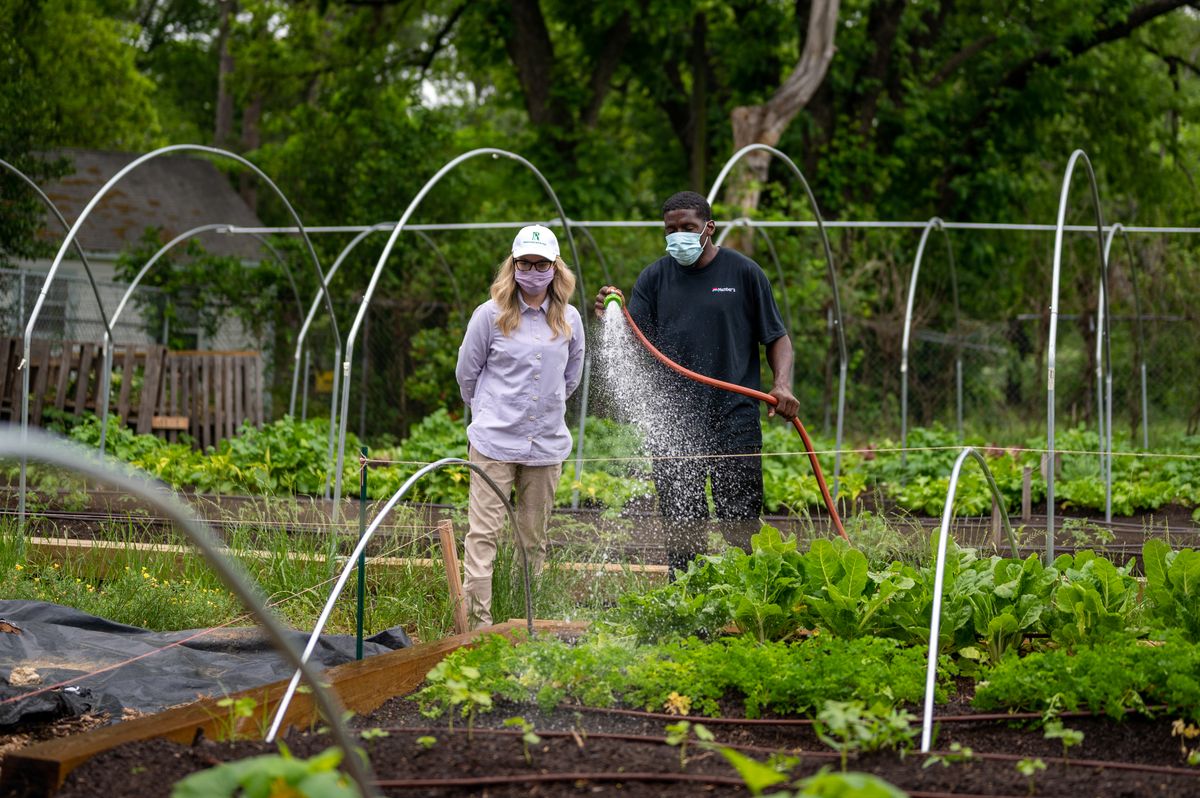
A community garden is a shared growing space where residents cultivate food and plants together or maintain separate plots under agreed rules.
Some projects are managed by local organizations, schools, municipalities or neighborhood groups.
11.1 How Community Gardens Work
There are several common arrangements.
Individual plots: Each participant receives a small growing area and manages their own crops.
Shared gardens: Members work together and share the harvest.
Educational gardens: Schools or organizations use growing spaces to teach gardening, nutrition and environmental awareness.
Community food projects: Produce may be distributed among participants or donated to local organizations.
The arrangement depends on the project and the community.
11.2 Why Shared Gardens Can Be Valuable
A community garden can provide benefits beyond food production.
It allows beginners to learn from experienced gardeners without purchasing every tool themselves.
Participants can share seeds, compost, equipment and practical knowledge.
Children can learn about pollination, plant development and seasonal food.
Gardens may also create opportunities for neighbors who otherwise rarely interact.
The Food and Agriculture Organization recognizes urban and peri-urban agriculture as a contributor to food access, livelihoods and local development. It also emphasizes the importance of integrating food production into wider urban planning.
FAO: Urban and Peri-Urban Agriculture
11.3 How to Find or Start a Community Garden
Start by checking whether local associations, schools, neighborhood organizations or municipalities operate shared growing spaces.
If there is no existing project, speak to neighbors and identify a suitable site.
Before planting, establish clear answers to several questions:
- Who owns or controls the land?
- Is permission available?
- Who pays for water?
- Who maintains the space?
- How are plots allocated?
- Who is responsible for tools?
- How is the harvest shared?
- What happens if a participant leaves?
Written agreements can prevent misunderstandings.
11.4 Community Gardening in Moroccan Cities
The idea has particular potential in Moroccan urban neighborhoods.
Cities such as Casablanca, Marrakech, Rabat and Fes contain apartment buildings, residential courtyards, educational institutions and community spaces that could support suitable small-scale gardening projects.
However, each location has different challenges.
Water availability, summer temperatures, building design, land ownership and local regulations all matter.
A school courtyard, for example, may be a suitable location for an educational vegetable garden if the school administration approves it and a reliable maintenance plan exists.
In a residential neighborhood, a shared courtyard could support herbs and leafy vegetables in raised containers.
The best projects begin with a realistic understanding of local conditions rather than copying a design from another country without modification.
12. Hydroponics and Other New Growing Methods
Traditional gardening uses soil or another growing medium.
However, some urban gardeners are exploring methods that use water-based nutrient solutions.
Hydroponics is one of the best-known examples.
12.1 What Is Hydroponics?
Hydroponics is a growing method in which plant roots receive water and dissolved nutrients without relying on ordinary field soil.
Different systems support roots in different ways.
Some use inert growing materials, while others suspend roots in nutrient-rich water.
Common crops include lettuce, basil and other leafy greens.
12.2 Is Hydroponics Better Than Soil?
Not necessarily.
Hydroponics can offer precise control over water and nutrients and can work in places where conventional soil growing is difficult.
However, systems require equipment, maintenance and knowledge of nutrient balance.
Pumps may need electricity, water chemistry must be monitored and equipment failures can damage crops.
For a beginner with three pots on a balcony, soil-based container gardening is usually simpler.
Hydroponics becomes more attractive when a gardener has a clear reason to use it, sufficient space and an understanding of its operating requirements.
12.3 Smart Gardening Technology
Some growing systems use sensors to monitor:
- Soil moisture.
- Air temperature.
- Humidity.
- Light intensity.
- Water levels.
- Nutrient conditions.
These tools can help identify problems earlier.
But they should be considered optional improvements rather than essential equipment.
A gardener can grow excellent herbs and vegetables without connecting every pot to a smartphone.
The most useful technology is the technology that solves a real problem without creating unnecessary cost or complexity.
13. Common Urban Gardening Mistakes
A beautiful garden does not require perfect conditions, but some common mistakes can make growing food unnecessarily difficult.
13.1 Planting Too Many Crops at Once
Beginners sometimes purchase numerous seedlings and containers before understanding how much care the garden requires.
The result can be overcrowding, insufficient sunlight and inconsistent watering.
Start with a small number of plants.
Expand only after you understand the time and resources required.
13.2 Choosing the Wrong Plants for the Light
A tomato plant in a dark corner may grow leaves without producing much fruit.
A lettuce plant exposed to intense heat may bolt or become bitter.
Choose plants according to the actual growing conditions.
13.3 Using Containers Without Drainage
Waterlogged roots are a common cause of plant decline.
Always check that containers have suitable drainage and that excess water can escape safely.
13.4 Overwatering
More water does not necessarily mean faster growth.
Roots require oxygen as well as moisture.
Water according to the growing medium's condition, not simply because the calendar says it is watering day.
13.5 Underestimating Summer Heat
Small pots can become extremely hot.
In warm climates, a plant may need shade during the hottest part of the afternoon even when it requires substantial morning sunlight.
Monitor the leaves and soil carefully.
13.6 Using Too Much Fertilizer
Excess nutrients can damage plants.
Follow product instructions, use appropriate quantities and avoid mixing fertilizers without understanding their composition.
13.7 Ignoring Pests
Aphids, whiteflies, caterpillars and other pests can affect balcony gardens.
Inspect the undersides of leaves regularly.
Remove small infestations manually where practical and use suitable controls when necessary.
Avoid applying pesticides carelessly, especially near edible crops, children, pets and pollinators.
13.8 Forgetting About Plant Spacing
Small seedlings may look comfortable when first planted, but they become larger.
Overcrowding restricts airflow and increases competition for light, water and nutrients.
Follow spacing guidance for the selected varieties.
13.9 Expecting Immediate Results
Plants need time to establish roots, develop leaves, flower and produce food.
A gardener who expects a tomato harvest after a few days may become disappointed.
Use the first growing season to learn.
13.10 Ignoring Building Rules and Neighbors
Balconies and rooftops are shared parts of a building environment, even when a balcony is privately used.
Water should not drip onto neighboring apartments.
Containers should be secured.
Heavy structures should not be installed without permission and appropriate assessment.
A responsible garden respects the people and buildings around it.
14. Pests and Plant Diseases in Small Gardens
A small garden is not immune to agricultural problems.
In fact, plants growing close together can sometimes make pest management more difficult.
The good news is that early inspection can prevent many problems from becoming serious.
14.1 Common Pests
Some pests frequently encountered in vegetables and herbs include:
- Aphids.
- Whiteflies.
- Spider mites.
- Caterpillars.
- Thrips.
- Fungus gnats.
Different pests produce different signs.
Aphids often cluster around young growth. Spider mites can cause tiny pale spots on leaves. Whiteflies may fly away when an affected plant is disturbed.
Learn to identify the problem before choosing a treatment.
14.2 Encourage Beneficial Insects
Not every insect in a garden is harmful.
Bees and other pollinators help many flowering food crops reproduce.
Some predatory insects also feed on pests.
A few suitable flowering plants can help make an urban garden more welcoming to beneficial insects.
However, choose plants according to local conditions and avoid introducing invasive species.
14.3 Preventing Fungal Problems
Poor airflow, overcrowding and prolonged leaf wetness can encourage some fungal diseases.
Prune damaged leaves, provide appropriate spacing and water around the base of plants.
If a plant becomes seriously diseased, isolate it where possible to reduce the risk of spreading the problem.
15. Composting in the City
Composting is one way to make an urban garden more resource-efficient.
Instead of sending all suitable organic kitchen and garden waste into the general waste stream, some of it can be transformed into compost.
15.1 What Can Be Composted?
Suitable materials often include:
- Vegetable peelings.
- Fruit scraps.
- Coffee grounds.
- Tea leaves.
- Dry leaves.
- Untreated cardboard in appropriate quantities.
- Small amounts of suitable garden waste.
The mixture needs an appropriate balance of moist nitrogen-rich materials and dry carbon-rich materials.
15.2 What Should Be Avoided?
For a simple household compost system, avoid adding meat, fish, dairy products and oily food scraps unless using a managed system specifically designed to handle them.
These materials can attract pests and create unpleasant odors.
Pet waste should also be excluded from ordinary vegetable garden compost.
15.3 Can You Compost on a Balcony?
Yes, in some circumstances.
Small enclosed composting systems can be used in limited spaces, although they require suitable ventilation, moisture management and regular attention.
Worm composting is another option.
However, a balcony composting system should not become a source of odor or insect problems for neighboring apartments.
If there is insufficient space, a community composting project may be more practical.
16. Urban Gardening and Climate: What Are the Real Benefits?
Urban gardens can contribute to greener neighborhoods, but their environmental benefits should be explained carefully.
A few pots do not solve urban pollution, and a rooftop vegetable garden does not independently reverse climate change.
Still, appropriately designed urban green spaces can provide useful local benefits.
16.1 More Vegetation in Built-Up Areas
Plants add vegetation to environments dominated by concrete, asphalt and buildings.
Depending on their scale and design, green spaces can provide shade, support biodiversity and improve the appearance of urban neighborhoods.
The FAO's Green Cities Initiative brings together urban agriculture, urban forestry and the recovery of organic resources as parts of greener city development.
16.2 Supporting Pollinators
Flowering plants can provide food for bees and other pollinating insects.
This is particularly important in urban environments where suitable habitat may be limited.
A balcony garden can include herbs and flowering plants that support insects while still producing edible crops.
16.3 Reducing Food Waste
Growing herbs and vegetables at home may encourage people to harvest only what they need.
A small amount of parsley can be picked for one meal rather than purchasing a large bunch that may eventually spoil.
This benefit depends on household habits rather than the mere presence of plants.
16.4 Water and Energy Trade-Offs
Urban gardening can also create environmental costs.
A poorly designed irrigation system may waste water.
An indoor farm that relies heavily on artificial lighting may consume considerable electricity.
Imported growing materials and disposable containers also have environmental footprints.
The UNEP has emphasized that the sustainability of urban agriculture depends on the type of production system and its wider resource use, rather than assuming that every urban growing project is automatically sustainable.
United Nations Environment Programme
The practical lesson is to use suitable local materials, conserve water, avoid unnecessary energy consumption and choose growing methods that fit the climate.
17. Urban Gardening in a Hot Climate: Practical Advice for Morocco
Climate matters enormously when planning an urban garden.
A growing method that works well in a cool European summer may struggle on a hot Moroccan terrace.
In cities such as Marrakech and Casablanca, gardeners need to consider seasonal temperatures, strong sunlight, wind and water availability.
17.1 Choose the Right Season
Cool-season crops may perform better during autumn, winter and early spring.
Examples include:
- Lettuce.
- Spinach.
- Radishes.
- Coriander.
- Peas.
- Some varieties of carrots.
Warm-season crops may be more suitable during warmer months when conditions are appropriate.
Examples include:
- Tomatoes.
- Peppers.
- Basil.
- Beans.
- Certain cucumbers.
Exact planting dates should be adapted to the local microclimate and seed variety.
A rooftop in Marrakech may experience much greater heat exposure than a shaded courtyard in another neighborhood.
17.2 Protect Containers From Heat
A dark plastic container sitting directly against a sun-heated wall may become extremely hot.
Use larger containers where possible, choose lighter-colored materials and provide afternoon protection when necessary.
Mulching can also reduce moisture loss from the growing medium.
17.3 Prioritize Water Efficiency
During hot periods, checking containers regularly becomes especially important.
A simple watering can may be sufficient for a small garden.
Larger installations may benefit from a well-designed drip irrigation system.
Rainwater harvesting can also be useful where collection is permitted and the water is suitable for the intended use.
Avoid using untreated wastewater on food crops.
17.4 Grow What Your Household Actually Eats
There is little reason to grow vegetables that nobody at home enjoys.
A household that uses mint, parsley, coriander, tomatoes and peppers regularly may find these crops more practical than experimenting with unusual vegetables.
This is one of the simplest ways to make a small garden worthwhile.
18. How to Start Urban Gardening This Week With a Small Budget
A beginner does not need to wait until they have a perfect balcony or a large budget.
The best way to begin is to complete a small project that can be maintained consistently.
Here is a practical seven-day starting plan.
Day 1: Observe Your Space
Spend a day observing sunlight.
Identify the areas that receive morning, midday and afternoon sun.
Measure the available space and check whether water can drain safely.
Do not purchase plants yet.
Day 2: Select Three Crops
Choose three plants based on the conditions.
For a moderately sunny balcony, a simple combination could be:
- Parsley.
- Loose-leaf lettuce.
- Compact cherry tomatoes.
If the balcony is particularly hot, adjust the selection and plan for shade.
If it receives limited sunlight, focus on leafy greens and suitable herbs.
Day 3: Find Containers
Look for three suitable containers.
They should be clean, safe for food growing and large enough for the chosen plants.
Check drainage holes.
Reuse appropriate household containers if necessary.
Day 4: Buy the Growing Materials
Purchase a suitable potting mix, a small amount of mature compost and seeds or seedlings.
Avoid buying unnecessary decorations, expensive meters or automated equipment.
Spend the available budget on healthy growing conditions.
Day 5: Prepare and Plant
Moisten the growing medium before filling the containers.
Plant seeds or seedlings according to their instructions.
Avoid burying seeds too deeply or packing the growing medium tightly.
Water gently.
Day 6: Organize the Garden
Arrange containers so that every plant receives appropriate light.
Secure any supports.
Make sure that drainage water does not create a problem for neighbors or building surfaces.
Keep a clear walking route.
Day 7: Create a Simple Maintenance Routine
Check the growing medium, inspect leaves and observe sunlight.
Create a small notebook or phone record with:
- Planting dates.
- Watering observations.
- Fertilizer applications.
- Changes in sunlight.
- Signs of pests.
- Harvest dates.
The goal is to learn what works in the actual space.
18.1 A Simple Starter Garden
Container 1: Parsley
Useful for cooking, manageable in a pot and suitable for a range of light conditions.
Container 2: Lettuce
A practical leafy crop that can provide repeated small harvests.
Container 3: Cherry tomatoes
A productive fruiting plant for a sufficiently sunny location.
A garden this small can teach almost every essential skill: watering, spacing, feeding, pruning, sunlight management and harvesting.
Once the plants are established, additional containers can be introduced gradually.
19. How to Make an Urban Garden Last Beyond the First Month
Starting a garden is relatively easy. Maintaining it over several months requires a little more planning.
Many beginners are enthusiastic during the first week but lose interest when plants grow slowly or require regular attention.
A sustainable routine should be simple enough to fit ordinary life.
19.1 Keep a Weekly Gardening Routine
Set aside a regular period for basic maintenance.
During this time:
- Inspect the leaves.
- Check the growing medium.
- Remove weeds.
- Look for pests.
- Check supports and drainage.
- Harvest mature produce.
- Record any problems.
A short, regular inspection can prevent small issues from becoming serious.
19.2 Replace Crops When Necessary
Some plants complete their life cycle quickly.
Lettuce may bolt during warm weather, and certain herbs may become woody or less productive.
Instead of treating every plant as permanent, plan to replace seasonal crops when necessary.
Succession planting is useful here.
It involves planting a small quantity of seeds at intervals rather than sowing everything on one day.
This can create a more continuous supply of vegetables.
19.3 Learn From Failed Plants
A plant that dies is not necessarily proof that someone is bad at gardening.
It may have received too much water, too little sunlight, excessive heat or insufficient nutrients.
The most useful response is to identify the likely cause before purchasing another plant.
Change one factor at a time where possible.
That makes it easier to understand what actually improves the growing conditions.
19.4 Share Knowledge
Gardeners can learn from neighbors, local agricultural organizations, experienced growers and reliable university extension resources.
Sharing seeds and suitable materials can also reduce costs.
A small community of gardeners can make the activity more enjoyable and help beginners avoid repeating common mistakes.
20. The Future of Urban Gardening: What Can We Realistically Expect?
Urban gardening is likely to remain an important part of conversations about greener cities, local food systems and better use of urban space.
However, it is important to distinguish established practices from emerging ideas.
20.1 What Is Already Well Established?
Several approaches are already practical and widely understood:
- Growing herbs and vegetables in containers.
- Using raised beds in suitable locations.
- Organizing community gardens.
- Growing selected crops on properly designed rooftops.
- Using compost and other suitable organic materials.
- Installing simple irrigation systems.
- Growing climbing vegetables vertically.
These methods do not depend on futuristic technology.
They rely on established horticultural principles and careful management.
20.2 What Is Still Developing?
Some approaches are evolving rapidly.
These include automated urban greenhouses, advanced hydroponic systems, sensor-controlled irrigation and indoor vertical farms.
They may improve production in certain circumstances, but their economic and environmental performance depends on energy costs, water availability, crop selection and operating efficiency.
Not every technology will be suitable for every city.
20.3 Will Urban Gardens Feed Entire Cities?
Urban gardening can contribute to food production, but it is unlikely to replace conventional agriculture.
Cities have limited growing space, and many staple foods require large areas of land.
Wheat, rice, maize and other major crops cannot realistically be produced in sufficient quantities through ordinary apartment balconies.
Urban agriculture is better understood as one part of a wider food system.
It can contribute fresh produce, local economic activity, education and community resilience while remaining connected to regional and national agricultural production.
The FAO emphasizes that successful urban and peri-urban agriculture requires integration with land, water, infrastructure and wider food-system planning.
FAO: Urban and Peri-Urban Agriculture
20.4 A More Green and Connected Urban Environment
The most interesting possibility may not be the amount of food produced by an individual balcony.
It may be the cumulative effect of many residents making better use of available spaces.
Imagine apartment buildings with safe shared planters, schools with educational vegetable gardens, community plots in residential neighborhoods and properly engineered rooftops that support vegetation.
These projects would not eliminate the need for rural farms, but they could help make cities greener, more connected and more aware of food production.
That is a realistic and worthwhile direction for urban gardening in the years ahead.
Frequently Asked Questions (FAQ)
1. What is urban gardening?
Urban gardening is the practice of growing vegetables, herbs, fruit and other plants in cities. It includes balcony gardens, rooftop gardens, indoor growing systems, residential courtyards and community plots.
2. Can I grow vegetables in a small apartment?
Yes. Many vegetables grow successfully in containers. Lettuce, parsley, spinach, radishes, spring onions, peppers and compact tomatoes are practical options. The most important requirements are suitable light, containers, drainage, water and growing medium.
3. What are the easiest vegetables to grow for beginners?
Leaf lettuce, radishes, spring onions, parsley and some compact pepper varieties are good starting choices. They are generally easier to manage than large vegetables that need extensive root space or climbing structures.
4. How much sunlight does an urban vegetable garden need?
Most fruiting vegetables, including tomatoes and peppers, benefit from approximately six or more hours of direct sunlight daily. Leafy vegetables and herbs can often tolerate partial shade. Requirements vary by crop and climate.
5. Can I grow tomatoes on a balcony?
Yes. Compact cherry tomato and patio varieties can grow in sufficiently large containers. They need sunlight, drainage, consistent moisture and support. Choose a variety suited to container production rather than automatically selecting a large garden variety.
6. What kind of soil should I use for container gardening?
Use a lightweight potting mix designed for containers. It should retain sufficient moisture while allowing excess water to drain. Compost can contribute organic matter and nutrients. Avoid using unknown soil from potentially contaminated urban locations.
7. How often should I water balcony plants?
There is no single schedule for every plant. Check the growing medium regularly and water thoroughly when necessary. Small containers exposed to hot sunlight may need more frequent watering than large containers in partial shade.
8. Can urban gardening save money?
It can, particularly when growing frequently used herbs and selected vegetables. However, savings depend on equipment costs, water, growing materials, fertilizer and harvest size. Gardening should not be assumed to be cheaper than buying all produce from a local market.
9. What is the best container size for vegetables?
It depends on the crop. Lettuce and radishes can grow in relatively shallow containers, while tomatoes, peppers and cucumbers generally need deeper and larger pots. Larger containers also make moisture management easier.
10. Is rooftop gardening safe?
It can be safe when properly designed and approved. However, wet soil, containers, people and water storage add significant weight. A qualified professional should assess structural capacity, waterproofing and drainage before a rooftop garden is installed.
11. Can I grow food in polluted urban soil?
Not without first understanding whether the soil is safe. Some urban soils may contain lead and other contaminants. Testing is recommended where contamination is suspected. Containers or raised beds filled with suitable clean growing material can help reduce exposure.
12. What is a community garden?
A community garden is a shared space where residents grow plants and food together or manage individual plots. It may be organized by a neighborhood association, school, municipality or community group.
13. What vegetables grow well in hot climates?
Depending on the season and local conditions, tomatoes, peppers, basil, beans and certain cucumbers can perform well in warm climates. Leafy vegetables often benefit from cooler growing periods and afternoon shade.
14. Can I grow strawberries in hanging baskets?
Yes. Strawberries can grow in hanging baskets and containers if they receive suitable sunlight, moisture, nutrients and enough root space. Choose varieties appropriate for your climate and growing conditions.
15. Is hydroponics better than traditional gardening?
Not necessarily. Hydroponics can be useful where conventional soil growing is difficult and offers control over nutrient delivery. However, it requires equipment, monitoring and sometimes electricity. Traditional container gardening is generally simpler for beginners.
16. Can I start an urban garden without buying expensive equipment?
Absolutely. A few suitable containers, a good potting mix, seeds and a watering can are enough to begin. Expensive sensors, automatic irrigation and specialized growing systems are optional.
17. How long does it take to harvest vegetables?
It depends on the crop and variety. Radishes and some leafy greens can be harvested relatively quickly, while tomatoes and peppers need longer to develop and produce fruit. Always check the variety's growing instructions.
18. Can urban gardens help the environment?
They can contribute to local biodiversity, provide vegetation, support pollinators and encourage composting and responsible water use. However, the environmental impact depends on materials, energy, irrigation and maintenance practices.
19. What should I do if my balcony receives very little sunlight?
Choose shade-tolerant crops such as mint, parsley, lettuce, spinach and chives. Observe the available light before planting. If the balcony receives almost no natural light, consider whether supplemental lighting is practical and affordable.
20. How can I start urban gardening this week?
Begin by observing your available sunlight, choosing three suitable crops, finding safe containers and purchasing a small amount of potting mix and seeds. Plant them, establish a simple watering routine and monitor their progress. Expand gradually as you gain experience.
Conclusion: Growing Food Starts With the Space You Already Have
Urban gardening in 2026 is not about creating an impressive garden overnight or pretending that a few balcony pots can replace conventional agriculture.
It is about recognizing that useful growing spaces exist in places that are often overlooked.
A balcony can provide fresh herbs. A sunny terrace can support tomatoes and peppers. A shared courtyard can become a neighborhood vegetable garden. A properly engineered rooftop can support a much larger growing project.
The most important lesson is that successful gardening begins with understanding the environment.
Sunlight, water, containers, soil and plant selection matter more than expensive equipment or complicated technology.
For beginners, the best investment is a small garden that can be maintained consistently. Start with three containers, grow food that your household enjoys, observe what happens and make improvements as you learn.
A few fresh leaves harvested beside your kitchen may seem like a modest achievement. But it is also the beginning of a practical relationship with food, nature and the space around you.
Cities may be built from concrete, glass and steel, but there is still room for something green to grow.
Sources and Further Reading
- FAO – Urban and Peri-Urban Agriculture. Food production, urban resilience and community agriculture.
- FAO – About Urban and Peri-Urban Agriculture. Benefits and planning considerations.
- University of Maryland Extension – Growing Vegetables in Containers. Suitable crops and growing conditions.
- University of California Agriculture and Natural Resources – Growing Vegetables in Containers. Soil depth and container requirements.
- University of Maryland Extension – Maintaining Container-Grown Vegetables. Watering and plant maintenance.
- US Environmental Protection Agency – Healthy Gardening Practices and Lead-Contaminated Soil. Soil safety and contamination prevention.
- USDA – Urban Agriculture. Urban food production, rooftop gardens and community projects.
- Singapore National Parks Board – Skyrise Greenery Technical Resources. Rooftop gardening, waterproofing, drainage and structural considerations.
- UNEP – Urban Agriculture and Sustainability. Environmental benefits and trade-offs.
- Penn State Extension – Container Vegetable Gardening: Four Keys to Success. Plant selection, sunlight, watering and nutrients.
- Oregon State University Extension – Container Gardening Basics. Suitable containers and vegetable varieties.
The conversation
Post a Comment