
Why Do Cats Purr in 2026: The Science Behind the Sound That Calms Cats — and Humans
It is late in the evening. The house has finally become quiet. A cat climbs onto the sofa, circles twice, and settles into the warm space beside its owner. Within moments, a soft vibration begins. It is not quite a hum, not quite a growl, and not quite the sound of a tiny motor. It is something unmistakably feline.
The cat is purring.
A hand rests gently against its fur. The vibration continues as the cat breathes in and out, seemingly without effort. Its eyes narrow, its paws relax, and the room feels a little more peaceful.
For many people, this is one of the simplest pleasures of living with a cat. A purr can make an ordinary moment feel strangely comforting. It is often interpreted as an expression of trust, affection, or happiness.
But what is actually happening inside the cat's body?
And why does the same sound sometimes come from a frightened kitten, an injured animal, or a cat waiting nervously in a veterinary clinic?
The answer is more complicated than the familiar idea that purring means happiness.
Scientists have spent decades studying the physical mechanism behind this remarkable sound. Recent research has challenged long-standing explanations of how a cat's voice box produces its characteristic vibration. Other studies have explored how cats use purring to communicate with their mothers, influence human behavior, and perhaps regulate their own emotional states.
Meanwhile, the idea that purring can encourage healing has captured considerable public attention. Some researchers have proposed that its low-frequency vibrations could have biological effects, but the evidence is much less conclusive than popular headlines sometimes suggest.
As of 2026, the science points to an intriguing conclusion: purring is not a single emotional message. It is a flexible biological behavior used in different situations, with meanings that depend on the cat and its circumstances.
Understanding that distinction can help owners recognize genuine comfort, notice possible signs of illness, and build a better relationship with their animals.
Key Takeaways
- Purring does not always mean happiness. Cats also purr when nursing, requesting food, feeling threatened, or experiencing pain.
- The voice box is central to purring. A major 2023 study demonstrated that feline vocal folds can produce purr-like frequencies without active neural stimulation.
- The dominant purring rhythm is often around 25–30 Hz. The broader 25–150 Hz range frequently quoted online includes other measured vibrational or acoustic components and should not be mistaken for every cat's fundamental purr frequency.
- Kittens begin purring very early. Purring appears to support communication and contact between mothers and their young.
- Cats can modify their purrs to attract human attention. Research has identified a higher-pitched, cry-like component in some food-requesting purrs.
- Healing claims remain unproven. There is no convincing clinical evidence that ordinary purring heals broken bones, increases bone density, or repairs human tissue.
- Human relaxation is plausible, but not automatic. Positive interactions with cats may influence mood and stress, yet research has not established that purring frequencies alone produce specific medical benefits.
- Context matters more than sound alone. Appetite, posture, breathing, movement, and changes in behavior are essential for interpreting a purr.
1. What Is a Cat's Purr?
A purr is a rhythmic, low-frequency vocalization produced by domestic cats and several other feline species.
Unlike a typical meow, which is usually produced during exhalation, a domestic cat's purr can continue through both inhalation and exhalation.
This gives the sound its characteristic almost-continuous quality.
When a cat purrs, the vibration often feels stronger than the sound suggests. A hand placed lightly against the chest or throat may detect a steady mechanical buzzing.
The purr is not perfectly uniform. Its intensity and acoustic structure can change between individual cats, between inhalation and exhalation, and between emotional or social situations.
Some cats produce an audible rumble from across a room. Others generate such a quiet purr that it is easier to feel than hear.
Why does purring sound like a small motor?
The familiar motor comparison comes from the repeated pulses that make up the sound.
A cat does not generate a continuous, perfectly smooth musical tone. Its vocal system produces rapidly repeating vibrations, accompanied by airflow and additional acoustic components.
The human ear blends these pulses into a low, buzzing rumble.
There is another interesting detail: the sound can contain higher frequencies layered over its basic rhythm. These higher components help explain why two cats purring at similar fundamental frequencies can sound noticeably different.
The vibration also travels through tissues in the cat's body, which is why a person touching a purring cat may experience the sound as a physical sensation.
Do all domestic cats purr?
Most domestic cats are capable of purring, but their habits differ.
A particularly vocal cat may purr frequently during social contact, while another may reserve the behavior for specific circumstances. Some cats are naturally quieter, and some have purrs that are difficult to detect.
A cat that rarely purrs is not automatically unhappy.
Likewise, a cat that purrs frequently is not necessarily healthier or more affectionate than one that communicates in other ways.
The most useful comparison is often the cat's own normal behavior rather than another cat's habits.
2. How Do Cats Purr? The Mechanical Science
For a surprisingly long time, researchers did not completely understand how such a relatively small animal could generate such a low-frequency vocalization.
The difficulty lies in the cat's vocal anatomy.
Most mammals produce voiced sounds when air passing through the larynx causes the vocal folds to vibrate. The frequency depends on several factors, including tissue mass, tension, airflow, and the way the folds interact.
A typical domestic cat has a comparatively small larynx, yet it can produce fundamental vocal vibrations near 25–30 Hz.
That is unusually low for an animal of its size.
The traditional neural oscillator explanation
For decades, a leading explanation involved a neural oscillator: a rhythmic signaling mechanism in the central nervous system.
The idea was that the brain generated repeated nerve signals approximately 20–30 times per second.
These signals activated muscles within the larynx, causing the glottis—the opening between the vocal folds—to change rhythmically.
As air passed through, repeated changes in airflow and pressure generated the characteristic sound.
Researchers had observed rhythmic electrical activity in laryngeal muscles during purring, supporting this explanation.
A landmark 1972 study by Remmers and Gautier described coordinated neural and muscular activity associated with feline purring. A 1991 study subsequently examined purring in domestic cats, pumas, and cheetahs.
The traditional model was important because it treated purring as a specialized vocal behavior involving precisely timed muscle contractions.
But it left a crucial question open.
Did the muscles have to create every individual vibration, or could the larynx itself vibrate at purring frequencies when air flowed through it?
The 2023 discovery that changed the discussion
In October 2023, researchers published a major study in Current Biology titled Domestic Cat Larynges Can Produce Purring Frequencies Without Neural Input.
The team examined eight excised domestic cat larynges.
By using an experimental setup in which air passed through the isolated voice boxes, researchers could test whether the tissue itself was capable of generating low-frequency oscillations without active nerve signals or muscular contractions.
All eight larynges produced self-sustained vibrations within the normal purring range.
The researchers also identified unusual connective-tissue masses embedded within the vocal folds, measuring up to approximately four millimeters in diameter.
These structures appear to contribute to the physical properties that make such low-frequency vibration possible.
The finding challenged the assumption that each purr cycle must be generated through a separate muscular contraction.
Instead, the larynx may operate partly through the same myoelastic-aerodynamic process involved in many other mammalian vocalizations.
In simpler terms, airflow and flexible tissue can work together to produce repeated vibration, much as air passing through a suitable reed can create a sustained sound.
This does not establish that nerves and muscles play no role in living cats.
The researchers explicitly acknowledged that active muscle contractions could still contribute to controlling or modifying purring. Their experiment demonstrated what the isolated larynx can do, not the complete operation of the living animal.
What about the diaphragm?
The diaphragm is the principal muscle involved in breathing.
When it contracts, the chest cavity expands and air enters the lungs. When it relaxes, the mechanics of breathing allow air to leave.
Because cats purr during both phases of breathing, the diaphragm has long attracted scientific attention.
Earlier physiological research identified changes in respiratory muscle activity during purring, including activity associated with inhalation.
However, it is important not to confuse the source of the airflow with the principal source of the sound.
The diaphragm helps move air, while the larynx is central to creating the rapid vibration associated with purring.
The 1991 study concluded that the diaphragm and other muscles did not appear necessary for the sound-producing mechanism beyond their normal respiratory contribution.
The latest evidence therefore favors a system in which breathing, laryngeal tissue mechanics, neural control, and muscle activity interact.
A new mathematical model in 2026
The science continued developing in 2026.
On October 29, 2026, Physical Review E accepted a paper titled Mathematical Model for Cat Purring.
The researchers developed a mathematical description combining a mechanically oscillating larynx with a neural oscillator.
Their model explored how neural activity might help initiate, control, or sustain purring while the laryngeal tissue provides an underlying capacity to vibrate.
This hybrid interpretation is particularly interesting because it could help reconcile older physiological observations with the 2023 laboratory results.
However, it remains a theoretical model. Its predictions require further experimental testing in living cats.
The central lesson is that researchers have made substantial progress in understanding purring, but the detailed coordination of the entire system is not yet settled.
3. Why Does Cat Purring Occur at 25–150 Hz?
The phrase “25–150 Hz” appears frequently in articles about cat purring.
It is often presented as if every purr consists of vibrations that move freely across this entire range.
The real acoustic picture is more complicated.
Hertz, abbreviated Hz, measures the number of cycles occurring every second.
A vibration at 25 Hz repeats approximately 25 times per second. A vibration at 100 Hz repeats 100 times per second.
The fundamental rhythmic frequency of an ordinary domestic cat's purr is often close to 25–30 Hz.
For example, the 1991 study by Sissom, Rice, and Peters measured a mean purring frequency of approximately 26.3 Hz in domestic cats.
But a complex sound can include harmonics, resonances, additional voiced components, and other vibrational frequencies.
A fundamental of 25 Hz may be accompanied by acoustic energy at multiples of that frequency.
That helps explain why a purr can contain a richer frequency spectrum than its basic rhythm suggests.
Why the distinction matters
Some popular claims about the biological benefits of purring compare the broad 25–150 Hz range with frequencies used in experimental vibration therapies.
Yet the presence of a similar numerical frequency does not mean the physical stimulation is equivalent.
Frequency is only one property of a vibration.
Amplitude, force, duration, tissue contact, exposure pattern, and the way energy passes into the body also matter.
A cat purring against a blanket does not necessarily deliver a meaningful mechanical stimulus to a human skeleton.
The frequency comparison is scientifically interesting, but it cannot independently establish a medical effect.
| Acoustic property | What it means |
|---|---|
| Fundamental purr frequency | The main repeating rhythm, often around 25–30 Hz |
| Higher-frequency components | Additional acoustic energy within the purring sound |
| Amplitude | How strong the vibration or sound is |
| Rhythm | How pulses are organized over time |
| Breathing phase | Whether the sound occurs during inhalation or exhalation |
| Acoustic variation | Changes associated with individual cats and different situations |
Understanding these distinctions is essential when evaluating research about purring and healing.
4. Why Do Kittens Purr? The First Conversation With Their Mother
Long before cats learn to demand breakfast from humans, they begin communicating with their mothers.
A newborn kitten enters the world with limited vision, developing hearing, and a strong dependence on warmth, milk, and physical contact.
During these earliest days, communication is critical.
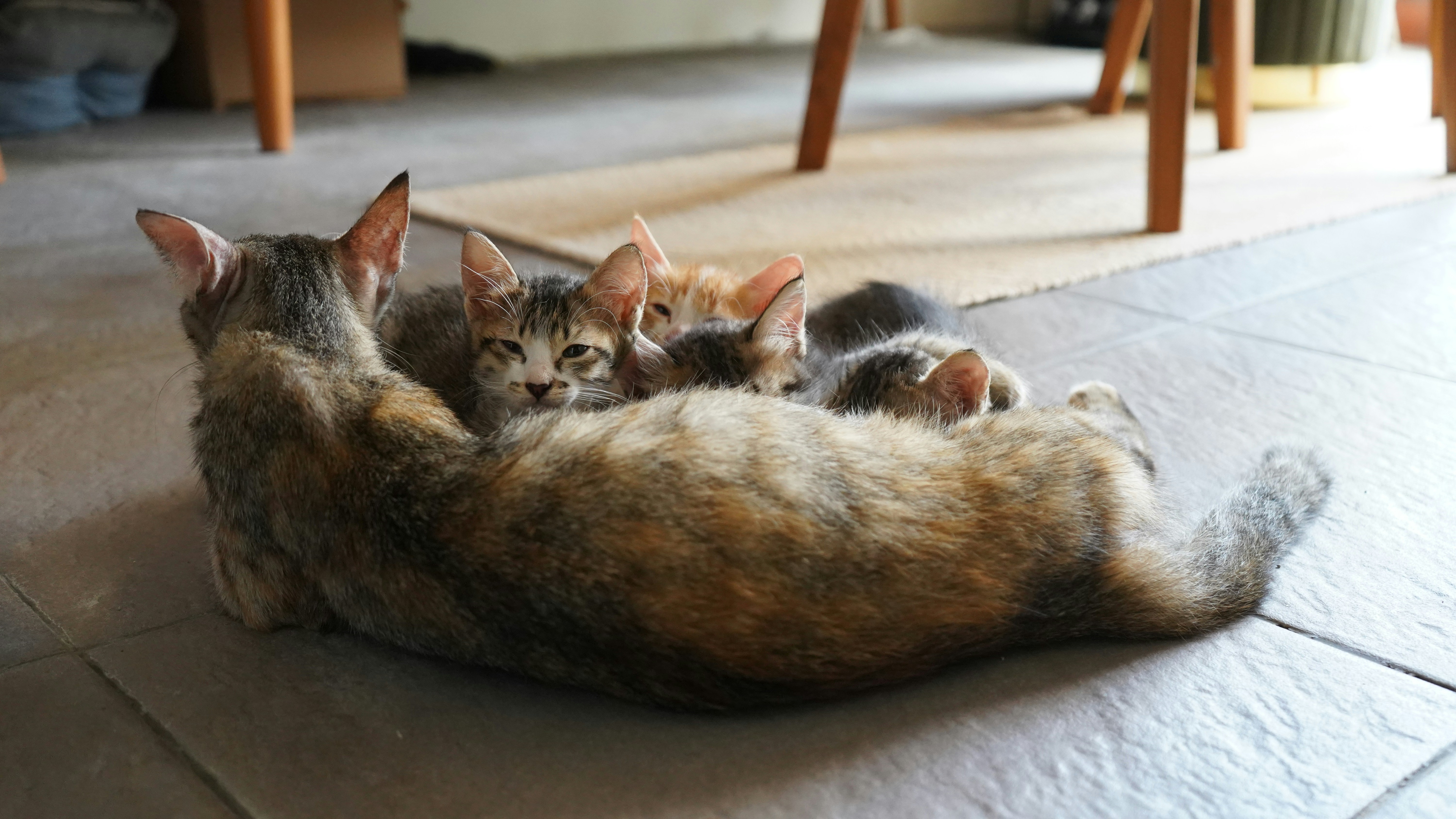
Kittens can begin purring within the first few days of life, and the behavior is especially associated with nursing.
A kitten feeding from its mother may purr even while it remains physically close to her body.
Researchers and veterinary sources commonly interpret this as part of early mother–kitten communication.
A quiet signal of contact
One possibility is that purring allows kittens to signal their presence or condition to their mother.
A soft, low-frequency vibration can be detectable through close physical contact without requiring a loud call.
This may be useful while nursing or resting in a group.
But the exact information conveyed is difficult to establish experimentally.
It is tempting to translate kitten purring into a human sentence such as “I am safe,” yet the behavior should not be understood as a literal language with a single meaning.
What researchers can observe is that purring occurs very early and is closely associated with maternal contact.
Why mother cats purr
Mother cats also purr while caring for their kittens.
A mother may purr during nursing, grooming, or close physical contact with the litter.
Her purring could provide a familiar sensory cue that helps maintain contact and contributes to the nursing environment.
Because newborn kittens rely heavily on physical and sensory information, vibrations may be particularly relevant.
However, scientists have not fully established whether maternal purring independently produces measurable calming effects in kittens or how much it contributes compared with warmth, scent, feeding, and touch.
These factors are closely connected in normal maternal care.
What owners should learn from kitten purring
The most important lesson is that purring begins as a natural feline behavior, not simply as a response to humans.
Cats do not need human attention to purr.
The behavior appears within feline family relationships long before an animal develops a relationship with a person.
This helps explain why purring can remain important throughout a cat's life, including interactions with other cats and situations involving physical comfort or vulnerability.
The Library of Congress and Cats Protection both describe the early development of purring and its association with nursing and maternal care.
5. Why Do Cats Purr When They Are Happy?
The most familiar explanation of purring remains an important one: cats frequently purr when they are comfortable.
A cat stretched across a sunny windowsill, receiving gentle attention, or resting beside a trusted companion may begin to purr.
In these situations, the sound often accompanies other signs of relaxation.
The cat's body may be loose rather than tense. Its ears may rest in a neutral position. Its breathing may be unlabored, and its tail may remain still.
Some cats also knead a soft surface with their front paws while purring.
This behavior, sometimes called making biscuits, resembles the rhythmic movements kittens use while nursing.
Although kneading and purring often occur together, their relationship is not identical in every cat.
Purring and social bonding
Purring may help reinforce positive interactions between cats and their human companions.
Imagine a person gently stroking a cat that has voluntarily approached.
If the cat remains nearby, relaxes, and begins purring, the owner may interpret the experience positively and continue offering attention.
The cat may also associate that interaction with comfort.
Over time, both may develop predictable social routines.
This is a simple example of how communication can shape a relationship without requiring either participant to understand the other's experience in the same way.
Purring may contribute to that process, although researchers cannot yet specify exactly what emotional experience accompanies every purr.
Can a cat be happy without purring?
Absolutely.
Some cats demonstrate comfort through proximity, head rubbing, relaxed posture, grooming, or choosing to sleep near a familiar person.
Others prefer spending time in the same room without being touched.
The absence of purring is not evidence that a cat dislikes its owner.
Owners should avoid judging affection by the loudness or frequency of a purr.
A quiet cat that voluntarily stays nearby may be displaying just as much trust as a cat that purrs loudly on someone's lap.
6. Why Do Cats Purr When They Are Stressed, Frightened, or in Pain?
One of the most important facts about feline behavior is that purring can occur in situations that are not pleasant.
Veterinary professionals sometimes observe purring in cats experiencing fear, illness, injury, or discomfort.
This is why the statement “a purring cat is a happy cat” is scientifically unreliable.
A cat may purr in a veterinary clinic while simultaneously displaying signs of tension.
Another cat may purr after an injury, despite remaining withdrawn or reluctant to move.
Is purring a form of self-soothing?
One hypothesis is that purring helps cats regulate their emotional state during stressful experiences.
Humans sometimes hum, breathe rhythmically, or repeat familiar actions when anxious.
It is possible that purring serves a comparable regulatory function in some circumstances.
However, this comparison is an analogy, not evidence that the underlying mechanisms are identical.
Researchers have not conclusively demonstrated that purring directly lowers a distressed cat's stress hormones or independently reduces its pain.
Purring in stressful situations is observable. The precise function of the behavior remains uncertain.
Why cats may purr at the veterinarian
A veterinary clinic exposes cats to unfamiliar smells, sounds, people, and handling.
For animals that are sensitive to environmental changes, this experience can be stressful even when veterinary staff use gentle techniques.
A purring cat on an examination table may be comfortable, frightened, seeking reassurance, or responding to a mixture of emotional states.
Veterinary professionals therefore examine the complete behavioral picture.
A cat that is purring while crouching tightly, holding its ears sideways, and attempting to hide should not be assumed to be relaxed.
The sound alone cannot settle the question.
The importance of recognizing feline pain
Cats often conceal signs of illness and discomfort.
An animal experiencing pain may become quieter, less playful, or less interested in normal routines.
Some cats hide more frequently. Others become unusually clingy or vocal.
The changes can be subtle enough that owners mistake them for normal aging or personality differences.
Veterinary guidance from VCA Animal Hospitals specifically identifies purring at unexpected times as one possible sign to evaluate alongside other behavioral changes.
Purring is not a diagnostic test for pain, but unusual purring should not automatically be interpreted as a reassuring sign.
7. Solicitation Purring: How Cats Ask Humans for Food
Some cats appear to have developed a remarkably effective way of attracting human attention.
The behavior is often called solicitation purring.
It may occur when a cat wants food, especially when approaching a familiar person who controls access to meals.
Imagine an owner sleeping early in the morning.
The cat approaches, climbs onto the bed, and begins purring.
But this purr sounds different from the soft rumble heard during quiet evening relaxation.
It contains a more urgent, higher-pitched quality.
The hidden cry inside a purr
In 2009, researcher Karen McComb and colleagues published a study in Current Biology titled The Cry Embedded Within the Purr.
The researchers compared recordings of ordinary purrs with purrs produced in food-requesting situations.
Human listeners judged solicitation purrs as more urgent and less pleasant than non-solicitation purrs, even when the recordings were presented at equal amplitudes.
Importantly, the researchers identified a higher-frequency voiced component embedded within the low-frequency sound.
This component resembled a cry.
When the researchers manipulated recordings to remove that component, listeners perceived the resulting purrs as less urgent.
The finding suggests that cats can produce acoustically distinctive purrs that influence how humans respond.
Are cats deliberately manipulating humans?
The word manipulation can make the behavior sound more calculating than the evidence supports.
The research demonstrates that certain purrs contain acoustic features that humans perceive as urgent.
It does not establish that cats consciously understand human psychology or intentionally design vocal signals.
A more cautious explanation is that feline vocal behavior can become effective within the social environment shared by cats and humans.
Cats that repeatedly receive food following certain vocalizations may continue using those behaviors.
Humans, meanwhile, may be especially responsive to sounds resembling distress or infant-like cries.
This offers a fascinating example of communication between species with very different evolutionary histories.
Should owners respond to every solicitation purr?
Not necessarily.
Feeding every time a cat demands attention can unintentionally reinforce routines that become inconvenient or contribute to excessive food intake.
A more practical approach involves establishing predictable mealtimes and providing food according to the cat's nutritional needs.
Puzzle feeders, enrichment activities, and scheduled play can provide alternatives to constant food-seeking.
However, a sudden increase in hunger or food-related vocalization should not automatically be dismissed as learned behavior.
Some medical conditions can alter appetite.
If a cat begins demanding significantly more food while losing weight, drinking excessively, or showing other changes, a veterinary assessment is appropriate.
8. Can Cat Purring Heal Bones or Injuries?
Few claims about purring have attracted as much attention as the idea that its vibrations may support healing.
Articles and social media posts sometimes describe purring as a natural treatment for fractures, wounds, muscle injuries, or reduced bone density.
The argument usually begins with a genuine observation.
Cat purrs contain low-frequency vibrations, and researchers have investigated how certain forms of mechanical stimulation affect biological tissues.
From there, the argument often moves too quickly.
Where the healing hypothesis comes from
Mechanical forces can influence living tissue.
Bone, for example, is biologically responsive to loading.
Walking, running, resistance exercise, and other activities that place appropriate mechanical demands on the skeleton can contribute to maintaining bone health.
Researchers have also studied specialized vibration treatments in experimental and clinical settings.
Because some frequencies investigated in this research overlap with frequencies associated with feline purring, scientists have proposed that purring might have biological effects.
This hypothesis is interesting, particularly because cats sometimes purr while injured.
But observing a behavior and identifying a plausible mechanism does not prove the mechanism explains that behavior.
The problem with frequency comparisons
Imagine two devices that both vibrate at 30 Hz.
One produces a barely detectable movement. The other generates a powerful mechanical force.
Despite having the same frequency, the amount of energy transmitted to nearby material can be dramatically different.
That distinction matters for biological systems.
A controlled therapeutic device may apply mechanical stimulation at a particular intensity and for a precisely measured duration.
A resting cat produces a much more complex sound and vibration through its body.
The physical stimulation reaching its bones—or another person's bones—has not been shown to be equivalent to the stimulation used in clinical experiments.
Matching frequencies alone cannot establish equal biological effects.
Does purring increase bone density?
There is no convincing direct clinical evidence demonstrating that ordinary cat purring increases bone density in cats or humans.
The hypothesis would require carefully designed research.
For example, investigators would need to measure relevant mechanical exposures and compare bone-related outcomes while accounting for age, activity, health, nutrition, and other influential factors.
Without such evidence, claims that purring strengthens bones remain speculative.
This is especially important when discussing osteoporosis or fracture recovery.
A person with reduced bone density should not regard cat purring as a substitute for medical evaluation or evidence-based treatment.
Does purring help cats recover from injuries?
It is possible that purring has some physiological function during illness or recovery.
However, multiple explanations remain plausible.
A cat might purr because the behavior is associated with self-regulation, communication, familiar social contact, or other internal processes.
The fact that an injured cat purrs does not establish that the purr accelerates tissue repair.
Researchers would need to distinguish the physical effects of vibration from the effects of rest, stress responses, and other biological variables.
As of 2026, direct evidence demonstrating clinically meaningful healing from ordinary purring remains insufficient.
What about therapeutic vibration research?
Research into medical vibration technologies is a separate field and should not be treated as interchangeable with cat purring.
Different interventions use different mechanical forces, waveforms, frequencies, and treatment protocols.
Furthermore, the medical evidence is not universally positive.
For example, a 2017 systematic review of randomized trials examining low-intensity pulsed ultrasound for fracture healing found that higher-quality studies did not demonstrate meaningful improvements in important patient outcomes.
Ultrasound is not the same intervention as low-frequency purring, but the example illustrates an important principle: a treatment can have a plausible physical mechanism without delivering the clinical benefits originally expected.
The evidence-based conclusion is that purring may be biologically interesting, but its reputation as a natural bone-healing treatment is not established.
9. Why Does Cat Purring Calm Humans?
Many cat owners describe the sensation of hearing a familiar purr as deeply relaxing.
The sound is gentle, repetitive, and closely associated with quiet companionship.
For some people, a purring cat creates a sense of comfort after a difficult day.
But what does science actually tell us about this experience?
The effect of rhythmic sound
Humans respond to rhythm in many settings.
Music, speech, environmental sounds, and repetitive auditory patterns can influence attention and emotional experience.
A predictable sound may also become associated with a familiar or safe environment.
For someone who has enjoyed years of positive experiences with cats, purring may function as a learned signal of companionship and relaxation.
The brain does not process a familiar sound only as a physical frequency.
It also interprets the sound through memory, emotion, and context.
This is why the same noise may have very different meanings for different people.
A lifelong cat owner may find purring comforting, while someone who fears cats might not experience the same response.
Does purring change human breathing?
A person relaxing beside a cat may begin breathing more slowly.
That is a plausible behavioral response to quiet rest and a comfortable environment.
However, there is not enough direct evidence to conclude that a cat's purr automatically entrains human breathing into a particular rhythm.
The phenomenon should not be confused with established forms of controlled breathing, which involve deliberately adjusting respiratory patterns.
A person may choose to sit quietly and breathe comfortably while spending time with a cat.
That can be a pleasant relaxation routine.
But the benefit should not be attributed to a specific purring frequency without supporting experimental evidence.
What does research say about oxytocin?
Oxytocin is a hormone involved in several physiological processes, including aspects of social behavior and bonding.
It is sometimes called the love hormone, but that nickname oversimplifies its functions.
Oxytocin does not act as a universal chemical signal of happiness or affection.
Its relationship with behavior depends on the individual and situation.
Research into human–animal interactions has investigated whether social contact relates to changes in oxytocin, cortisol, and emotional states.
One particularly relevant study was published online in iScience on October 14, 2026.
Researchers examined physiological relationships between 19 human owners and 29 pet cats.
They reported a positive association between owner and cat urinary oxytocin concentrations.
Higher cat oxytocin was also associated with lower owner cortisol and less negative mood.
The researchers noted that shared household environments might partly explain these associations.
That distinction is essential.
The study does not demonstrate that hearing a cat purr causes a person's oxytocin level to increase. Nor does it prove that purring itself reduces cortisol.
It provides evidence of associations within human–cat relationships, not proof of a specific purr-driven biological treatment.
New research on positive and forced interactions
Another 2026 study investigated how different forms of owner–cat interaction related to stress and bonding hormones in cats.
The study included 20 pet cats and examined changes in salivary oxytocin and cortisol.
Passive interactions were associated with increases in oxytocin and decreases in cortisol, while forced interactions showed an opposite pattern.
The findings varied according to the cats' potential attachment styles.
Although the study was relatively small, it reinforces an important principle: the quality and voluntary nature of an interaction can matter more than simply increasing physical contact.
Owners should not assume that holding or stroking a cat automatically benefits the animal.
A positive interaction is one the cat can comfortably participate in or leave.

Can living with cats protect human health?
Some observational studies have examined relationships between pet ownership and health outcomes.
These studies can be useful for identifying patterns, but they present significant challenges.
People who own pets may differ from non-owners in their lifestyles, home environments, social relationships, activity levels, and other factors.
These differences can influence measured health outcomes.
Even where researchers find an association between pet ownership and lower stress or cardiovascular risk, the finding does not establish that purring caused the difference.
It is more accurate to say that positive relationships with companion animals may contribute to emotional well-being for some people.
The specific medical effects of purring itself remain a subject for further research.
10. Do Big Cats Purr Like Domestic Cats?
The feline family includes animals with remarkable differences in size, habitat, behavior, and vocal anatomy.
A domestic cat may weigh only a few kilograms, while a tiger can be vastly larger.
Yet body size alone does not determine whether a feline can purr.
The difference between purring and roaring
Lions, tigers, leopards, and jaguars possess vocal adaptations associated with producing powerful roars.
These species generally do not produce the continuous, inhalation-and-exhalation purr characteristic of domestic cats.
Some may produce softer, low-frequency vocalizations that resemble purring in ordinary conversation, but these are not necessarily the same type of sound.
Researchers studying feline vocal anatomy have examined the roles of the larynx, vocal folds, and hyoid apparatus in these differences.
Modern research suggests that the relationship between anatomy and vocal capabilities is more complicated than a simple distinction between one throat bone that allows roaring and another that allows purring.
Which wild cats can purr?
Cheetahs, pumas, and several smaller wild feline species can produce purrs.
Even though a puma is much larger than an ordinary house cat, it belongs to a feline lineage with vocal capabilities more similar to those of domestic cats than to those of roaring lions.
Snow leopards are especially interesting because they belong to the Panthera genus but cannot produce the typical powerful roar of a lion or tiger.
They produce softer calls, including chuffs and purr-like sounds, although the classification of these vocalizations requires care.
A 2026 systematic review of acoustic communication in felids emphasized that reports of purring across wild cat species are sometimes difficult to verify because detailed acoustic recordings are limited.
The evolutionary story of purring is therefore not completely resolved.
11. When Is Cat Purring a Warning Sign?
Because purring can accompany both comfort and distress, owners should evaluate changes in the whole animal.
A familiar purr during a relaxed afternoon is usually not concerning.
A new, persistent, or unusual purr accompanied by other behavioral changes deserves closer attention.
Signs that may require veterinary care
| Observation | Possible significance | Recommended action |
|---|---|---|
| Purring while relaxed, eating normally, and behaving normally | Often compatible with contentment | Continue normal observation |
| Sudden increase in purring with hiding or withdrawal | Possible stress, illness, or discomfort | Contact a veterinarian |
| Purring with reduced appetite or unusual lethargy | Possible underlying illness | Arrange prompt veterinary advice |
| Purring while limping or avoiding jumps | Possible pain or injury | Schedule a veterinary examination |
| Purring after a fall or other trauma | Injury cannot be excluded | Seek urgent veterinary advice |
| Purring with open-mouth breathing, collapse, or severe breathing difficulty | Potential emergency | Seek emergency veterinary care immediately |
These observations are not diagnoses.
They are prompts to investigate the cat's condition rather than relying on the purr as reassurance.
Reading a cat's facial expression
Veterinary researchers have developed the Feline Grimace Scale to help recognize signs of acute pain.
It evaluates features including ear position, eye narrowing, muzzle tension, whisker position, and head position.
For example, a painful cat may have partially closed eyes, a tense muzzle, or ears held away from their normal forward position.
These features must be interpreted in context.
A sleepy cat may naturally narrow its eyes, while fear can also affect facial expression.
Owners can use established pain-recognition resources to improve their observations, but professional assessment remains important when illness is suspected.
The Feline Grimace Scale provides guidance on the facial indicators used to evaluate pain.
When to seek immediate help
Difficulty breathing is particularly important.
Cats do not ordinarily breathe through an open mouth while resting.
Open-mouth breathing, severe respiratory effort, collapse, or blue-tinged gums may indicate a life-threatening emergency.
A cat producing a purring-like noise while struggling to breathe should not be assumed to be comfortable.
Similarly, persistent inability to urinate, severe trauma, or sudden collapse requires urgent veterinary attention.
Do not delay necessary care because the animal is purring.
12. How to Understand Your Cat's Purring More Accurately
Owners can learn a great deal by observing the situations in which their cats purr.
The goal is not to decode every vibration as if it were a word.
Instead, it is to recognize patterns.
Look at the entire body
A cat's posture often provides information that the purr alone cannot.
Relaxed muscles, comfortable positioning, and voluntary proximity may support an interpretation of contentment.
A rigid body, flattened ears, tightly tucked posture, or repeated attempts to escape may suggest discomfort or fear.
Tail movements, facial expression, vocalizations, and environmental conditions are also relevant.
Pay attention to timing
A cat that purrs while approaching a food bowl may be communicating something different from a cat that purrs while resting beside another familiar animal.
Likewise, purring immediately after a stressful incident deserves a different interpretation from purring during an ordinary grooming session.
Timing helps identify what may have triggered the behavior.
Learn your cat's normal habits
Cats are individuals.
One may frequently purr during meals. Another may only purr when resting in a particular chair.
A third may rarely produce an audible purr at all.
Recognizing these normal patterns makes it easier to detect meaningful changes.
Owners do not need sophisticated equipment.
Simple observations recorded over several days can be useful, particularly when discussing unexplained behavioral changes with a veterinarian.
13. Practical Tips for Owners: Helping Cats Feel Safe and Comfortable
Understanding the science of purring should lead to better everyday care.
The most useful approach is not to make a cat purr as frequently as possible.
It is to create conditions in which the animal can feel secure and express its natural behavior.
Respect the cat's choice
Allow cats to approach voluntarily.
Some enjoy sitting on laps, while others prefer resting close by without direct physical contact.
Avoid repeatedly picking up a cat that struggles to escape.
Even affectionate handling can become stressful when the animal has no opportunity to withdraw.
Offer predictable routines
Cats often benefit from consistent access to food, clean litter boxes, resting areas, and opportunities for play.
Predictability may reduce some sources of environmental uncertainty.
However, a predictable routine should still accommodate individual needs and appropriate enrichment.
Create safe resting places
Quiet locations, comfortable bedding, hiding spaces, and elevated resting areas can help cats manage their surroundings.
A secure hiding place is particularly useful for animals that become anxious when visitors arrive or household activity increases.
Cats should be allowed to retreat without being chased or disturbed.
Make veterinary visits less stressful
Owners can help cats become familiar with their carriers before appointments.
Leaving a carrier available at home, placing comfortable bedding inside, and using gradual positive associations may make transport less frightening.
At the clinic, gentle handling and a quiet environment can further support welfare.
Owners should discuss significant veterinary anxiety with their veterinarian rather than attempting to solve it through forced exposure.
Support health instead of chasing a purr
Regular veterinary care, appropriate nutrition, dental attention, weight management, and opportunities for movement are more reliable foundations for feline health than any unproven healing claims about purring.
A cat that feels well may naturally purr during positive experiences.
But purring should never become a target that overrides the animal's comfort.
14. Can You Make Your Cat Purr?
Many owners wonder whether there is a particular touch, sound, or technique that will reliably trigger a purr.
There is no universal method.
Some cats respond positively to gentle stroking around the cheeks, chin, or head.
Others prefer specific areas of contact or do not enjoy extensive petting.
Even the same cat may have different preferences at different times.
A useful approach is to begin with brief, gentle contact when the cat voluntarily approaches.
Then pause and observe.
If the cat moves closer, rubs against the hand, or otherwise seeks more interaction, continuing may be appropriate.
If it turns away, becomes tense, or moves off, allow the interaction to end.
The objective is to respect the animal's preferences, not to force a response.
Why forcing a purr is counterproductive
A cat cannot be assumed to enjoy an experience simply because it eventually begins purring.
Because purring sometimes occurs during stress, using the sound as the sole measure of success can be misleading.
An owner who wants a strong relationship with a cat should prioritize voluntary interactions, predictable care, and the ability to retreat.
Whether the cat purrs loudly, softly, or not at all is secondary.
15. Common Myths About Cat Purring
Several widespread claims contain a small element of truth but go beyond what science has demonstrated.
| Common claim | What the evidence supports |
|---|---|
| Cats only purr when happy | False. Purring occurs in several emotional and physical contexts |
| Every cat purrs at exactly 25 Hz | False. Frequency and acoustic characteristics vary |
| Purring is produced entirely by the diaphragm | False. The larynx is central to producing the sound |
| Cats can heal broken bones by purring | Not demonstrated by convincing clinical evidence |
| A purring cat cannot be in pain | False. Painful or distressed cats may purr |
| Cat purring directly raises human oxytocin | Not established by purr-specific causal research |
| Every large feline can roar | False. Vocal capabilities depend on species and anatomy |
| A cat that never purrs is unhappy | Not necessarily. Individual communication differs |
| A louder purr always means greater affection | Unsupported. Loudness is not a reliable emotional measurement |
Scientific literacy does not require dismissing the pleasure people find in purring.
It simply means appreciating that pleasure without turning an interesting biological behavior into an unsupported medical claim.
16. What Scientists Still Do Not Know About Purring
The research on feline purring has become more sophisticated, but several important questions remain.
How does the living cat coordinate its purr?
The 2023 excised-larynx experiments established that feline vocal tissue can generate purr-range vibrations without neural input.
Yet living cats possess functioning nervous systems, respiratory muscles, and active mechanisms that control the larynx.
The detailed way these systems interact remains an active research question.
Future experiments may clarify whether neural signals primarily initiate purring, adjust its frequency, maintain its rhythm, or serve several functions at once.
Does purring actually reduce a cat's stress?
Researchers know that cats sometimes purr in stressful situations.
They do not yet know whether producing the sound itself reliably reduces stress.
Answering that question would require measurements that separate the effect of purring from the surrounding circumstances.
For example, social contact, familiar smells, rest, and environmental conditions can all influence an animal's physiological state.
Could purring have measurable therapeutic effects?
The healing hypothesis remains testable.
Researchers could investigate the forces generated by purring, the amount of vibration reaching particular tissues, and any biological outcomes under controlled conditions.
Until such work provides convincing results, therapeutic claims should remain hypotheses.
Why do individual cats purr so differently?
Cats vary in anatomy, temperament, health, learning history, and social experience.
All these factors may influence how and when purring occurs.
Researchers still have much to learn about whether different acoustic patterns correspond reliably to particular situations across individual animals.
Do cats interpret one another's purrs differently from humans?
Humans respond to the sounds they can hear and the contexts they recognize.
Cats may also receive information through direct physical vibration, body position, scent, and other sensory signals.
The way cats interpret purring within feline relationships may therefore differ considerably from the way humans interpret it.
Understanding these differences could improve our knowledge of communication between species.
17. Frequently Asked Questions About Cat Purring
1. Why do cats purr when you pet them?
Cats often purr during enjoyable physical contact. When accompanied by relaxed posture and voluntary interaction, purring may be consistent with comfort or contentment. However, the sound alone does not prove the cat enjoys being touched.
2. Do cats purr because they love their owners?
Purring can occur during positive social interactions and may contribute to bonding. It is not a direct or exclusive measurement of love. Cats express attachment in many ways, including proximity, greeting behavior, and voluntary contact.
3. Why does my cat purr while sleeping?
A cat that appears asleep may purr while resting or during transitions between wakefulness and sleep. Purring during apparent sleep is not necessarily concerning. Researchers have not established a specific dreaming-related explanation.
4. Why do cats purr when they are sick?
Some cats purr while ill, injured, or stressed. One possibility is that purring has a self-regulatory or communicative function, but this has not been conclusively established. Illness should be assessed through the cat's overall condition.
5. Can cats purr when they are in pain?
Yes. Cats experiencing pain may purr, and unexpected purring can accompany other warning signs. A purring cat should not automatically be considered pain-free.
6. What frequency is a cat's purr?
The fundamental purring rhythm in domestic cats is commonly around 25–30 Hz. Purring also contains additional acoustic components at other frequencies.
7. Is a cat's purr really between 25 and 150 Hz?
The 25–150 Hz range is frequently associated with purring research and hypotheses about vibration. However, it should not be interpreted as the precise fundamental frequency of every purr. Acoustic measurements must distinguish the basic rhythm from higher-frequency components.
8. Can purring heal broken bones?
There is no convincing clinical evidence that ordinary feline purring heals broken bones in cats or humans. Similarities between purring frequencies and frequencies investigated in mechanical therapies do not establish medical effectiveness.
9. Does cat purring reduce stress in humans?
Many people find purring relaxing, and some studies associate positive human–cat relationships with aspects of psychological or physiological well-being. However, the specific causal contribution of purring remains uncertain.
10. Does purring release oxytocin?
Human–cat interactions have been studied in relation to oxytocin and other hormones. It has not been established that the sound of purring alone reliably triggers oxytocin release in people.
11. Why does my cat purr on my chest?
A cat may choose your chest because it offers warmth, a comfortable resting position, or familiar contact. Purring in this situation may accompany relaxation or social interaction.
12. Why does my cat purr and knead at the same time?
Kneading resembles a movement associated with nursing in kittens. Adult cats may combine kneading with purring during comfortable or familiar situations, although the exact emotional meaning varies.
13. Why do cats purr loudly?
Purring loudness varies between cats and situations. A louder purr is not necessarily evidence of greater happiness. Sudden unexplained changes should be considered alongside other behavioral or physical signs.
14. Why does my cat purr at the vet?
The cat may be experiencing stress, seeking reassurance, or responding to handling. Some cats purr during uncomfortable circumstances, so veterinarians consider posture, facial expression, and other indicators.
15. Do kittens purr from birth?
Kittens can begin purring within the first few days of life. The behavior is particularly associated with nursing and early maternal contact.
16. Do mother cats purr to calm their kittens?
Mother cats purr during nursing and care. The sound may contribute to communication and a familiar sensory environment, but its independent calming effect has not been firmly established.
17. Why does my cat purr when hungry?
Some cats use solicitation purring when requesting food. Research has identified a higher-pitched, cry-like component that makes certain food-seeking purrs sound more urgent to human listeners.
18. Can cats purr and meow at the same time?
Cats can combine or alternate different acoustic components during vocal behavior. Their vocal system is capable of producing complex sounds rather than only one simple type of call.
19. Do lions and tigers purr?
Lions and tigers do not normally produce the continuous purr characteristic of domestic cats. They possess different vocal adaptations associated with roaring and other low-frequency calls.
20. Can cheetahs and pumas purr?
Yes. Cheetahs and pumas are capable of purring despite being much larger than domestic cats.
21. Should I worry if my cat suddenly stops purring?
Not necessarily, but a sudden change in vocal behavior can be worth investigating, particularly if accompanied by reduced appetite, hiding, weakness, respiratory changes, or other unusual symptoms.
22. How can I help my cat feel comfortable enough to purr?
Provide a secure environment, predictable routines, appropriate enrichment, gentle voluntary interaction, and regular veterinary care. Avoid forcing contact or treating purring as the only sign of a positive experience.
18. Conclusion: A Small Sound With a Complicated Meaning
Return to the quiet evening on the sofa.
The cat has settled beside its owner. Its body is relaxed, its breathing is steady, and a familiar low vibration fills the space between them.
For the person listening, the sound may represent trust, companionship, and a welcome moment of calm.
For the cat, it may reflect comfort, social engagement, or a familiar behavior shaped by millions of years of feline evolution.
Science has revealed that purring is far more complex than the simple expression of happiness it was once assumed to be.
The sound depends on unusual vocal anatomy, mechanical vibration, breathing, and neural control. Research has shown that cat vocal folds are capable of producing remarkably low frequencies without the muscular activity previously thought essential.
Purring also appears in several different behavioral contexts, from nursing and affectionate interaction to food requests and stressful experiences.
Some of its most intriguing proposed functions, particularly healing and stress reduction, remain incompletely understood.
That uncertainty does not make purring any less extraordinary.
A cat's purr is a reminder that even familiar animals can possess biological abilities that science is still working to explain.
For owners, the most useful discovery may be a simple one: understanding a cat requires listening to more than its voice.
Its posture, habits, health, environment, and choices all contribute to the story.
The next time a cat begins to purr, enjoy the moment—but also pay attention to the animal behind the sound.
The purr may be comforting. The context is what helps reveal its meaning.
Sources and Further Reading
The following research papers and veterinary resources support the scientific findings and practical guidance discussed in this article.
- Herbst, C. T., et al. (2023). Domestic cat larynges can produce purring frequencies without neural input. Current Biology, 33(21), 4727–4732.e4. Read the study
- Remmers, J. E., and Gautier, H. (1972). Neural and mechanical mechanisms of feline purring. Respiration Physiology, 16(3), 351–361. Read the study
- Sissom, D. E. F., Rice, D. A., and Peters, G. (1991). How cats purr. Journal of Zoology, 223(1), 67–78. Read the study
- McComb, K., Taylor, A. M., Wilson, C., and Charlton, B. D. (2009). The cry embedded within the purr. Current Biology, 19(13), R507–R508. Read the study
- Blyuss, K. B., and Kyrychko, Y. N. (2026). Mathematical model for cat purring. Physical Review E. Accepted October 29, 2026. Read the accepted paper
- Takagi, S., et al. (2026). Cats and humans show correlated affiliative physiological states. iScience. Available online October 14, 2026. Read the research
- The hormonal effects of owner-cat interactions on pet cats of different potential attachment styles (2026). Research examining cortisol, oxytocin, and interaction patterns in pet cats. Read the study on PubMed
- Library of Congress. Why and how do cats purr? An overview of purring physiology, kitten communication, and competing explanations. Read the overview
- VCA Animal Hospitals. Signs of Pain in Cats. Veterinary guidance on recognizing discomfort and changes in feline behavior. Read the veterinary guide
- Feline Grimace Scale. Research-based guidance on assessing pain-related facial expressions in cats. View the pain assessment guidance
- Cats Protection. After Birth. Advice on maternal care and early kitten behavior. Read the kitten-care guide
- Panthera. Which Big Cats Purr? An overview of purring and roaring among wild felines. Read the wildlife guide
- Systematic Review (2026). Form and function of acoustic communication in the Felidae — a systematic review and conservation outlook. Read the review
- Schandelmaier, S., et al. (2017). Low intensity pulsed ultrasound for bone healing: systematic review of randomized controlled trials. BMJ. Included for context on why proposed mechanical therapies require clinical evidence. Read the systematic review
The conversation
Post a Comment