
Why Do Dogs Wag Their Tails? The Science of What Your Dog Is Really Telling You
Introduction: The Little Movement That Says So Much
You arrive home after a long day. Before you have even taken off your shoes, your dog appears at the door. Its ears lift, its eyes brighten, and its tail begins moving from side to side. Within seconds, the entire back half of its body seems to be participating in the greeting.
It is one of the most familiar sights in everyday life with dogs. For many people, a wagging tail is practically the universal symbol of happiness.
But imagine a different situation.
You are walking through a quiet neighborhood when you encounter an unfamiliar dog. It stands several feet away, watching you. Its tail is raised and moving quickly from side to side. You assume it wants to be friendly and reach out to touch it.
The dog stiffens.
Perhaps it growls. Perhaps it moves backward. In a more serious situation, it might even snap.
What happened? Wasn't the dog wagging its tail?
The answer is that tail wagging is not a simple expression of happiness. It is a much more complicated part of canine communication. Dogs use their tails to communicate emotional states, levels of excitement, social intentions, and responses to their surroundings. The same basic movement can accompany very different feelings.
A dog might wag because it is pleased to see its owner. Another might wag because it is uncertain about a stranger. A third might wag while feeling threatened or preparing to defend itself.
Understanding this difference changes how we interpret dogs.
Scientists have spent decades investigating canine body language, emotional processing, domestication, and social behavior. Research has revealed that even the direction of a dog's tail movement can contain information about its emotional state. Other studies suggest that dogs notice these subtle differences in the body language of other dogs.
Yet there are still important unanswered questions.
Why did tail wagging become so prominent in domestic dogs? How much information can another dog actually extract from a wag? Can humans accurately identify the emotions behind different movements? And how much does breed, personality, or experience change the meaning?
The science offers some fascinating answers, but it also reminds us that a tail should never be interpreted in isolation.
Understanding what a dog is communicating requires looking at the entire animal: its eyes, ears, mouth, posture, movement, and the situation surrounding it.
The tail is only one part of a much larger conversation.


Key Takeaways
- Dogs wag their tails for several reasons, including excitement, social communication, uncertainty, fear, and heightened emotional arousal.
- A wagging tail does not automatically mean that a dog is happy or safe to approach.
- The direction of tail movement has been associated with emotional differences in controlled scientific studies.
- Right-biased wagging has been associated with more positive or approach-related situations, while left-biased wagging has been associated with more negative or withdrawal-related situations.
- Tail height, stiffness, speed, and width of movement provide additional information.
- A loose, sweeping wag accompanied by a relaxed body is generally more reassuring than a short, rigid wag.
- Dogs begin developing tail-related communication during early puppyhood.
- Breed anatomy, individual temperament, previous experiences, and tail shape can affect how easily a dog's signals can be interpreted.
- The safest approach is to understand the dog's entire body language rather than concentrating on its tail alone.
- Scientists still do not fully understand the evolutionary history and precise meaning of every form of tail wagging.
1. Why Do Dogs Wag Their Tails?
Tail wagging is a form of nonverbal communication. It allows dogs to express information through movement rather than relying entirely on sounds, facial expressions, or physical contact.
When a dog wags its tail, several muscle groups work together to move the tail from side to side. The movement is controlled through the nervous system and can vary considerably in speed, amplitude, rhythm, and position.
However, the important question is not simply how a tail moves. It is why the movement happens in the first place.
Communication Beyond Barking
Dogs communicate through several channels.
They bark when they want attention, growl when uncomfortable or threatened, whine when seeking something, and use body posture to influence how other animals respond to them.
Tail movement adds another layer to this communication system.
Imagine two people communicating without speaking. One might smile, move closer, and extend a hand. Another might cross their arms, move backward, and avoid eye contact.
Both are communicating, but their intentions are different.
Dogs use body movements in a similar way. Their tails help communicate emotional information to other dogs and humans.
A dog approaching a familiar person with a loose body and a broad wag is displaying a different pattern from a dog standing rigidly with its tail raised and moving in short, rapid motions.
The movement may look similar from a distance, but its social meaning can be very different.
Excitement and Emotional Arousal
One important reason dogs wag their tails is emotional arousal.
In behavioral science, arousal describes the level of activation or alertness an animal experiences. It does not necessarily mean happiness.
A dog can become highly aroused when:
- Its owner arrives home.
- It sees another dog.
- It notices food.
- It hears an unfamiliar sound.
- It encounters something frightening.
- It anticipates play.
- It becomes frustrated because it cannot reach something it wants.
In these situations, tail movement may increase because the animal is emotionally activated.
This explains why a dog can wag its tail while feeling nervous or uncomfortable. The movement communicates that something significant is happening emotionally, but it does not independently identify whether the experience is positive or negative.
A Social Signal
Tail wagging also plays a role in relationships.
Dogs frequently wag when interacting with other dogs and people. Research summarized in a 2024 scientific review found that dogs wag their tails in numerous social situations, including interactions with familiar people, unfamiliar humans, and other dogs.
The review also discusses observations suggesting that dogs wag more frequently when interacting with their owners than when interacting with unfamiliar people.
This makes sense when we consider the close relationships many dogs develop with their human companions.
A familiar person can represent food, safety, play, attention, and affection. Seeing that person can produce a strong emotional response.
Nevertheless, tail wagging is not limited to social greetings. Dogs can also wag in response to objects, food, and other environmental events.
This is one reason scientists avoid treating every wag as a direct message to another individual.
Source: Leonetti and colleagues, 2024, Why Do Dogs Wag Their Tails?.
2. What Is a Dog Actually Communicating When It Wags?
The meaning of a tail wag depends on the circumstances.
A dog does not have a single universal tail movement that translates into one precise human emotion. Instead, its tail contributes information to a larger behavioral display.
There are several common situations in which dogs wag their tails.
A Friendly Greeting
This is the movement most people recognize.
A dog sees someone familiar and begins moving its tail in a relaxed, sweeping pattern. Its hindquarters may move from side to side, and its body may appear soft and flexible.
The dog might approach voluntarily, have relaxed facial muscles, and display an open, comfortable posture.
This combination is commonly associated with positive social excitement.
Some dogs even develop what owners call a full-body wag. Their entire back end moves as if the tail were connected to the rest of their body through a flexible spring.
Uncertainty and Nervousness
Dogs sometimes wag when they are unsure.
Imagine a dog meeting an unfamiliar visitor inside its home. It may want to investigate the person but feel uncomfortable about the unfamiliar situation.
The tail might move slowly, remain relatively low, or show short movements near the tip.
Other signs may include:
- Ears positioned backward.
- Looking away repeatedly.
- Licking the lips.
- Lowering the head.
- Shifting weight backward.
- Moving away from the visitor.
In this situation, the dog may be communicating uncertainty rather than an invitation to interact.
Fear and Appeasement
A frightened dog may also move its tail.
Sometimes the tail is tucked between the rear legs. Sometimes it remains low while making small movements.
This can accompany behaviors that reduce social tension or communicate that the dog does not want confrontation.
For example, a dog might lower its body, avoid direct eye contact, turn its head away, and wag its tail close to its hind legs.
It is important not to interpret this as an invitation to pet the animal.
A frightened dog may need additional distance and time to feel comfortable.
Playfulness
During play, tail wagging often appears alongside exaggerated body movements.
Dogs may:
- Bounce from one side to another.
- Run in circles.
- Perform play bows.
- Change direction suddenly.
- Chase and retreat.
- Open their mouths in a relaxed expression.
A play bow occurs when a dog lowers its front legs while keeping its rear end raised.
This movement often helps communicate playful intentions.
However, even during play, excitement can become excessive. Owners should watch for stiffness, avoidance, and changes in the behavior of either dog.
Frustration and Conflict
A dog may wag while waiting for something it wants but cannot obtain.
For example, it might stand behind a gate, watching another dog or person. Its tail moves rapidly, but its body remains tense.
This is a useful reminder that tail movement does not necessarily indicate emotional comfort.
Sometimes the animal is excited, frustrated, conflicted, or highly stimulated.
3. The Left-versus-Right Tail Wagging Mystery
One of the most interesting discoveries in canine behavior research concerns the direction in which dogs wag their tails.
For years, people generally described tail wagging as a simple movement from left to right.
Researchers began asking a more precise question:
Does a dog show a preference for moving its tail more toward one side when experiencing different emotional situations?
The answer, according to several studies, is yes.
The 2007 Study That Changed the Discussion
In 2007, researchers Angelo Quaranta, Marcello Siniscalchi, and Giorgio Vallortigara published a paper titled Asymmetric Tail-Wagging Responses by Dogs to Different Emotive Stimuli in the journal Current Biology.
The study examined how dogs moved their tails when presented with different emotional stimuli.
The researchers found that dogs showed different directional patterns depending on what they were seeing.
When dogs encountered stimuli associated with positive experiences, such as their owners, they tended to show a rightward bias in tail movement.
When they encountered stimuli associated with more negative or threatening situations, such as an unfamiliar dominant dog, they showed a leftward bias.
The findings suggested that tail wagging might reflect asymmetrical activity in the brain.
This was significant because it indicated that the direction of movement could contain information beyond the simple presence of a wag.
Source: Quaranta, Siniscalchi and Vallortigara (2007), Current Biology.
Why Would the Brain Affect Tail Direction?
The human brain has two hemispheres, and some emotional and behavioral processes show lateralization.
Lateralization means that the left and right sides of the brain may contribute differently to certain functions.
Research into animal behavior has found that emotional processing and approach-or-withdrawal responses can involve differences in hemispheric activity.
The 2007 dog study suggested a possible connection between these brain processes and the direction of tail wagging.
The interpretation is broadly consistent with research linking left-hemisphere activity with some approach-related responses and right-hemisphere activity with some withdrawal-related responses.
However, this should not be simplified into the claim that one hemisphere controls happiness and the other controls sadness.
Emotions involve complex neural networks, and the relationship between brain activity and behavior is not that simple.
The 2013 Follow-Up: Dogs Notice the Difference
A particularly interesting follow-up appeared in 2013.
In a study published in Current Biology, Siniscalchi and colleagues investigated whether dogs could recognize differences in the direction of another dog's tail wagging.
The researchers presented dogs with videos showing another dog displaying predominantly left-biased or right-biased tail movement.
They measured behavioral reactions and heart activity.
The dogs showed higher cardiac activity and more anxiety-related behaviors when watching left-biased wagging compared with right-biased wagging.
This suggested that dogs do not merely produce different tail movements themselves. They can also respond differently when observing these movements in other dogs.
In other words, a tail may communicate information between dogs in ways that humans do not always notice.
Does This Mean You Should Always Look for a Rightward Wag?
Not necessarily.
The left-right distinction is an interesting scientific finding, not a reliable standalone diagnostic test.
The experiments involved particular conditions, controlled stimuli, and measured groups of dogs.
Real-life interactions are more complicated.
Dogs may move their bodies, rotate their hips, stand at different angles, or wag in ways that make directional interpretation difficult.
There are also differences between individual dogs.
The practical lesson is that directional wagging may contain useful emotional information, but it should be considered alongside the rest of the dog's behavior.
It is also important to distinguish the dog's own left and right sides from the viewer's perspective. A movement that looks leftward to someone watching from the front may correspond to the opposite side from the dog's perspective.
4. What Do Tail Height, Speed, and Position Mean?
Direction is only one part of the story.
The height of a dog's tail, its stiffness, and the speed of movement can also provide clues.
However, these are general behavioral patterns rather than a universal dictionary. The same tail position can look different depending on breed anatomy, the dog's normal posture, and the situation.
A Low or Tucked Tail
A tail held low may indicate relaxation in some dogs.
However, a tightly tucked tail is more commonly associated with fear, uncertainty, or an attempt to appear less threatening.
When a dog places its tail close to its belly, it may be trying to reduce its visible size or communicate discomfort.
Other possible signs include:
- Lowered body posture.
- Ears held backward.
- Avoidance of eye contact.
- Trembling.
- Attempting to hide.
- Moving away from people or animals.
A dog displaying these signals should not be forced into interaction.
A Neutral Tail
Many relaxed dogs hold their tails around the level of their spine or slightly below it.
The tail may be still, or it may move gently when the dog is interested in something.
A neutral tail is not necessarily a sign of happiness. It can simply mean that the dog is comfortable and not especially excited.
For this reason, a dog does not need to wag continuously to be content.
A High Tail
A raised tail often accompanies alertness or increased arousal.
The dog may be investigating something interesting or responding to an unfamiliar animal.
A high tail can also appear during confident or assertive interactions.
The important distinction is whether the tail remains flexible or becomes stiff.
A high, rigid tail combined with a tense body and fixed attention can indicate discomfort or a potential threat.
A Very Low, Fast Wag
A low, quick movement may occur when a dog is excited but uncertain.
It may also appear during appeasement behavior.
The dog might want to approach someone while simultaneously feeling uncomfortable.
This is a good example of why speed alone cannot explain an emotional state.
A Short, Stiff, Rapid Wag
This is one of the movements people should learn to recognize.
A dog may hold its tail high and make short, rapid movements while its body remains rigid.
The movement may appear energetic, but it should not be confused with a relaxed greeting.
If the dog also has a hard stare, a tense mouth, forward weight distribution, or raised hair along its back, give it space.
A Broad, Sweeping Wag
A wide, loose movement is commonly associated with friendly excitement, particularly when the dog's entire body appears relaxed.
The tail may move through a large arc, and the hips may follow.
This is often seen when dogs greet familiar people or prepare to play.
The overall posture matters more than the width of the movement alone.
Understanding Common Tail Patterns
These descriptions are practical guidelines, not guaranteed translations.
- Loose, broad wag: Friendly excitement. Look for a relaxed body and soft eyes.
- Low, gentle wag: Uncertainty or appeasement. Observe the ears, head and posture.
- Tucked tail: Fear or discomfort. Look for attempts to retreat.
- High, stiff wag: High arousal or tension. Watch for a hard stare and rigid body.
- Fast, short wag: Excitement or agitation. Observe the mouth, ears and weight distribution.
- Neutral, still tail: Calmness or attention. Consider the overall posture.
- Tail held very high with little movement: Alertness or tension. Observe whether the dog is approaching or avoiding.
Does a Faster Wag Mean a Happier Dog?
No.
Speed generally tells us something about the intensity of movement, but not necessarily the emotional quality behind it.
A dog may wag quickly because it is delighted to see its owner.
Another may wag quickly because it is highly stimulated by an unfamiliar animal.
The difference becomes clearer when we examine body tension, facial expression, and behavior.
This is similar to human communication. Someone speaking quickly might be excited, nervous, angry, or simply enthusiastic.
The speed of communication does not independently identify the emotion.
5. The Biggest Myth: A Wagging Tail Always Means Happiness
The belief that every wagging dog is friendly is one of the most common misunderstandings in everyday animal interaction.
It can also create dangerous situations.
A wagging tail indicates that the dog is displaying a particular form of movement. It does not guarantee that the dog wants physical contact.
Why Humans Misread Dogs
Humans naturally associate tail wagging with positive emotions.
We see it in cartoons, advertisements, children's books, and videos of dogs greeting their owners.
Over time, this association becomes automatic.
When we see a wagging tail, we often interpret it as an invitation to approach.
But dogs do not necessarily share this interpretation.
A dog might wag while feeling conflicted, uncertain, threatened, or highly aroused.
The movement can communicate that the animal is emotionally engaged without telling us exactly how it feels.
The Difference Between Friendly and Tense Wagging
Consider two dogs standing in front of you.
The first has a relaxed body, soft eyes, a slightly open mouth, and a broad tail movement. It approaches voluntarily and appears comfortable.
The second has a rigid posture, a raised tail, tense facial muscles, and short, rapid movements. It stares directly at you without relaxing.
Both dogs are wagging.
However, the second dog is showing signs that should make you cautious.
The mistake would be to treat the two movements as equivalent.
Why This Matters for Children
Children often approach unfamiliar dogs because they believe a wagging tail means the animal wants to play.
Parents and caregivers should teach children that a wagging tail is not permission to touch.
A safer approach is to:
- Never approach an unfamiliar dog without its owner's permission.
- Avoid hugging or leaning over unfamiliar dogs.
- Never disturb a dog that is eating or sleeping.
- Give dogs the opportunity to approach voluntarily.
- Stop interacting if the dog moves away.
- Avoid putting hands close to a dog's face.
- Respect signs of fear or discomfort.
A dog that wants interaction should be allowed to choose it.
The American Veterinary Society of Animal Behavior has specifically warned about the risks of interpreting stiff, high tail wagging as a friendly greeting.
Source: AVSAB — Dogs' Tails Tell Tales So Let's Listen!.
6. How Puppies Learn to Wag Their Tails
Tail wagging is not something dogs suddenly discover when they become adults.
It develops during early life.
Puppies gradually become more responsive to their surroundings, and their social behavior changes as they mature.
The Early Weeks of Puppyhood
Newborn puppies are highly dependent on their mothers.
During the earliest stages, their sensory systems and motor abilities are still developing.
They spend much of their time sleeping, feeding, and maintaining contact with their littermates.
As they grow, their movement becomes more coordinated and their interest in the surrounding environment increases.
Tail movement gradually becomes part of their developing behavioral repertoire.
What Research Says About Young Puppies
The 2024 review Why Do Dogs Wag Their Tails? discusses research comparing the early development of dog and wolf puppies.
In one study summarized by the review, hand-raised dog puppies and wolf puppies were observed at approximately three, four, and five weeks of age.
Dog puppies began showing tail wagging more frequently around four to five weeks, while wolf puppies almost never wagged in the same testing conditions.
The dog puppies also began displaying preferences for their human caregiver.
This observation is interesting because the animals were studied at a very young age.
It suggests that differences in tail-wagging tendencies may emerge early in development.
However, the finding does not prove that puppies are born with a complete understanding of human social communication.
Experience, development, and the surrounding environment all contribute to how dogs communicate.
Puppies Learn Through Experience
A puppy gradually learns which situations are safe, enjoyable, unfamiliar, or uncomfortable.
For example, a puppy may begin wagging when:
- Its mother approaches.
- A familiar caregiver enters the room.
- Food becomes available.
- A littermate begins playing.
- It encounters a new object.
- It anticipates attention.
As the puppy gains experience, it becomes better able to respond to different social situations.
This learning process continues beyond the early weeks.
Why Puppies Sometimes Wag at Almost Everything
Young dogs can appear extremely enthusiastic.
They may wag when meeting strangers, seeing another animal, discovering a toy, or exploring an unfamiliar room.
Part of this behavior reflects their developing social and exploratory tendencies.
It is also possible that puppies have not yet developed the same level of behavioral control as mature dogs.
As they grow, individual differences become more apparent.
Some dogs remain extremely expressive throughout adulthood. Others become more selective about when they display enthusiastic greetings.
The important point is that puppy tail wagging should be interpreted in the context of development rather than assuming that every movement has the same meaning throughout life.
7. Do Different Dog Breeds Wag Their Tails Differently?
Yes, breed characteristics can affect how tail movements look and how easily humans interpret them.
Dogs have been selectively bred for different physical and behavioral characteristics over many generations.
Their tails vary considerably in length, shape, flexibility, and natural position.
These differences influence visual communication.
Long-Tailed Breeds
Dogs with long, flexible tails may display large, visible movements.
A Labrador Retriever, for example, has a relatively thick tail that can produce noticeable side-to-side movement.
Other breeds have long, feathered tails that create a different visual appearance.
These dogs may make their emotional signals easier to observe from a distance, although the movement still requires interpretation.
Curled Tails
Some breeds naturally carry their tails in a curled position.
Examples include:
- Pugs.
- Shiba Inus.
- Akitas.
- Chow Chows.
- Basenjis.
Because these dogs have distinctive tail shapes, their resting posture can look different from that of dogs with straight tails.
A naturally curled tail should not automatically be interpreted as a sign of confidence or happiness.
Owners need to understand what is normal for the individual dog.
Short-Tailed and Bobtailed Breeds
Some dogs naturally have short tails, while others have been selectively bred for reduced tail length.
Examples include certain Pembroke Welsh Corgis and Australian Shepherds.
Their tail movements may be smaller and less obvious.
In these cases, other signals become particularly important.
The ears, eyes, facial expression, posture, and movement of the body may provide more useful information than the tail.
Docked Tails
Some dogs have had their tails surgically shortened or removed.
Tail docking can reduce the amount of visual information available to other animals and people.
It can also make certain movements harder to interpret.
This is another reason why tail communication should never be treated as the only method of understanding a dog's emotional state.
Breed Is Not Personality
It is important not to assume that every dog of a particular breed behaves identically.
Breed characteristics can influence physical appearance and certain behavioral tendencies, but individual personality remains important.
Two dogs from the same litter can develop very different social preferences.
One might enthusiastically greet everyone, while another prefers quiet interactions with familiar people.
Genetics, early experiences, training, health, and environment all contribute.
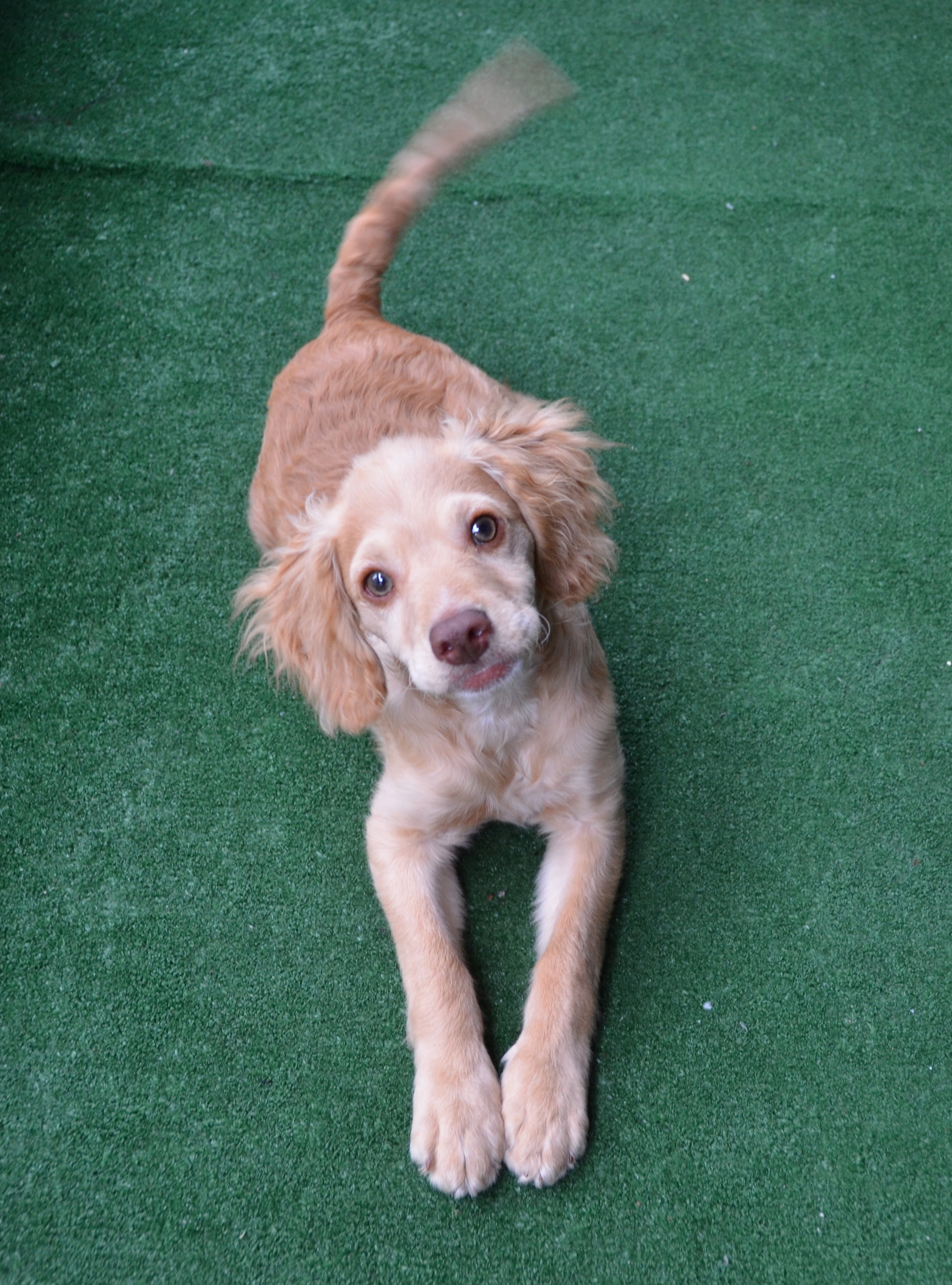

8. Why You Must Read a Dog's Entire Body Language
The tail provides useful information, but it becomes much more meaningful when combined with other signals.
Professional animal behaviorists often emphasize the importance of interpreting the entire body.
A dog's communication system involves several connected parts.
The Eyes
A dog's eyes can reveal changes in attention and emotional state.
Relaxed dogs often have soft eyes and a relatively neutral facial expression.
A frightened or uncomfortable dog may show widened eyes, visible eye whites, or repeated avoidance of direct interaction.
A hard, fixed stare can be a warning sign, especially when combined with a rigid body.
However, eye shape and normal expression vary considerably between breeds.
For example, dogs with naturally prominent eyes may look different from dogs with narrower eyes.
The Ears
Ear position can provide additional clues.
Ears held in their natural resting position may indicate that the dog is comfortable.
Forward-facing ears can suggest attention or interest.
Ears pulled backward may accompany fear, uncertainty, or appeasement.
But floppy ears can make these signals less visible.
It is therefore useful to watch the base of the ears and changes in their position rather than focusing only on the tips.
The Mouth
A relaxed dog may have an open mouth with loose facial muscles.
A stressed dog may close its mouth suddenly, lick its lips, or tighten the muscles around the muzzle.
Some dogs show their teeth when frightened, while others do so when displaying a threat.
A smile-like expression should not automatically be interpreted as happiness.
The rest of the animal's posture provides important context.
The Body
Body posture is among the most useful elements of canine communication.
A relaxed dog generally moves naturally without obvious stiffness.
A frightened dog may lower its body or shift its weight backward.
An aroused or threatening dog may become rigid, stand taller, or lean forward.
Changes in movement can also matter.
A dog that suddenly freezes during an interaction may be communicating discomfort.
This is particularly important because freezing can occur before growling or biting.
Putting Everything Together
Imagine a dog greeting a visitor.
Its tail is moving, its mouth is relaxed, its eyes are soft, and its body is loose.
This combination is more consistent with friendly social excitement.
Now imagine a dog with a rapidly moving tail, a closed mouth, a hard stare, and a rigid posture.
The interpretation changes completely.
This is why veterinary behavior professionals recommend looking for patterns rather than relying on one body part.
The ASPCA's canine body-language guidance provides further examples of how posture, facial expression, and movement work together.
9. When Tail Wagging Signals Stress, Fear, or Aggression
A dog does not need to stop wagging its tail when it becomes uncomfortable.
In fact, some of the most important situations for understanding tail communication occur when a dog is experiencing negative emotions.
Stress During an Unfamiliar Encounter
Imagine that a dog is approached by an unfamiliar person.
The dog may wag its tail while keeping its body low and its ears backward.
It might repeatedly lick its nose, turn its head, or attempt to move away.
These signs can suggest that the animal is uncomfortable.
The best response is to stop approaching and allow the dog to create distance.
Do not attempt to force a greeting.
Fear and Defensive Behavior
Fear can produce several different behavioral responses.
Some dogs retreat immediately. Others freeze. Some attempt to escape, while others may display defensive aggression if they feel trapped.
A frightened dog might show:
- A tucked or lowered tail.
- Flattened ears.
- A lowered body.
- Trembling.
- Repeated lip licking.
- Avoidance of eye contact.
- A stiff or frozen posture.
If the dog cannot escape, its behavior may escalate.
A dog that feels threatened may growl, bark, bare its teeth, or snap.
A growl should be treated as valuable information that the animal needs space. Punishing the warning signal may make future interactions less predictable.
Aggression and the High, Stiff Wag
One of the most misunderstood tail positions is the high, stiff wag.
People sometimes interpret it as enthusiasm.
However, a raised, rigid tail accompanied by a tense body may indicate high arousal, discomfort, or threatening behavior.
Additional warning signs include:
- A fixed stare.
- Tense facial muscles.
- A forward-leaning posture.
- Raised hair along the back.
- Growling or snarling.
- Reduced body flexibility.
Not every dog displaying these signs will bite, and no single signal can predict exactly what an animal will do.
Nevertheless, these patterns should be taken seriously.
The safest response is to avoid sudden movements, refrain from reaching toward the dog, and increase distance when possible.
Why You Should Never Punish a Warning
Growling and other warning signals are part of canine communication.
They provide an opportunity to recognize discomfort before a situation becomes more dangerous.
If a dog is repeatedly punished for growling, it may learn to suppress that warning without becoming more comfortable.
This can make interactions harder to predict.
Instead, owners should investigate what caused the discomfort and work with a qualified, reward-based trainer or veterinary behavior professional when necessary.
10. How to Read Your Own Dog More Accurately
One of the most useful things an owner can do is learn the normal behavior of their own dog.
General guides provide useful starting points, but every dog has individual characteristics.
Some dogs wag energetically whenever they are excited. Others display much smaller movements.
Some dogs have naturally high tails. Others carry them low.
The best interpretation comes from understanding what changes in your dog's behavior mean.
Establish Your Dog's Normal Baseline
Observe your dog in several everyday situations.
For example:
- When it is relaxing at home.
- When it sees a familiar person.
- When it hears an unfamiliar sound.
- When it encounters another dog.
- When it is waiting for food.
- When it is playing.
- When it is tired.
Notice how its tail normally looks in each situation.
This creates a personal reference point.
A sudden change from your dog's usual relaxed behavior may be more meaningful than a tail position considered unusual in another breed.
Watch What Happens Before and After the Wag
Context is essential.
Ask yourself what happened immediately before the tail began moving.
Did someone enter the room? Did the dog notice another animal? Did a loud noise occur?
Then observe what happens next.
Does the dog approach willingly? Does it move away? Does it become more relaxed? Does it freeze?
The sequence of events can reveal more than the tail movement alone.
Respect Changes in Behavior
Dogs communicate discomfort in different ways.
A dog that normally enjoys being touched might suddenly avoid contact.
A dog that usually greets visitors enthusiastically might begin hiding or showing tension.
Changes can result from fear, stress, unfamiliar circumstances, or physical discomfort.
If the change is sudden, persistent, or accompanied by signs of pain or illness, contact a veterinarian.
Let the Dog Choose the Interaction
A useful principle is to give dogs control over social contact.
Rather than reaching over an unfamiliar dog, allow it to approach voluntarily.
Keep interactions brief and observe whether the animal remains comfortable.
If it moves away, respect that decision.
A dog that wants to interact should be able to do so without being cornered or restrained.
Keep a Simple Behavior Journal
For owners who want to understand their dogs more deeply, keeping short observations can be helpful.
- Owner arrives home: Broad, loose wag, relaxed body, and happy approach.
- Unknown visitor enters: Low, slow movement, ears back, and moving away.
- Sees another dog: High, quick movement, stiff body, and needs more distance.
- Preparing to play: Wide, energetic wag and play bow.
- Loud noise outside: Tail tucked, hiding, and seeking a safe place.
Over time, patterns may become easier to recognize.
This is not a medical diagnostic method, but it can help owners communicate more effectively with veterinarians and trainers.
11. What Happens When a Dog Cannot Wag Its Tail?
Tail communication becomes more complicated when a dog has a naturally short tail, a docked tail, an injury, or a medical condition affecting movement.
Does this mean the dog cannot communicate effectively?
No.
Dogs use many forms of body language, and the tail is only one component.
A dog without a functional tail can still communicate through its eyes, ears, mouth, posture, movement, and vocalizations.
Other dogs may also respond to these signals.
However, the absence of normal tail movement can reduce one source of information.
The Importance of Alternative Signals
When a dog has limited tail movement, owners should pay particular attention to:
- Ear position.
- Facial tension.
- Eye contact.
- Head position.
- Overall body posture.
- Movement toward or away from people.
- Vocalizations.
- Changes in normal behavior.
A dog with a short tail may display excitement through its entire body.
For example, it might move its hips, bounce, or change its posture when greeting a familiar person.
Medical Problems and Tail Movement
Not every change in tail movement is behavioral.
Pain, injuries, and certain neurological or muscular problems can affect a dog's ability to move its tail.
A condition sometimes called limber tail syndrome can cause sudden pain and reduced tail movement, often after strenuous activity or prolonged swimming.
If a dog suddenly stops wagging, holds its tail unusually low, or appears painful when its tail is touched, it should be evaluated by a veterinarian.
Owners should avoid assuming that a sudden change is simply a mood difference.
12. Why Did Dogs Develop Such Expressive Tails?
The evolutionary history of dog tail wagging is an interesting subject, but it is also an area where scientific certainty remains limited.
Dogs evolved from ancient wolf populations, and domestication changed many aspects of their behavior, physiology, and relationship with humans.
Researchers have proposed several explanations for why tail wagging became so prominent in domestic dogs.
Domestication and Social Behavior
One possibility is that humans unintentionally selected dogs that were more socially tolerant and responsive.
Animals that were less fearful of people may have had greater opportunities to live near human communities.
Over generations, these characteristics may have contributed to changes in social communication.
Tail wagging could have become more common as part of this broader behavioral transformation.
Did Humans Directly Select Dogs That Wagged?
A second possibility is more surprising.
Perhaps humans directly or indirectly favored dogs that displayed rhythmic tail movements.
People often respond positively to rhythmic and animated movements.
A wagging tail can make a dog appear more socially expressive, even when the precise emotional meaning is unclear.
The 2024 review by Leonetti and colleagues discusses these two hypotheses:
- Increased tail wagging may have emerged as a by-product of selection for other domestication-related traits, such as tameness.
- Humans may have directly favored more frequent tail wagging because they responded positively to rhythmic visual behavior.
These are hypotheses, not established historical facts.
Researchers still need additional comparative, behavioral, and neurobiological evidence to determine which explanation is more accurate.
Why This Question Matters
Understanding tail wagging may help researchers investigate how domestication changed the relationship between humans and dogs.
It may also reveal more about how animals develop communication systems when living closely with another species.
The tail is therefore not just an interesting feature of dog behavior.
It may offer a window into the evolutionary history of one of humanity's oldest animal partnerships.
13. Do Dogs Understand Human Reactions to Their Tail Wagging?
This is another fascinating question.
Dogs are highly responsive to human behavior.
They can learn that certain actions produce attention, food, play, or other outcomes.
For example, a dog may learn that approaching a person with a loose body and an enthusiastic wag often results in a greeting.
It may also learn that certain forms of behavior make people uncomfortable.
However, understanding that humans respond to tail movements is not the same as consciously understanding the human concept of happiness.
Dogs Learn Social Patterns
Dogs can recognize familiar people, respond to human gestures, and adjust their behavior according to experience.
If a particular tail movement repeatedly accompanies successful social interactions, it may become part of the dog's learned communication repertoire.
For example, a dog might begin wagging when it sees its owner reaching for a leash because it has learned that this action often predicts a walk.
The wag may accompany anticipation and excitement.
Can Dogs Intentionally Wag?
This question is more complicated.
Dogs can voluntarily control many body movements, but scientists do not fully understand the degree of conscious intention behind different forms of tail wagging.
Some tail movements may occur automatically in response to emotional activation.
Others may be influenced by learned social expectations.
It is possible that both processes contribute.
What remains uncertain is how much dogs deliberately adjust their tail movements to influence the behavior of people or other dogs.
14. What Science Still Does Not Know About Tail Wagging
Despite the number of studies on canine communication, tail wagging remains less thoroughly investigated than many people assume.
The behavior is familiar, but familiarity does not mean that its mechanisms are completely understood.
Several important questions remain open.
Is There a Universal Tail-Wagging Language?
Probably not in the simple sense that humans sometimes imagine.
There are recognizable patterns associated with different emotional states, but individual dogs differ.
The same dog may also display different movements depending on the context.
Scientists have not established a universal dictionary in which every tail position has one fixed meaning.
How Much Information Can Dogs Extract From Another Dog's Tail?
The left-right studies suggest that dogs can respond differently to directional asymmetry.
However, it remains unclear how much information dogs extract from every combination of tail height, speed, rhythm, and movement.
More research is needed using naturalistic interactions rather than only controlled video experiments.
Does Tail Wagging Communicate Emotion or Intention?
This is a particularly important distinction.
Emotion refers to the animal's internal state.
Intention refers to what it may be preparing to do.
A dog might feel excited, but its next action could involve approaching, retreating, playing, or defending itself.
Tail movement may provide information about both emotional activation and social intentions, but researchers have not fully separated these functions.
Why Do Some Dogs Wag More Than Others?
Personality, breed, development, environment, and social experience may all contribute.
However, scientists still need better measurements to determine how much each factor influences tail-wagging frequency and style.
Did Domestication Directly Change Tail Wagging?
The evolutionary hypotheses remain open to investigation.
Researchers need broader comparisons across domestic dogs, wolves, and other canids to understand how tail movement changed over evolutionary time.
Can Artificial Intelligence Interpret Tail Wagging?
Modern motion-tracking technology may help answer some of these questions.
In a 2022 study, researchers used deep-learning-based motion tracking to analyze the movement of dogs' tail tips during interactions with humans.
They found that individual dogs showed distinct wagging characteristics and that rightward asymmetry developed over several days of interaction with a human experimenter.
The research suggests that tail movement contains measurable patterns that are more complex than simple side-to-side motion.
It also demonstrates how computer vision could help researchers study animal communication in greater detail.
However, an algorithm identifying movement patterns is not the same as reliably identifying a dog's exact emotional state.
The relationship between movement and emotion still requires careful testing.
15. The Best Way to Understand What Your Dog Is Saying
The next time your dog wags its tail, try not to immediately translate the movement into a single emotion.
Instead, take a moment to observe the complete situation.
Look at the dog's posture. Notice its facial expression. Consider what happened immediately before the movement began.
Ask whether the dog is approaching voluntarily or trying to create distance.
A relaxed dog may show a broad, flexible wag and comfortable body language.
An uncomfortable dog may display a lower, tighter, or more rigid movement.
A highly aroused dog may move its tail quickly without necessarily feeling happy.
Over time, you will become more familiar with your dog's normal communication style.
You may even begin recognizing small differences that other people overlook.
Perhaps your dog has a particular movement when it hears your car approaching. Perhaps it wags differently when it sees a familiar dog at the park. Perhaps its tail becomes still when it is concentrating.
These observations can help you understand your companion more accurately.
But perhaps the most important lesson is also the simplest:
A dog does not need to wag its tail to be happy, and a wagging dog does not necessarily want to be touched.
Respecting that distinction can make everyday interactions safer and more comfortable for both humans and dogs.
Frequently Asked Questions About Dog Tail Wagging
1. Why do dogs wag their tails when they see their owners?
Dogs often wag when they see familiar people because these encounters can produce positive emotional excitement and social engagement. Their owners may represent affection, food, play, safety, and companionship. A relaxed, broad wag accompanied by soft eyes and a loose body is commonly associated with a friendly greeting.
2. Does a wagging tail always mean a dog is happy?
No. Dogs can wag their tails when excited, nervous, frightened, frustrated, or highly aroused. The movement must be interpreted alongside the dog's posture, facial expression, and the surrounding situation.
3. Why does my dog wag its tail when it is nervous?
Tail wagging can accompany emotional arousal and social uncertainty. A nervous dog might wag slowly or keep its tail low while displaying other signs of discomfort, such as lip licking, looking away, or moving backward.
4. What does it mean when a dog wags its tail to the right?
Research has associated right-biased tail wagging with situations involving positive or approach-related emotional responses. A 2007 study by Quaranta and colleagues reported greater rightward bias when dogs encountered certain positive social stimuli, including their owners. However, this is not a universal test of happiness.
5. What does it mean when a dog wags its tail to the left?
Left-biased tail wagging has been associated with more negative or withdrawal-related emotional situations in controlled studies. Research also found that other dogs displayed increased cardiac activity and anxiety-related behavior when watching left-biased tail-wagging videos.
6. Can dogs understand the tail movements of other dogs?
Evidence suggests that they can respond to differences in tail movement. The 2013 Siniscalchi study found different physiological and behavioral responses when dogs watched videos showing left-biased versus right-biased tail wagging. The full extent of this ability remains under investigation.
7. Why does my dog wag its tail very fast?
Fast tail movement can indicate high emotional arousal. This may happen during excitement, play, frustration, nervousness, or tension. Look at the dog's body posture and facial expression to understand the situation.
8. What does a slow tail wag mean?
A slow wag can accompany relaxation, uncertainty, or cautious social interest. It does not have one fixed meaning. A low, slow movement combined with avoidance behavior may indicate discomfort, while a relaxed, gentle movement may occur when the dog is calmly observing something.
9. Why does my dog hold its tail between its legs?
A tucked tail commonly indicates fear, anxiety, or discomfort. The dog may be attempting to appear smaller or avoid confrontation. Give it space and investigate what might be causing the reaction.
10. Why does my dog hold its tail high?
A high tail can accompany alertness, confidence, excitement, or increased arousal. If it becomes rigid and is accompanied by a hard stare or tense body, the dog may be uncomfortable or potentially threatening.
11. Why does my dog wag its tail while growling?
Growling and tail wagging can occur together because tail movement does not guarantee friendliness. The dog may be highly aroused, frustrated, conflicted, or uncomfortable. Treat the growl as a warning and give the dog space rather than attempting to pet it.
12. Do puppies wag their tails?
Yes. Tail wagging develops during early puppyhood. Research discussed in a 2024 scientific review found that dog puppies began showing tail wagging more frequently around four to five weeks of age in one developmental study.
13. Do dogs wag their tails when they are sleeping?
Some dogs move their tails while sleeping, particularly during periods of active dreaming. However, the precise relationship between tail movement during sleep and dream content is not fully understood. A sleeping dog's movements should not be treated as a reliable indicator of a particular emotion.
14. Why does my dog wag only the tip of its tail?
Small movements at the tip can occur when a dog is attentive or highly aroused. The meaning depends on tail height, body stiffness, and the surrounding situation. A high, rigid tail with small movements deserves more caution than a relaxed tail with a gentle tip movement.
15. Why do some dog breeds have naturally curled tails?
Tail shape varies because of inherited anatomical characteristics and selective breeding. Breeds such as Pugs, Shiba Inus, and Akitas naturally have curled tails. Their normal tail position should be considered when interpreting their communication.
16. Can dogs communicate without tails?
Yes. Dogs also communicate through their ears, eyes, mouth, posture, movement, and vocalizations. Dogs with short or missing tails can still communicate, although some visual information may be reduced.
17. Why does my dog stop wagging its tail when I approach?
A dog may stop wagging because it is concentrating, uncertain, uncomfortable, or responding to a change in its surroundings. A sudden freeze during an interaction can be an important sign of discomfort. Avoid forcing contact and give the dog an opportunity to move away.
18. Can a dog wag its tail when it is aggressive?
Yes. Some dogs display a raised, stiff, rapidly moving tail when highly aroused or displaying threatening behavior. This is why a wagging tail should never be treated as automatic permission to approach or touch a dog.
19. Why does my dog wag its tail when I talk to it?
Your voice may be familiar and associated with attention, food, affection, or other positive experiences. The dog may respond through anticipation and social excitement. Its reaction will depend on your tone, the situation, and its previous experiences.
20. Why does my dog wag its tail more when I return home?
Your return may be a highly meaningful social event. Dogs can form strong attachments to their caregivers, and familiar greetings often produce noticeable excitement. Some dogs display a full-body wag, while others express their excitement through smaller movements.
21. Does a dog wag its tail voluntarily?
Dogs can control many tail movements through their nervous systems, but researchers do not fully understand the degree of conscious intention behind different types of wagging. Some movements may be automatic emotional responses, while others may be influenced by learned social behavior.
22. Should I approach an unfamiliar dog if its tail is wagging?
Not automatically. First consider the dog's entire body language and ask its owner for permission. Avoid approaching dogs that appear stiff, frightened, tense, or uncomfortable. Allow a dog to choose whether it wants to interact.
23. When should I worry if my dog stops wagging its tail?
A dog that suddenly stops moving its tail, holds it unusually low, or shows signs of pain should be examined by a veterinarian. Injuries, inflammation, and certain medical conditions can affect tail movement. Do not assume that every change is behavioral.
Conclusion: Listening to the Language of the Tail
A dog's tail may seem like a simple part of its body, but its movements can communicate a surprising amount of information.
A wag can accompany happiness, excitement, nervousness, uncertainty, fear, or heightened emotional arousal. Its direction, height, speed, and flexibility can all contribute to the picture.
Scientific research has made the subject even more interesting.
Studies published in 2007 and 2013 found that left-right differences in tail wagging were associated with emotional responses in dogs. A later study used advanced motion tracking to identify individual patterns and changes during human interaction. A 2024 review brought together evidence about the development, function, and possible evolutionary origins of tail wagging.
Nevertheless, there is still much to learn.
Scientists do not yet have a complete explanation of how dogs use every tail movement, how much information they communicate through it, or exactly how domestication shaped this behavior.
For dog owners, the most useful lesson does not require complicated scientific equipment.
Watch the whole dog.
Notice the eyes, ears, mouth, posture, and movements. Consider the environment and allow the animal to communicate without forcing an interaction.
A wagging tail is not simply a sign that a dog is happy. It is part of a much richer conversation.
And learning to listen to that conversation is one of the simplest ways to build a safer, more respectful, and more rewarding relationship with our canine companions.
Sources and Scientific References
The following references support the scientific discussion in this article. They include peer-reviewed research, veterinary behavior resources, and animal welfare guidance.
- Leonetti, S. et al. (2024). Why do dogs wag their tails? Biology Letters, 20(1), 20230407. Read the scientific review.
- Quaranta, A., Siniscalchi, M. and Vallortigara, G. (2007). Asymmetric tail-wagging responses by dogs to different emotive stimuli. Current Biology, 17(6), R199–R201. Read the research record on PubMed.
- Siniscalchi, M. et al. (2013). Seeing left- or right-asymmetric tail wagging produces different emotional responses in dogs. Current Biology, 23(22), 2279–2282. Read the research record on PubMed.
- Left-right asymmetry and attractor-like dynamics of dog's tail wagging during dog-human interactions (2022). Read the full research paper.
- American Veterinary Society of Animal Behavior (AVSAB). Dogs' Tails Tell Tales So Let's Listen! Read the veterinary behavior guidance.
- ASPCA Professional. Canine Body Language Tips. Read the canine body-language guide.
- VCA Animal Hospitals. Canine Communication — Interpreting Dog Language. Read the veterinary guide.
- VCA Animal Hospitals. How Do Puppies Communicate With Their Tails? Read the puppy behavior guide.
- PetMD. How to Read a Dog's Body Language. Read the veterinary-reviewed article.
- FOUR PAWS. How Dogs Communicate. Read the animal welfare guide.
Editorial note: The article distinguishes between findings from controlled experiments, veterinary behavioral guidance, and hypotheses about domestication. Proposed evolutionary explanations are not presented as established facts.
The conversation
Post a Comment