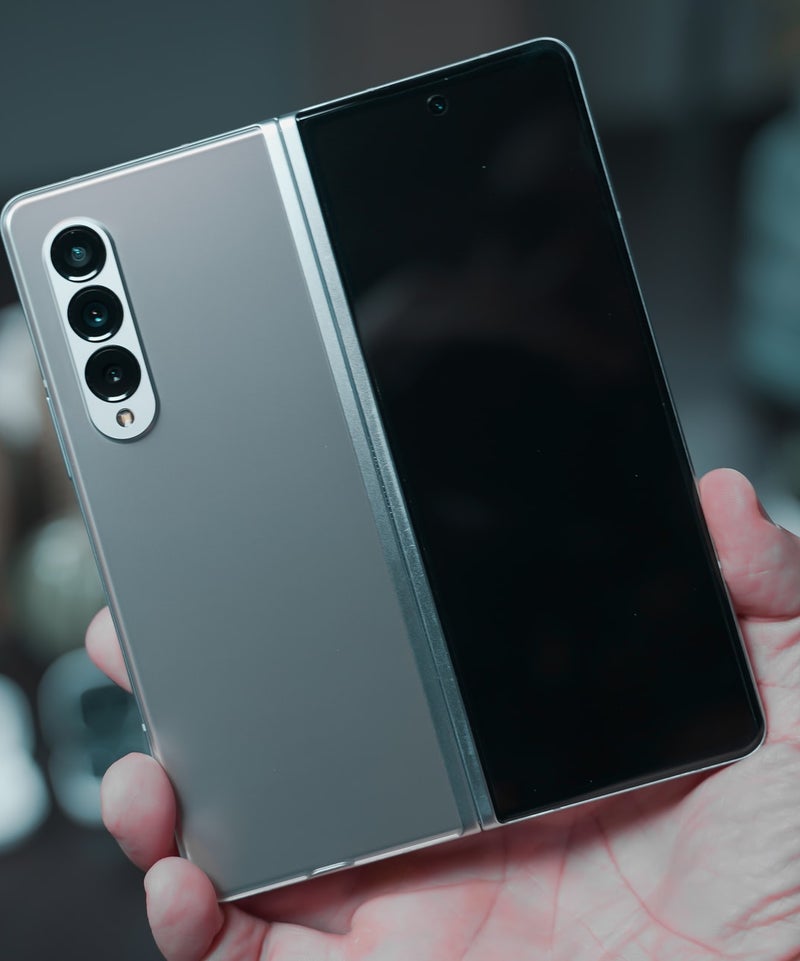
Apple's first foldable iPhone has done what foldables were supposed to do all along: make people desperate. Pre-orders for the iPhone Duo, the $1,999 folding phone Apple unveiled just last month, opened at 5 a.m. Pacific Time on Friday — and within minutes, every configuration was pushed back to January 2027. In some stores, the first wave of retail pickup sold out in about three minutes.
Apple's own online store now lists every Duo model as shipping in late January, a full three months after the planned October 23 launch date. "Demand has been nothing short of extraordinary," Apple said in a statement, according to CNBC. The company will keep accepting orders online — but if you want one under the Christmas tree, you're probably out of luck.
And where demand goes, scalpers follow. On eBay, confirmed pre-orders for phones that don't physically exist yet are trading at staggering markups. At least four buyers have paid $4,999.99 — a roughly $1,800 premium on the top-end 2TB model, which retails for $3,199. A 1TB "confirmed pre-order" sold for $4,400, and even base 256GB models ($1,999 retail) are changing hands for $2,700 to $3,800. Sellers face eBay fees, taxes, and shipping costs that push break-even well above retail; buyers face the usual pre-order-transfer risks, including scams.
A sellout measured in minutes
The timeline of Friday's launch tells the whole story. Pre-orders opened at 5 a.m. Pacific. Retail pickup slots for the $1,999 device were gone in about three minutes. Within ten minutes, shipping dates had slipped to December. Shortly after, they fell to January 2027 — and by the end of the day, Apple's U.S. store was quoting January 22 to January 25 delivery dates for most configurations.
This is not how recent iPhone launches have gone. The regular iPhone lineup — even at its hottest — has rarely seen multi-month backlogs in the first hours. The Duo's sellout suggests Apple's conservative first production run collided with genuine pent-up demand for a folding iPhone, the product Apple fans have watched Samsung sell for the better part of a decade.
What Apple is actually selling
The iPhone Duo pairs a 5.4-inch outer display with a 7.6-inch folding inner display — book-style, opening like a small tablet. Both screens support 3,000 nits of peak brightness and Apple Pencil input over USB-C. The inner display carries a nano-texture matte finish that Apple says is 40% stiffer than materials used in rival foldables, a direct answer to the crease and durability complaints that have dogged the category.
Key specifications:
- Displays: 7.6-inch Super Retina XDR folding inner display, 5.4-inch Super Retina XDR outer display
- Chip: A20 Pro (6-core CPU, 7-core GPU), with Apple's new C2 modem supporting mmWave in the U.S.
- Cameras: 48MP Fusion Main + 48MP Fusion Ultra Wide on the rear, a 12MP Center Stage camera on the outer display, and an under-display FaceTime camera on the inner screen; 4K120 video in Dolby Vision
- Biometrics: Touch ID built into the power button (no Face ID), plus the Camera Control button from the Pro models
- Build: Grade 5 titanium chassis, 254 grams, 5.2mm thick when open and 11.3mm closed, with a 3D-printed hinge cover protecting more than 100 internal components
- Battery: Dual-cell design rated for up to 44 hours of video playback on the outer display and 31 hours on the inner display; 50% charge in about 20 minutes
- Price: $1,999 (256GB), $2,199 (512GB), $2,599 (1TB), $3,199 (2TB); colors Star White and Night Sky
- Extras: MagSafe, Apple Intelligence, and a dedicated iPhone Duo Folio Case
At 5.2mm open, the Duo is one of the thinnest devices Apple has ever made — and at 254 grams, lighter than several Pro Max phones. The hinge, which Apple says protects more than 100 internal components, locks at multiple angles so the phone can stand on its own for video calls or photography, acting as its own tripod.
Why supply is this tight
There are two overlapping explanations for the shortage, and Apple hasn't confirmed which matters more.
The first is demand: the Duo is the first major iPhone redesign in years, arriving in a year when Apple has a new CEO — John Ternus, who took over from Tim Cook on September 1 and opened pre-orders himself with a teaser clip on X ("iPhone Duo… a whole new way to iPhone"). Cook, now executive chairman, followed with his own post pointing buyers to the October 23 launch. The handoff gives the Duo outsized symbolic weight: it is Ternus's first signature product.
The second is supply. According to reporting cited by BeInCrypto, Apple pays Samsung roughly $250 per folding display panel under an exclusive supply deal — with no second source. Foldable OLED panels are among the most technically demanding components in any phone, and a single-supplier arrangement gives Apple little room to ramp up if demand overshoots. The Malaysian market tells the same story: retailers like Machines and Switch sold through their initial allocations within an hour of pre-orders opening on October 16, with new delivery dates stretching to January 22, 2027.
The truth is almost certainly both: a first production run that was always going to be conservative, meeting an audience that had been waiting years for Apple to enter the category.
The $5,000 eBay market
Shortages like this inevitably create a shadow market, and the Duo's is moving fast. Dozens of completed eBay sales have been documented, with the headline prices clustering around $4,999 — an $1,800 markup on the $3,199 top configuration. Base 256GB models are trading between roughly $2,700 and $3,800, and 512GB units have reached nearly $4,000 in some auctions.
Almost all of this activity involves "confirmed pre-order" transfers: no physical devices are in buyers' hands, because the phone doesn't officially launch until October 23. Active listings commonly ask $2,800 to $3,750. The premiums reflect three things: genuinely tight initial supply, the lure of being first with Apple's first foldable, and the holiday window closing fast.
The risks are real. Pre-order transfers are among the easiest transactions to scam — the seller can cancel the underlying order after payment — and eBay's fees plus taxes and shipping mean sellers' real margins are thinner than the headline numbers suggest. For most buyers, the rational move is patience: as stock arrives around and after launch, secondary prices should moderate.
Why this launch matters
Beyond the gadget frenzy, the Duo is a strategic bet with industry-wide stakes.
First, it validates the foldable category in a way only Apple can. Samsung has spent years refining foldables, and Huawei has built a serious business around them — but a $1,999 Apple foldable selling out in minutes sends a different signal: the form factor is going mainstream, not staying a niche. IDC analyst Nabila Popal told CNBC that Duo shipments could grow about 70% next year, giving Apple roughly 40% of the foldable market — ahead of both Samsung and Huawei.
Second, it puts pressure on Apple to solve the supply problem fast. Samsung is already claiming that more iPhone owners are switching to its foldables. Every week of January ship dates is a window for rivals to pitch an impatient buyer a folding phone they can have tomorrow.
Third, the price resets expectations. At $1,999 to $3,199, the Duo is the most expensive mainstream iPhone ever — and it sold out anyway. That tells Apple the market will bear true luxury pricing on hardware that feels meaningfully new, a lesson the company will carry into the rest of its lineup.
What you can do if you want one
Hope isn't entirely gone. A few routes remain:
- Check Apple Stores on October 23. In-store sales begin on launch day, and some locations may have walk-in stock. Inventory is expected to be extremely tight, and Apple hasn't confirmed quantities.
- Reserve online pickup from October 24. Apple's store page says it will update store availability then, which may signal fresh stock reaching retail.
- Look at carrier deals. T-Mobile is reportedly offering up to $1,000 off the Duo for postpaid customers — a substantial discount if you can get a unit at all.
- Wait. Backlog-clearing often runs faster than Apple's initial estimates suggest. Nothing guarantees a December delivery, but the January dates may improve.
Frequently asked questions
How much does the iPhone Duo cost?
U.S. pricing starts at $1,999 for 256GB, rising to $2,199 (512GB), $2,599 (1TB), and $3,199 (2TB). It comes in two colors: Star White and Night Sky.
When does the iPhone Duo release?
The official launch date is October 23, 2026. But pre-orders sold out within minutes on October 16, and new online orders now show delivery estimates in late January 2027.
Why is the iPhone Duo sold out?
A combination of very strong demand and constrained supply. Apple appears to have planned a conservative first production run, and the folding display panels reportedly come from a single supplier (Samsung) under an exclusive deal, limiting how fast Apple can ramp up.
Should I buy a pre-order from eBay?
Caution is warranted. Prices run from about $2,700 to nearly $5,000, sellers' real margins are thinner than they look after fees, and pre-order transfers carry scam risk — the seller can cancel the underlying order after you're paid. Waiting for supply to normalize is the safer option.
Is the iPhone Duo Apple's first foldable phone?
Yes. Samsung, Huawei, and others have sold foldables for years, but the Duo is Apple's first folding smartphone — and its first major iPhone form-factor change in a generation.
Does the iPhone Duo have Face ID?
No. Apple replaced Face ID with Touch ID integrated into the side power button, freeing space for the folding design. It also carries the Camera Control button from the iPhone Pro models.
The bigger picture
The iPhone Duo's launch-day chaos is, in a sense, the best possible problem for Apple to have. A $1,999 phone selling out in three minutes is proof that the iPhone still commands the kind of desire no spec sheet can manufacture — and proof that the folding form factor has finally arrived as a mainstream proposition.
The real test starts now. Can Apple turn "extraordinary" demand into actual phones in people's hands before the holidays? Can it loosen its single-supplier grip on the folding display? And can John Ternus's first signature product live up to the frenzy? Samsung and Huawei won't be standing still while Apple figures it out.
One thing is certain: the foldable era of the iPhone has begun, and it began with a sellout. Whether it becomes a revolution or a footnote depends on what Apple does next.
What do you think — is the iPhone Duo worth $1,999, or is the foldable premium still too steep? Share your take in the comments.
The conversation
Post a Comment