Key Takeaways
- Neither candidate passed 50% on October 4, so Brazil's presidential election goes to a runoff on October 25, 2026 — just 13 days away.
- Senator Flávio Bolsonaro (Liberal Party) led the first round with 47.0% against incumbent Luiz Inácio Lula da Silva's 45.2%.
- The first runoff polls show a statistical tie, while prediction markets price Bolsonaro as the heavy favorite — a striking disagreement.
- The short campaign centers on crime, cost of living, corruption, and sharply different economic models.
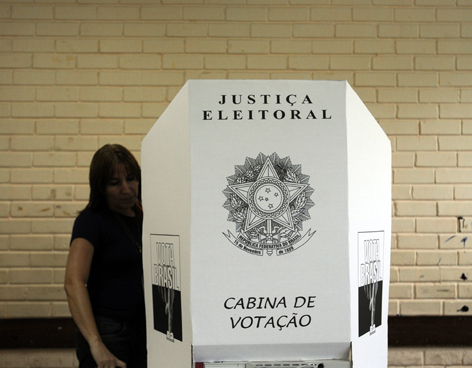
- More than 158 million voters are eligible; voting is compulsory for most adults and takes place electronically.
October 12, 2026 update — With 13 days to go until the October 25 runoff, the race looks far tighter in the polls than the betting suggests. The first Datafolha survey of the runoff (October 6–7) put Flávio Bolsonaro ahead 52% to 48% of valid votes — a technical tie within the two-point margin of error — while another survey had Lula narrowly in front. Prediction markets tell a different story: on October 10, Polymarket priced Bolsonaro at 89% against Lula's 12% in a $179.6 million market. Lula's route back runs through the roughly 30 million registered voters who stayed home on October 4 plus the minor candidates' voters — but no second-place finisher has won a Brazilian presidential runoff since 1989. (Figures via RG.org's October 10 market roundup.)
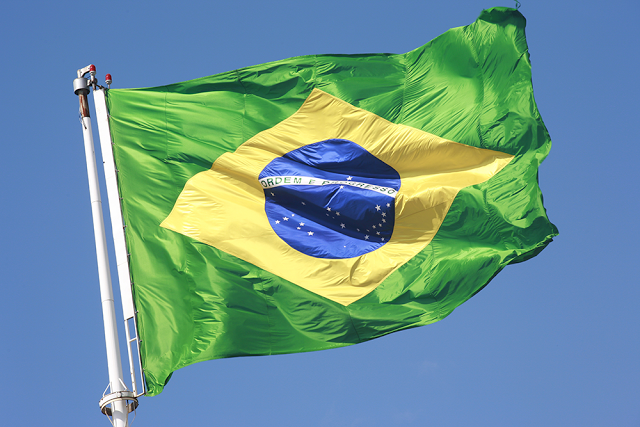
The result upended expectations. Final pre-election polls had generally forecast Lula narrowly ahead, yet Bolsonaro beat virtually every projection and enters the second round as the first-round winner — just a few points short of the outright majority. With the rest of the 12-candidate field eliminated, the final stretch of the campaign will decide who governs Brazil from 2027 onward, with consequences that extend well beyond the country's borders. Just as leadership changes in Washington have reshaped U.S. economic and social policy this year, shifts in Brasília will set Brazil's direction for years to come.
What Happened in the First Round on October 4
Brazilians voted from 8am to 5pm Brasília time in a race that pitted a left-wing incumbent against the Bolsonaro family's new political heir for the second election in a row. With over 99% of ballots tallied by the Superior Electoral Court (TSE), Flávio Bolsonaro held 47.0% of valid votes to Lula's 45.2% — a margin of roughly two million votes.
The headline was the miss: private surveys had forecast Lula ahead by around three percentage points. Instead, Bolsonaro's late surge went far beyond what polling captured. "The pollsters missed badly," said Robert Muggah of the Igarapé Institute, warning that runoff polls showing a dead heat may understate Bolsonaro as well. Both frontrunners skipped the major TV debates, leaving policy discussion thin despite worries over debt, corruption, and daily insecurity. Both campaigns leaned heavily on online messaging — a reminder of how decisive digital outreach has become in modern elections.
The Two Finalists: Profiles and Platform Contrasts
The runoff gives voters a choice between two of Brazil's best-known names, representing opposing models of government.
Flávio Bolsonaro, 45, is the eldest son of former President Jair Bolsonaro and runs for the right-wing Liberal Party (PL). He assumed the family's candidacy in December 2025 after his father was declared ineligible to run until 2030 and later sentenced to 27 years and three months in prison for plotting to overturn his 2022 defeat. Flávio has framed the sentence as political persecution and pledged to seek an amnesty for those convicted in the plot.
His platform combines conservative values, tough-on-crime policy, and a Milei-inspired economic agenda: tax cuts, privatizations, a debt ceiling, cutting spending from day one, fewer ministries, designating major criminal gangs as terrorist organizations, and ending presidential reelection — "I only need one term." His candidacy has drawn visible support from international conservatives, including Argentine President Javier Milei and U.S. President Donald Trump — whose headline-grabbing second term recently included awarding Elon Musk a medal in 2026.
Luiz Inácio Lula da Silva, 80, is the incumbent of the Workers' Party (PT), seeking a fourth term. He first governed from 2003 to 2011 and returned in 2023. Lula's model centers on a stronger state role, social programs, and inequality reduction — most notably Bolsa Família, which pays low-income families who keep children in school and vaccinated. For the runoff, he has said his campaign will emphasize education, research, technology, and industrial policy, while backing state-led investment in data centers and critical minerals.
| Category | Flávio Bolsonaro (PL) | Luiz Inácio Lula da Silva (PT) |
|---|---|---|
| Background | Senator, 45; eldest son of Jair Bolsonaro; family's political heir | Incumbent president, 80; governed 2003–2011 and since 2023; union leader origins |
| Economic model | Debt ceiling, spending cuts, tax cuts, privatizations, Milei-inspired fiscal adjustment | Active state, social spending, debt relief, state-led investment in strategic sectors |
| Public security | Gangs as terrorist groups, tougher sentencing, expanded prisons, Bukele-inspired approach | Target crime finances, improve investigations, strengthen prison system; opposes U.S. terror designation |
| Social policy | Revise welfare programs; reduce ministries and state size | Bolsa Família and inequality reduction; education and research investment |
| Foreign posture | Alignment with Trump, Milei, and regional conservative leaders | Developing-world diplomacy; closer South-South ties; friction with Washington over trade |
| Signature pledge | End presidential reelection; "the end of the PT era" | Continuity of social programs and institutional stability |
How the Runoff Works: Dates, Voting, and What's at Stake
Brazil uses a two-round system. A candidate needs more than half of the valid votes to win in the first round; otherwise, the top two finishers meet in a second round decided by simple majority. The runoff is always held on the last Sunday of October — which falls on October 25 in 2026.
- October 4, 2026: First round — 12 candidates; Bolsonaro 47.0%, Lula 45.2%; no outright winner.
- October 25, 2026: Runoff between Flávio Bolsonaro and Lula; simple majority decides.
- Voting hours: Polling stations operate 8am–5pm Brasília time on election day.
- Electronic voting: Brazil votes on electronic voting machines; results are typically totaled and published the same evening by the TSE.
- Compulsory voting: Voting is mandatory for most adults aged 18–70, producing turnout among the highest in the Americas.
- Inauguration: The winner takes office on January 1, 2027.

The Key Issues Driving the Final Two Weeks of Campaigning
With both candidates skipping TV debates in the first round, the runoff compresses the real policy argument into the campaign's final stretch. The defining issues: public security — crime, gangs, and diverging approaches to organized violence; cost of living — high personal debt and inflation pressure, with spending cuts on one side and welfare relief on the other; corruption — scandals that feed voter fatigue on both sides; and the direction of the economy — a leaner, market-driven state versus Lula's state-led model of data centers, critical minerals, and industrial policy.
How to Follow the Runoff Results
Brazil's electronic voting system delivers unusually fast results — first-round totals were nearly complete on election night. Watch the TSE's official results portal on October 25 for same-evening totals. International outlets including CNN, Rappler, and Al Jazeera have tracked the race with detailed explainers. Treat runoff polls with caution given how badly first-round polling missed the final margin.
One number to watch: the gap between the polls and the betting markets. The first Datafolha survey of the runoff (October 6–7) put Bolsonaro ahead just 52% to 48% of valid votes — a statistical tie within the two-point margin of error — while Polymarket traders priced a Bolsonaro victory at 89% on October 10, in a market worth $179.6 million. Markets can move fast on thin information, and polls missed badly in the first round: read both with skepticism. October has also been a crowded month for global headlines — Navi Pillay's 2026 Nobel Peace Prize win was announced on October 9, just as the first runoff polls were landing.
What the Outcome Could Mean
The stakes are regional as well as national. October has already delivered regional drama — from the 7.7-magnitude earthquake that struck Panama to this neck-and-neck runoff. A Bolsonaro victory would extend the wave of right-wing wins across Latin America by candidates aligned with Donald Trump, likely lifting Brazil's currency and markets — while testing relations with institutions his family has clashed with, including the Supreme Court. A Lula victory would keep the PT's state-led model in place but could deepen friction with Washington over trade and security. "It's two competing visions of what the country should look like and what Latin America should look like," Brian Winter, editor-in-chief of Americas Quarterly, told CNN. With the first runoff polls showing a statistical tie, the final two weeks — and the undecided voters they target — will decide which vision prevails.
Frequently Asked Questions
When is the Brazil 2026 presidential runoff?
The runoff between Flávio Bolsonaro and Luiz Inácio Lula da Silva is on Sunday, October 25, 2026 — the last Sunday of October, as Brazil's electoral calendar requires.
Who won the first round of the Brazil election?
Flávio Bolsonaro finished first with 47.0% of valid votes, ahead of incumbent Lula at 45.2%, with more than 99% of ballots counted. Since neither exceeded 50%, a runoff was triggered.
Who are the two candidates in the runoff?
Senator Flávio Bolsonaro (Liberal Party), 45, eldest son of former President Jair Bolsonaro; and incumbent President Luiz Inácio Lula da Silva (Workers' Party), 80, seeking a fourth term.
How does Brazil's presidential voting system work?
Brazilians vote on electronic voting machines; voting is compulsory for most adults aged 18–70. A candidate needs more than 50% of valid votes to win in the first round; otherwise the top two compete in a runoff decided by simple majority.
What are the main campaign issues in the runoff?
Cost of living, public security and crime, corruption, and the direction of the economy — specifically whether Brazil should pursue a leaner, market-driven state or a stronger state-led development model.
Why did the polls miss the first-round result?
Final polls had shown Lula narrowly ahead, but Bolsonaro outperformed them significantly. Analysts suggest late surges and hard-to-reach voters were undercounted, and caution that runoff polling may carry the same bias.
What did the first runoff poll show?
The first Datafolha poll of the runoff, taken October 6–7, put Flávio Bolsonaro ahead 52% to 48% of valid votes — a technical tie given the survey's two-point margin of error. Another survey had Lula narrowly in front, so the polling picture remains genuinely close with less than two weeks to go.
Why do the polls and the prediction markets disagree?
Sharply. The polls show roughly a four-point race, but on October 10 Polymarket priced a Bolsonaro victory at 89% against just 12% for Lula, in a market worth $179.6 million. Markets appear to be pricing in Bolsonaro's first-round momentum and the historical difficulty of overturning a first-round lead; polls, meanwhile, suggest a much closer contest. Given how badly first-round polling missed, both deserve skepticism — the truth may sit somewhere in between.
Can Lula still win the runoff?
It is an uphill climb, but not impossible. Lula's path runs through the roughly 30 million registered voters who stayed home on October 4 and the voters of the eliminated minor candidates — he would need to win the large majority of both groups. History is unkind to his position: no second-place finisher has won a Brazilian presidential runoff since 1989. Still, with polls showing a statistical tie, the race is far from settled.
The Bottom Line
Brazil's 2026 election has become a final two-week sprint. Flávio Bolsonaro enters the October 25 runoff with first-round momentum and a platform of fiscal tightening, tough security measures, and institutional change; Lula counters with continuity, social programs, and a state-led economic vision. For more than 158 million voters — and for observers across Latin America — the choice is between two sharply different futures. Mark October 25, and watch the numbers as they land that evening.
Disclaimer: facts in this article were last updated on October 12, 2026; this is a developing story. For the latest official information, consult the Superior Electoral Court (TSE).
The conversation
Post a Comment