Ebola Kenya: Shocking First Case and What It Means for You
- Kenya confirmed its first-ever Ebola case and death on Oct 6, 2026, involving a traveler from the DRC.
- The patient tested positive for the rare Bundibugyo strain, which currently has no approved vaccine or treatment.
- Officials identified 28 contacts plus fellow flight passengers, all under 21-day monitoring.
- Ebola spreads only through direct contact with bodily fluids, not through the air.
On Tuesday, October 6, 2026, Kenya’s Health Cabinet Secretary Aden Duale confirmed something the country had never faced before: Kenya’s first confirmed case of Ebola virus disease — and its first death. The patient, a Kenyan businessman in his late 30s who had lived in the Democratic Republic of the Congo (DRC) for about seven years, died at Nairobi Hospital on Monday night, October 5, at around 11:30 pm.
This was an imported case — a single patient who fell ill in the DRC, traveled while unwell, and went straight from the airport to hospital isolation in Nairobi. There is no ongoing community transmission in Kenya, and health authorities are working with the World Health Organization (WHO) and the Africa CDC on containment. For a detailed chronological account, see The Hindu’s explainer on the Kenya case.
What Happened: A Timeline of Kenya’s First Ebola Case
About a month earlier, the patient fell ill in the DRC and received treatment at several hospitals there. When his condition failed to improve, he traveled home: by road from the DRC to Kampala, Uganda, then on Saturday, October 3, 2026, aboard Jambojet flight 8523 to Nairobi.
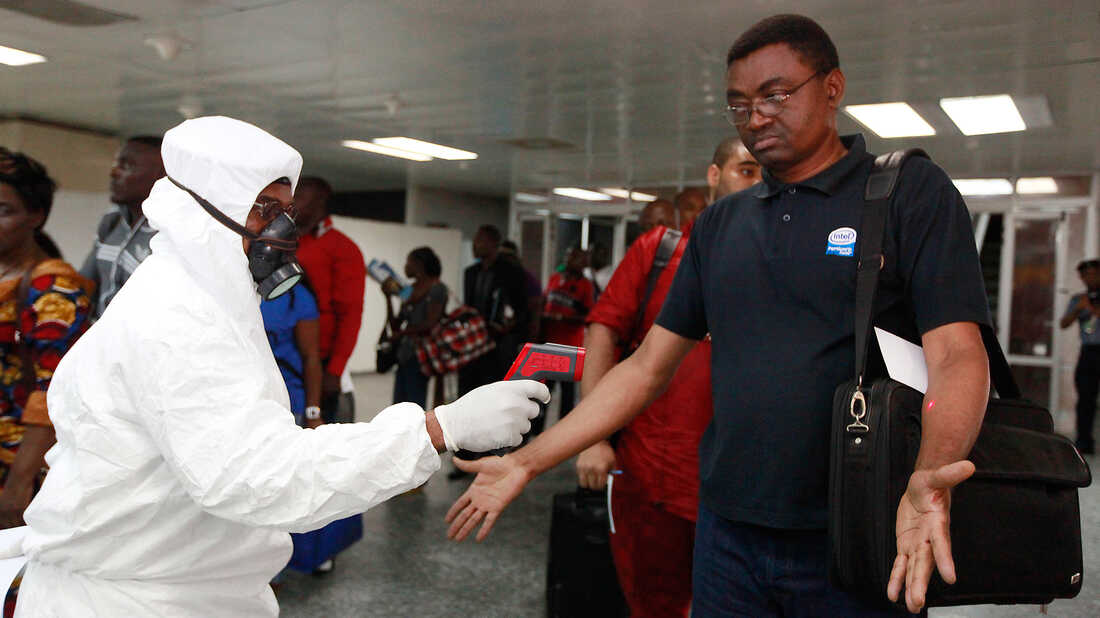
The flight landed at Jomo Kenyatta International Airport (JKIA) at about 1:10 pm, where he went through routine public-health screening — and passed it, possibly because earlier treatment had temporarily masked his symptoms. From the airport, a relative and a friend drove him directly to Nairobi Hospital. He never went anywhere else in the city.
At the hospital he was isolated in the Accident and Emergency department, then moved to the East Wing isolation unit. Doctors noted fever, chills, intense fatigue, weakness, muscle pain, painful swallowing, a sore throat, and bleeding under the skin at injection sites — and, given his travel history in an active outbreak zone, treated the case as suspected viral haemorrhagic fever. More on the flight and screening details is in this account of the traveler’s journey to Nairobi.
Samples tested positive for Ebola of the Bundibugyo species at two laboratories: the National Virology Reference Laboratory and the Kenya Medical Research Institute (KEMRI) lab. Despite supportive treatment, the patient died late on Monday night, October 5, at about 11:30 pm, and a safe burial under Ebola protocols followed on Tuesday.

| Date | Event |
|---|---|
| ~Early Sept 2026 | Falls ill in the DRC; treated at several hospitals |
| Oct 3, 2026 (~1:10 pm) | Arrives Nairobi via Kampala on Jambojet flight 8523; passes JKIA screening; taken straight to Nairobi Hospital and isolated |
| Oct 3–5, 2026 | Positive for the Bundibugyo strain at two laboratories; supportive treatment begins |
| Oct 5, 2026 (~11:30 pm) | Patient dies; safe-burial protocols arranged for Tuesday |
| Oct 6, 2026 | Health Cabinet Secretary Aden Duale announces Kenya’s first Ebola case and death; contact tracing begins |
| Oct 7, 2026 | WHO: the coming days will be decisive; contacts remain under 21-day monitoring |
The Bundibugyo Strain: Why This One Is Different
The best-known species — Zaire ebolavirus — caused the 2014–2016 West Africa epidemic and has approved vaccines (Ervebo) and antibody treatments. The Kenya case is different: the patient tested positive for the Bundibugyo strain, first identified in Uganda in 2007.
Bundibugyo is rare, with only a handful of recorded outbreaks — which is exactly why it has no approved vaccine or antibody treatment yet. Human trials for a Bundibugyo vaccine began in July 2026, but nothing is licensed today. Treatment is purely supportive care.
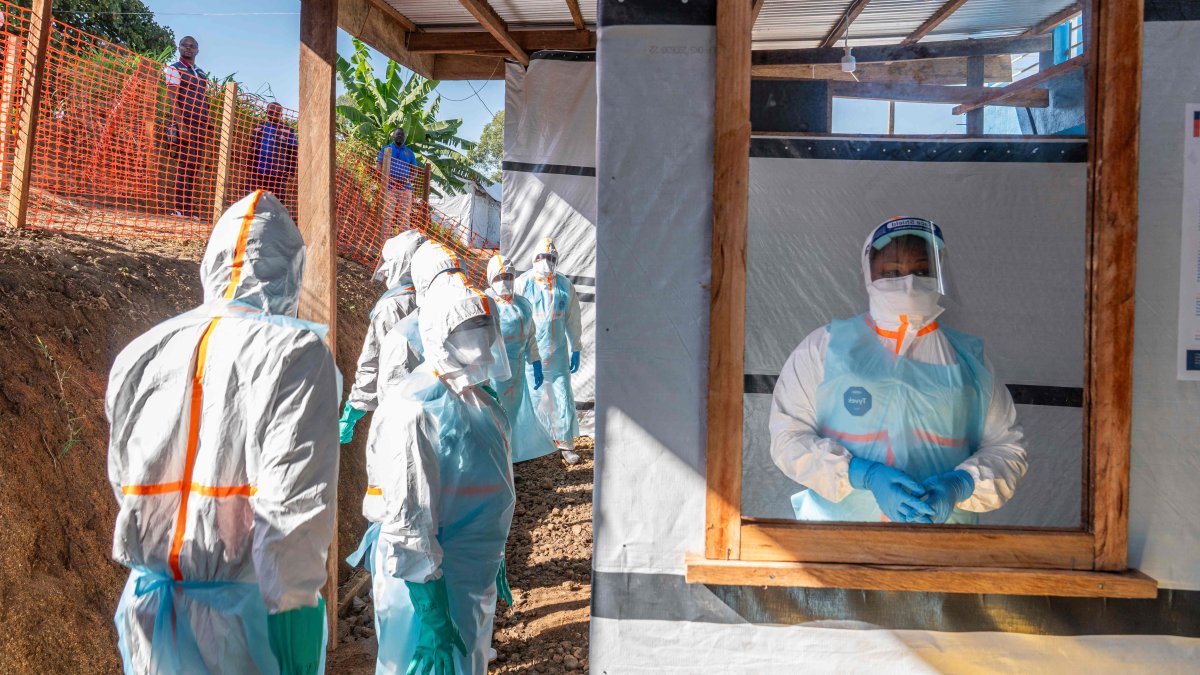
Historically, Bundibugyo outbreaks have shown lower fatality rates than Zaire outbreaks, but that comparison needs care: the DRC’s current outbreak is the largest Bundibugyo outbreak ever recorded, with more than 8,000 cases and over 4,000 deaths since it was declared in mid-May 2026. This report on Kenya’s confirmation of the case puts this context well.
| Feature | Bundibugyo strain | Zaire strain |
|---|---|---|
| First identified | 2007, Uganda | 1976, DRC |
| Approved vaccine | None (trials began July 2026) | Yes (Ervebo, 2019) |
| Approved antibody treatments | None | Yes (Zaire ebolavirus) |
| 2026 outbreaks | DRC: 8,000+ cases, 4,000+ deaths | No major Zaire outbreak in 2026 |
Symptoms and How Ebola Actually Spreads
Per long-standing WHO and CDC guidance, Ebola is not airborne. It spreads only through direct contact with the bodily fluids of infected people — living or dead — including blood, vomit, saliva, urine, faeces, and semen. Contaminated objects can also transmit the virus, which is why health workers wear full protective equipment and burials are carefully managed.
Symptoms usually appear 2 to 21 days after exposure and begin suddenly: fever, chills, and intense fatigue; muscle pain and weakness; painful swallowing and a sore throat; then often vomiting and diarrhoea. Severe cases can involve internal or external bleeding, and recovery depends on early supportive care.
Kenya’s Response: Contact Tracing and the 21-Day Watch
Officials identified 28 close contacts — family members and healthcare workers — plus 23 fellow passengers and four crew members from the October 3 flight, all placed under monitoring. Every contact is subject to 21 days of isolation and monitoring — the standard window covering Ebola’s maximum incubation period — and can be released after testing negative.
The WHO’s representative in Kenya, Dr. Neema Rusibamayila Kimambo, said on October 7 that the coming days would be decisive, with no other infections found so far. The Africa CDC is also sending a team to support the response. This report on Kenya’s first Ebola death lays out the key facts and regional picture.
The DRC is fighting its 17th Ebola outbreak, declared in mid-May 2026 — the largest Bundibugyo outbreak in history (8,000+ cases, 4,000-plus deaths). Earlier in the year, Uganda recorded 20 cases and 2 deaths before the WHO declared it Ebola-free in August 2026. Kenya’s case is the first in which a death has occurred outside the DRC during this outbreak.
Risk Assessment: Should You Be Worried?
- For the general public in Kenya: The risk is currently contained. The patient arrived ill, went straight to isolation, and died without re-entering the community. No secondary cases had been reported as of October 7.
- For travelers in the region: Avoid contact with the bodily fluids of anyone who is seriously ill, wash your hands frequently, and seek care promptly if you develop fever after visiting an area with active transmission.
- For everyone else: No spread beyond the DRC and this single imported case has been detected. Ebola is not airborne and does not spread through casual contact.
Kenya has laboratory capacity, isolation facilities, and contact-tracing machinery hardened during the Covid-19 pandemic, with international support already on the ground. The message from health ministries: be informed, not alarmed.
Frequently Asked Questions
Q: What are the symptoms of Ebola?
A: Sudden fever, chills, intense fatigue, muscle pain, headache, and sore throat are typical early signs, often followed by vomiting and diarrhoea. Severe cases can involve internal or external bleeding. Anyone with these symptoms after travel to an outbreak area should seek medical care immediately and mention their travel history.
Q: How does Ebola spread? Is it airborne?
A: No. Ebola spreads only through direct contact with the bodily fluids (blood, vomit, saliva, urine, faeces, semen) of an infected person, living or dead, or through contaminated objects. Casual contact, such as sitting near someone, does not transmit it.
Q: Is there a vaccine for the Bundibugyo strain?
A: Not yet. Approved Ebola vaccines and antibody treatments cover the Zaire strain, not Bundibugyo. Human vaccine trials for Bundibugyo began in July 2026, with more candidates in development — but none are licensed yet.
Q: Should travelers to East Africa be worried?
A: There is no reason for panic. Practice good hygiene, avoid contact with the bodily fluids of anyone who is ill, and see a doctor promptly if you develop a fever after travel.
Q: What is the 21-day monitoring period?
A: The standard public-health observation window for Ebola, matching the maximum incubation period. Contacts are monitored — and in Kenya’s case isolated — for 21 days; those who test negative and stay healthy are released.
Q: Can Ebola be cured?
A: There is no specific cure for the Bundibugyo strain. But supportive care — intravenous fluids, oxygen, and blood-pressure support — substantially improves a patient’s chances, and early care matters greatly.
Kenya’s first Ebola case is a landmark moment for the country’s public-health system. A single imported case, identified fast, isolated immediately, and met with textbook contact tracing, is exactly how outbreaks get stopped before they start.
You may also enjoy our other science explainers: the breakthrough that won the 2026 Nobel Prize in Physics, the chemistry prize awarded to Henri Kagan, and our guide to optogenetics research.
The conversation
Post a Comment