Nobel Economics 2026: 5 Frontrunners & Predictions
- The Economics prize is announced Monday, October 12 at 11:45 CEST (10:45 Casablanca time) by the Royal Swedish Academy of Sciences.
- Prediction markets favor Harvard's Ariel Pakes at roughly 20–22%, with Susan Athey and Michael Woodford close behind.
- Caution: this year's prediction markets missed the Physics and Chemistry winners entirely, so treat the odds as a starting point.
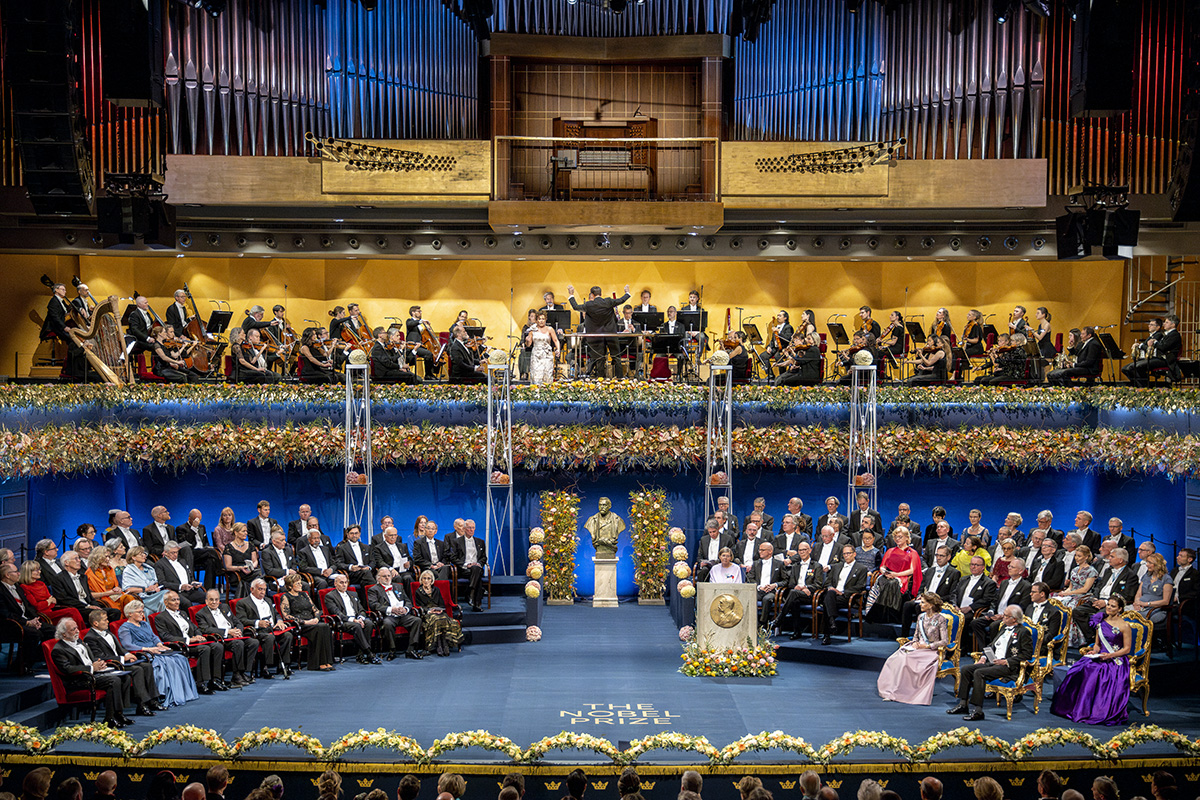
Today the curtain falls on Nobel week 2026. At 11:45 CEST (10:45 in Casablanca), the Royal Swedish Academy of Sciences in Stockholm announces the final award of the week — after the optogenetics trio took the Medicine prize, Francis Halzen won Physics, and Henri Kagan and Kenso Soai took Chemistry, with Anne Carson winning Literature and Navi Pillay taking Peace.
Every October the Economics prize sparks the same parlor game: economists, journalists and bookmakers placing their bets. This year there is a new crystal ball — thin but lively prediction markets on Polymarket and Kalshi — pointing at five names. Here is what each contender is known for, why the committee might pick them, and what the numbers actually say.
Ariel Pakes: The Market's Leading Contender
If the prediction markets are right, Harvard's Ariel Pakes is the man to beat: about 20% on Polymarket and up to 22% on Kalshi — the highest odds on a 17-name board that has drawn roughly $76,000 in volume since opening on October 6. But the case for Pakes goes beyond betting money.
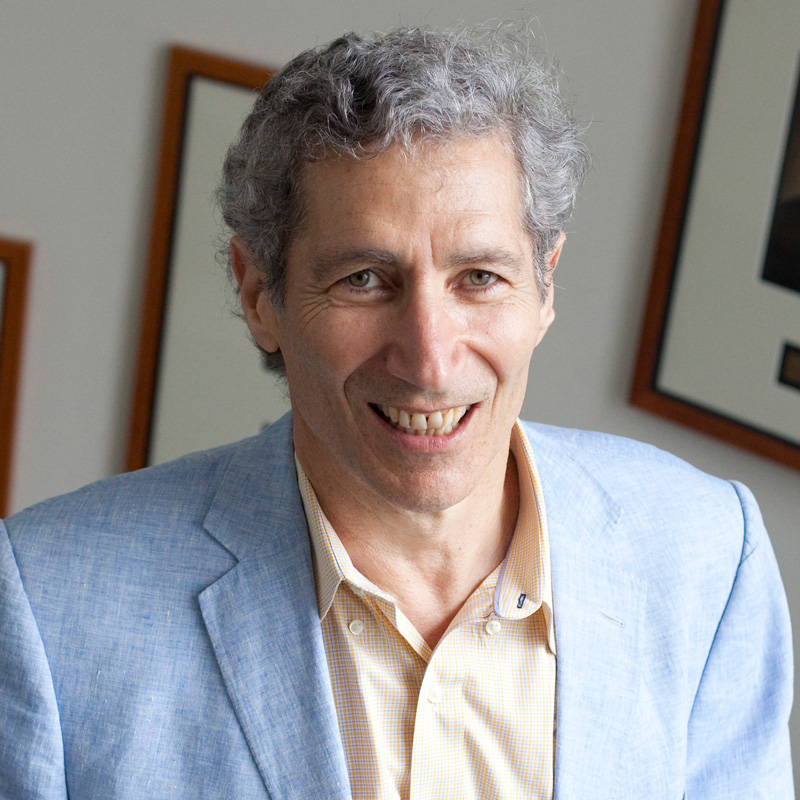
Pakes is one of the architects of modern empirical industrial organization. With Steven Berry and James Levinsohn, he developed the BLP method for estimating demand in differentiated-product markets — the econometric toolkit behind modern antitrust and merger reviews. The Academy has a track record of rewarding economists who built the tools the whole profession uses — most recently in 2021, when the prize went to empirical labor economists. If the committee wants to honor the "how we measure markets" revolution, Pakes is the natural choice.
Susan Athey: Market Design Meets the Digital Economy
Stanford's Susan Athey trades second on both boards — about 14% on Polymarket and 13% on Kalshi. She is the economist the digital economy would be most poetic to honor: a pioneer in market design and auction theory whose work shapes the ad auctions run by tech giants, and who has taught about cryptocurrencies and written on Bitcoin as a potentially revolutionary technology.

Athey's research bridges auction theory, econometrics and machine learning — from analyzing auctions with asymmetric bidders to giving economists new machine-learning tools for causal inference. The 2020 prize honored auction theorists Paul Milgrom and Robert Wilson; Athey would extend that line into the algorithm-driven marketplace. A win would also nudge the Economics prize's gender balance forward in a field that has long been male-dominated.
Michael Woodford: The Central Bankers' Favorite
Columbia's Michael Woodford sits at roughly 13% on Polymarket (the latest figure, from October 9 data — treat as approximate, since the thin market swings fast). His 2003 masterwork Interest and Prices built the modern New Keynesian framework that nearly every central bank uses to think about inflation, interest rates and forward guidance.
Woodford's core insight — that managing expectations about future interest rates matters as much as setting today's rate — shaped how central banks communicated through the financial crisis and the post-pandemic inflation surge. The global inflation fight of the past few years was won, in part, with his tools. The main strike against him is timing: his signature work is two decades old, and the Academy often prefers to let ideas season longer — or to surprise everyone with a younger name.
Richard Blundell: Inequality and the Labour Market
University College London's Richard Blundell trades around 9% on Kalshi — an outsider price for a deeply influential career. He is the leading figure in modern European labor economics, and his work on inequality, taxation and how labor markets respond to incentives has shaped tax-and-benefit policy across the UK and beyond.
Blundell's long-running studies answered questions governments genuinely need answered: how income-tax changes affect whether people work, how welfare programs alter household behavior, and how inequality evolves. A Blundell win would be the committee's classic move — honoring decades of careful, policy-changing empirical work rather than the betting favorite. And stranger things have happened this very week, as the Physics and Chemistry markets demonstrated.
Robert Barro: The Pundits' Pick
Harvard's Robert Barro is the prediction markets' blind spot — and the pundits' favorite. NPR's Planet Money reporting put Barro in the top three contenders as of October 7, arguing the macroeconomics cycle has come around to him. He is best known for Ricardian equivalence — the provocative argument that government borrowing doesn't stimulate the economy the way Keynesians claim — and for foundational work in growth theory with Xavier Sala-i-Martin.
In a year when fiscal policy and government debt dominate headlines worldwide, the committee could decide the moment belongs to Barro. With barely $76,000 traded across the whole market, a handful of small bets moves prices dramatically — as NPR's reporters put it, the market looks less like the wisdom of crowds and more like the educated guesses of a small number of nerdy gamblers.
Prediction-Market Odds: The Full Top 5
Here is the leaderboard from the final pre-announcement trading, compiled from Polymarket and Kalshi data across October 6–12. Treat these as a snapshot of a thin, fast-moving market — not a forecast.
| Name | Affiliation | Known For | Market Odds |
|---|---|---|---|
| Ariel Pakes | Harvard | Industrial organization; demand estimation (BLP econometrics) | ~20–22% (Polymarket / Kalshi) |
| Susan Athey | Stanford | Market design; auction theory; Bitcoin research | ~13–14% (Kalshi / Polymarket) |
| Michael Woodford | Columbia | Monetary economics; Interest and Prices | ~13% (Polymarket, Oct 9) |
| Richard Blundell | UCL | Labour economics; inequality; taxation | ~9% (Kalshi) |
| Robert Barro | Harvard | Macroeconomics; growth theory; Ricardian equivalence | Top 3 per pundits; not market-leading |
For context, last year's Economics prize went to Joel Mokyr, Philippe Aghion and Peter Howitt, honored for explaining innovation-driven growth through creative destruction. The 2026 laureate will receive 12 million Swedish kronor — about $1.2 million — split if the prize is shared. The Foundation raised the amount from 11 million kronor this year to preserve the prize's long-term value.
A Word of Caution: The Markets Missed This Week
Before treating the odds as a forecast, remember what happened earlier this Nobel week. The 2026 Physics board did not even list Francis Halzen — the actual winner. The Chemistry boards similarly missed Henri Kagan and Kenso Soai, who won for discoveries on non-linear effects and autocatalysis in asymmetric organic synthesis.
The Economics board is the thinnest of all: $76,000 in total volume is pocket change next to election markets worth hundreds of millions. A single enthusiastic bettor can swing a name several percentage points. And nominations stay secret for 50 years, so nobody outside the committee knows who was even considered — the Academy loves a surprise.
Frequently Asked Questions
When is the 2026 Nobel Prize in Economics announced?
Monday, October 12, 2026, at 11:45 CEST — 10:45 Casablanca local time — by the Royal Swedish Academy of Sciences in Stockholm.
Who decides the Economics prize winner?
A committee of economists appointed by the Royal Swedish Academy of Sciences evaluates nominations and recommends a laureate; the Academy's members take the final vote. All nominations and deliberations stay secret for 50 years.
How much is the Nobel Prize worth in 2026?
12 million Swedish kronor per full prize — roughly $1.2 million, raised from 11 million this year. The amount is split if the prize is shared. Winners also receive a gold medal and a diploma at the December 10 ceremony in Stockholm.
When was the Economics prize founded?
In 1968, when Sweden's central bank (Sveriges Riksbank) established it in memory of Alfred Nobel. Its full name is the Sveriges Riksbank Prize in Economic Sciences in Memory of Alfred Nobel — it is not one of the five prizes in Nobel's 1895 will.
Who won the Economics Nobel last year?
Joel Mokyr, Philippe Aghion and Peter Howitt (2025), honored for explaining innovation-driven economic growth — Mokyr for the prerequisites of sustained growth through technological progress, Aghion and Howitt jointly for the theory of sustained growth through creative destruction.
Why do prediction markets sometimes miss the winner?
Because they are thin. The 2026 Economics market drew only about $76,000 in total trading, so small bets cause big swings. This very week, the Physics and Chemistry boards completely missed Francis Halzen and Henri Kagan / Kenso Soai, who weren't even listed.
How can I watch the announcement?
The Academy streams announcements live, and the official Nobel Prize website publishes the release within minutes. For the odds angle, see Polymarket and Kalshi, plus NPR's contender analysis and this frontrunner profile roundup.
The conversation
Post a Comment