Nobel Prize 2026 Physics: Francis Halzen's IceCube Win
- Francis Halzen won the 2026 Nobel Prize in Physics for the IceCube Neutrino Observatory and the discovery of high-energy cosmic neutrinos.
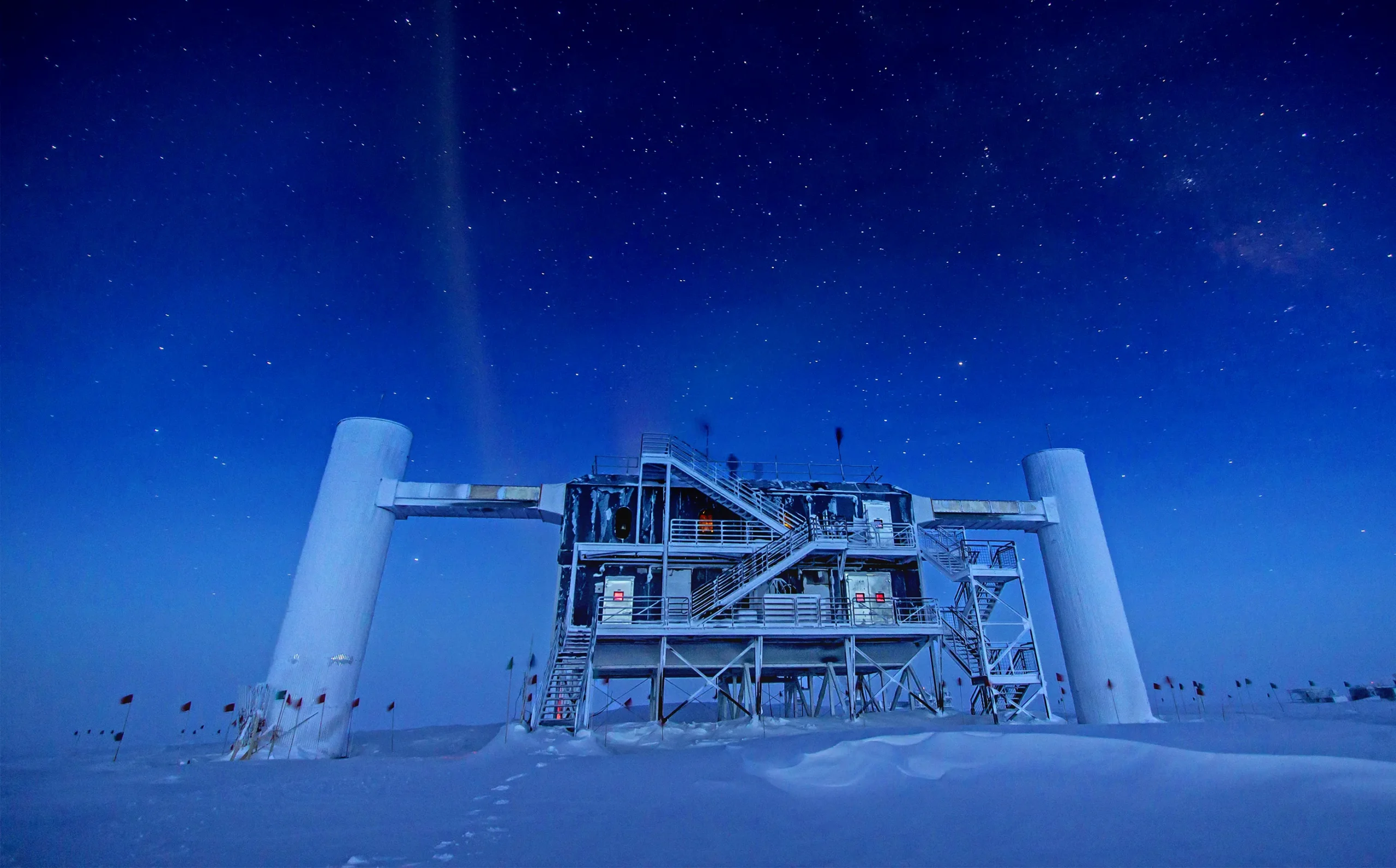
- IceCube is a cubic kilometre of Antarctic ice wired with light sensors — the world's largest neutrino telescope.
- Neutrinos are "ghost particles" from the most violent events in the universe; catching them opened a new kind of astronomy.
- Halzen takes home half of Nobel week so far: the medicine prize went to the optogenetics trio on October 5, with chemistry next on October 7.
On Tuesday, October 6, 2026, the Royal Swedish Academy of Sciences awarded the Nobel Prize in Physics to Belgian-born particle physicist Francis Halzen "for decisive contributions to the IceCube Neutrino Observatory and the discovery of high-energy neutrinos of astrophysical origin." The prize — 12 million Swedish crowns, about $1.2 million — honors a decades-long gamble: turning a cubic kilometre of Antarctic ice into a telescope for the universe's most elusive particles.
This guide explains who Francis Halzen is, what IceCube actually does, why ghost-like neutrinos matter, and what is still to come in Nobel week 2026.
Who Won the 2026 Nobel Prize in Physics?
Francis Halzen is a particle physicist and astroparticle physicist whose career has been defined by one audacious idea: that the clear, ancient ice buried beneath the South Pole could be used to track particles called neutrinos streaming in from deep space. According to the Nobel Prize website, his vision and scientific leadership were fundamental to building the IceCube Neutrino Observatory — a detector unlike anything that existed before it.
"Francis Halzen has led an international team of researchers and engineers who have provided us with a fantastic instrument," said Mark Pearce, chair of the Nobel Committee for Physics, at Tuesday's announcement. "His tenacity and scientific vision has paved the way for a new kind of astronomy."
The physics prize is the second Nobel unveiled this year. On Monday, October 5, the 2026 Nobel Prize in Medicine went to Karl Deisseroth, Peter Hegemann, and Georg Nagel for optogenetics — the technique that lets scientists switch individual brain cells on and off with light. Chemistry is next, on Wednesday, October 7.
What Is the IceCube Neutrino Observatory?
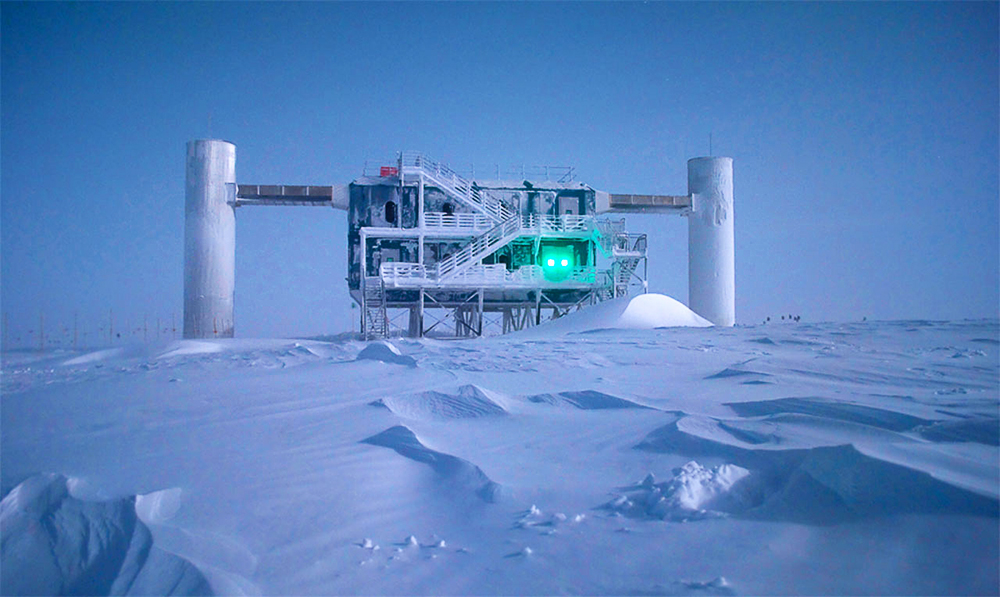
IceCube is the largest neutrino detector ever built, and its design sounds like science fiction. Researchers drilled more than 80 holes over two kilometres deep into the Antarctic ice sheet and lowered strings of light sensors into them. The result: a cubic kilometre of ice, wired with thousands of optical detectors, watching silently for the faintest flashes of light.
Why ice? Halzen realized that the ultra-clear ice at the South Pole is a near-perfect medium for spotting neutrinos. When a high-energy neutrino very occasionally collides with an atom in the ice, it produces a charged particle that emits a faint blue glow (Cherenkov radiation). IceCube's sensors catch that glow, and from it, physicists can reconstruct where the neutrino came from — pointing back to its cosmic source.
Building it took an international collaboration of researchers and engineers working in one of the most hostile environments on Earth. As CNN noted, Halzen's work developing the massive Antarctic observatory laid the foundations for what the committee calls "an entirely new type of astronomy."
Neutrinos: The Universe's Ghost Particles, Explained Simply
Neutrinos are subatomic particles produced in enormous quantities by stars, supernovae, and other violent cosmic events — trillions pass through your body every second without you noticing. They almost never interact with matter, which is exactly what makes them so valuable and so maddening to study:
- They travel in straight lines. Unlike charged cosmic rays, which get bent by magnetic fields, neutrinos point directly back to where they were born.
- They escape anything. Neutrinos stream out of regions of space that light cannot escape, carrying information about the most extreme environments in the universe.
- They are nearly impossible to catch. Detecting them requires enormous volumes of transparent material — like a cubic kilometre of Antarctic ice — and extraordinary patience.
Using IceCube, researchers can now capture neutrinos from extremely energy-rich processes in the distant universe, as the Nobel Prize site explains. Before IceCube's discoveries, humanity observed the cosmos almost entirely through light. High-energy neutrinos of astrophysical origin gave astronomers a second messenger — a fundamentally new way to see the universe's most violent events.
Why This Discovery Deserves a Nobel
The Nobel Committee rewards discoveries that open new fields, and IceCube did exactly that. A few reasons this one stands out:
- A new astronomy. Neutrino astronomy lets scientists study cosmic accelerators — black holes, blazars, colliding galaxies — through particles that light-based telescopes can never see.
- Decades of persistence. The prize citation highlights Halzen's "decisive contributions" — the vision to propose the observatory and the tenacity to see it built at the bottom of the world.
- International science at scale. IceCube is a collaboration spanning continents, a model of how modern physics tackles questions no single lab could answer alone.
- It keeps delivering. The observatory continues to operate, mapping the neutrino sky and refining our picture of where the universe's most energetic particles come from.
For context, last year's physics prize went to US-based scientists John Clarke, Michel Devoret, and John Martinis for experiments demonstrating quantum physics in action — research seen as advancing next-generation computing. This year's award swings the spotlight back to the cosmos.

Nobel Week 2026: What Has Been Announced and What's Next
Nobel announcements follow a fixed order each October. Here is where things stand:
| Date | Category | Winner(s) |
|---|---|---|
| Oct 5 (Mon) | Physiology or Medicine | Karl Deisseroth, Peter Hegemann, Georg Nagel — optogenetics |
| Oct 6 (Tue) | Physics | Francis Halzen — IceCube Neutrino Observatory |
| Oct 7 (Wed) | Chemistry | Henri Kagan, Kenso Soai |
| Oct 8 (Thu) | Literature | Anne Carson |
| Oct 9 (Fri) | Peace | Navi Pillay — for her efforts to promote peace and international law |
| Oct 12 (Mon) | Economic Sciences | To be announced |
All prizes carry the same award: 12 million Swedish crowns. The medals will be presented by Sweden's King Carl XVI Gustaf at a ceremony in Stockholm on December 10 — the anniversary of Alfred Nobel's death — followed by the traditional banquet at Stockholm City Hall.
Frequently Asked Questions
Who won the Nobel Prize in Physics 2026?
Francis Halzen, a Belgian-born particle physicist, won the 2026 Nobel Prize in Physics for his decisive contributions to the IceCube Neutrino Observatory and the discovery of high-energy neutrinos of astrophysical origin.
What is the IceCube Neutrino Observatory?
IceCube is a neutrino telescope built into a cubic kilometre of Antarctic ice at the South Pole. Thousands of light sensors frozen into the ice detect faint flashes produced when rare high-energy neutrinos collide with atoms, letting scientists trace the particles back to violent cosmic events.
What are neutrinos?
Neutrinos are nearly massless subatomic particles produced by stars, supernovae, and other extreme cosmic processes. They pass through almost everything untouched, which makes them hard to detect but uniquely useful: they travel in straight lines from their sources, giving astronomers a direct view of the universe's most violent regions.
How much is the Nobel Prize worth in 2026?
Each Nobel Prize carries 12 million Swedish crowns — roughly $1.2 million (about ₹11.5 crore). When multiple laureates share a prize, they split the amount.
When is the next Nobel Prize announced?
The 2026 Nobel Prize in Chemistry will be announced on Wednesday, October 7, followed by Literature (Oct 8), Peace (Oct 9), and Economic Sciences (Oct 12).
When was the first Nobel Prize awarded?
The Nobel Prizes were established under the will of Swedish inventor Alfred Nobel and first awarded in 1901. Physics has always held a prominent place in his will, and the prize remains one of the highest distinctions in science.
Bottom line: Francis Halzen bet his career on the idea that Antarctic ice could become a telescope — and won. IceCube's detection of high-energy cosmic neutrinos opened neutrino astronomy, a genuinely new way of observing the universe, and the 2026 Nobel Prize in Physics recognizes exactly that leap. With chemistry, literature, peace, and economics still to come, Nobel week 2026 is only getting started.
Related Nobel week 2026 coverage: Nobel Prize 2026 Chemistry: Henri Kagan and Kenso Soai Win and Nobel Prize 2026: Optogenetics Breakthrough Explained and Nobel Prize 2026 Literature: Anne Carson Wins and Nobel Peace Prize 2026: Navi Pillay Wins
The conversation
Post a Comment