World Space Week 2026: The Ultimate Rocket Revolution Guide
Right now, millions of people in at least 100 countries are celebrating the biggest space event on Earth: World Space Week 2026, running October 4 to October 10 under this year's theme, Rocket Revolution.
This guide covers what World Space Week is, why it takes place every October, what the 2026 theme means, and how you can take part from wherever you are.
- World Space Week runs Oct 4-10: the largest public space event on Earth.
- 2026 theme is Rocket Revolution - cheaper launches, booming space ecosystem.
- Dates honor Sputnik I (1957) and the Outer Space Treaty (1967).
- 100+ countries are taking part, from school workshops to museum expos.
- Join free: attend an event, follow a launch, or host a stargazing night.
What Is World Space Week?
World Space Week is an international celebration of science and technology, and its contribution to the betterment of the human condition. Declared by the United Nations General Assembly in 1999, it is an official UN-recognized observance held every year from October 4 to October 10.
What makes it remarkable is its scale. Unlike a single conference or exhibition, it is a decentralized, global celebration: space agencies, schools, museums, astronomy clubs, and companies all organize their own events under one shared banner. The result is thousands of activities worldwide in a single week.
The week is coordinated internationally by the World Space Week Association, a nonprofit that works with the UN Office for Outer Space Affairs (UNOOSA) to set the annual theme. That coordination keeps it growing: in 2026, at least 100 countries are confirmed as participants, including the Philippines, India, Pakistan, and the United States.
If you have ever wondered what World Space Week is and why it is celebrated, the short answer is simple: it is the one week each year when the entire planet pauses to look up together.

Why October 4-10? The Two Dates That Changed History
The choice of dates was deliberate. October 4 and October 10 mark two of the most important milestones in spaceflight history.
October 4, 1957 - Sputnik I. On this day, the Soviet Union launched Sputnik I, the first human-made object placed into orbit around Earth. The small polished sphere, about the size of a beach ball, broadcast a simple radio beep heard around the world. That beep announced the beginning of the Space Age.
October 10, 1967 - The Outer Space Treaty. A decade later, the Treaty on Principles Governing the Activities of States in the Exploration and Use of Outer Space entered into force. This landmark agreement established that space is the province of all humankind, that no nation may claim sovereignty over celestial bodies, and that space must be used for peaceful purposes.
By holding the celebration between these two dates, World Space Week honors both human achievement and international cooperation - the twin forces that have defined space exploration from the start.
| Date | Milestone | Why It Matters |
|---|---|---|
| Oct 4, 1957 | Launch of Sputnik I | First artificial satellite; the dawn of the Space Age |
| Oct 10, 1967 | Outer Space Treaty takes effect | Foundation of international space law and peaceful use |
| 1999 | UN General Assembly declares World Space Week | Official global observance held every October 4-10 |
| Theme: Rocket Revolution | Celebrates the new era of affordable, frequent launches |
The 2026 Theme: What the Rocket Revolution Really Means
The 2026 theme is Rocket Revolution, chosen by the World Space Week Association's Board in coordination with UNOOSA.
According to Association president Dennis Stone, the theme "recognizes how increased space access and falling launch prices have stimulated the space ecosystem and exciting new space applications." In plain language: getting to space has become dramatically cheaper and more routine than it was even a decade ago, and that change is reshaping everything.
The biggest driver is the reusable rocket. Traditional rockets were expendable - every stage discarded after one flight, like throwing away an airplane after a single trip. Reusable boosters, which land and fly again, have cut the cost of reaching orbit dramatically. Lower costs mean more launches, more satellites, and more organizations - universities, startups, developing nations - that can afford a place in space.
The effects are visible in everyday life: satellite internet for remote areas, Earth-observation satellites tracking weather and disasters, and student-built research satellites riding into orbit as secondary payloads. The Rocket Revolution celebrates this democratization of space.
This shift is part of a broader wave of recognition for science in 2026 - from this week's celebration of spaceflight to the 2026 Nobel Prize in Physics honoring new frontiers of discovery. The connection to everyday life is direct: the GPS in your phone depends on navigation satellites, and weather forecasts, disaster response, and remote schooling increasingly rely on orbit. Just as breakthroughs honored in this year's Nobel Prize in Chemistry emerged from patient basic research, today's space applications grew from decades of scientific investment - and tools like optogenetics, the science of controlling cells with light, show how curiosity about the universe keeps transforming daily life.
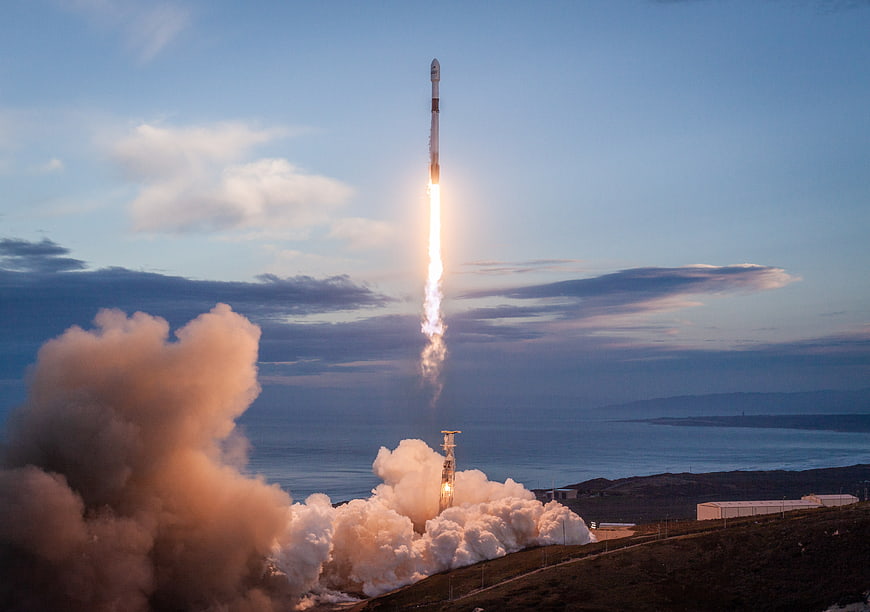
World Space Week 2026 Events Around the Globe
Here are some of the standout events confirmed for 2026.
- Europe - ESA meets Pokemon. The European Space Agency has teamed up with The Pokemon Company International for a Europe-wide family exhibition combining real space science with Pokemon, plus special Pokemon GO activities at participating museums.
- United States - Kennedy Space Center. The Kennedy Space Center Visitor Complex in Florida is holding a World Space Week Expo built around Space Shuttle Atlantis, letting visitors stand face to face with the orbiter that flew 33 missions.
- India - ISRO opens its doors. ISRO centres in Kerala - VSSC, LPSC, IISU, and IIST - are running interactive lectures October 6 to 10, a "Your Space" student programme, and a public outreach event on October 10 at the Kerala State Science and Technology Museum in Thiruvananthapuram, capped by a planned sounding-rocket launch at TERLS. See The Hindu's report on the Kerala celebrations for the full schedule.
- Pakistan - SUPARCO's nationwide programme. The Pakistan Space and Upper Atmosphere Research Commission (SUPARCO) is celebrating across the country with contests including Best Space School, Space Ambassador, Comic Book Design, Design Your Rocket, and Astrophotography.
| Region | Highlight Event | Best For |
|---|---|---|
| Europe | ESA x Pokemon family exhibition | Kids and families |
| USA (Florida) | World Space Week Expo at Kennedy Space Center | History lovers |
| India (Kerala) | ISRO lectures, student programmes, sounding-rocket launch | Students and educators |
| Pakistan | SUPARCO national contests | Creative competitors |
| Philippines & beyond | Local school and club events in 100+ countries | Everyone, everywhere |
For a curated calendar of talks and gatherings during the week, SpacePolicyOnline's World Space Week 2026 events listing is worth bookmarking.

How You Can Take Part in World Space Week 2026
You do not need to live near a space agency or buy a ticket to join in. Here are five practical ways to participate this week:
- Find a local event. Check the official event map, your local museum, planetarium, or university. With 100+ countries participating, something is probably happening near you.
- Look up. Join a stargazing night. Free apps identify constellations, planets, and satellites overhead in real time.
- Learn one new thing. Watch a Space Age documentary, read the Outer Space Treaty, or follow a launch broadcast online.
- Bring it to school. Teachers can download free activity guides - gravity, orbits, and rocket science fit standard science curricula.
- Share the story. Post with the official hashtags or send this guide to someone who loves science.
Frequently Asked Questions
What is World Space Week?
The largest annual public space event on Earth, declared by the UN General Assembly in 1999. It celebrates how space science and technology improve the human condition, through thousands of events held worldwide each October.
Why is World Space Week held from October 4 to October 10?
The dates commemorate Sputnik I, the first artificial satellite (October 4, 1957), and the Outer Space Treaty entering into force (October 10, 1967), which enshrined the peaceful use of outer space in international law.
What is the 2026 World Space Week theme?
Rocket Revolution, chosen by the World Space Week Association's Board with UNOOSA. It recognizes how increased space access and falling launch prices have stimulated the space ecosystem and enabled new space applications.
How can I participate in World Space Week 2026?
Attend a local museum, planetarium, or school event, join a stargazing night, watch a launch online, try a classroom activity, or share space facts on social media. Many events are free.
Is World Space Week celebrated in my country?
Very likely - in 2026, at least 100 countries are taking part, including the Philippines, India, Pakistan, the United States, and many European nations. Check local science centres and astronomy clubs.
Who organizes World Space Week?
The nonprofit World Space Week Association, working with the UN Office for Outer Space Affairs (UNOOSA). Individual events are run independently by space agencies, schools, museums, clubs, and companies.
The conversation
Post a Comment