Geothermal Energy's Quiet Breakthrough: How Earth's Heat Is Becoming a 24/7 Clean Power Source
Imagine a power station that does not care whether the sun has disappeared behind thick clouds, the wind has stopped blowing, or millions of people have switched on their air conditioners at the same time. It does not need a delivery of coal, a tanker of natural gas, or a field of batteries waiting to release stored electricity. Its energy source is already there, buried beneath the ground, quietly producing heat that has been building inside the planet for billions of years.
This is the promise of geothermal energy.
For decades, geothermal electricity has occupied a relatively small corner of the renewable energy industry. It has worked particularly well in volcanic regions such as Iceland, Kenya, Indonesia and parts of the western United States, where underground heat is relatively accessible. But its geographical limitations, expensive drilling operations and dependence on particular geological conditions have prevented it from becoming a major global electricity source.
That picture is beginning to change.
A new generation of geothermal developers is borrowing advanced drilling techniques from the oil and gas industry, combining them with improved underground sensors, computer modelling and new reservoir designs. The result is a different way of thinking about geothermal energy: instead of waiting for nature to provide the perfect combination of hot rock, underground water and natural fractures, engineers are learning how to reach hot rocks and create or design systems that can extract their heat.
In September 2026, Fervo Energy announced that its Cape Station project in Utah had achieved its first power milestone, synchronising a utility-scale enhanced geothermal system with the electricity grid. The development marked an important step in moving next-generation geothermal from demonstration projects towards larger commercial installations.
Meanwhile, Canada's Eavor has demonstrated a different approach in Germany, using an underground closed-loop system designed to collect heat without depending on naturally occurring underground water reservoirs.
These developments raise an important question: could heat beneath our feet become one of the most dependable sources of clean electricity in the modern world?
The answer is increasingly promising, although important technical, economic and environmental challenges remain.
1. What Is Geothermal Energy?
Geothermal energy is heat that comes from inside the Earth.
The word itself combines two Greek terms: geo, meaning Earth, and therme, meaning heat. The planet contains enormous quantities of thermal energy generated by several processes, including the remaining heat from its formation, radioactive decay within rocks and the movement of heat through the Earth's interior.
Although the surface of the planet experiences dramatic temperature changes between seasons, the deeper underground environment is considerably more stable.
In many locations, temperatures increase as drilling moves deeper into the Earth's crust. This phenomenon is known as the geothermal gradient. Its exact value varies depending on local geology, but temperatures generally rise by approximately 25–30 degrees Celsius per kilometre in many ordinary continental settings.
In particularly favourable geological regions, the temperature increases much faster.
This underground heat can be collected and used in different ways, depending on how hot the rocks are and how deep the resource lies.
1.1 How Does a Geothermal Power Station Work?
The basic principle is surprisingly simple.
Imagine placing a garden hose inside a very hot environment. If water flows through the hose, it gradually absorbs heat. When it comes out, the water is warmer than when it entered.
Geothermal electricity generation follows a similar principle, except the heat source is deep underground and the equipment is considerably more sophisticated.
A conventional geothermal power station generally works through several stages.
First: drilling underground wells.
Engineers drill deep wells into areas containing naturally hot rocks and underground fluids. These wells may extend several kilometres below the surface.
Second: collecting underground heat.
Hot water or steam moves towards the surface through production wells. Depending on the geological conditions, the water may already be hot enough to produce steam or may transfer its heat to another fluid.
Third: generating electricity.
The heat is used to produce steam or vapour that drives a turbine. The turbine rotates a generator, which produces electricity.
Fourth: recycling the water.
In many geothermal systems, cooled geothermal fluid is returned underground through injection wells. This helps maintain the reservoir and supports long-term operation.
The process resembles a giant natural heating system connected to an electricity generator.
Unlike a coal-fired power station, geothermal electricity does not depend on continuously burning fuel. Its energy comes from the natural heat stored in underground rocks.
1.2 The Three Ingredients of Traditional Geothermal Energy
Traditional hydrothermal geothermal power plants generally need three important ingredients:
- Heat: underground rocks must be hot enough to provide useful energy.
- Fluid: water or another suitable fluid must carry heat through the underground system.
- Permeability: the rocks need natural openings, fractures or connected pathways that allow the fluid to circulate.
Think of these three ingredients as a kettle, water and a working pipe system.
If the rocks are hot but contain very little water, the system may not produce enough energy. If water exists but cannot move through the rock, collecting the heat becomes difficult.
This explains why conventional geothermal development has historically concentrated in places with favourable natural geological conditions.
The new technologies discussed below are designed to overcome some of these limitations.

2. Why Geothermal Energy Is Different from Solar and Wind
Solar panels and wind turbines have transformed electricity generation around the world. Their costs have fallen significantly, and both technologies have become essential parts of modern electricity systems.
However, they share one important characteristic: their electricity production depends on weather and environmental conditions.
Solar panels generate electricity when sunlight reaches their surfaces. Their production falls during cloudy conditions and stops at night.
Wind turbines require sufficient wind. When the wind becomes too weak, electricity production falls. When it becomes too strong, turbines may shut down temporarily to protect their equipment.
This does not make solar and wind unreliable technologies. It means electricity systems must manage their changing production through storage, transmission, flexible demand and other generating sources.
Geothermal energy offers a different advantage.
2.1 The Power of 24/7 Electricity
Underground heat is available throughout the day and night.
A geothermal power station does not need sunshine, and its electricity production does not depend on whether the wind is blowing.
When a geothermal reservoir and power plant are properly designed, the facility can generate electricity continuously for long periods.
This characteristic is known as baseload or, more broadly, firm power.
Baseload traditionally describes electricity supplied continuously to meet the minimum level of demand. Firm power describes electricity that can be relied upon when required, subject to the operating characteristics of the plant.
The distinction matters because modern electricity systems need more than inexpensive electricity during sunny afternoons. They also need dependable supply during winter evenings, heatwaves and periods of low renewable generation.
The International Energy Agency reported in December 2024 that global geothermal capacity had an average utilisation rate above 75% in 2023.
For comparison, its analysis placed wind power below 30% and solar photovoltaic power below 15%.
These figures describe average utilisation, not the efficiency of the equipment or the amount of electricity every individual installation produces.
Nevertheless, they demonstrate geothermal energy's distinctive ability to operate continuously.
2.2 Geothermal and Battery Storage Can Work Together
Consider a city that receives a large amount of electricity from solar panels during the afternoon.
As the sun sets, solar production declines, but people continue using electricity. They cook dinner, charge vehicles, operate heating systems and use computers.
Battery storage can help transfer electricity generated earlier into the evening.
Geothermal energy offers another solution: it can continue generating electricity after sunset.
A system combining solar, wind, geothermal and batteries could therefore use each technology according to its strengths.
Solar and wind can provide substantial quantities of low-cost electricity when conditions are favourable. Batteries can respond quickly to changing demand. Geothermal can provide a continuous source of electricity and, in suitable installations, adjust its output to support the wider grid.
The technologies are not competitors in every situation. They can complement one another.
3. Traditional Geothermal vs. Enhanced Geothermal Systems
The most important development in modern geothermal energy is the emergence of technologies designed to reach resources that conventional geothermal plants could not economically exploit.
Two approaches are particularly important: enhanced geothermal systems and closed-loop geothermal systems.
They both attempt to make underground heat more accessible, but they work in different ways.
3.1 Traditional Hydrothermal Geothermal
Traditional geothermal power plants depend on naturally occurring underground reservoirs.
These reservoirs contain hot water or steam trapped within permeable rock formations.
Engineers drill wells to access the resource, extract the hot fluid and use it to generate electricity.
There are several common power plant designs.
Dry steam plants
These facilities use naturally occurring underground steam to drive turbines directly.
They are relatively uncommon because suitable natural steam reservoirs are limited.
Flash steam plants
These facilities bring high-pressure hot water to the surface. As pressure decreases, part of the water rapidly turns into steam.
The steam drives a turbine, while the remaining water can be reinjected underground.
Binary-cycle plants
These systems transfer heat from geothermal water to a separate working fluid with a lower boiling point.
The working fluid vaporises and drives a turbine in a separate closed circuit.
Binary systems are particularly useful for geothermal resources that are not hot enough to generate steam efficiently through conventional methods.
Their design also limits direct emissions from the geothermal fluid.
The limitation of traditional geothermal is not that the technology fails to work. It is that naturally favourable geological conditions are not available everywhere.
3.2 Enhanced Geothermal Systems: Creating the Underground Reservoir
Enhanced geothermal systems, commonly known as EGS, take a different approach.
Instead of searching exclusively for naturally permeable hot rock containing enough underground water, engineers identify hot rock formations and create or improve pathways through which fluid can circulate.
Imagine a sponge that has been compressed until water cannot move through it easily.
An engineer could create additional pathways through the material, allowing water to flow more freely.
An EGS project uses a related principle, although underground rock engineering is much more complex.
The process generally involves:
- Identifying a suitable underground formation with sufficient temperature.
- Drilling an injection well into the hot rock.
- Injecting fluid under carefully controlled conditions to open existing fractures or create additional pathways.
- Drilling or connecting a production well to establish circulation through the heated rock.
- Pumping heated fluid towards the surface.
- Extracting the heat to generate electricity.
- Returning the cooled fluid underground.
The injected water acts as a heat carrier.
It travels through the underground fracture network, absorbs thermal energy and returns to the surface.
One important distinction is that EGS does not create heat. It makes existing underground heat more accessible.
This could substantially increase the number of locations where geothermal electricity can be developed.
However, creating an underground reservoir requires detailed geological knowledge, engineering control and monitoring. The quality of the fracture network, the flow of water and the long-term behaviour of the reservoir all influence project performance.
3.3 Closed-Loop Geothermal: A Different Engineering Solution
Closed-loop geothermal systems take another route.
Instead of injecting water into fractured underground rock and collecting it through a separate production well, these systems circulate a working fluid through sealed underground pipes.
Think of a radiator installed deep beneath the ground.
The fluid travels through the underground pipes, absorbs heat from surrounding rocks and returns to the surface.
It transfers its heat to a power-generation system before circulating underground again.
The fluid remains inside the engineered pipe network rather than flowing through a deliberately stimulated underground fracture reservoir.
This offers several potential advantages.
- It reduces dependence on naturally occurring underground water.
- It avoids the need to create an underground fracture network for fluid circulation.
- It can limit direct contact between the circulating fluid and underground formations.
- It may offer opportunities in geological settings that are unsuitable for traditional hydrothermal projects.
But there is an important trade-off.
Heat must pass from the surrounding rock through the well structure into the circulating fluid. This can limit the amount of energy collected unless the system has sufficient underground heat-transfer area.
Long horizontal sections and multiple underground branches are therefore important parts of some closed-loop designs.
The technology is promising, but its long-term commercial economics must still be demonstrated across different geological conditions.
4. The Drilling Revolution: What Geothermal Energy Is Borrowing from Oil and Gas
For much of its history, geothermal development has been held back by a difficult problem: drilling deep underground is expensive.
A geothermal project may require several kilometres of drilling before engineers reach temperatures suitable for electricity production.
Every additional metre adds costs associated with drilling equipment, workers, materials, well construction and geological uncertainty.
This is where the oil and gas industry becomes important.
Over several decades, petroleum companies developed sophisticated methods for drilling deep wells, steering drill bits horizontally and accessing underground formations with considerable precision.
Geothermal developers are adapting some of these technologies for a different purpose.
4.1 Horizontal Drilling
Traditional geothermal wells are often drilled vertically or at relatively steep angles.
Modern drilling technology allows engineers to change the direction of a well underground and continue drilling horizontally.
This makes it possible to access a much larger section of hot rock from a single drilling location.
Imagine trying to collect water from a long underground river.
Instead of drilling multiple isolated vertical holes, engineers can construct a network that follows the underground formation and creates more opportunities for heat exchange.
Horizontal drilling can also allow multiple wells to be drilled from a common surface pad.
This may reduce land disturbance, simplify construction logistics and improve the economics of larger developments.
4.2 Multi-Stage Stimulation
Another technique adapted from unconventional oil and gas development is multi-stage stimulation.
In EGS projects, engineers can stimulate selected sections of underground rock to improve fluid movement.
Rather than treating the entire well as one uniform structure, the well can be divided into sections.
Engineers can then target particular zones and monitor how the underground system responds.
This allows more controlled reservoir development.
It also creates opportunities to learn which completion methods work best in different rock formations.
4.3 Fibre-Optic Sensors and Underground Monitoring
Drilling deeper and faster is only part of the solution.
Engineers also need to understand what happens underground after a well is completed.
Modern fibre-optic sensing systems can help monitor temperature changes, fluid movement, strain and other conditions along a well.
The technology resembles a sophisticated nervous system running through the underground infrastructure.
Instead of relying exclusively on measurements taken at a few isolated points, operators can collect information across long sections of a well.
This information helps engineers understand whether fluid is moving through the intended pathways, whether certain sections are producing more heat than others and whether the underground system is behaving as expected.
Better information can reduce uncertainty and improve future drilling decisions.
4.4 Utah FORGE: A Testing Ground for the Next Generation
One of the most important research projects in this field is the Frontier Observatory for Research in Geothermal Energy, known as FORGE.
Located near Milford in Utah, the project is supported by the US Department of Energy.
Its purpose is to test and improve the technologies required to develop enhanced geothermal systems.
FORGE provides researchers and industry partners with an environment where they can investigate drilling techniques, underground stimulation, well connections and reservoir performance.
The results are significant.
According to the 2025 US Geothermal Market Report, drilling time at the FORGE site fell from approximately 310 hours in 2020 to 110 hours in 2023.
That represents a substantial improvement in drilling performance.
The same report states that drilling rates have improved by more than 500% since 2017 and are approaching standard oil and gas performance levels.
This matters because drilling costs can represent a major part of total geothermal project investment.
Faster drilling does not automatically make every project inexpensive, but it can reduce one of the industry's biggest financial obstacles.
5. Fervo Energy: Turning Enhanced Geothermal into a Commercial Industry
Among the companies working to commercialise next-generation geothermal energy, Fervo Energy has attracted considerable attention.
Founded in the United States, Fervo combines advanced drilling, underground reservoir engineering and modern monitoring technology.
Its approach is based on the idea that geothermal resources can be developed using methods adapted from unconventional oil and gas operations.
The company has been particularly active in Nevada and Utah.
5.1 Project Red: A Major Demonstration
In July 2023, Fervo announced successful testing at Project Red, its commercial pilot project in northern Nevada.
The company reported that a 30-day well test achieved a flow rate of 63 litres per second at high temperature.
According to Fervo, the tested system demonstrated the ability to support approximately 3.5 megawatts of electric production.
This was an important technical milestone because it demonstrated that modern horizontal drilling and reservoir stimulation could produce useful geothermal electricity at a commercial demonstration scale.
In November 2023, Google announced that the project was operational and contributing carbon-free electricity to the Nevada grid.
The partnership was particularly interesting because technology companies increasingly need electricity around the clock to operate data centres and other digital infrastructure.
Solar and wind can contribute substantial amounts of clean electricity, but their output does not always match the continuous electricity requirements of data centres.
Geothermal offers another option.
5.2 Cape Station: Moving Beyond the Pilot Stage
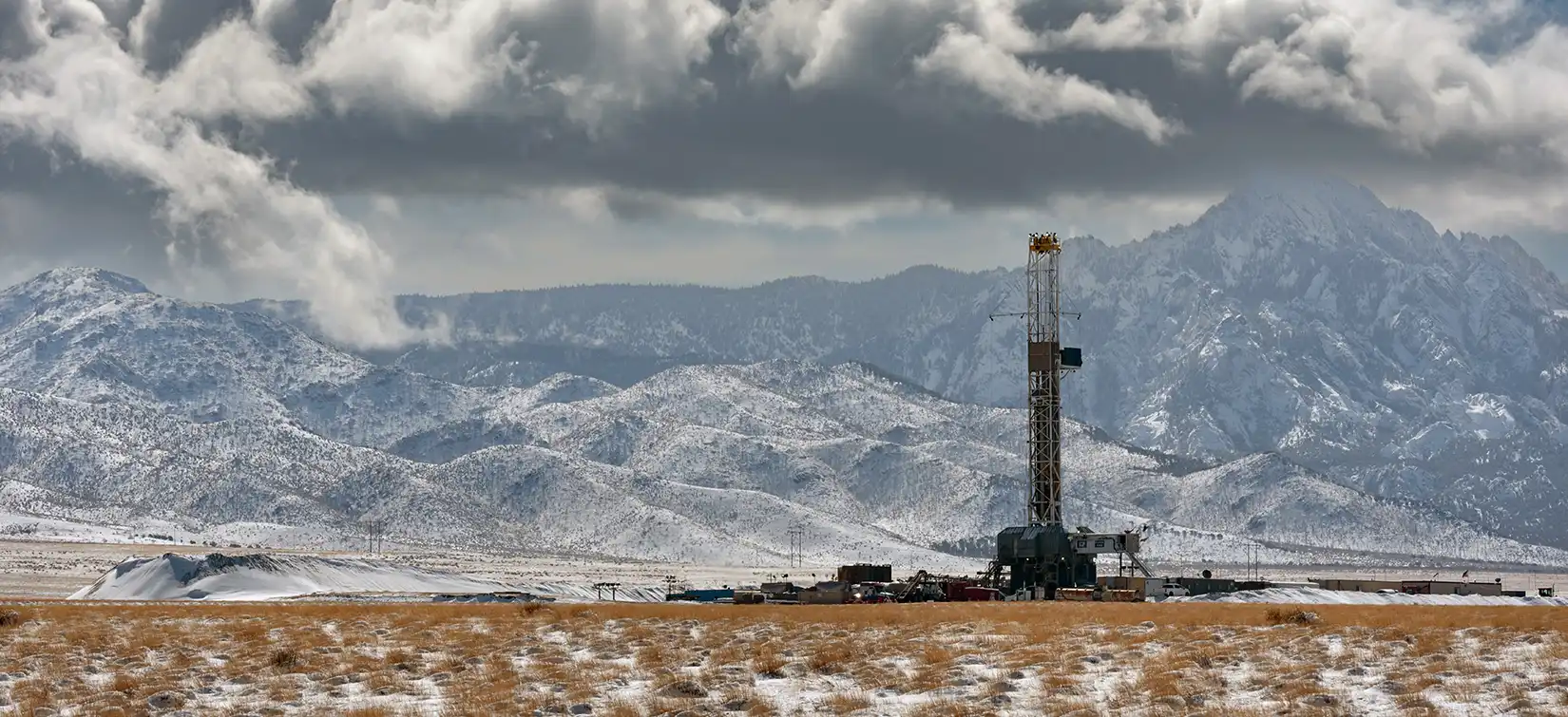
Fervo's most significant commercial development is Cape Station in Beaver County, Utah.
The project is designed to demonstrate that enhanced geothermal systems can operate at a much larger scale.
On September 24, 2026, Fervo announced that Cape Station had achieved first power, becoming the first greenfield utility-scale EGS project to reach grid synchronisation and export electricity.
The announcement included several important details.
Phase I is designed as an approximately 100-megawatt installation, divided into three 33-megawatt GeoBlocks.
The first GeoBlock achieved first power in September 2026. Fervo expected the remaining two units to reach their contractual commercial operation dates by January 2027.
A further 400-megawatt phase is under construction, with an expected commercial operation date in 2028.
The company also reported approximately 900 megawatts of fully contracted electricity purchases associated with Cape Station.
These figures must be interpreted carefully.
First power does not mean that every planned generating unit is already operating at full capacity. Contracted electricity is also not the same thing as electricity already delivered.
Nevertheless, the project's progress represents an important transition from small-scale demonstration towards commercial development.
It is a significant test of whether EGS can become a repeatable infrastructure business.
6. Eavor: Using Closed-Loop Technology to Extract Underground Heat
Fervo is not the only company attempting to change the geothermal industry.
Canada-based Eavor is developing a different approach based on closed-loop geothermal technology.
Its system, known as the Eavor-Loop, uses a network of underground wells connected to create a large heat-exchange structure.
Rather than relying on water moving through a stimulated underground reservoir, the system circulates a working fluid through a sealed underground circuit.
The surrounding rock heats the fluid, which carries thermal energy back towards the surface.
6.1 The Geretsried Project in Germany
Eavor's Geretsried project in Bavaria is one of the most important commercial demonstrations of this technology.
The project has been developed to supply both electricity and heat to the surrounding region.
Its published technical specifications include:
- Approximately 4,500 metres of drilling depth.
- Around 8.2 megawatts of planned electrical output.
- Approximately 64 megawatts of thermal output.
- An estimated annual carbon dioxide savings figure of around 44,000 tonnes, according to the project developer.
On December 4, 2025, Eavor announced that the Geretsried facility had begun delivering electricity to the German grid.
This was an important milestone for commercial closed-loop geothermal development.
It demonstrated that the concept could move beyond laboratory experiments and become an operating energy installation.
6.2 Why Closed-Loop Systems Matter
The potential advantage of closed-loop geothermal is its different relationship with underground geology.
Traditional geothermal and EGS projects depend on underground fluid circulation through rock formations.
Closed-loop systems instead rely on heat moving from the surrounding rock into a sealed pipe network.
This may make the approach attractive in locations where underground water resources are limited or where creating a suitable fracture network would be difficult.
However, closed-loop systems are not automatically cheaper or more efficient.
Their performance depends on factors such as rock temperature, well geometry, thermal conductivity, underground surface area, fluid circulation and drilling costs.
The key question is whether the system can collect enough heat to justify the investment required to build and operate it.
Geretsried provides an important real-world test, but broader commercial deployment will require more operating experience.
7. Other Companies and Projects Worth Watching
The geothermal industry is becoming more diverse.
Several companies are developing technologies that could complement or compete with the approaches used by Fervo and Eavor.
7.1 Sage Geosystems
Sage Geosystems is developing geothermal systems that combine underground heat extraction with energy storage concepts.
One area of interest is its work on pressure-based energy storage.
The broader idea is to use underground geological formations as part of an energy storage system while potentially integrating geothermal heat production.
This could create additional flexibility for electricity grids.
However, the commercial performance of individual projects will depend on the technology configuration and site conditions.
7.2 XGS Energy
XGS Energy is developing next-generation geothermal technologies intended to expand access to underground heat.
Its approach focuses on improving the way heat is collected from underground formations, including systems designed to reduce dependence on conventional hydrothermal reservoirs.
The company is among the emerging developers receiving investment as interest in next-generation geothermal grows.
Its commercial potential will depend on demonstrating reliable heat extraction, competitive well costs and repeatable project performance.
7.3 GreenFire Energy
GreenFire Energy has explored advanced geothermal concepts, including closed-loop and alternative heat-extraction approaches.
Its work illustrates an important point: geothermal development is not a single technological race.
Different underground environments may require different solutions.
A technology that works extremely well in one geological formation may be unsuitable in another.
The future industry may therefore include several competing designs rather than one universal system.
8. How Much Does Geothermal Electricity Cost?
Technology is only part of the story.
For geothermal energy to become a major global electricity source, it must compete economically with other technologies.
The most common measure is the levelised cost of electricity, or LCOE.
This estimates the average cost of producing electricity over the lifetime of a power project, taking account of construction, financing, operation and maintenance.
It allows different technologies to be compared, although it does not capture every difference in the value of electricity at different times.
8.1 The Current Cost of Conventional Geothermal
The 2025 US Geothermal Market Report provides useful cost benchmarks for conventional geothermal plants.
Its figures indicate that:
- Flash-based hydrothermal plants have estimated electricity costs of approximately $63–$74 per megawatt-hour.
- Binary geothermal plants have estimated costs of approximately $90–$110 per megawatt-hour.
These estimates are expressed in 2022 dollars in the report's underlying technology-cost analysis.
The difference reflects the technologies, resource conditions and plant configurations involved.
A geothermal resource with naturally high temperatures and strong fluid circulation can be economically attractive.
A lower-temperature resource may require additional equipment and investment.
8.2 Global Geothermal Costs in 2024
The International Renewable Energy Agency, or IRENA, published its Renewable Power Generation Costs in 2024 report in 2025.
It found that geothermal plants commissioned in 2024 had a global weighted-average levelised cost of electricity of approximately:
$0.060 per kilowatt-hour, equivalent to $60 per megawatt-hour.
This represented a 16% reduction compared with 2023.
IRENA also reported an average installed cost of approximately $4,015 per kilowatt for the eight geothermal plants included in its 2024 database.
The number of projects in that dataset is important.
Geothermal is a relatively small industry, and a limited number of new installations can influence annual global averages considerably.
These figures should therefore be viewed as useful market benchmarks rather than universal prices for every geothermal project.
8.3 Could Enhanced Geothermal Become Cheaper?
The International Energy Agency believes the cost potential is significant.
Its December 2024 report, The Future of Geothermal Energy, examined how improved drilling, project development and technology transfer could reduce the cost of next-generation geothermal.
In an ambitious scenario, the IEA estimated that next-generation geothermal costs could fall by approximately 80% by 2035.
It suggested that new projects could potentially produce electricity for around $50 per megawatt-hour under favourable conditions.
That would make geothermal an increasingly competitive source of dispatchable low-emissions electricity.
However, this is a scenario, not a guaranteed future price.
It depends on substantial improvements in drilling productivity, well construction, financing, project execution and reservoir performance.
The cost of geothermal electricity will also vary significantly between locations.
A project with excellent underground temperatures, relatively shallow resources and access to transmission infrastructure has a very different financial outlook from a project requiring expensive deep drilling in an uncertain geological environment.
9. How Much Geothermal Energy Does the World Already Produce?
Geothermal energy is not a new invention.
Countries have used underground heat for heating, bathing and electricity generation for decades.
However, its contribution to the global electricity supply remains relatively small.
According to IRENA's Renewable Power Generation Costs in 2024 report, approximately 320 megawatts of new geothermal generating capacity was commissioned worldwide during 2024.
This brought global installed capacity to almost 15.4 gigawatts.
The 2025 global geothermal factsheet published by REN21 also reported at least 400 megawatts of new capacity during 2024, bringing the worldwide total to approximately 15.1 gigawatts.
The difference between these estimates reflects different reporting datasets and methodologies.
Both sources show that geothermal development is growing, but still relatively slowly compared with solar and wind.
9.1 The United States
The United States remains one of the world's largest geothermal electricity producers.
The 2025 US Geothermal Market Report found that installed geothermal nameplate capacity reached approximately 3,969 megawatts in 2024.
That represented an increase of 8% compared with 2020.
California accounted for approximately 72% of US installed geothermal capacity, with Nevada ranking second.
The report also identified 27 new geothermal power purchase agreements signed since the previous market report, representing more than 1,600 megawatts of contracted capacity.
These agreements indicate growing interest from utilities and large electricity consumers.
Some projects are connected to the electricity requirements of data centres and other energy-intensive businesses.
9.2 The Leading Geothermal Countries
Several countries have built substantial geothermal industries.
United States: A major producer with established facilities in California, Nevada and other western states.
Indonesia: One of the world's largest geothermal markets, benefiting from its volcanic geography.
Philippines: A major geothermal electricity producer with decades of operating experience.
Türkiye: Has developed a significant geothermal industry, particularly for electricity generation.
New Zealand: Uses geothermal energy extensively and continues to expand its generating capacity.
Kenya: Has become an important geothermal producer in Africa, particularly through developments in the Rift Valley.
Iceland: Uses geothermal resources for both electricity and district heating, taking advantage of its volcanic geology.
These countries demonstrate how important underground geology remains.
But next-generation geothermal could eventually allow countries without particularly favourable conventional geothermal resources to participate.
9.3 The IEA's 800-Gigawatt Possibility
Perhaps the most ambitious projection comes from the International Energy Agency.
Its 2024 report estimated that next-generation geothermal could potentially reach 800 gigawatts of global capacity by 2050 under a scenario involving major technological progress and cost reductions.
That capacity could generate nearly 6,000 terawatt-hours of electricity annually.
The IEA estimated that this could meet up to 15% of global electricity demand growth between now and 2050.
It is important to understand what this number represents.
It is not a forecast that 800 gigawatts will definitely be built.
It is an assessment of the potential economic deployment if technology, financing and policy conditions improve sufficiently.
Nevertheless, it shows how dramatically geothermal's possible geographical reach could expand.
10. The Environmental Benefits of Geothermal Energy
Geothermal energy offers several environmental advantages.
Its greatest benefit is that it can produce electricity without continuously burning fossil fuels.
But its environmental performance depends on the design and location of the project.
10.1 Lower Greenhouse Gas Emissions
Geothermal power plants generally produce substantially lower lifecycle greenhouse gas emissions than fossil-fuel electricity generation.
The US Department of Energy reports that geothermal electricity produces approximately one-sixth of the carbon dioxide emissions of a natural gas power plant.
Binary-cycle geothermal plants, which use closed surface circuits, release essentially zero operational emissions from their generating process.
Some conventional geothermal reservoirs contain naturally occurring gases, including carbon dioxide and hydrogen sulphide.
These gases may require treatment or reinjection, depending on the facility.
The important point is that geothermal is not automatically emissions-free in every configuration.
Its overall environmental performance depends on the underground resource, plant design, construction methods and operating practices.
10.2 A Smaller Surface Footprint
One of geothermal energy's less obvious advantages is its relatively small land footprint.
A geothermal power station can generate electricity from underground infrastructure while occupying a comparatively limited surface area.
This is particularly useful in regions where land availability is limited or where competing uses include agriculture, industry and housing.
Horizontal drilling can also allow multiple wells to share a single surface drilling pad.
This may reduce the amount of land disturbed by development.
However, geothermal projects still require roads, drilling equipment, power stations, pipelines and transmission connections.
The environmental footprint does not disappear simply because most of the energy system is underground.
10.3 Supporting a More Stable Electricity Grid
Geothermal energy can help reduce dependence on fossil-fuel power plants when solar and wind production is low.
This may reduce the need for some fossil-fuel generation used to balance electricity supply.
It can also support renewable-heavy electricity systems by providing a continuous source of low-carbon power.
In this sense, geothermal is not only a renewable energy source. It can also become part of the infrastructure that makes other renewable technologies easier to integrate.
11. The Environmental Risks: What Could Go Wrong?
A responsible discussion of geothermal energy must also examine its risks.
The technology has important advantages, but underground engineering is never completely free of environmental consequences.
Three issues deserve particular attention: water use, induced seismicity and land disturbance.
11.1 Water Use
Some geothermal systems require water to circulate through underground rocks.
This creates an important question in regions where water resources are already under pressure.
In conventional hydrothermal and EGS projects, water may be injected underground and recycled repeatedly.
However, water can be lost through underground pathways, and some plants use water for cooling.
The amount consumed depends on the design, geology, cooling technology and operating conditions.
Binary-cycle systems and closed-loop geothermal designs can reduce certain forms of water use.
Some projects may also use non-freshwater sources, including treated wastewater or other suitable fluids.
The US Department of Energy's environmental analysis found that, under its GeoVision technology-improvement scenario, geothermal could supply 8.5% of US electricity generation by 2050 while accounting for only 1.1% of power-sector water withdrawals and 7.6% of water consumption.
These are scenario results, not measurements of every future project.
They nevertheless indicate that geothermal expansion does not necessarily require an unsustainable increase in freshwater consumption.
11.2 Induced Seismicity
One of the most discussed concerns surrounding EGS is induced seismicity.
This refers to earthquakes or smaller underground movements associated with human activities.
When engineers inject fluid into underground rock, changes in pressure can alter stresses along existing geological faults.
In certain circumstances, this can trigger seismic activity.
Most induced seismic events are small and detected by monitoring equipment rather than felt by nearby residents.
However, larger events are possible, particularly where projects interact with vulnerable geological structures.
This risk must be taken seriously.
Responsible EGS development requires:
- Detailed geological investigations before drilling.
- Identification of potentially active faults.
- Continuous seismic monitoring.
- Controlled fluid injection.
- Clear operational limits.
- Procedures for reducing or stopping injection if seismic activity increases.
The US Department of Energy has developed mitigation protocols for induced seismicity associated with enhanced geothermal projects.
These protocols are important because public confidence depends on demonstrating that underground operations can be managed responsibly.
11.3 Land Use and Local Communities
Although geothermal plants can have relatively small surface footprints, construction still affects local environments.
Drilling operations involve heavy equipment, transport vehicles, noise, lighting and temporary construction areas.
Projects can also require new roads and transmission infrastructure.
Local communities may be concerned about traffic, visual impacts, water use and the possibility of underground seismic activity.
These concerns cannot simply be dismissed as resistance to clean energy.
Developers need transparent environmental assessments, meaningful public consultation and clear communication about risks.
The long-term success of geothermal energy will depend not only on technical performance but also on public trust.
12. Where Does Geothermal Energy Work Best?
Geothermal energy has traditionally worked best in regions with strong underground heat resources.
These often include volcanic areas, tectonic boundaries and locations where underground fluids naturally circulate through hot rocks.
Countries such as Iceland, Kenya, Indonesia and New Zealand are particularly well positioned for conventional geothermal development.
However, enhanced geothermal systems could change the geographical picture.
12.1 Volcanic Regions
Volcanic areas often have relatively high underground temperatures at accessible depths.
This can make conventional geothermal development economically attractive.
Iceland is one of the best-known examples.
Its geological conditions allow geothermal energy to contribute substantially to both electricity production and building heating.
Kenya's geothermal developments in the Rift Valley provide another important example.
12.2 The Western United States
California, Nevada and Utah have favourable geothermal resources and established development infrastructure.
They also have experienced drilling contractors, electricity transmission networks and regulatory experience.
These factors make the region attractive for next-generation geothermal projects.
Fervo's developments in Nevada and Utah demonstrate how the region is becoming a testing ground for advanced geothermal technologies.
12.3 Regions with Limited Conventional Resources
The most interesting opportunity may involve countries that do not have obvious volcanic geothermal resources.
EGS could potentially reach hot underground rock in regions where natural water and permeability are insufficient.
The IEA's analysis suggests that improved drilling technology could make geothermal electricity technically possible in almost every country.
But technically possible does not mean economically practical.
Some regions may require extremely deep wells, expensive drilling equipment or substantial infrastructure investment.
A country with a large theoretical geothermal resource may still struggle to develop it commercially.
12.4 Where Geothermal May Not Be Competitive
Geothermal is not the best solution for every location.
Projects may be unsuitable where:
- Underground temperatures are too low at economically accessible depths.
- Drilling costs are exceptionally high.
- Geological structures create unacceptable risks.
- Water management is difficult.
- There is insufficient access to electricity transmission infrastructure.
- Financing and permitting conditions make long development periods uneconomic.
The technology expands the range of possible locations, but it does not eliminate geological and financial limitations.
13. What Could Geothermal Energy Mean for Homes?
Most people associate geothermal energy with electricity stations rather than everyday household heating.
But geothermal technologies can also transform how buildings are heated and cooled.
It is important to distinguish deep geothermal power generation from geothermal heat pumps.
They are related technologies, but they operate differently.
13.1 Geothermal Heat Pumps
A geothermal heat pump uses the relatively stable temperature of the shallow ground to heat or cool a building.
Underground pipes circulate a fluid that exchanges heat with the surrounding soil.
During winter, the system transfers heat from the ground into the building.
During summer, it can move heat from the building into the cooler ground.
This works much like a refrigerator operating in reverse.
Unlike deep geothermal electricity projects, geothermal heat pumps do not need extremely hot underground rocks.
They can operate in many geographical regions, provided the building and ground-loop system are properly designed.
13.2 Lower Heating and Cooling Costs
Buildings consume large quantities of energy for heating and cooling.
Traditional heating systems may depend on natural gas, heating oil or electric resistance heating.
Geothermal heat pumps can reduce electricity consumption compared with conventional electric heating because they move existing heat rather than generating all of it directly.
Their performance depends on installation quality, local electricity prices, climate and building efficiency.
The initial installation cost can be substantial because underground loops require excavation or drilling.
However, lower operating costs may compensate for the higher upfront investment over time.
13.3 District Heating
Geothermal energy can also support entire neighbourhoods.
In district heating systems, hot water travels through insulated underground pipes to multiple buildings.
Instead of every home operating an individual boiler, a central geothermal installation supplies thermal energy to a wider network.
This approach is particularly attractive in cities where suitable underground resources are available.
Eavor's Geretsried project in Germany is an example of how geothermal electricity and regional heating can be combined in one development.
14. What Could Geothermal Mean for Electricity Grids?
Electricity demand is changing.
Electric vehicles, artificial intelligence, data centres, industrial electrification and increasingly sophisticated buildings are all contributing to the need for additional electricity.
This creates a challenge for grid operators.
They must ensure that supply remains available when demand rises, even when solar and wind production is limited.
Geothermal energy could become part of the solution.
14.1 Data Centres and Artificial Intelligence
Modern data centres operate around the clock.
Their servers require continuous electricity, and cooling systems add another layer of energy demand.
AI infrastructure is making this challenge more significant because training and operating large AI systems can require substantial computing capacity.
Companies are therefore looking for clean electricity sources that can operate continuously.
Google's partnership with Fervo at Project Red illustrates this interest.
Rather than relying exclusively on electricity generated during favourable weather conditions, geothermal projects can provide a more consistent source of power.
However, geothermal is only one part of the solution.
Transmission capacity, grid connections, storage, energy efficiency and other generation technologies will remain essential.
14.2 Reducing Dependence on Fossil-Fuel Backup
When renewable electricity production falls, grid operators sometimes rely on natural gas or other dispatchable generating sources.
Geothermal could reduce the need for some of this backup generation.
A reliable geothermal plant can provide electricity during periods when solar production is unavailable and wind output is weak.
Its contribution will depend on how much capacity is built and how it is integrated into regional electricity networks.
14.3 Energy Security
Geothermal also has a potential energy-security advantage.
Its fuel source is located underground within the country where the plant operates.
It does not require continuous imports of coal, oil or natural gas.
Once the infrastructure is constructed, electricity production depends primarily on the performance of the underground resource and the generating equipment.
This could be valuable for countries seeking to reduce their exposure to international fuel-price changes.
However, geothermal equipment, drilling services and financing can still involve international supply chains.
Energy independence is therefore relative rather than absolute.
15. Could Geothermal Create New Jobs?
The expansion of geothermal energy could create employment across several industries.
Many of the required skills already exist in the oil and gas sector.
These include:
- Petroleum and geothermal engineers.
- Drilling specialists.
- Geologists and geophysicists.
- Underground reservoir engineers.
- Electrical engineers.
- Construction workers.
- Power plant operators.
- Environmental scientists.
- Seismic monitoring specialists.
- Data analysts and software developers.
This creates an interesting opportunity for workers in traditional energy industries.
Rather than treating oil and gas expertise as irrelevant to the energy transition, geothermal developers can adapt many existing skills for clean energy projects.
The International Energy Agency estimated that the geothermal industry employed approximately 145,000 people globally in its 2024 analysis.
It suggested that employment could increase more than sixfold to approximately one million by the end of the decade under an ambitious growth scenario.
That is a potential employment pathway, not a confirmed job forecast.
Training will be essential.
A large expansion in drilling and underground engineering would require universities, technical colleges, companies and governments to develop specialised education programmes.
Regions that successfully train workers could benefit from new industrial activity, engineering contracts and long-term energy infrastructure investment.
16. What Is Still Uncertain About Geothermal Energy?
Despite the recent breakthroughs, several important questions remain unanswered.
The technology has demonstrated impressive progress, but its long-term commercial success is not guaranteed.
16.1 Can Drilling Costs Fall Enough?
Drilling performance has improved considerably at demonstration sites.
However, every geothermal project has its own geological conditions.
Hard rock, unexpected formations, well instability and high temperatures can increase drilling difficulty.
The industry needs to demonstrate that improvements achieved at individual projects can be repeated across many different locations.
16.2 Will Underground Reservoirs Remain Productive?
EGS projects depend on maintaining useful fluid circulation through underground rock.
Over time, changes in underground flow pathways, mineral deposition and thermal conditions may affect performance.
If water does not circulate as expected, electricity production may decline.
If the reservoir is cooled too quickly in a particular area, the system may need operational adjustments.
Long-term monitoring is essential to establish how these systems behave over decades rather than months.
16.3 Can Closed-Loop Systems Compete Economically?
Eavor's Geretsried project is an important demonstration, but the commercial economics of closed-loop geothermal still need to be established across a wider range of sites.
The main questions include drilling costs, heat-transfer efficiency, maintenance requirements and long-term output.
A closed-loop design may avoid certain underground reservoir challenges, but it does not remove the need for expensive deep drilling.
16.4 Will Financing Become Easier?
Geothermal projects often require substantial investment before generating their first electricity.
Developers must pay for exploration, drilling, well testing, power station construction and grid connections.
Unlike a conventional solar farm, where the energy resource is relatively easy to assess before installation, geothermal developers face uncertainty about underground conditions.
Investors may therefore demand higher returns or additional guarantees.
Governments can help through research funding, loan guarantees, insurance mechanisms and policies that reduce early-stage exploration risk.
16.5 Can Permitting Keep Pace?
Geothermal projects require geological studies, environmental assessments, drilling permissions and electricity infrastructure approvals.
The IEA has noted that permitting and administrative processes can extend project development timelines to as much as a decade.
If governments want geothermal energy to expand, they will need efficient approval systems without weakening environmental protections.
17. The Future: Could Earth's Heat Become a Major Clean Energy Source?
The geothermal industry is approaching an important moment.
For many years, its growth depended heavily on naturally favourable geological conditions.
Now, new drilling methods and reservoir technologies are expanding the range of possible projects.
The significance of this change is not limited to a handful of power stations.
If geothermal developers can make deep drilling more predictable and affordable, underground heat could become a valuable energy resource across much larger parts of the world.
The opportunity is particularly important because electricity systems are becoming increasingly dependent on continuous power.
Artificial intelligence, electric transport, industrial electrification and modern buildings are all increasing demand for reliable electricity.
Solar and wind will remain essential, but their changing output creates a need for complementary sources.
Geothermal could fill part of that gap.
The next decade will be particularly important.
Projects such as Fervo's Cape Station will help determine whether EGS can be built repeatedly at commercial scale.
Eavor's Geretsried development will provide more information about the long-term performance of closed-loop systems.
Utah FORGE and other research initiatives will continue testing drilling and reservoir technologies.
Meanwhile, traditional geothermal markets will continue expanding their existing power stations and direct-heating infrastructure.
The future may not belong to a single geothermal design.
Instead, it could involve several technologies working in different geological environments: conventional hydrothermal plants where nature provides favourable reservoirs, EGS where engineers can create underground circulation pathways, and closed-loop systems where sealed underground heat exchangers offer an attractive alternative.
That combination could make geothermal energy far more versatile than it has been historically.
18. Key Takeaways
Geothermal energy is becoming increasingly important because new technologies are making underground heat more accessible.
The most important points are:
- Geothermal energy uses heat from inside the Earth to generate electricity and provide heating and cooling.
- Unlike solar and wind, geothermal can operate continuously, offering a source of firm, low-carbon electricity.
- Traditional geothermal plants depend on natural underground heat, fluid and permeability, limiting where they can be developed economically.
- Enhanced geothermal systems create or improve underground fluid pathways, allowing engineers to access hot rock in more locations.
- Closed-loop geothermal systems circulate fluid through sealed underground pipes, reducing dependence on natural underground water reservoirs.
- Oil and gas drilling technologies are accelerating development, particularly horizontal drilling, advanced well completion and underground monitoring.
- Fervo Energy's Cape Station achieved first power in September 2026, marking an important commercial milestone for utility-scale EGS.
- Eavor's Geretsried project began supplying electricity to Germany's grid in December 2025, demonstrating commercial closed-loop geothermal generation.
- Global geothermal capacity remains relatively small, at approximately 15.4 gigawatts at the end of 2024 according to IRENA.
- The IEA sees substantial long-term potential, estimating that geothermal could reach 800 gigawatts worldwide by 2050 under favourable conditions.
- Environmental risks remain important, especially water management, induced seismicity and responsible land development.
- The greatest opportunity is not necessarily replacing solar or wind, but complementing them with dependable clean electricity.
19. Frequently Asked Questions (FAQ)
1. What exactly is geothermal energy?
Geothermal energy is heat stored beneath the Earth's surface. It can be collected through underground wells and used to generate electricity, heat buildings, supply industrial processes and support district heating systems.
2. Is geothermal energy renewable?
Yes. Geothermal energy is generally classified as renewable because the Earth's internal heat is continuously replenished through natural geological processes. However, individual reservoirs must be managed responsibly. Extracting heat faster than it can be replenished locally can reduce a project's long-term performance.
3. Can geothermal energy produce electricity 24 hours a day?
Yes. Geothermal power stations can generate electricity continuously because their energy source is underground heat rather than sunlight or wind. Actual output depends on plant design, reservoir performance, maintenance and operating conditions.
4. What is the difference between geothermal energy and enhanced geothermal systems?
Traditional geothermal plants use naturally occurring underground reservoirs containing hot water or steam. Enhanced geothermal systems improve or create underground pathways through hot rock so that fluid can circulate and collect heat.
5. What is a closed-loop geothermal system?
A closed-loop system circulates a working fluid through sealed underground pipes. The fluid absorbs heat from surrounding rock and carries it to the surface. Unlike EGS, the system does not depend on circulating water through a deliberately stimulated underground fracture network.
6. Is geothermal energy cheaper than solar and wind?
Not necessarily. Solar and wind are generally among the cheapest sources of new electricity generation in favourable locations. Geothermal can be more expensive initially, but its ability to generate continuous electricity gives it additional system value. Its competitiveness depends on local resources, drilling costs, financing and available alternatives.
7. How deep do geothermal wells need to go?
The depth varies according to geological conditions. Some traditional geothermal projects operate at depths of a few kilometres, while next-generation projects may drill deeper to reach sufficiently hot rock. Eavor's Geretsried project, for example, has drilling depths of approximately 4,500 metres.
8. Can geothermal energy work in countries without volcanoes?
Potentially, yes. Enhanced geothermal systems are designed to access hot rock even when natural underground water circulation is insufficient. However, economic viability depends on temperature, depth, rock properties and drilling costs.
9. What is Fervo Energy developing?
Fervo Energy develops enhanced geothermal systems using advanced horizontal drilling, multi-stage stimulation and underground monitoring. Its projects include Project Red in Nevada and Cape Station in Utah.
10. What makes Eavor different from Fervo?
Fervo primarily develops enhanced geothermal systems that use fluid circulation through engineered underground fracture networks. Eavor's closed-loop approach circulates fluid through sealed underground pipes that collect heat from surrounding rock.
11. Does geothermal energy cause earthquakes?
Geothermal operations can induce small earthquakes or underground seismic events, particularly when fluids are injected into fractured rock. The risk depends on local geology, operating conditions and proximity to faults. Careful site selection, monitoring and controlled injection are essential.
12. Does geothermal energy consume large amounts of water?
Water requirements vary by technology. Some conventional and enhanced geothermal systems circulate and reinject water, while closed-loop systems use sealed fluid circuits. Cooling systems can also affect water consumption. Suitable projects may use non-freshwater sources to reduce pressure on freshwater supplies.
13. Can geothermal energy heat ordinary homes?
Yes. Geothermal heat pumps use relatively stable underground temperatures to provide heating and cooling. They are different from deep geothermal power plants because they do not require extremely hot underground rocks.
14. How much geothermal electricity does the world currently produce?
IRENA reported approximately 15.4 gigawatts of installed global geothermal capacity at the end of 2024. Geothermal is still a relatively small part of global electricity generation, although new drilling technologies could increase its contribution.
15. Could geothermal energy replace fossil fuels completely?
Geothermal could replace some fossil-fuel electricity and heating, but it is unlikely to become the only energy source. Different regions have different resources and energy needs. A practical clean energy system will probably combine geothermal, solar, wind, hydroelectricity, nuclear energy, storage and other technologies.
Final Thoughts: The Energy Source Beneath Our Feet
The most important energy breakthroughs are not always the loudest.
Solar panels have transformed rooftops and landscapes. Wind turbines have become familiar features of modern electricity systems. Batteries are changing how electricity is stored and delivered.
Geothermal energy is following a quieter path.
Its revolution is happening underground, through improved drilling equipment, better geological models, advanced sensors and new ways of collecting heat from rock formations that were previously difficult to exploit.
The significance of this progress is easy to overlook.
A world powered increasingly by electricity needs sources that can provide energy not only when conditions are favourable, but also when demand is high and other renewable sources are producing less.
Geothermal offers a compelling possibility: clean electricity that can continue flowing through the night, across changing seasons and during periods of unfavourable weather.
Yet its future will depend on more than impressive engineering demonstrations. Drilling must become less expensive, underground reservoirs must remain productive, environmental risks must be controlled and projects must prove financially sustainable.
Fervo's Cape Station and Eavor's Geretsried project are important steps, not the end of the journey.
If the industry succeeds, one of the world's most dependable clean energy resources may turn out to be the one that has been beneath our feet all along.
Sources and Further Reading
The following sources provide technical information, official project updates, environmental assessments and independent industry data used in this article.
- International Energy Agency (IEA) — The Future of Geothermal Energy (December 2024).
https://www.iea.org/reports/the-future-of-geothermal-energy - International Energy Agency — Executive Summary: The Future of Geothermal Energy.
https://www.iea.org/reports/the-future-of-geothermal-energy/executive-summary - US Department of Energy — Enhanced Geothermal Systems.
https://www.energy.gov/hgeo/geothermal/enhanced-geothermal-systems - US Department of Energy — FORGE: Enhanced Geothermal Systems.
https://www.energy.gov/cmei/forge/enhanced-geothermal-systems - National Laboratory of the Rockies — 2025 US Geothermal Market Report.
https://www.nlr.gov/geothermal/2025-us-geothermal-market-report - International Renewable Energy Agency (IRENA) — Renewable Power Generation Costs in 2024.
https://www.irena.org/Digital-Report/Renewable-Power-Generation-Costs-in-2024 - Fervo Energy — First Power at Cape Station (September 24, 2026).
https://fervoenergy.com/fervo-energy-achieves-first-power-at-cape-station-a-landmark-moment-for-the-future-of-enhanced-geothermal-systems/ - Fervo Energy — Technology Breakthrough at Project Red (July 18, 2023).
https://fervoenergy.com/fervo-energy-announces-technology-breakthrough-in-next-generation-geothermal/ - Google — A First-of-Its-Kind Geothermal Project Is Now Operational (November 28, 2023).
https://blog.google/company-news/outreach-and-initiatives/sustainability/google-fervo-geothermal-energy-partnership/ - Eavor — First Electricity Production at Geretsried (December 4, 2025).
https://eavor.com/press-releases/eavor-technologies-achieves-first-electricity-production-at-geretsried-site/ - Eavor Germany — Project Geretsried: Technical Specifications and Project Information.
https://eavor.de/en/projekt-geretsried/ - US Department of Energy — Environmental Analysis of Geothermal Energy.
https://www.energy.gov/hgeo/geothermal/environmental-analysis - REN21 — Renewables 2025 Global Status Report: Geothermal Power and Heat.
https://www.ren21.net/gsr-2025/technologies/geothermal/ - European Investment Bank — Generating Geothermal Energy in Germany: Eavor Loop.
https://www.eib.org/en/projects/all/20230481 - Our World in Data — Installed Geothermal Energy Capacity.
https://ourworldindata.org/grapher/installed-geothermal-capacity
The conversation
Post a Comment