The Nuclear Comeback: Why Small Modular Reactors Are Suddenly Everywhere in 2026
Imagine a city that never sleeps.
Somewhere inside a vast building, thousands of computers are working simultaneously. They are training artificial intelligence models, answering questions, generating images, analysing financial transactions and processing information for millions of people. Rows of powerful servers fill enormous rooms. Cooling systems run continuously. Electricity flows through the building day and night.
Now imagine that the electricity supplying this facility comes from a nuclear reactor located nearby.
For decades, nuclear power has been associated with enormous power stations, towering cooling structures and construction projects that can consume billions of dollars and take more than a decade to complete. The traditional model was simple: build one enormous reactor, connect it to the national electricity grid and operate it for generations.
But a different idea is attracting attention in 2026.
Instead of building increasingly enormous nuclear power stations, what if countries could manufacture smaller reactors in factories, transport their major components to carefully selected sites, and assemble several identical units as electricity demand grows?
What if a technology company could help finance a fleet of compact reactors to secure reliable electricity for its artificial intelligence infrastructure? What if an industrial facility could produce its own low-carbon electricity and heat without depending entirely on distant power stations?
This is the promise behind small modular reactors, commonly known as SMRs.
In 2026, the technology has moved beyond academic discussions and futuristic illustrations. Governments are selecting reactor designs, utilities are preparing construction sites, nuclear regulators are reviewing applications, and technology companies are signing agreements worth billions of dollars.
Canada is building a commercial SMR at Darlington. The United States has approved a construction permit for a commercial SMR at Tennessee's Clinch River site. The United Kingdom has signed a contract to develop its first SMR fleet. Google, Amazon and Meta are supporting different forms of next-generation nuclear development.
Yet there is an important distinction between enthusiasm and achievement.
Only a small number of small nuclear reactors have reached commercial operation, and the industry has not yet demonstrated that it can manufacture hundreds of identical units at predictable prices. Some proposed projects may be delayed, redesigned or cancelled. Nuclear waste remains a long-term responsibility, and the economics of first-of-a-kind reactors are still uncertain.
The nuclear comeback is real. The question is whether small modular reactors can turn that renewed interest into affordable, dependable electricity.
Here is what is happening, why it matters and what the technology still needs to prove.

Key Takeaways
- Nuclear power is experiencing renewed interest: Global nuclear electricity generation reached a record high in 2025, while governments increasingly view nuclear energy as part of their long-term energy security and decarbonisation strategies.
- SMRs are smaller nuclear reactors: They generally produce up to 300 megawatts of electricity per unit under the commonly used definition, although some programmes use the SMR label for larger designs.
- Artificial intelligence is changing the energy equation: Data centres are consuming increasing amounts of electricity, and technology companies want dependable, low-carbon power around the clock.
- Major companies are investing: Google is supporting Kairos Power's reactor programme, Amazon is backing X-energy's development pipeline, and Meta is supporting several nuclear projects.
- The first commercial projects are progressing: Canada's Darlington project and America's Clinch River project are important milestones, but neither should be confused with an established global SMR industry.
- SMRs are not automatically cheaper: Factory production could reduce costs after repeated manufacturing, but the first reactors remain expensive and financially risky.
- Safety depends on the design: Passive cooling, smaller reactor cores and advanced fuels can offer advantages, but every design requires rigorous independent assessment.
- Radioactive waste remains a challenge: SMRs still produce radioactive materials, and some designs may create different or more voluminous waste streams than conventional reactors.
- Most commercial deployments are expected in the 2030s: SMRs are unlikely to solve the immediate electricity shortages associated with rapid AI expansion.
1. The Nuclear Industry Is Entering a New Chapter
Nuclear energy never completely disappeared.
Even during periods when governments reduced investment in new nuclear power stations, existing reactors continued generating electricity in countries including France, the United States, China, Russia, South Korea and Canada.
The technology remained an important source of electricity, particularly in countries that needed dependable power without the direct carbon emissions associated with burning coal and natural gas.
What changed was the willingness to build more reactors.
Large nuclear projects became associated with enormous upfront investment, complicated construction programmes, regulatory uncertainty and occasional cost overruns. Some countries abandoned planned projects, while others extended the operating lives of existing plants rather than financing entirely new facilities.
That situation is now changing.
According to the International Energy Agency's Global Energy Review 2026, nuclear electricity generation reached a record high in 2025. Generation increased by approximately 1.2% compared with 2024, supported by reactor restarts in Japan, stronger performance in France and newly commissioned reactors in several countries.
The IEA reported that global nuclear generating capacity stood at approximately 420 gigawatts at the end of 2025, with reactors operating in more than 30 countries. Around 78 GW of nuclear capacity was under construction across 15 countries.
These figures describe the broader nuclear industry, not the SMR sector alone. Most reactors currently under construction are still conventional large-scale designs.
Nevertheless, the direction is significant.
Governments are reconsidering nuclear energy because electricity demand is growing, energy security has become a strategic concern, and many countries want to reduce dependence on fossil fuels without sacrificing the reliability of their electricity systems.
Why the nuclear industry needs a different construction model
Traditional nuclear power stations are built around large individual generating units.
A reactor producing 1,000 megawatts can supply electricity to a substantial region. However, the investment required is enormous. A utility must commit significant financial resources before the plant produces its first kilowatt-hour.
This creates a difficult situation.
Electricity companies must forecast demand many years into the future. If they build too much capacity, consumers and investors may carry the financial burden. If they build too little, the electricity system can struggle when demand increases.
SMRs offer another approach.
Instead of committing immediately to one enormous facility, an electricity provider could install a smaller generating unit and potentially add more units later.
Think of the difference between constructing an entire apartment complex in one enormous project and developing a neighbourhood in carefully planned stages.
The second approach does not automatically make each apartment cheaper. However, it can distribute investment over time and allow the developer to learn from the first construction phase before repeating the process.
That is the economic logic behind modular nuclear power.
2. What Exactly Is a Small Modular Reactor?
A small modular reactor is a nuclear reactor designed to generate less electricity than a conventional large nuclear reactor, with a construction approach intended to make greater use of standardised and factory-manufactured components.
The International Atomic Energy Agency and the wider nuclear industry commonly use a threshold of approximately 300 megawatts electric (MWe) per reactor module.
For comparison:
| Reactor category | Typical electrical capacity |
|---|---|
| Microreactors | Usually 20 MWe or less |
| Small modular reactors | Generally up to 300 MWe |
| Medium-sized reactors | Approximately 300-600 MWe |
| Large conventional reactors | Often 1,000 MWe or more |
These are broad categories rather than universal regulatory boundaries. Some developers and government programmes use the term SMR more broadly, including designs that exceed 300 MWe.
But size is only part of the story.
The word modular is particularly important.
How modular construction works
A conventional nuclear plant involves an enormous amount of construction at the site itself.
Workers must build the reactor building, install major equipment, connect complicated systems and construct the infrastructure needed to operate the facility.
An SMR programme attempts to move more of this work into controlled manufacturing environments.
For example:
- Engineers develop a standardised reactor design.
- Manufacturers produce major components or modules in specialised factories.
- Components undergo quality inspections and testing.
- Modules are transported to the selected nuclear site.
- Construction teams assemble the facility and connect the reactor to its supporting systems.
- Regulators inspect the completed installation before it receives permission to operate.
The intention is to reduce the amount of complicated work that must happen outdoors at a nuclear construction site.
Consider how modern aircraft manufacturing works.
Instead of building every component from scratch at an airport, manufacturers produce standardised sections in specialised facilities and assemble them according to carefully controlled specifications.
SMR developers want to apply a similar manufacturing philosophy to nuclear power.
However, the comparison has limits.
A nuclear reactor is not an ordinary industrial machine. Its components must meet strict nuclear quality requirements, its site must satisfy geological and environmental conditions, and its construction remains subject to extensive regulatory oversight.
The entire power station cannot simply be delivered in a shipping container and switched on.
Does modular mean portable?
Not necessarily.
Some microreactors are being designed for transportation to remote locations, but most commercial SMR projects still require substantial permanent infrastructure.
They need:
- Suitable geological foundations.
- Cooling systems.
- Electrical connections.
- Security arrangements.
- Radioactive waste management facilities.
- Qualified operating personnel.
- Emergency preparedness systems.
Even when the reactor module is manufactured elsewhere, the surrounding nuclear power station must be constructed and licensed.
This distinction matters because some promotional descriptions make SMRs sound like portable generators.
They are not.
They are sophisticated nuclear facilities that attempt to make construction more repeatable.
3. Not All Small Modular Reactors Use the Same Technology
One of the biggest misunderstandings surrounding SMRs is the assumption that they all work in the same way.
In reality, the term describes several different reactor technologies.
Some are relatively conservative developments of conventional nuclear reactors. Others use different coolants, fuels and operating principles.
Understanding these differences is important because they influence cost, safety, fuel availability and radioactive waste.
A. Light-water reactors
These reactors use ordinary water as both a coolant and, in most designs, a neutron moderator.
They are based on technologies already used in commercial nuclear power stations.
The BWRX-300, developed by GE Vernova Hitachi, is an example.
It uses boiling-water reactor technology and is designed to generate approximately 300 MWe.
Its connection to established reactor engineering is one of its principal attractions. Developers can build on decades of experience with boiling-water reactors rather than introducing an entirely unfamiliar technology.
However, an established reactor concept does not eliminate the challenges of building a new design, manufacturing components or obtaining regulatory approval.
B. High-temperature gas-cooled reactors
High-temperature gas-cooled reactors use gas, commonly helium, to remove heat from the reactor core.
Some designs use spherical fuel elements containing thousands of tiny coated fuel particles.
These particles are often based on a technology known as TRISO, short for tristructural isotropic fuel.
Each particle contains a uranium fuel kernel surrounded by several protective layers, including ceramic materials designed to retain radioactive fission products under demanding conditions.
The structure is rather like placing a valuable object inside several independent protective shells.
The goal is to improve fuel performance and reduce the likelihood that radioactive materials escape during certain accident conditions.
X-energy's Xe-100 is an important example of this technology.
It is designed to produce approximately 80 MWe per reactor module, with commercial plants planned around groups of four or twelve modules.
The technology is particularly interesting for industrial applications because high-temperature reactors can provide heat as well as electricity.
C. Fast-neutron reactors
Fast reactors use high-energy neutrons rather than relying on the same moderation approach used by conventional light-water reactors.
Some designs use liquid metals, including sodium, as coolants.
One prominent example is TerraPower's Natrium technology.
Natrium combines a sodium-cooled reactor with a molten-salt energy storage system.
This arrangement is designed to allow the plant to store some of its thermal energy and increase electrical output when demand rises.
There is an important technical distinction here: the Natrium reactor is rated at approximately 345 MWe, placing it above the commonly used 300 MWe SMR threshold. It is more accurately described as an advanced nuclear reactor rather than a conventional SMR under that definition.
D. Molten-salt reactors
Molten-salt reactors use high-temperature molten salts in different possible configurations.
Depending on the design, the salt may act as a coolant, while some concepts use fuel dissolved directly in the molten salt.
These reactors attract attention because they could operate at different temperatures and pressures from conventional water-cooled systems.
Their potential applications include industrial heat and electricity generation.
However, many molten-salt concepts still face substantial engineering challenges involving corrosion, materials compatibility, fuel chemistry and radioactive waste processing.
The fact that a technology has attractive theoretical characteristics does not mean it is commercially ready.
The World Nuclear Association's October 2026 overview describes more than 100 SMR designs at different stages of development, illustrating just how diverse the sector has become.
4. Why Are Small Modular Reactors Suddenly Everywhere in 2026?
The renewed interest in SMRs is not being driven by one discovery.
Several developments are happening simultaneously.
Electricity demand is rising. Governments want more secure energy supplies. Technology companies need dependable power. Industrial manufacturers are looking for ways to reduce emissions. And nuclear developers believe smaller reactors could address some of the problems associated with traditional nuclear construction.
Together, these factors have created an unusually favourable environment for the technology.
Electricity demand is changing
For much of the previous decade, many electricity markets focused on improving efficiency and integrating renewable energy.
Solar panels became cheaper. Wind farms expanded. Battery storage improved.
But electricity demand is now growing in several areas at once.
Electric vehicles, electrified heating, industrial electrification, digital infrastructure and artificial intelligence are increasing the amount of electricity required by modern economies.
A country cannot simply assume that yesterday's electricity infrastructure will be sufficient for tomorrow's economy.
It must plan for new generating capacity, transmission networks, storage and distribution infrastructure.
Nuclear power is attracting attention because it can provide a large quantity of electricity continuously, regardless of whether the sun is shining or the wind is blowing.
Energy security has become a strategic priority
The energy crises of recent years have demonstrated how vulnerable countries can be when they depend heavily on imported fuels.
Natural gas prices can change rapidly. Oil markets are exposed to geopolitical disruption. Coal supply chains can be affected by transportation problems and international policy.
Nuclear power offers a different arrangement.
A reactor requires uranium fuel, but it does not need continuous deliveries of fuel in the same way that a gas-fired power station does.
Nuclear fuel is generally purchased and stored in advance, and reactors can operate for extended periods between refuelling outages.
This creates an opportunity for countries to diversify their electricity supply and reduce exposure to certain international fuel-market disruptions.
It does not mean nuclear energy is independent of global supply chains. Uranium mining, conversion, enrichment, fuel fabrication and specialised manufacturing remain internationally interconnected.
Nevertheless, nuclear power can provide an important additional layer of energy security.
The climate equation
Governments also need to reduce greenhouse gas emissions.
Nuclear power generates electricity through nuclear fission rather than combustion.
During normal electricity generation, the reactor does not burn coal, oil or natural gas to produce heat.
There are still emissions associated with uranium mining, fuel processing, construction, transportation and decommissioning, but lifecycle assessments generally place nuclear electricity among the lowest-carbon energy sources.
The IAEA's assessments of lifecycle emissions show that nuclear power has emissions comparable with several renewable electricity technologies and substantially below conventional fossil-fuel generation.
For governments attempting to reduce emissions while maintaining a reliable electricity supply, that combination is attractive.
5. The AI Revolution Is Giving Nuclear Energy a New Customer
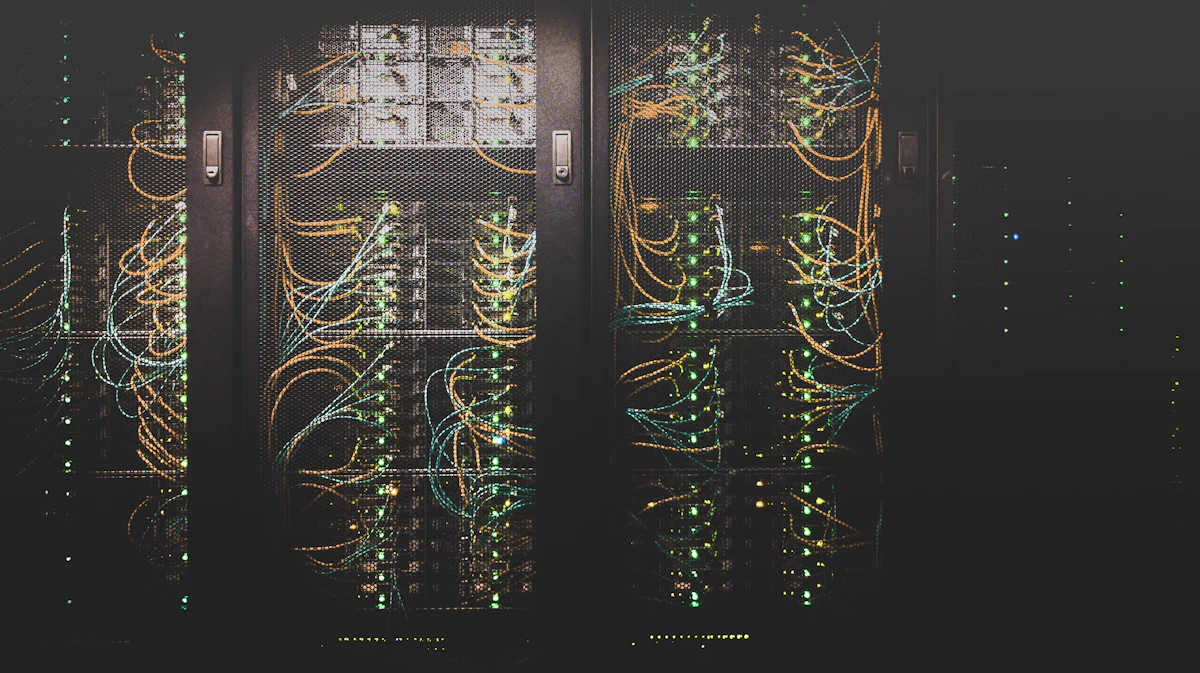
Perhaps the most interesting development behind the nuclear comeback is the growing relationship between nuclear energy and artificial intelligence.
For years, technology companies competed over processors, software, cloud computing platforms and access to data.
Now they are increasingly competing over something much more basic:
Electricity.
Modern AI systems require enormous computing infrastructure.
Training a large model can involve thousands of specialised processors working together. Once a model is deployed, millions of users may access it simultaneously. Video generation, advanced reasoning, autonomous agents and other demanding applications can require substantial computing resources.
All of this happens inside data centres.
And data centres need electricity.
How much electricity will AI data centres consume?
The International Energy Agency's 2026 report, Key Questions on Energy and AI, provides an important indication of the scale of this development.
Its updated central projection estimates that worldwide data-centre electricity consumption will increase from approximately 485 terawatt-hours (TWh) in 2025 to around 950 TWh in 2030.
That is almost a doubling in five years.
AI-focused data centres are expected to grow even faster, with their electricity consumption projected to triple over the same period.
By 2030, data centres could account for approximately 3% of global electricity consumption.
These are projections, not guaranteed outcomes.
Efficiency improvements could reduce electricity use per computing task. New applications could increase demand. The pace of investment will also depend on the economics of artificial intelligence.
Nevertheless, the pressure on electricity infrastructure is already visible.
The IEA reports that global data-centre electricity consumption increased by 17% in 2025, while AI-focused data-centre consumption rose by approximately 50%.
It also highlights an important engineering challenge: advanced AI server racks are becoming extraordinarily power-intensive. By 2027, an individual rack could have peak electricity demand equivalent to that of approximately 65 households.
This is not simply a question of finding a large power station.
Data centres need reliable electricity, appropriate grid connections, cooling systems and infrastructure capable of handling rapidly increasing demand.
Why nuclear energy is attractive to technology companies
Imagine operating a factory that produces something valuable every second of every day.
If its electricity supply becomes unreliable, production stops.
A data centre has a similar problem.
Even short interruptions can create operational difficulties. Backup generators and batteries provide protection, but large computing facilities still need dependable electricity from the wider energy system.
Nuclear power offers three characteristics that technology companies find attractive:
1. Continuous generation
Nuclear reactors can operate around the clock for extended periods between maintenance and refuelling outages.
2. Low operational carbon emissions
Companies seeking to reduce their electricity-related emissions can support nuclear generation as part of their clean-energy strategies.
3. Long-term electricity planning
A long-term power purchase agreement can help provide financial certainty for both an electricity producer and a large customer.
However, there is an important distinction.
When Google or Amazon signs an agreement to purchase nuclear electricity, the data centre does not necessarily receive electricity directly from a dedicated reactor.
In many arrangements, the reactor supplies electricity to the wider grid, while the technology company purchases an agreed amount of electricity through a contractual arrangement.
The physical electricity flows through the interconnected power system.
The contract helps finance generation and establishes the commercial relationship.
This distinction matters because nuclear power agreements are sometimes described as if a reactor is already operating beside a particular data centre.
In many cases, it is not.
Google's nuclear partnership with Kairos Power
Google made an important move in October 2024 when it announced an agreement with Kairos Power to purchase electricity from a future fleet of advanced small modular reactors.
The programme aims to deliver up to 500 megawatts of nuclear electricity by 2035.
The initial deployment is planned around the Hermes 2 demonstration plant in Tennessee, which is expected to provide up to 50 MWe to the Tennessee Valley Authority grid beginning in 2030.
The arrangement is particularly significant because it represents a corporate agreement supporting multiple advanced reactor deployments rather than simply purchasing electricity from an existing nuclear power station.
For Google, the agreement is part of a broader strategy to secure clean electricity for its expanding digital infrastructure.
For Kairos Power, a long-term commercial customer provides something that early nuclear developers desperately need: a potential route to market.
A reactor developer can spend years developing a design, conducting safety research and working with regulators.
But without a customer willing to purchase the resulting electricity, turning that work into a commercial project becomes much harder.
Amazon and X-energy: A 5-gigawatt ambition
Amazon has also become a major supporter of advanced nuclear energy.
Its collaboration with X-energy and Energy Northwest centres on the Xe-100 high-temperature gas-cooled reactor.
The initial Cascade Advanced Energy Facility project in Washington State is designed around four reactor modules, each producing approximately 80 MWe.
Together, the initial installation would generate around 320 MWe.
The development framework also allows for possible expansion to as much as 960 MWe through additional modules.
Amazon's broader collaboration with X-energy has an ambitious target: at least 5 gigawatts of new nuclear capacity across potential US projects by 2039.
But the announcement is not equivalent to five gigawatts of operating nuclear capacity.
The proposed reactors must still progress through financing, licensing, engineering, construction and commissioning.
In October 2026, the partnership expanded.
X-energy, Amazon and American Electric Power announced an agreement to investigate a second project in Indiana.
The proposed facility would use twelve Xe-100 modules to generate up to 960 MWe.
The project is being considered near the former Breed generating station in Sullivan County. Amazon is providing development funding, but the agreement represents feasibility work rather than authorisation to construct the plant.
On November 5, 2026, X-energy announced that Fluor Corporation had been selected to provide engineering and design services for the proposed Cascade facility.
The purpose is to carry lessons from the first proposed Xe-100 project into subsequent deployments and improve standardisation.
That is exactly the manufacturing challenge SMR developers must solve: learning how to build the second reactor more efficiently than the first.
Meta is supporting an even larger nuclear programme
Meta announced a major nuclear energy initiative in January 2026.
Its agreements with Vistra, TerraPower and Oklo, alongside an earlier agreement with Constellation Energy, are intended to support up to 6.6 gigawatts of new and existing nuclear capacity by 2035.
One particularly notable agreement involves TerraPower's Natrium technology.
The partnership supports the development of up to eight potential Natrium plants, with approximately 2.8 GW of reactor generating capacity and an integrated energy storage system capable of increasing total output to around 4 GW under the planned configuration.
Initial delivery is targeted as early as 2032.
However, not all of Meta's nuclear commitments involve SMRs.
The programme also supports existing nuclear power stations and advanced reactor technologies.
Natrium's 345 MWe reactor module, for example, sits above the conventional 300 MWe SMR definition.
This distinction is important: the technology industry's nuclear investment boom is larger than the SMR market itself.
Google is also investing in existing nuclear plants
Another interesting development came on October 6, 2026.
Google and Constellation Energy announced a 20-year agreement intended to bring an additional 890 megawatts of nuclear capacity to the PJM electricity grid.
The project involves upgrades at eleven existing nuclear generating units across Illinois, Pennsylvania and New Jersey.
The upgrades are intended to increase the electricity these facilities can produce.
This is not an SMR project.
It demonstrates another important part of the nuclear comeback: companies are supporting existing nuclear stations while simultaneously investing in new reactor technologies.
That may be particularly important during the period before new SMRs become commercially available.
6. Governments Are Turning SMR Ambitions Into Real Projects
Corporate agreements attract headlines, but governments and nuclear regulators ultimately determine whether proposed reactors can be built and operated.
In 2026, several countries have moved beyond general support for SMRs and entered more concrete development stages.
Canada: Building the Darlington SMR

Canada is currently home to one of the most important Western SMR construction projects.
Ontario Power Generation is developing a BWRX-300 reactor at the Darlington nuclear site in Ontario.
The project is particularly significant because it represents a major commercial SMR construction programme in a G7 country.
The Canadian Nuclear Safety Commission issued the construction licence in April 2025.
In March 2026, the regulator confirmed that the first major regulatory hold point, associated with installation of the reactor building foundation, had been cleared.
Construction has progressed through major foundation work, including the installation of a massive reactor building basemat.
The first reactor is designed to produce approximately 300 megawatts of electricity.
Ontario plans to develop up to four units at the site, potentially providing approximately 1,200 megawatts of nuclear generating capacity.
The first unit is targeted to connect to the electricity grid by the end of 2030.
The three additional units are subject to further approvals and are expected to follow between 2033 and 2035.
Why this project matters
Darlington is more than a single reactor installation.
It is an opportunity to test whether a standardised SMR design can be constructed, licensed and operated in an established nuclear environment.
Canada already has a substantial nuclear workforce, uranium industry, engineering expertise and regulatory infrastructure.
That makes it a useful environment for testing whether the SMR manufacturing model can become commercially repeatable.
The United States: Clinch River receives a construction permit
The United States achieved an important milestone on September 29, 2026.
The Nuclear Regulatory Commission approved a construction permit for the Tennessee Valley Authority to build a BWRX-300 small modular reactor at the Clinch River site in Tennessee.
The permit followed a 14-month regulatory review and represents the first US construction permit for a commercial SMR.
The reactor is intended to generate approximately 300 megawatts of electricity.
But a construction permit is not an operating licence.
TVA must still construct the facility, complete inspections and commissioning, and obtain the necessary regulatory authorisation before loading nuclear fuel and operating the reactor.
This is a critical distinction.
Receiving permission to construct a reactor is a significant achievement, but it does not mean that electricity is about to flow into the grid.
X-energy's progress with the US regulator
Another significant development occurred on October 30, 2026.
X-energy announced that the Nuclear Regulatory Commission had completed its final safety evaluation for the proposed Xe-100 reactor at the Long Mott Generating Station in Texas.
The proposed project involves four high-temperature gas-cooled reactor modules at Dow's industrial facility.
Together, they would provide approximately 320 MWe of electricity, with the ability to supply substantial industrial heat.
The NRC's completed safety evaluation represents an important licensing milestone.
However, the construction permit itself remains a separate regulatory decision, and the project still faces financing, construction and customer investment decisions.
The United Kingdom: Rolls-Royce SMR at Wylfa
The United Kingdom has also made a significant commitment.
In June 2025, the government selected Rolls-Royce SMR as its preferred technology partner for the country's first SMR programme.
The planned location is Wylfa on the island of Anglesey in North Wales.
On April 13, 2026, Great British Energy-Nuclear and Rolls-Royce SMR signed a contract to progress the development of three reactors at the site.
The project is intended to provide approximately 1.4-1.5 gigawatts of low-carbon generating capacity, with electricity delivery targeted for the mid-2030s.
There is an interesting technical detail here.
Each Rolls-Royce unit is designed to produce approximately 470 MWe, considerably larger than the traditional 300 MWe SMR threshold.
It is still marketed as a small modular reactor because the term also describes the manufacturing and construction approach.
The project demonstrates why the SMR label should not be interpreted as one universally fixed reactor size.
China: An important demonstration project
China is pursuing several advanced nuclear technologies.
One particularly important project is the ACP100, also known as Linglong One.
The reactor is being developed at the Changjiang nuclear site in Hainan.
It is designed to produce approximately 125 MWe and uses an integrated pressurised-water reactor configuration.
By October 2026, the project had reached advanced commissioning and testing activities, including reported hot functional testing.
However, commissioning tests should not be confused with commercial operation. An operating licence and the remaining commissioning milestones are still essential.
China's experience is important because it combines nuclear manufacturing capacity, government-backed investment and a substantial domestic electricity market.
Whether that model can be replicated in countries with smaller nuclear industries is a separate question.
7. Why Are There Suddenly More Than 150 SMR Projects?
The number of proposed small modular reactor projects has grown substantially.
The OECD Nuclear Energy Agency's September 28, 2026 announcement of the fourth edition of its SMR Digital Dashboard reported that the database tracks 156 small and micro modular reactor projects worldwide.
More than 120 developers contributed to the latest edition, which added 26 projects.
However, only 95 of the 156 projects are included in the dashboard's detailed assessment. The remaining projects include developments that are not actively progressing, have been paused or cancelled, or have not been included in the current assessment.
This is an important distinction.
The number does not mean that 156 SMR power stations are under construction.
It includes projects at different stages, from early design and feasibility studies to regulatory review, construction and potential deployment.
A proposed reactor is not the same as a licensed reactor.
A licensed reactor is not the same as a financed construction project.
And a completed reactor is not the same thing as an operating commercial power station.
The industry is attracting enormous attention because so many organisations are exploring the technology simultaneously.
But the real measure of success will be the number of reactors that actually reach commercial operation.
8. The Biggest Question: Will Small Modular Reactors Be Cheaper?
This is probably the most important commercial question facing the SMR industry.
If small modular reactors are going to become widely adopted, they must offer a compelling economic case.
The problem is that nuclear electricity is expensive to build.
A nuclear power station requires enormous upfront investment, specialised engineering, strict quality control and extensive regulatory oversight.
SMRs are designed to reduce some of these costs, but smaller reactors also lose some of the financial advantages enjoyed by large power stations.
The economies of scale problem
Imagine two factories.
The first produces 100,000 identical products annually.
The second produces only 500.
Both factories require management, machinery, quality control, buildings and maintenance.
The larger factory can distribute its fixed costs across far more products.
Nuclear power has a similar economic challenge.
A large reactor may cost billions to construct, but it can generate electricity on a much larger scale.
An SMR requires much of the same institutional infrastructure, engineering expertise and regulatory effort, even though it produces less electricity.
This means smaller does not automatically mean cheaper per unit of electricity.
The alternative: Economies of series production
SMR developers want to replace some of the traditional economies of scale with what economists call economies of series production.
The idea is simple.
Instead of constructing one enormous reactor, manufacturers produce many smaller reactors using standardised designs.
The first reactor may be expensive because the factory, supply chain, workforce and manufacturing processes are still being established.
The second reactor can benefit from lessons learned.
The third can use improved production processes.
By the tenth or twentieth unit, manufacturers hope to reduce construction time, minimise design changes and increase production efficiency.
This is the central economic promise of modular nuclear power.
But it requires repeated orders.
A factory designed to manufacture dozens of reactors will not become economically efficient if customers order only one or two.
What does the real-world cost look like?
Canada's Darlington project offers a useful example.
Ontario Power Generation's published project estimates put the total budget for the planned four-unit development at approximately C$20.9 billion, including interest, cost escalation and contingency.
The first reactor is estimated at C$6.1 billion, with an additional C$1.6 billion allocated to infrastructure and systems shared across the four planned units.
That means the initial investment allocated to the first reactor and common infrastructure is approximately C$7.7 billion.
These figures need careful interpretation.
They are specific to the Darlington project and should not be treated as a universal price for every SMR.
They also include project-specific costs and financing assumptions, rather than representing a simple factory production price.
Nevertheless, they illustrate an important reality.
The first commercial SMR is not necessarily a cheap nuclear power station.
Its economic value may depend partly on whether later units can be constructed more efficiently.
The NuScale cancellation: A warning from the past
The United States has already experienced an important setback in the SMR industry.
In November 2023, the Utah Associated Municipal Power Systems and NuScale Power agreed to terminate their Carbon Free Power Project.
The proposed project was intended to develop a NuScale small modular reactor facility.
Despite years of development and regulatory progress, the partners concluded that the project was unlikely to secure sufficient electricity subscriptions to remain financially viable.
In other words, there were not enough customers willing to commit to purchasing the electricity under the project's commercial arrangements.
The project was cancelled before construction.
This experience demonstrates that nuclear engineering success is not enough.
A reactor can have a technically developed design and still fail commercially.
What independent research says about SMR economics
Research published in 2026 in PNAS Nexus examined expectations surrounding SMRs, particularly in countries without established nuclear industries.
The researchers questioned whether SMRs would deliver the low electricity prices, rapid commercial maturity and local manufacturing opportunities sometimes promised by supporters.
Their analysis highlighted the loss of economies of scale and the limited number of commercially operating examples.
Other economic studies reach more optimistic conclusions, particularly when they model repeated production, standardised designs and large fleets.
The difference often comes down to assumptions about future manufacturing volumes, financing, construction learning and regulatory efficiency.
The OECD Nuclear Energy Agency's Costs of Generating Electricity 2025 also stresses that levelised electricity costs must be considered alongside the wider costs of integrating generation into a specific electricity system.
A reactor's cost per megawatt-hour is not the whole story.
What could make SMRs cheaper?
Several factors could improve their economics:
- Repeated manufacturing of identical reactor modules.
- Standardised engineering and construction methods.
- More predictable project schedules.
- Reduced dependence on complicated site-based manufacturing.
- Shared infrastructure across multiple reactor units.
- Better financing conditions once the technology has an operating record.
- A larger international supply chain.
But these are potential benefits, not guaranteed savings.
The economic verdict: SMRs may eventually become competitive in certain markets, particularly industrial facilities, remote regions and electricity systems that need smaller additions of dependable generating capacity. Their ability to deliver cheaper electricity than large reactors or renewable energy has not yet been demonstrated across a mature commercial fleet.
9. Are Small Modular Reactors Actually Safer?
Safety is one of the most sensitive subjects in nuclear energy.
The history of nuclear power includes major accidents, including Three Mile Island, Chernobyl and Fukushima.
These events have influenced public opinion, regulatory standards and the way nuclear power stations are designed.
SMR developers argue that their smaller reactor cores, modern engineering and passive safety systems can reduce certain accident risks.
There are genuine engineering reasons behind these arguments.
But it is important to distinguish between a safety feature and a guarantee of safety.
What is passive safety?
Many conventional nuclear reactors rely on powered equipment, pumps, valves and backup electrical systems to maintain cooling.
These systems are designed with redundancy.
If one component fails, another can take over.
Some advanced SMR designs use passive safety systems that rely more heavily on natural physical processes.
These can include:
- Gravity.
- Natural circulation of coolant.
- Heat conduction.
- Natural convection.
- Stored water supplies.
- Pressure differences.
Think about how a hot-air balloon rises without an electric motor.
The movement happens because of differences in temperature and density.
Passive reactor systems attempt to use similar natural processes to remove heat under certain operating and accident conditions.
The advantage is that some safety functions may continue without relying on powered pumps or immediate operator intervention.
However, passive systems still require careful design, testing and regulatory assessment.
Smaller reactors can reduce certain risks
A smaller reactor core generally contains less nuclear fuel than a large reactor.
Depending on the design, it may also have lower decay heat and a smaller inventory of radioactive materials.
This can help reduce certain potential accident consequences.
Some advanced fuel technologies are also designed to retain radioactive materials more effectively.
TRISO fuel, for example, uses multiple protective layers around tiny fuel particles.
But the relationship between reactor size and safety is not straightforward.
A small reactor can still experience equipment failures, fuel damage, coolant problems or other serious events.
A facility with several small reactors also has to manage the safety and security of multiple nuclear units.
The relevant question is not simply whether the reactor is small.
It is whether the complete facility can demonstrate an acceptable level of safety throughout its operating life.
Can SMRs be built closer to cities?
Some developers argue that smaller reactors and advanced safety systems could allow nuclear facilities to operate closer to industrial customers or population centres.
There is a technical basis for considering different emergency planning arrangements.
The US Nuclear Regulatory Commission has developed alternative, performance-based emergency preparedness requirements for SMRs and other advanced reactor technologies.
Under these arrangements, emergency planning can be scaled according to the characteristics of the particular facility and its safety analysis.
It is not a blanket exemption from emergency planning. Each reactor and site must be assessed individually.
For example, X-energy has described a proposed 400-metre emergency planning zone for its Xe-100 design, compared with the conventional 10-mile plume exposure planning zone used for traditional US light-water reactors.
That is a company-described design and regulatory proposal, not a universal rule for all SMRs.
What about human error and security?
Nuclear safety is not only about reactor physics.
It also depends on people, institutions and procedures.
A facility needs trained operators, reliable security arrangements, independent inspections and a strong safety culture.
SMRs will also need protection against physical attacks, cyber threats, sabotage and failures in supporting infrastructure.
If a country does not have an experienced nuclear regulator or a qualified workforce, adopting SMRs does not automatically solve those institutional challenges.
Smaller reactors may reduce some technical and financial barriers to deployment.
They do not remove the need for responsible nuclear governance.
10. What Happens to Nuclear Waste?
One of the biggest questions surrounding nuclear power is what happens to the fuel after it has been used.
Nuclear reactors produce electricity through nuclear fission.
During the process, uranium atoms split and release energy. The fuel also accumulates radioactive fission products and other materials.
Eventually, the fuel becomes less useful for producing electricity and must be removed or replaced.
But used nuclear fuel does not become harmless when it leaves the reactor.
It remains radioactive and generates heat.
This is why spent fuel must be carefully managed.
Where does used nuclear fuel go?
Immediately after removal from a conventional reactor, spent fuel is usually placed in a specially designed cooling pool.
The water provides shielding and removes heat.
After sufficient cooling, fuel can be transferred to specially engineered dry storage systems, depending on national regulations and facility design.
These systems are designed to contain radioactive materials and protect the fuel during long-term storage.
However, storage is not the same thing as final disposal.
A long-term solution generally involves deep geological disposal, where suitably conditioned radioactive waste is placed in carefully selected underground geological formations.
Some countries are progressing with geological repository programmes, but the development of such facilities is technically demanding and politically sensitive.
For example, Finland's deep geological disposal programme is among the world's most advanced.
The United States, meanwhile, continues to manage commercial spent nuclear fuel largely through interim storage arrangements because a permanent commercial repository has not been established.
The US Nuclear Regulatory Commission explains that spent fuel remains highly radioactive and potentially harmful and must be managed safely over very long periods.
Do SMRs produce less radioactive waste?
There is no simple answer.
Some SMR developers argue that advanced fuels and different reactor designs could improve fuel utilisation and reduce certain waste streams.
Some fast reactors may also be designed to use materials that conventional reactors do not use as efficiently.
But different designs produce different types and quantities of radioactive waste.
A reactor using conventional light-water technology may have a waste profile similar in important respects to existing reactors.
A high-temperature gas reactor may produce used fuel elements and radioactive graphite-related materials.
A molten-salt reactor introduces different waste-management questions involving fuel-bearing salts and chemical processing.
A sodium-cooled fast reactor introduces its own challenges involving sodium and specialised fuel handling.
A particularly important study published in Proceedings of the National Academy of Sciences in 2022 examined the waste implications of several proposed SMR designs.
The researchers found that some concepts could produce more voluminous and chemically or physically reactive waste streams than conventional large light-water reactors.
The results do not mean every SMR produces more waste.
They demonstrate that reactor size alone cannot determine the environmental consequences of its fuel cycle.
The OECD Nuclear Energy Agency has also emphasised that radioactive waste management must be integrated into the design and planning of new reactor technologies from the beginning.
Transport, storage, disposal and decommissioning cannot simply be postponed until the reactors are operating.
Could future reactors recycle nuclear fuel?
Potentially.
Some advanced reactor designs are being developed with fuel-recycling strategies.
Reprocessing can recover certain materials from used nuclear fuel for possible reuse.
This could improve resource utilisation in particular fuel cycles.
However, reprocessing is technically complicated, expensive and subject to strict safeguards.
It also produces radioactive waste that still needs management.
Fuel recycling does not make nuclear waste disappear.
The waste verdict: SMRs may offer improvements in certain fuel cycles, but there is no general evidence that smaller reactors eliminate the long-term radioactive waste challenge. Every commercial design needs a credible waste-management strategy.
11. The Hidden Bottleneck: Where Will the Nuclear Fuel Come From?
The public conversation about SMRs often focuses on reactor construction.
But there is another important question:
Can the industry manufacture enough specialised nuclear fuel to support the proposed reactors?
Many conventional light-water reactors use low-enriched uranium fuel containing less than 5% uranium-235.
Some advanced reactor designs require a different fuel known as high-assay low-enriched uranium, or HALEU.
HALEU contains uranium enriched to more than 5% but less than 20% uranium-235.
The higher enrichment can allow certain reactor designs to achieve smaller cores, longer operating cycles or different fuel performance characteristics.
However, the supply chain is still developing.
The US Department of Energy has identified the limited availability of domestic HALEU supplies as a potential obstacle to advanced reactor deployment.
In January 2026, the department finalised major enrichment-related task orders involving American Centrifuge Operating and General Matter, with approximately $900 million allocated to each under the programme's planned funding arrangements.
The wider federal initiative includes up to $2.7 billion for developing domestic low-enriched uranium and HALEU infrastructure.
The US Nuclear Regulatory Commission also explains that HALEU production, fabrication, transportation and use require appropriate licensing and regulatory controls.
This creates an interesting situation.
Governments are funding reactor development while simultaneously investing in the fuel supply chains needed to make those reactors work.
Without reliable fuel production, a technically successful reactor programme could still experience delays.
It is another reminder that a nuclear power station is part of a much larger industrial system.
Not every SMR needs HALEU, but the fuel requirements of advanced reactor designs will become increasingly important as the industry expands.
12. How Long Before SMRs Actually Produce Electricity?
This is where expectations need to be realistic.
Artificial intelligence is expanding quickly.
New data centres can be planned and constructed within a relatively short period compared with major energy infrastructure.
The IEA notes that a data centre can become operational in approximately two to three years, whereas energy infrastructure requires longer planning periods, major investment and regulatory approval.
Nuclear power stations operate on a different timetable.
A typical SMR development may involve:
- Selecting the technology.
- Identifying a suitable location.
- Conducting geological and environmental assessments.
- Developing the detailed engineering design.
- Completing regulatory reviews.
- Securing financing and customer commitments.
- Manufacturing nuclear-grade components.
- Constructing the facility.
- Testing and commissioning the reactor.
- Obtaining permission to begin commercial operation.
Even with improved modular construction, this is a complicated process.
The expected timeline
The following examples illustrate how the industry is developing.
| Project | Country | Target or current milestone |
|---|---|---|
| Google-Kairos Hermes 2 | United States | First electricity targeted for 2030 |
| Darlington BWRX-300 | Canada | Grid connection targeted by end of 2030 |
| Clinch River BWRX-300 | United States | Construction permit issued September 2026 |
| Amazon-X-energy Cascade | United States | First deployment targeted in the early 2030s |
| Rolls-Royce SMR | United Kingdom | Targeted electricity delivery in the mid-2030s |
| X-energy Indiana project | United States | Feasibility and development stage in October 2026 |
These are programme targets and milestones, not guarantees of completion.
Construction delays, regulatory changes, financing difficulties and supply-chain problems could alter the schedules.
The most important point is that SMRs are unlikely to become a major source of new electricity for AI data centres during the immediate 2026-2028 period.
Their potential contribution is much more relevant to the energy infrastructure being developed for the 2030s and beyond.
13. Can SMRs Work Alongside Solar and Wind Energy?
One of the most important questions about the future electricity system is whether nuclear power and renewable energy should compete with each other.
In reality, they can perform different but complementary roles.
Solar panels generate electricity when sunlight is available.
Wind turbines generate electricity when wind conditions are suitable.
Hydropower can provide electricity according to water availability and reservoir management.
Batteries can store electricity and release it when demand rises.
Nuclear power can provide dependable low-carbon generation over long periods.
An electricity system needs to combine these technologies according to local conditions.
The difference between variable and firm generation
Imagine a country with a large solar energy programme.
During sunny afternoons, solar generation may exceed electricity demand.
But at night, solar panels stop producing electricity.
The country needs other sources of power, energy storage, demand management or electricity imports to maintain supply.
Nuclear power can contribute a continuous source of generation.
However, that does not mean nuclear reactors must operate at maximum output at every moment.
Some nuclear technologies can adjust their output, and some advanced designs are being developed with flexible operation in mind.
The Natrium system, for example, combines nuclear generation with thermal energy storage to provide greater flexibility.
SMRs could also be deployed in groups, potentially allowing utilities to match generating capacity more closely to changing demand.
But there is no universal operating strategy for all reactor designs.
Some will be most economical when operating continuously. Others may be designed for particular industrial or flexible electricity applications.
Could nuclear power replace renewable energy?
That is not the most useful way to think about the energy transition.
Solar and wind have become major sources of new electricity generation, and their deployment can be relatively rapid.
Nuclear power offers a different set of characteristics, including continuous low-carbon generation and relatively high energy density.
The future electricity system is likely to require a combination of technologies.
The challenge is to identify the right mix for each country.
In some places, abundant solar and wind resources combined with storage and strong transmission networks may provide the most economical solution.
In others, nuclear power may offer valuable reliability, especially where electricity demand is large and the available renewable resources are more limited.
SMRs are potentially another option within this wider system.
They are not a replacement for every other energy technology.
14. Beyond Electricity: What Else Could SMRs Power?
The potential applications of SMRs extend beyond national electricity grids.
This is one reason the technology attracts interest from industrial companies.
Traditional nuclear power stations are primarily associated with electricity generation.
However, nuclear reactors produce heat, and that heat can potentially be used directly in industrial processes.
This creates opportunities in sectors that are difficult to decarbonise.
Industrial manufacturing
Factories producing chemicals, steel, cement and other industrial materials often require substantial amounts of heat.
Some industrial processes operate at temperatures that are difficult to supply economically using conventional electric heating.
High-temperature nuclear reactors could potentially provide some of this heat.
The Xe-100 is particularly interesting because its high-temperature design is intended to provide both electricity and industrial-grade heat.
Desalination
Freshwater shortages are becoming increasingly important in many regions.
Desalination plants can convert seawater into freshwater, but the process requires energy.
Nuclear power could potentially provide electricity or heat for desalination facilities.
This is especially relevant for countries with limited freshwater resources and growing industrial or urban demand.
However, the economics depend on the reactor, desalination technology, local water needs and the cost of alternative energy supplies.
Hydrogen production
Hydrogen is used in chemical manufacturing, refining and other industrial activities.
Producing low-emission hydrogen requires energy.
Nuclear reactors could supply electricity and, depending on their operating temperatures, heat for certain hydrogen production processes.
This could help reduce the emissions associated with hydrogen currently produced using fossil fuels.
Remote communities and industrial sites
Large conventional nuclear power stations are not suitable for every location.
Some remote communities, mines and industrial facilities have limited access to electricity infrastructure.
Microreactors and smaller SMR designs could potentially provide dependable local power.
But remote deployment introduces its own difficulties, including transportation, security, fuel management, maintenance and the availability of trained personnel.
A small reactor may be easier to accommodate physically, but that does not automatically make it easy or inexpensive to operate.
15. What Could Stop the Nuclear Comeback?
Despite the renewed interest, the SMR industry faces several major challenges.
These are not minor technical details.
They will determine whether the technology becomes a significant part of the global electricity system or remains a collection of promising but expensive projects.
1. Construction costs
The first commercial reactors must demonstrate that their construction costs can be controlled.
If every unit remains a first-of-a-kind project, the expected manufacturing savings may never appear.
2. Financing
Nuclear projects require substantial capital before generating electricity.
Investors need confidence that construction will be completed and that the reactor will receive the necessary licences.
Even relatively small reactors can create enormous financial commitments.
3. Regulatory approval
Nuclear regulators must examine the safety of each design.
Although regulatory processes are being modernised, new reactor technologies still require extensive technical assessment.
International cooperation could help reduce duplicated work, but regulatory requirements cannot simply be ignored.
4. Fuel availability
Some advanced reactors require specialised fuel that is not yet available at the industrial scale needed for a large fleet.
Building the reactor before establishing its fuel supply could create future operational problems.
5. Waste management
Every reactor programme needs a credible strategy for spent fuel, radioactive waste, transportation, storage and eventual disposal.
New reactor designs may create waste streams that existing national systems were not originally designed to handle.
6. Public acceptance
Nuclear energy remains controversial.
Communities may have concerns about accident risks, radioactive waste, water use, land development and long-term environmental responsibilities.
A government announcement does not guarantee public support.
Local engagement and transparent regulation will remain essential.
7. Competition from other energy technologies
SMRs are not entering an empty market.
Solar power, wind power, batteries, hydropower, natural gas, geothermal energy and other technologies are competing to supply electricity.
The cost and performance of these alternatives will influence whether SMRs become economically attractive.
The nuclear industry must prove that its proposed advantages are worth the investment.
16. What Does the Nuclear Comeback Mean for the Future of Energy?
The renewed interest in nuclear power represents a change in how governments and large companies think about electricity.
For many years, the energy transition was discussed mainly in terms of replacing fossil fuels with renewable energy.
That remains an essential objective.
But the rapid expansion of digital infrastructure, electrified industries and energy-intensive technologies has made the electricity challenge more complicated.
Countries need more clean electricity, but they also need reliable supply, resilient infrastructure and affordable prices.
Nuclear energy offers one possible contribution.
SMRs could potentially make nuclear power available to a wider range of customers, including industrial facilities and smaller electricity systems that cannot easily accommodate enormous conventional reactors.
However, their success will depend on much more than the ability to produce a working reactor.
The technology must demonstrate that it can be manufactured repeatedly, financed responsibly, regulated effectively and operated safely.
It must also show that its waste can be managed over the long term.
What about countries without an established nuclear industry?
The SMR discussion is particularly important for developing economies.
Smaller reactors may appear attractive because they could reduce the initial investment required for a nuclear project.
But developing a nuclear programme requires far more than purchasing a reactor.
Countries need:
- An independent nuclear regulatory authority.
- Experienced engineers and operators.
- Emergency response capabilities.
- Nuclear security infrastructure.
- Fuel supply arrangements.
- Waste management policies.
- Long-term financial planning.
- Strong public institutions.
These requirements remain important even when a reactor produces only a few hundred megawatts.
International cooperation could help countries develop the necessary expertise, but it cannot eliminate the institutional responsibilities involved.
For countries with strong renewable resources, the decision must also consider whether SMRs offer better value than expanding solar, wind, storage and electricity interconnections.
The answer will vary from one country to another.
Could SMRs become as common as conventional power stations?
Possibly, but the industry has a substantial distance to travel.
The first successful commercial projects could demonstrate that standardised designs and repeated manufacturing can reduce costs.
If that happens, more utilities may become interested.
Manufacturers could establish specialised production facilities, suppliers could invest in nuclear-grade components and regulators could develop greater familiarity with the technologies.
But there is also a less optimistic possibility.
If first-of-a-kind projects experience significant cost increases, customers may hesitate to finance additional units.
The industry could end up with a small number of successful reactors rather than the large international fleets developers currently imagine.
Both outcomes remain possible.
17. What Should We Watch Next?
The next few years will be particularly important for determining whether SMRs can move from commercial ambition to commercial reality.
Several milestones deserve attention.
First: The completion of the first commercial construction projects.
Darlington is one of the most important tests of the Western SMR industry. Its construction schedule, costs and commissioning experience will influence future projects.
Second: The first electricity from new-generation SMRs.
The expected 2030 milestones associated with projects such as Kairos Hermes 2 and Darlington will provide important evidence about whether developers can meet their schedules.
Third: Regulatory decisions.
Construction permits, operating licences and independent safety evaluations will reveal which designs are progressing through the regulatory system.
Fourth: Manufacturing capacity.
A successful SMR industry will require more than individual engineering achievements. It will need factories capable of producing components consistently and at sufficient volume.
Fifth: Commercial electricity prices.
Ultimately, customers need to know how much electricity these reactors will produce and what it will cost.
Sixth: Waste and fuel management.
The nuclear industry must demonstrate that its fuel supply chains and radioactive waste arrangements can support long-term deployment.
These milestones will provide a much clearer picture than the number of corporate announcements or proposed reactor designs.
Conclusion: The Nuclear Comeback Is Real, but the SMR Revolution Is Still Being Tested
The nuclear industry is experiencing a remarkable period of renewed attention.
Artificial intelligence is creating new electricity demand. Governments are reconsidering energy security. Industrial companies are searching for reliable low-carbon power. And technology companies are increasingly willing to support nuclear projects that would have attracted far less commercial interest a decade ago.
Small modular reactors sit at the centre of this changing landscape.
Their promise is appealing: manufacture more components in factories, standardise reactor designs, distribute investment across smaller units and make nuclear energy available to a wider range of customers.
The developments of 2026 show that this idea is no longer purely theoretical.
Canada is constructing its first commercial SMR project. The United States has approved a construction permit for TVA's Clinch River reactor. The United Kingdom has signed a contract for its first SMR fleet. Google, Amazon and Meta are helping finance new nuclear technologies.
But the most important questions remain unanswered.
Will the first commercial projects be completed on time? Can manufacturers reduce costs through repeated production? Will fuel supplies keep pace with demand? Can radioactive waste be managed responsibly? And will the electricity ultimately be affordable enough to compete with other low-carbon technologies?
These are questions that announcements cannot answer.
They require operating reactors, transparent cost data and years of practical experience.
The future of nuclear energy may indeed be smaller, more modular and more closely connected to the factories and data centres that power the modern economy.
But the real nuclear comeback will not be measured by the number of reactor designs announced in 2026.
It will be measured by how many actually work, how safely they operate, how much their electricity costs and whether they make the global energy transition more reliable and affordable.
For now, small modular reactors are one of the most interesting experiments in the future of electricity.
And the world is watching to see whether they can deliver.
Frequently Asked Questions (FAQ)
1. What is a small modular reactor (SMR)?
A small modular reactor is a nuclear reactor designed to produce less electricity than a conventional large reactor, generally up to approximately 300 MWe per module under the commonly used definition. Its construction approach aims to use standardised, factory-manufactured components that can be assembled at a nuclear site.
2. Why are small modular reactors becoming popular in 2026?
Interest is growing because electricity demand is increasing, particularly from AI data centres and industrial facilities. Governments also want dependable low-carbon electricity and greater energy security. SMRs are being considered as a potentially more flexible alternative to building only large conventional nuclear power stations.
3. Can SMRs power AI data centres?
Yes, they could potentially provide electricity for AI data centres, either through direct industrial arrangements or by supplying the wider electricity grid. Google, Amazon and other technology companies are supporting nuclear projects intended to help meet future computing demand. However, most of the proposed new SMR capacity will not become available until the 2030s.
4. Are small modular reactors safer than conventional nuclear reactors?
Some SMR designs incorporate passive cooling systems, smaller reactor cores and advanced fuel technologies that may reduce certain accident risks. However, safety depends on the complete reactor design, its location, operating procedures and regulatory oversight. No reactor design should be considered automatically safe simply because it is smaller.
5. How much does a small modular reactor cost?
There is no single standard price. Costs vary according to reactor technology, generating capacity, construction conditions, financing and the number of units being built. Canada's Darlington project has an estimated four-unit budget of approximately C$20.9 billion, including interest, escalation and contingency. Future costs may fall if manufacturers achieve repeated production and standardisation.
6. Do SMRs produce radioactive waste?
Yes. All nuclear fission reactors produce radioactive materials, including spent fuel. Different SMR technologies produce different waste streams, and some may create additional waste-management challenges. Long-term storage and disposal remain essential parts of every nuclear programme.
7. When will the first commercial SMRs begin operating?
Some small reactors already operate, including Russia's floating Akademik Lomonosov nuclear power station. Among new Western commercial projects, Darlington in Canada is targeting grid connection by the end of 2030, while Google's Kairos partnership targets initial electricity from Hermes 2 around 2030. Other major programmes are targeting the 2030s.
8. What is the difference between an SMR and a traditional nuclear power station?
The main differences are generating capacity and construction philosophy. Traditional nuclear stations often use individual reactors producing 1,000 MWe or more. SMRs generally produce up to 300 MWe per module and aim to use factory manufacturing, standardised components and repeatable construction processes.
9. Do SMRs require special nuclear fuel?
Not all of them. Some use conventional low-enriched uranium similar to existing nuclear power stations. Others require high-assay low-enriched uranium (HALEU), which is enriched to between 5% and 20% uranium-235. HALEU production capacity is still developing, and fuel availability could influence the deployment schedules of some advanced reactors.
10. Can small modular reactors replace solar and wind energy?
No. They are better understood as potential complementary technologies. Solar and wind provide low-carbon electricity when weather conditions allow, while nuclear reactors can provide dependable generation over extended periods. Combining nuclear power, renewables, energy storage and improved electricity networks could help create a more resilient energy system.
11. Why are technology companies investing in nuclear power?
Companies operating large data centres need dependable electricity for computing, cooling and digital infrastructure. Nuclear power offers continuous low-carbon generation, making it attractive for long-term electricity agreements. Supporting new nuclear projects can also help finance generating capacity that may eventually serve the wider electricity grid.
12. Will SMRs solve the world's energy problems?
No single technology can solve every energy challenge. SMRs could become useful sources of reliable low-carbon electricity and industrial heat, but their commercial costs, safety performance, construction schedules, fuel requirements and waste-management systems still need to be demonstrated at scale.
Sources and Further Reading
The following sources provide additional technical, regulatory and economic information used in this article. Government agencies, international organisations, regulators and independent research are prioritised alongside company announcements.
1. International Energy Agency (IEA)
2. OECD Nuclear Energy Agency (NEA)
- SMR Digital Dashboard - Fourth Edition, September 2026
- The Costs of Generating Electricity 2025
- Back-End Management of Small Modular and Generation IV Reactors
3. World Nuclear Association
4. Canadian Nuclear Safety Commission
5. Ontario Power Generation
6. US Nuclear Regulatory Commission
- Advanced Reactor Applications and Regulatory Developments
- High-Level Radioactive Waste
- HALEU Fuel: Uses and Regulatory Requirements
7. Google and Kairos Power
8. X-energy and Energy Northwest
- Cascade Advanced Energy Facility - Xe-100 Project
- X-energy's October 2026 SMR Development Announcements
9. Meta
10. UK Government
11. Peer-reviewed research
- Nuclear Waste from Small Modular Reactors - Proceedings of the National Academy of Sciences (2022)
- Small Modular Reactors for Developing Countries: Expectations and Evidence - PNAS Nexus (2026)
12. Nuclear construction and industry developments
- American Nuclear Society - Darlington SMR Construction Report, June 2026
- Reuters - US Approves Construction of Its First Commercial SMR, September 29, 2026
Photo Credits
Photo 1 - Akademik Lomonosov Floating Nuclear Power Station
Direct image URL:
Credit: Elena Dider, Wikimedia Commons. Akademik Lomonosov being transported to Pevek, Russia, August 23, 2019. Creative Commons Attribution-ShareAlike 4.0 International (CC BY-SA 4.0).
Photo 2 - Darlington Small Modular Reactor Construction
Direct image URL:
Credit: Ontario Power Generation (OPG), reproduced by the American Nuclear Society / Nuclear Newswire, June 2026. The image shows the reactor building basemat being lowered into the prepared reactor shaft. Confirm image reuse permissions with the copyright holder before publication.
THE JORNAL
Science, AI, Technology, Space & Culture
The conversation
Post a Comment