Solar Shingles: The Roof That Could Power Your Home
Imagine waking up on a sunny morning, opening your curtains and looking at your roof. There are no large solar panels sitting above the tiles. No obvious metal frames, bulky mounting equipment or dark rectangular modules interrupting the appearance of your house.
Yet your roof is quietly producing electricity.
The refrigerator is running. Your laptop is charging. The washing machine is ready for another cycle. Outside, sunlight is striking what looks like an ordinary roof, but beneath its familiar appearance is a network of photovoltaic technology converting sunlight into usable electrical energy.
This is the idea behind solar shingles.
Also called solar roof tiles or photovoltaic roofing, these products combine two functions that traditionally belonged to separate parts of a house: protecting the building from the weather and generating electricity.
Instead of attaching conventional solar panels above an existing roof, manufacturers integrate photovoltaic cells into roofing materials themselves. The result is a roof that can generate electricity while maintaining a more conventional architectural appearance.
It sounds like a natural next step in residential solar technology. After all, almost every house needs a roof, and many roofs receive hours of sunlight every day. Why not turn that unused surface into a source of electricity?
However, there is an important question behind the attractive concept: Are solar shingles actually better than traditional solar panels, or are homeowners paying a premium for a more attractive appearance?
The answer depends on installation costs, electricity prices, roof condition, sunlight exposure, energy consumption and the particular photovoltaic roofing system being considered.
Solar shingles are no longer just an experimental idea. Commercial products exist, and established roofing manufacturers are entering the market. Nevertheless, they remain a relatively specialised alternative to conventional rooftop solar.
In this guide, we explore how solar shingles work, what makes them different from ordinary solar panels, how much they cost, their advantages and limitations, and whether photovoltaic roofing represents a sensible investment in 2026.
1. What Exactly Are Solar Shingles?
Solar shingles are small photovoltaic roofing units designed to perform the same basic job as conventional roof coverings while generating electricity from sunlight.
A traditional roof uses materials such as asphalt, clay, concrete, slate or metal to protect a building. If the homeowner wants solar electricity, a separate installation is normally added above that roof.
Solar shingles combine these two functions.
Each active shingle contains photovoltaic cells that absorb sunlight and convert it into electrical energy. The shingles are installed as part of the roof itself, rather than being mounted on a separate framework above it.
The result is a roof that can look relatively ordinary from the street while functioning as a small power-generating installation.
There are two important terms to understand:
- Solar shingles: Smaller photovoltaic roofing units designed to resemble conventional asphalt shingles or other roofing materials.
- Solar roof tiles: Individual solar-generating tiles that may resemble slate, clay or glass roofing tiles.
The terms are often used interchangeably, although the actual construction, dimensions and installation methods differ between manufacturers.
Solar shingles belong to a broader category called building-integrated photovoltaics, commonly shortened to BIPV.
Building-integrated photovoltaics refers to solar technology incorporated directly into construction materials, including roofs, windows, façades and other building surfaces.
Instead of adding a solar device to a building after construction, BIPV makes electricity generation part of the building's original design.
The US Department of Energy identifies building-integrated photovoltaics as a promising technology but also recognises that technical and commercial barriers remain before it can become widespread.
Reference: US Department of Energy – Solar Photovoltaic System Design Basics.
What do solar shingles look like?
Their appearance depends on the manufacturer.
Some resemble conventional dark asphalt shingles. Others use smooth glass surfaces, textured photovoltaic tiles or patterns designed to imitate traditional slate roofing.
Certain systems combine active solar tiles with inactive matching tiles. This allows manufacturers to cover areas that cannot generate electricity, such as sections around chimneys, roof edges and ventilation openings, without making the entire roof look inconsistent.
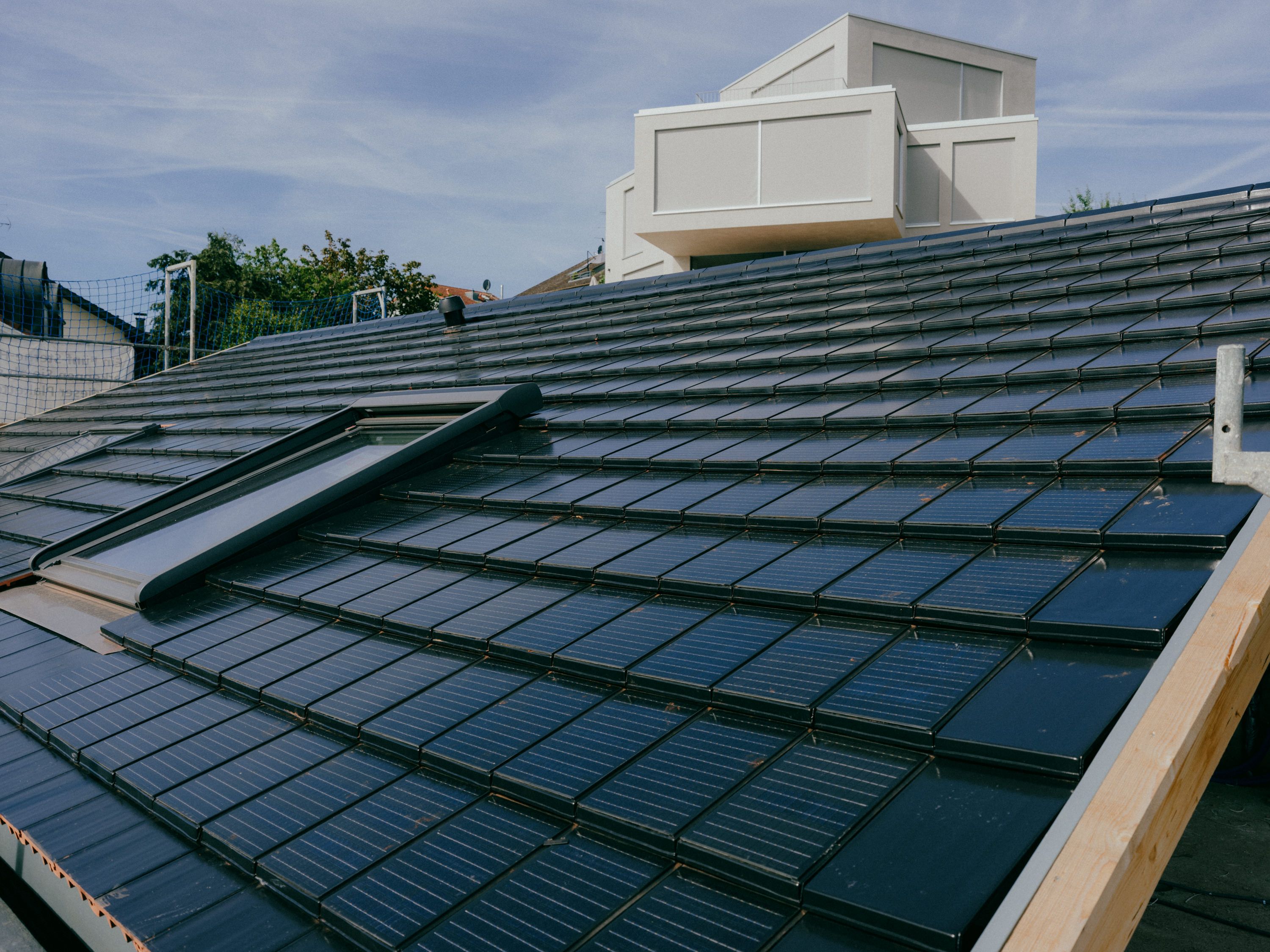
The important distinction is that solar shingles are not simply miniature solar panels attached to ordinary roofing materials. They are engineered to form part of the roof's weather-resistant covering.
That makes their design more demanding. They must generate electricity while also dealing with rain, wind, temperature changes, roof movement and the physical stresses that ordinary roofing materials experience.
2. How Do Solar Shingles Generate Electricity?
The science behind solar shingles is essentially the same as the science behind conventional photovoltaic panels.
The process begins when sunlight reaches the photovoltaic cells inside a shingle.
These cells contain semiconductor materials, commonly based on silicon. When photons from sunlight strike the semiconductor, they transfer energy to electrons, allowing an electrical current to flow through an electrical circuit.
This phenomenon is known as the photovoltaic effect.
It is the same basic principle used in rooftop solar panels, solar-powered calculators and large solar farms.
However, generating electricity on the roof is only the beginning. The electricity must also be converted and distributed so that household appliances can use it.
Step 1: Sunlight reaches the photovoltaic cells
Solar shingles are positioned across suitable roof surfaces.
Their photovoltaic cells absorb incoming sunlight and generate direct current electricity, usually called DC.
The amount of electricity produced depends on several variables, including sunlight intensity, roof orientation, shading, temperature and the total active photovoltaic area.
Step 2: Electrical connections collect the energy
Individual solar shingles are connected through electrical wiring.
The wiring combines the electricity generated across the roof into a system that can be managed by the appropriate power electronics.
Depending on the product, the installation may use module-level electronics, microinverters or another approved system architecture.
Step 3: An inverter converts the electricity
Most household appliances operate using alternating current electricity, known as AC.
An inverter converts the DC electricity generated by the solar shingles into AC electricity suitable for household use.
The inverter is an essential part of the installation, not an optional decoration.
The US Department of Energy explains that inverters are among the main components of a complete photovoltaic system.
Reference: Department of Energy – Solar Photovoltaic System Design Basics.
Step 4: Your home uses the electricity
Once converted, electricity can supply household appliances.
Depending on the system design, electricity can be used immediately, stored in a compatible battery or exported to the electricity grid.
For example, imagine a house generating more electricity at midday than its occupants are using.
The surplus could charge a home battery or be exported to the grid, depending on the equipment and local electricity regulations.
Later, when the sun disappears, the household can use stored electricity or draw electricity from the grid.
Step 5: Battery storage provides additional flexibility
Solar shingles do not automatically provide electricity throughout the night.
Without battery storage, a conventional grid-connected solar installation normally relies on the electricity grid when solar generation is unavailable.
A battery can store surplus daytime electricity for later use.
However, battery storage adds another expense. Furthermore, having solar shingles alone does not guarantee that a house will remain powered during a grid outage. Backup operation generally requires compatible storage, appropriate inverter equipment and a system designed to isolate the home safely from the grid.
The distinction matters because some homeowners assume that installing solar roofing automatically makes their property independent of the electricity network.
It does not.
3. Solar Shingles vs Traditional Solar Panels
At first glance, the difference seems mostly cosmetic.
Traditional panels sit visibly above a roof. Solar shingles are incorporated into the roof covering.
But the differences extend beyond appearance.
They affect installation, electrical output, maintenance, repair costs and the financial calculation behind the investment.
The main differences
| Feature | Solar shingles | Traditional solar panels |
|---|---|---|
| Appearance | Integrated into the roof | Visible modules above the roof |
| Installation | Part of the roofing system | Mounted on an existing roof |
| Roof replacement | Often involved | Usually unnecessary if the roof is suitable |
| Efficiency per area | Often lower | Generally higher |
| Initial cost | Usually higher | Usually lower |
| Roof design | Can suit complex architectural designs | Requires suitable mounting areas |
| Maintenance | May involve roofing and electrical specialists | Generally easier to access |
| Replacement | Can involve disturbing roof materials | Individual modules can often be replaced separately |
| Aesthetic impact | More discreet | More visually prominent |
| Best timing | New builds and roof replacements | Existing roofs in good condition |
Appearance: the biggest selling point
For many buyers, appearance is the most attractive feature of solar shingles.
Some homeowners like renewable energy but dislike the appearance of conventional panels.
This can be particularly important for houses with carefully designed architecture, expensive roofing materials or restrictions on visible changes to historic buildings.
Solar shingles offer another possibility: generating electricity without making the roof look like a separate piece of energy equipment.
However, the appearance varies significantly between systems. Some solar tiles are visibly different from ordinary roofing, even if they are much less noticeable than raised panels.
Installation: replacing the roof versus adding equipment
Traditional solar panels can usually be installed on an existing roof that is structurally sound and has sufficient remaining life.
Solar shingles are different because they form part of the roof covering.
Installing them may involve removing the existing roofing material and preparing the roof for a new integrated system.
This creates an important financial difference.
A homeowner with a recently replaced roof may have little reason to remove perfectly functional roofing simply to install photovoltaic shingles.
A homeowner already planning a complete roof replacement faces a different decision because the cost of installing a new roof would have been necessary anyway.
Efficiency: which produces more electricity?
Conventional solar panels generally produce more electricity per square metre of occupied roof space.
This matters when the available roof area is limited.
The Energy Saving Trust estimates that solar roof tiles can typically produce around 80% of the electricity generated by conventional panels over the same area, although the actual result depends on the products being compared.
Reference: Energy Saving Trust – Solar Roof Tiles.
A larger integrated solar roof may compensate for some of this difference by covering more of the available roof surface.
Nevertheless, if the primary objective is to generate the greatest amount of electricity from a limited roof area, conventional panels generally retain an advantage.
4. How Much Do Solar Shingles Cost in 2026?
Cost is probably the biggest obstacle preventing solar shingles from becoming a mainstream roofing option.
They combine specialised roofing materials, photovoltaic equipment, electrical installation and often a substantial amount of skilled labour.
The price can also vary enormously depending on the size and complexity of the roof.
There is no single worldwide installation price, and American, British and European estimates should not be treated as interchangeable.
United States installation costs
According to Angi's October 2026 cost guide, professional solar-shingle installations in the United States typically cost between $21,000 and $50,000, with a reported national average of approximately $35,000.
Its estimate places many installations around $21–$25 per square foot, although the final amount depends on the amount of roof covered, materials, labour and project complexity.
These figures are estimates rather than guaranteed contractor quotations.
A project involving an unusually large roof, extensive removal work or difficult architectural details may cost considerably more.
Source: Angi – How Much Do Solar Shingles Cost? (2026).
How does that compare with traditional solar panels?
EnergySage's 2026 US pricing data reports an average price of approximately $31,135 before incentives for a 12-kilowatt traditional solar-panel installation.
Its reported average price is approximately $2.60 per watt.
These figures cannot be compared as if they describe identical projects.
A traditional solar-panel quotation generally concerns an electricity-generating installation, while an integrated solar-roof quotation may also include substantial roofing work.
The correct comparison is between two complete projects:
- Replacing the roof and installing conventional solar panels.
- Installing an integrated photovoltaic roof that provides both roofing and electricity generation.
The second option may still cost more, but the difference becomes more meaningful when the cost of an ordinary roof replacement is included.
Source: EnergySage – Solar Panel Cost in 2026.
United Kingdom installation costs
The Energy Saving Trust reports that a typical 4-kilowatt-peak solar roof-tile installation costs approximately £12,000.
It also estimates that solar roof tiles can cost around 1.5 times as much as conventional solar-panel installations.
Importantly, its quoted figure does not include all possible expenses, such as removing the existing roof covering and scaffolding.
Source: Energy Saving Trust – Solar Roof Tiles.
What makes solar shingles expensive?
Several factors influence the final quotation.
1. Specialised photovoltaic materials
Solar shingles require photovoltaic cells integrated into roofing products that must also withstand outdoor conditions.
The materials and manufacturing processes can be more specialised than those used for ordinary roof coverings.
2. More complicated installation
Roofers and electricians must coordinate the roofing and electrical components.
The installation requires attention to waterproofing, electrical connections, roof geometry and manufacturer specifications.
3. Roof removal and preparation
If an existing roof must be removed, the homeowner may face additional expenses for demolition, disposal, scaffolding and preparation.
4. Roof complexity
A simple rectangular roof is generally easier to work on than a roof containing multiple slopes, dormers, skylights, chimneys and complicated junctions.
5. Inverters and batteries
An inverter is required, and homeowners who want backup electricity may need additional battery equipment.
6. Limited installer availability
Conventional solar panels benefit from a large installation industry.
Solar shingles require installers who understand the specific roofing product and its electrical requirements. Fewer qualified contractors can mean less competition and potentially higher labour costs.
A useful financial comparison
Imagine two homeowners.
The first has a roof that was replaced only three years ago. They want solar electricity but would need to remove much of their existing roofing to install integrated solar shingles.
The second owns a house with an ageing roof that needs replacement within the next year.
For the first homeowner, solar shingles could mean paying for a roof replacement much earlier than necessary.
For the second, the roofing expense is already part of the household's building-maintenance budget.
This is why the timing of the installation can matter almost as much as the price of the technology itself.
5. How Are Solar Shingles Installed?
Solar shingles require a coordinated roofing and electrical installation.
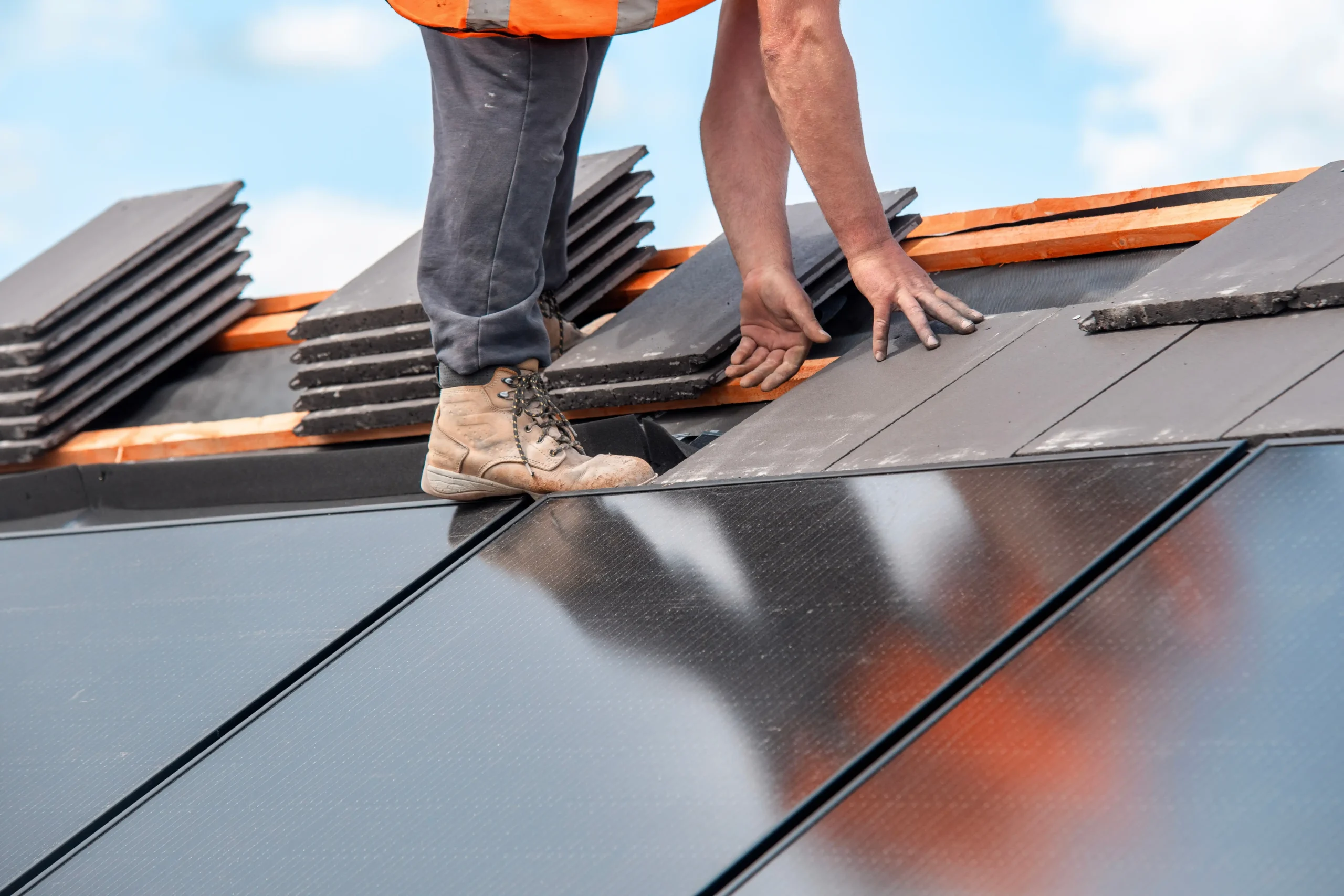
Although the precise procedure differs between manufacturers, a typical project follows several stages.
Stage 1: Roof inspection
The installer examines the existing roof.
They look for structural problems, water damage, unsuitable roof geometry, shading and other conditions that could affect the project.
The roof must be capable of supporting the proposed materials and meeting applicable building requirements.
Stage 2: Energy assessment
The installer reviews household electricity consumption.
This helps determine how much electricity the proposed system should generate.
A household using large amounts of electricity may require a larger active photovoltaic area than a smaller property.
The installer also considers the roof's orientation and the amount of sunlight it receives throughout the year.
Stage 3: Roof preparation
If the project involves replacing an existing roof, the old roofing material may need to be removed.
The roof deck, underlayment and other protective components are then prepared according to the manufacturer's specifications.
This stage is particularly important because the roof must remain weatherproof.
Stage 4: Installing the solar roofing
The active solar shingles and matching non-generating roofing components are installed.
Some products use installation methods similar to conventional roofing shingles.
For example, GAF describes its Timberline Solar ES 2 as a nailable solar shingle installed directly onto the roof using roofing tools and techniques.
Reference: GAF Timberline Solar Roofing System.
Other systems use larger glass or photovoltaic tile assemblies.
Stage 5: Electrical installation
The photovoltaic units are connected according to the manufacturer's electrical design.
The inverter, wiring, protection equipment and any optional battery storage are installed.
Stage 6: Inspection and activation
The installation must satisfy applicable electrical and building regulations.
Where required, inspections and utility approvals must be completed before the system is activated.
The homeowner should receive the relevant documentation, warranty information, system specifications and maintenance instructions.
6. The Advantages of Solar Shingles
Solar shingles have several advantages beyond their ability to generate electricity.
1. A more attractive roof
This is their most obvious benefit.
Solar technology can be integrated into the architecture rather than being visibly attached to the building.
For homeowners who dislike the appearance of conventional panels, this may be an important improvement.
2. Two functions in one product
A conventional roof protects the building, while solar panels generate electricity.
Solar shingles are designed to combine both roles.
This integration can be particularly attractive during new construction or a complete roof replacement.
3. Better use of certain roof shapes
Some smaller solar roofing products can fit areas that are difficult to cover with conventional rectangular panels.
This can be useful on roofs with complicated slopes, dormers or architectural details.
However, the smaller size of individual tiles does not automatically mean the system will produce more electricity.
4. Renewable electricity
Like conventional solar panels, solar shingles produce electricity without burning fuel during operation.
They can reduce the amount of electricity a household needs to purchase from the grid.
The environmental benefit depends partly on the electricity source they replace, their manufacturing impact and their useful operating life.
5. Potentially attractive long-term roofing solutions
Some integrated systems are designed with durability and weather protection as major priorities.
CertainTeed's SunStyle, for example, describes its system as a fully integrated solar roofing solution designed for challenging weather conditions.
The manufacturer provides a 25-year tile warranty and specifies separate power-performance warranty conditions.
These are manufacturer-specific promises, not guarantees that every solar-shingle product has the same lifespan.
Reference: CertainTeed SunStyle.
6. A design option for restricted properties
Some homeowners face architectural or planning restrictions on visible rooftop equipment.
An integrated solar roof may offer a more discreet solution where conventional panels are difficult to accommodate.
However, planning approval should never be assumed. Local authorities can impose requirements on both conventional panels and integrated solar roofing.
7. The Disadvantages: What Homeowners Need to Understand
Despite their attractive design, solar shingles have significant limitations.
These limitations explain why conventional solar panels remain the more common choice.
1. Higher upfront costs
For many households, the price difference is decisive.
A solar roof may require a substantial investment before it begins generating any financial return.
If the objective is simply to reduce electricity bills at the lowest possible cost, conventional solar panels are usually the stronger competitor.
2. Lower electricity production per unit of roof area
Many solar-shingle systems have lower power density than conventional photovoltaic panels.
This means homeowners may need to cover more roof area to achieve the same electricity production.
This can become a serious disadvantage when the available roof surface is limited.
3. Installation is less widely available
A homeowner can usually find several companies offering conventional solar installations in a developed solar market.
Solar-shingle installers may be harder to locate.
Availability depends on the country, manufacturer, product certification and local distribution network.
This can also make it harder to obtain competing quotations.
4. Repairs can be more complicated
Conventional solar panels are separate modules mounted above a roof.
If a panel is damaged, a qualified technician can often remove and replace that individual module without rebuilding the roof covering.
Solar shingles form part of the roof itself.
Repairing a damaged unit may involve electrical work, roofing work and careful attention to the surrounding waterproofing.
The exact difficulty depends on the product design.
5. The roof and electrical systems become more closely connected
This is both an advantage and a disadvantage.
Integration creates a cleaner appearance, but it also means that roofing repairs and electrical maintenance may become more interconnected.
A future roofing contractor must understand the photovoltaic system, and an electrical contractor must understand how the roof is constructed.
6. Hot weather can affect performance
Solar cells do not necessarily become more efficient when the temperature rises.
In fact, photovoltaic module output generally declines as cell temperature increases beyond standard test conditions.
The way a solar roof is constructed can influence how much heat accumulates around the photovoltaic cells.
A study highlighted in Nature Energy explains that photovoltaic modules integrated closely into roofing can operate at higher temperatures than modules separated from the roof by ventilated mounting structures.
It also discusses how cooling arrangements and climate affect the temperature and power output of integrated systems.
Reference: Nature Energy – Building Integration and Cooling.
This does not mean solar shingles are unsuitable for hot climates.
It means that thermal design, ventilation and manufacturer performance specifications deserve particular attention.
7. Replacement materials may be harder to source
An ordinary roof can often be repaired using widely available materials.
An integrated solar roof may depend on a particular manufacturer's product range.
If the manufacturer changes its design or stops selling a product, sourcing matching replacement components could become more difficult.
This is an important long-term consideration for a roof expected to remain in place for decades.
8. How Efficient Are Solar Shingles?
Efficiency is one of the most misunderstood aspects of solar roofing.
A product may have an impressive appearance, but appearance does not determine how much electricity it generates.
There are two separate measurements to consider:
- Conversion efficiency: The percentage of sunlight reaching a photovoltaic cell that is converted into electricity.
- Power density: How much electrical power a particular roof area can generate under specified conditions.
A homeowner should consider both.
A high-efficiency cell does not automatically produce the most electricity if the active area is small or the roof receives substantial shade.
Roof orientation matters
The direction in which the roof faces influences how much sunlight reaches it.
In the Northern Hemisphere, south-facing roof surfaces are often particularly favourable for annual solar production.
East-facing and west-facing surfaces can also be useful, although their production patterns differ.
A north-facing roof may be less suitable, depending on latitude, pitch and surrounding conditions.
Shading can reduce electricity production
Trees, neighbouring buildings, chimneys and other structures can cast shadows across a roof.
Even partial shading can reduce production, depending on the electrical design of the system.
Installers should examine shading throughout the day and across different seasons rather than simply looking at the roof during a single sunny afternoon.
Solar shingles and conventional panels in hot climates
Heat deserves special attention.
Photovoltaic cells respond to sunlight, but their electrical output is influenced by their operating temperature.
A system that receives excellent sunlight but becomes excessively hot may produce less electricity than a cooler system operating under otherwise similar conditions.
The solution is not necessarily to choose conventional panels automatically.
Instead, homeowners should compare the temperature coefficients, installation arrangements, ventilation requirements and real-world performance information of the specific products.
Do solar shingles work on cloudy days?
Yes.
Photovoltaic cells can still generate electricity when sunlight is filtered by clouds.
However, production normally falls because less solar energy reaches the cells.
The same principle applies to conventional solar panels.
Solar shingles do not require uninterrupted sunshine to function, but their annual output depends heavily on local weather and solar exposure.
9. Solar Shingle Brands and Products to Know
The solar-roofing market includes several different approaches.
Some products focus on familiar asphalt-shingle designs, while others aim to create a complete architectural roof made from photovoltaic tiles.
A few manufacturers and product families illustrate the direction of the industry.
GAF Timberline Solar
GAF is one of the established roofing companies to enter the solar-shingle market.
Its Timberline Solar system combines photovoltaic technology with roofing products designed to resemble conventional asphalt shingles.
One distinguishing feature is its installation method.
GAF describes the Timberline Solar ES 2 as the world's first nailable solar shingle, designed to be installed using roofing tools and techniques.
The system is intended to combine roof protection and electricity generation in one installation.
It also promotes a coordinated roofing and solar warranty approach.
Official information: GAF Timberline Solar.
CertainTeed SunStyle
CertainTeed offers SunStyle, an integrated solar roofing product with a distinctive geometric appearance.
Rather than trying to imitate ordinary asphalt shingles exactly, SunStyle uses a design inspired by traditional European roof patterns.
Its manufacturer specifies 110 watts for each active tile.
CertainTeed also provides performance warranty information covering the expected output over time, including a stated 80% nominal output level at 25 years.
The warranty conditions and exclusions should be examined in the actual documentation before purchasing.
Official information: CertainTeed SunStyle.
Tesla Solar Roof: An Important 2026 Development
Tesla helped bring solar roofing into mainstream public attention.
Its Solar Roof concept used glass roofing tiles, with photovoltaic cells incorporated into selected tiles and matching non-generating tiles completing the design.
The product attracted attention because it attempted to make an entire roof look like a premium architectural material rather than a conventional solar installation.
However, the market situation changed in 2026.
On August 24, 2026, Reuters reported that Tesla had stopped selling its premium Solar Roof tiles through its website. Electrek separately reported that Tesla had informed third-party installers that new Solar Roof tiles would no longer be supplied.
Sources: Reuters and Electrek.
This is an important reminder that a technologically interesting product is not necessarily commercially sustainable.
It also demonstrates why buyers should investigate current product availability and installer support rather than relying on older promotional material.
Tesla's reported decision does not mean that the wider solar-shingle industry has disappeared. Other manufacturers continue to offer integrated photovoltaic roofing products.
10. How Long Do Solar Shingles Last?
A solar roof is a long-term building investment.
Homeowners are not simply purchasing an electricity-generating device. They are choosing a roofing material that must protect the property over many years.
Consequently, lifespan and warranties deserve as much attention as efficiency.
Roofing warranties and power warranties are different
A product may carry several separate warranties:
Product warranty: Covers specified defects in materials or manufacturing.
Weatherproofing warranty: Covers certain failures involving water penetration or weather protection.
Power-performance warranty: Specifies the minimum electrical output the photovoltaic components are expected to retain over a particular period.
These warranties should not be confused.
A 25-year roofing warranty does not necessarily mean that the solar cells will produce their original electricity output for 25 years.
CertainTeed's SunStyle documentation, for example, specifies a 25-year tile warranty alongside separate power-performance commitments.
Reference: CertainTeed SunStyle Warranty Information.
What happens as the shingles age?
Photovoltaic materials gradually lose some of their ability to produce electricity.
This process is known as degradation.
The rate depends on the technology, manufacturing quality, operating conditions and environmental exposure.
Other components also have different lifespans.
Inverters, wiring, electrical protection devices and batteries may require maintenance or replacement during the life of the roof.
The Department of Energy notes that inverters are among the photovoltaic components that may require replacement during a system's operating life.
What should a warranty include?
Before purchasing, homeowners should examine:
- The length of the product warranty.
- The period of weatherproofing protection.
- The guaranteed electricity output over time.
- The conditions for replacing defective tiles.
- Whether labour and removal costs are included.
- Whether the warranty transfers to a future property owner.
- What happens if the manufacturer stops producing the product.
- Which installers are authorised to carry out repairs.
A long warranty is valuable only if its conditions are clear and the company responsible for supporting it remains accessible.
11. Maintenance: Does a Solar Roof Need Special Care?
Solar shingles are designed to operate outdoors with relatively little routine intervention.
They do not normally require the same kind of daily attention as household mechanical equipment.
Nevertheless, they are not maintenance-free.
Cleaning
Dust, leaves, bird droppings and other debris can reduce the amount of sunlight reaching photovoltaic surfaces.
Rain may remove some accumulated dirt, but it will not necessarily clean every roof equally.
The appropriate cleaning method depends on the product and roof design.
Homeowners should follow manufacturer instructions rather than using abrasive tools or unapproved cleaning chemicals.
Electrical inspections
Electrical connections, inverters and protection equipment should be inspected according to the manufacturer's maintenance requirements and local regulations.
A sudden fall in electricity production may indicate shading, equipment problems, wiring faults or other technical issues.
Monitoring software can help homeowners identify unexpected changes in system output.
Roof inspections
The roofing components still need attention.
Damaged tiles, flashing problems, water penetration and deterioration around roof openings should be addressed promptly.
Because the photovoltaic components are integrated into the roof, repairs should be performed by professionals familiar with the specific system.
Battery maintenance
If a battery is included, it introduces an additional component with its own operating requirements and warranty.
Battery capacity, temperature conditions, charging behaviour and replacement costs should be considered when calculating the long-term economics of the entire installation.
12. Are Solar Shingles Environmentally Friendly?
The environmental case for solar shingles is closely connected to the wider benefits and limitations of photovoltaic electricity.
During operation, solar shingles generate electricity without burning coal, oil or natural gas.
This can reduce emissions when their output replaces electricity produced from fossil fuels.
They may also reduce the need for separate roofing and solar mounting structures because the photovoltaic material forms part of the building envelope.
However, it would be misleading to describe the technology as having no environmental impact.
Manufacturing photovoltaic cells requires energy and raw materials. Glass, metals, semiconductor materials, wiring and electrical equipment all have environmental footprints.
The roofing materials must also be transported, installed and eventually managed at the end of their useful lives.
The environmental calculation therefore depends on the complete lifecycle.
A solar roof that operates reliably for decades and replaces carbon-intensive electricity can provide significant environmental benefits.
A system that requires premature replacement or generates relatively little electricity may deliver a less attractive overall result.
The most important consideration is not simply whether a product is labelled green, but how much useful electricity it generates over its complete lifetime relative to the resources needed to manufacture, install and maintain it.
13. Are Solar Shingles Worth It?
This is the question that ultimately matters to homeowners.
The technology works. Commercial products exist. The photovoltaic principle is well established.
But technical feasibility and financial value are two different things.
Solar shingles can be worthwhile under certain conditions, yet they are not automatically the best choice for every property.
Scenario 1: You are building a new house
Potentially a good fit.
New construction is one of the strongest situations for considering solar shingles.
The roof has not yet been installed, so the homeowner can compare ordinary roofing and conventional solar panels against an integrated photovoltaic roof from the beginning.
Architects can incorporate solar roofing into the original building design.
The roof orientation, electrical layout, inverter location and optional battery storage can all be planned together.
This avoids the additional disruption associated with removing a relatively new roof.
The final decision still depends on the cost difference and available products.
Scenario 2: Your existing roof needs replacement
Worth comparing.
This is another situation in which solar shingles deserve serious consideration.
If the existing roof is already approaching the end of its useful life, the homeowner will need to spend money on replacement anyway.
The relevant question becomes:
How much more would an integrated solar roof cost compared with a conventional replacement roof plus ordinary solar panels?
This comparison can reveal whether the extra expense is reasonable.
A premium solar roof might become attractive if the homeowner also values its appearance, durability and architectural integration.
Scenario 3: Your roof is relatively new
Usually less attractive.
Replacing a roof that is only a few years old can undermine the economics of solar shingles.
The homeowner would be paying to remove functional roofing material and replace it prematurely.
In most cases, conventional solar panels are likely to be a more practical option.
Scenario 4: You want the cheapest possible solar electricity
Traditional panels usually win.
If the main objective is reducing the cost of electricity generation, conventional rooftop panels generally have the advantage.
They benefit from standardised equipment, wider installer availability, established supply chains and strong competition.
They also typically produce more electricity per unit of roof area.
A homeowner who prioritises financial returns over architectural appearance should compare conventional solar panels carefully before choosing integrated roofing.
Scenario 5: Your property has architectural restrictions
Solar shingles may become particularly interesting when traditional solar panels are not permitted or would significantly change the appearance of the building.
However, approval is not automatic.
The relevant planning authority and building regulations must be consulted before work begins.
14. How to Calculate Whether a Solar Roof Is Financially Worthwhile
The simplest way to evaluate an investment is to estimate its payback period.
The basic formula is:
Payback Period = Net Installation Cost ÷ Annual Financial Savings
For an integrated roof, however, the comparison requires an additional step.
The homeowner should calculate the extra cost of the solar roof relative to the conventional roofing project they would otherwise undertake.
For example, imagine the following hypothetical project:
- Conventional roof replacement: $18,000.
- Solar roofing installation: $35,000.
- Additional investment for the solar option: $17,000.
- Estimated annual electricity savings: $1,700.
The incremental payback calculation would be:
$17,000 ÷ $1,700 = 10 years
This is an illustrative calculation, not a real market quotation or a prediction of future savings.
It demonstrates why the cost of an ordinary replacement roof must be included in the comparison.
What can change the payback period?
Several factors influence the result.
Electricity prices: Higher electricity prices can increase the value of electricity generated at home.
Self-consumption: Using electricity when it is generated may be more valuable than exporting it, depending on local tariff arrangements.
Export compensation: Some electricity providers compensate homeowners for surplus energy. The rates and rules differ between markets.
Roof orientation: A roof receiving more useful sunlight may produce more electricity.
Shading: Trees and nearby buildings can reduce annual generation.
Financing: Interest payments can increase the total cost of the project.
Maintenance: Repairs and component replacements affect long-term returns.
Battery storage: Batteries can improve the ability to use solar electricity after sunset, but their purchase and replacement costs must be considered.
Government incentives: Rebates, grants, tax programmes and renewable-energy schemes can influence the final investment. These programmes vary by country and may change.
A responsible financial assessment should use a realistic estimate of annual electricity production rather than relying on a manufacturer's most optimistic figures.
15. What Should You Ask Before Buying Solar Shingles?
The decision should not be based on appearance alone.
Before signing a contract, homeowners should ask installers several important questions.
Questions about performance
- How much electricity will the system generate annually?
- What is the expected output during different seasons?
- What are the photovoltaic cells' efficiency and temperature characteristics?
- How much roof area will actually contain active solar shingles?
- How will shading affect performance?
Questions about installation
- Does the project require complete roof replacement?
- Will the roof structure need reinforcement?
- Who handles the roofing and electrical work?
- Is the installer certified by the manufacturer?
- Are permits, inspections and grid approvals included in the quotation?
Questions about long-term costs
- What is the total installed price?
- Are scaffolding and old-roof removal included?
- Is an inverter included?
- Is battery storage included?
- What happens if an individual solar shingle breaks?
- Are replacement components readily available?
Questions about warranties
- How long is the product warranty?
- What does the weatherproofing warranty cover?
- What is the guaranteed electricity output after 25 years?
- Does the warranty include labour?
- What happens if the manufacturer stops operating?
A written answer to these questions is more useful than a general promise that the roof will generate free electricity for decades.
16. The Future of Solar Roofing
Solar shingles represent a larger change in how buildings may be designed.
For decades, solar electricity was treated as something added to an existing building.
A roof was constructed first. Solar panels were then installed above it.
Building-integrated photovoltaics challenges that separation.
The roof, windows and other building surfaces can potentially become active parts of a building's energy system.
This opens the door to buildings that produce some or all of their own electricity without relying entirely on conventional rooftop equipment.
Better integration could reduce installation costs
One of the biggest opportunities is combining roofing and solar installation into a more standardised process.
Companies already experienced in roofing have an advantage because they understand building materials, weatherproofing and construction practices.
GAF's nailable solar-shingle design illustrates this approach.
If integrated products become easier to install using familiar roofing tools and established contractor networks, the industry could reduce some of the labour and training barriers that currently limit adoption.
Efficiency remains important
Solar shingles must also compete with increasingly capable conventional photovoltaic modules.
A beautiful roof that produces relatively little electricity may struggle to justify its price.
Future products will need to improve power density, durability and thermal performance while remaining easy to install and repair.
Product availability matters as much as innovation
The reported withdrawal of Tesla's Solar Roof from new sales in 2026 illustrates the commercial difficulty of turning an impressive product concept into a sustainable business.
The wider industry needs reliable manufacturers, trained installers, accessible replacement materials and warranties that homeowners can trust.
The roof could become part of a connected energy system
Solar shingles could eventually operate alongside:
- Home battery storage.
- Electric vehicle charging.
- Smart electrical appliances.
- Home energy management software.
- Heat pumps.
- Grid-interactive electricity systems.
Instead of treating a roof as a passive building component, homeowners could treat it as one part of an integrated energy network.
This is an interesting possibility, but the financial and technical details will determine how quickly it becomes common.
Conclusion: A Beautiful Idea, but Not Yet the Cheapest Solar Solution
Solar shingles offer an appealing vision of the future.
A roof no longer needs to be just a protective covering. It can also become an electricity-generating surface, helping households use renewable energy without covering their homes in conventional solar panels.
The technology is real, and products from companies such as GAF and CertainTeed demonstrate that photovoltaic roofing has moved beyond experimental concepts.
Yet the financial reality remains complicated.
Solar shingles generally cost more than conventional solar panels, can produce less electricity per square metre and are supported by a smaller installation network.
For homeowners whose existing roofs are in excellent condition, the extra cost may be difficult to justify.
But the calculation changes when a roof needs replacing or a house is being built from scratch. In those situations, the ability to combine roofing and electricity generation in one integrated system becomes more attractive.
The most sensible approach is to compare complete projects rather than simply comparing the price of solar shingles with the price of solar panels.
For now, traditional solar panels remain the practical choice for many households seeking the lowest-cost route to solar electricity.
Solar shingles, however, offer something different: the possibility of making renewable energy an almost invisible part of the architecture.
And as the technology develops, that distinction could become increasingly important.
Key Takeaways
- Solar shingles are photovoltaic roofing materials that generate electricity while protecting a building.
- They are a form of building-integrated photovoltaics (BIPV).
- Unlike conventional solar panels, they are installed as part of the roof rather than mounted above it.
- Their biggest advantage is their discreet architectural appearance.
- Traditional solar panels generally produce more electricity per unit of roof area.
- Solar shingles are usually more expensive than conventional rooftop solar.
- US installation estimates in 2026 range from approximately $21,000 to $50,000, depending on the project.
- The best time to consider them is generally during new construction or a complete roof replacement.
- Heat, shading, orientation and the amount of active photovoltaic roofing influence performance.
- Product warranties, weatherproofing protection and electricity-output guarantees must be examined separately.
- Solar shingles do not automatically provide electricity during a grid outage; suitable battery and backup equipment may be required.
- Traditional panels remain the more economical option for many homeowners.
Frequently Asked Questions (FAQ)
1. What are solar shingles?
Solar shingles are roofing materials containing photovoltaic cells that generate electricity from sunlight. They replace or form part of conventional roofing materials rather than being mounted on a separate structure above the roof.
2. Are solar shingles better than solar panels?
Not necessarily. Solar shingles offer a more integrated and discreet appearance, but conventional solar panels generally produce more electricity per unit of roof area and cost less to install. The better option depends on the property, budget and priorities.
3. How much do solar shingles cost in 2026?
In the United States, Angi estimates an average professional installation cost of around $35,000, with typical projects ranging from $21,000 to $50,000. Costs differ substantially between countries, manufacturers and roof designs.
4. Can solar shingles power an entire house?
They can potentially generate enough electricity to meet a household's annual energy consumption if the roof has sufficient suitable photovoltaic area and receives adequate sunlight. However, actual results depend on household demand, system capacity, weather and seasonal production.
5. Do solar shingles work at night?
No. Solar shingles need sunlight to generate electricity. At night, a home must use electricity from the grid or from previously stored battery energy.
6. Can solar shingles work during a power outage?
Not automatically. A standard grid-connected solar system generally shuts down during an outage for electrical safety. Backup operation requires compatible battery storage and appropriate equipment designed to supply the home safely.
7. How long do solar shingles last?
Lifespans and warranties differ between manufacturers. Some integrated roofing products carry 25-year tile or product warranties, while their photovoltaic components have separate electricity-output guarantees. Actual performance depends on the product and operating conditions.
8. Are solar shingles waterproof?
They are designed to form part of a weather-resistant roofing system. However, waterproofing depends on the complete installation, including flashing, underlayment, connections and workmanship. The manufacturer's weatherproofing warranty should be examined carefully.
9. Do solar shingles work in hot climates?
Yes. They can generate electricity in hot climates, but high photovoltaic cell temperatures can reduce electrical output. Thermal design, ventilation and the product's temperature characteristics are important when selecting a system.
10. Can solar shingles be installed on an existing roof?
They can be installed during some renovation projects, but often require significant roof preparation or replacement. A roof that is already near the end of its life is generally a more suitable candidate than a recently installed roof.
11. Do solar shingles increase property value?
They may make a property more attractive to some buyers, particularly those interested in integrated renewable energy and modern architecture. However, the actual effect on resale value depends on the local housing market, installation quality, warranties and remaining system life. A guaranteed increase in property value should not be assumed.
12. Are solar shingles worth the money?
They can be worthwhile when a homeowner is already replacing a roof, building a new property or prioritising an integrated appearance. For homeowners mainly interested in generating electricity at the lowest cost, conventional solar panels generally offer better value.
Sources and Further Reading
- US Department of Energy – Solar Photovoltaic System Design Basics.
- Energy Saving Trust – Solar Roof Tiles.
- Angi – How Much Do Solar Shingles Cost? (2026).
- EnergySage – Solar Panel Cost in 2026.
- GAF – Timberline Solar Roofing System.
- CertainTeed – SunStyle.
- Nature Energy – Building Integration and Cooling.
- Reuters – Tesla Stops Selling Solar Roof Tiles, August 24, 2026.
- Electrek – Tesla Discontinues Its Solar Roof, August 20, 2026.
- The Washington Post – Are Solar Roofs Worth the Price?.
Editorial note: Costs and product availability reflect the cited information available in November 2026. Prices, warranties, installation requirements and incentives vary by country. Manufacturer specifications should always be checked before making purchasing decisions.
The conversation
Post a Comment