Introduction: A Message From a World That No Longer Exists
Deep within Antarctica, beneath a landscape of frozen plains, exposed mountains, and relentless winds, scientists have discovered something extraordinary: ice containing air that was trapped approximately six million years ago.
This ancient ice preserves a physical connection to an Earth that looked remarkably different from the planet we know today. Global temperatures were warmer, sea levels were higher, and ecosystems were adjusting to environmental conditions that have long since disappeared.
There were no modern cities, no industrial civilization, and no written records. The atmosphere that surrounded ancient forests, oceans, and early human ancestors was different from the air surrounding us now.
Yet tiny samples of that atmosphere have survived.
Locked inside Antarctic ice are microscopic bubbles that formed as snow gradually accumulated, compressed, and transformed into glacial ice. These bubbles became natural containers for the gases circulating through Earth's atmosphere millions of years earlier.
In October 2025, researchers announced a remarkable breakthrough. An international scientific team associated with the U.S. National Science Foundation's Center for Oldest Ice Exploration, known as COLDEX, had identified the oldest directly dated ice and trapped air yet reported.
The samples came from the Allan Hills region of East Antarctica, a remote landscape where unusual geological conditions allow exceptionally ancient ice to survive surprisingly close to the surface.
The findings were published in the peer-reviewed journal Proceedings of the National Academy of Sciences.
The discovery does more than establish a record for ancient ice. It offers researchers an opportunity to investigate how Antarctica responded to a warmer global climate, how atmospheric conditions changed through geological time, and why the continent eventually became so cold.
Perhaps most importantly, it provides evidence that could improve our understanding of the relationship between greenhouse gases, temperature, and the world's largest ice sheet.
To understand why this discovery matters, we must first explore how scientists found the ice, what makes it so old, and how something as ordinary as frozen water can preserve information for millions of years.
What Was Discovered: The Oldest Directly Dated Ice and Air
The central achievement was the identification of Antarctic ice dating back approximately six million years. The research, led by scientists including Sarah Shackleton of Woods Hole Oceanographic Institution and John Higgins of Princeton University, examined shallow ice cores collected from the Allan Hills blue-ice area.
Ice cores are cylindrical sections of ice extracted through drilling. They allow researchers to examine the physical, chemical, and atmospheric information preserved inside glaciers. Most ice-core research depends on progressively drilling downward through accumulated snow and ice. In suitable locations, deeper layers generally correspond to older periods.
At Allan Hills, however, the geological arrangement is much more complicated. Researchers recovered samples from drilling locations generally around 100 to 200 meters beneath the surface. Some of the oldest ice was therefore accessible at a fraction of the depth required for many traditional Antarctic ice-core projects.
The team used measurements involving the atmospheric isotope argon-40 to determine the age of trapped air. The oldest dated samples reached approximately six million years, extending the known age of directly dated ice well beyond earlier discoveries from the same region. Previous research at Allan Hills had established the presence of ice and air at least 2.7 million years old. The new findings more than doubled that age.
But the breakthrough was not simply a matter of finding an exceptionally ancient piece of ice. The scientific team also examined oxygen isotopes within the frozen water. These measurements provided evidence of substantial long-term cooling in the Antarctic region. According to the published study, the isotopic temperature reconstruction indicates approximately 12 plus or minus 2 degrees Celsius of cooling between the six-million-year-old conditions and the late Pleistocene reference period. This represents a regional paleoclimate reconstruction, not a measurement of global cooling.
Together, the age measurements and isotope evidence create a valuable record of climatic change across a geological interval that researchers have struggled to reconstruct using direct atmospheric samples. The findings provide new evidence about the development of the Antarctic ice sheet and the cooling of the southern polar region over millions of years.
The Unusual Landscape Where Ancient Ice Survived
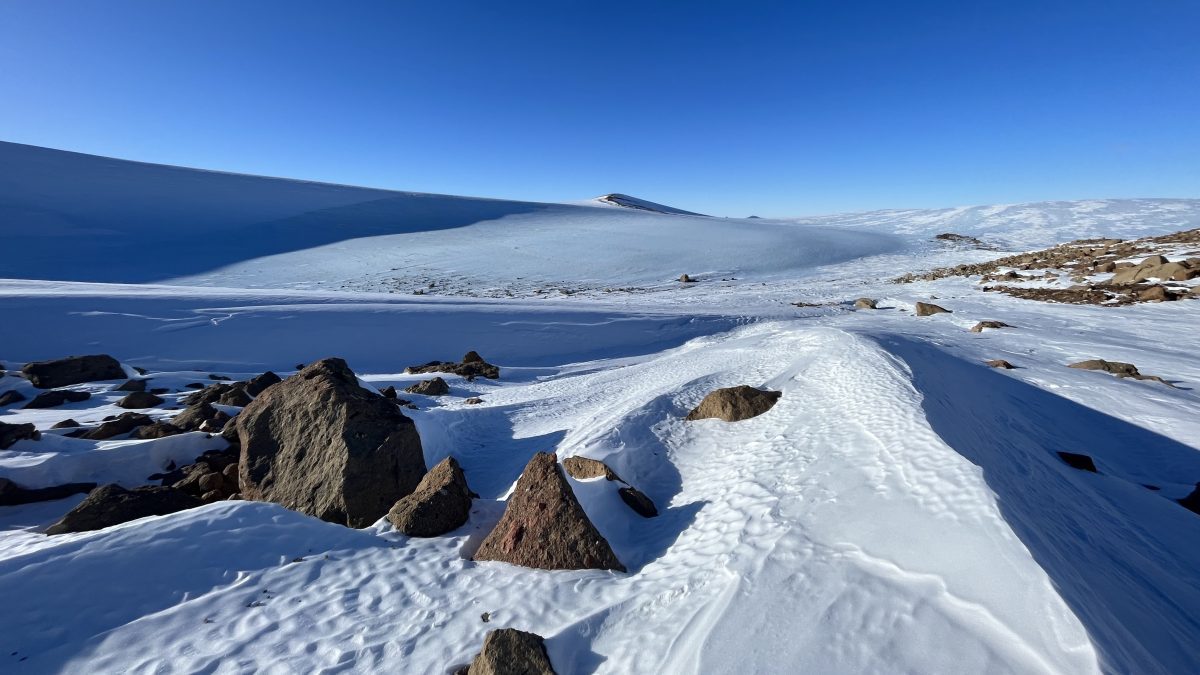
Antarctica is commonly imagined as a continuous white wilderness, but its frozen landscape contains enormous geological differences. Some regions are dominated by deep ice sheets that have accumulated snow for hundreds of thousands of years. Others contain glaciers that flow through mountain valleys, exposed rocky ridges, or powerful wind corridors. The Allan Hills are particularly unusual.
Located in East Antarctica near the Transantarctic Mountains, this region contains extensive blue-ice areas where old glacial ice becomes exposed at the surface. Under ordinary conditions, snowfall accumulates, gradually buries existing ice, and creates increasingly thick layers. At Allan Hills, strong winds can remove fresh snow before it builds into a permanent covering. Meanwhile, the underlying ice moves slowly through complex terrain shaped by mountains and bedrock. Over very long periods, this combination of ice movement, topography, extreme cold, and surface erosion can bring ancient ice closer to the surface.
Imagine an enormous archive in which the oldest documents are normally stored at the bottom of a towering stack. Now imagine that the archive has been tilted, folded, and slowly rearranged until some of its oldest pages appear near the edges. The Allan Hills ice behaves in a somewhat similar way. Its geological history has brought extremely old material into locations where scientists can retrieve it without drilling several kilometers into the ice sheet.
However, this accessibility comes with a challenge. The ice is not necessarily arranged in a simple chronological sequence. Layers can be compressed, tilted, folded, or otherwise disturbed by glacial movement. Researchers must therefore investigate the age and geological setting of individual samples rather than assuming that every meter of drilling represents a predictable interval of time. This complicated structure is precisely why direct dating methods are so important. Without them, scientists could easily misunderstand the sequence of climatic information preserved in the ice.
How Ice Becomes a Natural Time Capsule
The preservation of ancient air begins with an ordinary snowfall. Snowflakes accumulate on the frozen surface of Antarctica, gradually building up over seasons and years. Fresh snow contains large spaces between its crystals. These spaces allow air to circulate through the upper snowpack. As additional snow accumulates, its weight compresses the layers beneath. The crystals gradually change shape and become denser, creating a transitional material called firn.
Firn is neither fresh snow nor completely solid glacial ice. It contains a network of pores through which atmospheric gases can still move. With continued burial and compression, those pores gradually close. Once the open pathways become sealed, individual bubbles of air become isolated within the solid ice. The atmosphere present during this sealing process is effectively trapped. Over time, the surrounding glacier may become hundreds or thousands of meters thick, but the bubbles can remain preserved.
For climate scientists, these bubbles are extraordinarily valuable because they contain direct samples of ancient atmospheric gases. Researchers can analyze carbon dioxide, methane, and other constituents when sufficient suitable gas is available and the samples have remained well preserved. This differs from many other methods of reconstructing ancient climates. For example, marine sediments and fossilized biological remains often provide indirect evidence of past atmospheric conditions. Scientists use chemical relationships and calibrated models to estimate environmental characteristics. Ice-core bubbles, by contrast, can preserve actual samples of the atmosphere.
There is an important complication: the age of the ice and the age of the air are not always identical. Snow can remain porous for an extended period before bubbles become completely sealed. Consequently, the trapped air may be younger than the surrounding ice. Scientists account for this difference when interpreting ice-core records. At exceptionally old and structurally complex sites, determining exactly how air and ice ages relate becomes a significant scientific task. Nevertheless, the fundamental principle is remarkable. An atmosphere that existed long before modern humans can leave behind a small physical sample, protected within frozen water for geological timescales.
How Scientists Can Determine That Ice Is Six Million Years Old
Finding old-looking ice is relatively straightforward. Establishing that it has survived for six million years is much more difficult. Researchers cannot simply count visible annual layers in ice this ancient. In some younger ice cores, seasonal variations in dust, chemistry, or isotopes allow scientists to identify annual cycles. But as ice becomes older, layers can become extremely thin, compressed, or distorted.
At Allan Hills, researchers used an atmospheric dating approach involving argon-40. Argon is a noble gas, meaning it is chemically unreactive under ordinary environmental conditions. Its isotopes provide useful information about Earth's atmospheric history. One important process involves potassium-40, a naturally occurring radioactive isotope found in rocks. As potassium-40 decays, some of it produces argon-40. Over immense periods, argon released from Earth's interior has contributed to the atmospheric inventory of this isotope. As a result, atmospheric argon-40 has changed gradually over geological time. Ancient air can preserve a slightly different isotopic composition from modern air. By carefully measuring the relevant argon isotope ratios in trapped gas, researchers can estimate when that air became isolated from the atmosphere.
This is not the same as conventional radiocarbon dating, which is unsuitable for material millions of years old. The measurements require extremely sensitive laboratory instruments capable of detecting small isotopic differences. Researchers must also consider possible contamination, gas loss, and the complicated geological history of the samples. A misleading result could occur if the ice had been disturbed or if atmospheric gases had exchanged with their surroundings after the original bubbles formed. For that reason, age estimates are evaluated alongside other physical and chemical evidence. The published Allan Hills research used these methods to identify samples containing ancient air whose isotopic composition indicated an age of approximately six million years. The result provides a direct scientific basis for the discovery rather than relying solely on assumptions about how deeply the ice was buried. It also demonstrates that Antarctic ice can preserve information across a far longer timescale than the most familiar ice-core records.
Reading Temperature From the Chemistry of Frozen Water
Air bubbles reveal atmospheric composition, but the ice itself also contains a remarkable amount of information. Every water molecule is made from hydrogen and oxygen. However, not all oxygen atoms have the same mass. Different forms of an element, known as isotopes, contain different numbers of neutrons. Oxygen-16 and oxygen-18 are two naturally occurring isotopes that are particularly useful in paleoclimate research. Their relative abundance in snow and ice is influenced by processes such as evaporation, condensation, atmospheric circulation, and temperature.
When water evaporates from the ocean, molecules containing lighter isotopes generally enter the vapor phase more readily. As moist air moves toward colder regions, water containing heavier isotopes tends to condense and fall as precipitation preferentially during successive stages of cooling. The remaining atmospheric moisture becomes progressively depleted in heavier isotopes. By the time that moisture reaches Antarctica, its isotopic composition contains information about the conditions under which the snow formed. Scientists can measure these isotope ratios in ancient ice and use them to reconstruct aspects of past climate. The method is powerful, but it is not a simple thermometer. Changes in moisture sources, atmospheric circulation, elevation, and seasonal snowfall can also influence the isotopic signal. Researchers therefore interpret isotope measurements using additional evidence and physical understanding.
In the Allan Hills study, the oxygen-isotope record suggested a substantial long-term cooling trend across the ancient samples. The researchers estimated approximately 12 degrees Celsius of regional cooling, with an uncertainty of roughly 2 degrees, between conditions represented by six-million-year-old ice and the late Pleistocene. That finding offers evidence for Antarctica's transition toward colder conditions over geological time. It also helps scientists compare the ice record with independent reconstructions obtained from marine sediment cores. When different archives tell compatible stories, researchers gain stronger confidence that they are identifying genuine features of Earth's climate history.
Six Million Years Ago: A Warmer Chapter in Earth's History
To appreciate the significance of the discovery, it helps to imagine Earth approximately six million years ago. This period belongs to the late Miocene epoch. The continents occupied broadly recognizable positions, but many ecosystems, atmospheric conditions, and regional landscapes differed substantially from those of today. The world was still experiencing the long-term environmental changes that would eventually help shape modern climates. Antarctica already possessed extensive ice, but the size, behavior, and stability of different parts of its ice sheet had changed through earlier periods. Elsewhere, changing environmental conditions influenced forests, grasslands, oceans, and animal populations.
Marine sediments and other geological records suggest that some intervals of the late Miocene and subsequent Pliocene were warmer than modern preindustrial conditions. Global sea level also experienced substantial changes during these epochs. However, the climate six million years ago should not be treated as a single uniform condition. Temperatures varied across regions, and the geological record contains fluctuations occurring over thousands or millions of years. An ancient sample from Antarctica cannot, by itself, reconstruct the entire global climate. What it can offer is an exceptionally valuable local measurement that can be compared with other evidence.
This is important because polar regions are particularly sensitive components of Earth's climate system. Large ice sheets influence sea level, reflect incoming sunlight, affect atmospheric circulation, and interact with surrounding oceans. When an ice sheet expands, it can increase the amount of solar radiation reflected back into space. When ice retreats, darker land or water surfaces may absorb more energy. Such feedbacks can amplify or moderate environmental changes. By studying ancient Antarctic ice, researchers may gain better insight into the conditions under which large ice sheets expanded, changed configuration, or remained stable. The six-million-year-old samples therefore offer a rare opportunity to examine an important chapter of Earth's climate history using material that was actually present during that time.
Why Blue Ice Is Different From Ordinary Glacial Ice
Blue ice is visually striking, but its scientific value extends far beyond appearance. Glacial ice often appears blue because water molecules absorb longer wavelengths of visible light more effectively than shorter blue wavelengths. In dense ice, this optical effect becomes especially noticeable. Yet a blue-ice area is not defined only by the color of its surface. It is also associated with particular environmental and glaciological conditions. In parts of Antarctica, powerful winds remove snow through erosion and sublimation. Sublimation occurs when solid ice changes directly into water vapor without first becoming liquid. Where snow removal exceeds new accumulation, older ice can become exposed. Over time, ice flowing from surrounding regions may continually replace material removed at the surface. In suitable locations, the process exposes ice that originated much farther inland or much earlier in Earth's history.
This creates an unusual opportunity for scientific exploration. Instead of drilling through kilometers of younger ice, researchers may access ancient material relatively close to the surface. However, blue-ice areas are not automatically ancient, and visible color cannot establish an ice sample's age. Each site has its own history. Some exposed ice may be comparatively young. Other locations may preserve material that has experienced complex deformation. At Allan Hills, rugged terrain helps influence the movement and preservation of ice. The extreme cold slows processes that might otherwise destroy ancient samples, while persistent winds limit the accumulation of newer snow. Researchers are still investigating exactly why some ice in this region has survived for millions of years. Understanding that preservation mechanism matters because it could help identify other Antarctic locations containing even older ice. The discovery may therefore represent more than an isolated success. It could provide clues for an entirely new strategy of exploring Earth's ancient atmosphere.
Two Remarkable Ice-Core Projects Are Solving Different Mysteries
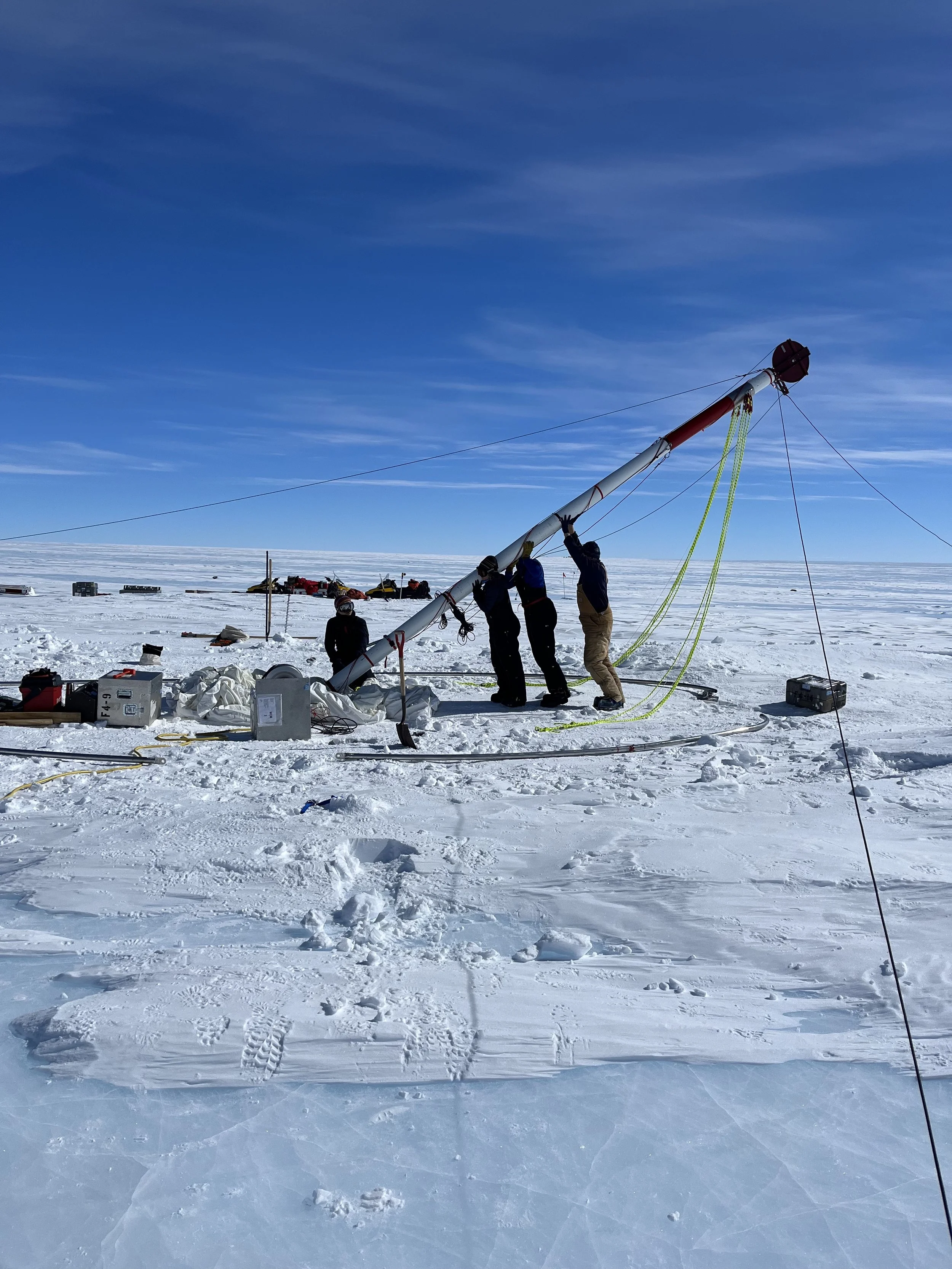
The Allan Hills discovery is part of a much broader international effort to extend humanity's direct record of past atmospheric conditions. Another major achievement came from the European Beyond EPICA-Oldest Ice project. In January 2025, researchers announced that drilling at Little Dome C in East Antarctica had reached approximately 2,800 meters beneath the surface. The project recovered an exceptionally long ice core containing a climate record extending back at least 1.2 million years. Later in 2025, participating laboratories began examining some of the deepest and oldest sections. By 2026, scientists were continuing the painstaking work of analyzing the recovered material.
At first glance, the European and American discoveries might appear to be competing claims about the oldest ice. In reality, they represent two complementary kinds of scientific record. The Beyond EPICA project focuses on recovering a long, relatively continuous sequence of climate information. Such a sequence is valuable because researchers can follow changes through time rather than examine isolated samples. The Allan Hills project focuses on finding exceptionally ancient ice that preserves individual snapshots from much earlier periods. These snapshots may reveal atmospheric and environmental conditions that no existing continuous ice-core record can reach.
A useful comparison is the difference between a long documentary film and a collection of very old photographs. The continuous record shows how events unfolded over an extended interval. The isolated samples can reach much farther into the past, but they may not preserve everything that happened between individual moments. Both approaches answer important scientific questions. Together, they could allow researchers to reconstruct a more complete picture of Earth's changing atmosphere. The continuous core can help explain the timing of transitions, while ancient blue-ice samples may provide direct evidence from periods previously accessible mainly through indirect geological records.
The Mystery of Earth's Changing Ice Ages
One of the most important questions in paleoclimate science concerns the changing rhythm of Earth's ice ages. During much of the earlier Pleistocene, major glacial cycles were strongly associated with a periodicity of approximately 41,000 years. Later, during the Mid-Pleistocene Transition, the climate system shifted toward longer, often roughly 100,000-year glacial cycles. This transition occurred broadly between about 1.2 million and 800,000 years ago, although its boundaries depend on how researchers define the change.
Scientists understand that variations in Earth's orbit influence the distribution of solar energy reaching the planet. These variations include changes in orbital eccentricity, axial tilt, and precession. Together, they affect the timing and intensity of seasonal sunlight. But orbital variations alone do not fully explain every feature of the ice-age record. Interactions among greenhouse gases, oceans, ice sheets, and surface processes are also important. Researchers continue to investigate why the climate system began responding differently to orbital forcing. Was the transition related to changing atmospheric carbon dioxide concentrations? Did continental ice sheets become larger or behave differently? Were changes in ocean circulation or long-term ice-sheet erosion involved? Could several mechanisms have combined to produce the new pattern?
The Beyond EPICA record is especially valuable for investigating these questions because it reaches into the time interval during which the transition developed. Scientists hope that direct atmospheric measurements from this extended record will clarify how greenhouse gases behaved across successive glacial cycles. Meanwhile, Allan Hills ice offers access to a much older world, before the familiar late-Pleistocene pattern became established. The two projects therefore examine different portions of a long climatic story. One investigates how the modern rhythm of ice ages emerged. The other reaches into ancient conditions that may reveal how Antarctica developed before those later cycles.
What Ancient Air Could Reveal About Greenhouse Gases
One of the most exciting possibilities involves reconstructing the atmosphere's greenhouse gas concentrations millions of years ago. Carbon dioxide is particularly important because it influences how Earth absorbs and releases energy. Methane is another powerful greenhouse gas whose atmospheric concentration can change in response to biological, chemical, and environmental processes. Over hundreds of thousands of years, Antarctic ice cores have provided direct evidence that atmospheric greenhouse gases and climate conditions changed together. Extending these measurements farther into the past could offer valuable insights into periods when the planet was warmer.
However, an important distinction must be made. The Allan Hills researchers have demonstrated the existence of exceptionally ancient ice and trapped air, and their published work provides evidence about its age and regional temperature history. That does not mean they have already established a complete, high-resolution carbon dioxide history extending six million years into the past. Reconstructing greenhouse gas concentrations from these samples remains an important research objective. Scientists must first determine whether sufficient gas is available, whether the samples are well preserved, and whether the original atmospheric composition can be reconstructed reliably. Very old ice can experience physical and chemical changes that complicate measurements. Some gases may diffuse, escape, or become altered through interactions with surrounding materials. Careful laboratory procedures are necessary to identify and account for these possibilities.
If reliable greenhouse gas measurements can be obtained, scientists could compare them with independent temperature records from ancient marine sediments and other geological archives. That would help researchers test hypotheses about the relationship between atmospheric composition and long-term climate changes. The evidence would not necessarily produce a simple answer. Climate is influenced by numerous interacting processes, including ocean circulation, continental geography, orbital variations, ice-sheet dynamics, and greenhouse gases. The greatest scientific value may come from identifying how these factors interacted during different environmental conditions.
What Happens When Ancient Ice Arrives at a Laboratory?
Recovering an ice core from Antarctica is only the beginning of the scientific process. The material must be preserved carefully during transportation, storage, and analysis. Ice cores collected in the field are packed into insulated containers and transported through specialized logistical networks. For the American COLDEX program, samples are curated through the U.S. National Science Foundation's ice-core infrastructure, including the National Ice Core Facility in Colorado. Maintaining cold storage is essential. If ancient ice melts and refreezes, some of the original physical structure and atmospheric information may be damaged or lost.
Once samples reach a laboratory, researchers can divide them into smaller sections for different kinds of analysis. Some sections are used to examine stable isotopes in the water. Others are prepared for gas extraction, chemical measurements, or structural examination. Scientists may use specialized saws to cut the ice, carefully removing material from the outer surfaces to reduce the possibility of contamination. In gas analysis, laboratory systems can release trapped air through controlled melting or mechanical crushing. The extracted gases are then measured using sensitive analytical instruments. Mass spectrometers can distinguish isotopes based on their mass-to-charge ratios, allowing scientists to study atmospheric composition or obtain chronological information. Other measurements examine impurities, dust particles, and the internal structure of the ice. Each technique reveals a different part of the ancient environment.
The challenge is that the samples are scientifically precious and finite. A small piece of exceptionally old ice may contain information relevant to several different research questions. Scientists must therefore coordinate how the material is divided and ensure that enough is preserved for future investigations. Technological improvements could eventually make it possible to extract additional information from samples already stored in research facilities. The value of an ancient ice core may continue to grow long after the expedition that recovered it has ended.
Why the Discovery Matters for Future Sea-Level Research
Antarctica contains the largest mass of ice on Earth. Changes in the Antarctic ice sheet therefore have major implications for global sea level. When ice resting on land loses mass to the ocean, it contributes to rising sea levels. The rate and magnitude of such changes depend on several processes, including atmospheric warming, ocean heat, ice flow, snowfall, and the behavior of floating ice shelves. Scientists use observations, geological evidence, and numerical models to investigate how the ice sheet may respond to future environmental conditions. But predicting the behavior of an enormous ice sheet is challenging. Some processes unfold over decades, while others operate over centuries or millennia. Important interactions occur where ice meets the ocean, where glaciers flow across bedrock, and where changes in ice thickness affect the forces driving movement.
Ancient climate records can help constrain these models. If researchers can reconstruct how Antarctica behaved during earlier warm periods, they may obtain useful evidence about the conditions under which its ice expanded, contracted, or changed stability. This does not mean that six-million-year-old ice directly predicts how many centimeters sea level will rise in a particular future decade. The modern climate system is experiencing rapid human-caused warming under conditions that differ from those of the late Miocene. Continental configurations, ice-sheet geometry, atmospheric composition, and the speed of environmental change all matter. Nevertheless, ancient periods provide natural evidence about the range of conditions that Earth's climate system has experienced. They can reveal whether a model produces physically plausible outcomes across different climate states. Researchers can also compare ice-core findings with geological records from ocean sediments and coastal deposits. Such comparisons may strengthen understanding of how temperature, greenhouse gases, and ice-sheet changes have interacted. Ultimately, the discovery contributes to a larger scientific effort: reducing uncertainty about one of the most consequential components of Earth's climate system.
Why Looking Into the Past Helps Explain Today's Warming
Modern climate science depends on both direct observations and knowledge of Earth's longer history. Satellites measure changes in ice extent, temperature, and surface elevation. Ocean instruments monitor heat content and circulation. Weather stations provide detailed observations of atmospheric conditions. These modern measurements are essential, but they cover relatively short periods compared with the geological timescales over which ice sheets develop. Ancient climate archives provide a different perspective. They show how Earth responded to environmental changes long before modern technology existed. This is especially useful for understanding processes that operate slowly. Large ice sheets may continue adjusting to changing temperatures long after the initial forcing begins. Deep ocean circulation can also respond over extended periods. Geological records therefore provide valuable information about long-term climate sensitivity and delayed environmental responses.
However, natural climate variability does not contradict the scientific evidence for modern human-caused warming. Past climate changes occurred for many reasons, including orbital variations, greenhouse gas changes, volcanic activity, and long-term geological processes. Today's rapid increase in atmospheric carbon dioxide is primarily driven by human activities, especially the burning of fossil fuels and land-use changes. Ancient ice helps scientists understand how greenhouse gases and temperature have interacted across very different periods. It is a source of evidence about climate mechanisms, not an argument that modern warming must be harmless because Earth's climate changed naturally in the past. Indeed, evidence that Antarctica was substantially warmer during ancient intervals can help demonstrate how different the polar environment may become under sustained changes in global temperature. The key questions concern magnitude, timing, and physical mechanisms. How much warming is required to produce major changes in ice-sheet stability? How rapidly can particular parts of the system respond? Which changes may persist after atmospheric temperatures stabilize? Ancient records cannot answer these questions alone. But they can provide an independent line of evidence that complements contemporary observations, experiments, and climate modeling.
Why This Is Also a Story About Scientific Collaboration
The discovery illustrates how modern scientific breakthroughs often depend on cooperation across institutions, disciplines, and countries. The COLDEX program brings together specialists in glaciology, atmospheric chemistry, geophysics, climate science, and analytical instrumentation. Field researchers are responsible for collecting samples under difficult conditions. Drilling specialists design and operate equipment capable of extracting cores without destroying their structure. Laboratory scientists develop methods to measure extremely small differences in isotopic composition. Climate researchers interpret the results using physical models and independent environmental records. Each contribution is essential. An ice core may appear to be a simple cylinder of frozen water, but extracting meaningful information from it requires extensive expertise.
International cooperation also allows scientists to compare discoveries from different Antarctic regions. The European Beyond EPICA project, for example, provides a complementary continuous record that can be analyzed alongside the much older snapshots recovered at Allan Hills. Combining evidence from multiple archives can reduce the risk of relying too heavily on one unusual location. Collaboration is also important for maintaining the scientific value of recovered samples. Repositories and shared research facilities make it possible for different teams to investigate ice collected during earlier expeditions. As analytical techniques improve, researchers may revisit archived material to answer new questions. In this way, the benefits of a single field campaign can extend far into the future. A sample recovered today might contribute to discoveries decades later, when new instruments become capable of detecting evidence that current methods cannot measure.
Conclusion: The Past Is Still Waiting Beneath the Ice
The discovery of six-million-year-old ice in Antarctica represents an extraordinary achievement in the scientific exploration of Earth's history. At the Allan Hills, researchers have found a rare archive that preserves ancient atmospheric samples and evidence of long-term regional cooling. The work has extended the known age of directly dated ice and trapped air while opening new possibilities for studying warmer periods in Earth's geological past. But the discovery is also a reminder that scientific progress rarely ends with a single dramatic finding. The ice must be analyzed carefully. Its geological history must be reconstructed. Its chemical signals must be compared with independent evidence. And its implications for greenhouse gases, Antarctic ice-sheet behavior, and global climate must be tested through further research.
The most important unanswered questions may prove even more interesting than the original discovery. Could additional ancient ice reveal how the atmosphere behaved during warmer geological periods? Might new samples help explain the development and stability of the Antarctic ice sheet? Could improvements in laboratory technology uncover information that current instruments cannot yet detect? Scientists are continuing to investigate these possibilities. For now, the achievement offers a striking image of how Earth preserves its own history. While the world above it changed repeatedly, a small amount of Antarctic ice remained frozen, protecting tiny pockets of ancient air. After millions of years, those samples have finally entered a laboratory where scientists can begin to understand their story. The remarkable lesson is that Earth's distant past is not always entirely lost. Sometimes, it survives beneath the ice, carrying information that may help us understand the planet's future.
Sources
Proceedings of the National Academy of Sciences (PNAS), 2025. Shackleton, S., et al. Miocene and Pliocene ice and air from the Allan Hills blue ice area, East Antarctica. https://doi.org/10.1073/pnas.2502681122
Woods Hole Oceanographic Institution, October 29, 2025. Six-million-year-old ice discovered in Antarctica offers unprecedented window into a warmer Earth. https://www.whoi.edu/press-room/news-release/six-million-year-old-ice-discovered-in-antarctica-offers-unprecedented-window-into-a-warmer-earth/
NSF Center for Oldest Ice Exploration (COLDEX). https://coldex.org/ice-core-information and https://coldex.org/photo-gallery
British Antarctic Survey, 2025-2026. Beyond EPICA - Earth's Oldest Ice. https://www.bas.ac.uk/project/beyond-epica/
University of Minnesota, 2025. Six-million-year-old Antarctic ice offers glimpse into warmer era of Earth's past. https://twin-cities.umn.edu/news-events/six-million-year-old-antarctic-ice-offers-glimpse-warmer-era-earths-past
The conversation
Post a Comment