Earth orbit is becoming more crowded with working satellites, rocket remnants and fragments that can threaten future missions. Satellites support communication, navigation and research, so an avoidable collision can affect services far beyond the spacecraft involved. This subject is easy to simplify into a single promise. In practice, it involves many connected systems, imperfect observations and choices that are made by people rather than machines.
Consider this concrete situation: Two satellites approach the same region of low Earth orbit. Both operators receive warnings, but without coordination they could choose maneuvers that complicate each other. The example is deliberately ordinary because the decisive questions are often practical: what can be measured, what remains uncertain, who must act, and what would count as a meaningful improvement? Those questions help separate an exciting idea from an unsupported promise.
What Was Discovered
Tracking systems estimate trajectories and conjunction probabilities while operators use propulsion, shared data and agreed procedures to manage collision risk. Interest in this area has grown because observation, computation and public needs are meeting at the same time. The resulting advances should be understood as a collection of tools and methods, not as evidence that the problem has been solved. Different teams may use the same vocabulary while measuring different outcomes.


The first important distinction is between noticing a pattern and explaining its cause. A pattern can be useful for a limited task without proving a universal rule. The second distinction is between a demonstration in favorable conditions and reliable performance among real people, places and institutions. Both distinctions are central to understanding the orbit traffic problem nobody can solve with a bigger rocket.
How It Works
At the center is a chain from inputs to interpretation to action. Tracking systems estimate trajectories and conjunction probabilities while operators use propulsion, shared data and agreed procedures to manage collision risk. The details of that chain matter. If an input is noisy or unrepresentative, sophistication later in the process cannot magically recover facts that were never measured. When a model, instrument or routine produces an answer, a responsible explanation also identifies the assumptions behind it.
A useful mental model is to ask four questions: What exactly goes in? What transformation happens? What comes out? Who can independently check the result? In a reliable system, uncertainty is neither hidden nor dramatized. It is communicated in terms that match the decision. Tiny fragments are hard to track, predictions contain uncertainty and rules differ among operators and jurisdictions.
Orbit is a shared operating environment
Low Earth orbit contains numerous pathways, inclinations and altitudes used by different missions. An apparently simple claim often compresses several separate steps. Each step can succeed or fail independently, and the result should be evaluated at the level where the evidence actually applies. The useful question is which link in this chain has direct support, and which depends on a simplifying assumption. That distinction gives the claim its real scope.
Crowding is not evenly distributed, so local traffic patterns matter. Here the initial observation should be recorded before anyone decides what it means. A clear baseline and a description of how the measurement was collected prevent later improvements from being exaggerated. If a new technique is proposed, it should be compared with the existing method under the same conditions. Without this discipline, a promising anecdote may be mistaken for a dependable pattern.
Small objects, high relative speed
Even tiny pieces can damage spacecraft because orbital encounters occur at enormous speeds. Conditions at the edge of the usual example are especially revealing. They show whether an explanation is robust, or whether it works only because a convenient variable was held constant. A field test would change one relevant condition and record whether the conclusion holds. Such comparisons reveal where the explanation becomes fragile.
A fragment too small to see from the ground can still be operationally serious. The edge case matters because an approach that succeeds in ideal conditions can fail at the moment it is needed most. Record which resources were available, which were missing and how the outcome changed. Practical guidance should describe these limitations in advance, allowing people to recognize when a recommendation is inappropriate rather than discovering it through a costly mistake.
Tracking is prediction
Sensors observe objects and software estimates where they may travel, with uncertainty that grows over time. The central issue is not merely whether a result can be produced. Someone must decide what to do with it, when to act, and how to respond if new information changes the situation. The result only gains value once the intended decision is specified. Otherwise precision can become an impressive number without a practical purpose.
A conjunction alert is a probability-based operational warning, not a guaranteed collision. Imagine the person who must act receiving only a polished summary with no details about timing or uncertainty. That person may delay, overreact or apply a solution to the wrong problem. A better handoff states what is known, what must be checked and which choices are reversible. Useful information is designed for its recipient, not merely for the person producing it.
The coordination problem
If two active spacecraft can maneuver, they need conventions for who acts and how to communicate. A convincing account should distinguish the proposed mechanism from alternatives that could create a similar observation. Otherwise an attractive story can become more memorable than the evidence. Two explanations may fit the same first observation. Independent measurements or a controlled comparison can help distinguish them.
Uncoordinated course changes can undermine an otherwise careful avoidance plan. One visible result could follow from several hidden processes. The strongest investigation therefore begins by listing plausible alternatives and seeking observations that separate them. Even when definitive proof is unavailable, this method narrows what readers should believe. The purpose of skepticism here is constructive: it helps make a good explanation survive contact with competing evidence.
Why disposal matters
Satellites that remain abandoned may become long-lived obstacles or collision sources. Average performance can conceal important differences among people, regions, tasks and circumstances. A fair evaluation asks who benefits first, who pays the costs and who might be excluded. A headline average must be accompanied by evidence about the people and settings outside the middle of the distribution.
End-of-mission design is part of responsible operation, not an optional final feature. Averages can be misleading when the relevant environment varies. Readers should ask whether the same benefits and burdens appear for newcomers, specialists, low-resource settings and people with different needs. If the strongest gains occur only in well-equipped places, the intervention may require adaptation. Equity is not an optional appendix; it changes what successful implementation actually means.
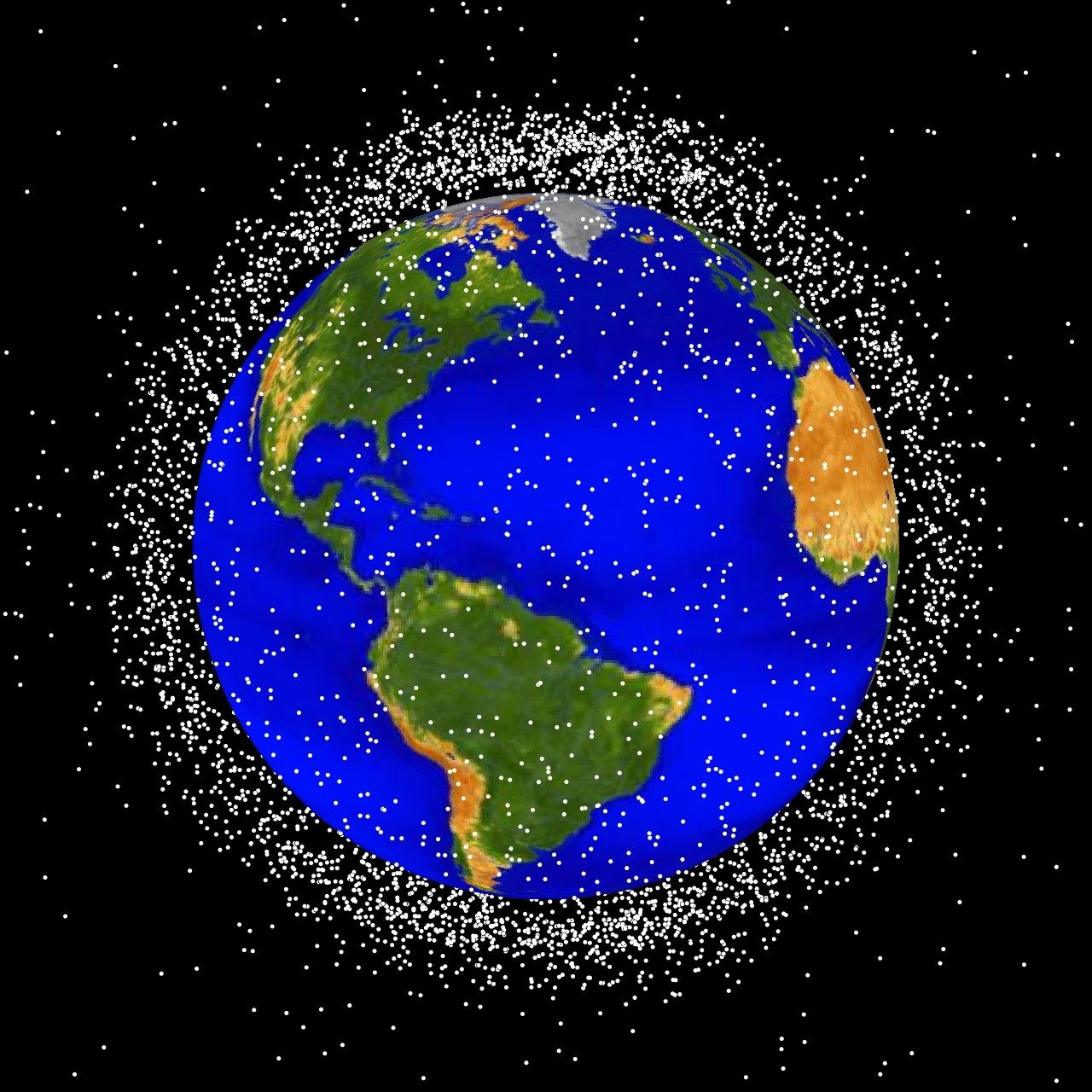

Breakups create long tails
A single fragmentation can produce debris that affects many later missions. An approach that works today may behave differently after routines, environments or incentives change. Continuous measurement matters because a successful first demonstration does not lock the world in place. Changing circumstances should trigger a review of the original assumptions, not blind loyalty to a formerly successful method.
Preventing explosions and collisions usually beats cleaning up afterward. The long view changes the problem. Habits become easier or harder, infrastructure ages, prices move and technologies receive updates. What worked at launch needs later testing. Keeping a record of those changes is less glamorous than announcing an achievement, but it reveals whether the benefit lasts. A system that cannot learn from its own ordinary failures will eventually lose reliability.
Removal is technologically hard
Capturing a tumbling object requires navigation, rendezvous and control near an uncooperative target. An experiment is easier to justify when errors can be detected early and corrected without lasting harm. Where decisions are difficult to reverse, the standard of evidence should be higher. Before deploying the idea widely, identify the mistakes that are easy to reverse and those that require stronger safeguards.
A successful demonstration does not mean every piece can be collected cheaply. The wise response depends on the consequences of being wrong. Testing an inexpensive, reversible routine is different from altering a historic object or changing critical infrastructure. In higher-stakes settings, independent confirmation, training and fallback procedures become more important. A clear account of uncertainty is a form of protection because it helps people make decisions proportional to actual risk.
The legal layer
Ownership, responsibility and permission remain important even when an object no longer works. Data and technology can reveal relationships without fully representing lived experience. Interpretation improves when practitioners and affected communities can challenge assumptions. Experts gain a more complete account when local experience is treated as testable knowledge rather than background decoration.
A cleanup craft cannot assume every abandoned satellite is free to grab. Local knowledge can supply context that a formal dataset omits, but the information still deserves careful verification. The best approach invites people affected by the decision to point out gaps, describe exceptions and evaluate the result. This makes the process more accountable without assuming every observation is equally reliable. Participation strengthens evidence when it is organized and documented.
Data-sharing incentives
Operators may worry about disclosing sensitive orbital information while still needing reliable warnings. The most dramatic example is not necessarily representative. Clear definitions and ordinary comparisons often teach more than exceptional success stories. A vivid example can begin the inquiry, but repeated ordinary cases are what show whether the lesson travels beyond the spectacle.
Trusted exchange formats and common procedures help narrow that gap. An exceptional outcome is tempting because it makes a compelling story. The better follow-up asks how often the outcome occurs and what ordinary cases look like. Include failures, borderline examples and unsuccessful attempts. That wider denominator can transform the interpretation. What first looked like a miracle may become a useful but limited improvement, which is still worth understanding.
A sustainable orbital economy
Long-term access depends on launch practices, operational discipline, design and international cooperation. A polished measurement has limited value if it cannot change a choice, explain a trade-off or reduce a meaningful burden. Utility should be described in concrete terms. A useful outcome should improve a real choice, not simply create one more indicator that someone is expected to monitor.
The relevant measure is not simply satellite count but whether space remains usable for future generations. A new capability deserves attention only when its benefits are connected to an actual task. Consider the time, money, expertise and maintenance required to use it. The best alternative might be simpler than the headline innovation. Comparing those choices does not diminish scientific progress; it directs that progress toward the people and problems for which it can make a measurable difference.
Why It Matters
Satellites support communication, navigation and research, so an avoidable collision can affect services far beyond the spacecraft involved. The wider implication is that access, governance and practical usefulness matter alongside discovery. A promising technique can still leave the most exposed people behind if it assumes resources they do not have. Conversely, modest improvements that reach the right decision makers can be transformative even if they do not produce dramatic headlines.
There is also a question about who gets to define success. Researchers may value a precise measurement, a company may value adoption, and a community may value a service that works predictably during a difficult moment. Those aims can align, but they are not identical. A responsible public conversation makes the differences visible instead of pretending every participant is optimizing the same outcome.
A Practical Way to Evaluate the Claims
What would an independent observer actually measure? Start with the central case: Two satellites approach the same region of low Earth orbit. Both operators receive warnings, but without coordination they could choose maneuvers that complicate each other. Define an outcome before collecting evidence and distinguish direct measurements from estimates. A chart can be beautifully drawn while still answering the wrong question. The most meaningful measure is the one connected to a real decision.
Which people or situations were absent from the test? Start with the central case: Two satellites approach the same region of low Earth orbit. Both operators receive warnings, but without coordination they could choose maneuvers that complicate each other. A result from one setting should not automatically be exported to every setting. Geography, ability, cost, training and institutional resources can change both usefulness and fairness. Look for evidence that includes a range of conditions.
What is the cost of a mistake and who bears it? Start with the central case: Two satellites approach the same region of low Earth orbit. Both operators receive warnings, but without coordination they could choose maneuvers that complicate each other. Low-probability errors can have serious consequences, while frequent minor inconveniences can accumulate into a significant burden. Decisions should reflect the severity of possible outcomes, not only the average score.
How does this compare with the best available alternative? Start with the central case: Two satellites approach the same region of low Earth orbit. Both operators receive warnings, but without coordination they could choose maneuvers that complicate each other. Alternatives include doing nothing, improving an existing process or using a simpler tool. The correct benchmark is the real available option, with its costs and constraints, rather than an imaginary perfect system.
Who maintains the system or habit after the early excitement fades? Start with the central case: Two satellites approach the same region of low Earth orbit. Both operators receive warnings, but without coordination they could choose maneuvers that complicate each other. A durable benefit needs maintenance, training, feedback and clear responsibility. Without them, initial performance can degrade quietly while publicity about the original demonstration remains.
What Happens Next
Better data sharing, safe disposal, collision-avoidance planning and responsible debris-removal tests are more realistic than a single sweeping cleanup. Tiny fragments are hard to track, predictions contain uncertainty and rules differ among operators and jurisdictions. A realistic next chapter therefore looks less like a single breakthrough and more like careful iteration. Better information must connect to better decisions, and the people affected must have ways to question the system.
Readers can follow this field by looking for replicated work, transparent methods and results from settings beyond the original demonstration. They should pay attention to who funds evaluations, whether failures are reported, and whether experts distinguish preliminary signals from established outcomes. Progress is not only a faster or more impressive result; it is a result that remains useful when conditions are imperfect.
Conclusion
The deeper lesson of the orbit traffic problem nobody can solve with a bigger rocket is that curiosity and caution belong together. Earth orbit is becoming more crowded with working satellites, rocket remnants and fragments that can threaten future missions. Satellites support communication, navigation and research, so an avoidable collision can affect services far beyond the spacecraft involved. The opportunity is genuine, but it will be realized through evidence, thoughtful design, and practical choices rather than through slogans. The most useful question to carry forward is simple: what would have to be true for this idea to help in the world as it actually exists?
Frequently Asked Questions
Is this already settled science or practice?
It is more accurate to treat the subject as a changing field than as a finished product. Some mechanisms are well established; other claims depend on specific contexts, measurement choices or early demonstrations. Readers should check the date of a study, compare independent accounts and ask what was actually tested before adopting an absolute conclusion. Better data sharing, safe disposal, collision-avoidance planning and responsible debris-removal tests are more realistic than a single sweeping cleanup.
Can ordinary people benefit without specialist equipment?
Sometimes the most valuable benefit is a clearer question, a better routine or a more informed conversation with a trained professional. Specialized tools can be useful, but they should be matched to a real task. A simpler choice may be more affordable, understandable and reliable in everyday conditions. Better data sharing, safe disposal, collision-avoidance planning and responsible debris-removal tests are more realistic than a single sweeping cleanup.
What is the most common misunderstanding?
A common mistake is converting a limited finding into a universal promise. The fact that a relationship exists does not mean it is large in every person or setting, and the fact that a technology works in one demonstration does not establish durability everywhere. Context is part of the evidence. Better data sharing, safe disposal, collision-avoidance planning and responsible debris-removal tests are more realistic than a single sweeping cleanup.
What should readers watch for next?
Look for results that compare against credible alternatives, describe errors openly and measure outcomes relevant to affected people. Independent replication and real-world evaluation matter more than promotional language. Pay special attention to whether the benefits reach groups that were absent from the original tests. Better data sharing, safe disposal, collision-avoidance planning and responsible debris-removal tests are more realistic than a single sweeping cleanup.
How can I discuss this topic responsibly?
Start with a concrete example, explain the mechanism in plain language and name the most important uncertainty. Separate promising possibilities from confirmed benefits, and avoid treating caution as opposition to progress. This approach makes the conversation both more engaging and more accurate. Better data sharing, safe disposal, collision-avoidance planning and responsible debris-removal tests are more realistic than a single sweeping cleanup.
Sources and Further Reading
The conversation
Post a Comment