An extraordinary visitor crossed our solar system and revealed chemical fingerprints unlike those of familiar comets. Now, astronomers are using its ancient ice to investigate a distant birthplace, the history of the Milky Way, and the ingredients from which other planetary systems are made.
Introduction: A Visitor With No Return Ticket
Imagine finding a stone on a beach that did not come from any mountain, river, or coastline on Earth. Its minerals are recognizable, but their proportions are unusual. Its surface carries marks of an environment nobody nearby has ever seen. And when scientists examine its chemistry, they discover that it may be older than the landscape surrounding it.
Something remarkably similar happened in astronomy.
On July 1, 2025, a telescope in Chile detected a faint object traveling through the solar system. At first, it was another moving point against a crowded background of stars. But calculations soon revealed something extraordinary: this object was not a permanent member of the Sun's family.
It had arrived from interstellar space.
Astronomers named it 3I/ATLAS, making it the third confirmed interstellar object discovered passing through our solar system. Unlike ordinary comets, which follow elongated but ultimately returning paths around the Sun, this visitor was traveling on a hyperbolic trajectory. It would approach, sweep around the Sun, and depart into the darkness.
Its journey was remarkable enough. Its chemistry made the story even more interesting.
During 2026, observations from the James Webb Space Telescope and the European Southern Observatory revealed chemical and isotopic signatures that pointed toward an extremely cold, potentially ancient formation environment. Some findings suggested that its icy material might have originated long before the Sun itself existed.
This was not simply another comet passing through the neighborhood. It was an opportunity to investigate matter assembled around a different star, possibly during an earlier chapter of our galaxy's history.
And for astronomers, the most exciting part was not what this mysterious visitor looked like. It was what the visitor had preserved.

Photo 1 — An interstellar visitor. NASA/ESA Hubble Space Telescope observation of 3I/ATLAS on July 21, 2025. Background stars appear streaked because Hubble tracked the comet's movement. Credit: NASA, ESA, D. Jewitt (UCLA); processing J. DePasquale (STScI).
1. The Discovery That Changed an Ordinary Night
The telescope that discovered 3I/ATLAS belongs to the Asteroid Terrestrial-impact Last Alert System, better known as ATLAS. Its primary purpose is to monitor the sky for moving objects, particularly asteroids that could approach Earth. It surveys large areas repeatedly, looking for tiny changes that reveal something moving against distant stars.
Most detections are scientifically useful but unsurprising. Astronomers identify previously known asteroids, calculate orbits, and update databases. Occasionally, however, a moving point refuses to fit the usual expectations.
That was the case with 3I/ATLAS.
The initial report reached the Minor Planet Center on July 1, 2025. Astronomers rapidly combined observations from different facilities and examined earlier images to extend the object's observed path backward in time.
The resulting orbital solution showed that the comet was moving too fast to remain gravitationally bound to the Sun. It was not simply following an unusually elongated solar orbit. It had entered the system from beyond its boundaries.
Only two earlier visitors had been confirmed: 1I/ʻOumuamua, discovered in 2017, and 2I/Borisov, discovered in 2019. Both had transformed astronomers' understanding of how objects can travel between planetary systems.
Now there was a third example.
What made 3I/ATLAS especially promising was that it behaved like an active comet. As sunlight warmed it, material escaped from the icy body, producing a surrounding cloud of gas and dust known as a coma.
That activity created a natural laboratory. Scientists could study material released from the comet without physically capturing it.
A frozen messenger had begun revealing its contents.
2. Why Scientists Knew It Came From Another Star
Objects in space do not need passports, but their movements can reveal their origins.
Gravity determines whether an object remains associated with a star. A planet travels around its star because its speed and direction keep it gravitationally bound. Most familiar comets follow the same principle, although their orbits can stretch far beyond the planets.
An interstellar visitor behaves differently.
Its trajectory resembles an open curve rather than a closed loop. It approaches the Sun with enough orbital energy to escape again, unless some extraordinary interaction changes its motion.
This difference is described mathematically through orbital eccentricity. A circular orbit has an eccentricity of zero, an elliptical orbit has a value between zero and one, and a hyperbolic trajectory has a value greater than one.
For 3I/ATLAS, measurements established an unmistakably interstellar trajectory.
That matters because the solar system contains its own distant reservoir of icy objects, including the hypothesized Oort Cloud. A comet arriving from that region might appear to be coming from an enormous distance, yet it would still have formed within our Sun's gravitational domain.
An interstellar object provides something fundamentally different: a physical sample from another planetary environment.
The comet reached its closest point to the Sun around October 30, 2025, remaining approximately 1.4 astronomical units away. An astronomical unit is the average distance between Earth and the Sun.
It never threatened Earth. Its closest approach to our planet was roughly 270 million kilometers, or 170 million miles.
The scientific excitement therefore had nothing to do with an impending collision.
It came from an unusual opportunity: astronomers could observe a traveler from another star system without sending a spacecraft to that distant system themselves.
3. The Chemical Fingerprint Hidden in Comet Ice
The most valuable information inside a comet is often invisible.
A photograph can reveal a glowing coma, an extended tail, and changes in brightness. But even the sharpest image cannot directly identify all the molecules responsible for those appearances.
To investigate composition, astronomers use spectroscopy.
Every molecule interacts with light in characteristic ways. Certain wavelengths are absorbed, while others are emitted. When scientists separate incoming light into a spectrum, these features become recognizable chemical fingerprints.
Water vapor produces one collection of features. Carbon dioxide produces another. Carbon monoxide, methane, and other molecules leave their own signatures.
Imagine listening to an orchestra through a wall. You may not see the instruments, but you can identify the violin, trumpet, and drum by their distinctive sounds.
Spectroscopy performs a comparable task with light.
When 3I/ATLAS approached the Sun, previously frozen material warmed and escaped into space. This process, called sublimation, allows ice to transform directly into gas without first becoming liquid.
The expanding gas cloud made the comet's chemical ingredients accessible to telescopes.
Different instruments examined different wavelengths, allowing researchers to piece together a more comprehensive picture.
One of the major surprises was the comet's abundance of carbon dioxide relative to water. Subsequent observations also revealed methane, and measurements of isotopes provided clues about the environment where its material originally formed.
These discoveries did not identify a particular parent star.
But they showed that this visitor carried a history different from that of many familiar solar system comets.
4. What James Webb Saw That Ordinary Telescopes Could Not
The James Webb Space Telescope was designed to investigate some of the universe's most distant and ancient objects. Yet its infrared instruments can also study small bodies traveling through our own celestial neighborhood.
For 3I/ATLAS, that capability was exceptionally valuable.
Webb observes infrared wavelengths, where many molecules produce identifiable spectral features. Its instruments can reveal chemical ingredients that are difficult or impossible to measure through ordinary visible-light photography.
During observations in December 2025, Webb examined the comet after its closest approach to the Sun.
By that stage, heating had already transformed some of the body's ice into gas. Its coma offered a rich collection of chemical signatures.
Researchers used Webb's Near-Infrared Spectrograph to examine isotopic ratios, while observations with the Mid-Infrared Instrument provided additional molecular measurements.
In results reported in June 2026, scientists identified unusually high abundances of certain isotopes and unusual relationships among the comet's volatile gases.
Webb also directly detected methane gas from an interstellar visitor, an important milestone for studying the chemistry of objects formed beyond our solar system.
These measurements are more informative than a simple list of ingredients.
Two comets might both contain water, methane, and carbon dioxide, yet their relative abundances and isotopic compositions can reveal that they formed under different physical conditions.
Temperature, radiation, available material, and chemical processing all affect the resulting mixture.
Webb's observations therefore offered an opportunity to investigate the comet's distant past rather than merely describe its present appearance.
For researchers, the light coming from a small, fading object had become a chemical record of another planetary system.
5. The Strange Clue Hidden in Heavy Hydrogen
One of the most remarkable findings involved something that sounds almost ordinary: hydrogen.
Hydrogen is the simplest chemical element. Most hydrogen atoms contain a single proton and one electron. But a small proportion contain an additional neutron. This heavier form is called deuterium.
Deuterium behaves similarly to ordinary hydrogen, but the extra neutron changes certain chemical processes. Under extremely cold conditions, molecules containing deuterium can become relatively more abundant.
This makes the ratio of deuterium to ordinary hydrogen a valuable scientific clue.
When astronomers measure that ratio in water, methane, or other compounds, they can compare it with models of chemical reactions occurring in cold interstellar clouds and young planetary systems.
For 3I/ATLAS, the results were striking.
A study published in Nature in June 2026 reported unusually high deuterium enrichment in the comet's water. The researchers concluded that its water ice was consistent with formation at temperatures no higher than approximately 30 kelvins, equivalent to about minus 405 degrees Fahrenheit.
A separate study in Nature Astronomy reported an unusually high deuterium-to-hydrogen ratio in methane.
These measurements suggested that at least some of the comet's ingredients formed under conditions very different from those experienced by many solar system comets.
However, isotopic measurements do not provide an exact address or birth certificate.
Different environmental processes can influence chemical composition, and scientists must distinguish original formation signatures from later changes.
What the evidence strongly suggests is that 3I/ATLAS preserved a distinctive chemical history, potentially dating to an extremely cold, ancient environment.
6. Could This Comet Really Be Older Than the Sun?
Our Sun formed approximately 4.6 billion years ago. Earth assembled around the same period, and the oldest surviving materials from the early solar system help scientists reconstruct that distant beginning.
But the Milky Way existed billions of years before our Sun appeared.
Many generations of stars had already formed, evolved, and died. Some had released newly manufactured elements into surrounding space. Others had left behind clouds of gas and dust that eventually became the ingredients of new planetary systems.
A comet forming around an older star could therefore be substantially older than any comet originating around our Sun.
That possibility makes 3I/ATLAS especially fascinating.
Research announced by the European Southern Observatory in July 2026 found chemical evidence consistent with an origin in the outer regions of an old star system. The results supported the possibility that the comet is older than the Sun.
Other investigations of its isotopes have strengthened the picture of an unusual, potentially ancient birthplace.
But there is an important scientific distinction between an age estimate and a directly measured age.
Astronomers have not simply counted layers inside the comet or collected a laboratory sample that determines its exact birthday.
Instead, they combine its chemistry with models of stellar populations, galactic evolution, and planetary formation.
Those models can identify plausible environments and age ranges, but uncertainty remains.
The central discovery is therefore more subtle than the claim that astronomers have found a comet with a precisely known age.
They have found a rare interstellar visitor whose composition may preserve evidence from an earlier generation of planetary formation.
That is extraordinary even without a definitive birth date.
7. How a Comet Can Survive Billions of Years
A comet seems delicate when seen from Earth.
Its tail stretches across enormous distances, its brightness changes rapidly, and sunlight continually strips material from its surface.
Yet the central icy body can be remarkably persistent.
Far from stars, temperatures become extremely low. Solar heating disappears, and the processes that produce a bright coma largely stop.
Under those conditions, much of a comet's volatile material can remain frozen.
The object may drift through interstellar space for millions or billions of years, experiencing occasional impacts, cosmic radiation, and gradual surface modifications.
It is not perfectly preserved.
High-energy particles can alter molecular structures, radiation can darken surfaces, and collisions may remove material or break the body into fragments.
But interior layers may retain chemical information that has survived much longer than the comet's visible activity.
This creates an interesting scientific problem.
When sunlight warms an interstellar comet, researchers may observe gases originating from different depths. Material near the surface could have experienced extensive radiation processing, while deeper ice may preserve signatures closer to the original formation environment.
Scientists must therefore ask not only what molecules are present, but also where those molecules were stored and how they escaped.
A comet is not a sealed museum exhibit.
It is more like an ancient geological archive whose pages have been weathered, rearranged, and partially exposed.
Interpreting the archive requires understanding both its original composition and the billions of years of change that may have followed.
8. The Unexpected Importance of Methane
Methane is familiar on Earth because it is a major component of natural gas and is produced by several geological and biological processes.
In space, however, methane is not automatically evidence of life.
It can form through ordinary chemistry in cold molecular clouds, on icy grains, and in planetary environments where carbon and hydrogen interact under suitable conditions.
Its discovery in the coma of 3I/ATLAS was important for a different reason.
NASA reported in June 2026 that Webb's mid-infrared observations detected methane after the comet had passed its closest point to the Sun.
Researchers found that the methane appeared in a way consistent with a possible reservoir buried beneath the surface.
A surface exposed to sunlight warms first. Deeper layers respond more slowly because heat takes time to travel through the material.
If methane-rich ice is protected beneath an insulating layer, it may become active after the outer material has already started releasing other gases.
This delayed appearance can reveal information about the comet's internal structure.
Webb also confirmed that the comet remained unusually rich in carbon dioxide relative to water.
Together, those observations suggested a complex mixture of volatile materials, rather than a chemically uniform frozen body.
This distinction matters because the way different gases escape depends on temperature, depth, porosity, and the physical properties of surrounding dust.
The observations provided evidence about both composition and behavior.
Scientists were not merely identifying what the comet contained. They were beginning to investigate how its interior responded to heating by a star it had never previously orbited.
9. A Portrait Built From Many Telescopes
No single telescope could answer every question about 3I/ATLAS.
Hubble provided detailed optical images of the coma. Webb identified molecular and isotopic signatures. Ground-based observatories measured brightness, motion, and spectral characteristics. Other space missions added observations from different locations and wavelengths.
Each contributed a different piece of evidence.
A visible-light image shows how dust reflects sunlight. Infrared instruments reveal thermal and molecular behavior. Spectrographs identify emissions from particular gases, while repeated observations help researchers track changes over time.
This kind of coordinated investigation is one of the great strengths of modern astronomy.
A comet changes continuously as its distance from the Sun changes. Measurements collected before and after its closest solar approach can reveal how the object responds to heating.
Some substances become active relatively far from the Sun. Others require more intense warming. Still others may be released from particles traveling through the coma rather than directly from the nucleus.
Comparing measurements across time helps scientists distinguish these different processes.
Observations also involve uncertainty. Instruments have different sensitivities, and a molecule that is not detected might simply be below the instrument's detection threshold.
By bringing independent measurements together, astronomers can test interpretations more rigorously.
The result is a developing portrait rather than a single photograph.
For an object that will not return, that cooperation is particularly important. Every observation increases the scientific value of an encounter that cannot be repeated with the same visitor.
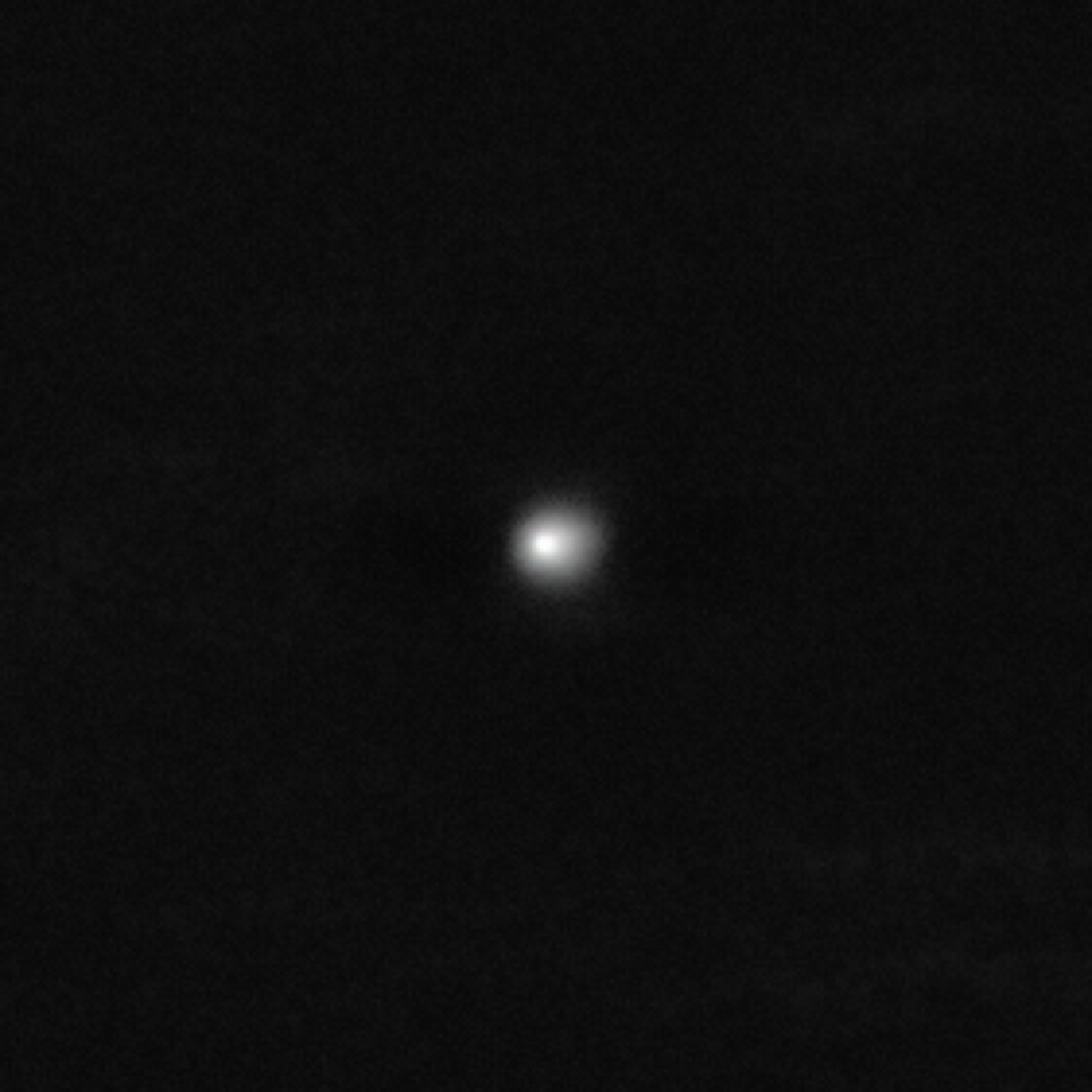
Photo 2 — A distant visitor under a powerful telescope. Deep image of 3I/ATLAS obtained by ESO's Very Large Telescope on July 3, 2025. Multiple exposures were combined to reveal the faint comet. This is an actual observation, not an illustration. Credit: ESO/O. Hainaut.
10. What the Comet Reveals About Other Planetary Systems
For centuries, our understanding of planetary formation came almost entirely from the solar system.
Scientists studied planets, moons, meteorites, asteroids, and comets orbiting the Sun. These objects offered valuable evidence about how our own planetary neighborhood assembled.
Then astronomers began discovering thousands of planets around other stars.
These exoplanets revealed an astonishing variety of worlds, including giant planets close to their stars, compact systems of rocky planets, and planets orbiting multiple stars.
But seeing a distant planet is not the same as examining small pieces of material left over from its formation.
Interstellar comets offer another approach.
A comet expelled from a planetary system may preserve material from the disk of gas, dust, and ice that originally surrounded its parent star.
Comparing its composition with solar system comets can reveal which chemical properties are widespread and which depend strongly on local conditions.
For example, unusually carbon-dioxide-rich material may point toward different formation temperatures, chemical environments, or histories of processing.
Isotope ratios add further constraints.
The important question is not whether 3I/ATLAS proves our solar system is unusual.
One comet cannot establish that.
Instead, it provides an additional sample for comparing planetary construction materials across different environments.
With enough examples, scientists may eventually discover patterns.
Some chemical signatures might be common throughout the galaxy. Others might cluster around particular stellar populations, formation ages, or galactic regions.
The long-term ambition is to understand how much of planetary formation follows universal rules and how much depends on the conditions around each star.
11. The Galactic Archaeology Hidden in an Ice Grain
Archaeologists reconstruct lost civilizations from fragments of pottery, tools, buildings, and written records. Astronomers face a similar challenge when investigating the early Milky Way.
Stars preserve information about the gas from which they formed. Their chemical compositions reveal the contributions of earlier stellar generations.
But stars are not the only potential archives.
Small icy bodies can preserve molecules that formed under particular temperatures and radiation conditions. Their isotopic ratios may contain additional clues about the history of the surrounding material.
This has given scientists an intriguing possibility: interstellar comets could become tools for galactic archaeology.
The idea begins with the fact that galaxies change chemically over time.
The earliest generations of stars formed from material dominated by hydrogen and helium. Nuclear reactions inside stars gradually produced heavier elements, including carbon, oxygen, and nitrogen.
When stars expelled material into space, they enriched the gas clouds from which later generations formed.
Consequently, the chemical environment of a young planetary system can depend on when and where it formed.
A comet assembled billions of years ago may preserve some characteristics of that environment.
Researchers studying 3I/ATLAS have examined whether its carbon and hydrogen isotope ratios reflect material formed in an earlier stage of galactic chemical evolution.
The results are promising, although translating a chemical signature into a precise formation location remains difficult.
The comet's most valuable contribution may therefore be comparative.
It can help astronomers test whether their models of ancient interstellar chemistry are consistent with actual material that survived into the present.
In that sense, even a tiny icy object can become evidence about the history of an entire galaxy.
12. Why Cosmic Radiation Complicates the Story
Long-distance space travel can transform the traveler.
An interstellar comet spends much of its journey outside the protective environment of a planetary system. During that time, it may encounter energetic particles originating from stars, supernova remnants, and other astrophysical sources.
These particles can alter the chemical composition of exposed surfaces.
Radiation can break molecular bonds and create new compounds. It can change the appearance of dust and ice, sometimes producing complex organic residues.
That creates a challenge for researchers trying to identify the comet's original composition.
An unusual molecule might have formed near the parent star. But it might also have appeared after the object was expelled into interstellar space.
Similarly, a measured abundance could reflect original formation conditions, later radiation processing, or the selective release of particular compounds during the comet's solar encounter.
To separate these possibilities, scientists combine several kinds of evidence.
They examine molecules with different chemical properties. They compare isotopes, which can sometimes retain information that differs from ordinary molecular abundances. They model the penetration of heat and radiation through icy material.
They also study how the composition of the coma evolves as the object moves away from the Sun.
The goal is to distinguish ancient chemical inheritance from subsequent modification.
This is an essential safeguard against overinterpreting dramatic discoveries.
A strange chemical measurement does not automatically indicate a strange or extraordinary cause.
Sometimes the answer is a familiar physical process operating under unfamiliar conditions.
Understanding those processes makes the scientific interpretation more powerful, not less exciting.
13. The Frozen Dust That Adds Another Clue
The gas escaping from 3I/ATLAS is only part of the story.
Comets also release dust and tiny ice-bearing particles. These grains interact with sunlight in ways that can reveal their sizes, structures, and compositions.
Some particles may consist primarily of ice. Others may contain intimate mixtures of ice and nonvolatile material, including mineral grains and carbon-rich dust.
That distinction influences their spectral signatures.
A mixture of ice and dark material can absorb and scatter light differently from a relatively clean ice grain, even when both contain the same basic substance.
A study made available in September 2026 examined Webb observations from August 2025, December 2025, and April 2026. Its analysis found spectral behavior consistent with small, dust-rich water-ice aggregates.
The researchers considered explanations involving changes in grain size, mixtures of ice and refractory material, and the physical state of the ice.
Refractory material is material that resists evaporation at temperatures where volatile ices are readily released.
These observations suggest that some icy grains in 3I/ATLAS differ from the relatively clean ice particles detected in certain solar system comets.
They also raise broader questions about how dust and ice combine inside planet-forming disks.
Before a planet exists, its building materials begin as microscopic grains. Some collide and stick together, gradually contributing to larger structures.
Studying the grains released by an interstellar comet can therefore provide clues about the earliest stages of planetary construction.
The interpretation remains subject to further testing, but the observations widen the scientific value of this unusual visitor beyond its gaseous composition.
14. What 3I/ATLAS Does Not Tell Us
Spectacular astronomical discoveries often attract spectacular claims.
An object arrives from outside the solar system. Its chemistry appears unusual. Its path cannot be explained by an ordinary closed solar orbit.
For some observers, that combination invites speculation about alien technology.
But an interstellar origin is not evidence of artificial construction.
Stars and planets naturally produce, scatter, and eject countless small objects. Gravitational encounters can send asteroids and comets into interstellar space, allowing them to travel independently for enormous periods.
The observable behavior of 3I/ATLAS is consistent with a natural comet.
Its gas and dust activity, spectral signatures, and response to sunlight can be investigated through established physical processes.
Researchers have also conducted searches for possible technological radio signals.
In June 2026, the SETI Institute reported observations using the Allen Telescope Array. After filtering radio detections to investigate potential signals, the researchers found no evidence of extraterrestrial technology associated with the comet.
That result does not establish anything about whether life exists elsewhere in the galaxy. It addresses a much narrower question concerning particular detectable radio signals.
The larger scientific lesson is about evidence.
An unusual observation should encourage investigation rather than immediate certainty.
Astronomers have compelling reasons to study the comet without requiring an artificial origin.
It represents actual material from beyond the solar system, available for chemical and physical examination.
The natural explanation is not disappointing.
A small frozen body carrying possible traces of an ancient planetary environment across interstellar space is already one of the most remarkable objects modern astronomy can investigate.
15. Why This Discovery Matters on Earth
At first glance, a comet traveling hundreds of millions of kilometers away may seem disconnected from everyday human concerns.
It will not provide electricity, solve an environmental problem, or immediately change how people live.
Its value is more fundamental.
Human beings have always tried to understand whether the world around them is typical or exceptional.
For most of history, we knew of only one planetary system: our own. Every story about planetary formation was built around the Sun, Earth, and their neighbors.
Discoveries of exoplanets dramatically expanded that picture, but many questions remain.
Are the chemical ingredients of our solar system common? Do icy bodies in other systems contain similar mixtures of water, carbon compounds, and minerals? How do the age and location of a planetary system affect its chemistry?
Interstellar objects help address these questions.
They offer direct evidence that the building materials of other planetary systems can cross the vast distances between stars.
Their study also encourages advances in spectroscopy, observational coordination, orbital calculations, and the interpretation of complex astronomical data.
These methods have wider scientific applications, including the investigation of planetary atmospheres and distant objects that cannot be visited directly.
The discovery also changes the way we think about the seemingly empty space between stars.
That space is not perfectly empty.
It contains gas, dust, radiation, and wandering objects that may have been expelled from planetary systems long ago.
A comet like 3I/ATLAS reminds us that planetary systems are not entirely isolated islands.
Over astronomical timescales, some of their material becomes part of a larger galactic environment.
16. What Astronomers Still Need to Discover
Despite the remarkable observations, many fundamental questions about 3I/ATLAS remain unanswered.
Scientists do not know exactly which star system produced it. They cannot yet reconstruct the complete sequence of events that led to its ejection.
Its age remains an estimate constrained by physical and chemical evidence rather than a precisely measured value.
Researchers must also determine which unusual properties reflect its initial formation and which developed later.
Future analyses may improve measurements of isotope ratios, grain properties, and the relative abundances of different molecules.
Models of heat transfer through cometary material could clarify why certain substances appeared at different times.
Comparisons with ordinary solar system comets will remain essential.
The larger challenge is statistical.
Three confirmed interstellar visitors constitute a fascinating beginning, but they cannot represent the full diversity of objects moving between the stars.
Astronomers need a much larger sample.
New wide-field surveys, particularly those conducted by the Vera C. Rubin Observatory, are expected to improve the discovery of moving and transient objects.
Earlier detection is especially valuable.
If scientists identify an incoming interstellar visitor while it is still far from the Sun, they may have more time to arrange observations before solar heating substantially changes its surface.
Eventually, spacecraft missions might intercept a suitable interstellar object.
Such an encounter would offer measurements impossible to obtain from Earth alone, including close-range imaging and possibly direct analysis of particles.
For now, 3I/ATLAS provides a glimpse of what more systematic investigations could achieve.
It is both a remarkable scientific discovery and a preview of a much larger field still taking shape.
17. The Next Era of Interstellar Exploration
The detection of 3I/ATLAS illustrates an important shift in astronomy.
For generations, scientists largely studied distant planetary systems through the light arriving from their stars and planets.
Interstellar visitors introduce another possibility: investigating physical material from those systems after it has traveled into our own neighborhood.
That opportunity is rare today, largely because such objects are difficult to discover.
Many may be too small or too faint to detect. Others could pass through the outer solar system without coming close enough to become visible.
More sensitive surveys should expand the number of known visitors, although the exact discovery rate remains uncertain.
Each new detection will contribute to a growing scientific collection.
Some visitors may be rich in particular ices. Others could be rocky and relatively inactive. Their colors, shapes, rotation patterns, and chemical signatures may vary considerably.
Over time, researchers could compare these properties with predictions about planetary systems of different ages and stellar environments.
An especially exciting possibility is the development of missions designed to respond to newly discovered objects.
Unlike missions targeting familiar planets or asteroids, these spacecraft would need to prepare for destinations whose trajectories are not known far in advance.
That creates difficult engineering problems involving propulsion, timing, navigation, and available fuel.
But the scientific reward could be substantial.
A spacecraft passing near an interstellar comet might collect unprecedented measurements of its structure and immediate environment.
It could examine surface features that distant telescopes cannot resolve and investigate the interaction between dust, gas, and sunlight at close range.
For the first time, humanity might study a visitor from another planetary system not merely as a point of light, but as a neighboring world.
Conclusion: The Universe Has Been Sending Us Messages
There is something deeply moving about the journey of 3I/ATLAS.
At some point in the distant past, material gathered in a cold environment associated with a star other than our Sun.
Dust and ice became part of a larger body. Gravitational interactions may eventually have expelled that body from its original system.
It traveled through the galaxy, exposed to radiation and the immense emptiness between stars.
Then, in 2025, it entered a region inhabited by a civilization capable of noticing it.
Human instruments recorded its movement. Telescopes examined its expanding atmosphere. Scientists compared subtle patterns in light with laboratory measurements and theoretical models.
By 2026, the resulting discoveries had begun revealing a possible history of extremely cold formation conditions and unusual chemical inheritance.
The comet's exact birthplace remains unknown. Its age is not settled beyond uncertainty. Its complete history may never be recovered.
But none of those limitations erase the significance of the encounter.
3I/ATLAS has shown how information about distant planetary environments can be carried by small bodies that drift between the stars.
It also offers a reminder that some of the most revealing scientific discoveries do not arrive as spectacular explosions or enormous new structures.
Sometimes they appear as a faint dot in an ordinary telescope image.
The dot moves. Its orbit refuses to close. Its chemistry tells a story that does not quite resemble our own.
And suddenly, a piece of another star system is passing through our sky.
Sources / Further Reading
NASA — Comet 3I/ATLAS: Discovery, Trajectory, and Observations; NASA — Webb Finds Clues to Ancient, Distant Origin of Comet 3I/ATLAS (June 2026); European Southern Observatory — Older Than the Sun: New Clues to the Comet's Origin (July 2026); Nature — Isotopic Evidence for a Cold and Distant Origin of 3I/ATLAS; Nature Astronomy — An Enriched Methane D/H Ratio in 3I/ATLAS; SETI Institute — Radio Observations of 3I/ATLAS (June 2026).
The conversation
Post a Comment