Vertical Farming: Can Skyscraper Farms Feed the Cities of Tomorrow?
Imagine walking into a building in the middle of a crowded city and discovering something unexpected: a farm.
There are no tractors, no muddy fields and no rows of crops stretching towards the horizon. Instead, you find tall metal shelves rising towards the ceiling. On every level, hundreds of small green plants grow beneath carefully positioned strips of LED lighting. Water travels through narrow channels. Tiny pumps deliver nutrients directly to the roots. Sensors monitor temperature, humidity and carbon dioxide. Somewhere in the building, computers are calculating exactly how much light each crop needs.
Outside, traffic moves through the city. Buildings cast shadows over crowded streets. Supermarkets receive vegetables transported from farms hundreds or even thousands of kilometres away.
Inside, lettuce, spinach and herbs are growing in an environment designed to keep them healthy throughout the year.
This is vertical farming, one of the most interesting experiments in modern agriculture.
The concept sounds almost futuristic: instead of expanding farmland horizontally, farmers grow upwards, stacking multiple layers of crops inside buildings. By combining hydroponics, aeroponics, LED lighting, automation and environmental sensors, they attempt to produce fresh food using less land and water while remaining close to the people who consume it.
The attraction is understandable. Cities are growing, agricultural land faces pressure, water supplies are becoming increasingly uncertain, and extreme weather can disrupt food production. A farm that operates independently of rainfall, seasons and many outdoor environmental conditions appears to offer an attractive solution.
But there is an important question behind the excitement.
Can vertical farms genuinely feed the cities of tomorrow, or are they better suited to producing a relatively small selection of expensive fresh vegetables?
The answer is more complicated than either the technology's enthusiastic supporters or its harshest critics sometimes suggest.
Vertical farming has demonstrated impressive capabilities. It can produce large quantities of certain crops in remarkably small spaces, reduce irrigation requirements and provide predictable harvests. Yet electricity consumption, construction costs, crop limitations and commercial profitability remain significant obstacles.
Understanding its future requires looking beyond the impressive shelves of glowing green plants and examining the science, economics and practical realities of producing food indoors.
1. What Exactly Is Vertical Farming?
Vertical farming is an agricultural production method in which crops are grown in vertically stacked layers rather than exclusively across a conventional horizontal field.
The basic principle is simple: use the unused vertical space inside a building to increase the amount of cultivated growing area available on a relatively small footprint.
Imagine a conventional vegetable field measuring 1,000 square metres. Plants occupy one main growing layer, and their access to sunlight depends on the weather, season, surrounding vegetation and geographical location.
Now imagine a building occupying the same ground area but containing five, eight or even more growing levels.
Each level has its own planting channels, irrigation equipment and lighting. Instead of relying on sunlight reaching the ground, artificial lights provide the energy needed for photosynthesis.
The result is a production system that can potentially accommodate several times the growing area within the same building footprint.
However, vertical farming does not necessarily mean constructing enormous agricultural skyscrapers.
Commercial systems can take several forms:
- Retrofitted warehouses: Existing industrial buildings converted into controlled indoor farms.
- Purpose-built facilities: Buildings designed specifically around lighting, irrigation, ventilation and crop production.
- Shipping-container farms: Compact, modular farms installed inside modified containers.
- Vertical growing towers: Structures in which plants grow in columns or around vertical surfaces.
- Indoor growing cabinets: Smaller systems installed in restaurants, supermarkets, research facilities or other commercial spaces.
The important distinction is that vertical farming describes the arrangement and production environment, not the height of the building.
A modest warehouse containing six productive growing levels may qualify as a vertical farm, even though it looks nothing like a skyscraper.
How Is It Different from a Greenhouse?
Vertical farms and greenhouses both belong to the broader category of controlled-environment agriculture. However, their approaches are different.
A traditional greenhouse uses transparent walls or roofing to allow natural sunlight to reach crops. It may supplement sunlight with artificial lighting and regulate temperature, humidity and irrigation.
An enclosed indoor vertical farm generally takes environmental control further.
It may eliminate natural sunlight almost entirely, using artificial lighting as the main source of energy for plant growth. Temperature, humidity, air circulation, carbon dioxide concentration and nutrient delivery are also managed inside the building.
This creates a highly predictable environment, but it introduces an important disadvantage: the farm must purchase much of the energy that an outdoor field receives naturally from the Sun.
That difference becomes central when evaluating whether vertical farming is economically and environmentally sustainable.
2. How Does a Vertical Farm Actually Work?
A vertical farm is not simply a collection of shelves with plants on them. It is an integrated production system in which several technologies must work together.
The plants need light, water, nutrients, oxygen around their roots, carbon dioxide and suitable temperatures. The equipment must provide these resources in carefully controlled quantities.
A failure in one part of the system can affect the entire production cycle.
For example, if a conventional outdoor vegetable field experiences a short interruption in irrigation, the consequences depend on soil moisture, weather and the crop's condition.
In a tightly controlled indoor farm, a failed water pump or electrical system can quickly interrupt the environment supporting thousands of plants.
The main technologies are hydroponics, aeroponics, LED lighting and climate-control equipment.
2.1 Hydroponics: Growing Plants Without Soil
Hydroponics is one of the most important technologies behind vertical farming.
It involves growing plants without conventional agricultural soil, using a nutrient-rich water solution to supply the minerals required for development.
This does not mean plants can grow using water alone.
They still need essential nutrients, including nitrogen, phosphorus, potassium, calcium, magnesium and several micronutrients. Hydroponic systems provide these elements in carefully formulated solutions.
Think of soil as a natural storage and delivery system. It holds water, nutrients and air around plant roots. Hydroponics replaces much of that function with engineered equipment.
The roots may grow directly into water, through a thin flowing solution or inside a supporting material such as coconut fibre or rockwool.
Several hydroponic approaches are used in indoor farms.
Nutrient Film Technique (NFT)
In an NFT system, plants sit in channels through which a shallow stream of nutrient-rich water continuously flows.
The roots reach into the moving solution, absorbing water and dissolved minerals. Some roots remain exposed to the air inside the channel, helping them obtain oxygen.
The water is collected, monitored and circulated again.
NFT is particularly useful for lightweight crops such as lettuce and certain herbs.
Deep Water Culture (DWC)
In Deep Water Culture, plant roots are suspended in nutrient-rich water, usually with oxygen supplied by air pumps or other aeration equipment.
Floating platforms or supporting structures hold the plants above the solution.
The system provides roots with constant access to water and nutrients, although oxygen management is essential. Roots deprived of sufficient oxygen can become damaged and vulnerable to disease.
Ebb and Flow Systems
These systems periodically flood the growing area with nutrient solution before allowing the water to drain back into a reservoir.
The cycle supplies moisture and nutrients while allowing the root zone to receive air between irrigation periods.
Media-Based Hydroponics
Some vertical farms use inert or partially inert materials to support plant roots.
Common examples include coconut coir, rockwool and specialised growing mats.
These materials provide physical support and help manage water and oxygen around the roots, while nutrients are delivered through irrigation.
The advantage of hydroponics is the ability to control nutrient delivery and reuse much of the irrigation water. However, water quality, nutrient concentration, pH and sanitation must be monitored carefully.
Virginia Tech's indoor vertical farming guidance describes hydroponics and related soilless systems as central components of indoor crop production, while emphasising the importance of nutrient management and system sanitation.
Read the Virginia Tech indoor farming guide.
2.2 Aeroponics: Feeding Roots with a Fine Mist
Aeroponics takes the idea of soilless cultivation a step further.
Instead of placing the roots in a continuous water channel, the plant's roots hang inside an enclosed chamber.
Specialised nozzles periodically spray them with a fine mist containing water and dissolved nutrients.
The roots receive moisture and nutrients while remaining exposed to air.
The principle is similar to spraying a plant's roots with a carefully controlled nutritional mist rather than keeping them submerged.
Potential advantages include:
- Efficient delivery of water and nutrients.
- Excellent access to oxygen around the roots.
- Reduced dependence on large volumes of circulating water.
- Opportunities for precise control over root-zone conditions.
- Flexible arrangements for vertical growing structures.
However, aeroponics is technically demanding.
Spray nozzles can become blocked by mineral deposits or other material. Pumps must operate reliably, and misting schedules must match the plants' needs.
A prolonged interruption can expose roots to damaging dehydration, particularly in systems with little moisture-retaining material.
For this reason, aeroponics is not automatically better than hydroponics. The appropriate system depends on the crop, the facility, the available technical expertise and the cost of maintaining reliable equipment.
2.3 Aquaponics: Combining Plants and Fish
Another approach is aquaponics, which combines fish production with hydroponic plant cultivation.
Fish are raised in tanks. Their waste contains nutrients that can be processed by beneficial microorganisms into forms that plants can absorb.
Water circulates between the fish system and plant-growing areas, with filtration and biological processes helping maintain water quality.
The idea creates a relationship between two forms of food production:
- Fish provide a source of protein and nutrients.
- Plants absorb dissolved nutrients from the water.
- Water is treated and circulated through the system.
Aquaponics can reduce the need for conventional fertiliser inputs, but it introduces additional complexity.
Fish require suitable water conditions, oxygen levels and feeding schedules. Plants and fish do not always have identical environmental requirements, and the system needs careful biological management.
Aquaponics is therefore an interesting component of controlled-environment agriculture, but it is not a universal replacement for conventional hydroponics.
3. LED Lighting: Replacing the Sun Inside a Building
Perhaps the most recognisable feature of a modern vertical farm is its lighting.
Rows of plants grow beneath LED panels that often produce unusual combinations of red, blue and other wavelengths.
These lights are not installed merely to make the building look futuristic. They provide the energy plants need to carry out photosynthesis.
In natural environments, sunlight supplies the photons that plants use to convert carbon dioxide and water into carbohydrates.
Inside a fully enclosed vertical farm, artificial lighting must perform much of this work.
Why Are Red and Blue Lights Used?
Plants do not use every wavelength of light in exactly the same way.
Different wavelengths influence photosynthesis, leaf development, flowering, plant shape and other biological processes.
Red light is particularly effective at supporting photosynthetic activity. Blue light plays important roles in regulating plant structure, leaf development and other responses.
Green light also contributes to photosynthesis, including within deeper parts of a plant canopy.
Modern LED systems can be designed to provide combinations of wavelengths according to the crop and its developmental stage.
This creates opportunities to adjust lighting recipes rather than simply switching a conventional lamp on and leaving it unchanged.
A lettuce crop may receive a different lighting programme from a strawberry plant or a medicinal herb.
Why Not Use Ordinary Light Bulbs?
Ordinary household lighting is designed primarily for human vision.
Agricultural lighting must be evaluated using plant-related measurements, including photosynthetic photon flux density (PPFD) and daily light integral (DLI).
PPFD measures the number of photosynthetically active photons reaching a particular area each second.
DLI measures the accumulated amount of photosynthetically active light received over an entire day.
These measurements help growers determine whether crops receive sufficient light without wasting electricity or exposing plants to unnecessarily intense illumination.
LED technology offers several advantages:
- High electrical efficiency compared with many older lighting technologies.
- Adjustable light intensity and spectrum.
- Long operating life.
- More flexible installation between growing shelves.
- Precise scheduling and automation.
However, even efficient LEDs cannot eliminate the fundamental energy requirement of growing plants without sunlight.
The farm must still supply artificial light for many hours, and it must also remove heat generated by lighting and other equipment.
That is why lighting efficiency is not just a technical detail. It is one of the most important factors determining the economic viability of vertical farming.
4. The Hidden Climate Inside a Vertical Farm
Light is only one part of the equation. Plants also need a suitable atmosphere.
A vertical farm must recreate many of the conditions that would normally be provided by the natural environment.
The most important variables include temperature, humidity, airflow and carbon dioxide concentration.
Temperature: Keeping Plants in Their Comfort Zone
Different crops grow best at different temperatures.
If an indoor farm becomes too hot, plants may experience stress, their development may slow, and the quality of harvested produce may decline.
If temperatures fall too low, growth can become slower and production schedules may be disrupted.
Heating, ventilation and air-conditioning systems, commonly known as HVAC, help maintain suitable conditions.
The challenge is that these systems consume electricity, particularly when the facility must remove heat generated by LED lighting, pumps and other equipment.
A vertical farm in a hot climate may face considerable cooling requirements. A facility in a cold climate may need heating during parts of the year.
The location therefore affects the economics of indoor farming.
Humidity: Managing Water in the Air
Plants absorb water through their roots and release some of it into the atmosphere through a process called transpiration.
Inside an enclosed building, this moisture accumulates unless ventilation or dehumidification removes it.
Excessive humidity can encourage fungal diseases, interfere with plant development and create problems with condensation.
Dehumidifiers help remove moisture from the air. Some advanced systems can collect the extracted water and return it to irrigation reservoirs after appropriate treatment.
This creates an opportunity to reuse water that would otherwise be lost.
However, dehumidification also consumes energy. A farm must balance water recovery against the electricity required to operate the equipment.
Carbon Dioxide: Another Essential Ingredient
Plants absorb carbon dioxide during photosynthesis.
Some commercial vertical farms monitor and regulate indoor CO2 concentrations to support crop growth.
In certain circumstances, controlled CO2 enrichment can increase photosynthetic activity, provided that lighting, temperature, nutrients and other conditions are suitable.
But simply adding more carbon dioxide does not guarantee higher yields.
Plants have biological limits, and additional CO2 becomes less useful when another factor restricts growth.
Airflow: Preventing Stagnant Conditions
Air circulation is another important component.
Fans help distribute heat, humidity and carbon dioxide throughout the growing area. They also reduce the risk of stagnant air around plant leaves.
Without appropriate airflow, conditions can vary between shelves, producing uneven growth.
This matters particularly in farms containing thousands of plants arranged across several levels.
The objective is to create a consistent growing environment without wasting electricity through unnecessary ventilation.
5. What Can You Actually Grow in a Vertical Farm?
One of the biggest misconceptions about vertical farming is that it can already produce every type of food as efficiently as conventional agriculture.
Technically, many different plants can be grown indoors. Commercially, however, only certain crops make strong economic sense.
The most successful candidates generally have short growing cycles, compact structures, relatively high market value and the ability to grow in hydroponic systems.
Leafy Greens: The Natural Starting Point
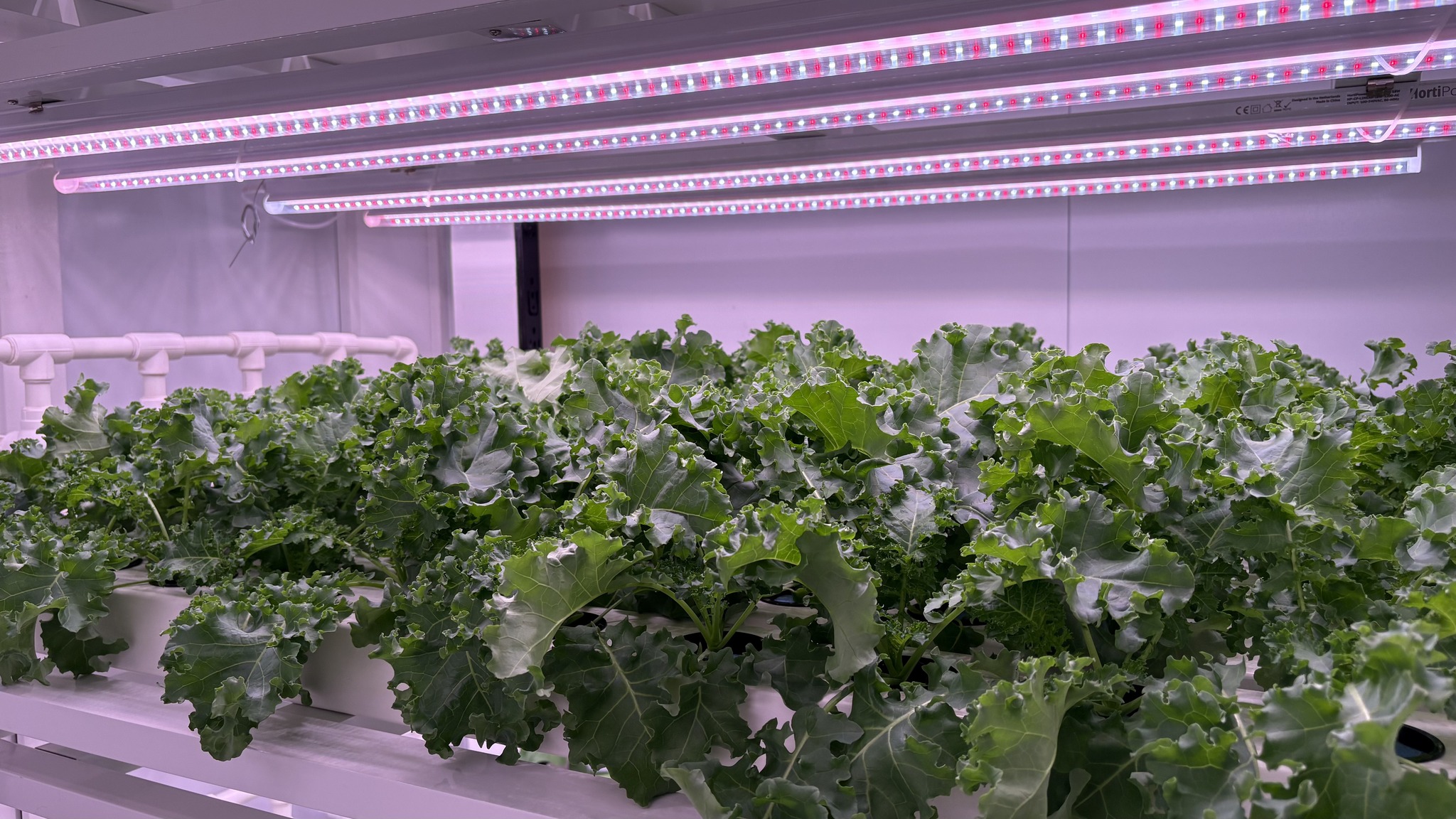
Leafy vegetables are currently among the most suitable crops for vertical farms.
Examples include:
- Lettuce.
- Spinach.
- Kale.
- Arugula.
- Swiss chard.
- Mizuna.
- Other specialised salad leaves.
These crops have several commercial advantages.
They are relatively compact, can grow quickly, and the entire above-ground plant is often harvested and sold.
They also have established markets among supermarkets, restaurants and consumers interested in fresh salads.
The ability to produce consistent harvests throughout the year can be particularly valuable where outdoor production is affected by heat, cold, drought or seasonal conditions.
A 2025 review published in Agronomy for Sustainable Development identifies lettuce and other leafy vegetables as some of the most established candidates for vertical production.
Herbs: Small Plants with Commercial Value
Herbs are another attractive category.
Basil, mint, coriander, parsley and similar crops can be grown in compact systems.
They are useful for vertical farming because they do not necessarily require the large growing spaces associated with some fruiting plants.
Fresh herbs can also have relatively high value compared with their physical size.
For restaurants, food retailers and specialist buyers, consistent availability and freshness can make local production attractive.
Microgreens: Small Crops, Short Growing Cycles
Microgreens are young edible plants harvested shortly after their first true leaves develop.
Popular examples include radish, mustard, sunflower and broccoli microgreens.
Their growing cycles are generally short, and they can be produced in trays arranged across multiple shelves.
Microgreens are often sold to restaurants, specialist food shops and consumers interested in premium fresh ingredients.
Their relatively high value per kilogram can help support the economics of indoor production.
However, they remain a specialised food category rather than a replacement for major agricultural crops.
Strawberries and Small Fruiting Vegetables
Vertical farming is also exploring crops that produce fruits rather than only leaves.
Strawberries are an interesting example.
Their relatively compact growth habit and high commercial value make them attractive candidates for controlled-environment production.
Some indoor farms and research facilities also experiment with dwarf tomato and pepper varieties.
These crops introduce additional challenges.
Fruiting plants generally need more light and longer production periods than many leafy vegetables. They may also require pollination management, additional support structures and more complicated harvesting procedures.
Consequently, the electricity and labour required to produce a kilogram of fruit can be considerably different from the requirements for lettuce.
A system that is profitable for salad leaves may not be profitable for strawberries or tomatoes.
What About Mushrooms?
Mushrooms are sometimes included in discussions about indoor vertical farming because they can be cultivated in controlled indoor environments.
Oyster mushrooms, shiitake and lion's mane are examples of species that can be produced in stacked growing arrangements.
However, mushrooms are biologically different from green plants.
They are fungi rather than photosynthetic crops, so they do not require LED lighting to power photosynthesis.
Their production depends instead on suitable growing substrates, moisture, temperature, ventilation and other environmental conditions.
This distinction creates opportunities for indoor mushroom cultivation with a different energy profile from fully illuminated plant farms.
Can Vertical Farms Grow Rice, Wheat and Corn?
This is where the conversation becomes particularly important.
Rice, wheat, maize and soybeans provide a substantial share of the calories and protein consumed around the world.
They are also generally produced on enormous agricultural areas.
Vertical farming researchers have investigated the possibility of growing staple crops indoors. Experiments and modelling have demonstrated that certain cereals can achieve impressive yields per unit of growing area when environmental conditions are carefully controlled.
A 2024 review in Frontiers in Science discusses research and simulations in which wheat and rice yields per unit of production area were estimated to be 10 to 60 times higher than global average annual field yields.
At first glance, this appears to solve one of agriculture's biggest problems.
But there is an important distinction between producing more grain per square metre and producing affordable grain.
Cereal crops must develop substantial quantities of dry plant matter. Wheat produces grain that must be dried and processed. Rice production similarly involves harvesting, processing and handling a crop that provides concentrated calories.
Artificial lighting requires substantial electricity, and the energy cost of producing that dry matter can become prohibitive.
A 2025 study published in Plant Physiology, involving researchers at the Weizmann Institute of Science, estimated a minimum production cost of approximately $10 per kilogram of dry plant matter based on the energy requirements considered in its analysis.
The authors concluded that vertical farming was not economically competitive with conventional dried cereals and pulses such as wheat, rice and soybeans under the conditions examined.
This does not mean growing wheat indoors is biologically impossible.
It means that doing so at a commercially competitive price is a very different challenge.
For the foreseeable future, conventional agriculture is likely to remain much more suitable for producing large quantities of staple calories.
6. How Much Food Can a Vertical Farm Produce?
One of the strongest arguments in favour of vertical farming is its ability to increase production per unit of ground area.
Instead of using a single horizontal growing surface, a facility can stack several layers above one another.
The resulting cultivated area may be many times larger than the floor space occupied by the building.
For example, imagine a facility with a ground footprint of 1,000 square metres and five growing levels.
Ignoring corridors, equipment spaces and other unusable areas, the farm could theoretically provide 5,000 square metres of growing surface.
With ten levels, that theoretical figure would become 10,000 square metres.
Real facilities achieve less than these simplified calculations because plants need access for maintenance, harvesting, irrigation equipment and airflow.
Nevertheless, the underlying advantage is genuine.
What Do the Research Numbers Show?
A comprehensive 2025 review published in Agronomy for Sustainable Development examined the productivity and environmental performance of vertical farming, particularly lettuce production.
The researchers reported that lettuce yields in vertical farms commonly averaged approximately 60 to 105 kilograms of fresh produce per square metre of cultivated growing area annually.
The review also identified considerable variation between facilities, growing conditions and production methods.
These figures should not be confused with kilograms produced per square metre of the building's total floor area. Stacked levels increase cultivated area, but the facility also requires space for corridors, equipment, packaging and other operations.
The distinction is important when comparing a vertical farm with a conventional field or greenhouse.
Continuous Harvesting Changes the Equation
Traditional farming is often organised around seasonal planting and harvesting cycles.
Vertical farms can schedule production more continuously.
For example, one growing shelf may contain seedlings, another may hold plants approaching maturity, and a third may be ready for harvesting.
After harvesting, the empty space can be cleaned and replanted.
This creates a production pipeline.
Instead of waiting for a large seasonal harvest, the farm can potentially deliver smaller quantities of produce throughout the year.
For restaurants and supermarkets, that predictability may be valuable.
However, continuous production does not mean uninterrupted production under all circumstances. Equipment failures, crop disease, supply disruptions and electricity problems can still interrupt operations.
7. Water: One of Vertical Farming's Strongest Advantages
Agriculture uses enormous quantities of freshwater.
In many regions, farmers face increasing pressure from drought, groundwater depletion, competition for water and unpredictable rainfall.
Vertical farming offers a different approach because irrigation water can circulate through a controlled system rather than being distributed across open soil.
In many hydroponic installations, water that is not absorbed by plants can be collected, monitored and reused.
This reduces the amount of water lost through drainage and other processes.
Why Recirculating Water Matters
Consider a conventional field where irrigation water is applied to the soil.
Some water is absorbed by plant roots. Some evaporates. Some may drain below the root zone, depending on soil characteristics and irrigation management.
In a recirculating hydroponic system, unused water can return to a reservoir.
Growers can then monitor its nutrient concentration, acidity and other properties before circulating it again.
This does not eliminate water consumption.
Plants still transpire, and water is also needed for cleaning, equipment maintenance and other activities.
Nevertheless, recirculation can substantially reduce irrigation requirements.
What Does the Research Say?
The 2025 review in Agronomy for Sustainable Development reported average water-use efficiency of approximately 140 grams of fresh lettuce per litre of water for vertical farms.
For comparison, its collected open-field data showed an average of approximately 15.3 grams per litre.
These figures suggest a substantial potential advantage for vertical farming, although the comparison combines studies conducted under different conditions and should not be interpreted as a universal guarantee for every farm.
The review also highlighted the importance of including water used for heating, ventilation, air conditioning, cleaning and other operations when calculating total water consumption.
Why Water Efficiency Could Matter in Dry Regions
Water scarcity makes controlled-environment agriculture particularly interesting in places where conventional irrigation is difficult or expensive.
A farm operating in an urban area may be able to supply local markets without depending on large areas of irrigated agricultural land.
However, water savings should not be considered in isolation.
A vertical farm may save water while consuming considerable electricity.
The environmental value of the system therefore depends on the combined performance of its water, energy and nutrient systems.
8. The Biggest Problem: Electricity Consumption
If water is vertical farming's strongest advantage, electricity is one of its most serious weaknesses.
Outdoor plants receive sunlight without farmers having to purchase it.
Indoor plants need artificial lighting, and their environment must be maintained using electrical equipment.
This creates a continuous energy requirement.
The farm is effectively replacing several natural processes with machines.
LEDs replace sunlight. HVAC systems manage temperature and humidity. Pumps circulate irrigation water. Fans distribute air. Sensors and control systems monitor conditions.
All these systems consume electricity.
How Much Electricity Does a Vertical Farm Use?
The 2025 review in Agronomy for Sustainable Development reported average energy-use efficiency for vertical lettuce production of approximately 0.08 to 0.13 kilograms of fresh produce per kilowatt-hour of electricity.
Expressed another way, that corresponds to roughly 7.7 to 12.5 kWh per kilogram of fresh lettuce, depending on the production system and reported efficiency.
The same review identified lighting and climate control as the two dominant energy-consuming components.
Lighting accounted for approximately 42 to 80 percent of energy consumption in the systems examined, while climate control accounted for approximately 16 to 43 percent.
The researchers reported considerable variation because farms differ in crop selection, climate, building design, lighting efficiency and operational management.
These figures demonstrate why electricity is such a central issue.
Why LED Efficiency Cannot Solve Everything
LED technology has improved considerably.
Modern grow lights can deliver more useful light for each unit of electricity consumed than older lighting technologies.
Better optical design may also improve how evenly light reaches plants.
But improving the efficiency of a light does not eliminate the need to supply light.
Plants still require energy to produce biomass.
Even if the lighting system becomes more efficient, climate control, ventilation, pumps and other equipment remain necessary.
There is also a biological limit to how efficiently plants can convert incoming light energy into usable biomass.
Vertical farming therefore faces a combination of engineering and biological constraints.
Can Renewable Energy Make Vertical Farms Sustainable?
Renewable electricity could significantly improve the environmental performance of indoor farming.
Solar panels, wind power, renewable electricity contracts and energy storage may help reduce dependence on fossil-fuel electricity.
Some farms may also benefit from locating near renewable energy facilities or using electricity during periods of lower grid demand.
However, renewable power does not automatically make a vertical farm inexpensive.
The facility still needs sufficient electricity capacity, and the cost of solar panels, batteries, grid connections and backup systems must be considered.
A particularly interesting finding from the 2025 vertical farming review is that, depending on geographical conditions, approximately two to six square metres of photovoltaic panel area may be required for each square metre of cultivated growing area to generate the electricity needed by a facility under the assumptions examined.
This illustrates an important spatial challenge.
A building may stack thousands of square metres of crops, but its roof alone may not provide enough space for all the solar panels required to power the operation.
Renewable energy can help, but it does not remove the need for careful energy planning.
9. How Much Does It Cost to Build and Operate a Vertical Farm?
Vertical farming can look like an elegant agricultural solution, but building one is not inexpensive.
A commercial facility requires more than shelving and seeds. It needs a specialised building, electrical infrastructure, irrigation equipment, LED lighting, climate-control systems, water treatment, monitoring technology, food-handling facilities and trained employees.
These investments create substantial financial barriers.
The Initial Investment
The cost of establishing a vertical farm depends on its size, location, technology and intended crops.
A 2025 scientific review in Agronomy for Sustainable Development discusses indicative setup-cost estimates of approximately $1,500 to $3,500 per square metre for vertical farming facilities.
This is a research estimate rather than a universal construction quotation. Actual projects can differ substantially depending on the building, equipment, automation and local construction costs.
Consider the main expenses:
- Building and insulation: The physical facility and controlled indoor environment.
- LED lighting: Artificial light for photosynthesis.
- Hydroponic equipment: Growing channels, tanks, pumps and irrigation.
- Climate control: Heating, cooling, ventilation and dehumidification.
- Automation: Sensors, computers, robotics and control software.
- Water treatment: Filtration, sanitation and nutrient management.
- Packaging facilities: Cleaning, sorting, storage and distribution.
- Backup systems: Emergency electricity and essential equipment.
A company can reduce some construction costs by converting an existing warehouse, but retrofitting an industrial building does not automatically make it suitable.
The building may need stronger electrical connections, improved insulation, drainage, specialised ventilation and food-safe working areas.
Operating Costs: The Expenses That Never Stop
After construction, the farm must pay for electricity, labour, seeds, nutrients, water, maintenance, packaging, rent and distribution.
Electricity is particularly important because it is required throughout the production cycle.
Unlike a conventional farm that receives sunlight without paying an electricity bill for it, a fully enclosed vertical farm must continuously purchase the energy needed to reproduce important growing conditions.
Labour is another consideration.
Automation can reduce repetitive tasks, but workers are still needed to manage crops, inspect equipment, clean facilities, monitor food safety, harvest produce and maintain production schedules.
Highly automated farms may also require specialised engineers and technicians.
Why Have Some Vertical Farming Businesses Struggled?
The industry has experienced several high-profile financial setbacks.
The collapse of major companies such as Infarm and Bowery Farming demonstrated that impressive technology and investor interest do not automatically translate into sustainable businesses.
A 2025 academic review identifies high energy consumption as one of the major barriers behind recent bankruptcies and wider commercial difficulties.
However, it is important not to attribute every company failure to electricity prices alone. Management decisions, operational problems, market demand, financing structures and the ability to scale production also matter.
One recurring mistake in technology-driven agriculture is assuming that a system that works successfully in a small demonstration facility will automatically become profitable when expanded.
Scaling introduces new challenges:
- Larger facilities require greater electrical capacity.
- Equipment failures can affect more production.
- Labour and logistics become more complicated.
- Producing more vegetables does not guarantee that customers will buy them.
- Wholesale prices may be lower than the prices assumed in business projections.
A vertical farm must therefore be designed around a realistic market rather than simply around its maximum possible growing capacity.
10. Is Vertical Farming Better for the Environment?
The environmental argument for vertical farming is attractive.
It uses less land, can reduce irrigation water consumption, protects crops from some outdoor pests and weather events, and allows food to be produced near consumers.
But environmental sustainability involves more than land and water.
Electricity generation, construction materials, fertiliser production, packaging, refrigeration and transportation all contribute to the overall environmental footprint.
The Carbon Footprint Question
A farm that grows lettuce inside a building powered by renewable electricity may have a very different environmental impact from an otherwise identical farm using electricity generated mainly from fossil fuels.
This is an essential distinction.
The 2025 review in Agronomy for Sustainable Development discusses average greenhouse gas emissions of approximately 2.9 kilograms of CO2-equivalent per kilogram of fresh produce for the vertical farming systems included in its analysis.
The researchers also explain that environmental performance depends on comparisons with alternative production systems and the energy requirements of those alternatives.
The figure should therefore not be interpreted as a universal carbon footprint for every vertical farm.
A separate 2025 study by researchers at the Weizmann Institute of Science reached a particularly important conclusion: the electricity source can fundamentally change the environmental assessment.
Its calculations suggest that vertical farming supplied by certain electricity mixes could increase greenhouse gas emissions compared with conventional production, while photovoltaic-powered production could provide environmental benefits for some crops, particularly those with low dry-matter content.
The study also identifies major efficiency improvements as necessary before the technology can become broadly sustainable.
Does Local Production Automatically Mean Lower Emissions?
Not necessarily.
A vegetable grown 10 kilometres from a supermarket may travel a shorter distance than one transported 500 kilometres from a rural farm.
That sounds environmentally preferable.
However, the local farm may have used substantial electricity to produce the vegetable, while the distant farm may have relied mainly on sunlight and efficient field production.
The difference between the two transport distances is only one part of the calculation.
Other factors include:
- The source of electricity.
- The efficiency of the lighting system.
- Heating and cooling requirements.
- Packaging and refrigeration.
- The type of crop being produced.
- Food losses during distribution.
- The production method used by the alternative supplier.
A more meaningful comparison considers the entire production and distribution system.
Can Vertical Farms Reduce Food Waste?
There is another possible environmental benefit.
Producing vegetables close to consumers can shorten the time between harvesting and sale.
This may help reduce spoilage during transportation and storage, although the extent of the benefit depends on distribution practices and actual supply-chain performance.
Local farms can also coordinate harvesting with supermarket orders and restaurant demand.
However, proximity alone does not eliminate waste.
Unsold vegetables, rejected produce, poor scheduling and equipment failures can still generate losses.
11. Could Vertical Farms Help Feed Growing Cities?
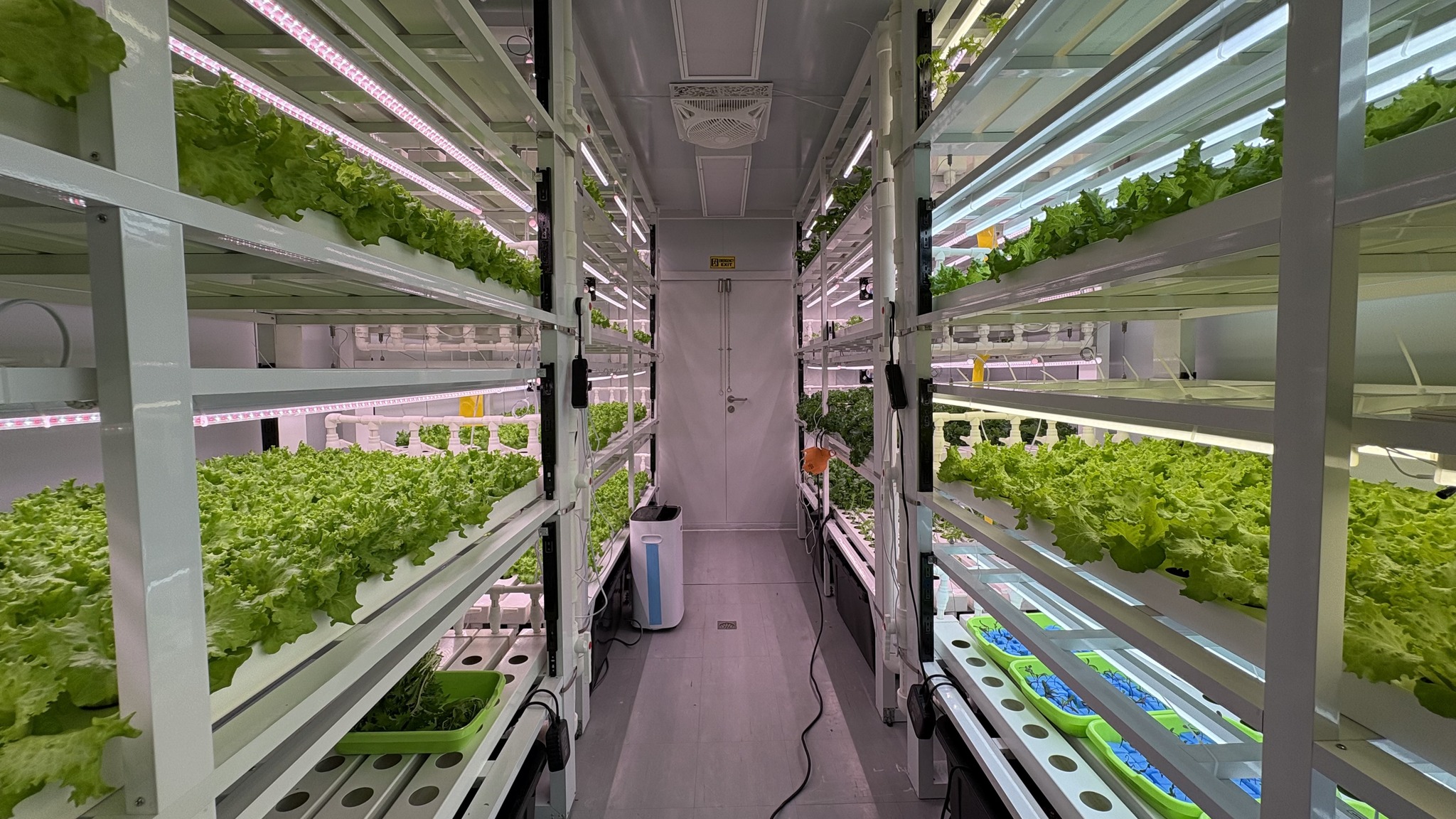
This is the central question.
Cities are major centres of food consumption. They depend on complicated networks of farms, processors, transport companies, wholesalers, supermarkets and food distributors.
The United Nations Food and Agriculture Organization recognises urban and peri-urban agriculture as an important contributor to the resilience of city food systems.
Its urban agriculture programme highlights the role of food production within and around cities, including opportunities to improve access to fresh food and strengthen connections between urban consumers and regional producers.
11.1 Producing Fresh Vegetables Close to Consumers
One of the clearest opportunities is supplying supermarkets, restaurants, hotels and institutional kitchens with fresh vegetables.
A farm located near a city centre could deliver lettuce, basil, spinach and microgreens without relying on long-distance transportation.
The benefits could include:
- Shorter delivery times.
- More predictable availability.
- Less dependence on seasonal outdoor conditions.
- Greater control over production quality.
- Potential reductions in post-harvest losses.
- Easier coordination with local buyers.
For certain premium crops, these advantages may justify the higher production costs.
11.2 Strengthening Food Security During Disruptions
Modern cities depend on long and complicated supply chains.
Weather disasters, transport interruptions, international conflicts, border restrictions and other disruptions can affect food availability.
A network of strategically located vertical farms could provide an additional source of fresh vegetables when some conventional supply routes are interrupted.
This does not mean a city could become independent of external agriculture.
But having several complementary sources of food production can improve resilience.
A city that produces some of its own vegetables while maintaining strong connections with regional farmers may be better prepared for disruptions than one relying on a single supply channel.
11.3 Making Use of Underused Urban Buildings
Vertical farms do not necessarily require newly constructed skyscrapers.
Unused warehouses, industrial buildings and certain commercial spaces may provide opportunities for indoor agriculture.
Converting suitable buildings could give vacant urban infrastructure a productive purpose.
Some facilities might even be integrated into supermarkets, hotels, restaurants or food distribution centres.
A supermarket could potentially grow selected herbs and salad vegetables on its premises, harvesting them close to the point of sale.
However, the economic feasibility would depend on available space, energy prices, customer demand and operating costs.
11.4 Helping Cities in Water-Stressed Regions
Water scarcity creates another possible opportunity.
Cities in dry climates may face pressure to reduce dependence on agricultural production requiring substantial irrigation.
Recirculating hydroponic systems could help produce certain fresh vegetables with significantly less irrigation water than conventional field production.
Yet this advantage must be balanced against electricity availability and cooling requirements.
In hot regions, removing heat and controlling humidity can be expensive.
The most promising locations are therefore not simply the driest places. They are places where the combination of water scarcity, electricity prices, renewable energy availability, crop demand and supply-chain conditions makes indoor production practical.
12. A Real Example: The SIGLA Indoor Farm in the Philippines
Vertical farming is not merely an idea being discussed by technology companies.
Universities and research organisations are already investigating how indoor agriculture could work in real communities.
One interesting example is the Sustainable Indoor Farm for Growing Leafy Vegetables using Artificial Lighting, known as SIGLA.
The project was developed at the University of the Philippines Los Baños with support from the Department of Science and Technology–Philippine Council for Agriculture, Aquatic and Natural Resources Research and Development (DOST-PCAARRD).
The facility was presented in April 2025 as a modular, weatherproof indoor vertical farm designed to support urban agriculture and access to high-value leafy vegetables.
Its crop trials included:
- Batavia Jonction lettuce.
- Lalique Crystal lettuce.
- Lollo Rosso lettuce.
- Arugula.
- Swiss chard.
- Mizuna.
- Kale.
The project is particularly interesting because its purpose extends beyond simply demonstrating that vegetables can grow indoors.
The research team is also assessing resource-use efficiency, energy consumption, water requirements, carbon footprint and economic performance.
The project is intended to help inform the development of community-based indoor farms, including systems incorporating solar panels.
Importantly, its cost-benefit and environmental assessments were still underway in the published April 2025 account. It would therefore be premature to treat the facility as proof that the model is already commercially profitable.
The SIGLA project illustrates an important direction for vertical farming: relatively modular facilities designed around specific local needs rather than enormous, capital-intensive agricultural skyscrapers.
Its eventual success will depend on whether the technology can deliver reliable food production at a financially and environmentally acceptable cost.
Source: DOST-PCAARRD and University of the Philippines Los Baños, 10 April 2025.
13. The Future of Vertical Farming: What Could Make It Work?
Despite its challenges, vertical farming is not a failed experiment.
The technology is developing, and several areas of research could improve its performance.
The important question is whether these improvements can reduce costs faster than they introduce new technical complexity.
More Efficient LED Lighting
Lighting remains one of the largest electricity expenses.
Future improvements in LED efficiency could allow growers to provide the required amount of light using less electricity.
Better optical design may also improve how evenly light reaches plants.
Researchers are investigating crop-specific light recipes that adjust intensity, spectrum and timing according to plant development.
Artificial Intelligence and Smart Sensors
A modern vertical farm generates large quantities of information.
Sensors can monitor:
- Temperature.
- Humidity.
- Carbon dioxide.
- Nutrient concentration.
- Water flow.
- Lighting intensity.
- Plant growth.
- Equipment performance.
Artificial intelligence and automated control systems can analyse these measurements and adjust growing conditions.
Rather than operating every light and climate-control system at a fixed setting, a smart farm could respond to changes in plant requirements and electricity prices.
A 2024 article in Frontiers in Science discusses dynamic environmental control and the potential to adjust daily lighting patterns according to changing electricity prices without necessarily reducing crop biomass.
It also highlights the importance of combining sensors, plant monitoring and crop-growth models.
This is particularly relevant because the cheapest operating schedule may not be the same as the biologically optimal schedule.
A system that can balance both could improve profitability.
Better Crop Varieties
Most crops used in commercial vertical farming were originally developed for conventional agricultural conditions.
Researchers are increasingly interested in varieties specifically adapted to indoor production.
Potential characteristics include:
- Compact growth.
- Faster development.
- Efficient use of artificial light.
- Consistent leaf development.
- High harvestable biomass.
- Improved resistance to indoor diseases.
- Suitable taste, texture and nutritional qualities.
For example, a lettuce variety developed specifically for a multi-layer indoor environment might produce more marketable leaves while requiring less growing space.
Over time, specialised breeding could improve productivity and reduce operating costs.
Robotics and Automation
Harvesting, planting, transplanting and packaging are labour-intensive activities.
Robotic systems could eventually handle more of these operations.
Automated machines might move trays between growing levels, identify mature plants using computer vision, and assist with harvesting.
However, robotics must be economically justified.
A machine that performs a task quickly but costs more to purchase and maintain than the labour it replaces does not necessarily improve profitability.
Integrating Farms with Renewable Energy
Vertical farms may become more attractive when they can access relatively inexpensive renewable electricity.
Possible approaches include:
- Solar installations.
- Wind-generated electricity.
- Battery storage.
- Flexible lighting schedules.
- Heat recovery.
- Smart-grid integration.
- Long-term renewable electricity contracts.
Some facilities may also be located near industrial sites where waste heat or other reusable resources are available.
These opportunities are promising, but their effectiveness depends on the local energy infrastructure and the requirements of the individual farm.
Designing Farms Around the Right Crops
Perhaps the most important improvement will not be a new machine.
It may be a change in business strategy.
Instead of trying to produce everything, successful farms may concentrate on crops that offer the strongest combination of growing efficiency, market value and local demand.
For one city, that might mean lettuce and basil.
For another, it could mean strawberries, specialist herbs or seedlings for conventional farms.
The future may belong to specialised facilities rather than enormous farms attempting to replace entire agricultural supply chains.
14. Could Vertical Farming Become Part of Everyday Life?
The future of vertical farming may be less dramatic than the image of entire skyscrapers covered in glowing crops.
A more realistic possibility is a network of different production systems operating alongside conventional agriculture.
Imagine a future supermarket supplied by several sources.
Wheat, rice, maize and other staple foods arrive from traditional agricultural regions.
Fresh vegetables arrive from nearby greenhouses and specialised vertical farms.
Some herbs are grown inside the supermarket itself.
Restaurants receive locally produced salad leaves several times a week.
Urban farms supplement regional agricultural production rather than competing with every part of it.
This arrangement could provide practical advantages without requiring cities to produce all their own food.
Would Consumers Pay More?
Price remains one of the most important questions.
Vertical farms may be able to sell produce that is fresher, more consistent or available throughout the year.
Some consumers and restaurants may be willing to pay a premium for those characteristics.
However, most households also consider affordability.
If indoor lettuce remains substantially more expensive than conventional alternatives, demand may be limited.
For vertical farming to reach a larger market, production costs must fall, operations must become more efficient and businesses must find customers willing to purchase their products consistently.
Will the Technology Change Food Quality?
Controlled environments provide opportunities to influence certain aspects of plant development.
Lighting, nutrient availability and growing conditions can affect the appearance, texture and chemical composition of vegetables.
Researchers are studying whether specific growing conditions can improve selected nutritional or sensory characteristics.
However, it would be misleading to assume that all vertical-farm vegetables are automatically healthier or tastier than field-grown alternatives.
Nutritional quality depends on the crop variety, growing conditions, maturity at harvest, storage and handling.
The USDA notes that produce grown using the same cultivars can have broadly similar nutritional and sensory characteristics across different production methods.
15. Can Skyscraper Farms Really Feed the Cities of Tomorrow?
The most honest answer is that vertical farming can contribute to feeding future cities, but it is unlikely to replace conventional agriculture.
Its strengths are real.
It can produce certain fresh vegetables in compact spaces, operate throughout the year, reduce irrigation water requirements and provide local sources of food.
It may be particularly valuable in cities with limited agricultural land, unreliable access to fresh vegetables or challenging outdoor growing conditions.
However, its limitations are equally real.
Artificial lighting and climate control consume electricity. Construction and equipment require significant investment. Many crops remain difficult to produce economically indoors. Staple crops such as wheat, rice, maize and soybeans are generally much better suited to conventional agriculture.
There is also a difference between producing enough lettuce to supply a supermarket and supplying the full nutritional requirements of millions of people.
A city needs calories, proteins, fats, carbohydrates, vitamins and minerals. Leafy vegetables contribute important nutrients, but they cannot replace the enormous quantities of staple foods and other agricultural products required by urban populations.
What Is Known?
Several findings are already supported by research and operating facilities:
- Stacked production systems can increase cultivated area relative to building footprint.
- Hydroponics and aeroponics can support commercial indoor crop production.
- Water can be recirculated, reducing irrigation requirements.
- Lettuce, herbs and microgreens are among the most established crops.
- Controlled environments can provide more predictable production conditions.
- Electricity consumption is a major economic and environmental challenge.
- The economics differ considerably according to crop, location and energy source.
What Remains Uncertain?
Several questions require further research and commercial evidence:
- How quickly can electricity consumption fall?
- Can indoor farms consistently compete with greenhouse production?
- How much renewable energy can realistically be integrated into large facilities?
- Will specialised crop varieties substantially improve profitability?
- Can automation reduce labour costs without creating expensive maintenance requirements?
- How much of a city's vegetable demand could be supplied profitably by local indoor farms?
- Can the technology become affordable enough to serve ordinary households rather than mainly premium markets?
These questions will help determine whether vertical farming remains a specialised agricultural industry or becomes a significant component of urban food production.
Conclusion: The Future of Farming May Be Both Vertical and Traditional
The image of a skyscraper filled with crops is compelling.
It suggests a future in which cities become less dependent on distant agricultural regions, vegetables grow throughout the year, water is reused and unused buildings become productive spaces.
Some of that future is already happening.
Vertical farms are producing leafy vegetables, herbs and other specialist crops using hydroponics, LED lighting and advanced environmental controls. Universities and research institutions are investigating ways to improve their efficiency, while commercial operators continue experimenting with new business models.
But the technology is not a magic solution to global food security.
Replacing natural sunlight with electricity is expensive. Growing wheat and rice indoors remains economically challenging. Building sophisticated facilities requires substantial capital, and producing food locally does not automatically make it environmentally sustainable.
The most realistic future is a combination of agricultural technologies.
Traditional farms will continue to supply much of the world's staple food. Greenhouses will provide controlled growing conditions using natural sunlight. Vertical farms may produce selected fresh vegetables closer to consumers. Urban agriculture, regional farming networks and improved food distribution will work together to make food systems more resilient.
The farm of tomorrow may not stand alone in the middle of a city, feeding millions from a single building.
Instead, it may be one important part of a much larger network.
And perhaps that is where vertical farming's real promise lies: not in replacing the countryside, but in giving cities another way to grow the food they need.
Key Takeaways
- Vertical farming grows crops in stacked layers, increasing cultivated area without requiring an equivalent expansion of ground space.
- Hydroponics and aeroponics eliminate the need for conventional agricultural soil, delivering water and nutrients directly to plant roots.
- LED lighting makes indoor cultivation possible throughout the year, but artificial lighting and climate control create substantial electricity requirements.
- Lettuce, spinach, kale, herbs and microgreens are among the most suitable commercial crops because of their compact growth and relatively short production cycles.
- Strawberries and dwarf tomatoes are possible indoor crops, but fruiting plants generally require more light, time and labour.
- Wheat, rice, maize and soybeans remain better suited to conventional agriculture because their production requires large quantities of affordable dry plant matter.
- Water efficiency is a major advantage, particularly when hydroponic systems recirculate irrigation water.
- High construction and operating costs remain significant barriers, and electricity prices can determine whether a vertical farm is profitable.
- Renewable electricity could improve environmental performance, but solar panels, storage and sufficient energy infrastructure are still necessary.
- Vertical farms are more likely to supplement than replace traditional agriculture, providing fresh vegetables close to urban consumers.
Frequently Asked Questions (FAQ)
1. What is vertical farming in simple terms?
Vertical farming is a method of growing plants in stacked layers, usually inside buildings where lighting, temperature, humidity, water and nutrients are controlled. It allows farmers to increase the amount of growing space available within a limited ground footprint.
2. How do vertical farms grow plants without soil?
Most indoor vertical farms use hydroponics or aeroponics. Hydroponics supplies nutrients through water, while aeroponics delivers nutrients through a fine mist sprayed onto suspended roots. Supporting materials such as coconut fibre or rockwool may also be used.
3. What crops grow best in vertical farms?
Lettuce, spinach, kale, basil, coriander, mint and microgreens are among the most suitable crops. Strawberries and compact varieties of tomatoes and peppers can also be produced, although they generally have more demanding growing requirements.
4. Do vertical farms use more electricity than traditional farms?
Fully enclosed vertical farms generally require substantially more electricity for crop production than open-field farms because they rely on artificial lighting, climate control, pumps and ventilation. The exact difference depends on the crop, equipment, location and production system.
5. Do vertical farms really save water?
They can. Hydroponic systems often collect and recirculate unused irrigation water, reducing losses. However, total water use also depends on plant transpiration, humidity management, cleaning and other operations. Actual savings vary between facilities.
6. Can vertical farms grow rice and wheat?
Yes, rice and wheat can be grown in controlled indoor environments, and research has demonstrated potentially high yields per unit of growing area. However, electricity requirements make large-scale production economically challenging. Conventional agriculture remains much more suitable for producing affordable staple grains.
7. Are vegetables from vertical farms healthier?
Not automatically. Their nutritional quality depends on crop varieties, nutrient availability, lighting, maturity, harvesting and storage. Controlled growing conditions may allow growers to influence certain nutritional characteristics, but there is no universal evidence that all vertical-farm vegetables are healthier than conventional produce.
8. Can vertical farming solve global food shortages?
Vertical farming could improve access to fresh vegetables, reduce some resource requirements and strengthen local food supply chains. However, it cannot currently replace conventional agriculture for the large-scale production of staple foods. It is best understood as one component of a diversified food system.
9. Are vertical farms environmentally friendly?
Their environmental performance depends heavily on electricity sources, energy efficiency, water management, building materials and crop selection. Farms powered by low-carbon electricity may have advantages, but facilities relying on carbon-intensive electricity can have a significant environmental footprint.
10. Will vertical farming become common in future cities?
It is possible that specialised indoor farms will become increasingly common near supermarkets, restaurants, distribution centres and densely populated areas. However, widespread adoption will depend on lower operating costs, better technology, reliable energy supplies and consistent consumer demand.
Sources and Further Reading
The following scientific and institutional sources provide additional information about vertical farming, its technologies, economics and environmental performance.
- Pennisi et al. (2025) — Vertical farming: productivity, environmental impact, and resource use. A review. Agronomy for Sustainable Development.
- Lovat, Noor and Milo (2025) — Vertical farming limitations and potential demonstrated by back-of-the-envelope calculations. Plant Physiology.
- Virginia Tech (2026) — What Are Indoor Vertical Farms? Virginia Cooperative Extension.
- Kaiser et al. (2024) — Vertical farming goes dynamic: optimizing resource use efficiency, product quality, and energy costs. Frontiers in Science.
- Miserocchi and Franco (2025) — Benchmarking energy efficiency in vertical farming: Status and prospects. Thermal Science and Engineering Progress.
- United States Department of Agriculture — Vertical Farming: No Longer a Futuristic Concept. Agricultural Research Service.
- DOST-PCAARRD and University of the Philippines Los Baños (2025) — Research on indoor farming opens opportunities for the industry.
- Food and Agriculture Organization of the United Nations — Urban and peri-urban agriculture.
Photo Credits
Photo 1 — SIGLA Modular Indoor Vertical Farm: ARMRD, DOST-PCAARRD, University of the Philippines Los Baños.
Direct image: Open original photograph.
Photo 2 — Kale Growing Inside the SIGLA Modular Indoor Farm: ARMRD, DOST-PCAARRD, University of the Philippines Los Baños.
Direct image: Open original photograph.
Both photographs are credited to their original institutional source. Consult the source publication for reuse and attribution conditions.
The conversation
Post a Comment