Voyager 1 Is About to Reach a Distance Never Before Achieved by Humanity
Nearly half a century after leaving Earth, NASA's most distant spacecraft is approaching a remarkable milestone. On 18 November 2026, Voyager 1 is expected to reach a distance of one light-day from our planet. Its achievement is not simply about travelling farther than any other human-made object. It is about how far human curiosity can reach, how long engineering can endure, and what it means to remain connected across an almost unimaginable distance.
Imagine sending someone a message and knowing that they will not receive it until tomorrow. Now imagine that the person cannot answer immediately, either. Their reply will take another entire day to return to you.
That is not a description of an unreliable internet connection or an unusually distant relative. It is becoming the everyday reality of communicating with one of humanity's oldest and most extraordinary explorers.
Voyager 1, NASA's robotic spacecraft launched in 1977, is approaching a distance of one light-day from Earth. On November 18, 2026, it is expected to be approximately 16.09 billion miles, or 25.89 billion kilometres, away. At that distance, even a signal travelling at the fastest speed permitted by modern physics needs 24 hours to reach the spacecraft.
And that is only half the conversation.
A response sent from Voyager 1 would need another 24 hours to reach Earth. A complete exchange could therefore take approximately two days, even if the spacecraft and the ground communication systems were operating perfectly.
The milestone is extraordinary because it transforms an abstract astronomical measurement into something everyone can understand. Light is often described as incredibly fast. It travels approximately 300,000 kilometres per second, crossing the distance between Earth and the Moon in a little more than a second.
Yet even light needs an entire day to cover the distance separating Earth from Voyager 1.
The spacecraft is not travelling towards a dramatic destination visible in a telescope. It is moving through the vast region beyond the Sun's protective influence, continuing a journey that began when disco music, cassette tapes and early personal computers were part of everyday life.
And remarkably, it is still doing science.
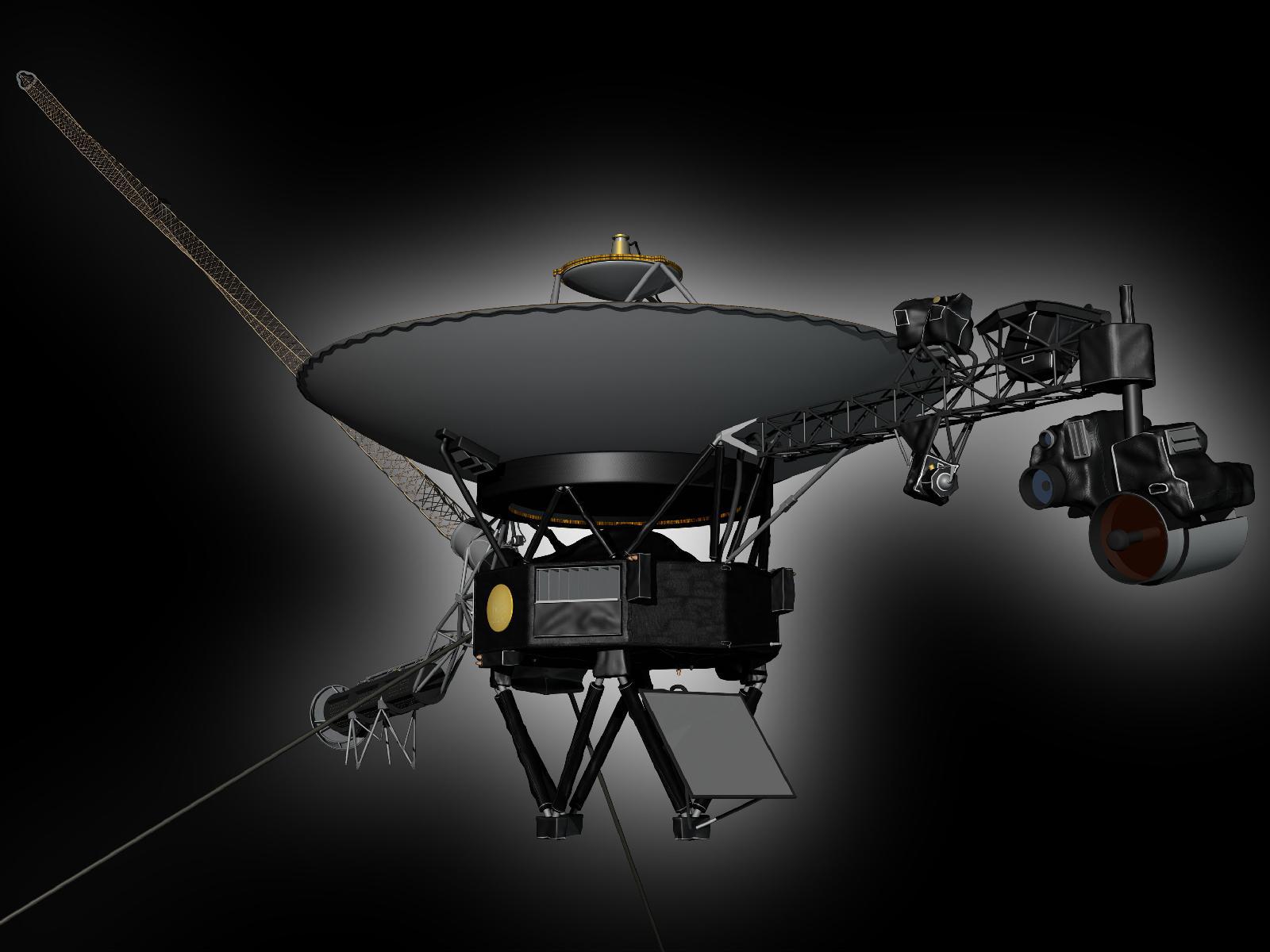
Key Takeaways
- NASA expects Voyager 1 to reach one light-day from Earth on November 18, 2026.
- The spacecraft will be approximately 16.09 billion miles (25.89 billion kilometres) from Earth at the milestone.
- A radio message will take approximately 24 hours to travel from Earth to Voyager 1, with another 24 hours required for a reply.
- Voyager 1 launched on September 5, 1977, and explored Jupiter and Saturn before continuing towards interstellar space.
- The spacecraft crossed the heliopause in August 2012, becoming the first human-made object to enter interstellar space.
- Its remaining scientific instruments continue investigating the environment beyond the Sun's protective bubble.
- Engineers are managing declining electrical power by switching off equipment and redesigning how spacecraft systems operate.
- The Golden Record aboard Voyager 1 carries sounds, music, greetings and images intended to represent Earth to a possible extraterrestrial discoverer.
- The one-light-day milestone is a distance achievement, not a sudden change in the spacecraft's surroundings.
1. What Exactly Is a Light-Day?
The expression sounds almost poetic, but a light-day is a precise astronomical measurement.
It describes the distance that light travels through a vacuum in one day.
Light travels at approximately 299,792 kilometres per second. Multiply that speed by the number of seconds in 24 hours and the result is approximately 25.9 billion kilometres.
That is the distance Voyager 1 is expected to reach from Earth on November 18.
The distinction matters because a light-day measures distance, not duration.
People are familiar with light-years, the measurement commonly used when discussing stars and galaxies. A light-year is the distance light travels in one year. A light-day is based on the same principle, but covers a much shorter period.
There are 365 days in a standard year, so one light-day represents approximately 1/365 of a light-year.
Even that comparison can be misleading. A distance of 25.9 billion kilometres is already far beyond anything most people can imagine travelling.
Why astronomers use the speed of light
In ordinary life, distance is usually measured in kilometres, metres or miles. These units work well when discussing journeys between cities or even planets within the Solar System.
However, space is so enormous that conventional numbers quickly become difficult to understand.
Consider the distance between Earth and the Sun. Light takes approximately eight minutes and twenty seconds to travel between them.
When astronomers discuss nearby stars, the journey of light becomes years long.
Proxima Centauri, the closest known star to the Sun, is more than four light-years away. Its light takes over four years to reach us.
Using light-based measurements gives scientists a practical way to describe these enormous distances.
For Voyager 1, the one-light-day milestone provides an especially understandable measurement because it directly describes how long communication takes.
A message that takes a day
Think about sending a postcard to someone living on another continent.
The message leaves your home, travels through the postal system and eventually arrives. The recipient reads it and sends a response.
With Voyager 1, the process is much more extreme.
A command transmitted from Earth travels through space as a radio signal. Radio waves are electromagnetic radiation and travel at the speed of light through the near-vacuum of space.
The signal reaches Voyager 1 approximately 24 hours later.
If the spacecraft receives the instruction, processes it and sends a response immediately, that response still requires another 24 hours to return.
The total round-trip communication time is therefore approximately 48 hours.
This creates an unusual engineering situation. Controllers cannot operate Voyager 1 like a vehicle that responds instantly to a steering wheel. The spacecraft must be capable of performing many tasks independently.
NASA's October announcement explains that the spacecraft will reach approximately 16.09 billion miles from Earth at the milestone. It also confirms the corresponding one-day signal travel time.
2. A Spacecraft Born in 1977
Voyager 1 did not begin its journey as an experiment designed specifically to reach interstellar space.
Its original mission was to investigate the outer planets of our Solar System.
NASA launched Voyager 1 on September 5, 1977, shortly after its twin spacecraft, Voyager 2, had departed Earth.
The two probes were designed to take advantage of a favourable arrangement of the outer planets. This alignment allowed spacecraft to use planetary gravity to change their trajectories and travel between distant destinations more efficiently.
The opportunity was unusually valuable. The planetary arrangement used by the Voyager mission occurs only approximately once every 176 years.
The spacecraft were designed for planetary exploration, but their engineering proved capable of much more.
Jupiter: The first major destination
Voyager 1 reached Jupiter in March 1979.
Before the spacecraft arrived, Jupiter was already known as the largest planet in the Solar System. But close observations revealed a much more complicated world.
The probe examined the planet's atmosphere, magnetic environment, radiation belts and moons.
One of the most remarkable discoveries involved Io, Jupiter's volcanic moon.
Voyager observations revealed active volcanic eruptions on Io, providing the first direct evidence of active volcanism beyond Earth.
This transformed scientific understanding of the Solar System. Moons were no longer simply frozen, inactive objects orbiting giant planets. Some were geologically active worlds with complex environments.
Voyager also returned detailed observations of Jupiter's atmosphere and its enormous storm systems.
Saturn: Another world of surprises
In November 1980, Voyager 1 reached Saturn.
The spacecraft examined the planet's rings, atmosphere and moons.
Its observations of Titan were especially important. Titan possesses a dense atmosphere, making it a fascinating target for scientists interested in planetary chemistry and the conditions that might support complex chemical processes.
Voyager's discoveries helped establish Titan as one of the most interesting destinations for future exploration.
After the Saturn encounter, Voyager 1 followed a trajectory that sent it away from the planetary region.
Voyager 2 continued its own journey, eventually visiting Uranus and Neptune.
The two spacecraft became very different explorers, even though they originated from the same mission.
3. How Voyager 1 Escaped the Sun's Protective Bubble
One of the most important scientific achievements in Voyager 1's history happened long after its planetary encounters.
To understand it, we first need to understand the heliosphere.
The Sun does not simply produce light and heat. It continuously releases a stream of charged particles known as the solar wind.
This stream moves outward through the Solar System, carrying the Sun's magnetic field with it.
Together, the solar wind and magnetic field create an enormous protective region called the heliosphere.
It is sometimes compared to a bubble surrounding the Solar System.
However, this bubble is not a solid structure. It is a changing region of space shaped by the interaction between solar material and the surrounding interstellar environment.
The heliopause
As the solar wind travels farther from the Sun, it eventually encounters the surrounding interstellar medium.
The boundary separating the heliosphere from the interstellar environment is known as the heliopause.
Crossing this boundary is a major scientific event because it allows instruments to examine conditions outside the Sun's direct influence.
Voyager 1 crossed the heliopause on August 25, 2012.
NASA announced that the spacecraft had entered interstellar space after scientists analysed its measurements and determined that the surrounding environment had changed.
This was a historic first for a human-made object.
Voyager 2 later crossed the heliopause in November 2018.
Does interstellar space mean leaving the Solar System?
This question is more complicated than it first appears.
The heliosphere is not identical to the entire Solar System.
The Solar System also contains distant objects influenced by the Sun's gravity, including icy bodies in the region associated with the Oort Cloud.
Voyager 1 crossed the heliopause, but it has not travelled beyond every gravitationally associated region of the Sun.
In other words, entering interstellar space does not mean the spacecraft has completely escaped every part of the Solar System.
The distinction is important because popular descriptions sometimes suggest that Voyager has already left the Solar System entirely.
A more accurate description is that it has entered the interstellar environment beyond the heliosphere.
It is now studying conditions that no other spacecraft has directly investigated.
4. What Is Voyager 1 Studying Today?
Voyager 1 is no longer photographing planets.
Its cameras and several other instruments have been switched off over the decades to conserve electricity.
However, the spacecraft still has scientific work to perform.
Its remaining instruments investigate particles, magnetic fields and other characteristics of the surrounding environment.
These measurements help scientists understand the transition between the Sun-dominated region and interstellar space.
Cosmic rays
Cosmic rays are energetic particles travelling through space.
Some originate from the Sun, while others come from much more distant astrophysical sources.
Studying cosmic rays helps researchers understand the energetic environment beyond the heliosphere.
Voyager's measurements have contributed to understanding how the heliosphere affects the particles travelling through it.
Magnetic fields
Magnetic fields play a major role in the behaviour of charged particles in space.
They influence how particles move, how energy is transported and how different regions of space interact.
Voyager's magnetometer measures the magnetic environment surrounding the spacecraft.
These observations are valuable because scientists cannot simply send an instrument to another location and collect identical measurements.
The spacecraft is exploring an environment that has never previously been sampled directly by a human-made probe.
Plasma waves
Plasma is a state of matter consisting of charged particles.
It is common throughout the universe, including in stars, interstellar space and many planetary environments.
Voyager's plasma wave instrument studies electrical signals associated with waves in the surrounding plasma.
These measurements provide clues about the density and behaviour of the material through which the spacecraft travels.
The scientific importance of these instruments extends beyond the Voyager mission itself.
Their observations help researchers build better models of the heliosphere and the surrounding interstellar environment.
5. The Extraordinary Engineering Problem: Keeping Voyager Alive
A spacecraft launched in 1977 was never expected to operate indefinitely.
Every year in deep space brings new challenges.
Components age, electrical power declines, temperatures become difficult to manage and communication becomes increasingly complicated.
Voyager 1 has survived far longer than its original planetary exploration mission.
But its longevity is not the result of luck alone.
It reflects decades of engineering decisions, careful monitoring and creative problem-solving.
Where does Voyager 1 get its electricity?
Voyager 1 does not depend on solar panels.
At its enormous distance from the Sun, sunlight is far too weak for conventional solar power to be a practical source of electricity for the spacecraft's systems.
Instead, Voyager uses radioisotope thermoelectric generators, commonly called RTGs.
These devices convert heat produced by the radioactive decay of plutonium-238 into electrical power.
The process is different from a conventional nuclear reactor.
An RTG does not generate electricity through a controlled chain reaction. It uses the heat naturally produced by radioactive decay and converts part of that energy into electricity.
This technology has been particularly useful for missions travelling into regions where sunlight is limited.
However, the available power gradually decreases.
NASA explains that Voyager's power supply loses approximately four watts each year.
That may sound insignificant compared with the electricity used by household appliances, but it is a serious limitation for a spacecraft with a very small power budget.
Turning equipment off to preserve the mission
Over the years, engineers have switched off various systems and scientific instruments.
The objective is simple: preserve enough electricity to keep the most valuable equipment operating.
A spacecraft cannot simply plug into a power socket or replace its generator.
Every decision must account for the limited resources available.
This resembles managing an old building with a declining energy supply. If the electrical system cannot support every room, the most important equipment must receive priority.
NASA's October 29, 2026 report described a significant power-saving operation known as the Big Bang.
Engineers completed a series of simultaneous equipment changes on Voyager 1 in September. They turned off three devices and substituted them with three lower-power alternatives.
The changes were designed to reduce electrical consumption while maintaining the thermal conditions needed for the spacecraft to function.
Without this operation, NASA said the mission would have needed to switch off another scientific instrument as early as summer 2027.
The successful engineering work is important because every additional year of scientific operation provides opportunities to collect measurements from an environment that cannot be studied in the same way from Earth.
The challenge of temperature
Electricity is not the only problem.
The spacecraft also needs to maintain suitable operating temperatures.
Electronics, sensors and other components must function within specific temperature limits.
The deep-space environment is extremely cold, and the spacecraft's ageing systems have limited resources.
Engineers must therefore balance electrical savings with thermal requirements.
Reducing power consumption in one area may affect how heat is distributed elsewhere.
This is one reason why the recent equipment changes required careful coordination rather than simply switching off individual devices without considering their wider effects.
6. Voyager 1 Recently Lost Contact With Earth
The approaching milestone arrives during a particularly challenging period for the mission.
NASA reported that communication with Voyager 1 was briefly lost during October 2026.
The Deep Space Network failed to detect the spacecraft's radio signal during two scheduled communication attempts on October 18 and 19.
The signal reappeared on October 20.
The team subsequently maintained communication while investigating what had happened.
According to NASA's Jet Propulsion Laboratory, an automatic response involving the spacecraft's thrusters had taken place.
One group of thrusters went offline and backup thrusters activated.
This behaviour is associated with a protective system designed to place the spacecraft in a stable configuration when its computers detect a possible problem.
What is fault protection?
Imagine a computer detecting an unexpected error.
Rather than continuing to operate normally and risking further problems, it may enter a protective state.
Spacecraft use similar principles.
Fault protection systems monitor important conditions and can automatically respond when something unusual occurs.
For Voyager 1, the system can interrupt normal operations while engineers investigate.
This is essential because the spacecraft cannot wait for an immediate human response.
Its controllers are separated from it by approximately a day of signal travel time.
The recent communication interruption illustrates how delicate the mission has become.
It also demonstrates why Voyager's ability to operate autonomously remains so important.
Does the recent communication problem mean the mission is ending?
Not necessarily.
The spacecraft's signal returned, and NASA reported that communications had been maintained.
However, the incident is a reminder that the mission is operating with ageing equipment and increasingly limited resources.
It would be irresponsible to suggest that Voyager 1 can continue indefinitely.
The spacecraft's remaining lifetime depends on its power supply, the condition of its instruments and the ability of engineers to maintain communication and operation.
What is clear is that the team continues working to preserve the mission.
7. The Golden Record: A Message From Earth
Perhaps the most emotionally interesting feature of Voyager 1 is not its scientific equipment.
It is the Golden Record.
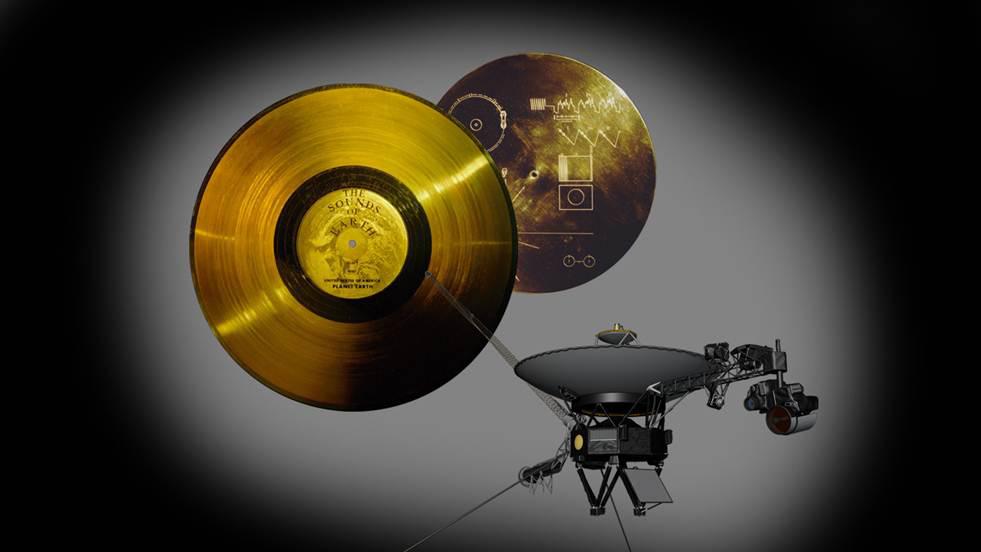
Each Voyager spacecraft carries a gold-plated copper phonograph record measuring 12 inches in diameter.
The record was designed as a message representing Earth and humanity.
It was included in the mission in case the spacecraft were ever discovered by intelligent beings beyond our planet.
The idea was ambitious.
How could humans introduce themselves to a civilisation whose language, biology, technology and understanding of the universe might be completely different?
The solution was to create a collection of sounds, images, music and greetings intended to communicate something about life on Earth.
What is on the Golden Record?
The record contains greetings in 55 languages.
It includes natural sounds such as wind, surf, thunder and animal calls.
There are also musical selections representing different cultures and periods.
The music ranges from classical compositions to other musical traditions, including Chuck Berry's contribution.
The record also contains 115 images encoded in analogue form.
These images were selected to represent aspects of Earth, human biology, daily life, science and civilisation.
The record's cover includes symbolic instructions intended to explain how it might be played.
It also contains information designed to help a potential discoverer understand the origin of the spacecraft.
Why include a message that might never be heard?
There is no guarantee that another civilisation will ever find Voyager 1.
The spacecraft is travelling through an enormous region of space, and the probability of a specific object being discovered is difficult to establish.
The Golden Record should therefore not be described as evidence that extraterrestrial life will find us.
Its importance is cultural and philosophical as much as scientific.
It represents a moment when humanity decided to place a small collection of its sounds and images on a spacecraft travelling beyond the planets.
In a sense, the record is a time capsule.
It preserves a picture of Earth as understood by the people who selected its contents in the 1970s.
It also raises an interesting question: if humanity created another interstellar message today, what would we choose to include?
Would we represent our scientific discoveries, our languages, our music, our conflicts, our environmental challenges or our hopes for the future?
The Golden Record cannot answer that question.
But it gives us a fascinating starting point.
8. How the Deep Space Network Talks to Voyager
Communicating with a spacecraft billions of kilometres away requires more than an ordinary radio antenna.
NASA uses the Deep Space Network, a system of large communication facilities designed to support missions travelling far beyond Earth.
The network includes facilities in California, Spain and Australia.
Their geographical separation helps maintain communication as Earth rotates.
This arrangement means that a spacecraft can remain in contact with ground stations as different parts of the planet become visible to it.
Why are the antennas so large?
Radio signals become weaker as they spread through space.
By the time a signal from Voyager 1 reaches Earth, it is extremely faint.
Large antennas are needed to collect these weak signals.
The Deep Space Network uses powerful transmitters and sensitive receiving equipment to communicate with distant spacecraft.
The system also relies on precise timing and careful coordination.
Controllers must know where the spacecraft is, where to point the antennas and when to expect a signal.
Why is communication so slow?
The Deep Space Network does not make radio waves travel faster.
The speed of light remains the limiting factor.
Even with advanced technology, a signal travelling between Earth and Voyager 1 needs approximately 24 hours each way at the one-light-day milestone.
The network can improve how efficiently signals are transmitted and received, but it cannot remove the enormous distance separating the two locations.
This is a fundamental limitation of space exploration.
A spacecraft travelling to a distant planet or beyond cannot be controlled through instant communication.
It needs onboard systems capable of handling instructions, monitoring its condition and responding to unexpected situations.
Voyager 1 is an early and remarkable example of this principle.
9. What Happens When Voyager 1 Reaches One Light-Day?
The milestone is expected on November 18, 2026.
NASA's published mission information gives the expected distance as approximately 16.094 billion miles from Earth, equivalent to 25.902 billion kilometres.
The exact distance and time are based on the spacecraft's predicted trajectory.
It is important to understand what the milestone actually represents.
Nothing dramatic will happen to Voyager 1 when it crosses this distance.
There will be no sudden explosion, change in speed or new boundary in space.
The spacecraft will not encounter a physical wall or enter a completely different region simply because it has travelled one light-day from Earth.
The significance is primarily a measurement of distance and communication time.
Why is it still historic?
Because no human-made object has previously reached this distance from Earth.
Voyager 1 will become the first spacecraft to be separated from our planet by a full day's journey for light.
It gives the public a new way to appreciate the scale of human exploration.
For nearly 50 years, the spacecraft has continued moving away from Earth.
It has survived planetary encounters, decades of operation and the gradual decline of its electrical supply.
Now its distance has become so enormous that a simple conversation requires two days.
That is a remarkable achievement for a machine built using technology from the 1970s.
10. NASA's Worldwide Invitation: Shine Bright for Voyager
NASA has created a public participation initiative called Shine Bright for Voyager's Light-Day.
The agency invites people to participate after sunset on Tuesday, November 17, 2026, ahead of the expected milestone.
The idea is simple.
Participants can use a phone-based flashing tool or a flashlight to send the letters V-G-R in Morse code.
The letters stand for Voyager.
The initiative is a symbolic celebration rather than a method of communicating with the spacecraft.
A flashlight or phone screen cannot transmit a meaningful signal across billions of kilometres to Voyager 1.
The purpose is to create a shared moment in which people on Earth recognise the extraordinary distance reached by a human-made explorer.
The initiative is also a reminder that space exploration is not only about rockets and scientific instruments.
It is about the people who design missions, build spacecraft, interpret measurements and preserve the achievements of previous generations.
For readers who want to participate, NASA provides instructions and information on its official Shine Bright for Voyager page:
NASA: Shine Bright for Voyager's Light-Day
11. What Voyager 1 Teaches Us About the Future of Space Exploration
Voyager 1 is not a blueprint for every future space mission.
Its technology is old, its scientific capabilities are limited compared with modern spacecraft, and its power supply is gradually declining.
Nevertheless, its journey provides important lessons.
Reliability matters as much as innovation
Space exploration often focuses on new technologies.
People naturally become interested in the newest telescope, the latest rocket or the most advanced planetary lander.
But Voyager demonstrates another side of engineering: the ability to make equipment survive for decades in an environment that humans cannot easily repair.
Reliability is not always visually exciting.
It involves careful design, testing, monitoring and maintenance planning.
It also requires engineers to solve problems using limited resources.
The spacecraft's recent power-saving operation shows how innovation can involve finding ways to preserve old equipment rather than replacing it.
Long missions require long-term thinking
Voyager was launched in 1977.
Some of the people involved in its early development have retired, and new generations of engineers and scientists have taken responsibility for the mission.
This creates a challenge that extends beyond technology.
Knowledge must be transferred between generations.
Engineers need to understand systems designed before many modern computers existed.
They must preserve documentation, reconstruct technical decisions and develop solutions without being able to inspect the spacecraft physically.
Long-duration missions therefore depend on institutional memory as well as engineering skill.
Science does not always need immediate results
Some scientific missions produce discoveries within days or months.
Others require years of observation.
Voyager's journey shows how important long-term measurements can be.
A single observation may reveal something interesting, but repeated measurements over decades can reveal how an environment changes.
The spacecraft's continued exploration of interstellar space offers scientists a rare opportunity to study conditions beyond the heliosphere.
Its observations cannot be replaced simply by sending a new spacecraft into the same general region.
12. Could Humans Ever Travel as Far as Voyager 1?
Voyager 1 is a robotic spacecraft.
It does not need food, water, oxygen, exercise facilities or protection for human passengers.
This makes its journey fundamentally different from a crewed mission.
Human beings have travelled to the Moon, lived aboard the International Space Station and operated spacecraft in Earth's orbital environment.
But travelling to the distance of Voyager 1 would require capabilities far beyond current crewed spaceflight.
The problem of distance
Even at the speeds achieved by existing human spacecraft, a journey to Voyager 1's present location would take an extraordinary amount of time.
The spacecraft is travelling at approximately 38,000 miles per hour relative to the Sun, according to NASA's October 2026 announcement.
That is fast by everyday standards.
However, space distances are so large that even such speeds are relatively modest.
The problem becomes even more complicated when considering the human requirements of a mission.
A crewed spacecraft would need reliable life-support systems, protection against radiation, supplies, communication systems and a way to maintain the health of its passengers.
A journey lasting decades or longer would raise enormous medical, engineering and psychological challenges.
Would future propulsion change everything?
Scientists and engineers continue investigating propulsion concepts that could potentially allow spacecraft to travel faster.
However, many ambitious proposals remain experimental or theoretical.
It would be inaccurate to suggest that humanity is close to sending astronauts to Voyager 1.
Robotic spacecraft remain the practical way to investigate extremely distant regions of space.
They can operate without the complex life-support requirements of a crewed mission.
Voyager 1 demonstrates just how much can be achieved through robotic exploration.
13. What Will Happen When Voyager 1 Finally Stops Working?
Every spacecraft has a finite operational lifetime.
Voyager 1's electrical power continues to decline, and its remaining systems will eventually become unable to support scientific operations.
The exact date cannot be predicted with complete certainty.
Engineers can estimate power consumption and manage equipment, but unexpected failures remain possible.
The mission will eventually reach a point when its remaining scientific instruments can no longer operate.
Communication may also become impossible.
When that happens, Voyager 1 will continue travelling through space.
It will not suddenly stop moving because its electrical systems have shut down.
In the absence of a significant external force, the spacecraft will continue along its trajectory.
Its Golden Record will remain attached to it.
The probe will become a silent object travelling through interstellar space.
Will it ever reach another star?
Voyager 1 is travelling in the general direction of the constellation Ophiuchus.
Its trajectory does not mean that it is heading directly towards a known habitable planet.
NASA has discussed the spacecraft's future trajectory and the enormous timescales involved in its journey.
The possibility of the probe passing relatively close to another star exists on astronomical timescales, but such encounters are not imminent.
The spacecraft is not expected to become a functioning visitor to another planetary system.
It is better understood as an object carrying a record of human exploration into the distant future.
14. Why Voyager 1 Still Matters in 2026
It might be tempting to view Voyager 1 as an old scientific achievement that has already completed its most important work.
After all, modern space agencies operate much more advanced instruments.
Today's telescopes can observe distant galaxies, modern probes can study planets in extraordinary detail, and sophisticated instruments can collect measurements that were impossible in 1977.
But Voyager 1 remains scientifically relevant for a reason.
It is in a location that other spacecraft have not reached.
Its measurements provide direct observations of the interstellar environment beyond the heliosphere.
That makes its continued operation valuable.
The spacecraft also demonstrates the importance of missions designed with long-term scientific objectives.
A mission can produce unexpected discoveries many years after its original targets have been completed.
The planetary encounters were only the beginning of Voyager's story.
Its journey beyond the heliosphere has become one of the most important chapters in modern space exploration.
A connection between generations
There is also something deeply human about Voyager.
A person born in 1977 could now be approaching their fiftieth birthday.
During that lifetime, the world has experienced extraordinary changes in communication, computing, transport and scientific knowledge.
Yet Voyager 1 is still sending information through space using technology developed in that same historical period.
It has outlived many consumer technologies that were considered advanced when it launched.
It has travelled farther than any other human-made object.
And its mission continues to depend on people who understand how to maintain a machine that cannot be physically reached.
That connection between generations is one of the most remarkable aspects of the story.
15. The Bigger Meaning of One Light-Day
A distance of one light-day may sound like a technical milestone.
But it offers a useful way to think about humanity's place in the universe.
On Earth, communication is usually instantaneous enough that we rarely consider the physical distance travelled by information.
A message sent from one side of a city can arrive in seconds.
A video call can connect people across continents.
Even communication with astronauts in low Earth orbit involves delays so small that ordinary conversation remains possible.
Voyager changes that experience.
A message takes a day to arrive.
A response takes another day.
The spacecraft is no longer part of an immediate conversation with Earth.
Its connection to humanity is stretched across a distance that is almost impossible to imagine.
And yet, the connection still exists.
The probe's instruments continue gathering information.
The Deep Space Network continues listening.
Engineers continue calculating, transmitting commands and analysing the results.
The spacecraft is a reminder that human exploration does not always require people to travel physically.
Sometimes a carefully designed machine can travel farther than any human could reasonably hope to reach.
Sometimes a mission launched for one purpose becomes an entirely different scientific achievement.
And sometimes the most extraordinary discoveries come not from arriving at a destination, but from continuing the journey.
Voyager 1 is approaching one light-day from Earth.
The milestone will not change the spacecraft itself. It will not create a new physical boundary or reveal a sudden secret about the universe.
But it will give humanity a remarkable measurement of its own reach.
A machine launched in 1977 will be so far away that even light needs an entire day to reach it.
That is more than a number.
It is a record of human curiosity, patience and engineering endurance travelling through the darkness.
Frequently Asked Questions
1. What is Voyager 1's one-light-day milestone?
It is the point at which Voyager 1 reaches a distance from Earth equal to the distance light travels in 24 hours. NASA expects this to happen on November 18, 2026.
2. How far away will Voyager 1 be?
NASA estimates that Voyager 1 will be approximately 16.094 billion miles (25.902 billion kilometres) from Earth at the milestone.
3. How long does it take to communicate with Voyager 1?
At one light-day, a radio signal takes approximately 24 hours to travel from Earth to the spacecraft. A response takes another 24 hours to return, creating a round trip of approximately 48 hours.
4. When was Voyager 1 launched?
Voyager 1 launched on September 5, 1977, from Cape Canaveral, Florida.
5. Is Voyager 1 outside the Solar System?
Voyager 1 crossed the heliopause in August 2012 and entered interstellar space. However, this does not mean it has passed beyond every gravitationally associated region of the Solar System.
6. Is Voyager 1 still working?
Yes. NASA continues to communicate with Voyager 1, and several scientific instruments remain operational. Engineers are managing its declining power supply by switching off equipment and introducing energy-saving changes.
7. What powers Voyager 1?
Voyager 1 uses radioisotope thermoelectric generators. These convert heat produced by the radioactive decay of plutonium-238 into electrical power.
8. What is the Golden Record?
The Golden Record is a gold-plated copper phonograph record carried by both Voyager spacecraft. It contains sounds, music, greetings in 55 languages and images intended to represent Earth and humanity.
9. Can Voyager 1 still take photographs?
Its imaging system has been switched off for many years to conserve electricity. The spacecraft continues collecting measurements through its remaining operational scientific instruments.
10. What happened when NASA recently lost contact with Voyager 1?
NASA reported that communication briefly disappeared during scheduled attempts on October 18 and 19, 2026. The signal returned on October 20. Engineers identified an automatic change involving the spacecraft's thrusters and continued investigating the incident.
11. What is NASA's Shine Bright for Voyager initiative?
It is a public participation event scheduled for after sunset on November 17, 2026. Participants can symbolically send the letters V-G-R in Morse code using a flashlight or NASA's automated flashing tool.
12. Will Voyager 1 ever reach another star?
Voyager 1 will continue travelling through interstellar space, but it is not on a mission to visit a specific star or planetary system. Any close stellar encounter would occur on extremely long astronomical timescales.
13. Will Voyager 1 eventually stop moving?
Its electrical systems will eventually stop functioning, but the spacecraft will continue travelling through space. Losing power does not mean that it suddenly loses its motion.
14. Why is Voyager 1 important to modern science?
It provides direct measurements of the environment beyond the heliosphere. Its observations help scientists understand the interaction between the Sun and interstellar space, making the spacecraft scientifically valuable even decades after its planetary encounters.
Conclusion: Humanity's Longest Conversation
The story of Voyager 1 is not simply about a machine travelling farther than anything humanity has ever built.
It is about the ability to create something that continues to explore long after its original mission has ended.
The spacecraft has travelled past Jupiter and Saturn, crossed the heliopause, survived decades of declining power and continued collecting scientific information from an environment that no other human-made object has explored in the same way.
Now, as it approaches one light-day from Earth, it offers an extraordinary demonstration of the scale of space.
A signal sent today takes approximately a day to arrive. A response takes another day to return.
The achievement is both scientific and deeply human.
The Golden Record carries a small representation of our world, while the spacecraft itself carries the work of thousands of people who helped design, build, operate and preserve it.
Voyager 1 may eventually become silent, but its discoveries and the knowledge gained from its journey will remain part of humanity's scientific history.
Almost 50 years after launch, the little spacecraft is still moving away from home.
And Earth is still listening.
Sources and Further Reading
- NASA Jet Propulsion Laboratory — NASA's Voyager 1 Conserves Power, Resolves Brief Communications Pause (October 29, 2026). Read the NASA announcement.
- NASA Science — Voyager 1: The Farthest Spacecraft. Read the Voyager 1 mission overview.
- NASA Science — Shine Bright for Voyager's Light-Day. Read the public participation announcement.
- NASA Science — Where Are Voyager 1 and Voyager 2 Now? Explore the spacecraft's current locations.
- NASA Science — Interstellar Mission. Learn about Voyager's interstellar exploration.
- NASA Science — Voyager Golden Record. Discover the Golden Record.
- NASA Jet Propulsion Laboratory — Voyager 1 Mission. Explore the Voyager 1 mission archive.
The conversation
Post a Comment